Two difficult truths

My friend Ed Fallon addresses a subject I’ve written a lot about, the large and rapid migration of people to the Midwest as the west coast continues to experience worsening droughts. And wildfires fed by dried trees and brush. Following are excerpts from a recent email message from Ed.
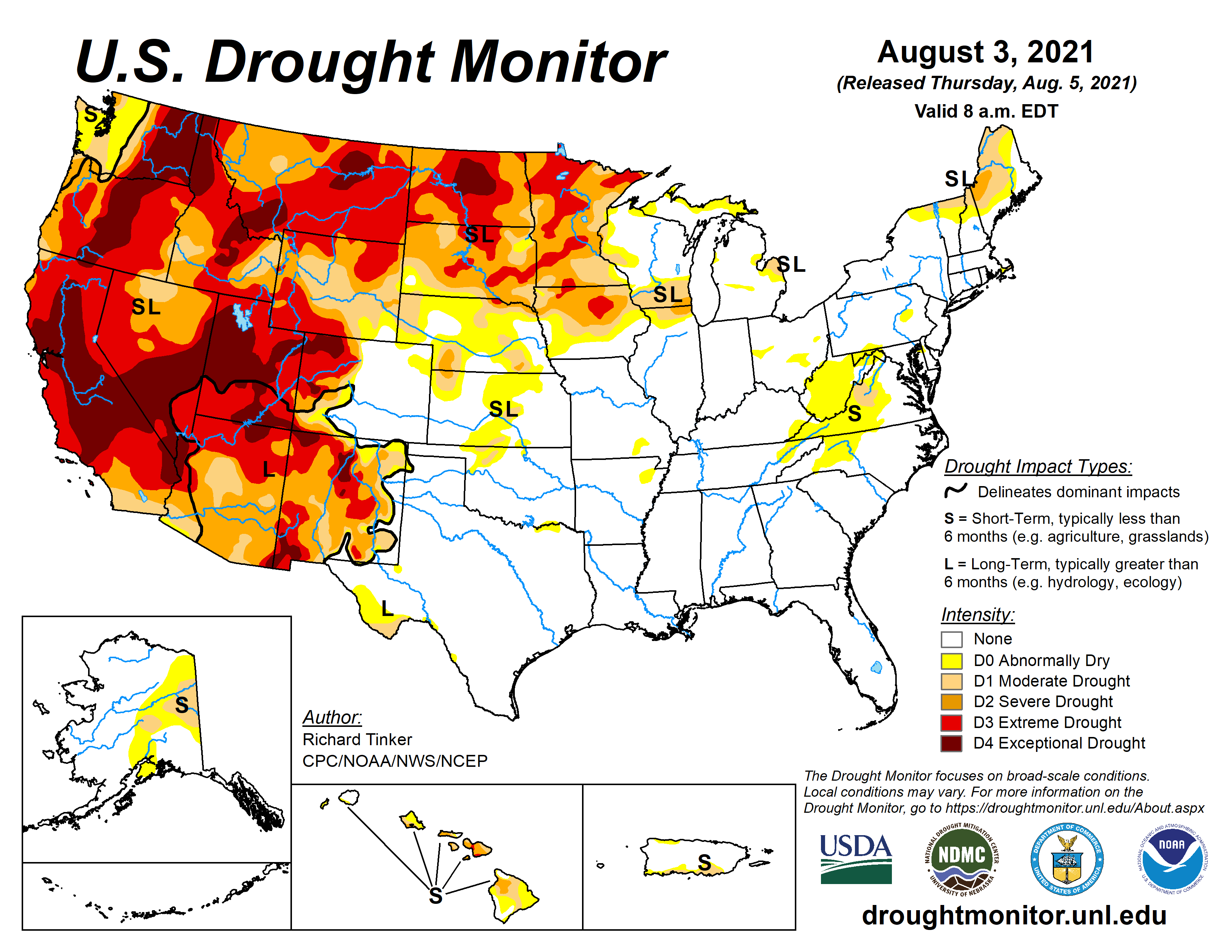
https://droughtmonitor.unl.edu/

The highlight of my week occurs every Thursday at 8:00 a.m. Sadly, it’s not a good highlight.

That’s when the National Drought Mitigation Center releases its update about conditions across the US. Sure, I study the map of the Midwest, where things have improved in some areas. But I spend more time analyzing the map of the US West, where drought conditions continue to worsen each week.

The situation in the West is so bad that those of us living in regions blessed with reliable rainfall need to be honest about two difficult truths.

1. West Coast migrants will move to the Midwest

With the prognosis for ongoing and worsening drought, there is simply no way 70 million people can continue to live in the US West. Even before the Midwest sees migration from coastal areas lost to sea-level rise, we need to prepare for the surge of migrants from our western neighbors.
How soon will the exodus from the West begin? Next year. Yup, 2022. That’s my prediction. The situation is that bad.

2. Second, the Midwest needs to commence an overhaul of its biggest industry: agriculture

Second, the Midwest needs to commence an overhaul of its biggest industry: agriculture. Out West, 80-90 percent of the water from the Colorado River is used for irrigation. Without water, farming at its current scale will not survive. As western farms abandon operations, places with adequate rain will need to fill the food-production void.

In the Midwest, instead of fields and fields of corn and soybeans (largely consumed by cars, animals, and laboratories), those fields need to grow actual food. This won’t be an easy transition. It will take innovation, sacrifice, and boldness. It will also take time, which we don’t have a lot of. So we need to get started now.

The only viable solution to the West’s drought problem in the New Climate Era is a drastically smaller population coupled with a radically altered economic model founded on that bedrock of conservative principles: conservation.

Ed Fallon


My friend Sikowis (Christine Nobiss) of the Great Plains Action Society has written an excellent zine that addresses the need to overhaul agricultural practices in the Midwest. Following are excepts from that zine.

The crew at Great Plains Action Society has a lot to say about resisting colonial-capitalism, taking climate action, and abolishing white supremacy. All our zines are free to use and disseminate to the public as we believe in copyleft–the practice of granting the right to freely distribute and modify intellectual characteristics with the requirement that the same rights be preserved in derivative works created from that property. This does not, of course, apply to our culture, heritage, and traditions, in any way, which has long been exploited by white supremacist identity thieves. 

The problem with iowa: Big-Ag’s Sacrifice zone

This zine provides an Indigenous perspective on the environmental catastrophe known as the State of Iowa where the water is poisoned, animals are dying, the soil is disappearing, and the landscape is turning into a desert. Indigenous concepts such as regenerative agriculture, sustainable land use, and compassion for the earth have been violently oppressed by an imperialist heteropatriarchy to make way for colonial-capitalist farming practices which are now killing us and wreaking havoc on the climate. The only way to heal this land is to adopt Indigenous ways of being and uplift an Indigenous regenerative economy

Long Term Goal in Iowa

Great Plains Action Society’s long-term goal is to rematriate extensive swaths of Iowa in order to revive tallgrass prairie, restore buffalo populations, along with many other insects, birds, fish, and animal species eradicated from these lands. The buffalo is a keystone species of the prairie as their migratory patterns, individual movements, and diet assist in creating hardier flora resistant to sickness and climate shifts or irregular weather patterns.

Prairie reclamation is vital to resolving Iowa’s environmental issues and combating the global climate crisis. For instance, most prairie grasses have deep and extensive root systems effectively holding soil in place and protecting them from drought conditions. This is particularly important due to increased severe recipitation events and eventual large-scale drought caused by climate change. Prairie plants also help to clean water sources. Most importantly, prairie reclamation can recapture billions of tons of carbon.

Short Term Goals

Organize and Change Laws

Along with many others in Iowa, Great Plains Action Society wants to remove and change dangerous laws that allow colonial farming practices to continue. Our collective is lobbying, writing, campaigning for a factory farm moratorium as well as a lift on Iowa’s Ag-Gag law. We are a member of the Iowa Alliance for Sustainable Agriculture who is a leading coalition working on better land stewardship and livestock production practices. We have also worked with other organizations like Iowa Citizens for Community Improvement, The Pesticide Action Network, Bioneers, SOCAP, and The Women, Food and Agriculture Network to lobby, speak, and help develop projects. For instance, we consulted on a two-year project with the Pesticide Action Network who released an animation on the global repercussions of Big-Ag, which can be found at https://www.seedsandtruth.com/

Building communities for the (near) future

We need to model how to build sustainable communities not only for climate refugees coming to the Midwest, but also for ourselves. When water no longer flows through the pipes, sewer systems fail and there is no electricity, we will all become climate refugees.

These will become chaotic times as people are forced to abandon the lives of comfort they are familiar with. There will be a great need for spiritual support. Especially as traditional church services will be disrupted, how do we envision spiritual support in the coming time?

There have been numerous experiments to build intentional community. But the model needed now must be created with the intention of being replicated many times over with minimal complexity, using locally available materials—a pre-fab community.

Pre-fab Community
  • Community hub with housing and other structures
    • Simple housing
      • Straw bale houses, sod houses, tents
      • Automobiles, buses and RVs
    • Passive solar and solar panels
    • Stores, school, meetinghouse
    • Central kitchen, bathrooms and showers
  • Surrounding fields for food and straw
  • Water supply
    • Wells, cisterns and/or rain barrels
  • Power
    • Solar, wind, horse
  • Manufacturing
    • Pottery
    • Sawmill
  • Communication
    • Radio
    • local networks
  • Transportation
    • Bicycles
    • Horses
    • Pedal powered vehicles
  • Medical
    • Stockpile common medications
    • Essential diagnostic and treatment equipment
    • Medical personnel adapt to work in community
  • Spiritual

Water walkers

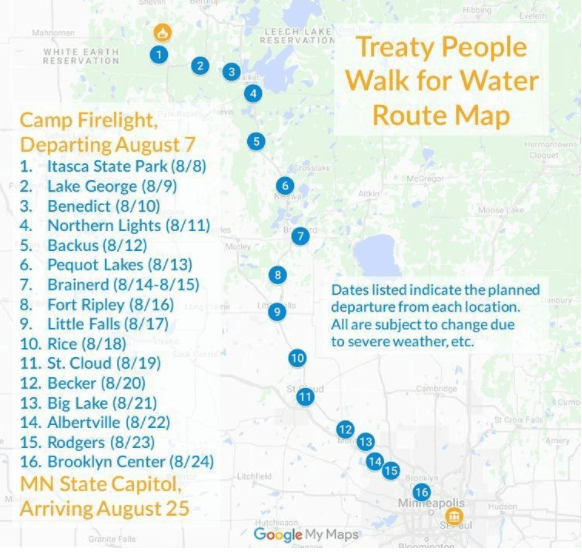
Water protectors are walking from the headwaters of the Mississippi to Minneapolis. They are walking 235 miles to the Minnesota State Capitol to tell President Biden to cancel the Line 3 Tar Sands pipeline permit. The video at the end of this discusses LN3: 7 TEACHINGS OF THE ANISHINAABE RESISTANCE.

This morning, water walkers left Fire Light Camp on the Mississippi on a walk to St. Paul. They will be walking for two weeks to their destination of the Minnesota State Capitol Building, arriving by August 25th. The Capitol Building will hold a large welcome event to celebrate the walkers, and tell President Biden to step in and direct the Army Corps to cancel this pipeline’s permits.

Water walk begins from headwaters of Mississippi, headed to Capitol by August 25 by Barbara With, Wisconsin Citizens Media Cooperative, August 7, 2021
https://wcmcoop.org/2021/08/07/water-walk-begins-from-headwaters-of-mississippi-headed-to-capitol-by-august-25/

Water walkers bound for the Minnesota State Capitol left Backus, MN this morning after spending the night at the home of an ally along the route. The walk began last Saturday at the Fire Light Water Protector camp situated on the Mississippi River.

Water protectors spent nearly three weeks camping on the roadside near the Upper Mississippi to monitor Enbridge’s drilling activity under the river as they construct the Line 3 Tar Sands pipeline. Enbridge has drilled under dozens of rivers and waterways, causing several major “frac outs” that spilled toxic drilling fluid into rivers and wetlands. The Minnesota Department of Natural Resources has not appeared to provide oversight or consistently monitor Enbridge’s work.

Walkers plan to make the 235 mile journey to the State Capitol by August 25. They are planning acts of civil disobedience in order to demand that those in power honor the treaties and protect the public water from a foreign corporation.

Water Walkers headed for the Capitol: Why They Walk by August 25 by Barbara With, Wisconsin Citizens Media Cooperative, August 12, 2021
https://youtu.be/6wwPn2pfugM

I’m reminded of the Native American youth who ran 2,000 miles from Standing Rock to Washington, DC, to deliver a petition to stop construction of the Dakota Access Pipeline (DAPL) in 2016.

“Most of us coming from the reservation have never been this far from home,” Bobbi Jean Three Legs, a resident of the Standing Rock Reservation, told PEOPLE on her 18th day of a 2,000-mile journey.

Three Legs spoke with PEOPLE from Frederick, Maryland – the last stop she and a group of 37 other Native Americans, mostly teens, made before completing a 2,000-mile run to Washington, D.C. to deliver the most important message of their lives.

The group ran from the Standing Rock Reservation in North Dakota all the way to Washington to hand over a petition started by Three Legs, 25, and Anna Lee Rain Yellowhammer, 13, to stop construction on a massive oil pipeline that would cross the Missouri River, putting their community’s sole water source at risk.

These Native American Youths Are Running 2,000 Miles to Protect Their Water “It feels like nobody’s thinking about our future,” Bobbi Jean Three Legs tells PEOPLE By Tiare Dunlap, PEOPLE Magazine, August 5, 2016

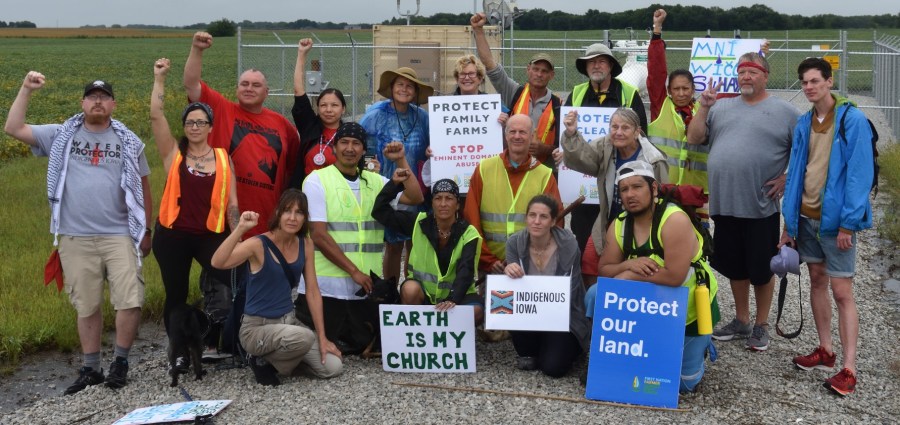
Reminded, also, of the sacred journey of a small group of us, walking and camping for eight days, 94 miles along the path of the Dakota Access Pipeline to call attention to the abuse of eminent domain to build the pipeline. Hoping that would stop the flow of oil through it, since at that point the pipeline was already in operation. https://firstnationfarmer.com/

Meeting for worship with attention to photography

Sometimes when people compliment a photo I’ve taken, I’ll say the Creator deserves the credit. Then they would often say I had a role in how the beauty was captured.

I usually wouldn’t say anything further, but there is much more to my relationship with the Spirit and photography.

Years ago I began to noticed I was having conversations with the Creator. ‘I love the majesty of these mountains’. ‘Wow, this is a beautiful flower you created’. ‘These mountains humble me’. ‘You know what I’m trying to do here. Could you help me out?’. I asked that last question often, because I intentionally challenge myself and the Spirit to capture difficult images.

There is a connection between the image, the camera, my eyes, the Spirit and the image. A full circle. The Spirit refining how the image is seen.

As I walk with my camera, my eyes scan from side to side, up and down. But very often my attention is drawn by a force beyond me, or within me. By the Spirit. Or Inner Light, which is an interesting juxtaposition with light and photography. I walk slowly, in silence, so I can hear where I should look. If there is a complex scene before me, I stop and wait. Usually, after some time, the image within the scene will emerge. These are sacred times. In some ways making me much more present in the moment. And in other ways taking me to a different space.

There is a connection between the image, the camera, my eyes, the Spirit and the image. A full circle. The Spirit refining how the image is seen.

Prior to digital photography I developed film negatives and printed photos in darkrooms, first as a student at Scattergood Friends School and then as yearbook staff at Earlham College. Doing darkroom work was very popular with the kids I worked with as part of the Friends Volunteer Service Mission in the early 1970’s. I can still see their expressions (via the orange darkroom light) as the images magically formed on the paper in the developer solution.

The process of developing the negatives and prints is technically challenging. And rolls of film would have room for a limited number of photos so you had to make each shot count.

Prior to the advent of digital photography I don’t believe there was automatic control of focus or exposure settings for shutter speed and lens aperture. I think some cameras had built in light meters.

Digital photography was revolutionary. Besides automating focus and exposure, you can actually preview how the photo will look. Eliminating the problems of the darkroom, and allowing as many images as the memory card could hold. Which could be erased and used over and over again. I like the sustainability that reuse represents. I was bothered by all the silver that was used to make the emulsion for photographic film.

The camera became an amazing teacher, giving me the freedom to take as many shots, with as many variations as I wanted. The last time I visited the mountains I wasn’t sure if I would return. So I took 1,093 photos during those four days, most of which you can see here: Colorado 2017.

Although I was raised on farms and had a deep connection with nature, being in the Rocky Mountains was spiritually transformative. Changed my life in many ways. I’m so blessed our family would often spend summer vacations camping in Rocky Mountain National Park, Colorado.

I felt closer to God when we were deep in the quiet of the forests or high on the mountainside. Having grown up in Quaker communities, I was used to worshiping in silence so we can hear the whisper of the Spirit. Being enveloped in the silence of the mountains was a natural relation to Quaker worship. Or as I think of this now, Quaker worship is a natural extension of the silence of the mountains. Silence in the sense of quiet, but at times loud with the voice of the Spirit.

Quakers often refer to our business meetings as meeting for worship with attention to business. Emphasizing the spiritual basis of what would be discussed. I began to think of the quiet I moved through with my camera, even in the city, as meeting for worship with attention to photography.
On those rare occasions when I didn’t have my camera with me I would still be recording images in my head. Once my good friend Diop Adisa and I were talking about photography. I was surprised to learn he also took mental photos when without a camera. We called that Zen photography. I remember how we laughed at those shared observations.

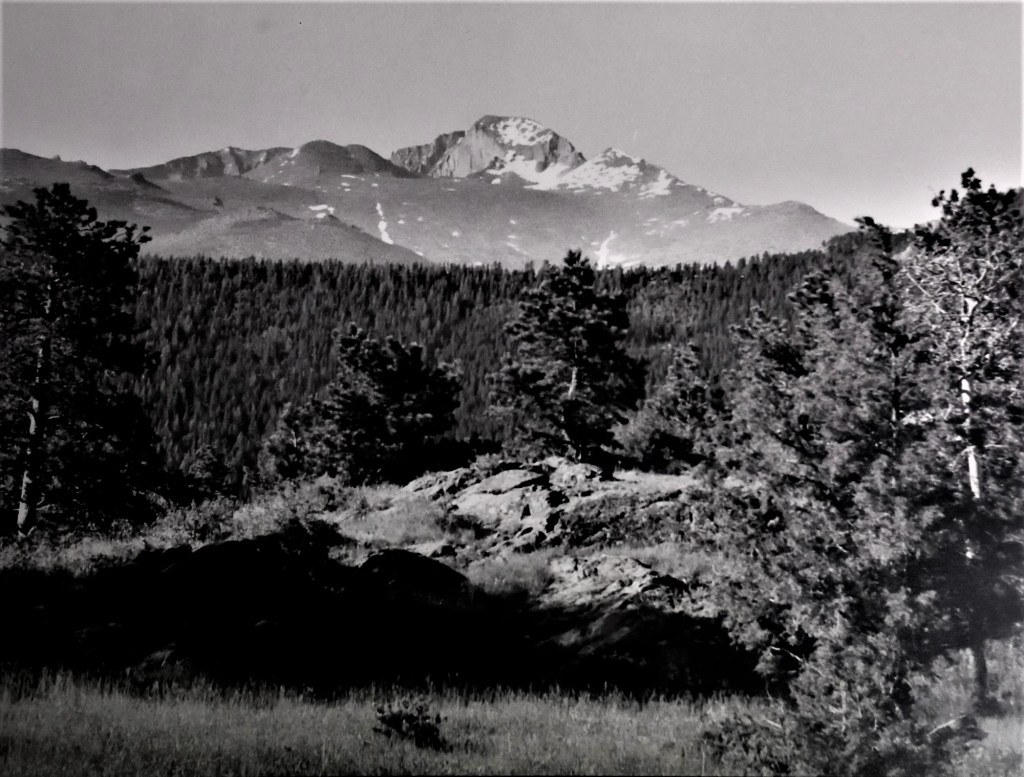
This is a photo I took of Long’s Peak in the early 1970’s. I printed it in the darkroom and kept it near me, a reminder of the mountains. Looking forward to returning.

Long’s Peak, Rocky Mountain National Park, Colorado

When I moved to Indianapolis in 1971, I was just shocked by the clouds of noxious smog. That was before catalytic converters. I could not, and still can not understand how people could continue to drive when they were destroying our environment. Even today with “Code Red” reports on our environment people don’t make the connection to the years of fossil fuel emissions from automobiles. Or at least don’t feel a sense of accountability themselves. Can not conceive of life without a car. It is too late for that. I can not bear to hear the clamor to fix Mother Earth now, when what needed to be done decades ago was completely ignored.

I kept seeing an image of my beloved mountains obscured by smog. I would look at the photo above, and imagine not being able to see that in the future. That was incomprehensible and devastating, and led me to refuse to have a car for the rest of my life.

Although not having a car made many things more difficult there were many positive consequences. Besides turning me into an avid runner, for transportation and enjoyment, perhaps the most significant was related to my photography and the spiritual aspects of that.

I selected places where I lived to be within three miles of the hospital where I worked. Although when I first began running home from work I lived seven miles away. I’d either take a bus, or walk to work so a shower wouldn’t be needed. Then run home. Wearing scrubs at the hospital was great because I didn’t have to bring clothes that were bulky or needed not to be wrinkled. When I moved from one apartment to another, the criteria included being on a bus route and within walking distance of a grocery store and the hospital.

Running in the Indianapolis Mini Marathon which I did 23 years in a row

Walking or running outdoors everyday allowed me to look more closely and see the beauty around me. As I became more aware of my surroundings I began to take my camera with me every day. And not just when going to work. I had to start out earlier than usual to compensate for the time I spent looking for and taking photos. I lose track of time.

At first people would comment on the constant presence of my camera. But it wasn’t long before people would instead ask where my camera was if I did not have it with me.

I admired photographers like Ansel Adams, not only for their amazing images, but how they used their skill to try to make others see the importance of protecting these beautiful lands.

I never thought I’d see the vast destruction of nature from air, water and soil pollution. From oil pipeline construction and spills. Millions of acres laid to waste from mining tar sands. The intentional destruction of vast forests. The death of coral reefs. The removal of entire mountaintops! The severe, ongoing drought of the entire West. Devastating fires and violent storms. Fires in Rocky Mountain National Park. Experience temperatures from heat domes which are reaching the point of being not survivable.

Or witness my long ago nightmare of mountain beauty obscured. Now not by smog, but by the smoke from huge and ferocious wildfires hundreds of miles away.

I never thought my images might be records of the beauty of Mother Earth as it was before all this destruction. Beauty that will never be restored. Beauty of all kinds rapidly disappearing. I’ve written profusely about all these things. But I get the sense that my photos have more of an impact. Speaking for Mother Earth in ways words can not. Thinking perhaps I should just stop writing and capture and share images instead. Before more beauty disappears.


to save a wilderness… one must reach deep into one’s heart and find what is there, then speak it plainly and without shame.

Robert Leonard reid

How could we convince lawmakers to pass laws to protect wilderness? (Barry) Lopez argued that wilderness activists will never achieve the success they seek until they can go before a panel of legislators and testify that a certain river or butterfly or mountain or tree must be saved, not because of its economic importance, not because it has recreational or historical or scientific value, but because it is so beautiful.

I left the room a changed person, one who suddenly knew exactly what he wanted to do and how to do it. I had known that love is a powerful weapon, but until that moment I had not understood how to use it. What I learned on that long-ago evening, and what I have counted on ever since, is that to save a wilderness, or to be a writer or a cab driver or a homemaker—to live one’s life—one must reach deep into one’s heart and find what is there, then speak it plainly and without shame.

Reid, Robert Leonard. Because It Is So Beautiful: Unraveling the Mystique of the American West . Counterpoint. Kindle Edition

The eyes of the future are looking back at us

There is a native concept of considering what the effects of decisions made today will be on seven generations into the future.

The following quotation makes a two way connection between us and future generations. Looking at each other over the generations.

The eyes of the future are looking back at us and they are praying for us to see beyond our own time. They are kneeling with hands clasped that we might act with restraint, that we might leave room for the life that is destined to come. To protect what is wild is to protect what is gentle. Perhaps the wilderness we fear is the pause between our own heartbeats, the silent space that says we live only by grace. Wilderness lives by this same grace. Wild mercy is in our hands.

― Terry Tempest Williams, Refuge: An Unnatural History of Family and Place

Similarly, can we not look back at our ancestors? We are our ancestors’ future generation looking back.

I think about this a lot these days. As stories of the remains of native children on the grounds of the institutions of forced assimilation continue. Thousands of children never returned home.

I’ve been praying about what we are doing now that future generations will see as wrong. My Spirit recoils from the likelihood there probably will not be a seventh, or sixth, or fifth generation because of the accelerating rate of environmental collapse.

What have we done?

What will we do?

Practicing Hope

Most white people in what is called North America were ignorant of the history of forced assimilation. But many are learning about it now, shocked to hear about the Native residential schools from news reports about the remains of hundreds of children on the grounds of those institutions. Are learning about the cultural genocide, the physical, emotional and sexual abuse and deaths that occurred there.

Yesterday I wrote about my struggle with guilt and blame regarding Quakers’ involvement with forced assimilation of Native children. As is often the case, I write to try to understand things better myself. And hope some of that might be useful to others. On this subject I sense many Friends share my feelings of guilt. I recognized I had a problem when I wrote we should not feel guilt about what happened in the past, that we didn’t do ourselves. And yet I felt guilty. I’m working on that.

When you are disciplined in hope, you can face these things because you have learned to put them in context, you have learned to swallow joy and grief together, and wait for peace.

Quinn Norton

I often sign messages “practicing hope” which relates to the following quotation. Hope is a mental discipline that helps you put things in context. While we should not feel guilt about the past, it is very important to face hard truths now. This takes time and attention. Cycles of failure and success. Waiting for peace.

People often mistake hope for a feeling, but it’s not. It’s a mental discipline, an attentional practice that you can learn. Like any such discipline, it’s work that takes time, which you fail at, succeed, improve, fail at again, and build over years inside yourself.

Hope isn’t just looking at the positive things in this world, or expecting the best. That’s a fragile kind of cheerfulness, something that breaks under the weight of a normal human life. To practice hope is to face hard truths, harder truths than you can face without the practice of hope. You can’t navigate dark places without a light, and hope is that light for humanity’s dark places. Hope lets you study environmental destruction, war, genocide, exploitative relations between peoples. It lets you look into the darkest parts of human history, and even the callous entropy of a universe hell bent on heat death no matter what we do. When you are disciplined in hope, you can face these things because you have learned to put them in context, you have learned to swallow joy and grief together, and wait for peace.

IT IS BITTER TEA THAT INVOLVES YOU SO: A SERMON ON HOPE by Quinn Norton, April 30, 2018
Standing Family 1900

Corrosive of the human spirit

I am broken, trying to make sense of Quakers’ involvement with the institutions of forced assimilation, the Native residential schools. In the news now because of the verification of the remains of hundreds, soon to be thousands, of children on the grounds of those institutions in both the US and Canada. Verified because Native peoples have known they were there, because thousands of children never returned home.

I can not imagine the trauma. The children forcibly removed from their families. The community not knowing if the children would ever return. Their future was stolen. Those who did return often no longer fit into the community. I only recently learned this intentional cruelty was meant to break the resistance of those Native peoples that did not want to give up their land.

I’ve read that we aren’t to feel guilt or blame for what happened in the past. But we are called to learn about the wrongs, learn the truth. Then begin to work for reconciliation and healing. Canada went through such a process, involving the government and the entire country, several years ago. Secretary of the Interior, Deb Haaland, has initiated a Federal investigation of forced assimilation in this country.

From our twenty‐first‐century vantage point, we know (or can learn) how Native people suffered and continue to suffer the consequences of actions that Friends committed 150 ago with the best of intentions. Can we hold those good intentions tenderly in one hand, and in the other hold the anguish, fear, loss, alienation, and despair borne by generations of Native Americans?

Native organizations are not asking us to judge our Quaker ancestors. They are asking, “Who are Friends today? Knowing what we know now, will Quakers join us in honest dialogue? Will they acknowledge the harm that was done? Will they seek ways to contribute toward healing processes that are desperately needed in Native communities?” These are my questions, too.

Quaker Indian Boarding Schools. Facing Our History and Ourselves by Paula Palmer, Friends Journal, October 1, 2016

Although I believe we should not feel guilt, I have not yet been able to to get past my own sense of that. My head and my heart are out of synch. For a time I’ve felt I needed to distance myself from my Quaker communities. I struggle to discern if this was a spiritual leading, or just an emotional reaction. I’m still not sure. I know I continue to feel guilt. And projected this same guilt toward Friends in general. I know that is wrong and am working hard, praying to find my out of this.

Unearthing the truth was necessary not only for the victims to heal, but for the perpetrators as well. Guilt, even unacknowledged guilt, has a negative effect on the guilty. One day it will come out in some form or another. We must be radical. We must go to the root, remove that which is festering, cleanse and cauterize, and then a new beginning is possible.

Forgiveness gives us the capacity to make a new start. That is the power, the rationale, of confession and forgiveness. It is to say, “I have fallen but I am not going to remain there. Please forgive me.” And forgiveness is the grace by which you enable the other person to get up, and get up with dignity, to begin anew. Not to forgive leads to bitterness and hatred, which, just like self-hatred and self-contempt, gnaw away at the vitals of one’s being. Whether hatred is projected out or projected in, it is always corrosive of the human spirit.

Truth and Reconciliation BY DESMOND TUTU, Greater Good Magazine, SEPTEMBER 1, 2004

If has been tremendously helpful to have become friends with Native people I began to know as we walked and camped together for 94 miles along the path of the Dakota Access pipeline in 2018. The main intention of that sacred journey was to create a community of native and non-native people who began to know and trust each other so we could work together. That intention was achieved.

And yet, in another way, I have more of a sense of the trauma of assimilation from seeing the terrible effects on my friends.

As Paula Palmer wrote above, “Will they [Quakers] seek ways to contribute toward healing processes that are desperately needed in Native communities?” These are my questions, too.

I need to deal with my guilt before I can contribute to the healing processes.

I am deeply grateful for the acceptance and generosity of my Des Moines Mutual Aid community, which includes Native people. That is helping me move away from this destructive guilt.

I have faith I will be led to a better place.

First Nation-Farmer Climate Unity March September 2018

Line 3 pipeline

I haven’t been keeping up with the developments of Line 3 and was astonished to learn nearly 600 water protectors had been arrested. But not at all surprised there has been so little media coverage.

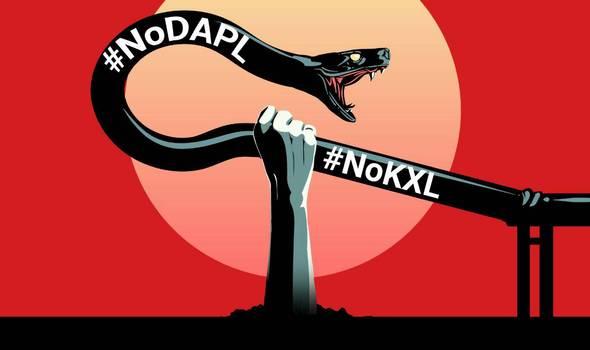
Sadly, there have been so many similarities related to fossil fuel pipelines in the past. Since 2013 when a resistance movement was built against the construction of the Keystone XL pipeline. Some of that history follows.

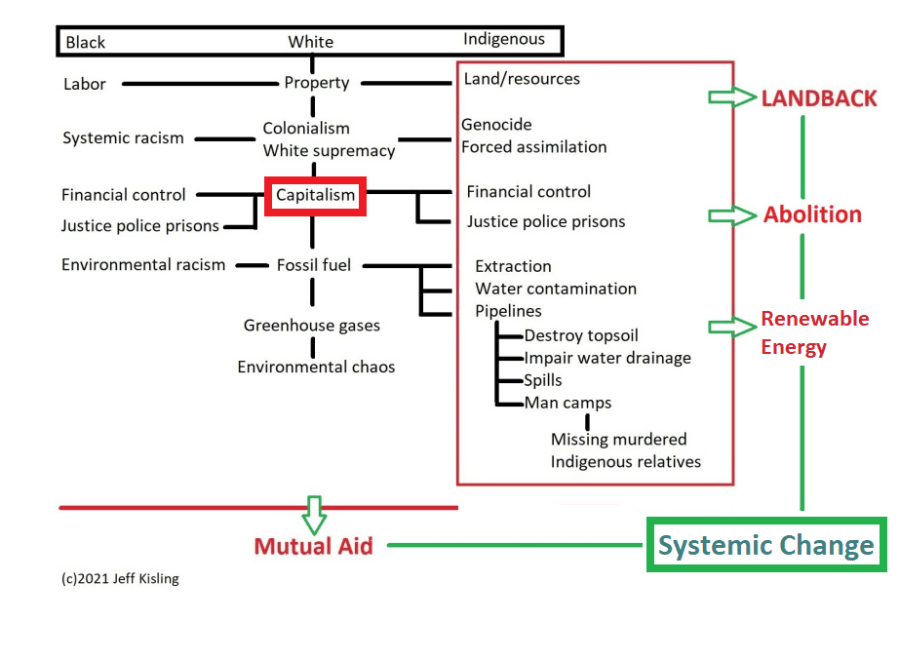
Protection of the water is part of the concept of LANDBACK. An illustration of the need to return to the guidance of Indigenous peoples to protect Mother Earth.

Nearly 600 water protectors have been arrested during ongoing protests in Minnesota against the construction of the Enbridge Line 3 tar sands pipeline at the Shell River, which the partially completed pipeline is set to cross in five places. On Monday, authorities arrested Indigenous leader Winona LaDuke and at least six others. She was just released from jail yesterday and joins us after three nights in jail. LaDuke describes how the Canadian multinational corporation Enbridge, which is building the pipeline, has funded more than 40 police squads from around the state to crack down on protests, saying, “It is a civil crisis when a Canadian multinational controls your police force.” LaDuke is executive director of Honor the Earth. She says Enbridge’s efforts to finish construction come as investors are increasingly pulling out of the fossil fuels sector. “Who wants to have the last tar sands pipeline? It’s the end of the party.”

Just Out of Jail, Winona LaDuke Decries Militarized Crackdown on Enbridge Line 3 Pipeline Protests, Democracy NOW, July 23, 2021

A FEW WEEKS before a controversial oil pipeline was approved for construction in his area, Aitkin County, Minnesota, Sheriff’s Deputy Aaron Cook bought a new assault rifle that cost $725. The purchase was part of an effort to standardize police weaponry, said Cook’s boss, the local sheriff, and was unrelated to the Line 3 pipeline being built by Enbridge. Cook himself, however, told the gun seller that Enbridge could play a role in boosting the agency’s arsenal.

“Our budget took a hit last week, so that’s all we will be ordering for now,” the deputy said in a November 2020 email about his purchase. “I’m hoping the pipeline will give us an extra boost to next year’s budget, which should make it easy for me to propose an upgrade/trade to your rifles rather than a rebuild of our 8 Bushmasters” — a reference to another make of assault rifles.

The email suggests that at least some law enforcement officers anticipate new policing resources if the pipeline, Enbridge’s Line 3, is completed.

MINNESOTA POLICE EXPECTED PIPELINE BUDGET BOOST TO FUND NEW WEAPONS. The same cops tasked with policing resistance to pipelines anticipate financial benefits from oil companies moving into their areas by Alleen Brown, The Intercept, July 22 2021

This same unbelievable militarized response occurred during the Standing Rock gathering to protect the water from the Dakota Access pipeline. Police departments from several states came.


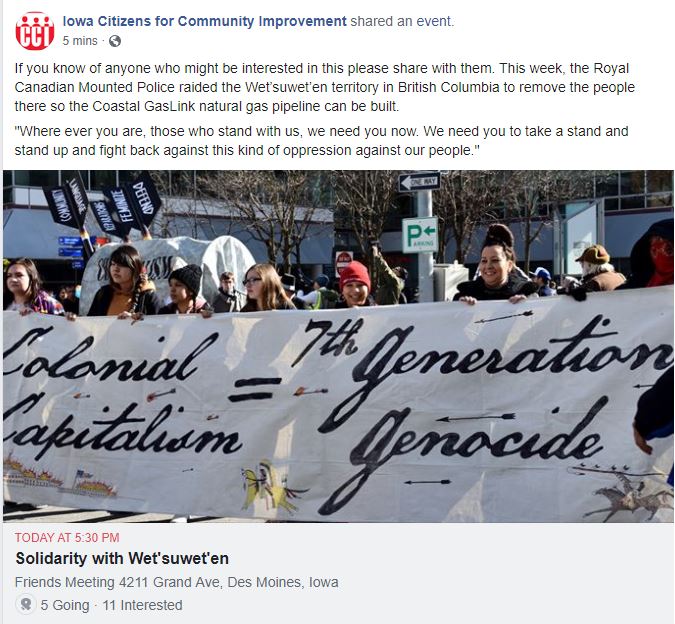
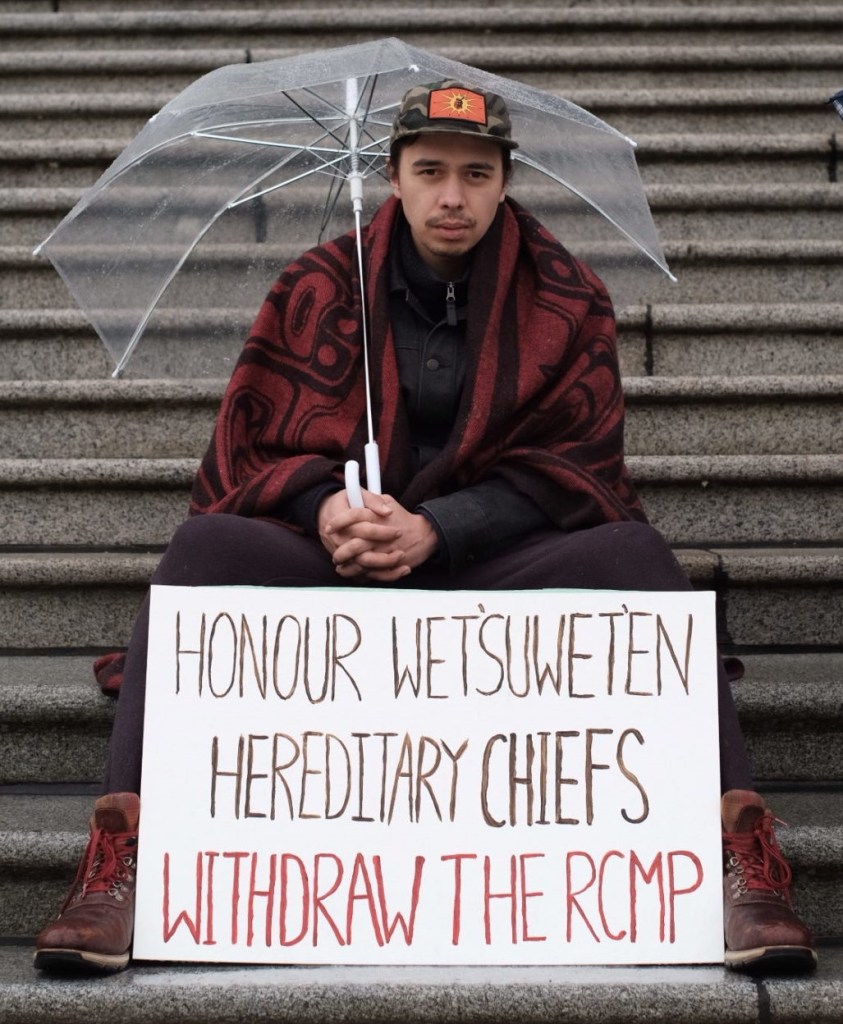
Last year militarized Royal Canadian Mounted Police invaded the Wet’suwet’en peoples’ land, yet again, to try to crush the resistance of the people trying to prevent the Coastal GasLink pipeline from being built through their pristine lands.

[ WARNING: This video contains graphic images of an armed threat on the lives of land defenders Denzel Sutherland-Wilson (Gitxsan) and Anne Spice (Tlingit). It may be traumatic for many to see. But we feel strongly that it should be available to witness. Denzel, Anne, and all the land defenders are now safe. These events took place during the RCMP raid on unceded Wet’suwet’en territory on February 7, 2020. The video was filmed by Gitxsan land defender Denzel Sutherland-Wilson from atop this tower. ]

Winona LaDuke mentioned Line 3 would create 23 jobs. Similarly proponents of the Keystone XL pipeline talked about how many jobs would be created when in fact less than 50 would be. After my letter was published in the Indianapolis Star, Senator Donnelly didn’t speak about jobs again.


Students advocate for those who are houseless

The specter of potentially millions of people becoming houseless because of the termination of the moratorium on evictions reminds me of the students camping in the rain to call attention to the problem in Indianapolis.

On  December 5, 2015, Brebeuf Jesuit High School students camped out on the Circle downtown to highlight the problem of homelessness in Indianapolis.  The president of the city council and two councilors were present, too. The term homeless was used then.

The rain didn’t dampen their spirits (much). My friend Jim Poyser had asked me to take photos of the event. I almost decided not to go when I saw how hard it was raining. I lived about a mile from downtown and didn’t have a car. And I didn’t have a way to contact Jim. But something kept urging me to at least see if they were there. It was a memorable night I’m glad I didn’t miss.

Fortunately I had a hood for my camera. The video is a slideshow of some of the photos I took that night.

The students had more presentations and rallies in the following months.


Houseless not homeless!

Those who are forced into being without an abode and/or dwelling are all to quickly deemed less than citizens. In many regards are even treated as less than human. How about thinking that we are NOT homeless, nor last-class citizens or non-human? We think, have feelings, have intellect and struggle. How would you feel to be thought of as anything less than human just for circumstances due to those of profit/gain/control?

Houseless, not homeless!

Mutual Aid Case study 1

Things at our weekly Mutual Aid free food project didn’t go as usual. Which is a good illustration of how and why Mutual Aid works so well.

Every Saturday morning my Des Moines Mutual Aid group comes to Trinity Las Américas United Methodist Church in downtown Des Moines, Iowa. There we continue the free food program that was started by the Black Panthers in the 1960’s. see: Feeding the hungry

When I arrived, there were a number of people already in the basement, none of whom I knew. And the tables were set up differently. Someone asked me if I was with Des Moines Mutual Aid, introducing himself as Alejandro Alfaro-Santiz, pastor of the church. Several months ago Ronnie James asked if I knew Alejandro, saying he was an amazing organizer (which was something coming from someone who is a great organizer himself).

Alejandro told me they were running a COVID vaccine clinic this morning. And that he had spoken to Ronnie about the change. Just then Ronnie arrived and said Alejandro was going to show him where to find the tables for us to use.

Now this is a small thing but illustrates the flat hierarchy that is the basis of Mutual Aid. Rather than Ronnie telling me to come with him, he started up the steps with Alejandro. It was up to me to decide if I should go along. I went with them to the THIRD floor where the tables were. We began to fold up the legs and carry the tables down. Others joined us as we went back up for more. They laughed when I said we were getting our cardio workout.

We set these tables up in the yard of the public school across the street from the church, eventually setting up about 25 of them. Although it had rained earlier we were blessed the rain held off for the rest of the morning.

It’s kind of magical how the food boxes are created. When we begin there might be about a dozen empty boxes. So we put the food that will eventually end up in a box in piles on the table itself. Then as each box of food to be distributed is emptied, that becomes a box to fill with one of the piles of food sitting on the table. Eventually there are usually enough boxes for all the piles of food. In the rare times that hasn’t worked out, plastic bags are used for the remainder.

There are often a few minutes of rest between the arrival of food to be distributed from various sources. We share our stories, getting to know each other better. We’re all wearing masks, so it can take a second to figure out who you’re talking to. You have to be careful about what you share on social media because law enforcement scans for that kind of information.

I met person 1 four or five months ago. He had been otherwise occupied and hadn’t been at the church for some time. But I read about the work he was doing for Iowa Citizens for Community Improvement. And I’d seen him “like” my photos sometimes. This morning he said he enjoyed the photos of the deer I posted on Facebook yesterday. He introduced me to a young person who wanted to become involved in Mutual Aid. I later heard from someone else, who themselves (person 2) had been arrested at a Des Moines City Council meeting, that person 1 had been arrested, also. And that he had been hurt in the process.

Person 2 said the police were much rougher than they needed to be. She was targeted for arrest because she was videotaping what was going on. When I asked if they took her phone, she told me she had arranged for another person to take it if it looked like she was going to be arrested. So the police didn’t get her phone. Good to plan ahead.

Despite the fact that we needed to totally rearrange our process, we were ready for the cars to come down the line to pick up the food at the designated time of 10 o’clock.

While the food was being distributed, some of us began to clean and fold up the tables, and carry them back up to the third floor of the church.

As I was getting ready to leave, Ronnie asked if the tables had gotten back to their original locations. Just checking that we all had done our part in cleaning up.

I hope this shows how we stay connected through multiple means.

This is how Mutual Aid works. Being able to adapt. Taking your own initiative. Maintaining a flat hierarchy. Sharing stories. Sharing the joy.


Eviction

The failure of the US Congress to act to address the crisis of those who face eviction is a glaring example of our broken political, economic and social justice systems. Politicians who objected to renewal of the moratorium on evictions should have come up with an alternative. But did not. Conservative estimates show between 50,000 and 65,000 people face eviction in Iowa in August (Des Moines Register).

Everyone has the right to food, water and shelter.

This is another example of the importance of Mutual Aid. Another example of not waiting for help from the government. 50,000 evictions cannot be handled by one Mutual Aid group like my Des Moines Mutual Aid group. But Mutual Aid groups in every community would. Think about starting your own Mutual Aid group. In the meantime, please donate here.

Des Moines Mutual Aid

July 25 · Applications have re-opened… but we need your help to keep them that way.
Please donate to the fund so we can continue to provide relief to our neighbors in the form of rent, utilities and more.
DONATE Venmo: venmo.com/desmoines_mutualaid
PayPal: bit.ly/dsmblmrentrelief
APPLYbit.ly/dsmrentrelief

May be a cartoon of text that says 'APPLICATIONS ARE OPEN. DONATE SO WE CAN CONTINUE TO PROVIDE RELIEF TO OUR NEGHBORS. DONATE Venmo: @DesMoines_MutualAid Cash app: $DSMBLMRentRelief Paypal: Ly/DSMBLMRentRelief APPLY MOINES bit.ly/dsmrentrelief RENT RELIEF FUND MOILD'
(18) Des Moines Mutual Aid | Facebook

How to find help if you’re facing eviction
For renters who may get an eviction notice, the first piece of advice experts say is: Stay put.
A tacked-on notice from your landlord does not mean your family must leave your apartment, said Eric Burmeister, executive director of the Polk County Housing Trust Fund. Only a judge can order a notice to vacate. The process can take 30 to 60 days.
Experts say it’s better to call for help before a formal eviction notice is filed with the courts. Many nonprofit organizations can help with finding assistance and negotiating a payment plan with your landlord to avoid a court order.
It’s also important not to skip the eviction hearing. If a renter does, the judge can issue a default judgement in favor of the landlord. 

There are several numbers to call for help: 
United Way: 211
Iowa Legal Aid: 800-332-0419
Iowa Rent and Utility Assistance Program: iowahousingrecovery.com, 855-300-5885
Polk County rental assistanceIMPACT Community Action Partnership: 515-518-4770

The federal freeze on evictions ends Saturday. Thousands of Iowa renters could be at risk by Ian Richardson and Kim Norvell, Des Moines Register, July 30, 2021