COP26 Not Nearly Enough

I’ve followed the work of Chase Iron Eyes and the Lakota People’s Law Project for years. He was involved in the Dakota Access pipeline struggle at Standing Rock, including begin arrested there. In the video below, he and his daughter, Tokata, talk about why everything discussed at COOP26 isn’t nearly enough.

As we near the end of COP26 — the United Nations’ most recent climate conference in Glasgow, Scotland — we have reason for concern. Because, while nations the world over have again come together to talk about addressing the climate emergency, activists — including a host of Indigenous People and organizations — are watching closely and sending a strong message from the frontlines: everything being discussed and promised at COP26 isn’t nearly enough. This past week, my daughter, Tokata, and I appeared on Christiane Amanpour’s show, broadcast on both PBS and CNN, to talk about COP26, our anti-pipeline stands, and the future of Indigenous and climate justice.

As Tokata’s friend, Greta Thunberg, put it in Glasgow, “It is not a secret that COP26 is a failure. It should be obvious that we cannot solve the crisis with the same methods that got us into it in the first place.”

I suspect you’ll agree with Greta, Tokata, and me when we say solving global warming isn’t going to be easy. It will demand sacrifices on the part of individuals and nations and a willingness to embrace a diversity of perspectives — from the latest climate science to the wisdom of Indigenous peoples. Our voices matter, because we have long practiced living in harmony with Unci Maka, our Grandmother Earth, and all the other species who inhabit her.

Chase Iron Eyes

In the video he says the human species is at a very vulnerable, but teachable moment. Our social contract is broken and requires social, economic, and racial justice. That solutions to our environmental crisis depend on Indigenous liberation. And yet, he is hopeful because Standing Rock raised global consciousness and once progress is made, there is no turning back.

There was an emotional part of the video, when Tokata was asked how she felt about the remains of native children being uncovered on the grounds of the institutions of forced assimilation. About learning of these atrocities while she is in school herself, a tool of the genocide of her people. She said she gives thanks for those children. And feeling she is carrying on their legacy.

The video ends with Chase talking about their work building bridges with non-Indigenous people. Let’s come together.
COP 26 and continued colonial capitalism

As expected, little was accomplished at the recent COP 26 meetings because countries with capitalist economic systems were in control. Industrial nations’ policies will continue to protect the capitalist economic system and the fossil fuel industry regardless of the environmental consequences.
See: https://landbackfriends.com/?s=capitalism

The Free
https://thefreeonline.wordpress.com/2021/09/29/its-decolonization-or-extinction-and-that-starts-with-land-back/

I often write about the necessity of replacing the capitalist economic system as essential to addressing our evolving environmental catastrophes. Recently The Free blog of post-capitalist transition re-blogged my post, It’s Decolonization or Extinction. And that starts with Land-Back. Many people and organizations are working toward a post-capitalist world.

And yet, even as humanity faces perhaps the greatest existential crisis in its species’ history, the public debate on climate barely mentions the underlying economic system that brought us to this point and which continues to drive us toward the precipice. Ever since its emergence in the seventeenth century, with the creation of the first limited liability shareholder-owned corporations, capitalism has been premised on viewing the planet as a resource to exploit — its overriding objective to maximize profits from that exploitation as rapidly and extensively as possible. Current mainstream strategies to resolve our twin crises of climate breakdown and ecological overshoot without changing the underlying system of growth-based global capitalism are structurally inadequate

Solving the Climate Crisis Requires the End of Capitalism by Jeremy Lent, originally published by Patterns of Meaning, October 13, 2021

Current mainstream strategies to resolve our twin crises of climate breakdown and ecological overshoot without changing the underlying system of growth-based global capitalism are structurally inadequate

Jeremy Lent

This is doubly tragic because the dominance of capitalist governments also meant Indigenous peoples didn’t have a voice at COP 26. It is Indigenous knowledge that can help repair Mother Earth.

“The Cop is a big business, a continuation of colonialism where people come not to listen to us, but to make money from our land and natural resources,” said Ita Mendoza, 46, an indigenous land defender from the Mixteca region of Oaxaca in southern Mexico, attending Cop for the first time. “What benefits does the Cop bring when more than a thousand people fighting to keep the planet alive have been killed [since Paris]?”

“It’s a testament of our resilience that even after hundreds of years of colonization and betrayal that we indigenous communities are still willing to sacrifice our lives, health and energy for this last-ditch attempt to save the planet,” said Ruth Miller, climate justice director of the Alaska-based Native Movement, a Dena’ina Athabaskan and Ashkenazi Russian Jewish woman, who is a member of the Curyung tribe.

“We’re here offering sustainable solutions to the rest of the world that require an ideological shift, not a green industry built on colonialism and repression. It’s up to them if they listen or not.”

INDIGENOUS VOICES ARE MISSING AT COP26 by Nina Lakhani, The Guardian, November 4, 2021

As the United Nations Climate Change Conference—also known as COP26—got underway in Glasgow, Scotland this week, Indigenous activists from around the world warned that failure to center their peoples’ voices and solutions would seriously hamper efforts to tackle the growing planetary emergency.

“We can develop actions based on our culture and our traditional knowledge.”

“Today, the climate is warming, the animals are disappearing, the rivers are dying and our plants don’t flower like they did before,” Txai Suruí, a law student, activist, and member of the Paiter Suruí people of northwestern Brazil, said during Sunday’s COP26 opening ceremony. “The Earth is speaking. She tells us that we have no more time.”

“Indigenous people are in the frontline of the climate emergency, and we must be at the center of the decisions happening here,” she stressed. “We have ideas to postpone the end of the world.”

Kyle Whyte, a member of the Citizen Potawatomi Nation in Oklahoma who serves on U.S. President Joe Biden’s White House Environmental Justice Advisory Council, told NBC News that “if countries don’t get on board with us, leaving out the people who steward a lot of the lands, it’s not just a moral issue anymore. It will have a devastating effect on the speed at which the rest of the world will get to sustainability.”

‘The Earth Is Speaking’: Indigenous Activists Tell COP26 There’s No Climate Solution Without Them. “Indigenous people are in the frontline of the climate emergency, and we must be at the center of the decisions happening here. We have ideas to postpone the end of the world.” by BRETT WILKINS, Common Dreams, November 1, 2021

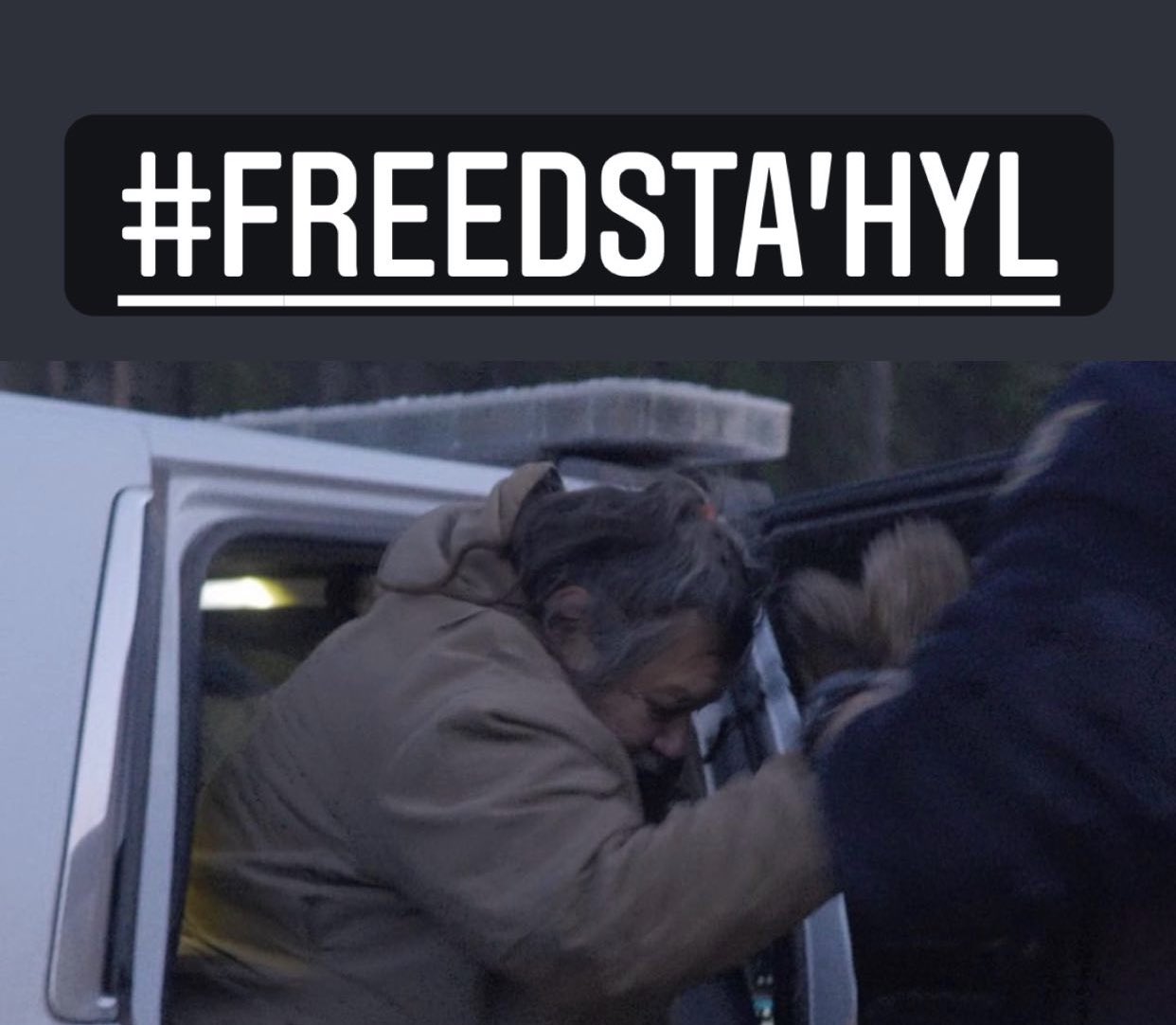
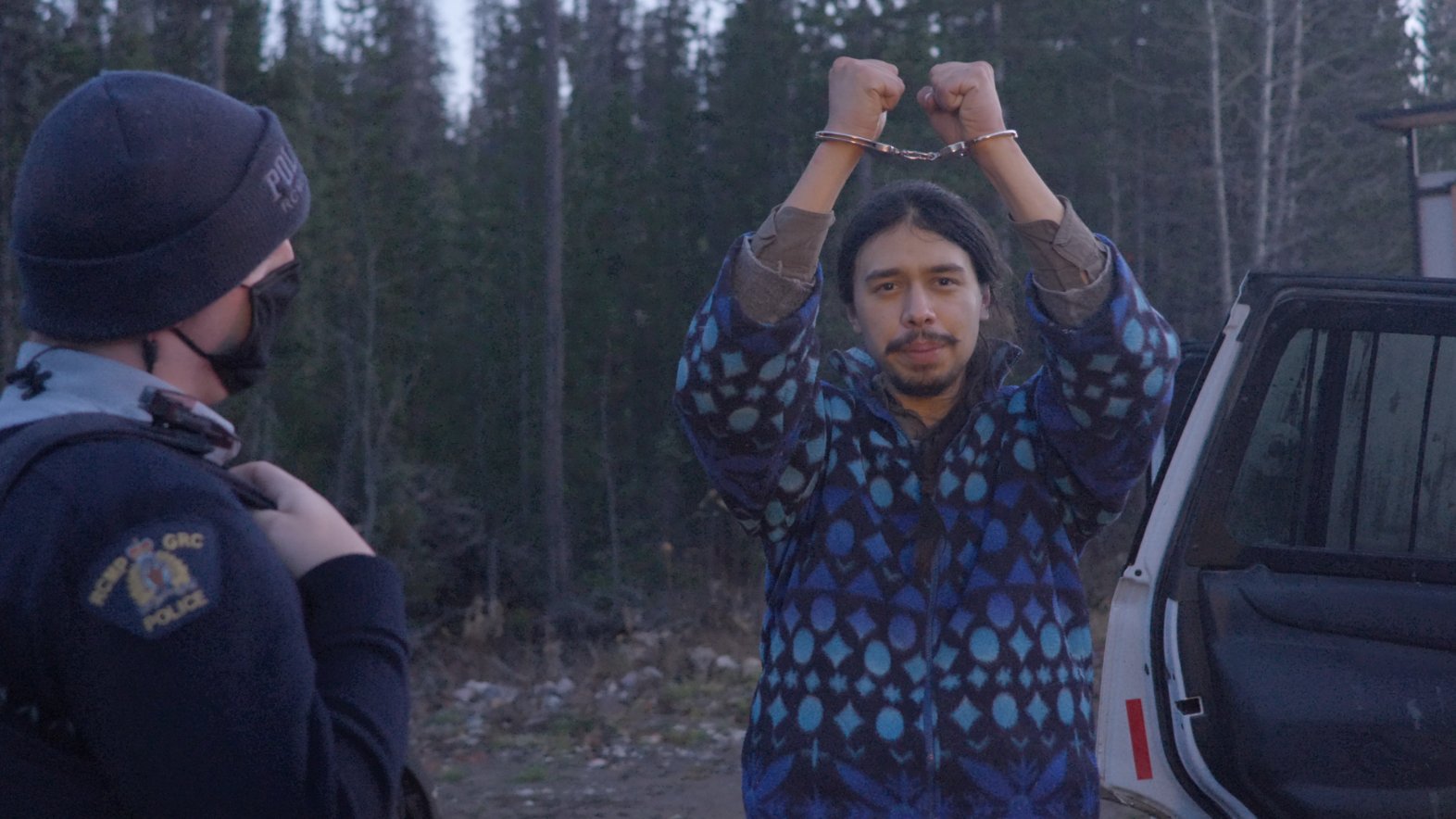
Chief Dsta’hyl and Kolin Sutherland-Wilson arrested

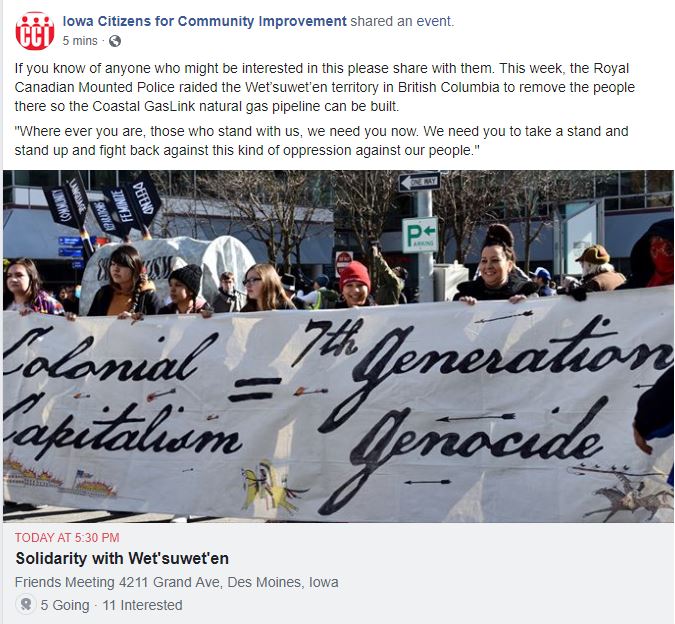
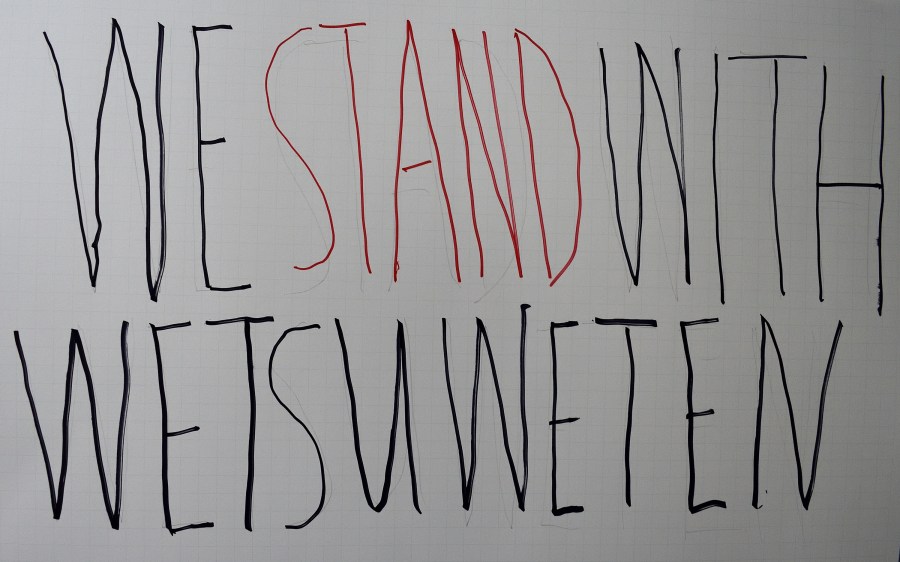
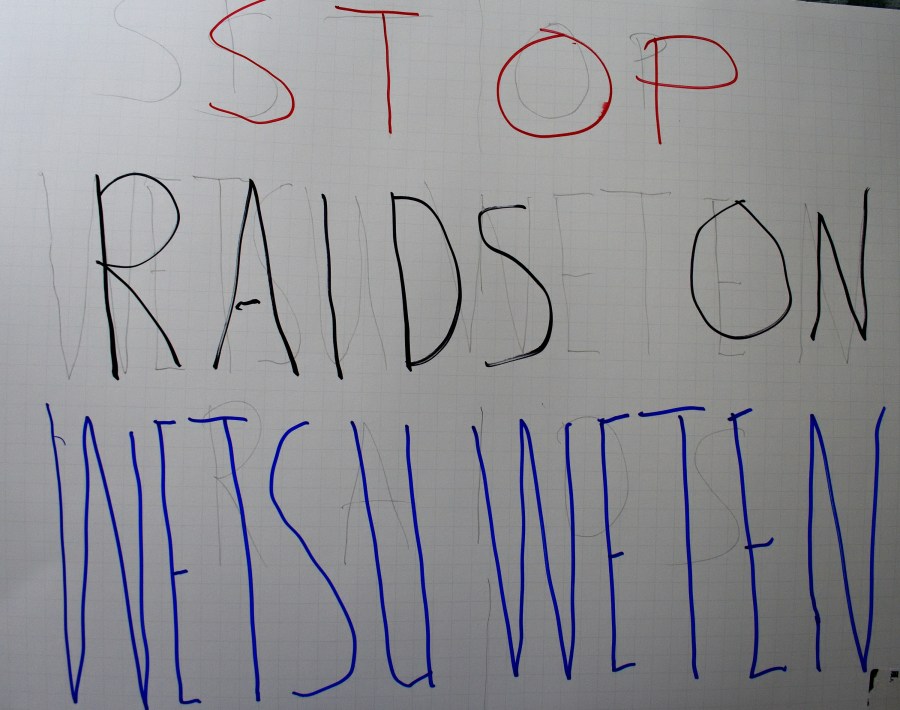
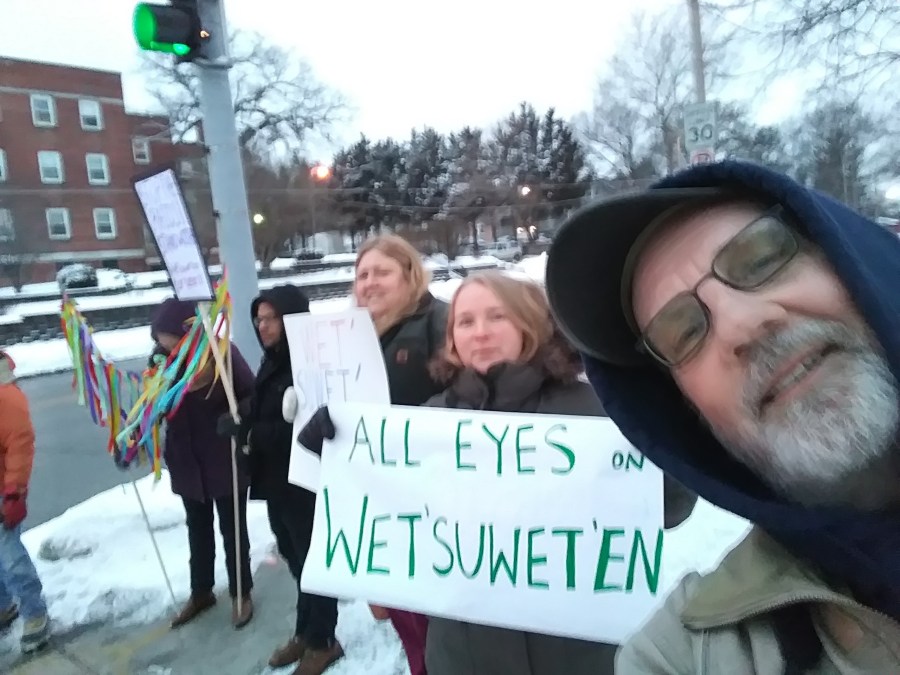
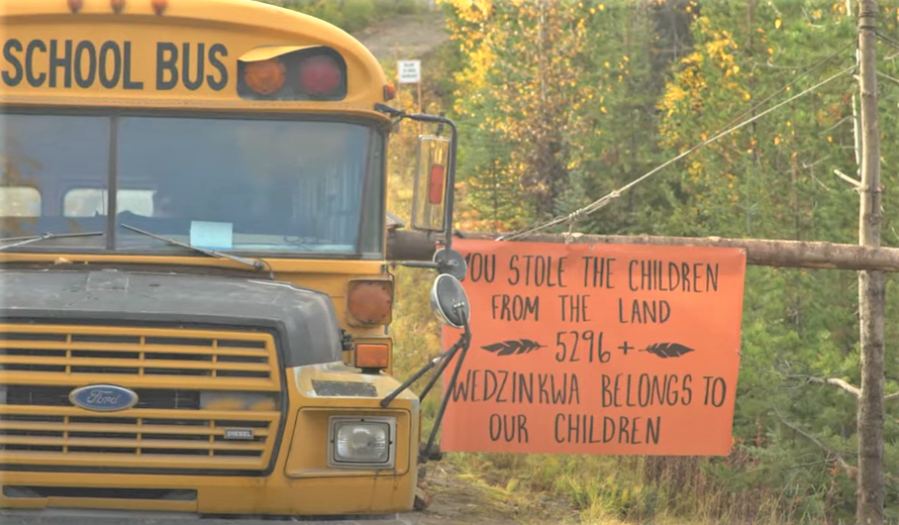
There have been many conflicts and arrests of Wet’suwet’en people by militarized Royal Canadian Mounted Police for years. There are heightened tensions now as construction of the Coastal GasLink pipeline has reached the point of drilling under the sacred headwaters of the Wedzin Kwa river.

Yesterday Chief Dsta’hyl and Kolin Sutherland-Wilson were arrested and removed from the Wet’suwet’en land. At the end of this are information and videos about Kolin and his brother Denzel Sutherland-Wilson and their work to protect the Wet’suwet’en territories.

Other posts about the We’suwet’en struggles can be found here: https://landbackfriends.com/?s=wetsuweten

Image

#LANDBACK and Indigenous Youth
Image
Kolin Sutherland-Wilson arrested yesterday

Earlier in this series about #LANDBACK I wrote the first time I heard that term was from Denzel Sutherland-Wilson. I shared this awful video of Royal Canadian Mounted Police (RCMP) pointing sniper rifles at him. Canada is ready to kill us

[ WARNING: This video contains graphic images of an armed threat on the lives of land defenders Denzel Sutherland-Wilson (Gitxsan) and Anne Spice (Tlingit). It may be traumatic for many to see. But we feel strongly that it should be available to witness. Denzel, Anne, and all the land defenders are now safe. These events took place during the RCMP raid on unceded Wet’suwet’en territory on February 7, 2020. The video was filmed by Gitxsan land defender Denzel Sutherland-Wilson from atop this tower. ]

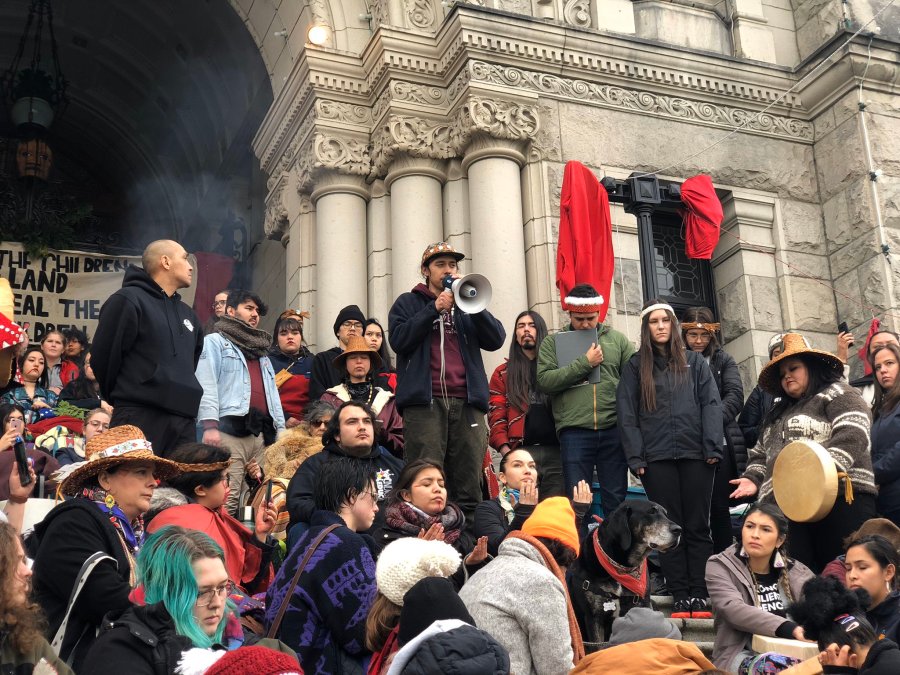
At this same time his brother, Kolin Sutherland-Wilson, was bringing attention to these issues, including sitting outside the doors of the British Columbia legislature by himself for a week. His video on Colonialism in Canada is an excellent review of the subject and brings together many of the issues related to #LANDBACK.


#AllOutForWedzinKwa
#FreeDstahyl

#AllOutForWedzinKwa
#DefendWedzinKwa
#WetsuwetenStrong
#WeAreAllOne
#LANDBACK

Continued erasure of Indigenous peoples

How can the atrocities of the Native residential institutions of forced assimilation, continue to be ignored by the mainstream media, governments, and the public? (These institutions should not be referred to as “schools”. )

How can faith communities, some of whom were involved with these institutions, not advocate to have the truth revealed, and work toward reconciliation?

Some of the following might be traumatic for those who have had experiences related to forced assimilation.

The Facebook group, Every Child Matters, documents the progress in locating the remains of children on the grounds of some of these institutions. And stories of those who have been affected. Searches continue in the lands called the United States and Canada.

https://www.facebook.com/groups/125050373031500/permalink/217155080487695/

A community to provide educational resources, generate awareness, share events and actions and work together to create a world our 7 generations yet to come can feel proud to be a part of.

“Every person will do their work in their own way as we move forward.

Some will take direct action and take action. That is important. Some will write policy. That is important. Some will do ceremony. That is important. Some will share stories. That is important. Some will build relationships and understanding. That is important. Some will teach. That is important. If we all do what we know how to do, with what we know, it will be good.

Everyone and everything has purpose. Keep your ears and minds and hearts open. Try to listen to each other without forming an opinion. Listen to things as information. You don’t have to agree with it. But you can validate it as someone’s experiences, feelings and ways of healing. ” 

Every Child Matters

As it says on that Facebook page, “Every person will do their work in their own way as we move forward… If we all do what we know how to do, with what we know, it will be good.”

Try to imagine how an Indigenous person feels as hundreds more remains of children continue to be uncovered. And seeing almost nothing is done to acknowledge that. To witness the continued erasure.

What work will we choose to do? The concept of truth and reconciliation begins with finding and sharing the truth. One thing I’ve been called to do is share what I’m learning on this website. https://landbackfriends.com/

Try to imagine how an Indigenous person feels as hundreds more remains of children continue to be uncovered. And seeing almost nothing is done to acknowledge that. To witness the continued erasure.

The following explains why orange is used as a theme for some of what is written and shared.

Both the National Day for Truth and Reconciliation and Orange Shirt Day take place on September 30.

Orange Shirt Day is an Indigenous-led grassroots commemorative day that honours the children who survived residential schools and remembers those who did not. This day relates to the experience of Phyllis Webstad, a Northern Secwepemc (Shuswap) from the Stswecem’c Xgat’tem First Nation, on her first day of school, where she arrived dressed in a new orange shirt, which was taken from her. It is now a symbol of the stripping away of culture, freedom and self-esteem experienced by Indigenous children over generations.
On September 30, we encourage all Canadians to wear orange to raise awareness of the very tragic legacy of residential schools, and to honour the thousands of Survivors.

National Day for Truth and Reconciliation

Canadian Residential School History

Native American Legislative Update

Following are legislative updates for October from Portia K. Skenandore-Wheelock, Congressional Advocate, Native American Advocacy Program, Friends Committee on National Legislation (FCNL). This is a link to information from FCNL related to Native Americans. On that page you can sign up to receive these legislative updates. https://www.fcnl.org/issues/native-americans

The Friends Committee on National Legislation is a national, nonpartisan Quaker organization that lobbies Congress and the administration to advance peace, justice, and environmental stewardship. https://www.fcnl.org/about

This month’s action is to Support the Establishment of a Truth and Healing Commission on Indian Boarding Schools.

“It is long overdue for the United States to acknowledge the historic trauma of the Indian boarding school era. In the 19th and early 20th centuries, Christian churches collaborated with the government to create hundreds of boarding schools for Native American children. The conditions at these schools, some of them Quaker-run, were unspeakable.
Now we must work with tribal nations to advance congressional efforts to establish a federal commission to formally investigate boarding school policy and develop recommendations for the government to take further action. Although the wrongs committed at these institutions can never be made right, we can start the truth, healing, and reconciliation process for the families and communities affected as we work to right relationship with tribal nations.
Remind your members of Congress of their responsibility to tribal nations and urge them to support the Truth and Healing Commission on Indian Boarding School Policies in the United States Act (S. 2907/H.R. 5444).”

This link will help you write and send a letter of support for the establishment of a Truth and Healing Commission.

As a constituent and person of faith, I welcome the introduction of the Truth and Healing Commission on Indian Boarding School Policies Act (S. 2907/H.R. 5444) and urge you to support this important legislation.

From the 1860s through the 1960s, U.S. federal boarding school policy sought to assimilate more than 100,000 Native children into white American culture at 367 boarding and day schools operated by 14 different denominations. The traumatic separation of Native children from their families, identity, traditions, and spiritual beliefs was often coupled with psychological and physical abuse administered at these institutions. Heartbreakingly, many of these children never returned home.

The faith community has begun acknowledging our complicity in the historic trauma of the boarding school era and is committed to locating, cataloguing, and sharing boarding school records with the commission and the public as part of the truth-telling process. Given the scale of this effort and the government’s central role in boarding school policy, I call on you to join this important work and establish a federal commission to formally investigate boarding school policy and develop recommendations for the government to take further action.

The intergenerational impact of federal boarding school policy is still felt today. Loss of indigenous languages and cultures, injury to tribal governance and sovereignty, and high poverty, poor health, and growing suicide rates continue to harm tribal communities across the country. The establishment of the commission is an important first step in starting the truth, healing, and reconciliation process for all of us.

I urge you to co-sponsor this vital legislation and make a public statement in support of it and ask that you encourage your colleagues in Congress to do the same.

Quaker Lobby Backs Indian Boarding School Investigation Legislation by Timothy McHugh, FCNL, October 4, 2021

Washington, DC – The Friends Committee on National Legislation (FCNL) welcomed late last week’s introduction of important legislation to investigate and address the atrocities committed at Indian boarding schools throughout the United States in the 19th and 20th centuries.

Contact Tim McHugh: media@fcnl.org, 202-903-2515

“For far too long, the truth of cultural genocide led by European-Americans at Indian boarding schools has remained hidden in secrecy and ignored. Christian churches, including Quakers, carry this burden of transgression against indigenous people. It is necessary and important for our government to investigate, acknowledge, and report the truth to help us move toward healing the injustice against American Indians, Alaska Natives and Native Hawaiians,” said Diane Randall, FCNL’s general secretary.

“History cannot be undone. But it also can’t be ignored. The faith community must acknowledge our complicity in the historic trauma of the boarding school era and work in solidarity with tribal nations to advance congressional efforts to establish a truth, reconciliation, and healing process for the families and communities affected,” Randall concluded.

Senator Elizabeth Warren (MA), Representative Sharice Davids (KS), and Representative Tom Cole (OK) introduced the Truth and Healing Commission on Indian Boarding School Policies in the United States Act to establish the first formal commission in US history to investigate and document the attempted termination of cultures and languages of Indigenous peoples, assimilation practices, and human rights violations that occurred against American Indians, Alaska Natives, and Native Hawaiians through Indian Boarding School policies. A final report will be due within five years of the commission’s creation.

“This bill is a positive first step toward addressing not only the crimes of the boarding school era but centuries of abuse, maltreatment, and genocide of Native people at the hands of the federal government. Acknowledging the truths tribal communities have always known is an important part of the healing and reconciliation process for all of us,” said Portia Kay^nthos Skenandore-Wheelock, FCNL’s Native American Advocacy Program Congressional Advocate.

“Our work must also continue beyond the Commission in supporting the Indigenous languages, cultures, and peoples these policies were intended to destroy and erase. Only then can we create a future where all our children are safe, loved, and proud of who they are.”

Bill Advances to Protect Native American Cultural Heritage

On Oct. 13, the House Committee on Natural Resources advanced the Safeguard Tribal Objects of Patrimony (STOP) Act of 2021 (H.R. 2930) by unanimous consent. This bipartisan bill would prohibit the export of Native American cultural items that were illegally obtained, provide for the return of items, and double criminal penalties for individuals convicted of selling or purchasing human remains or illegally obtained cultural items.

“Throughout history, Native American cultural items such as human remains, sacred objects, and objects of cultural patrimony have been looted and sold to collectors in our country and abroad,” said Rep. Leger Fernández (NM-3) during an earlier hearing on the bill. “The STOP Act gives Tribes, Pueblos, and Nations a tool to close the door on the illegal exportation of cultural objects.”

Similar legislation (S. 1471) has been approved by the Senate Indian Affairs Committee and is awaiting action by the full Senate.


Indigenous Land Acknowledgement

As we bear witness and lobby in solidarity with Native Americans, we also honor the Nacotchtank tribe on whose ancestral land the FCNL, FCNL Education Fund, and Friends Place on Capitol Hill buildings stand. They are also known as the Anacostans, the Indigenous people who lived along the banks of the Anacostia River, including in several villages on Capitol Hill and what is now Washington, D.C. By the 1700s, the Nacotchtank tribe had merged with other tribes like the Pamunkey and the Piscataway, both of which still exist today.

Friends Committee on National Legislation (FCNL)

Critical thinking

I recently wrote about evidence and faith. Faith in the very narrow definition of “blind” faith, basing beliefs and actions on an ideology in contrast to evidence and critical thinking.

Ideology is fueling increasingly violent culture wars today. I often find myself wishing people were better informed and thinking critically. Not in the sense of agreeing with me, but having views based on facts and evidence, when available, and informed by critical thinking.

Critical thinking is a widely accepted educational goal. Its definition is contested, but the competing definitions can be understood as differing conceptions of the same basic concept: careful thinking directed to a goal. Conceptions differ with respect to the scope of such thinking, the type of goal, the criteria and norms for thinking carefully, and the thinking components on which they focus. Its adoption as an educational goal has been recommended on the basis of respect for students’ autonomy and preparing students for success in life and for democratic citizenship. “Critical thinkers” have the dispositions and abilities that lead them to think critically when appropriate.

Stanford Encyclopedia of Philosophy


sensemaking–the action or process of making sense of or giving meaning to something, especially new developments and experiences.

At the collective level, a loss of sensemaking erodes shared cultural and value structures and renders us incapable of generating the collective wisdom necessary to solve complex societal problems like those described above. When that happens the centre cannot hold.

Threats to sensemaking are manifold. Among the most readily observable sources are the excesses of identity politics, the rapid polarisation of the long-running culture war, the steep and widespread decline in trust in mainstream media and other public institutions, and the rise of mass disinformation technologies, e.g. fake news working in tandem with social media algorithms designed to hijack our limbic systems and erode our cognitive capacities. If these things can confound and divide us both within and between cultures, then we have little hope of generating the coherent dialogue, let alone the collective resolve, that is required to overcome the formidable global-scale problems converging before us.

Pontoon Archipelago or: How I Learned to Stop Worrying and Love Collapse. By James Allen, originally published by Medium, June 18, 2019

As James Allen writes here, “at the collective level, a loss of sensemaking erodes shared cultural and value structures.” I think Allen’s focus on shared cultural and value structures is important. We don’t rely strictly on facts to make sense of things.

Critical thinking is how many of us make sense of things new to us.

There are so many new things coming at us. Worsing environmental chaos and collapsing economic and political systems.

But some people choose to allow others to make sense of things for them. Theirs is a conscious choice to abandon critical thinking and embrace leaders who profess to share their culture and values. Authoritarianism can be attractive to these people. This explains the assault on democratic governance. Helps explain refusal to get vaccinated against COVID-19 and reject mask mandates, support voting restrictions, etc.

I’m especially disturbed about recent, widespread attacks against schools and educators who teach about the history of slavery and the genocide of Indigenous peoples. We cannot begin to make progress toward reconciliation without acknowledging the truth.

Some people are saying they don’t want students to be disturbed by those histories. That is appalling, because there is much we should be disturbed by.

Banning books is especially disconcerting and antithetical to education and critical thinking. Other authoritarian regimes have banned books. I realize “other authoritarian regimes” implies ours is one.

Some people are terrified that kids will learn about racism.
Especially white people.
Especially that white KIDS might learn about it.
How would that affect a white child’s self-esteem, they say.
Imagine learning that racism existed in the United States.
A country founded by white people.
(Taken from brown people. Made largely profitable by the enslavement of black people.)
Wouldn’t that make white kids feel bad?
It’s a strange question.
First of all, wouldn’t it make the black and brown kids feel worse than the white kids?
After all, it was their ancestors who were brutalized and subjugated.
Second of all, what does history have to do with your feelings?

Moreover, how would one even teach American history without talking about racism?
This is the United States – a country that built much of its economy on the backs of black people kidnapped from their homes across the sea and then bought and sold here as property.
Not only that but the very land we stand on was once the domain of dark-skinned indigenous people.
People who were tricked, coerced and killed if they did not give up this land – if they did not move on to ever shrinking corners of the continent until they were almost all dead, assimilated or stashed away on reservations.
What would it do to a white child to learn all this?
Provide an accurate account of events, I suppose.

It’s not just the history of racism these children are learning, but they’re starting to think that racism is WRONG.

And that’s a problem because it has an impact on how we view the modern world today.

So if we teach the history of racism, how do we justify saying that it ever ended?
How do we not admit that it merely evolved into the status quo?
That’s really the issue.
Not the past but the present.
It’s not the racism of the antebellum South or even the pre-civil rights period North of the Mason-Dixon line.

IF YOU’RE AFRAID KIDS WILL LEARN RACISM IS BAD, PERHAPS PUBLIC SCHOOL IS NOT FOR YOU By Steven M. Singer, Gadfly On The Wall, October 20, 2021


Earth’s Bloodstains

I awoke wondering how to bring more attention to the horrors of the institutions of forced assimilation in the lands called the United States and Canada. The atrocities hidden for many years are finally beginning to be exposed as the remains of THOUSANDS of children are being located on the grounds of those institutions.

Even as this history is beginning to show up on social media and websites there is continued silence from mainstream media. Although there is news about a story Anderson Cooper is working on for 60 Minutes (below).

Where is the outrage? As it is sometimes framed, there would be a radically different response if the remains were of white children. Instead, the ongoing silence is the continued erasure of Indigenous peoples.

What really happened and what is still happening today are not what are published in the mainstream media. If you desire truth, you will have to dig for it yourself.

Earth’s bloodstains

One way I discover websites related to my concerns is when I’m notified when one of my blog posts has been re-blogged. Which was how I learned about the website with the provocative title Earth’s Bloodstains that re-blogged my blog post “We don’t give up“.

Welcome … this site is about exposing our sanitized histories, revealing truth, uncovering earth’s carefully concealed blood stains, exposing the criminals, both past and present who continue to deprive their fellow human beings of the right to a decent existence on planet earth. After twelve years of researching our histories I can only conclude we have been fed layer upon layer of lies. What really happened & what is still happening today are not what are published in the mainstream media. If you desire truth, you will have to dig for it yourself.*

*Please note,  I don’t claim to speak for any group/s of people regarding their own histories. In order for those histories to be known however, I am simply publishing here, histories that have been recorded by non-mainstream indigenous/historians/authors/researchers that we weren’t told, including our own (Aotearoa / New Zealand). So conditioned was I to mainstream versions of history, it was not until I learned about the true history of our own Parihaka in the Taranaki that I woke up to the lies by omission. The official histories taught us in school, were frequently a layer of whitewash, as described by Dr Hirini Moko Mead, the final myth-making phase of colonization. For it is the victors who wrote our histories. I want to expose them. Please contact me if there is anything you know to be incorrect or if you can point me to histories I’ve missed. I am relying on published truth but am aware there are oral histories that likely aren’t in print. 

Earth’s Bloodstains

Exposing the lies of the powerful who mercilessly drive people off lands they’ve inhabited for centuries, who greedily shore up land for themselves alone, shutting out the people, all the while under the cover of ‘law’, a law they carefully craft themselves, for their own ends, and under the guise of ‘economic development’, ‘progress’, ‘civilization’, ‘sustainability’, the great lie that there is not room enough for all on planet earth, all this  in the name of greed, avarice and profit.

Remembering those who sought justice and found none, the many millions who are still being mercilessly slaughtered with swords, poison, fire, lynching, bombs, warfare, guns, drowning, starvation, enslavement, exile, torture, exposure and disease, suffering unspeakable agonies, driven from their homes, incarcerated, raped, abused and enslaved, shipped to the four corners of the earth, enduring trauma that will continue to haunt them and their descendants all their days, visiting the terror upon succeeding generations, driving them in their sadness to suicide, addiction and death even, far from the comfort of hearth and kin, the innocents whose only ‘crime’ was to require a share of the Creator’s earth to live on …

Earth’s Bloodstains


#LANDBACK

Indigenous Peoples’ Day

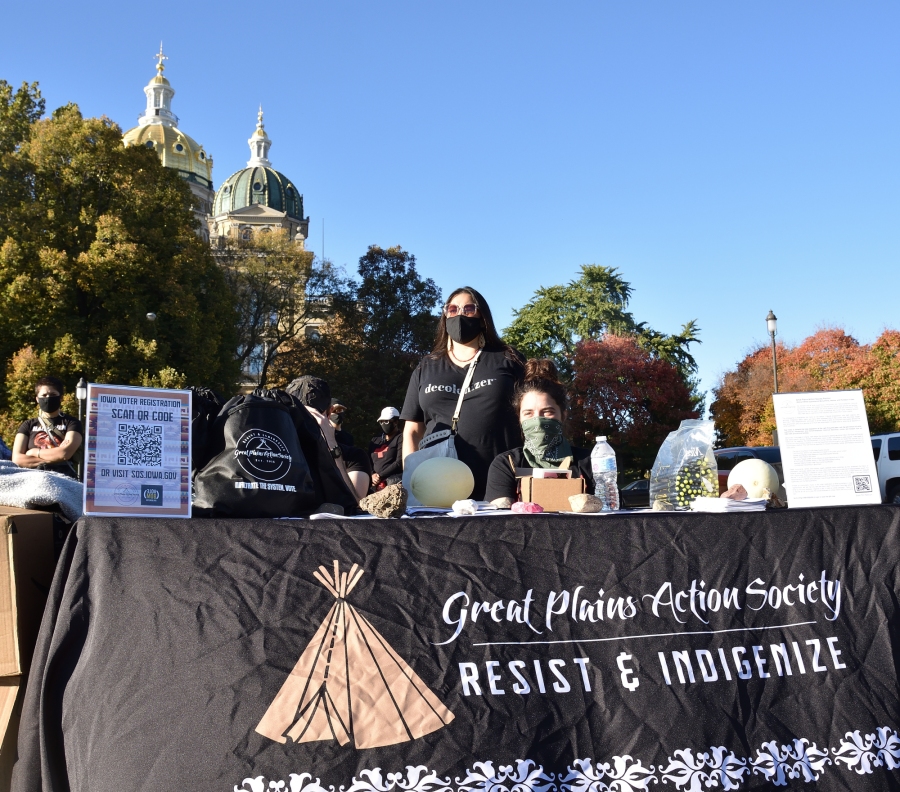
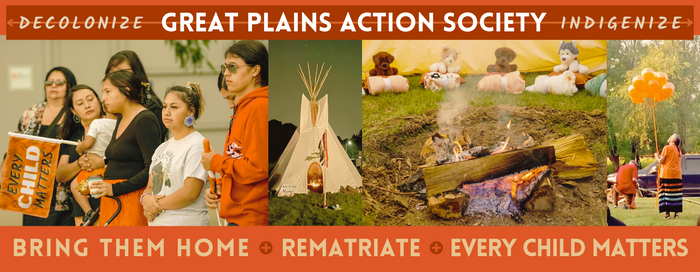
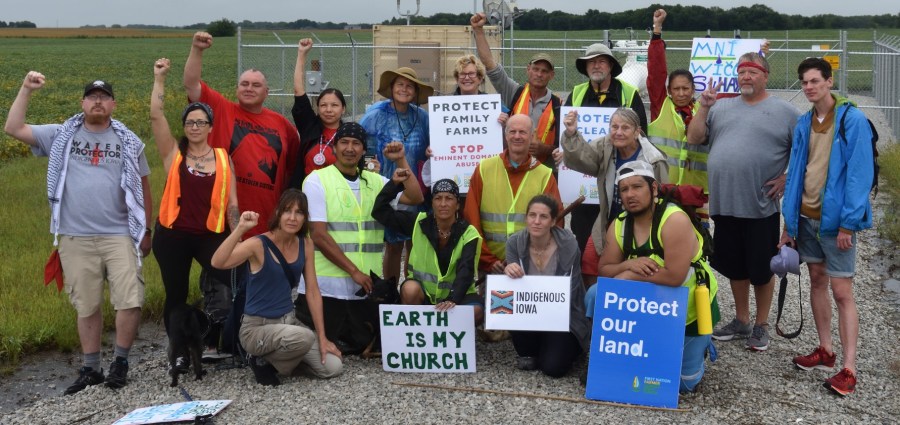
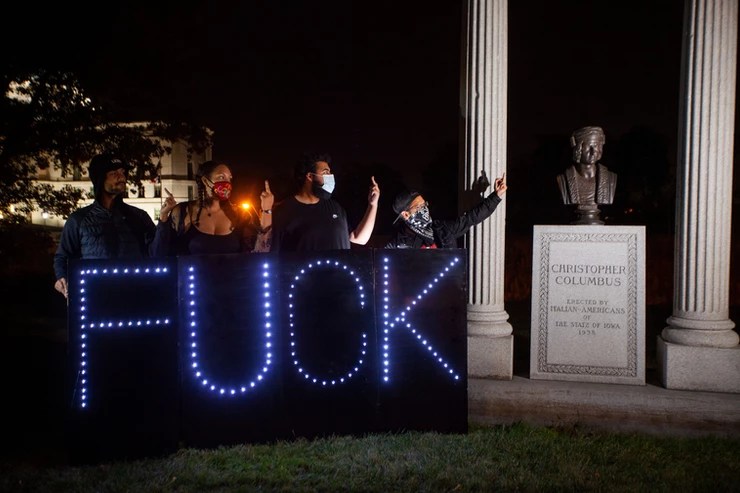
Because of the upsurge in COVID cases in Iowa, my friends at the Great Plains Action Society decided not to hold a public gathering this Indigenous Peoples’ Day. Instead, they participated in a guerrilla street art action to push back at the recognition of Columbus Day in Iowa and the nation.

Celebrate Indigenous People’s Day by Abolishing Columbus Day

To celebrate Indigenous People’s Day, we participated in a guerrilla street art action to push back at the recognition of Columbus Day in Iowa and the nation. The art is inspired by the Overpass Light Brigade and utilizes LED lights to spell out movement messaging tackling various issues. The art build and action was led by Qırımlı Frontlines Organizer, Mahmud Fitil. Ronnie James provided on-the-ground support, gathering together an amazing crew of local radicals to help hold the art. The photos were taken by Karla Conrad, a movement photographer well known for her work in Iowa. The following piece to accompany the photos is written by Sikowis Nobiss.

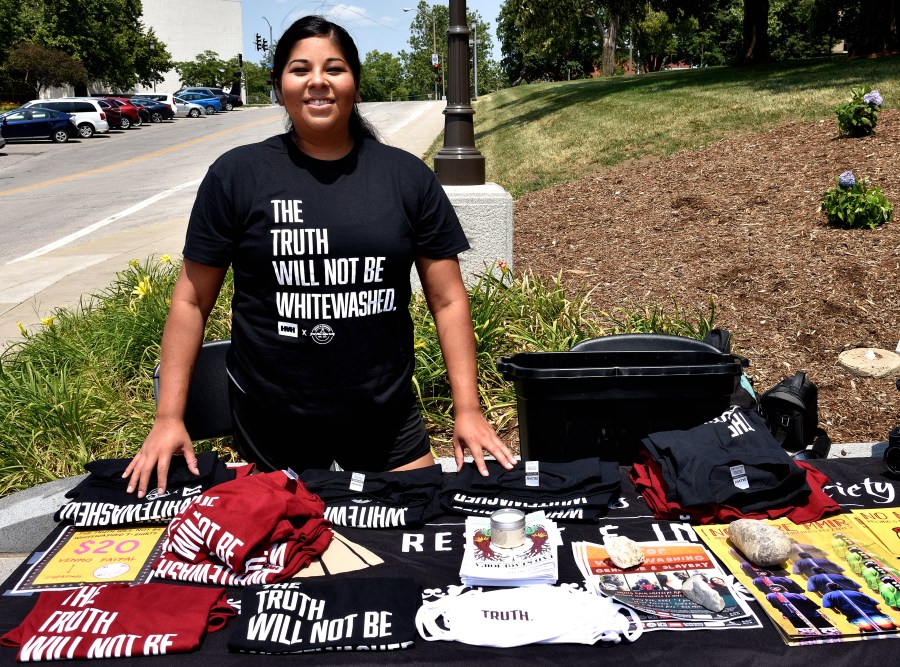
Indigenous People’s day is a time to celebrate Indigenous cultures, practices, and success but it is also a powerful political statement about and against whitewashed history as well as colonial violence. It is observed on the same date as Columbus Day with the goal of ending the celebration of a man that did not, in fact, discover America who was also a rapist, a murderer, and slave trader. Unfortunately, the bulk of declarations and proclamations recognizing Indigenous Peoples in cities, counties, and states across the country do not abolish Columbus Day. For instance, President Joe Biden issued a proclamation last Friday to recognize Indigenous Peoples’ Day, which is the first time a sitting US president has commemorated this holiday, but Columbus Day is still a national holiday, which means the nation state still celebrates and upholds colonization, genocide, and slavery. Most federal employees will receive the day off to observe Columbus Day, which is still endorsed by Congress.

The state of Iowa needs to completely abolish Columbus Day and statues uplifting white supremacy that perpetuate hate and whitewash our history. Hate speech alone is not considered a hate crime under Iowa code, however, the state itself should be held to a different standard and barred from entering or perpetuating behavior that undermines a person’s mental well-being, safety, and sense of belonging in this state. Furthermore, the Iowa constitution already protects against discrimination based on religion, sexual orientation, age, race, national origin, and disability. Since Columbus Day and monuments to white supremacy celebrate genocide, land theft, and enslavement, they perpetuate and legitimize discrimination as they make many BIPOC residents unwelcome in public spaces that trigger very real historical traumas.

Sikowis Nobiss , Great Plains Action Society

Photo by Karla Conrad

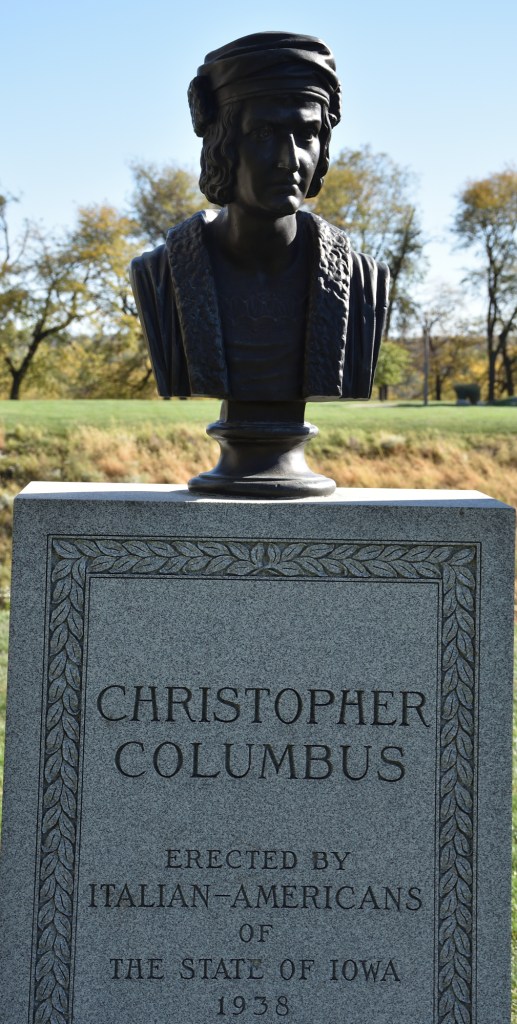
The following is about Indigenous Peoples’ Day last year. My friend Ronnie James appears below, with the bust of Christopher Columbus (and he’s mentioned above for his role in the guerrilla street art.)


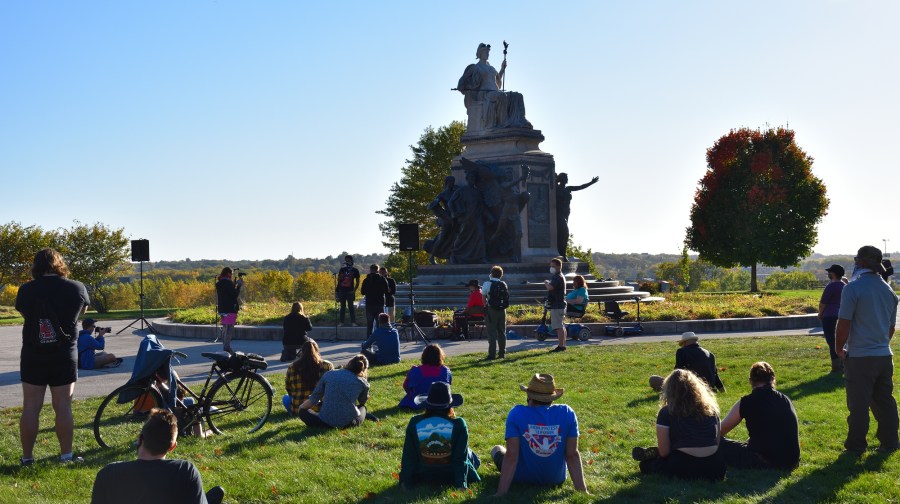
Remarks at Indigenous Peoples Day 2020 in Des Moines, Iowa State Capitol grounds, October 12, 2020, by Alejandro Murguia-Ortiz, American Friends Service Committee

Photos from Indigenous Peoples’ Day 2020

Worst case scenario

New or worsening catastrophes seem to be coming at us daily. Worse things than we can imagine are yet to come. When I say “we” in most cases I mean white people since many things below are race related.
I often think of what Albert Einstein said, “problems cannot be solved with the same mind set that created them.”

There are several reasons I’ve been praying, thinking, and writing about the precarious place we are at now. We need to build alternatives to the systems of capitalism, materialism, militarism, incarceration, racism, and white supremacy. Systems rooted in stolen lands and stolen labor. Not only because they are founded on injustice, but because these systems are failing now. (See: Time for a reset)

Any chance we have to address these injustices and mitigate these dangers requires changing our mind set. Looking back over my life it seems like an endless struggle to try to change people’s mind set, with no success.

What is different now is changes are being forced upon us.

Deepening environmental chaos is one of the main drivers of change. Millions of people have lost their homes and communities because of fires and storms. Lack of water will increasingly force many to relocate. Drought will decimate food production.

Our political and social systems are breaking down with the rise of authoritarianism and the police state.

Violence is increasing dramatically in the face of these dangers. Civil discourse is often impossible. Who could have imagined violence at school board meetings? Of children being yelled at for wearing masks? School shootings? An insurrection at the US Capitol?

However much we continue to try to avoid dealing with these threats to the society we grew up in, we are being forced to deal with these changes and what they portend.

What might be some worst-case scenarios?

  • Clean water becomes increasingly scarce. Many industries result in significant water pollution including runoff of agricultural fertilizers and pesticides, and massive amounts of sewage from concentrated farming practices. Fossil fuel mining such as fracking and tar sands pollute vast quantities of water.
  • Food insecurity will increase as drought spreads or fires destroy farmland and communities. Continued warming will decrease crop yields.
  • Electricity will increasingly be interrupted or cease as energy systems and electrical grids fail or cannot meet demands, resulting in problems with
    • refrigeration, heating, and air conditioning
    • operation of people’s myriad electrical devices including phones and computers. Social media will disappear.
    • computer systems involved in every aspect of modern life
      • physical plants
      • communication networks
      • water sanitation and sewage systems
      • coordinating purchasing and shipping
      • hospital and pharmacy systems
      • energy systems
      • educational institutions
      • manufacturing
      • air traffic and flight control
      • military systems
      • judicial systems, including police dispatch and legal documents.
      • operation of carceral systems
  • Some political systems will become increasingly authoritarian as many citizens demand protection from “others”.
  • Social disorder will preclude political order.

There are other things to add to the list.

To reiterate, these systems are beginning to fail now. And will continue to do so. We will not be able to continue to avoid thinking and doing something about them.

Think about the related problems from just one of these: no functioning cell phones, tablets or computers. What might happen when there are no longer any social media platforms? How will young people who have never known a time before there were cell phones going to react?

I’ve been thinking of these things in the context of justice work. Lobbying our legislatures to support peace and justice issues will no longer be relevant (or possible). The injustices we often work on as distinct issues will be drowned out by increasing chaos.

Our work for justice should be to engage with systems that are replacing our broken ones. This would actually be returning to systems such as LANDBACK, Abolition, and Mutual Aid.

This diagram I’ve been working on shows some of the ways people are building ways to adapt as old systems collapse.

More information about LANDBACK, Abolition, and Mutual Aid can be found with the following links.

LANDBACKhttps://landbackfriends.com/?s=landback
Abolitionhttps://landbackfriends.com/?s=abolition
Mutual Aidhttps://landbackfriends.com/?s=Mutual+AID

Ethnic studies so history will not be erased

It is a paradox that education is crucial for healing, in this case healing from the intergenerational traumas suffered by Indigenous peoples in the lands called the United States and Canada. And yet, who will teach these subjects? Care must be taken to avoid triggering that might occur for Indigenous educators.

The following quote references Alberta’s Teacher Qualifications Standard that I wrote about yesterday.

As the National Day for Truth and Reconciliation approaches, we can expect Canadian teachers are thinking about how they can better weave Indigenous perspectives into their lesson planning.

In the past, events like this rarely made it as national news, staying inside our Indigenous communities where the pain remained hidden from the rest of Canada. Now, teachers are talking about them with their students — how history and society influence individual situations of race-motivated violence and cultural genocide. It’s our responsibility to make sure they are equipped to teach the truth and acknowledge the important role schools play in reconciliation.

But how do we do that when many of our educators were not taught about residential schools when they were students?

This question does not have one answer. In 2016, the Hon. Justice Murray Sinclair, former chair of the Truth and Reconciliation Commission, said, “Education got us into this mess and education will get us out of it.” After generations of miseducation, it will take generations of real truth-sharing and knowledge-building within our provincial education systems to achieve reconciliation.

We owe it to Indigenous educators who are triggered and challenged to deliver education around a topic like residential schools that have impacted them. Educators like me, who when viewing the images of children with their plain clothes, short hair, and empty eyes — identities stripped — still struggle to separate the pain we hold from lesson planning.

We also owe it to non-Indigenous educators who lack confidence in teaching because they weren’t taught the truth about the atrocities of the residential school system. This is a significant blocker to the successful integration of truth-telling in our classrooms, which can be solved by supporting educators in their journey of learning.

We must ensure the materials passed down to educators are written accurately by authentic voices. We need ongoing government funding and access to professional learning programs. Alberta is one province that does this well. Its Teacher Qualifications Standard requires educators to take courses in foundational knowledge of Indigenous history.

We owe it to all students to bring truth and drive reconciliation in classrooms by Linda Isaac & John Estabillo, National Observer, September 16, 2021

Education got us into this mess and education will get us out of it.

Hon. Justice Murray Sinclair

Last year, as a massive uprising against systemic racism swept across the worldactivists fighting for Black liberation and racial justice put radical demands against institutional racism on the table, such as abolishing and defunding the police. Another key step toward challenging institutional racism is the push for ethnic studies and teaching about systemic racism in U.S. schools. I am part of that fight in California.

Racism has been in the United States for over 400 years, stemming from slavery and genocide. However, Trump’s emboldening of white nationalism and last year’s protests against police violence have raised the level of urgency to fight against systemic racism. In this crucial moment, the push for ethnic studies is an important fight because accurate, anti-racist, multicultural educational curricula are vital to creating a better, more just society.

I was one of the very few African American men to graduate from Pittsburg High School and attend Stanford University, where I earned my bachelor’s in International Relations. In my decade-long teaching and writing career post-Stanford, I’ve seen how the education system is a site of institutional racism that directly impacts non-white students. I’ve also written about other forms of systemic racism, such as the police and gentrification. Ethnic studies, an educational discipline that teaches non-white students their own history and empowers them to be agents of their own destiny, is crucial to challenging institutional racism within the education system.

As ethnic studies programs grow around the country, right-wing pushback is also mounting — overlapping with efforts to ban the teaching of critical race theory in U.S. schools. Critical race theory and ethnic studies are not the same: Critical race theory is a highly academic, and rather esoteric, legal theory that analyzes the manifestations of racism in U.S. law; it is mostly taught in law schools, not in K-12 public education. Meanwhile, ethnic studies focuses on the histories, cultures and struggles of marginalized racial/ethnic groups, especially as they relate to the overall history of the United States.

I’M FIGHTING FOR ETHNIC STUDIES SO MY HISTORY WON’T BE ERASED By Adam Hudson, Truthout, September 22, 2021