There is a native concept of considering what the effects of decisions made today will be on seven generations into the future.
The following quotation makes a two-way connection between us and future generations. Looking at each other over the generations.
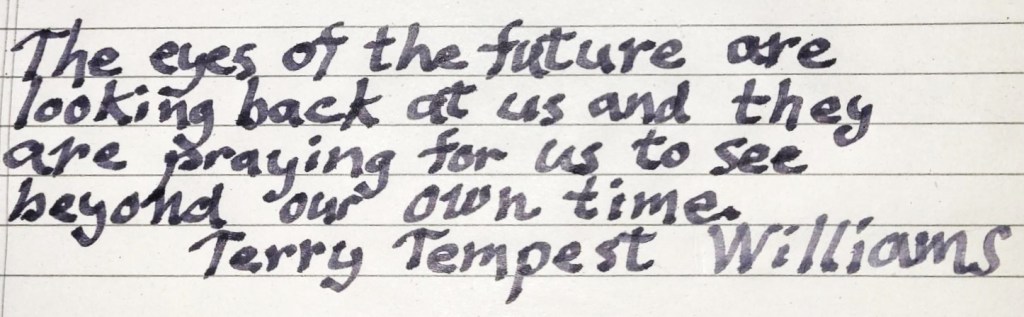
The eyes of the future are looking back at us and they are praying for us to see beyond our own time. They are kneeling with hands clasped that we might act with restraint, that we might leave room for the life that is destined to come. To protect what is wild is to protect what is gentle. Perhaps the wilderness we fear is the pause between our own heartbeats, the silent space that says we live only by grace. Wilderness lives by this same grace. Wild mercy is in our hands.
― Terry Tempest Williams, Refuge: An Unnatural History of Family and Place
Similarly, can we not look back at our ancestors? We are our ancestors’ future generation looking back.
I think about this a lot these days. As stories of the remains of native children on the grounds of the institutions of forced assimilation continue. Thousands of children never returned home.
I’ve been praying about what we are doing now and how much harm this is doing to future generations. My Spirit recoils from the likelihood there probably will not be a seventh, or sixth, or fifth generation because of the accelerating rate of environmental collapse.
What have we done?
What will we do?
As we work for change, we are admonished that we need to tell new stories. This morning I found this story Nico Santos tells, from the movie Dragon Rider.
“Wings”
Oh, I’ve been lost in the darkness I heard your voice from afar You weren’t my callin’ You weren’t my callin’ Whenever the night was starless And I couldn’t see anymore You showed me the mornin’ You showed me the mornin’
So I-I-I wanna let you know When life has got you low
I’ll be your wings to fly When there’s trouble on your mind Whenever you’re ’bout to fall There’s nothin’ I won’t try ‘Cause I’ll be your wings to fly When you’re sufferin’ inside Come hell or high water Got you covered all my life Let these wings take you High, high There’s nothin’ I won’t try
We built our own kinda fortress Nothing can break us apart Walls won’t be fallin’ These walls won’t be fallin’ I wouldn’t be if it wasn’t for you I wouldn’t speak if it wasn’t the truth You are my callin’ You are my callin’
So I-I-I wanna let you know When life has got you low
I’ll be your wings to fly When there’s trouble on your mind Whenever you’re ’bout to fall There’s nothin’ I won’t try ‘Cause I’ll be your wings to fly When you’re sufferin’ inside Come hell or high water Got you covered all my life Let these wings take you High, high There’s nothin’ I won’t try
You were my eyes, oh, when I couldn’t see Were my voice, oh, when I couldn’t speak Can I give it back to you? Let me give it back to you You were my legs, oh, when I couldn’t run Were my heart when my own went numb I’ll do what I have to do Everything to get you through
I’ll be your wings to fly When there’s trouble on your mind Whenever you’re ’bout to fall There’s nothin’ I won’t try ‘Cause I’ll be your wings to fly When you’re sufferin’ inside Come hell or high water Got you covered all my life Let these wings take you High, high There’s nothin’ I won’t try Let these wings take you High, high There’s nothin’ I won’t try Let these wings take you high
I’ve been preparing for a discussion my Quaker meeting will have this weekend about Mutual Aid. At the end of this is a table of posts I’ve been writing to help me organize my thoughts. I am not satisfied with how this post has turned out, but these are notes, not a finished document.
Stepping back from the details, I’m reflecting on what I hope will happen as a result of this discussion. My hope is that we begin to use Mutual Aid to guide our work, both in our Quaker meeting and how we do our work in the community for peace and justice.
Mutual Aid requires a paradigm shift from a community of primarily White Quakers immersed in the capitalist economic system, white supremacy, settler colonialism and land theft, forced assimilation, foreign and domestic militarism, state sanctioned violence, punishment oriented criminal justice system, fossil fuel power, and whatever you call our political systems.
Wow!
The greatest obstacle will be to persuade Friends that we should stop participating in those systems. Although that is looking more attractive as these systems are rapidly collapsing now.
Capitalism is economic slavery. Capitalism has forced millions into poverty. Capitalism denies shelter, food, water, healthcare quality education, and the ability to build any wealth at all to millions of people.
There were White Quakers who were involved in the institution of slavery. Even those who did not claim ownership of enslaved men, women and children benefited economically. Continue to benefit.
I don’t think we have many years of civilization left. But I think a few years hence people will look back at this time in a similar way to how we look back on slavery.
Quakers also have their history of participation in the institutions of forced assimilation to atone for. This is a significant barrier between Friends and Indigenous peoples.
In December 2020, Ronnie James and I had the following email exchange:
Ronnie
I don’t know what you can do. The church is the church’s past, which is its future. It continues to see my people as obstacles in its endless conquest.
Jeff
I was not feeling worthy of participating in Mutual Aid but thanks to you, I’ve signup up again for this weekend.
Ronnie
You’re a good relative Jeff. To be blunt, there is too much damage that the church profits from and needs to protect to have any future there.
Jeff
I am afraid you are right.
Ronnie
I wish you the best. I imagine its a hard struggle.
Mutual aid work is not easy. It means forming lasting commitments to doing hard work collaborating with people even when we have conflict. And facing the heart-wrenching realities of the systems we live under. It is also deeply satisfying work that transforms us from being exasperated passive observers of the shitstorm we’re living in to inspired builders of the new world we desperately crave.
The day after Christmas, Dec. 26, 1862, President Abraham Lincoln ordered the largest execution in United States history — the hanging of 38 Dakota men. At the heart of this is the genocide and land theft of the tribal nations by the white settler-colonialists. #LANDBACK
“Today, all the people of the region continue to be affected by this traumatic event. We take the youth on the ride, so that they may connect with their culture in a more physical way. By being apart of the ride they are connecting themselves with their ancestors and their horse relatives. It is through the ride that they are able to see the beauty in the history and their culture.” SUNKTANKA
The Dakota 38 Plus 2 Memorial Ride is a ride that honors the 38 Dakota men who were hung in Mankato in December of 1862. The ride began from the vision of a Dakota elder and warrior. In this vision riders would ride from Crow Creek, SD to Mankato, MN. Ever since then the ride has continued to happen annually from the beginning year December 2005 to present collecting supporters and new riders along the way.
My name is Winona Goodthunder. My Dakota name is Wambde Ho Waste Win, Eagle Woman with a Good Voice. I have ridden in this ride since 2006, the second year. I was in eighth grade when I started. As the years have gone by the riders that we’ve met every year have become a part of a new kind of family. We are all different even though we are all somehow related. Those of us who are from the Lower Sioux region are used to different types of living than those who come from Canada, Nebraska, South Dakota, and other parts of the world. The differences that we have are forgotten when we come to this ride. We get up early in the morning to get our horses ready together. We ride all day together, and we eat together at night. It is then that our differences merge and we teach each other. The thing that seems to bind us the most is the fact that we can laugh. Humor may not be what is expected on a memorial ride, but it is encouraged for it is stressed that this ride is for forgiveness.
Although our group goes only for the last four days it is enough to establish that sense of family amongst each other. It is from these riders that I’ve learned most about my culture. I have read books, but they cannot foster the feeling that one gets when they are living in an experience such as the ride.
In the spring of 2005, Jim Miller, a Native spiritual leader and Vietnam veteran, found himself in a dream riding on horseback across the great plains of South Dakota. Just before he awoke, he arrived at a riverbank in Minnesota and saw 38 of his Dakota ancestors hanged. At the time, Jim knew nothing of the largest mass execution in United States history, ordered by Abraham Lincoln on December 26, 1862. “When you have dreams, you know when they come from the creator… As any recovered alcoholic, I made believe that I didn’t get it. I tried to put it out of my mind, yet it’s one of those dreams that bothers you night and day.”
Now, four years later, embracing the message of the dream, Jim and a group of riders retrace the 330-mile route of his dream on horseback from Lower Brule, South Dakota to Mankato, Minnesota to arrive at the hanging site on the anniversary of the execution. “We can’t blame the wasichus anymore. We’re doing it to ourselves. We’re selling drugs. We’re killing our own people. That’s what this ride is about, is healing.” This is the story of their journey- the blizzards they endure, the Native and Non-Native communities that house and feed them along the way, and the dark history they are beginning to wipe away.
This film was created in line with Native healing practices. In honoring this ceremony, we are screening and distributing “Dakota 38″ as a gift rather than for sale. This film was inspired by one individual’s dream and is not promoting any organization or affiliated with any political or religious groups. It was simply created to encourage healing and reconciliation.
I have watched this video, “Dakota 38”, many times. My friend and roommate from Scattergood Friends School, Lee Tesdell, teaches in Mankato, and has spoken about this history with me.
The photography and especially the story, are just excellent and very moving. I’ve been learning how trauma is passed from generation to generation. The events shown in the film “Dakota 38” occurred in 1862.
“Today, all the people of the region continue to be affected by this traumatic event.” SUNKTANKA
Composers Jay McKay and Jay Parrotta spent three years fusing sound and visuals into a cinematic experience that takes the viewer onto the Northern Plains and through a relentless pounding blizzard. Sound has the ability to transport, and the mix of chants, drums and melody is spellbinding.
Forgive Everyone Everything
FORGIVE EVERYONE EVERYTHING is inscribed on a bench in Reconciliation Park, Mankato, Minnesota, where the ride ends. The photo of the memorial shows a list of the names of the 38 Dakota men who were all hanged at the same time in what is now Mankato, Minnesota. A raised wooden platform, with 38 nooses along the sides, was constructed. It is said nearly 4,000 people witnessed this, the largest execution in U.S. history, on December 26, 1862.
As to who needs to be forgiven, there are many answers to that.
At the heart of this is the genocide and land theft of the tribal nations by the white settler-colonialists.
More specifically this history came about as the Dakota were forced into smaller and smaller areas of land, to the point they could not sustain themselves.
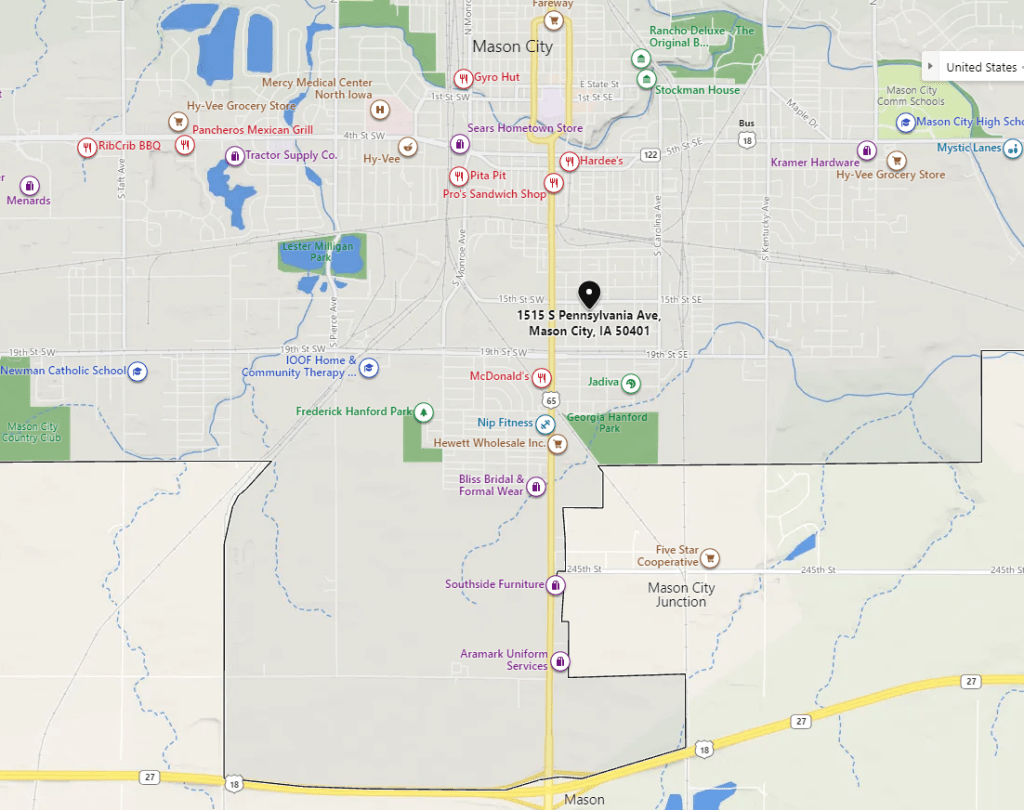
December 20 at 5:30 PM the Mason City Community School District will be meeting at 1515 South Pennsylvania Ave in Mason City (be there by 4:30). Map below.
Monday, December 20, 2021, from 5:30 – 6:30 PM CST Mason City Community School District Administration Building 1515 South Pennsylvania Avenue, Mason City, Iowa
Important Notes: – Enter the building on the South side. If you would like to speak then you must be signed up to speak before 5:30 PM. – We are encouraging folks to show up by 4:30 PM to fill the room with positivity! – Folks signed up to speak have 5 minutes allotted, but we encourage shorter testimonies so more may be heard. – We are there only to make a case to the Mason City School Board that they must NOT reinstate the mascot. We DO NOT encourage any interaction with the “Save the Name” group outside or inside the meeting. We insist on non-violent language and behavior.
The Mason City Community School District realized, after 96 years, that they needed to retire the racist Mohawk mascot. They did so after the St. Regis Mohawk Tribe told them to stop and the Meskwaki Nation/ACLU and Great Plains Action Society have been very public about abolishing racist mascots in Iowa. However, a white-led group of agitators is trying to reverse this decision and their rhetoric is filled with vile, dehumanizing, racist, and transphobic behavior. They managed to present a petition to speak at the December 20th meeting and we would like Indigenous folks and allies to join us in making a strong stand against white supremacy and to set a precedent that racist mascots will no longer be tolerated in Iowa.
This is follow up to previous events about Mason City schools, including an online forum December 12. See more here: Abolish Racist Mascots
Join us for an Indigenous-led forum discussing why mascots in Iowa are harmful and perpetuate white supremacy. Though Iowa has 27 racist “Indian” mascots still being used, we will spotlight the issue in Mason City where white supremacists have organized to protest the rightful retirement of the Mohawk mascot.
Following are graphics from the Great Plains Action Society
“The Des Moines Register identified 27 high schools with Indigenous-themed mascots from a list provided by the Iowa High School Athletic Association. That count does not include the Meskwaki Settlement School Warriors. The Sac and Fox Tribe’s list included elementary and middle schools as well”
First a reminder about today’s Indigenous-led forum discussing why mascots in Iowa are harmful and perpetuate white supremacy. Though Iowa has 27 racist “Indian” mascots still being used, they will spotlight the issue in Mason City where white supremacists have organized to protest the rightful retirement of the Mohawk mascot. https://landbackfriends.com/2021/12/11/abolish-racist-mascots/
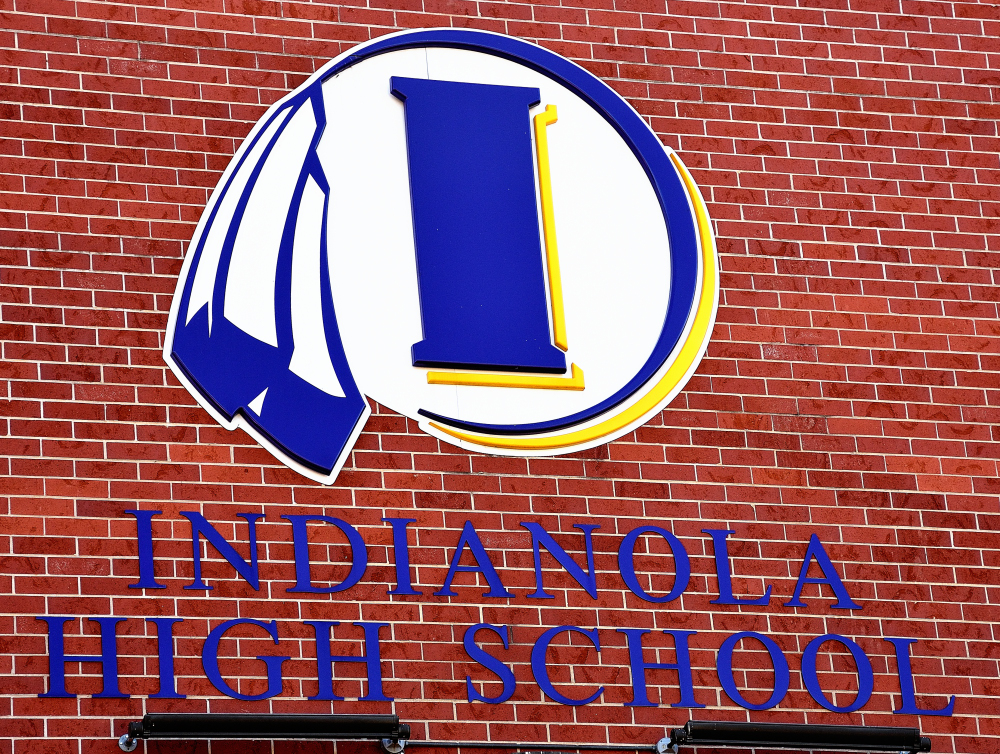
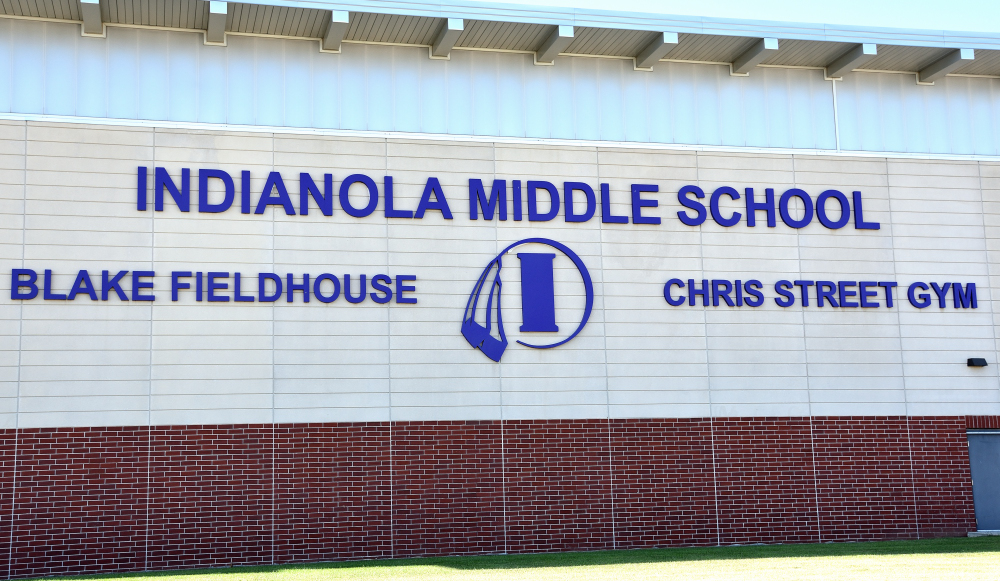
My Mutual Aid mentor and friend Ronnie James has been working on the use of the team name of The Indianola Indians and the usage of Native imagery on school property and apparel. Knowing I live in Indianola, Ronnie asked me to take some photos related to this which I was glad to do. He wrote an excellent article about the Indianola school board meeting he attended in August published by the Great Plains Action Society that he is part of.
After initial discussion among the board, they voted on tabling the issue until after their Nov. 2021 election, where it will be brought back with the intention of an extensive process of public debate. During public comments, there was just one person who argued in favor of the name and imagery by claiming he spent a lot of time asking Natives in Oklahoma their opinion. Another commenter stated they needed more “facts”, while another said something similar but referred to Native “traits” as something they want all students to aspire to, but mentioned Natives in the past tense repeatedly.
When representatives of Great Plains Action Society were afforded time to speak, we brought a large packet of peer reviewed academic research demonstrating the harm that Indigenous mascots and imagery has on Native youth, which we left with the board. We also addressed the board’s intention to table the item. We reminded them that putting this issue aside so as not to harm their chances at reelection and playing politics with it is an act of white supremacy as these actions put their comfort first at the expense of the peoples that it actually affects.
We also offered to begin dialogues with local and national Native orgs and individuals that were not trying to sell them something. In response to one of the board’s reasons to table the item, they claimed that Covid was their highest priority. The room was crammed with 20 or more people (with less than 5% wearing masks) and their school system has no mask mandate. If they were tackling this issue in good faith while getting the school back into pre-Covid shape, then now is a perfect time to act on changing the team name so that when/if we return to normal, the school can start on a good footing working to end white supremacy.
Great Plains Action Society believes some of the school board is acting in good faith, but that they still do not view the name and imagery change as a priority. Based on social media comments, the town itself has a split of those extremely hostile to change and those that support it. We will continue to work with the Board of Education and our relatives that live in the town to keep this in the forefront and finally change the team name.
Debate over the use of Native American-related mascots spans nationwide, with leaders of athletic programs from youth to professional sports grappling over their logos and team names. The Washington Football Team and the Cleveland Guardians, two professional teams that attracted national attention for their use of Indigenous-related mascots, decided in the past two years to remove Native American-related imagery and language from their branding.
Greetings Iowa school leaders, school board members, and community members: We, the undersigned Tribal Nations and local and national Native organizations, call upon you – the 66 K-12 schools in the state of Iowa with Native “themed” school mascots – to retire your mascots.
Meskwaki Nation Sac & Fox Tribe of the Mississippi in Iowa
The use of Native symbols and names has come to attention as pressure has come to change such names and symbols of national sports teams for example. Tomorrow’s discussion will be about the use of Mohawk in Mason City, Iowa.
The Mason City Community School District reached out to the Saint Regis Mohawk Tribe and asked if the tribe would be open to a partnership and allow the use of imagery and name. The tribe said no and asked for the end of the usage of the “Mohawk” mascot and nickname. (Info from the Globe Gazette).
Last month, the Mason City School Board decided to end the use of the name “Mohawks,” at athletic events and on merchandise. Over the long term building signs and school décor will also be scrubbed of the name, as the district assesses costs related to rebranding.
Shortly after the decision was made, Mason City resident Tom Stalker created the “Mason City Mohawk Save the Name” Facebook page. The group has shared their frustrations about the decision and was given time to speak at Monday night’s meeting.
There is an excellent opportunity to learn more about this tomorrow, 12/12/2021 at 5:00 pm Central time, when my friends of the Great Plains Action Society (GPAS) host a discussion of why these mascots are harmful and perpetuate white supremacy.
Join us for an Indigenous-led forum discussing why mascots in Iowa are harmful and perpetuate white supremacy. Though Iowa has 27 racist “Indian” mascots still being used, we will spotlight the issue in Mason City where white supremacists have organized to protest the rightful retirement of the Mohawk mascot. We will be joined by:
– John Kane, Kahnawake Mohawk, Let’s Talk Native With John Kane Radio Show
– Rev. Le Anne Clausen de Montes, Mason City resident and the Cofounder of the Iowa Change the Name Coalition
– Salvi Montes-Clausen, Latino/Nahuatl and Youth Cofounder of the Iowa Change the Name Coalition
– Edouardo Zendejas, Omaha Tribe of NE and author of Mascots That Honor Indians
– Keely Driscoll, Meskwaki Nation and Youth Organizer with Great Plains Action Society
– Trisha Etringer, Winnebago Tribe of NE and Operations Director with Great Plains Action Society
– Jessica Engelking, Anishinaabe and Education Director with Great Plains Action Society
– Alexandrea Walker, Winnebago Tribe of NE and Youth Organizer with Great Plains Action Society
-Sikowis Nobiss, George Gordon First Nation and Executive Director of Great Plains Action Society
Following are graphics from the Great Plains Action Society
“The Des Moines Register identified 27 high schools with Indigenous-themed mascots from a list provided by the Iowa High School Athletic Association. That count does not include the Meskwaki Settlement School Warriors. The Sac and Fox Tribe’s list included elementary and middle schools as well”
There is an ancient Lakota prophecy about a black snake that would slither across the land, desecrating the sacred sites and poisoning the water before destroying the Earth.
The following Includes remarks by my friends Sikowis Nobiss (Great Plains Action Society), Lee Tesdell, Ed Fallon (Bold Iowa).
Great Plains Action Society is firmly opposed to so-called carbon capture and sequestration or storage (CCS) projects such as the proposed Summit Midwest Carbon Express.
The reasons for our opposition are numerous, however, our greatest concern is that CCS only serves the interests of the fossil fuel industry. Carbon capture and sequestration is by design a way to prolong the usage of fossil fuels while reducing CO2 emissions. Amidst this climate emergency we must demand a reduction and phasing out of fossil fuels as a wider part of a just transition.
We are also concerned about intense water usage as drought and warmer temperatures are greatly affecting access to clean water. Fossil fuel companies have known that their products were contributing to climate change for over forty years and now they see CCS as a government bail out with many governmental subsidies providing just the type of perverse incentive for CCS operators to manipulate the system.
Additionally, there are the same concerns present with other pipeline projects in the area regarding degradation of the land, disturbance of sacred ceremonial and burial sites. CCS is greenwashing rather than a solution to the climate emergency that Iowans deserve, as Indigenous people we remain committed to the water, the land and the future generations of Iowans. #noco2pipelines #stopsummit
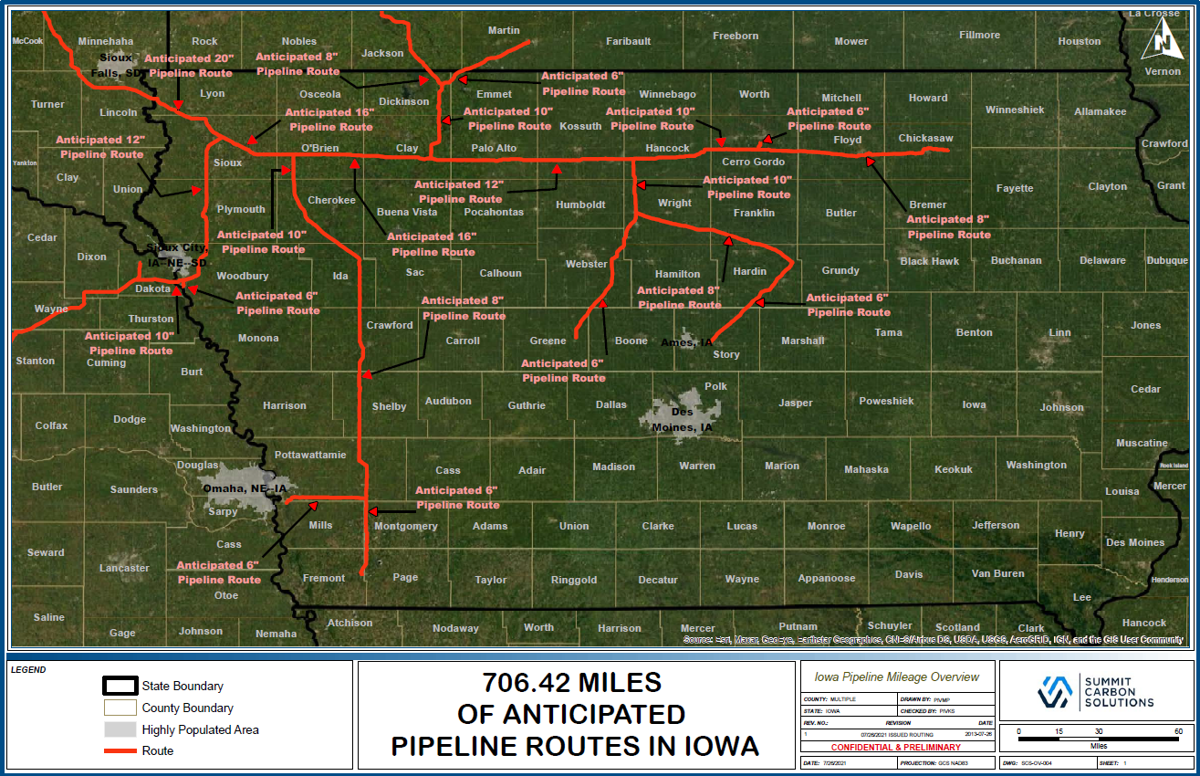
Summit Carbon Solutions (aka Bruce Rastetter – Iowa factory farm & ethanol baron) has now started the process for approval of a CO2 pipeline from Iowa to North Dakota, where the CO2 will be buried (or possibly used for fracking). This pipeline will impact at least 30 Iowa counties. Summit is likely to rely on eminent domain to secure the land easements needed to bury much of the pipeline.
Summit intends to obtain the CO2 from Iowa ethanol plants and other industrial polluters in Iowa, and then sell the ethanol to California and other states that have a low carbon fuel standard. The claim is that by sequestering the CO2 from the ethanol plants, the ethanol becomes low carbon fuel and in the process overall emissions are lowered (all while Rastetter and these industries siphon off a bunch of public money and investment that should go towards proven climate solutions).
In reality – Carbon Capture and Sequestration (CCS) is just the latest money making scheme to greenwash fossil fuel pollution and allow dirty industries to continue business as usual. This Top 5 list from our friends at Food & Water Watch is a great resource:
Carbon Capture is an Expensive Failure
Carbon Capture is Energy Intensive
Carbon Capture Actually Increases Emissions
Storage Presents Significant Risks
Carbon Capture Trades Off with Other Critical Solutions (and delays a true clean energy future)
Not enough info you say? Even more reading on why CCS is a bad idea from F&WW here and from Greenpeace here.
Beyond the economics, corporate control, climate/environmental and land use issues is there a human cost or risk from this pipeline?
Glad you asked! A recent CO2 pipeline break in Mississippi led to mass poisoning of one community and is still under investigation:
CCS schemes only serve to prop up polluting industries and pad the profits of fossil fuel profiteers by siphoning off public money on expensive “technology” that doesn’t reduce carbon emissions. We call on Bruce Rastetter and Summit Carbon to drop their polluting pipeline plans. We call on the Iowa Utilities Board to deny Summit Carbon’s hazardous liquid pipeline permit application. And we call on Iowa’s elected officials and decision makers to take a stand against this pipeline and to invest in a 100% renewable future that benefits 100% of the people.
Iowans have a right to clean air, water, and a habitable environment. To get there we need a just transition to a 100% carbon-free energy system. We want our public tax dollars invested into proven and cost-effective technologies needed to get there such as wind and solar. We demand that you reject unproven, costly, and dangerous projects like the Summit Carbon Solutions CO2 pipeline. Which would ultimately prop up fossil fuel extraction and destructive industrial agriculture practices.
We have little time left for the mass mobilization of resources needed to transition to carbon-free energy and the conservation practices that are proven to reduce emissions and sequester carbon. We are calling on you to rule with the majority of Iowans rather than wealthy campaign contributors like Bruce Rastetter and reject the proposed Summit Carbon Solutions pipeline.
Critics of a proposed $4.5 billion pipeline project say Iowa Utilities Board members appointed by former Gov. Terry Branstad have a conflict of interest and should recuse themselves from decisions about the project, which has hired Branstad as an adviser.
Summit Carbon Solutions wants to build a pipeline, called the Midwest Carbon Express, across 30 counties in Iowa to capture carbon emissions from ethanol and other industrial agriculture plants, compress it into a liquid and transport it to North Dakota for permanent sequestration a mile underground.
At a Sept. 13 meeting in Ames, Lee Tesdell, a central Iowa farmland owner, asked whether any of the Iowa Utilities Board members were appointed by Branstad and whether they would recuse themselves from making a decision about whether Summit should receive a permit to build nearly 710 miles of pipeline across Iowa.
TesdelI, whose central Iowa farm is not in the pipeline’s pathway, said he believes board members Branstad appointed have a conflict of interest. “Either Branstad should resign from the Midwest Carbon Express team or they (board members) should recuse themselves,” he said.
Ed Fallon, a former state representative and vocal Dakota Access pipeline opponent, said he believes the Iowa Utilities Board members should recuse themselves. “Given their high-salary positions, they’re beholden to Branstad, and that gives the impression that they would be inclined to vote his way,” Fallon said.
“I, Chief Arvol Looking Horse, of the Lakota, Dakota, and Nakota Nations, ask you to understand an Indigenous perspective on what has happened in America, what we call “Turtle Island.” My words seek to unite the global community through a message from our sacred ceremonies to unite spiritually, each in our own ways of beliefs in the Creator.”
“There needs to be a fast move toward other forms of energy that are safe for all nations upon Mother Earth. We need to understand the types of minds that are continuing to destroy the spirit of our whole global community. Unless we do this, the powers of destruction will overwhelm us.”
“To us, as caretakers of the heart of Mother Earth, falls the responsibility of turning back the powers of destruction. You yourself are the one who must decide.”
“You alone – and only you – can make this crucial choice, to walk in honor or to dishonor your relatives. On your decision depends the fate of the entire World.”
Important Message from Keeper of Sacred White Buffalo Calf Pipe. I, Chief Arvol Looking Horse ask you to understand an Indigenous perspective on what has happened in America, what we call “Turtle Island.” by CHIEF ARVOL LOOKING HORSE, Indian Country Today, Sept 7, 2017
The reason I write so much is to think/pray about things I am led to do. And in hopes others might see ways they can engage in these struggles. We need massive numbers of people to make the radical changes outlined below immediately. I know people have been hearing this for years, but we have two choices today. If we continue to delay, we will absolutely continue to see escalating environmental chaos. I describe an the alternative here.
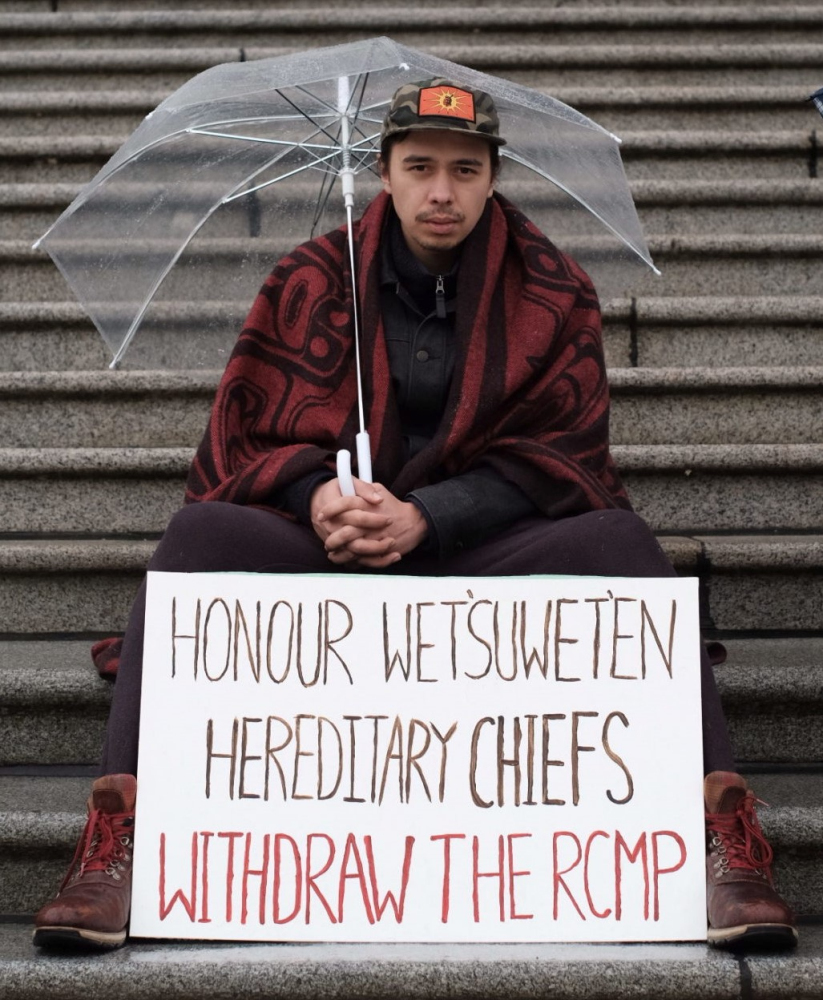
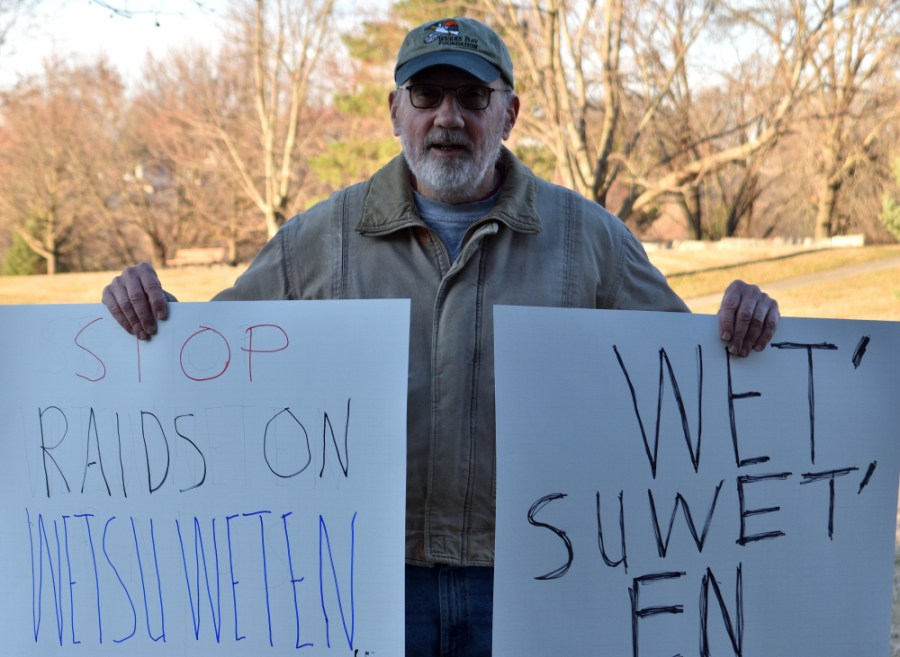
Writing yesterday’s post, Canadian pipeline and railway protests, I sensed many of my friends would disagree with the idea of sabotage. And question why a white male would be so focused on Indigenous ways in general, and the Wet’suwet’en actions to protect their water, land, and culture specifically.
All my words might result in people not being able to see my view of the forest for the trees. So, this morning I step back to show the forest. Some of the trees are found at the end.
The Forest
Settler colonialists stole the land in this country.
The land should be returned to Indigenous control (#LANDBACK) because
It is the right thing to do
Despite broken treaties, it is the legal thing to do
It is the only hope we have to slow down the devastation and begin to heal the land, water, air and ourselves
LANDBACK does not mean taking away private property. It means returning public lands to Indigenous practices
Environmental devastation has been caused by massively excessive fossil fuel burning.
Our environmental catastrophe will cause increasingly severe and frequent storms, drought, and damage.
There is no time for gradually decreasing fossil fuel emissions.
Any nonviolent action (for example, rail sabotage) to stop fossil fuel combustion should be supported.
The capitalist economic system drives excessive fossil fuel combustion, so must be replaced
Mutual Aid is a framework to organize communities in humane ways. Is an alternative to capitalism that can be implemented immediately. I’ve been working with Mutual Aid communities for the past year.
Mutual Aid has been how Indigenous communities worked for thousands of years.
As yesterday’s post said, “use your words to inspire others to action – not to beg for change from government bodies complicit in an active genocide.”
The efforts of the Wet’suwet’en peoples demonstrate how to accomplish the above. Might be our ‘last best hope’. And deserve our support.
The Trees
I am a lifelong Quaker, raised in Quaker communities. I seek and try to follow the guidance from the Spirit or Creator.
When I moved to Indianapolis in 1970, I was horrified by the filthy air (this before catalytic converters). I was strongly led to do whatever I could to address that, which included refusing to have a car.
I came to Indianapolis to participate in the Friends (Quaker) Volunteer Service mission project in inner city Indianapolis. My first experience in justice work with oppressed communities. I learned the importance of building long term relationships.
I tried many ways to convince others to stop burning fossil fuels, with no success.
In 2013 environmental activists recognized the decision to approve the Keystone XL pipeline was a chance, finally, to take on the fossil fuel industry. The Keystone Pledge of Resistance trained thousands to participate in acts of nonviolent civil disobedience. I was trained as an Action Lead, where I learned how to organize local civil disobedience acts, including training local activists.
Around that time, I was led to connect with the Kheprw Institute (KI), a youth mentoring community, because of their environmental work, including making rain barrels and developing an aquaponics system to grow food.
Also, at that time my Quaker meeting participated in the Quaker Social Change Ministry (QSCM) program, which trained us how to make connections with communities experiencing injustice. My experience with the Kheprw Institute made it logical for my Quaker meeting to engage with KI using the QSCM model. I learned much more about social justice work.
Next, there were many ways various groups in Indiana came together to try to stop the Dakota Access Pipeline (DAPL). This is how I began to learn about and engage with Indigenous peoples, who were part of the DAPL resistance.
Standing Rock showed Indigenous peoples from around the world coming together to try to stop DAPL. Demonstrated to necessity of prayer.
When I retired and returned to Iowa, I needed to find those who were doing similar environmental and social justice work. I was excited to make new connections, beginning by attending environmental justice rallies.
In 2018 I was blessed to participate in the First Nation-Farmer Climate Unity March. About a dozen Indigenous and a dozen non-native people spent eight days walking and camping along the route of the Dakota Access pipeline. Walking for ninety-four miles down empty gravel roads provided opportunities to share our stories with each other. That was remarkably successful in achieving one of the goals of the March, to create a community of native and non-native people who began to know and trust each other.
Since the March, there have been many ways we’ve worked together and deepened our relationships.
In January 2020, I came across a YouTube video that showed the Wet’suwet’en peoples in British Columbia evict Coastal GasLink pipeline workers from the pristine land and waters of the Wet’suwet’en territories. After so many years of struggle with little success to stop fossil fuel development I was astounded by the eviction and began to follow that closely.
The eviction was temporary and multiple actions to force the construction of the pipeline over the objections of the Wet’suwet’en continued.
Shortly after that eviction, militarized Royal Canadian Mounted Police (RCMP) violently invaded and arrested Indigenous peoples.
This news was not covered by mainstream media, so the Wet’suwet’en peoples wanted their supports to share what was happening on their social media platforms.
I wrote daily blog posts about the Wet’suwet’en and shared those on Facebook and twitter as well.
I wanted to make sure I was expressing the situation accurately and appropriately. Not being there in person, I connected with a media contact for the Wet’suwet’en which helped in that regard. That was important to do to avoid what happens too often as supporters cause more harm than good.
In February (2020) a few of us had a rally to support the Wet’suwet’en. We advertised the event on Facebook.
Ronnie James, and Indigenous organizer in Des Moines saw the event and came to see who was doing this work. That meeting changed my life. Ronnie taught me a great deal about organizing.
Ronnie patiently taught me the concepts of Mutual Aid, something I hadn’t known about. Eventually I asked if I could join in the work of Mutual Aid and for over a year, I’ve been part of the grocery giveaway program, one of several Mutual Aid projects in Des Moines.
I’m convinced Mutual Aid is the model needed to address justice and survival issues.
The Wet’suwet’en peoples are being attacked and arrested again by the RCMP.
Environmental devastation continues to unfold with much more severe weather occurring more frequently. With both the pollution of water and increasing drought.
Groups like the Extinction Rebellion are using direct action to force attention on the existential threats of environmental chaos and the need to act now.
Too many tipping points have been reached to stop evolving environmental chaos.
Not only the environment, but social, economic, and political systems are collapsing.
Mutual Aid is the way to replace those systems and provide immediate help to all who are impacted.
Indigenous peoples’ intergenerational trauma from the policies of forced assimilation is overwhelming as the remains of native children are found on the grounds of the so-called boarding schools
Indigenous ways are needed to attempt to heal Mother Earth.
Indigenous peoples are taking back control of their lands.
Here is the latest news about the Royal Canadian Mounted Police raid on the Wet’suwet’en territories.
Our ancient allies again show us their support as we have done for centuries. We will also be connected and stand beside each other! https://t.co/IO21p4xdex
"…serious concerns for the safety of Wet’suwet’en land defenders and their supporters, considering previous arrests and reports that officers deployed in 2019 were approved to use lethal oversight during the execution of the injunction order."https://t.co/z92DAwM23D
Dozens of heavily armed RCMP officers arrived en masse on Wet'suwet'en territory today, breached @Gidimten checkpoints and have made at least 15 arrests of land defenders.
BC Pours Resources into RCMP Raid on Wet’suwet’en Territory during Provincial Climate Emergency: "Prioritizing fossil fuel expansion while British Columbians grapple with a climate emergency is an alarming, criminal and incredibly poor decision" https://t.co/qTT0nTTXNVpic.twitter.com/4dVKt55wtN
One worker stuck in camp behind a blockade line says CoastalGasLink didn't tell pipeline crews they had been evicted from the territory. "A lot said they would have left," they told. "No one actually told us" @TheTyeehttps://t.co/3W9rsbFIY1
I’ve followed the work of Chase Iron Eyes and the Lakota People’s Law Project for years. He was involved in the Dakota Access pipeline struggle at Standing Rock, including begin arrested there. In the video below, he and his daughter, Tokata, talk about why everything discussed at COOP26 isn’t nearly enough.
As we near the end of COP26 — the United Nations’ most recent climate conference in Glasgow, Scotland — we have reason for concern. Because, while nations the world over have again come together to talk about addressing the climate emergency, activists — including a host of Indigenous People and organizations — are watching closely and sending a strong message from the frontlines: everything being discussed and promised at COP26 isn’t nearly enough. This past week, my daughter, Tokata, and I appeared on Christiane Amanpour’s show, broadcast on both PBS and CNN, to talk about COP26, our anti-pipeline stands, and the future of Indigenous and climate justice.
As Tokata’s friend, Greta Thunberg, put it in Glasgow, “It is not a secret that COP26 is a failure. It should be obvious that we cannot solve the crisis with the same methods that got us into it in the first place.”
I suspect you’ll agree with Greta, Tokata, and me when we say solving global warming isn’t going to be easy. It will demand sacrifices on the part of individuals and nations and a willingness to embrace a diversity of perspectives — from the latest climate science to the wisdom of Indigenous peoples. Our voices matter, because we have long practiced living in harmony with Unci Maka, our Grandmother Earth, and all the other species who inhabit her.
In the video he says the human species is at a very vulnerable, but teachable moment. Our social contract is broken and requires social, economic, and racial justice. That solutions to our environmental crisis depend on Indigenous liberation. And yet, he is hopeful because Standing Rock raised global consciousness and once progress is made, there is no turning back.
There was an emotional part of the video, when Tokata was asked how she felt about the remains of native children being uncovered on the grounds of the institutions of forced assimilation. About learning of these atrocities while she is in school herself, a tool of the genocide of her people. She said she gives thanks for those children. And feeling she is carrying on their legacy.
The video ends with Chase talking about their work building bridges with non-Indigenous people. Let’s come together.
















 LANDBACK Friends