“Fourth of He Lies”

NOTE: This is an edited re-posting from the year 2021. The events below occurred then, not today. There were similar events in other years. See: Monuments to White Supremacy July 4, 2020.

Also from the Great Plains Action Society: Decapitating Colonialism: White Supremacist Statues, Monuments, & Symbolism by Alexandrea Flanders.

I’ve come a long way from what I, a white person, was taught in school. About the heroes and battles that brought independence from the British. And just a sentence or so about taking over Indigenous lands, and the slave trade. All whitewashed and presented as acceptable. Even referred to as “Manifest Destiny”.

“He has excited domestic insurrections amongst us, and has endeavoured to bring on the inhabitants of our frontiers, the merciless Indian Savages, whose known rule of warfare, is an undistinguished destruction of all ages, sexes and conditions.”

— Declaration of Independence

The Terrible Origins of July 4th

The crown and the colonists were both determined to seize lands from native peoples and to continue enslavement. But their interests were also hostile to one another and war was the inevitable result. White settlers wanted full independence for themselves and no control over their actions at all.

The indigenous populations were nearly eradicated in the decades long quest for conquest. Expanding slavery was an integral part of those efforts against native peoples. Genocide could not be carried out completely nor could any accommodation be made with European nations in the quest to control land from sea to shining sea. That is why the settlers declared their independence.

The process of decolonizing ourselves is a difficult one. We have been cut off from our history and we don’t know where or how our people played a part. As we try to educate ourselves we may find it difficult to give up traditions that we have claimed as our own. Regardless of personal choices made on July 4th, the causes of the Declaration of Independence must be known and acknowledged. That is the beginning of true independence for Black people.

THE TERRIBLE ORIGINS OF JULY 4TH By Margaret Kimberley, Black Agenda Report.
July 3, 2021

NOTE: This event was in the year 2021, not today.

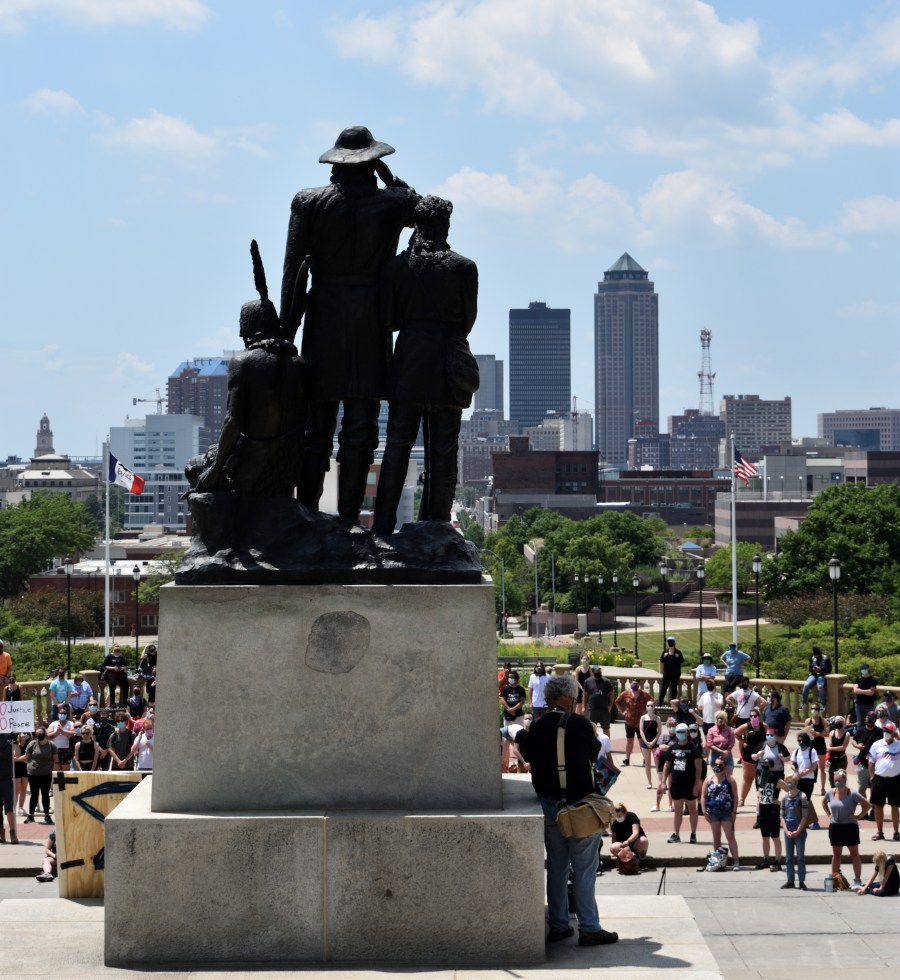
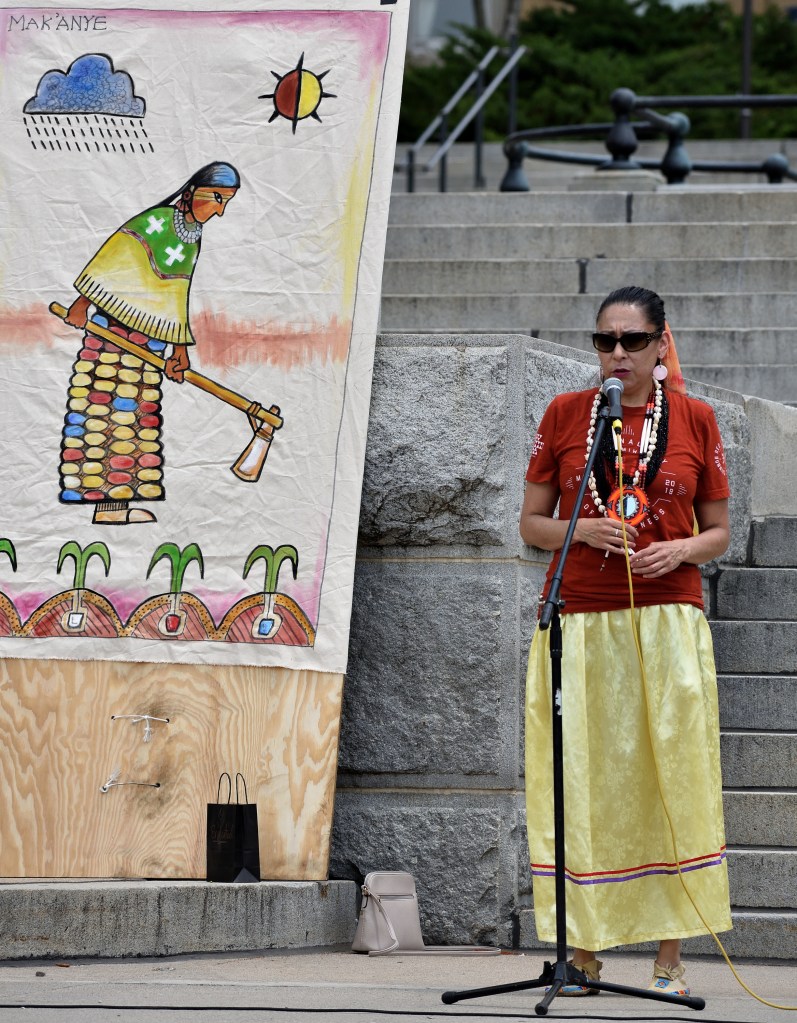
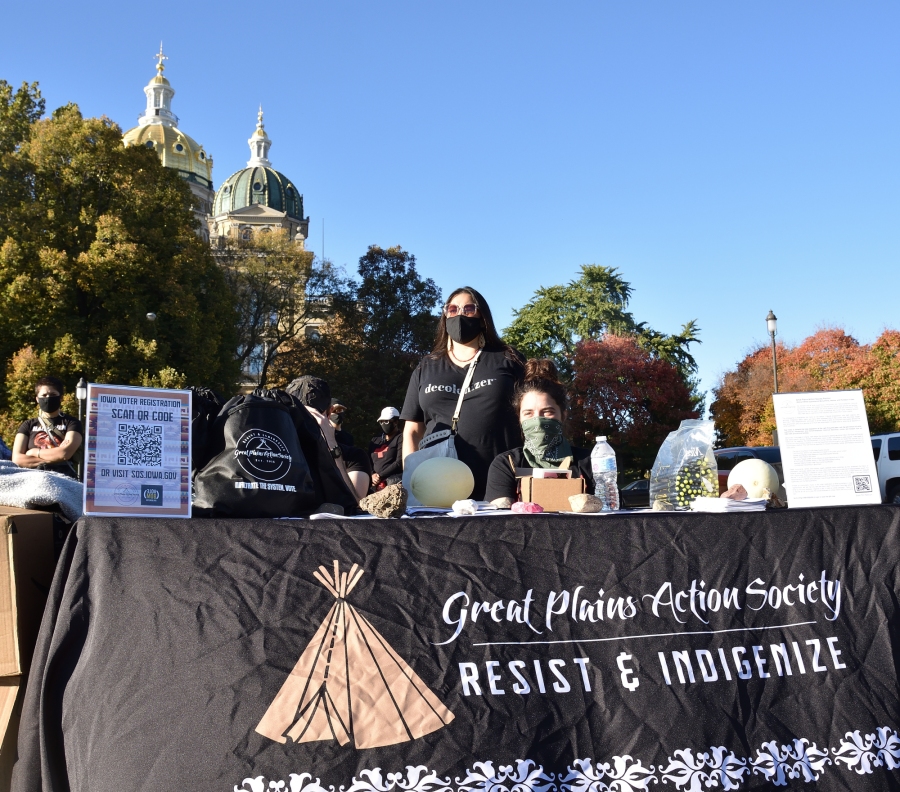
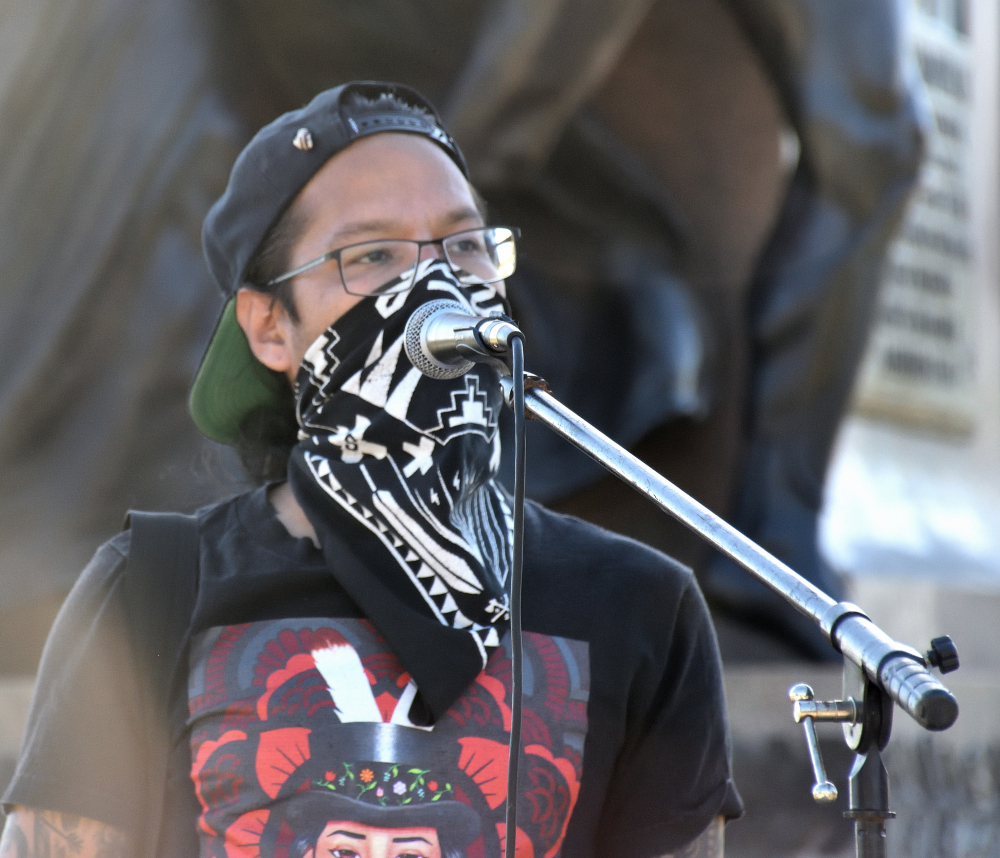
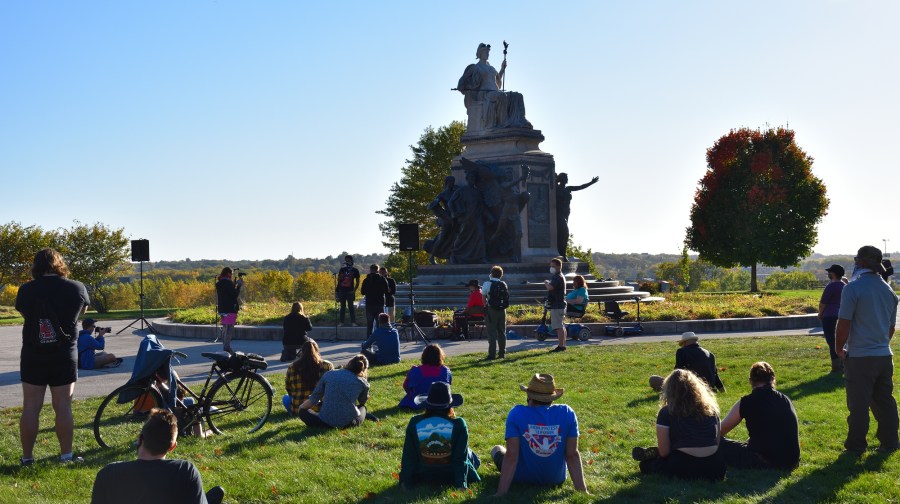
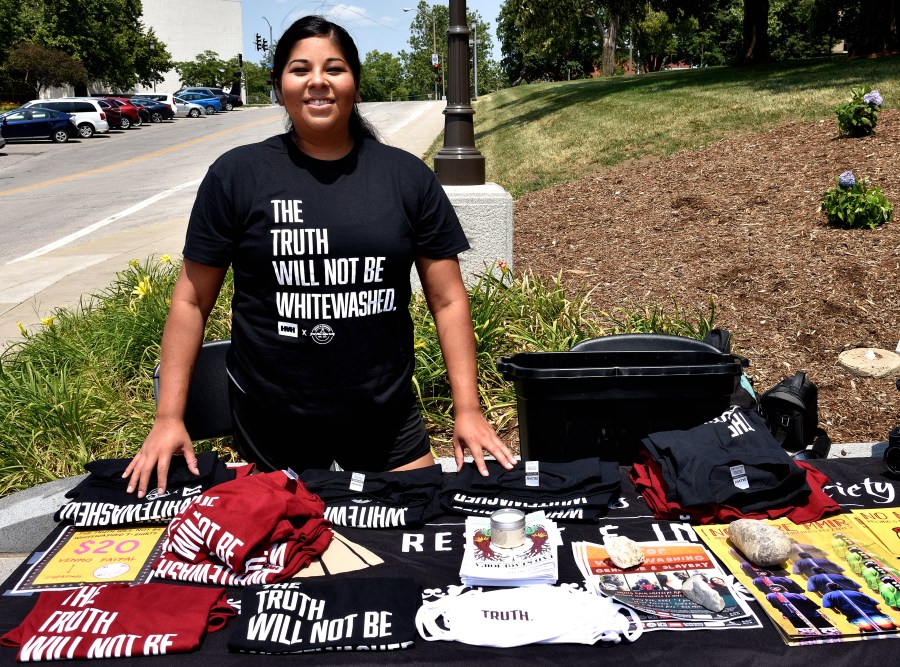
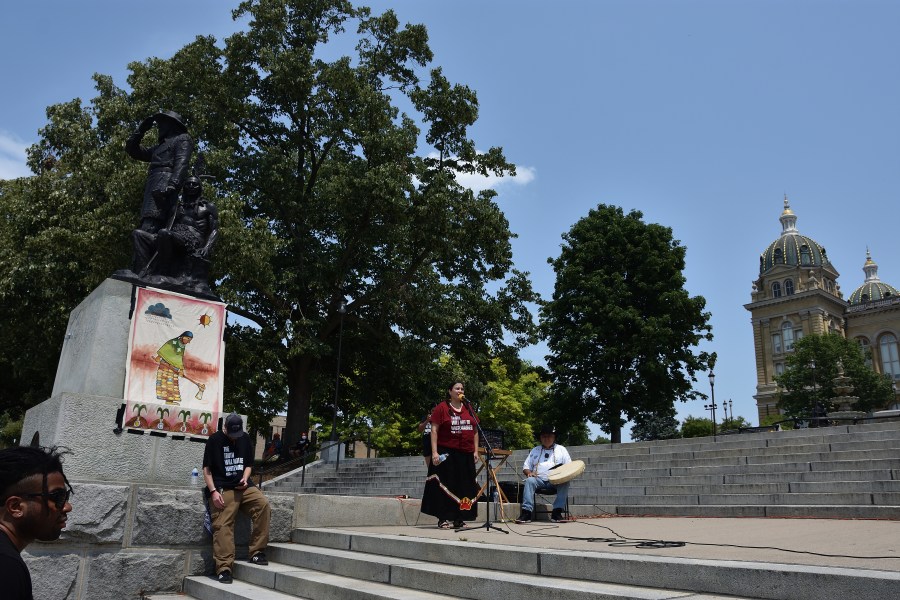
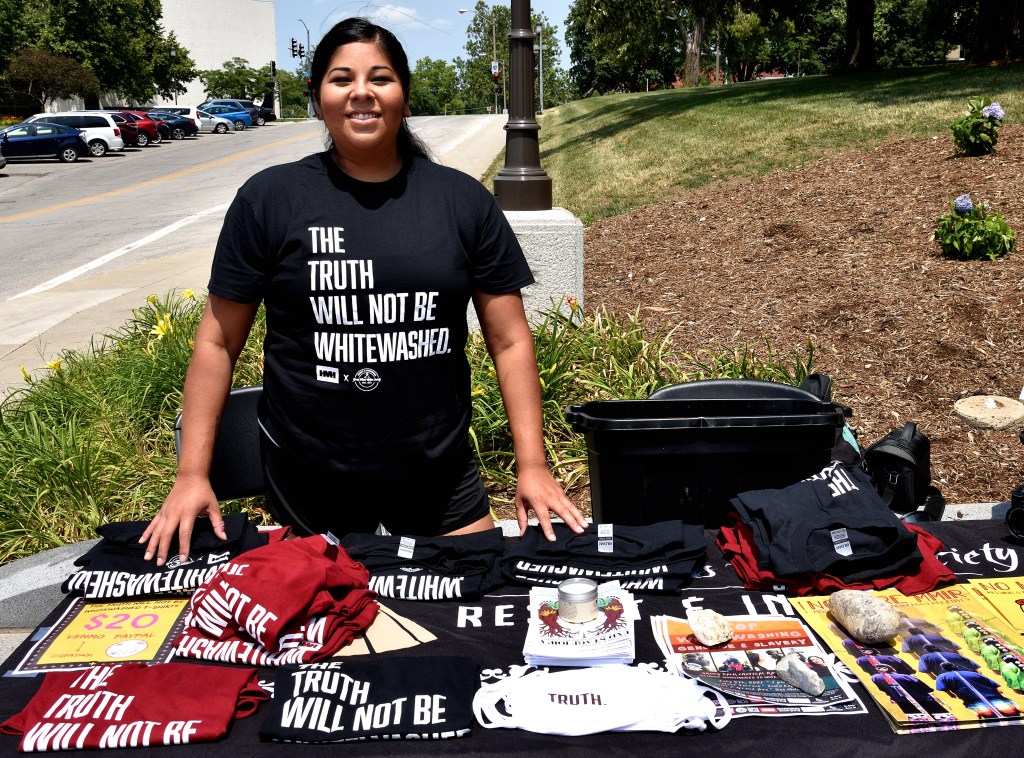
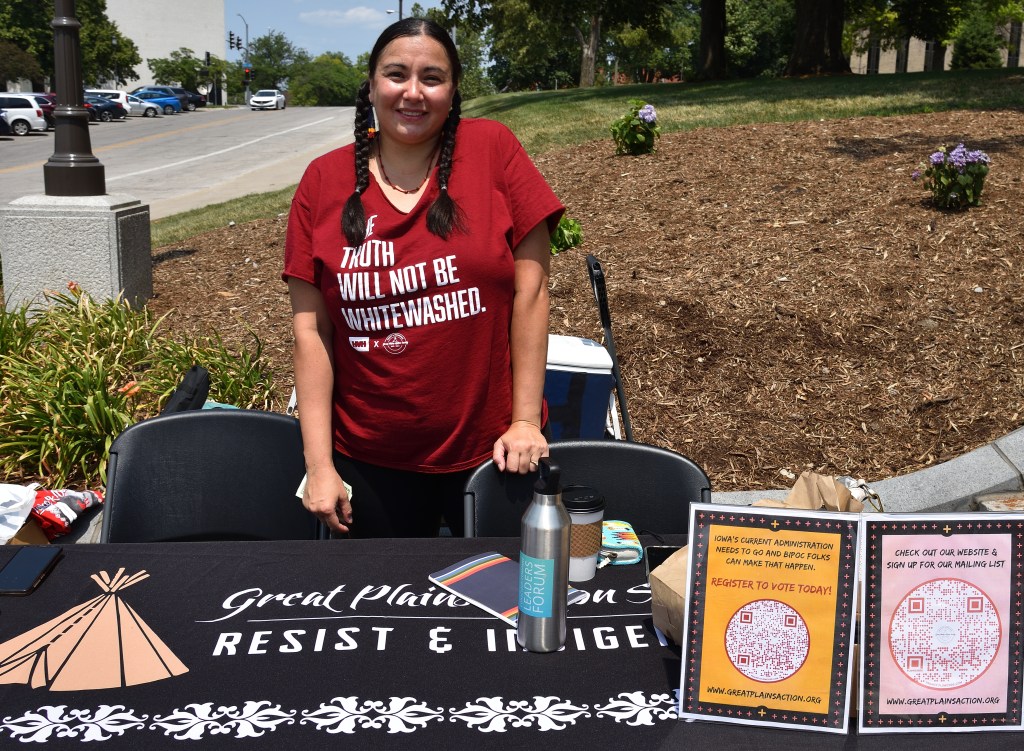
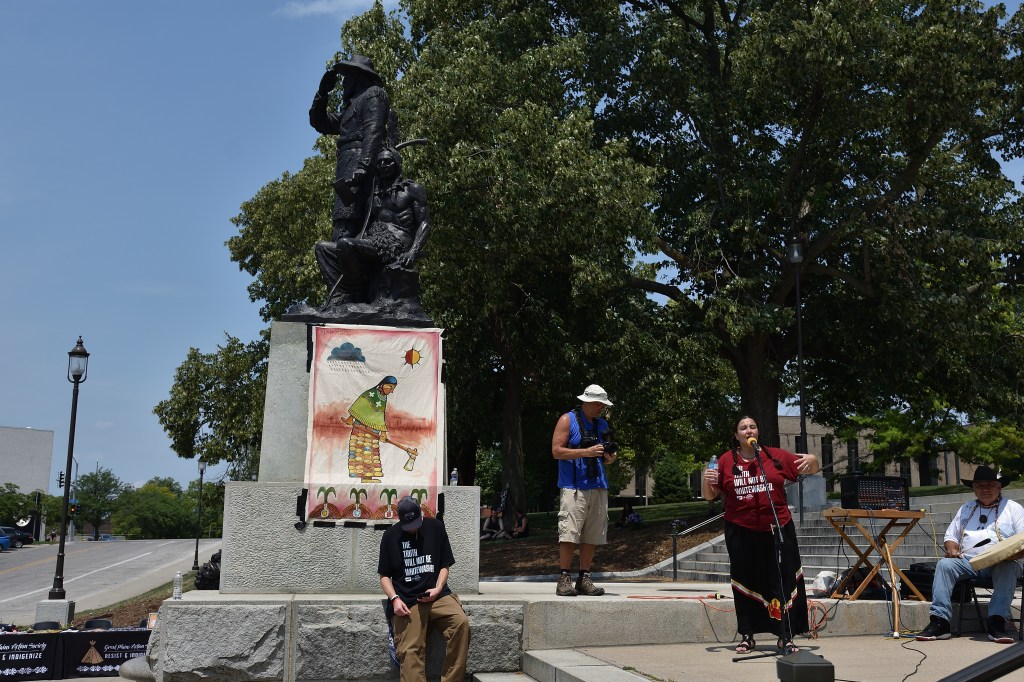
The Great Plains Action Society has organized gatherings at the Iowa State Capitol for several years on July 4th, referred to as the Fourth of He Lies. I attended these events and took the photos below. My Des Moines Mutual Aid community has been involved.

In 2021 the event was called Stop Whitewashing Genocide and Slavery. Bring Back Critical Race Theory & Remove Monuments to White Supremacy!

Indigenous Led | Great Plains Action Society I United States

On July 4th, stand with Great Plains Action Society, Iowa Citizens for Community Improvement, Ní Btháska Stand Collective, Des Moines Black Liberation Movement, Humanize My Hoodie, Revolutionary Action Party, Quad Cities Interfaith, Iowa Coalition for Collective Change, and Des Moines Mutual Aid!

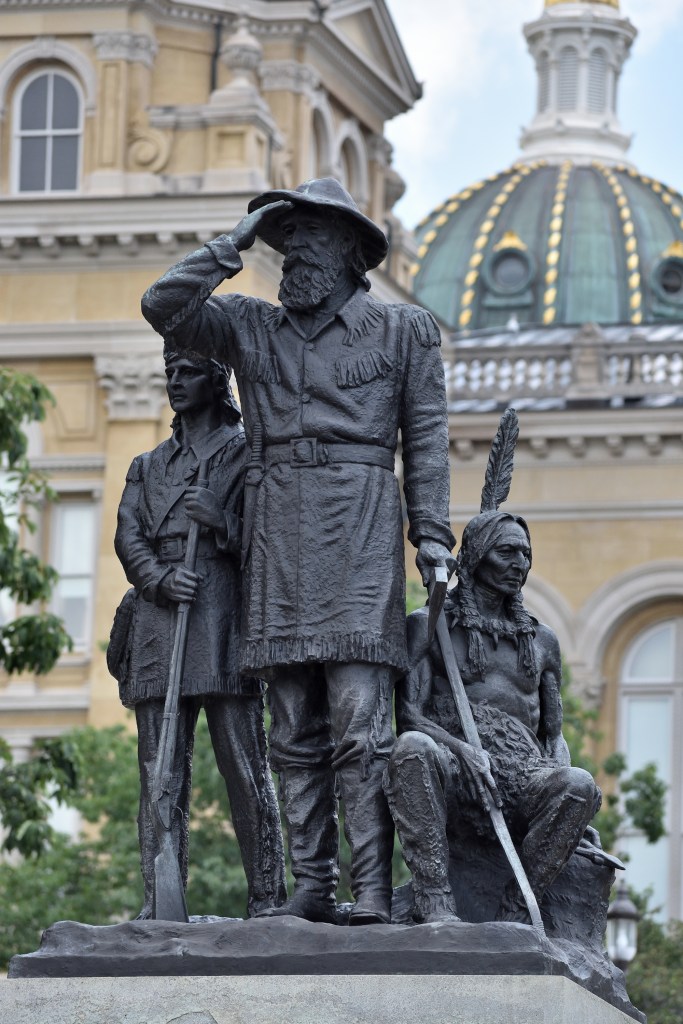
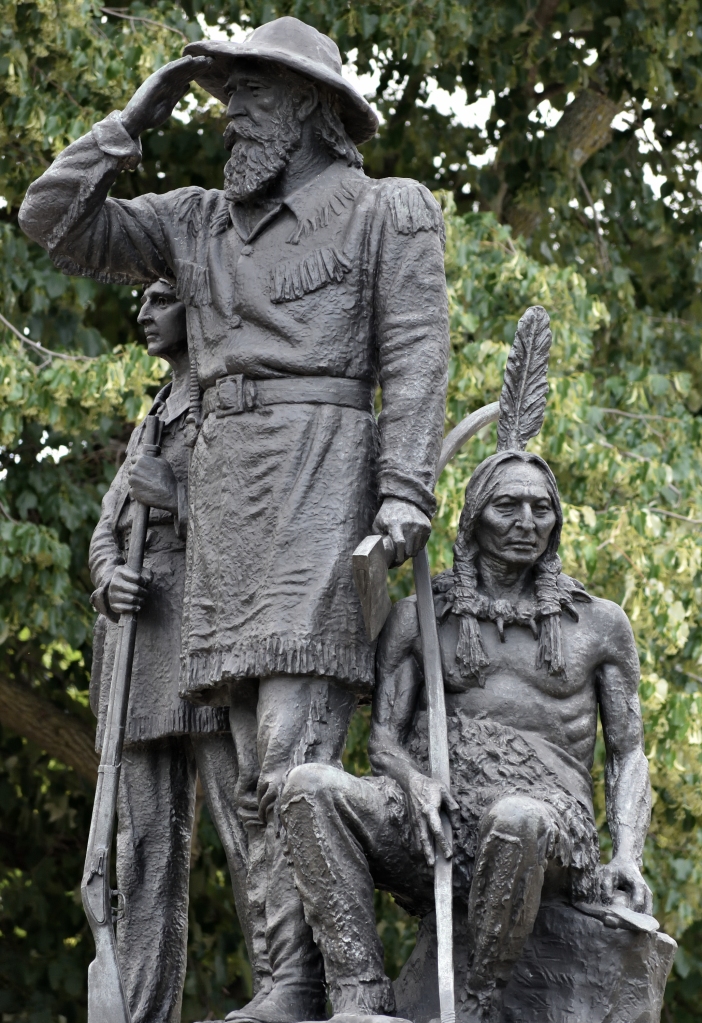
Join us on “Fourth of He Lies” to demand that the Iowa legislators remove whitewashed monuments to white supremacy in Iowa. Organizers will present a petition demanding that all racist, misogynistic, homo/transphobic, whitewashed historical depictions be removed from all state grounds and facilities. These monuments fall into the realm of hate propaganda and make folks feel unwelcome in public spaces. So, we need legislation that removes all monuments, murals, and depictions of white supremacist persons, acts, and ideologies from all Iowa state grounds and state-funded institutions.

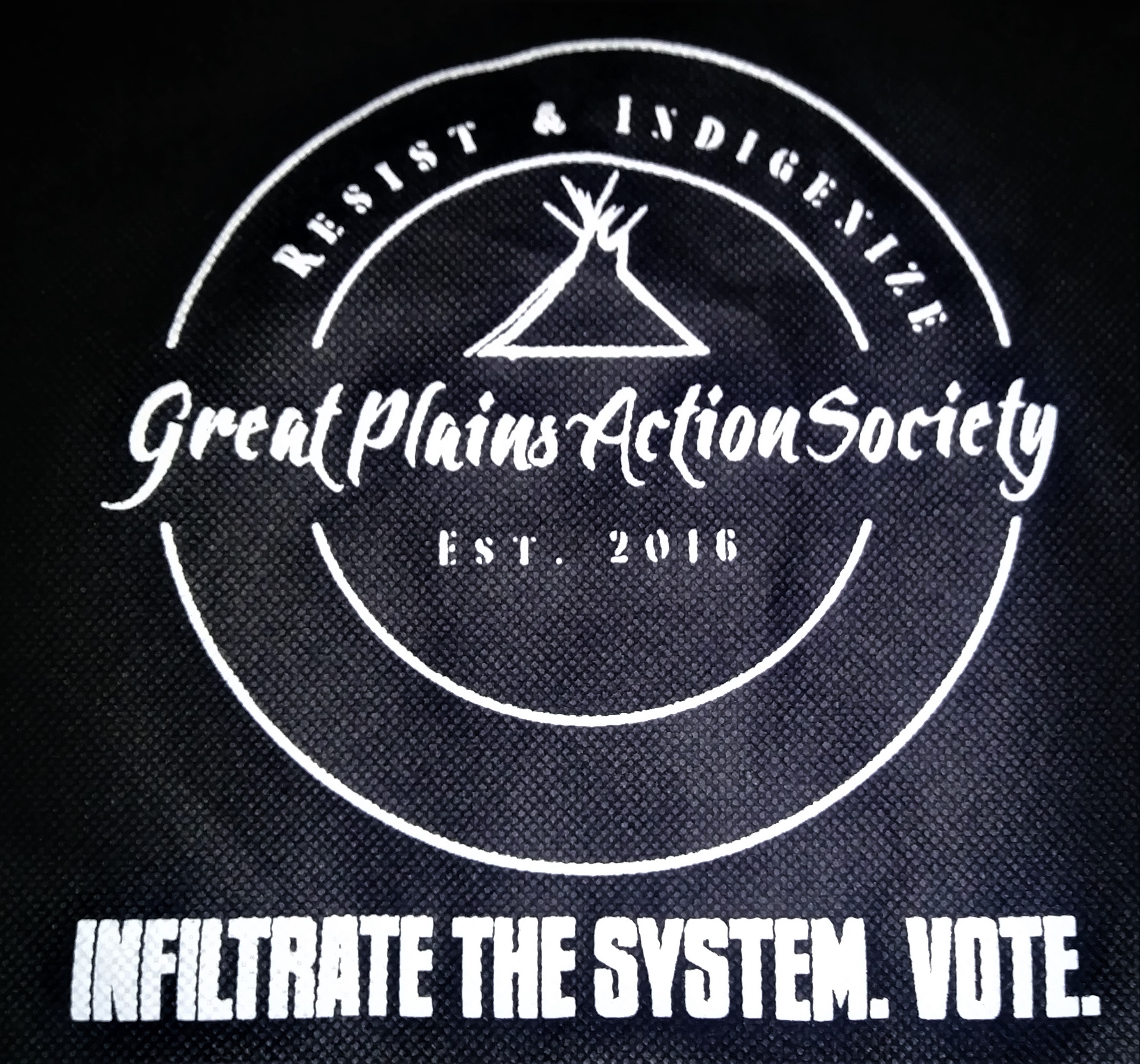
Great Plains Action Society

(C)2021 Jeff Kisling

An Epistle to Friends Regarding Community, Mutual Aid and LANDBACK

To protect all living-beings and sacred sites is a feminine act and in complete defiance to Christopher Columbus’ worldview, which is the narrative that we counter every time we celebrate Indigenous People’s Day instead of Columbus Day. –Sikowis Nobiss


It has become clear to some of us who are called Friends that the colonial capitalist economic system and white supremacy are contrary to the Spirit and we must find a better way. We conscientiously object to and resist capitalism and white supremacy.

Jeff Kisling

I am sometimes discouraged that so much work by Indigenous Peoples, so much that I have tried to do, rarely results in any progress toward justice. For White people, we must begin by de-colonizing ourselves.


Dear Friends

The measure of a community is how the needs of its people are met. No one should go hungry, or without shelter or healthcare. Yet in this country known as the United States millions struggle to survive. The capitalist economic system creates hunger, houselessness, illness that is preventable, and despair. A system that requires money for goods and services denies basic needs to anyone who does not have money. Black, Indigenous, and other people of color (BIPOC) are disproportionately affected. Systemic racism. The capitalist system that supports the white materialistic lifestyle is built on stolen land and genocide of Indigenous peoples, and the labor of those who were enslaved in the past or are forced to live on poverty wages today.

Capitalism is revealed as an unjust, untenable system, when there is plenty of food in the grocery stores, but men, women and children are going hungry, living on the streets outside. White supremacy violently enforces the will of wealthy white people on the rest of us.

It has become clear to some of us who are called Friends that the colonial capitalist economic system and white supremacy are contrary to the Spirit and we must find a better way. We conscientiously object to and resist capitalism and white supremacy.

capitalism has violated the communities of marginalized folks. capitalism is about the value of people, property and the people who own property. those who have wealth and property control the decisions that are made. the government comes second to capitalism when it comes to power.

in the name of liberation, capitalism must be reversed and dismantled. meaning that capitalistic practices must be reprogrammed with mutual aid practices. 
Des Moines Black Liberation Movement

Mutual Aid

How do we resist? We rebuild our communities in ways not based on money. Such communities thrive all over the world. Indigenous peoples have always lived this way. Generations of white people once did so in this country. Mutual Aid is a framework that can help us do this today.

The concept of Mutual Aid is simple to explain but can result in transformative change. Mutual Aid involves everyone coming together to find a solution for problems we all face. This is a radical departure from “us” helping “them”. Instead, we all work together to find and implement solutions.  To work together means we must be physically present with each other. Mutual Aid cannot be done by committee or donations. We build Beloved communities as we get to know each other. Build solidarity. An important part of Mutual Aid is creating these networks of people who know and trust each other. When new challenges arise, these networks are in place, ready to meet them.

Another important part of Mutual Aid is the transformation of those involved. This means both those who are providing help and those receiving it.

With Mutual Aid, people learn to live in a community where there is no vertical hierarchy. A community where everyone has a voice. A model that results in enthusiastic participation. A model that makes the vertical hierarchy required for white supremacy impossible.

Commonly there are several Mutual Aid projects in a community. The initial projects usually relate to survival needs. One might be a food giveaway. Another helping those who need shelter. Many Mutual Aid groups often have a bail fund, to support those arrested for agitating for change. And accompany those arrested when they go to court.

LANDBACK

The other component necessary to move away from colonial capitalism and white supremacy is LANDBACK or ReMatriate.

But the idea of “landback” — returning land to the stewardship of Indigenous peoples — has existed in different forms since colonial governments seized it in the first place. “Any time an Indigenous person or nation has pushed back against the oppressive state, they are exercising some form of landback,” says Nickita Longman, a community organizer from George Gordon First Nation in Saskatchewan, Canada.

The movement goes beyond the transfer of deeds to include respecting Indigenous rights, preserving languages and traditions, and ensuring food sovereignty, housing, and clean air and water. Above all, it is a rallying cry for dismantling white supremacy and the harms of capitalism.

Returning the Land. Four Indigenous leaders share insights about the growing landback movement and what it means for the planet, by Claire Elise Thompson, Grist, February 25, 2020

ReMatriate

“For Indigenous Peoples Day, I would like for folks to better understand and appreciate this movement which has been working its way into the dominant public narrative over the past few years. As a hashtag or sign at a protest, the term Land Back is straightforward. It is a demand that stolen land, sacred sites and sovereign stewardship be returned to whom it was stolen from: Indigenous peoples. It has become popular movement slang used in our ongoing efforts to fend off relentless theft and racial injustice, and a call for reparations.
Land Back is a helpful term but I prefer to use ReMatriate, as it is more inclusive of the many issues that have arisen from land theft, and better describes the Indigenous fight to defend Mother Earth. It is a call to reestablish Indigenous landscapes, bring back Indigenous traditional ecological knowledge and to give stolen power back to the feminine. In a world where unfettered patriarchal violence and greed has brought us to the precipice of a climate extinction, ReMatriation is the return of the matriarchy. This counterbalances the forces of toxic masculinity that, through Christian colonial-capitalist violence, are intent on holding all power and controlling all the life, land and resources on our Mother Earth.”

PERSPECTIVES: Why “ReMatriate” is a more inclusive term for returning land to Indigenous peoples by Sikowis Nobiss, reckon, Oct 3, 2023


What will Friends do?

It matters little what people say they believe when their actions are inconsistent with their words.  Thus, we Friends may say there should not be hunger and poverty, but as long as Friends continue to collaborate in a system that leaves many without basic necessities and violently enforces white supremacy, our example will fail to speak to mankind.

Let our lives speak for our convictions.  Let our lives show that we oppose the capitalist system and white supremacy, and the damages that result.  We can engage in efforts, such as Mutual Aid, LANDBACK, and ReMatriate to build Beloved community. To reach out to our neighbors to join us.

We must begin by changing our own lives if we hope to make a real testimony for peace and justice.


ReMatriate and Land Back

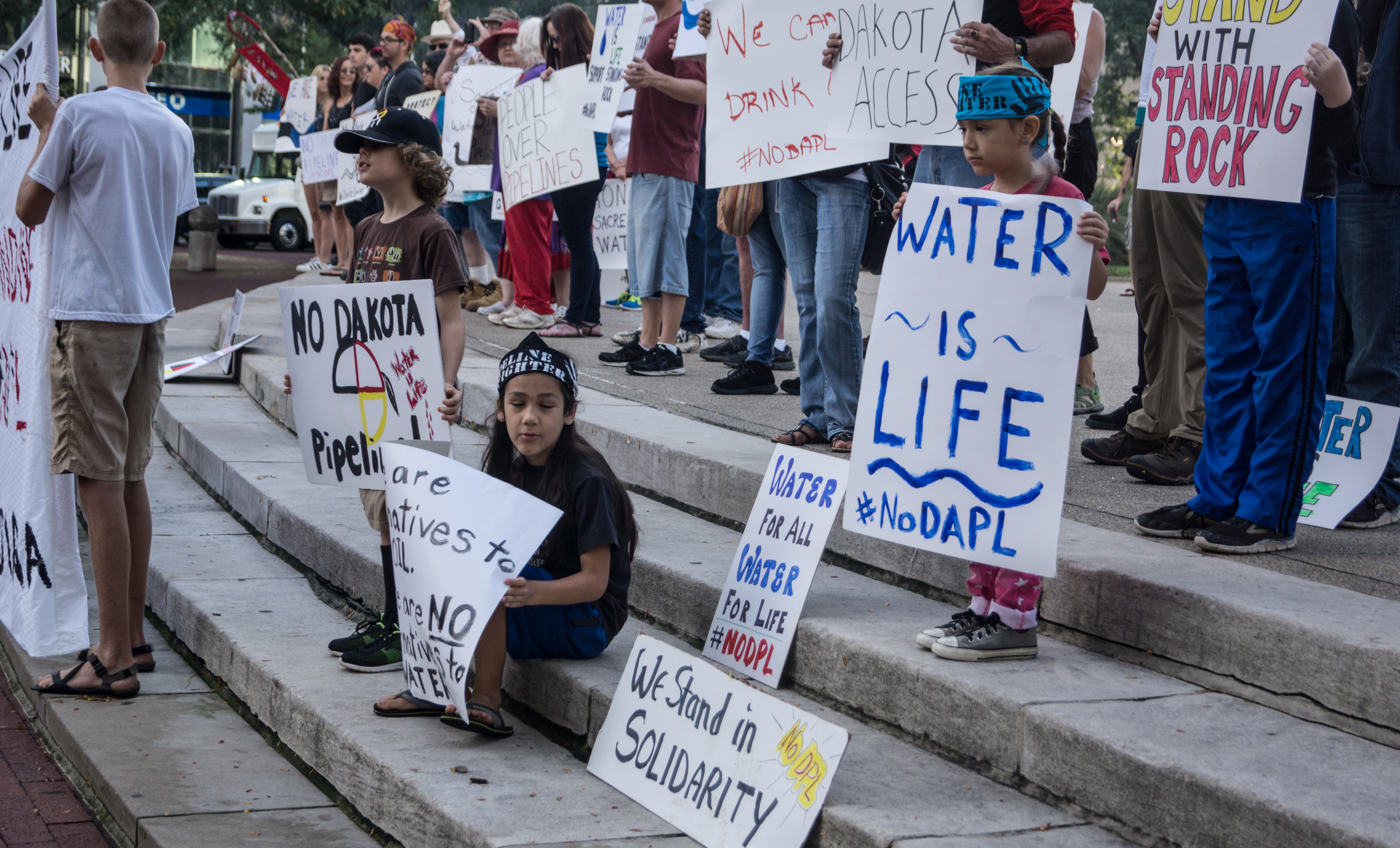
I remember the moment when I woke up in my tent for the first time in the Oceti Sakowin camp north of the Standing Rock Reservation during the fight to stop the Dakota Access Pipeline in 2016. Everywhere I looked Indigenous people were reclaiming space and power. We all felt a deep need to steward the land, because we were tired of the harm that colonizers had inflicted upon us. It was the first time in my life that I truly felt the power of the Land Back movement.

PERSPECTIVES: Why “ReMatriate” is a more inclusive term for returning land to Indigenous peoples by Sikowis Nobiss, reckon, Oct 3, 2023

Thus begins another excellent article by my friend, Sikowis Nobiss.

The subheading of that article continues: “In a world where unfettered patriarchal violence and greed has brought us to the precipice of a climate extinction, ReMatriation is a call to reestablish Indigenous landscapes and give stolen power back to the feminine.”

“For Indigenous Peoples Day, I would like for folks to better understand and appreciate this movement which has been working its way into the dominant public narrative over the past few years. As a hashtag or sign at a protest, the term Land Back is straightforward. It is a demand that stolen land, sacred sites and sovereign stewardship be returned to whom it was stolen from: Indigenous peoples. It has become popular movement slang used in our ongoing efforts to fend off relentless theft and racial injustice, and a call for reparations.

Land Back is a helpful term but I prefer to use ReMatriate, as it is more inclusive of the many issues that have arisen from land theft, and better describes the Indigenous fight to defend Mother Earth. It is a call to reestablish Indigenous landscapes, bring back Indigenous traditional ecological knowledge and to give stolen power back to the feminine. In a world where unfettered patriarchal violence and greed has brought us to the precipice of a climate extinction, ReMatriation is the return of the matriarchy. This counterbalances the forces of toxic masculinity that, through Christian colonial-capitalist violence, are intent on holding all power and controlling all the life, land and resources on our Mother Earth.”


First, a definition: “Rematriation is a powerful word that Indigenous women of Turtle Island use to describe how they are restoring balance to the world…it means ‘Returning the Sacred to the Mother.”

The Indigenous concept of rematriation champions a return to our origins, to life and co-creation, and a focus on Mother Earth with the reclaiming of all kinds of things, such as ancestral remains, yes, but also spirituality, cultural practices, knowledge, resources, and seeds.

Rematriate by  Dr. Jessica R. Metcalfe, Beyond Buckskin, Nov 12, 2021


Returning the land to Indigenous peoples is exceedingly hard

Truthfully, there is just a blatant disregard for the health of the land, the water and the air we breathe. Where there used to be tallgrass prairie, oak savannah, and woodland there are now massive monocropped fields of corn and soy with ethanol plants, meatpacking plants, and Concentrated Animal Feed Operations dotting the landscape.

Yet I have found that returning the land to Indigenous peoples is exceedingly hard. I can raise funds to fight a pipeline or end the Missing and Murdered Indigenous Relatives crisis, but it is almost impossible to raise funds as a non-profit to buy just one acre of land in Sioux City to start a Native urban garden, or for even a few acres near Des Moines so we can reclaim first foods and ReMatriate the prairie.

My friend Foxy Onefeather carried this sign about Missing and Murdered Indigenous Relatives (sometimes referred to at MMIW-Missing and Murdered Indigenous Women) during our eight-day walk, the First Nation-Farmer Climate Unity March, from Des Moines to Fort Dodge in 2018. Sikowis helped organize the march.

I first heard Sikowis and Donnielle Wanatee speak at our Quaker Yearly Meeting in 2017, in a panel discussion about building bridges with Native peoples.

I have spoken to hundreds of folks about Land Back and ReMatriation. I have also spoken to congregations such as the Mennonites, the Quakers, Nuns and Nones, The Beloved Community, The United Church and Catholic Workers. In every one of these conversations I hear a cocktail of white guilt combined with a desire to be in proximity to Indigenous folks and our movements that ultimately just leads to more inaction.

These conversations always leave me feeling tokenized and angry. Despite the fact that giving the land back to Native stewards is the single most powerful act that white folks with generations of inherited wealth—which can be traced back to stolen land—can do to counter colonialism, none of these conversations have ever led to any change.

ReMatriation is a movement

ReMatriation describes an entire movement that is not just intent on returning land, but making sure that Indigenous lifeways return so we can build a regenerative and compassionate world economy. While we will not ReMatriate the world in my lifetime, the term allows a new understanding. I consider this planet to be my mother and therefore she is a matriarch. I believe that by doing this work, I am following the path my ancestors put me on to keep my mother safe.

Indigenous People’s Day

To protect all living-beings and sacred sites is a feminine act and in complete defiance to Christopher Columbus’ worldview, which is the narrative that we counter every time we celebrate Indigenous People’s Day instead of Columbus Day.

Sikowis Nobiss, MA is Nêhiyaw/Saulteaux of the George Gordon First Nation and the founder and Executive Director of Great Plains Action Society. When she imagines a strong political infrastructure, societies built on compassion, and a regenerative economy, she sees a focus on relationships and community. She believes we can get there through Indigenous ideologies and practices, which are the antitheses to Christian fundamentalism and colonial capitalism. Sikowis is mom, a writer, a speaker, an organizer and an earth defender fighting to decolonize the world. Learn more about Great Plains Action Society at greatplainsaction.org.


Sikowis references this article, which is an excellent discussion of what Land Back means: LAND BACK! What do we mean? by Ronald Gamblin, 4Rs NLC Coordinator, 4Rs Youth Movement. This quote is from that article:

“When you hear the words decolonization, white supremacy, patriarchy or even racism, do you feel something? Do you get a chill down your back, randomly start crossing your arms, get tense all over your body, or even just feel an urge to resist? Well good! When your body is cold it shivers, when it’s hungry it growls, when it’s in fear it shakes and when it’s sad it cries. Your body is meant to respond, whether that be physical or emotional, and it’s the same when deconstructing what you’ve been taught. It tells you that something is there and that you must go through it and find ways to process it.” – Kris Archie, Executive Director of the Circle on Philanthropy and Aboriginal Peoples


A few comments:

I don’t usually quote so much from other sources, as I did here. But this is Sikowis’ story, meant to better inform people about Land Back and ReMatriation.

Regarding my use of the word friend, that is not to call attention to myself. Rather that is to let the reader know that I know these people and firmly believe in what they stand for. I am blessed to know them as friends of mine.

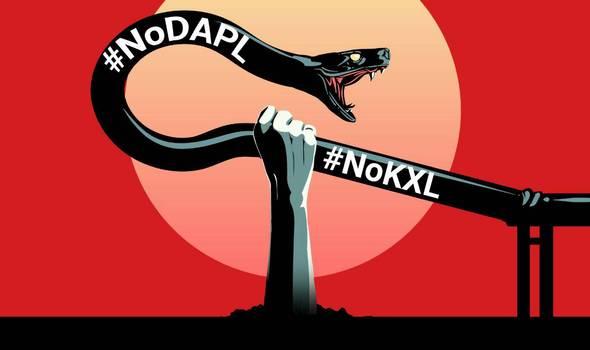
We have some parallel paths. In Indianapolis I worked against the Keystone and Dakota Access Pipelines. That included organizing and training people to engage in nonviolent civil disobedience.

Yesterday, I wrote an update related to my website, LANDBACK Friends, that includes a detailed document about the relationships between the Great Plains Action Society and Midwest Quakers. As the name implies, LANDBACK Friends is my writing, hoping to inform Quakers (Friends) about LANDBACK and now, ReMatriate.

These are some of the photos I’ve taken over the past few years related to Indigenous People’s Day and related events in Iowa and Indianapolis.

Indigenous Peoples’ Day

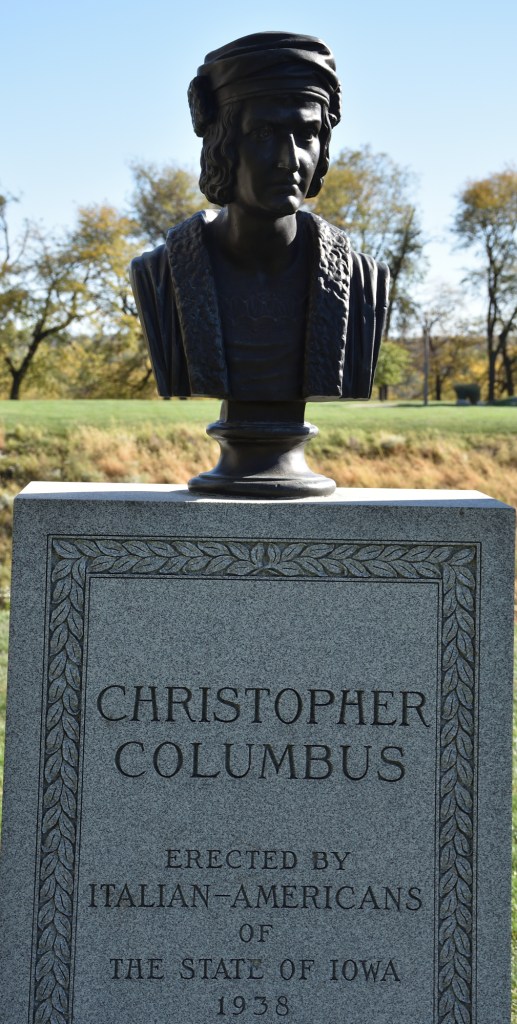
Because of the upsurge in COVID cases in Iowa, my friends at the Great Plains Action Society decided not to hold a public gathering this Indigenous Peoples’ Day. Instead, they participated in a guerrilla street art action to push back at the recognition of Columbus Day in Iowa and the nation.

Celebrate Indigenous People’s Day by Abolishing Columbus Day

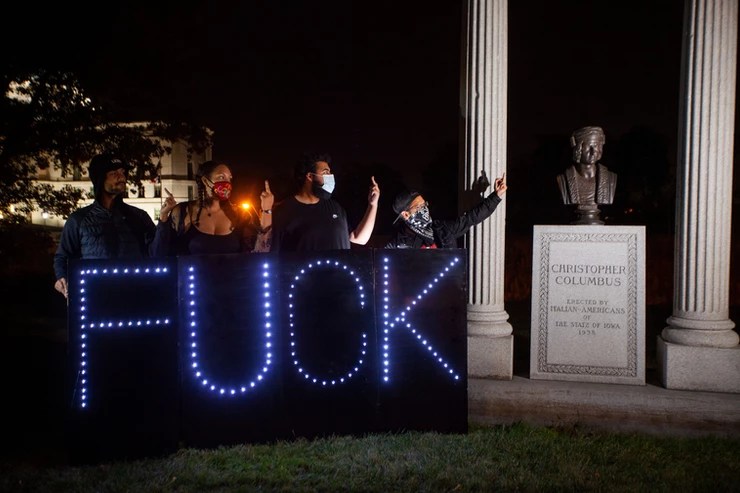
To celebrate Indigenous People’s Day, we participated in a guerrilla street art action to push back at the recognition of Columbus Day in Iowa and the nation. The art is inspired by the Overpass Light Brigade and utilizes LED lights to spell out movement messaging tackling various issues. The art build and action was led by Qırımlı Frontlines Organizer, Mahmud Fitil. Ronnie James provided on-the-ground support, gathering together an amazing crew of local radicals to help hold the art. The photos were taken by Karla Conrad, a movement photographer well known for her work in Iowa. The following piece to accompany the photos is written by Sikowis Nobiss.

Indigenous People’s day is a time to celebrate Indigenous cultures, practices, and success but it is also a powerful political statement about and against whitewashed history as well as colonial violence. It is observed on the same date as Columbus Day with the goal of ending the celebration of a man that did not, in fact, discover America who was also a rapist, a murderer, and slave trader. Unfortunately, the bulk of declarations and proclamations recognizing Indigenous Peoples in cities, counties, and states across the country do not abolish Columbus Day. For instance, President Joe Biden issued a proclamation last Friday to recognize Indigenous Peoples’ Day, which is the first time a sitting US president has commemorated this holiday, but Columbus Day is still a national holiday, which means the nation state still celebrates and upholds colonization, genocide, and slavery. Most federal employees will receive the day off to observe Columbus Day, which is still endorsed by Congress.

The state of Iowa needs to completely abolish Columbus Day and statues uplifting white supremacy that perpetuate hate and whitewash our history. Hate speech alone is not considered a hate crime under Iowa code, however, the state itself should be held to a different standard and barred from entering or perpetuating behavior that undermines a person’s mental well-being, safety, and sense of belonging in this state. Furthermore, the Iowa constitution already protects against discrimination based on religion, sexual orientation, age, race, national origin, and disability. Since Columbus Day and monuments to white supremacy celebrate genocide, land theft, and enslavement, they perpetuate and legitimize discrimination as they make many BIPOC residents unwelcome in public spaces that trigger very real historical traumas.

Sikowis Nobiss , Great Plains Action Society

Photo by Karla Conrad

The following is about Indigenous Peoples’ Day last year. My friend Ronnie James appears below, with the bust of Christopher Columbus (and he’s mentioned above for his role in the guerrilla street art.)


Remarks at Indigenous Peoples Day 2020 in Des Moines, Iowa State Capitol grounds, October 12, 2020, by Alejandro Murguia-Ortiz, American Friends Service Committee

Photos from Indigenous Peoples’ Day 2020

Lakota Nation vs. the United States

Art can be a powerful tool for justice and activism. Can reach the heart when the mind is closed.

Following is an announcement about a documentary film that is being produced, Lakota Nation vs. the United States. The announcement helps explain why the Black Hills are a focus of #LANDBACK.

LOS ANGELES — Documentary film studio XTR announced on Tuesday it is making Lakota Nation vs. the United States, a feature-length documentary chronicling the Lakota Indians’ present-day quest to reclaim the Black Hills.

XTR is partnering with actor Mark Ruffalo and actress/author/activist and Emmy Award-winner Sarah Eagle Heart (Oglala Sioux) as executive producers on the documentary. Oglala Sioux Jesse Short Bull is directing the documentary alongside Laura Tomaselli. Benjamin Hedin is producing.

The Black Hills are considered sacred to the Lakota people, who say the land was stolen in violation of treaty agreements.

The film, which is currently in production, is the first documentary to amplify the tragic history of the land claim. Lakota Nation vs. the United States features interviews with a number of Indigenous citizens who are central to the effort to regain control of the Black Hills land that stretches across South Dakota, Wyoming and Montana. Adding to the team’s formidable strength are co-director Tomaselli and producer Hedin, the duo behind Sam Pollard’s critically acclaimed 2020 documentary, MLK/FBI.

“This is a timely story with powerful voices on screen and behind the scenes, driving essential change,” Ruffalo said. “The fight for Black Hills is far from over, and our intention is to support the Lakota people by raising awareness for the injustices they face in present-day America. The perception in many Americans’ minds is this is only historical, this ‘happened.’ What they don’t understand is that it is happening now. It is today, it is immediate and mostly hidden from your eye. This is a current issue.”

The testimony of the interviewees is complemented by a vibrant photographic aesthetic that depicts the sweeping immensity of the land as well as the reverence it inspires. The film also applies the subject of reparations within the context of the history of land theft and genocide, the U.S. government’s brutalist policy of extermination, for which no redress has been made to Indigenous nations.

“It is my life’s work to use powerful storytelling to share deep perspectives to implore social, environmental and Indigenous justice,” said Eagle Heart. “Knowledge and understanding are essential elements needed for advocacy and impactful change. The multilayered approach of this project helps accurately represent the Lakota people as we are now to allow healing and redressing.”

Highlighted in the film are Nick Tilsen, who was arrested protesting President Trump’s visit to Mount Rushmore in July 2020, and activist Krystal Two Bulls.

This story is placed in the present movement to return the Black Hills to its rightful caretakers and spiritual ancestors is as meaningful as any conversation we are having about race and justice in America today. 

Mark Ruffalo, Sarah Eagle Heart Co-producing Film on Present-Day Fight for Black Hills by Native News Online staff, Sept 21, 2021

This story is placed in the present movement to return the Black Hills to its rightful caretakers and spiritual ancestors is as meaningful as any conversation we are having about race and justice in America today.

But (Nick) Tilsen said he wants to use the monument as a way to teach truth — in a way that uncovers the country’s flawed history. He wants Mount Rushmore closed, then reopened under tribal control and with a new name — the Six Grandfathers Tribal Park, for the Lakota name of the rock formation where the monument is carved.

“What ends up happening at Mount Rushmore, we actually tell the true history of this land,” he said. “We tell the history of the treaties, we tell the history of these men that are on the mountain and what their policies were like,” adding that could spark conversations about how the history is connected to current issues among Native American communities, including high rates of poverty and incarceration.

Lakota activist: Mount Rushmore key in move to regain land. When then-President Donald Trump visited Mount Rushmore last year for a fireworks display, Lakota activist Nick Tilsen saw an opportunity to advance the Land Back Movement by STEPHEN GROVES Associated Press, March 24, 2021

Here are links to what I wrote about last year’s protests at Mount Rushmore, which two of my friends attended.
https://jeffkisling.com/2020/07/02/mount-rushmore-anti-trump-rally/
https://jeffkisling.com/2020/07/03/the-declaration-of-independence-for-white-males/
https://jeffkisling.com/2020/07/03/actions-at-mount-rushmore-7-3-2020/

LANDBACK is a movement that has existed for generations with a long legacy of organizing and sacrifice to get Indigenous Lands back into Indigenous hands. Currently, there are LANDBACK battles being fought all across Turtle Island, to the north and the South. 

As NDN Collective, we are stepping into this legacy with the launch of the LANDBACK Campaign as a mechanism to connect, coordinate, resource and amplify this movement and the communities that are fighting for LANDBACK. The closure of Mount Rushmore, return of that land and all public lands in the Black Hills, South Dakota is our cornerstone battle, from which we will build out this campaign. Not only does Mount Rushmore sit in the heart of the sacred Black Hills, but it is an international symbol of white supremacy and colonization. To truly dismantle white supremacy and systems of oppression, we have to go back to the roots. Which, for us, is putting Indigneous Lands back in Indigenous hands. 

LANDBACK Manifesto

Truth and Healing Curriculum

As the horror stories of the institutions of forced assimilation of Indigenous children continue to emerge, it is clear the erasure of this history almost succeeded. I remember being taught very little beyond Columbus ‘discovering America’, the colonial version of ‘Thanksgiving’, and not much related to the settler colonists and Indigenous peoples.

It is crucial for non-native people to learn this history, to know how this country developed, so we can all begin to heal. We can’t do that as long as we remain within the boundaries of whitewashed colonial stories. This is important for the context for dealing with rapidly evolving environmental chaos. Because a return to Indigenous practices and relationships with Mother Earth and all our relations is, I believe, the way to adapt to the coming collapse.

In the last blog post I wrote about sixth grader Alden Nobiss’ idea of having students teach each other about anti-racism and an accurate history of this country known as the United States.

Alden’s mother, Christine Nobiss (Sikowis) says, “he basically thinks that if teachers can’t teach critical race theory, then why can’t students do it? So that’s his idea. He thinks that students can teach each other in their spare time. During recess, during lunch time, and that’s something that he’s going to try to do. So, we have a book that he’s going to share called 500 Years After Columbus, which is a curriculum guide for teaching better indigenous studies for k-12. So, he’s already taking a look at that.”


It has been a long-running goal of many Native people to have more about their history and culture taught in grade schools. New requirements have been adopted in Connecticut, North Dakota and Oregon and advocates say their efforts have gained some momentum with the nation’s reckoning over racial injustice since the killing of George Floyd.

The legislation affecting schools has advanced alongside new bans on Native mascots for sports teams and states celebrating Indigenous Peoples Day in place of Christopher Columbus Day.

The push for curriculum requirements has not been without challenges, with some legislatures deeming new laws unnecessary because Native American history already is reflected in school curriculum. There also have been some steps in the opposite direction amid battles over how topics related to race and racism are taught in classrooms.

In South Dakota, a group of teachers and citizens charged with crafting new state social studies standards said last month that Gov. Kristi Noem’s administration deleted from their draft recommendations many elements intended to bolster students’ understanding of Native American history and culture. They said changes made to the draft gave it a political edge they had tried to avoid, aligning it instead with the Republican governor’s rhetoric on what she calls patriotic education.

Push for Indigenous Curriculum Makes Gains by Susan Haigh, Indian Country Today, Sept 15, 2021

Without the political will to ensure accountability and to guide implementation, what is observed rather in mainstream American education is the ongoing erasure of Indigenous people. Sam Torres

Only five states mentioned Indian boarding schools in their state content standards, which is “unimaginable,” said Sam Torres of The Native American Boarding School Healing Coalition. “It’s obviously a representation and reflection of what is being valued in educational and curricular context.”

As the United States federal government gears up to assess the genocide it perpetuated against Native communities for nearly a century, Native leaders and academics say there is one glaring method for accessing truth and healing: education.

Roughly fifty four percent of public schools across the United States make no mention of Native Americans in their K-12 curriculum, and 87 percent of state history standards don’t discuss Native American history after 1900, according to a study conducted in 2019.

For its part, NABSHC—an organization that has been at the helm of increasing public awareness on boarding schools since its founding nearly a decade ago—in 2020 released its first ever Truth and Healing Curriculum. The curriculum, available for free online, is made up of four lessons on Indian Boarding Schools focusing on history, impacts, stories, and healing.

“We were hearing a lot of feedback from community members asking for materials for their students,” Torres said. In developing the curriculum— sectioned into primary, middle and upper grades learning levels—Torres said he and staff members focused on the pillars that mimic a Native approach to collective education.

Other nonprofit institutions, such as The Ziibiwing Center of Anishinabe Culture & Lifeways in Michigan and the Heard Museum in Arizona have also developed their own supplemental Indian Boarding School curriculum. But without a state mandate on the specific curriculum, or enough educators aware of or comfortable enough with the content, the material reaches only a tiny fraction of students.

NABSHC’s Truth and Healing curriculum has been downloaded over one thousand times, Torres said, as the organization sets its sight on training educators in decolonizing knowledge. 

“Rigorous meaningful curricular materials have and continue to be developed by Native people,” Torres said. “Yet without the political will to ensure accountability and to guide implementation, what is observed rather in mainstream American education is the ongoing erasure of Indigenous people.”

The vast majority of Americans don’t learn about Indian boarding schools growing up. These Native leaders and educators want to change that by Jenna Kunze, Native New Online, Sept 13, 2021

The National Native American Boarding School Healing Coalition has developed a curriculum on U.S. Indian Boarding Schools for teachers and parents to use with their students and children.

The Truth and Healing Curriculum is comprised of four (4) robust lessons on Indian boarding schools covering History, Impacts, Stories, and Healing, and is appropriately sectioned into three (3) learning levels: primary, middle, and upper grades.

NABS understands that educational resources such as these are greatly needed for a variety of important reasons. As a response to requests from teachers and parents, we developed the Truth and Healing Curriculum to support distance learning during the COVID-19 pandemic.

Download a package that includes all curriculum.

Download Curriculum


May these steps be steps of prayer

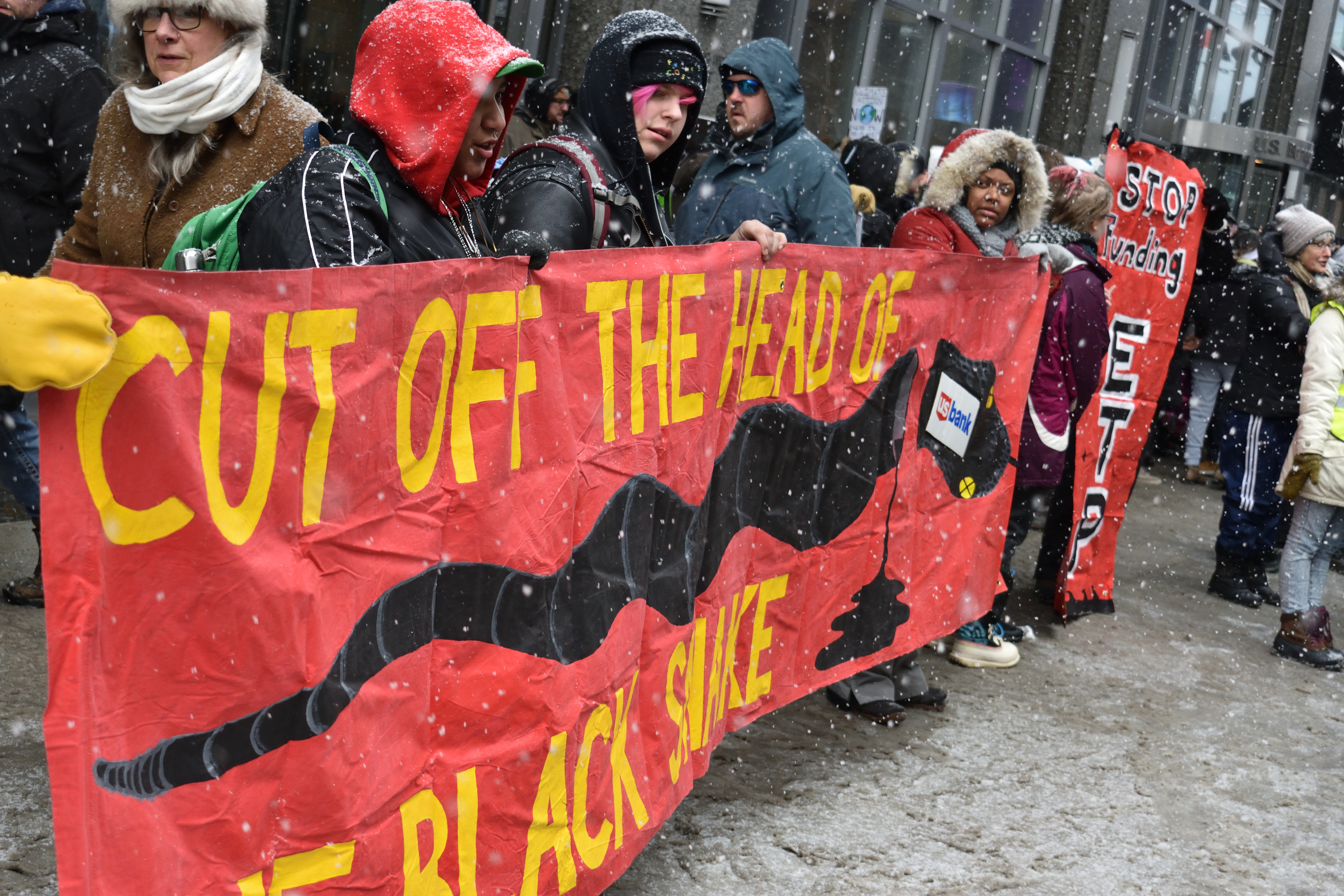
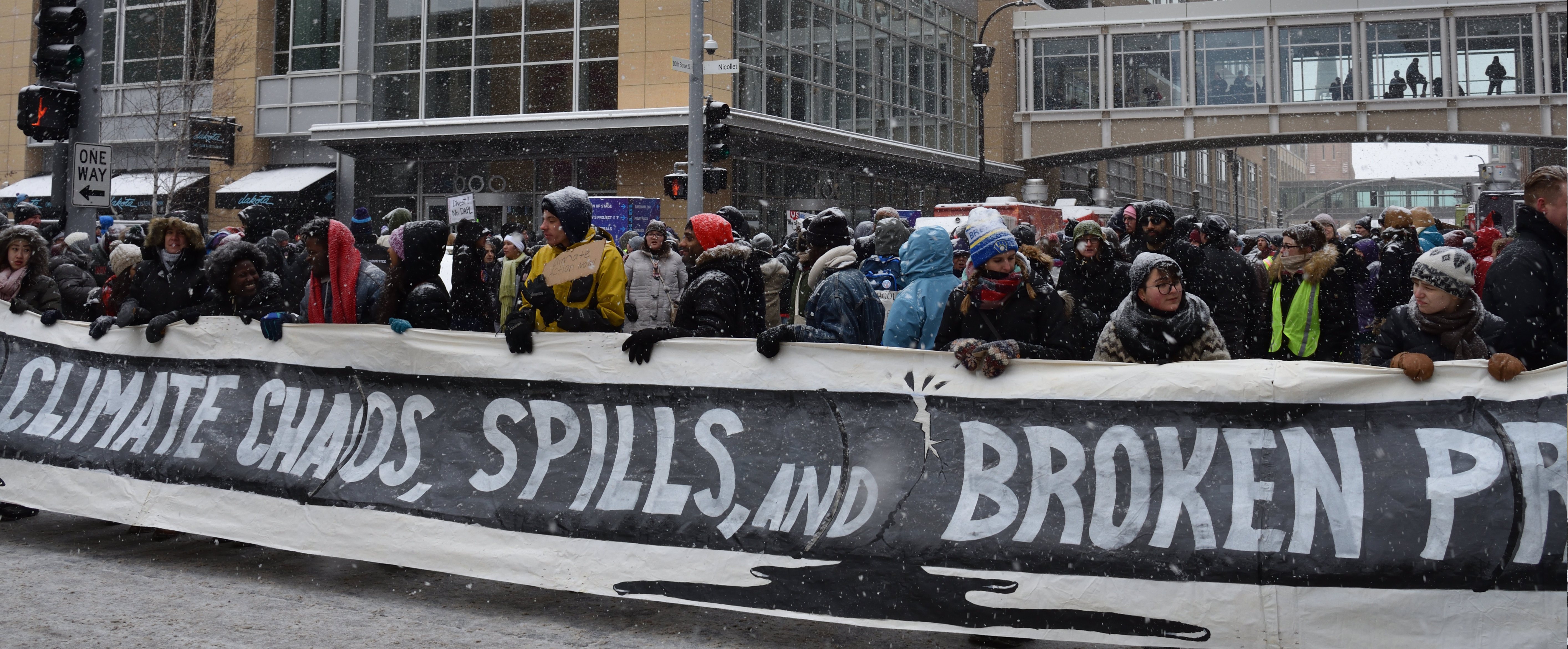
Recent posts have been about “Treaties not Tar Sands” and the Treaty People Walk for Water. Walkers arrived at the Minnesota Capitol grounds Wednesday, ending a 256 mile walk from the Mississippi headwaters, an effort to draw attention to the state-approved Enbridge Line 3 pipeline.

Camp Migizi leader and Fon Du Lac Band member Taysha Martineau and Standing Rock Elder Sonny Wonase address 2,000 pipeline opponents gathered for the “Treaties not Tar Sands” rally at the Minnesota State Capitol on Aug. 25th, 2021.

It is time that all the people of the earth come together and every step that you walk on this earth, may these steps be steps of prayer. Steps of prayer put feet on the ground, put prayer with every step you take. The fight isn’t over yet.

Sonny Wonase

Police presence was as strong as ever, including a fence meant to wall state officials off from our prayerful ceremony and pleas for justice. As you can probably guess, that didn’t deter water protectors. At the end of the rally, my fellow organizers read a statement of demands criticizing Governor Tim Walz’s support of the pipeline and militarized response. We also continued to call on President Joe Biden to intervene.

Until we’re heard and acknowledged, we will not be silent. We will not stop taking direct action to end this invasion of our sacred lands and protect our water and manoomin (wild rice). We are carrying forward the tradition of Indigenous activism begun by the American Indian Movement in the 1960s and renewed at Standing Rock five years ago. I express my gratitude to Standing Rock for standing with us now — and to you for holding space with us and Mother Earth. If we come together across our traditional boundaries, if we act with a unified voice and spirit, we can win this fight.

Taysha Martineau

Yesterday’s post was about the heavy police presence at the Capitol. According to Native News Online, “in anticipation of the demonstration, Minnesota State troopers barricaded all roadways into the Capitol grounds. Fearing damage to monuments near the capitol, as when a Christopher Columbus statue was taken down by protesters last summer, all statues were fenced in and guarded by law enforcement.”

In the evening, demonstrators announced they will occupy the Minnesota Capitol grounds overnight and began pitching tents on the lawn. However, Minnesota State Troopers ordered demonstrators to remove the tents and allowed people to occupy the permitted tipis on the lawn.

‘Treaties Not Tar Sands’ Rally Convenes at Minnesota State Capitol, by Darren Thompson, Native News Online, August 26, 2021
https://youtu.be/YIkTBCvpToM

This is a powerful livestream video of the Water Walkers, in silence, arriving at the Minnesota State Capitol Wednesday.

I can’t help but reflect on how different this peaceful, prayerful walk compares to the insurrection at the U.S. Capitol on January 6, 2021.

#StopLine3
#HonorTheTreaties
#WaterIsLife

National holidays, Indigenous leadership and buried children

I’ve been writing about the event that was going to be held at the Iowa State Capitol “stop whitewashing genocide and slavery”. I urged people I know to attend. Support the BIPOC struggle in Iowa – LANDBACK Friends Organizers asked for a show of support. I was disappointed to see only a few people I know.

The same calls to remove monuments to white supremacy was held last year. Monuments to White Supremacy July 4, 2020 – LANDBACK Friends

Canada Day, July 1, and July 4 in the land called the United States, celebrate one view of the history of these two countries. Celebrations of white colonialism and the reign of capitalism. My Native friends refer to these as KKKCanada Day or Cancel Canada Day, and “The 4th of he lies”.

The remains of hundreds of children on the grounds of residential schools in Canada was a focus of the event here in Des Moines, and in Canada described below. The number will be in the thousands.

In Canada, monuments have been vandalized or destroyed and churches defaced. Four burned to the ground.

The search for remains in the United States has not yet begun. What does this mean for religious organizations involved with these schools here?

While There Had Been Anti-Canada Day Marches In The Past, This Year’s Especially Large Turnout Was Spurred In Part By The Discovery Of Over 1,100 Bodies At Former Residential Schools Over The Past Few Months.

On July 1, several thousand Indigenous people and settler and immigrant allies answered the call of organizations like Idle No More to protest the celebration of Canada Day and the ongoing genocide of Indigenous peoples. Cancel Canada Day actions took place across the land occupied by the Canadian state, from St. John’s, Newfoundland, in the east, to Victoria, B.C., including a march of thousands to parliament in Ottawa.

Uniting under the slogan “No Pride in Genocide,” these rallies put forward a panoply of demands. At the forefront was that Canada Day be replaced with a day to honor those whose lives have been lost to the Canadian state, whether Indigenous, Black, POC, women, or LGBTQ+. This was accompanied by demands for the end of settler encroachment and return of Indigenous land, Indigenous sovereignty, a real response to the disappearance and murder of Indigenous women, the end of police brutalization of Indigenous people, that the church take responsibility and offer compensation for the residential schools, and the end of celebration of the settler-colonial state.

At the same time, settler-colonial symbols have been vandalized and destroyed, including a statue of Captain James Cook in Victoria and statues of Queen Victoria and Elizabeth II in Manitoba. In addition, many churches have been defaced, and four in BC have been burned to the ground. All this reflects Indigenous consciousness—the awareness that we live under the boot of a settler-colonial state that demands our elimination, and that this fundamental reality needs to change.

However, changing this reality is impossible under capitalism. Indigenous oppression, expropriation, and elimination are carried out in order to remove us as an obstacle to capitalist expansion and exploitation of the land. While victories can be won in the short term, this oppression cannot end while capitalism remains in place. As a result, we must do all we can to unite the class struggle of the non-Indigenous working class with the decolonial struggles of Indigenous peoples, if we are to eliminate the capitalist system that oppresses and exploits both.

THOUSANDS MARCH IN CANCEL CANADA DAY ACTIONS By Taytyn Badger, Left Voice, July 4, 2021

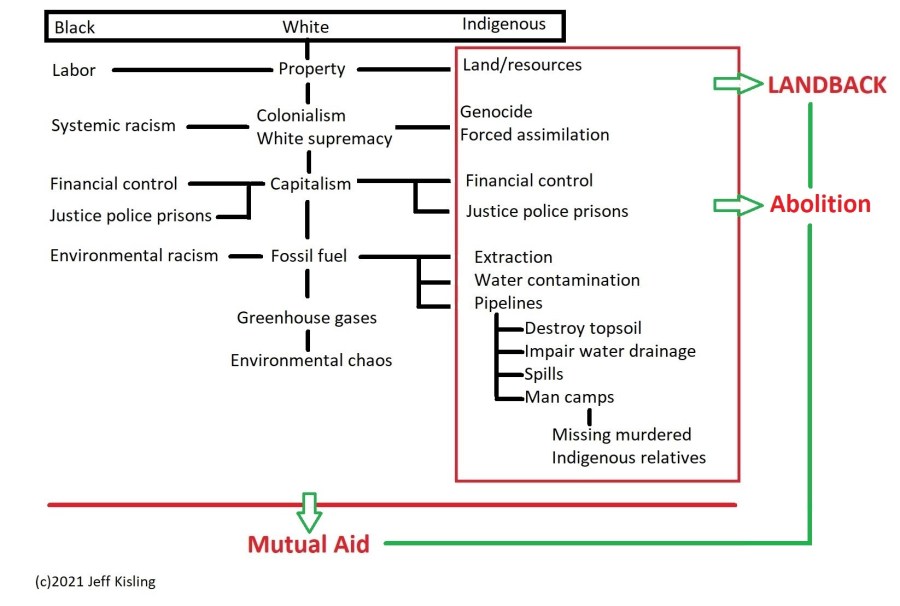
Following is a graphic I’ve been working on, indicating the central role of capitalism.

capitalism has violated the communities of marginalized folks. capitalism is about the value of people, property and the people who own property. those who have wealth and property control the decisions that are made. the government comes second to capitalism when it comes to power.

in the name of liberation, capitalism must be reversed and dismantled. meaning that capitalistic practices must be reprogrammed with mutual aid practices.

Des Moines Black Liberation

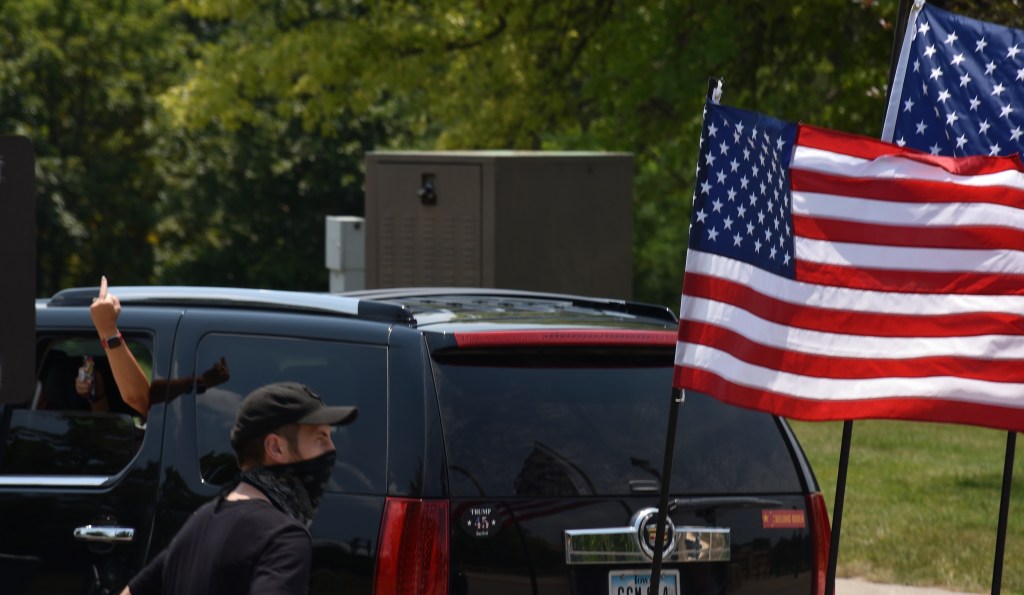
A caravan of Trump supporters tried to disrupt the ceremonies. Some of the flags were pulled off as they passed by. I was astonished at the quick reaction of some in our crowd. They have seen this thing before. There was an immediate increase in tension. After the caravan left, Iowa State Patrol cars closed off the street.

Trump supporters

July 4 Nexus

nexus a connection or series of connections linking two or more things

There are so many concepts and much history related to July 4th.

I’ve come a long way from what I, a white person, was taught in school. About the heroes and battles that brought independence from the British. And just a sentence or so about taking over Indigenous lands, and the slave trade. All whitewashed and presented as acceptable. Even referred to as “Manifest Destiny”.

“He has excited domestic insurrections amongst us, and has endeavoured to bring on the inhabitants of our frontiers, the merciless Indian Savages, whose known rule of warfare, is an undistinguished destruction of all ages, sexes and conditions.”

— Declaration of Independence

The crown and the colonists were both determined to seize lands from native peoples and to continue enslavement.

THE TERRIBLE ORIGINS OF JULY 4TH By Margaret Kimberley, Black Agenda Report.
July 3, 2021

The crown and the colonists were both determined to seize lands from native peoples and to continue enslavement. But their interests were also hostile to one another and war was the inevitable result. White settlers wanted full independence for themselves and no control over their actions at all.

The indigenous populations were nearly eradicated in the decades long quest for conquest. Expanding slavery was an integral part of those efforts against native peoples. Genocide could not be carried out completely nor could any accommodation be made with European nations in the quest to control land from sea to shining sea. That is why the settlers declared their independence.

The process of decolonizing ourselves is a difficult one. We have been cut off from our history and we don’t know where or how our people played a part. As we try to educate ourselves we may find it difficult to give up traditions that we have claimed as our own. Regardless of personal choices made on July 4th, the causes of the Declaration of Independence must be known and acknowledged. That is the beginning of true independence for Black people.

THE TERRIBLE ORIGINS OF JULY 4TH By Margaret Kimberley, Black Agenda Report.
July 3, 2021

The news reminds us of the political rally of the previous guy at Mount Rushmore, July 4, 2020. A perfect example of LANDBACK. Native people blocked the highway to Mount Rushmore because the monument is on Native land. Several of my friends were there. In 1980 the Supreme Court confirmed the land belongs to the Sioux. Compensation of $2 million dollars was offered. But never taken.

“What Mount Rushmore has always represented is a system of power and oppression and white supremacy, because they take a sacred place and carved the faces of white men who are responsible for our colonization and our demise,” (Lakota activist) Nick Tilsen said.

Lakota activist: Mount Rushmore key in move to regain land. When then-President Donald Trump visited Mount Rushmore last year for a fireworks display, Lakota activist Nick Tilsen saw an opportunity to advance the Land Back Movement By STEPHEN GROVES Associated Press, March 24, 2021

The above are connected to a gathering at the Iowa State Capitol this afternoon from 1 – 3 pm, Stop Whitewashing Genocide and Slavery. Bring Back Critical Race Theory & Remove Monuments to White Supremacy!

Indigenous Led | Great Plains Action Society I United States

On July 4th, stand with Great Plains Action Society, Iowa Citizens for Community Improvement, Ní Btháska Stand Collective, Des Moines Black Liberation Movement, Humanize My Hoodie, Revolutionary Action Party, Quad Cities Interfaith, Iowa Coalition for Collective Change, and Des Moines Mutual Aid!

Join us on “Fourth of He Lies” to demand that the Iowa legislators remove whitewashed monuments to white supremacy in Iowa. Organizers will present a petition demanding that all racist, misogynistic, homo/transphobic, whitewashed historical depictions be removed from all state grounds and facilities. These monuments fall into the realm of hate propaganda and make folks feel unwelcome in public spaces. So, we need legislation that removes all monuments, murals, and depictions of white supremacist persons, acts, and ideologies from all Iowa state grounds and state-funded institutions.