Dakota 38 + 2


The day after Christmas, Dec. 26, 1862, President Abraham Lincoln ordered the largest execution in United States history — the hanging of 38 Dakota men. At the heart of this is the genocide and land theft of the tribal nations by the white settler-colonialists. #LANDBACK

“Today, all the people of the region continue to be affected by this traumatic event. We take the youth on the ride, so that they may connect with their culture in a more physical way. By being apart of the ride they are connecting themselves with their ancestors and their horse relatives. It is through the ride that they are able to see the beauty in the history and their culture.” SUNKTANKA


The Dakota 38 Plus 2 Memorial Ride is a ride that honors the 38 Dakota men who were hung in Mankato in December of 1862. The ride began from the vision of a Dakota elder and warrior. In this vision riders would ride from Crow Creek, SD to Mankato, MN. Ever since then the ride has continued to happen annually from the beginning year December 2005 to present collecting supporters and new riders along the way.

My name is Winona Goodthunder. My Dakota name is Wambde Ho Waste Win, Eagle Woman with a Good Voice. I have ridden in this ride since 2006, the second year. I was in eighth grade when I started. As the years have gone by the riders that we’ve met every year have become a part of a new kind of family. We are all different even though we are all somehow related. Those of us who are from the Lower Sioux region are used to different types of living than those who come from Canada, Nebraska, South Dakota, and other parts of the world. The differences that we have are forgotten when we come to this ride. We get up early in the morning to get our horses ready together. We ride all day together, and we eat together at night. It is then that our differences merge and we teach each other. The thing that seems to bind us the most is the fact that we can laugh. Humor may not be what is expected on a memorial ride, but it is encouraged for it is stressed that this ride is for forgiveness.

Although our group goes only for the last four days it is enough to establish that sense of family amongst each other. It is from these riders that I’ve learned most about my culture. I have read books, but they cannot foster the feeling that one gets when they are living in an experience such as the ride.

Winona Goodthunder


In the spring of 2005, Jim Miller, a Native spiritual leader and Vietnam veteran, found himself in a dream riding on horseback across the great plains of South Dakota. Just before he awoke, he arrived at a riverbank in Minnesota and saw 38 of his Dakota ancestors hanged. At the time, Jim knew nothing of the largest mass execution in United States history, ordered by Abraham Lincoln on December 26, 1862. “When you have dreams, you know when they come from the creator… As any recovered alcoholic, I made believe that I didn’t get it. I tried to put it out of my mind, yet it’s one of those dreams that bothers you night and day.”

Now, four years later, embracing the message of the dream, Jim and a group of riders retrace the 330-mile route of his dream on horseback from Lower Brule, South Dakota to Mankato, Minnesota to arrive at the hanging site on the anniversary of the execution. “We can’t blame the wasichus anymore. We’re doing it to ourselves. We’re selling drugs. We’re killing our own people. That’s what this ride is about, is healing.” This is the story of their journey- the blizzards they endure, the Native and Non-Native communities that house and feed them along the way, and the dark history they are beginning to wipe away.

This film was created in line with Native healing practices. In honoring this ceremony, we are screening and distributing “Dakota 38″ as a gift rather than for sale. This film was inspired by one individual’s dream and is not promoting any organization or affiliated with any political or religious groups. It was simply created to encourage healing and reconciliation.

Smooth Feather


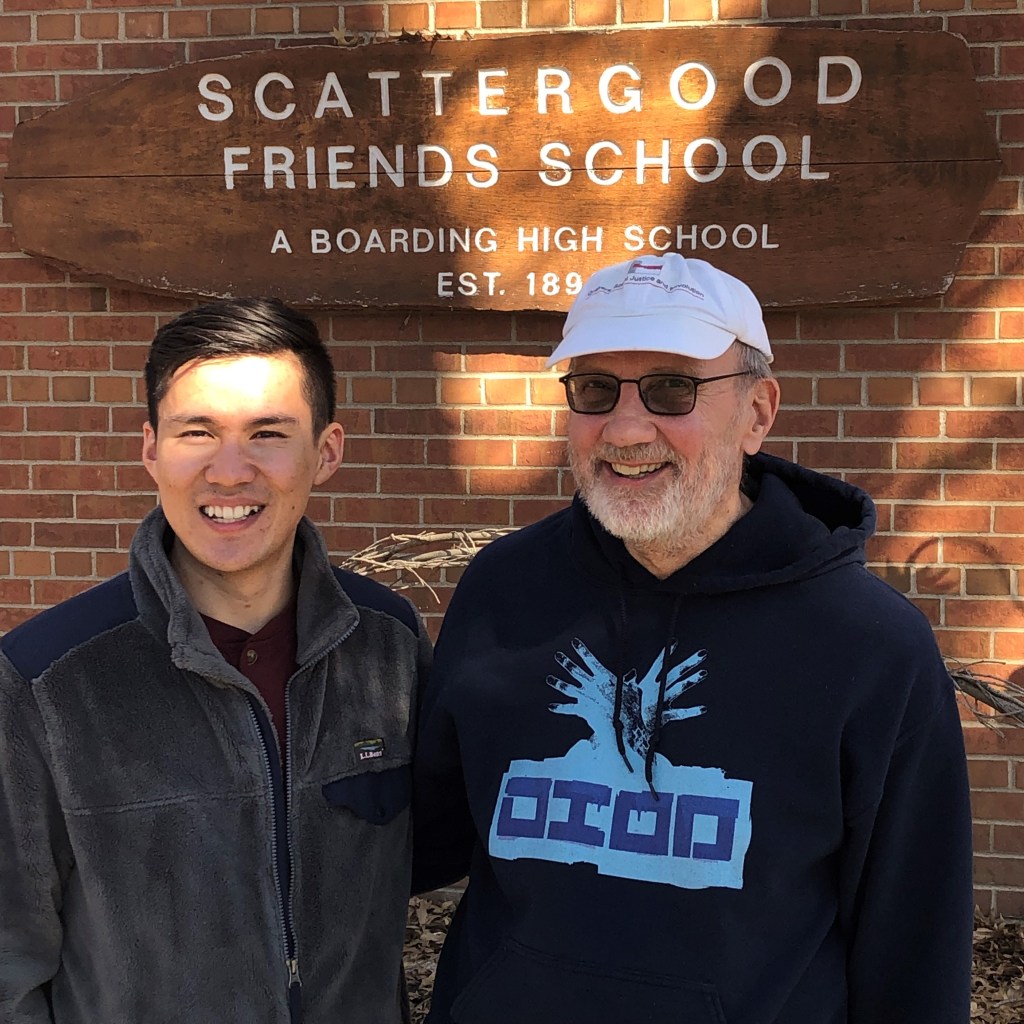
I have watched this video, “Dakota 38”, many times. My friend and roommate from Scattergood Friends School, Lee Tesdell, teaches in Mankato, and has spoken about this history with me.

The photography and especially the story, are just excellent and very moving. I’ve been learning how trauma is passed from generation to generation. The events shown in the film “Dakota 38” occurred in 1862.

“Today, all the people of the region continue to be affected by this traumatic event.” SUNKTANKA

Please note the video is age-restricted and only available on YouTube.
Search for Dakota 38
https://www.youtube.com/results?search_query=dakota+38

Composers Jay McKay and Jay Parrotta spent three years fusing sound and visuals into a cinematic experience that takes the viewer onto the Northern Plains and through a relentless pounding blizzard. Sound has the ability to transport, and the mix of chants, drums and melody is spellbinding.


Forgive Everyone Everything

FORGIVE EVERYONE EVERYTHING is inscribed on a bench in Reconciliation Park, Mankato, Minnesota, where the ride ends. The photo of the memorial shows a list of the names of the 38 Dakota men who were all hanged at the same time in what is now Mankato, Minnesota. A raised wooden platform, with 38 nooses along the sides, was constructed. It is said nearly 4,000 people witnessed this, the largest execution in U.S. history, on December 26, 1862.

As to who needs to be forgiven, there are many answers to that. 

At the heart of this is the genocide and land theft of the tribal nations by the white settler-colonialists. 

More specifically this history came about as the Dakota were forced into smaller and smaller areas of land, to the point they could not sustain themselves.

#LANDBACK
This image has an empty alt attribute; its file name is 96766751_rTnbZmN48yVXBZxfPoiyqOQl6MjM_fEEZFr6jKZWb54.jpg
https://foursquare.com/v/reconciliation-park/4d86396a509137040938a75b
NAMES OF THE EXECUTED INDIANS

#1 was to be TA-TAY-ME-MA but he was reprieved because of his age and questions related to his innocence

  1. Plan-doo-ta, (Red Otter.)
  2. Wy-a-tah-ta-wa, (His People.)
  3. Hin-hau-shoon-ko-yag-ma-ne, (One who walks clothed in an Owl’s Tail.)
  4. Ma-za-bom-doo, (Iron Blower.)
  5. Wak-pa-doo-ta, (Red Leaf.)
  6. Wa-he-hua, _.
  7. Sua-ma-ne, (Tinkling Walker.)
  8. Ta-tay-me-ma, (Round Wind) — respited.
  9. Rda-in-yan-ka, (Rattling Runner.)
  10. Doo-wau-sa, (The Singer.)
  11. Ha-pau, (Second child of a son.)
  12. Shoon-ka-ska, (White Dog.)
  13. Toon-kau-e-cha-tag-ma-ne, (One who walks by his Grandfather.)
  14. E-tay-doo-tay, (Red Face.)
  15. Am-da-cha, (Broken to Pieces.)
  16. Hay-pe-pau, (Third child of a son.)
  17. Mah-pe-o-ke-na-jui, (Who stands on the Clouds.)
  18. Harry Milord, (Half Breed.)
  19. Chas-kay-dau, (First born of a son.)
  20. Baptiste Campbell, _.
  21. Ta-ta-ka-gay, (Wind Maker.)
  22. Hay-pin-kpa, (The Tips of the Horn.)
  23. Hypolite Auge, (Half-breed.)
  24. Ka-pay-shue, (One who does not Flee.)
  25. Wa-kau-tau-ka, (Great Spirit.)
  26. Toon-kau-ko-yag-e-na-jui, (One who stands clothed with his Grandfather.)
  27. Wa-ka-ta-e-na-jui, (One who stands on the earth.)
  28. Pa-za-koo-tay-ma-ne, (One who walks prepared to shoot.)
  29. Ta-tay-hde-dau, (Wind comes home.)
  30. Wa-she-choon, (Frenchman.)
  31. A-c-cha-ga, (To grow upon.)
  32. Ho-tan-in-koo, (Voice that appears coming.)
  33. Khay-tan-hoon-ka, (The Parent Hawk.)
  34. Chau-ka-hda, (Near the Wood.)
  35. Hda-hin-hday, (To make a rattling voice.)
  36. O-ya-tay-a-kee, (The Coming People.)
  37. Ma-hoo-way-ma, (He comes for me.)
  38. Wa-kin-yan-wa, (Little Thunder.)

Confronting white supremacy in Johnston community school district

The video below was recorded from last night’s online meeting about the Racist Rise to Ban Anti-Racist Books, Confronting white supremacy in the Johnston School District.

Of all the awful things that have been occurring over the last several years, banning books is the worst, so far, for me as a white person. At Scattergood Friends School we were taught to be lifelong learners. I not only enjoy reading, but that is how I learn about what is going on in the world. Learn about injustice and how others are working for justice.

But there is more to this for black, Indigenous, and other people of color (BIPOC). Rising authoritarianism, increasingly aggressive and militarized policing, voter suppression, and actions such as banning books are all efforts to perpetuate racism and white supremacy.

Education is one of the most important ways to call attention to racism and to help white people learn ways to call it out. Calls to ban books and ban teaching of “critical race theory” are meant to prevent learning about racial injustice.

As is often the case, Johnston Community School District (JCSD) has equity as one of its strategic goals. But students, parents, and staff feel more unsafe and targeted than ever before. Hostility and violence towards students, parents, and staff of color have been increasing at the district as made evident by the many recent attacks on equity.

Things were particularly bad at the last JCSD school board meeting discussion about banning “The Hate You Give” and “Diaries of a Part-Time Indian”. A white person said several racist or homophobic words from those books out loud. Children were present. There was no context for saying them out loud, and to be spoken by a white person.

White people need to support these efforts to stop banning books and other racial incidents. School boards across the country are being weaponized to promote racism.

One of the principles of justice work is to not add to the burden of those experiencing injustice. Online discussions like last nights are great ways for white people to learn. I encourage you, especially if you are white, to take advantage of these opportunities.

The Racist Rise to Ban Anti-Racist Books.

Parents, students, and allies will gather online this Wednesday, December 15, 2021, at 7 PM CST to highlight a recent incidence of hate speech used at a board meeting and the inaction by Johnston Community School district administration and school board. The meeting largely revolved around the recent attempt by a few Johnston parents to ban the books “The Hate You Give” and “Diaries of a Part-Time Indian”, both written by BIPOC folks, which address oppression and racism in the US. There has been a rise in attempts to ban anti-racist books since 2020 when Trump tried to enact a federal ban on critical race theory. The recent state of racism and discrimination in Johnston will be discussed highlighting recent incidences that propagate racism and discrimination in the district and throughout the community.

Though the Johnston Community School District (JCSD) has equity as one of its strategic goals, students, parents, and staff feel more unsafe and targeted than ever before. Hostility and violence towards students, parents, and staff of color have been increasing at the district as made evident by the many recent attacks on equity. JCSD released a statement saying the district is continuing “to partner with parents and students to create an inclusive environment where everyone in our community has access to a high-quality educational experience” but students, parents, and staff are saying this is simply not happening. Students, parents, staff, and community members called for the district to interrupt hate speech including racist and homophobic slurs used by a parent at a recent school board meeting asking for the policy when individuals share such words. The superintendent and school board members did not stop this from happening and cited instead of the policy on public participation and did not seek to disrupt or disallow these words to be used during a school board meeting.

This event is hosted by: Johnston Parents for Equity and Anti-Racism (JPEAR) is a collective of parents organizing the Johnston Community School District (JCSD) to respond to the needs for equity and anti-racism in our schools and community.

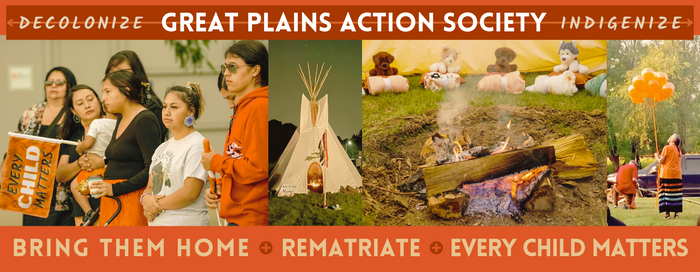
Great Plains Action Society works to resist colonial-capitalist institutions and white supremacy through Indigenous ideologies and practices. Our goal is to reclaim what has been stolen and oppressed to create a better world for us all. Iowa Coalition for Collective Change specializes in empowering organizations and marginalized communities through education, research, and advocacy.

Points of Unity

The second anniversary of my connections with Des Moines Mutual Aid is approaching. Our experiences together have literally changed my life. The Spirit led me to this and continues to do so. This can be a way to live through these increasingly uncertain times.

True security lies in the unrestrained embrace of insecurity — in the recognition that we never really stand on solid ground, and never can.

– Oliver Burkeman –
May be an image of text that says 'POINTS OF UNITY DES MOINES MUTUAL AID'
May be an image of text that says '0. We believe in working shoulder to shoulder and standing in solidarity with all oppressed communities. We ourselves are oppressed, and our mutual aid work IS a fight for our collective liberation. We do not believe in a top-down model of charity. Instead we contrast our efforts at horizontal mutual aid, the fostering of mutually beneficial relationships and communities, to dehumanizing and colonizing charity.'
May be an image of text that says '1. We believe in community autonomy We believe that the communities we live and organize in have been largely excluded from state social services, but intensely surveilled and policed by the state repressive apparatus Capitalism is fundamentally unable to meet people's needs. We want to build self- sustaining communities that are independent of the capitalist state both materially and ideologically, and can resist its repression.'
May be an image of text that says '2. We are police and prison abolitionists. oractice Abolition and the mutual aid that we are inextricably linked. We dn' on capitalist institutions or the police to do our work. We believe in building strong and resilient communities which make police obsolete, including community systems of accountability and crisis intervention'
May be an image of text that says '3. We work to raise the political consciousness of our communities. Part of politica education is connecting people's lived experiences to a broader political perspective. Another component is working to ensure that people can meet their basic needs. It is difficult to organize for future liberation when someone is entrenched in day-to- day struggle.'
May be an image of text that says '4.We have open disagreements with each other about ideas and practices. We believe there is no formula for resolving our ideological differences other than working towards our common aims, engaging with each other in a comradely manner, and respecting one another, whether or not we can hash out isagreements in the process.'

The next American Revolution, at this stage in our history, is not principally about jobs or health insurance or making it possible for more people to realize the American Dream of upward mobility. It is about acknowledging that we Americans have enjoyed middle-class comforts at the expense of other peoples all over the world. It is about living the kind of lives that will not only slow down global warming but also end the galloping inequality both inside this country and between the Global North and the Global South. It is about creating a new American Dream whose goal is a higher Humanity instead of the higher standard of living dependent on Empire. It is about practicing a new, more active, global, and participatory concept of citizenship. It is about becoming the change we wish to see in the world.

The courage, commitment, and strategies required for this kind of revolution are very different from those required to storm the Winter Palace or the White House. Instead of viewing the U.S. people as masses to be mobilized in increasingly aggressive struggles for higher wages, better jobs, or guaranteed health care, we must have the courage to challenge ourselves to engage in activities that build a new and better world by improving the physical, psychological, political, and spiritual health of ourselves, our families, our communities, our cities, our world, and our planet.

Grace Lee Boggs,The Next American Revolution

Prison Abolition Letter Writing Project

I recently attended my first meeting with the Prison Abolition Letter Writing Project of the Central Iowa Democratic Socialists of America (DSA). I didn’t know who would be there but thought it likely a few of my Mutual Aid friends might. It is a maxim of justice activism that a small core group of people work in many different justice groups in a city, and such was the case. I was glad to see two of my Mutual Aid friends there. Seven of us met in a park shelter not far from the church our Mutual Aid group uses for the food giveaway project each Saturday morning.

I wondered what I would learn about the Prison Abolition Letter Writing Project and was fascinated by what I did learn. I assumed the idea was to establish a relationship with those imprisoned, which it certainly is. But as part of the sample letter shows, the concept is to invite those incarcerated to help those who are not understand what is going on in the prison system. Yet another example of Mutual Aid, where all involved work from the concept that we are all working together. Not “us helping them”.

I am writing to you as a part of the Central Iowa Democratic Socialists of American prison abolition group. I am inviting you to join our solidarity and pen-pal network. We are connecting with people incarcerated in Iowa because we believe the struggles of people both inside and outside of prison walls are intertwined. Specifically, we recognize the need to eliminate systemic injustices produced by the current criminal justice system.

Please let me know if you are interested in taking part in this project. I would love to receive any information from you so that we can make a case to those on the outside to take action on the demands of incarcerated people.

We are the Central Iowa chapter of the Democratic Socialists of America (DSA). Promoting the concept of democratic socialism through political action, direct service, and education. We are building for the future beyond resistance.
https://www.facebook.com/CentralIowaDSA

I became interested in DSA when my friend Fran Quigley, a professor in the Law School at Indiana University, wrote the following in response to my blog post, The Evil of Capitalism, 12/31/2020. Fran’s book was just published. Religious Socialism: Faith in Action for a Better World – August 25, 2021.

This post of yours struck me close to home. I too have become fully convinced of the evils of capitalism. Moreover, I have come to the conclusion that my faith dictates that I work to replace it. Turns out I am far from alone, so I’ve been devoting much of my time this past year to the Religion and Socialism Committee of the DSA, www.religioussocialism.org.
Fran Quigley

I’ve also been participating in the Quaker for Abolition Network, initiated by Mackenzie Barton-Rowledge and Jed Walsh. The following is from an article they wrote for Western Friend.

Mackenzie: Let’s start with: What does being a police and prison abolitionist mean to you?
Jed: The way I think about abolition is first, rejecting the idea that anyone belongs in prison and that police make us safe. The second, and larger, part of abolition is the process of figuring out how to build a society that doesn’t require police or prisons.
Mackenzie: Yes! The next layer of complexity, in my opinion, is looking at systems of control and oppression. Who ends up in jail and prison? Under what circumstances do the police use violence?
As you start exploring these questions, it becomes painfully clear that police and prisons exist to maintain the white supremacist, heteronormative, capitalist status quo.

Abolish the Police by Mackenzie Barton-Rowledge and Jed Walsh, Western Friend, November December 2020

We as White Quakers like to think of ourselves as ahead or better than dominant culture, but we have been complicit in a system and mindset that are ubiquitous. Claiming the full truth of our history and committing to repair the harms done are deeply spiritual acts of healing our own wounds of disconnection. I would argue it is the pathway upon which we can, perhaps for the first time, discover and invigorate our faith with its full promise.

What would it mean for us to take seriously and collectively as a Religious Society a call to finish the work of abolition, hand in hand and side by side with those affected and their loved ones? What would it mean for us to stand fully with the calls to abolish the police and fully fund community needs instead? What would it mean to reckon with our past complicity with harm and fully dedicate ourselves to the creation of a liberating Quaker faith that commits to build the revolutionary and healing faith we long to see come to fruition? What would it look like to finally and fully abolish slavery?

A Quaker Call to Abolition and Creation by Lucy Duncan, Friends Journal, April 1, 2021

Lucy’s article includes this correction, that so many White people do unintentionally:
Correction: The author and FJ editors realize that an earlier version of this article inadvertently erased BIPOC (Black, Indigenous and people of color) Quakers in describing Quakers as though we were/are all White. Certainly there have been Black Friends and Friends of Color in our body from our earliest history. We apologize for this error. This online article has been updated accordingly. We have also clarified the relationship of George Fox with Margaret and Thomas Rous.

A goal of Mutual Aid is to grow, pulling increasing numbers of people into the work. I’ve been involved in Des Moines Mutual Aid and the food giveaway project for the past year. The Iowa Mutual Aid Network has expanded to include the following organizations. The Prison Abolition Letter Writing Project is a way to bring more people into our mutual work.

The Iowa Mutual Aid Network is made up of numerous individuals, collectives, and affinity groups working together and alongside each other to change the material conditions of oppressed communities in so-called Iowa.

The groups represented on this site are in no way a full accounting of those that are engaged in the struggle.

All Power To The People


Deadman

Logan Staats’ beautiful new song, “Deadman” is another example of the power of art to call attention to injustice. The track comes alongside a visual accompaniment partially shot at the site of a former residential school.

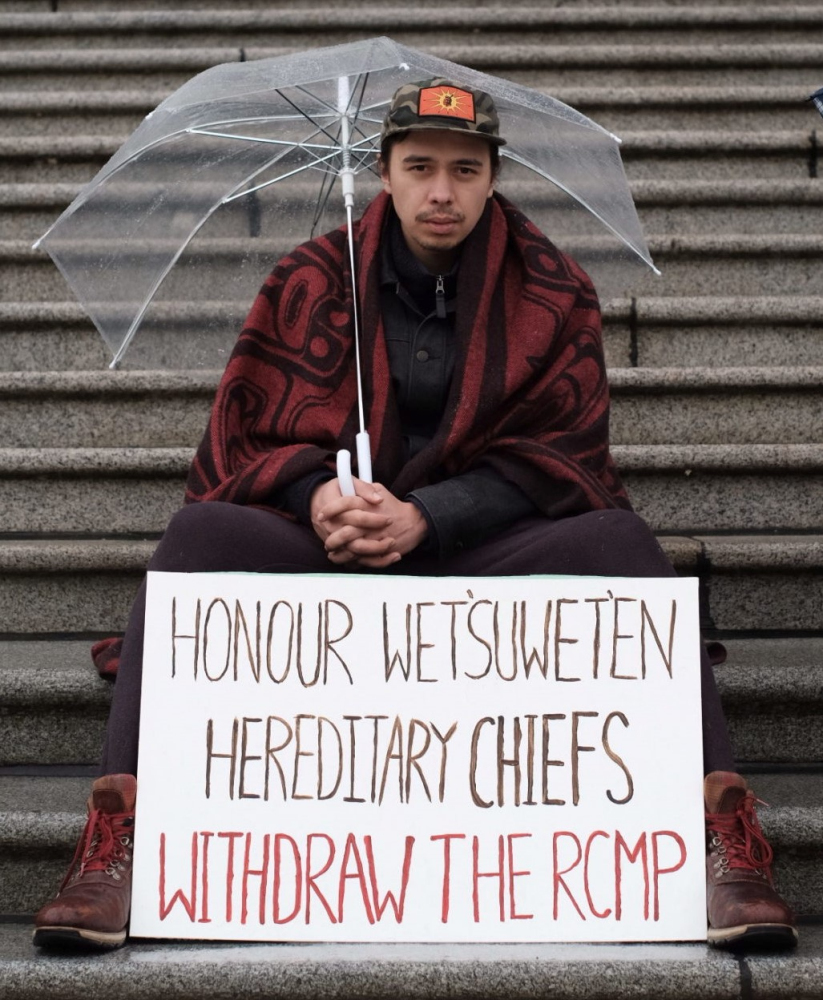
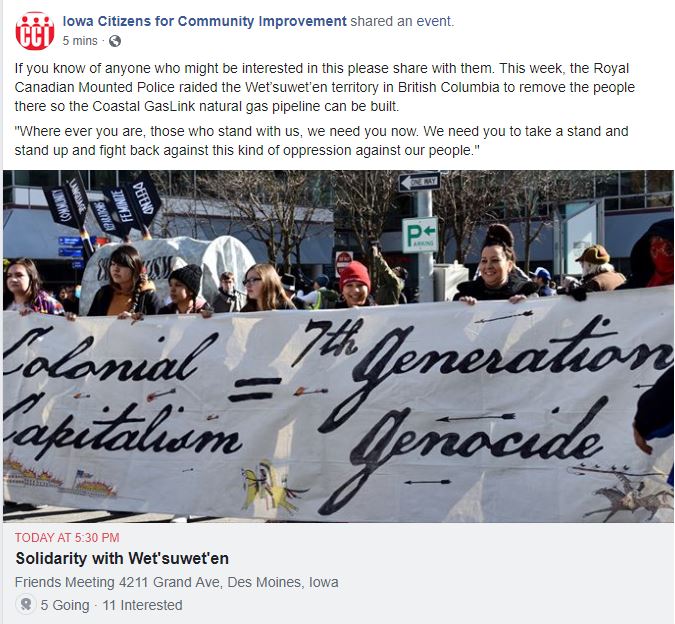
Logan was beaten and arrested by the RCMP while supporting the Wet’suwet’en peoples. I was only peacefully singing our water song and hugging/protecting a 70-year-old matriarch. I was free’d and remain steadfast and committed to defending the land from sea to sea all across Turtle Island.

Mohawk singer-songwriter Logan Staats makes his return with the new single “Deadman,” which signals the storyteller and activist’s debut release under the Indigenous-owned label, Red Music Rising.

“I wrote ‘Deadman’ while in rehab. It’s not about a girl; the culture is the love that I’m asking for,” he revealed in a press release.

The love Staats pleads for in the song is not romantic but rather a demand for something cherished, stolen by settler colonialism. “The love for myself that was stolen from me — by the government, the crown, the church. When I sing ‘Give back my love,’ I’m speaking about my culture, my pride and my love for myself.”

As a descendent of residential school survivors, Staats delivers the single alongside a video partially shot on the property of the Mohawk Institute — a former residential school in Brantford, ON — and at Land Back Lane, where Six Nations land defenders have been fighting development on unceded Six Nations territory.

In a statement, Staats recalled fighting for land sovereignty alongside the land defenders in Wet’suwet’en territory:

Recently I’ve been spending a lot of time on the West Coast in Wet’suwet’en territory after answering the call of the Hereditary Chiefs there and standing in solidarity with the land defenders on their sovereign ground. After serving an eviction notice to Coastal Gas Link, a for-profit corporation conducting illegal activities on Wet’suwet’en territory, heavily armed RCMP officers were flown in and conducted a raid on the traditional lands or ‘Yin’tah’. During that raid I was punched in the ear, my head was slammed into the frozen pavement by my braids, and I was kneed in my spine and held down while I was handcuffed and bleeding… all after I was only peacefully singing our water song and hugging/protecting a 70-year-old matriarch. I was hauled off to jail along with my sister Layla Black, several other land defenders, elders; along with members of the press. With the support of my community and people rallying across nations, I was free’d and remain steadfast and committed to defending the land from sea to sea all across Turtle Island.

Logan Staats Announces Red Music Rising Debut with New Single “Deadman”. The track comes alongside a visual accompaniment partially shot at the site of a former residential school by Haley Bentham, exclaim.ca, Nov 25, 2021


This story is about supporting water protectors like Logan who are being criminalized.


And Movement Memos calls attention to Mutual Aid efforts, like those in Des Moines, Iowa, that I work with.

Movement Memos

An ongoing call to action for movement work and mutual aid efforts around the country. Kelly Hayes connects with activists, journalists and others on the front lines to break down what’s happening in various struggles and what listeners can do to help.

Native American Legislative Update

Following are legislative updates for October from Portia K. Skenandore-Wheelock, Congressional Advocate, Native American Advocacy Program, Friends Committee on National Legislation (FCNL). This is a link to information from FCNL related to Native Americans. On that page you can sign up to receive these legislative updates. https://www.fcnl.org/issues/native-americans

The Friends Committee on National Legislation is a national, nonpartisan Quaker organization that lobbies Congress and the administration to advance peace, justice, and environmental stewardship. https://www.fcnl.org/about

This month’s action is to Support the Establishment of a Truth and Healing Commission on Indian Boarding Schools.

“It is long overdue for the United States to acknowledge the historic trauma of the Indian boarding school era. In the 19th and early 20th centuries, Christian churches collaborated with the government to create hundreds of boarding schools for Native American children. The conditions at these schools, some of them Quaker-run, were unspeakable.
Now we must work with tribal nations to advance congressional efforts to establish a federal commission to formally investigate boarding school policy and develop recommendations for the government to take further action. Although the wrongs committed at these institutions can never be made right, we can start the truth, healing, and reconciliation process for the families and communities affected as we work to right relationship with tribal nations.
Remind your members of Congress of their responsibility to tribal nations and urge them to support the Truth and Healing Commission on Indian Boarding School Policies in the United States Act (S. 2907/H.R. 5444).”

This link will help you write and send a letter of support for the establishment of a Truth and Healing Commission.

As a constituent and person of faith, I welcome the introduction of the Truth and Healing Commission on Indian Boarding School Policies Act (S. 2907/H.R. 5444) and urge you to support this important legislation.

From the 1860s through the 1960s, U.S. federal boarding school policy sought to assimilate more than 100,000 Native children into white American culture at 367 boarding and day schools operated by 14 different denominations. The traumatic separation of Native children from their families, identity, traditions, and spiritual beliefs was often coupled with psychological and physical abuse administered at these institutions. Heartbreakingly, many of these children never returned home.

The faith community has begun acknowledging our complicity in the historic trauma of the boarding school era and is committed to locating, cataloguing, and sharing boarding school records with the commission and the public as part of the truth-telling process. Given the scale of this effort and the government’s central role in boarding school policy, I call on you to join this important work and establish a federal commission to formally investigate boarding school policy and develop recommendations for the government to take further action.

The intergenerational impact of federal boarding school policy is still felt today. Loss of indigenous languages and cultures, injury to tribal governance and sovereignty, and high poverty, poor health, and growing suicide rates continue to harm tribal communities across the country. The establishment of the commission is an important first step in starting the truth, healing, and reconciliation process for all of us.

I urge you to co-sponsor this vital legislation and make a public statement in support of it and ask that you encourage your colleagues in Congress to do the same.

Quaker Lobby Backs Indian Boarding School Investigation Legislation by Timothy McHugh, FCNL, October 4, 2021

Washington, DC – The Friends Committee on National Legislation (FCNL) welcomed late last week’s introduction of important legislation to investigate and address the atrocities committed at Indian boarding schools throughout the United States in the 19th and 20th centuries.

Contact Tim McHugh: media@fcnl.org, 202-903-2515

“For far too long, the truth of cultural genocide led by European-Americans at Indian boarding schools has remained hidden in secrecy and ignored. Christian churches, including Quakers, carry this burden of transgression against indigenous people. It is necessary and important for our government to investigate, acknowledge, and report the truth to help us move toward healing the injustice against American Indians, Alaska Natives and Native Hawaiians,” said Diane Randall, FCNL’s general secretary.

“History cannot be undone. But it also can’t be ignored. The faith community must acknowledge our complicity in the historic trauma of the boarding school era and work in solidarity with tribal nations to advance congressional efforts to establish a truth, reconciliation, and healing process for the families and communities affected,” Randall concluded.

Senator Elizabeth Warren (MA), Representative Sharice Davids (KS), and Representative Tom Cole (OK) introduced the Truth and Healing Commission on Indian Boarding School Policies in the United States Act to establish the first formal commission in US history to investigate and document the attempted termination of cultures and languages of Indigenous peoples, assimilation practices, and human rights violations that occurred against American Indians, Alaska Natives, and Native Hawaiians through Indian Boarding School policies. A final report will be due within five years of the commission’s creation.

“This bill is a positive first step toward addressing not only the crimes of the boarding school era but centuries of abuse, maltreatment, and genocide of Native people at the hands of the federal government. Acknowledging the truths tribal communities have always known is an important part of the healing and reconciliation process for all of us,” said Portia Kay^nthos Skenandore-Wheelock, FCNL’s Native American Advocacy Program Congressional Advocate.

“Our work must also continue beyond the Commission in supporting the Indigenous languages, cultures, and peoples these policies were intended to destroy and erase. Only then can we create a future where all our children are safe, loved, and proud of who they are.”

Bill Advances to Protect Native American Cultural Heritage

On Oct. 13, the House Committee on Natural Resources advanced the Safeguard Tribal Objects of Patrimony (STOP) Act of 2021 (H.R. 2930) by unanimous consent. This bipartisan bill would prohibit the export of Native American cultural items that were illegally obtained, provide for the return of items, and double criminal penalties for individuals convicted of selling or purchasing human remains or illegally obtained cultural items.

“Throughout history, Native American cultural items such as human remains, sacred objects, and objects of cultural patrimony have been looted and sold to collectors in our country and abroad,” said Rep. Leger Fernández (NM-3) during an earlier hearing on the bill. “The STOP Act gives Tribes, Pueblos, and Nations a tool to close the door on the illegal exportation of cultural objects.”

Similar legislation (S. 1471) has been approved by the Senate Indian Affairs Committee and is awaiting action by the full Senate.


Indigenous Land Acknowledgement

As we bear witness and lobby in solidarity with Native Americans, we also honor the Nacotchtank tribe on whose ancestral land the FCNL, FCNL Education Fund, and Friends Place on Capitol Hill buildings stand. They are also known as the Anacostans, the Indigenous people who lived along the banks of the Anacostia River, including in several villages on Capitol Hill and what is now Washington, D.C. By the 1700s, the Nacotchtank tribe had merged with other tribes like the Pamunkey and the Piscataway, both of which still exist today.

Friends Committee on National Legislation (FCNL)

Another World is Possible

Despite the collapse of capitalism and the current political system based upon it, there are signs of hope. More and more people are joining with others to build better economic and political systems. Or return to systems that worked in the past for hundreds of years.

I am blessed to have gotten to know people who are doing just that. One of my new friends is Jake Grobe who works at Iowa Citizens for Community Improvement (ICCI). Jake joins in our Mutual Aid work in Des Moines. I knew he was going to the People vs Fossil Fuels Week of Action last week in Washington, DC. I saw some of what he posted online while he was there. And we got to visit yesterday when we were at the Mutual Aid food bank. He described being present when the flag outside the Army Corps of Engineers was replaced with one indicating “No Consultation”, which you can see in the video below. Following is from an email message he sent yesterday. I like the things he said about what gives him hope.

Also below is part of a teach-in my friend Ronnie James presented in 2020. “The recent past shows us that mutual aid is not only a tool of survival, but also a tool of revolution.

In addition, umair haque writes about the problems with hierarchies. “These two forces naturally oppose one another, like fire and ice — hierarchy and progress. And it seems to me one of the great secrets history tries to teach us is that when we find ways to make them work together, then and only then human possibility opens to its fullest horizons.”

Hierarchy is what Mutual Aid is about. Mutual Aid works to avoid vertical hierarchies. And instead to maintain a flat or horizontal hierarchy, where everyone has a voice.

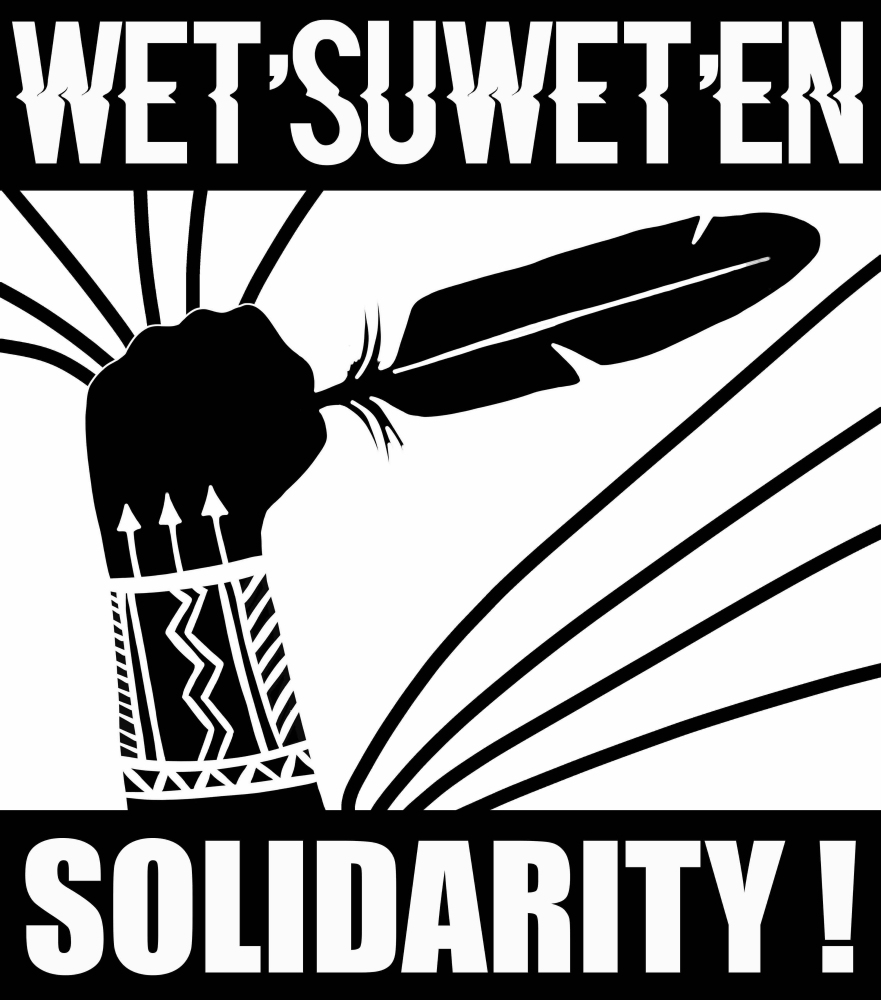
As an example of how our struggles are interconnected, Jake and Ronnie are in the photo below that was taken after we completed the Mutual Aid food giveaway. We are supporting the Wet’suwet’en peoples who are struggling to protect the water and prevent the construction of the Coastal GasLink pipeline through their pristine lands.

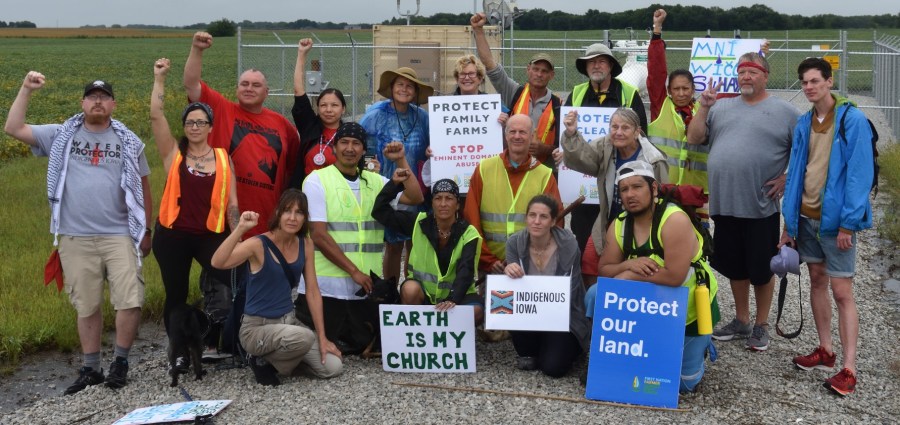
Last week a delegation of CCI members and People’s Action joined thousands in Washington DC for the People vs Fossil Fuels Week of Action. Led by Indigenous and frontline communities, we marched, occupied, and blocked roads alongside faith groups, racial justice groups, and environmental groups to demand federal action to end the era of fossil fuel destruction. 

Words mean nothing without action: call Biden to demand a halt to Line 3.

Despite all the promises, the Biden Administration has approved over 2,500 new oil and gas permits on public land, the fastest pace since 2008. He has let projects like the Line 3 tar sands pipeline in Minnesota go online, already polluting sacred water and violating treaty rights. And as I speak, Biden is surrendering to the demands of two blatantly corrupt Senators to gut the Build Back Better bill of programs needed to address the climate crisis. 

Reeling with all this has been hard to say the least. Here is where I’m finding hope:

  • Indigenous people have been resisting genocide for hundreds of years and many continue to lead the fight on the frontlines – there is a lot to learn.
  • Over 500 of us were arrested in the name of justice last week, many more have put their literal bodies on the line to stop construction of fossil fuel projects, and right now Sunrise youth are going on a hunger strike outside the white house while tens of thousands of workers are on strike.

People seeing their power and using it means we can win, because Mother Earth will regenerate and heal herself, as soon as we stop the harm.

Jake Grobe, Iowa CCI

Perhaps, like me, you think things aren’t going so well in the world today — 1930s style authoritarianism, extremism, and stagnation rock the world like a hurricane once again.
The question then is this: what kind of world do we want? In this essay I’m going to offer three futures. They’ll contrast the tension between hierarchy and progress. You see, the question in ages like this one is whether hierarchies — which make things comfortable for those above the waterline, even during decline and collapse — can make us more capable of change, growth, and maturity, somehow too. So I will write it from a curious perspective, too — that we each decide, in some way, what kind of future we are to create.

These two forces naturally oppose one another, like fire and ice — hierarchy and progress. And it seems to me one of the great secrets history tries to teach us is that when we find ways to make them work together, then and only then human possibility opens to its fullest horizons.

So what kind of future do we want? One with lots of burdensome, bitter, and polarizing hierarchy — groups vying to pull each other down — which flatlines progress? Or one where consensual hierarchy has collapsed into predation — no one can agree to govern or be governed, so monsters rule — which leads to super-charged regress? Or one in which, improbably, hierarchy and progress have learned, improbably, to walk hand in hand? That choice, I think, is the one that will define these times.

(How) We Need To Fix The World. If We Don’t Change the Path We’re On… by umair haque, Eudaimonia and Co, Oct 2021

As bleak as this is, there is a significant amount of resistance and hope to turn the tide we currently suffer under. We stand on the shoulders of giants that have been doing this work for centuries, and there are many lessons we can learn from.

The first, and possibly the most important, is that it was not always this way, which proves it does not have to stay this way. 

What we have is each other. We can and need to take care of each other. We may have limited power on the political stage, a stage they built, but we have the power of numbers.

Those numbers represent unlimited amounts of talents and skills each community can utilize to replace the systems that fail us.  The recent past shows us that mutual aid is not only a tool of survival, but also a tool of revolution.

If we are to survive, and more importantly, thrive, we know what we will have to do.

All Power To The People.

Ronnie James, The Police State and Why We Must Resist, 8/22/2020


Mutual Aid supports the Wet’suwet’en peoples

Critical thinking

I recently wrote about evidence and faith. Faith in the very narrow definition of “blind” faith, basing beliefs and actions on an ideology in contrast to evidence and critical thinking.

Ideology is fueling increasingly violent culture wars today. I often find myself wishing people were better informed and thinking critically. Not in the sense of agreeing with me, but having views based on facts and evidence, when available, and informed by critical thinking.

Critical thinking is a widely accepted educational goal. Its definition is contested, but the competing definitions can be understood as differing conceptions of the same basic concept: careful thinking directed to a goal. Conceptions differ with respect to the scope of such thinking, the type of goal, the criteria and norms for thinking carefully, and the thinking components on which they focus. Its adoption as an educational goal has been recommended on the basis of respect for students’ autonomy and preparing students for success in life and for democratic citizenship. “Critical thinkers” have the dispositions and abilities that lead them to think critically when appropriate.

Stanford Encyclopedia of Philosophy


sensemaking–the action or process of making sense of or giving meaning to something, especially new developments and experiences.

At the collective level, a loss of sensemaking erodes shared cultural and value structures and renders us incapable of generating the collective wisdom necessary to solve complex societal problems like those described above. When that happens the centre cannot hold.

Threats to sensemaking are manifold. Among the most readily observable sources are the excesses of identity politics, the rapid polarisation of the long-running culture war, the steep and widespread decline in trust in mainstream media and other public institutions, and the rise of mass disinformation technologies, e.g. fake news working in tandem with social media algorithms designed to hijack our limbic systems and erode our cognitive capacities. If these things can confound and divide us both within and between cultures, then we have little hope of generating the coherent dialogue, let alone the collective resolve, that is required to overcome the formidable global-scale problems converging before us.

Pontoon Archipelago or: How I Learned to Stop Worrying and Love Collapse. By James Allen, originally published by Medium, June 18, 2019

As James Allen writes here, “at the collective level, a loss of sensemaking erodes shared cultural and value structures.” I think Allen’s focus on shared cultural and value structures is important. We don’t rely strictly on facts to make sense of things.

Critical thinking is how many of us make sense of things new to us.

There are so many new things coming at us. Worsing environmental chaos and collapsing economic and political systems.

But some people choose to allow others to make sense of things for them. Theirs is a conscious choice to abandon critical thinking and embrace leaders who profess to share their culture and values. Authoritarianism can be attractive to these people. This explains the assault on democratic governance. Helps explain refusal to get vaccinated against COVID-19 and reject mask mandates, support voting restrictions, etc.

I’m especially disturbed about recent, widespread attacks against schools and educators who teach about the history of slavery and the genocide of Indigenous peoples. We cannot begin to make progress toward reconciliation without acknowledging the truth.

Some people are saying they don’t want students to be disturbed by those histories. That is appalling, because there is much we should be disturbed by.

Banning books is especially disconcerting and antithetical to education and critical thinking. Other authoritarian regimes have banned books. I realize “other authoritarian regimes” implies ours is one.

Some people are terrified that kids will learn about racism.
Especially white people.
Especially that white KIDS might learn about it.
How would that affect a white child’s self-esteem, they say.
Imagine learning that racism existed in the United States.
A country founded by white people.
(Taken from brown people. Made largely profitable by the enslavement of black people.)
Wouldn’t that make white kids feel bad?
It’s a strange question.
First of all, wouldn’t it make the black and brown kids feel worse than the white kids?
After all, it was their ancestors who were brutalized and subjugated.
Second of all, what does history have to do with your feelings?

Moreover, how would one even teach American history without talking about racism?
This is the United States – a country that built much of its economy on the backs of black people kidnapped from their homes across the sea and then bought and sold here as property.
Not only that but the very land we stand on was once the domain of dark-skinned indigenous people.
People who were tricked, coerced and killed if they did not give up this land – if they did not move on to ever shrinking corners of the continent until they were almost all dead, assimilated or stashed away on reservations.
What would it do to a white child to learn all this?
Provide an accurate account of events, I suppose.

It’s not just the history of racism these children are learning, but they’re starting to think that racism is WRONG.

And that’s a problem because it has an impact on how we view the modern world today.

So if we teach the history of racism, how do we justify saying that it ever ended?
How do we not admit that it merely evolved into the status quo?
That’s really the issue.
Not the past but the present.
It’s not the racism of the antebellum South or even the pre-civil rights period North of the Mason-Dixon line.

IF YOU’RE AFRAID KIDS WILL LEARN RACISM IS BAD, PERHAPS PUBLIC SCHOOL IS NOT FOR YOU By Steven M. Singer, Gadfly On The Wall, October 20, 2021


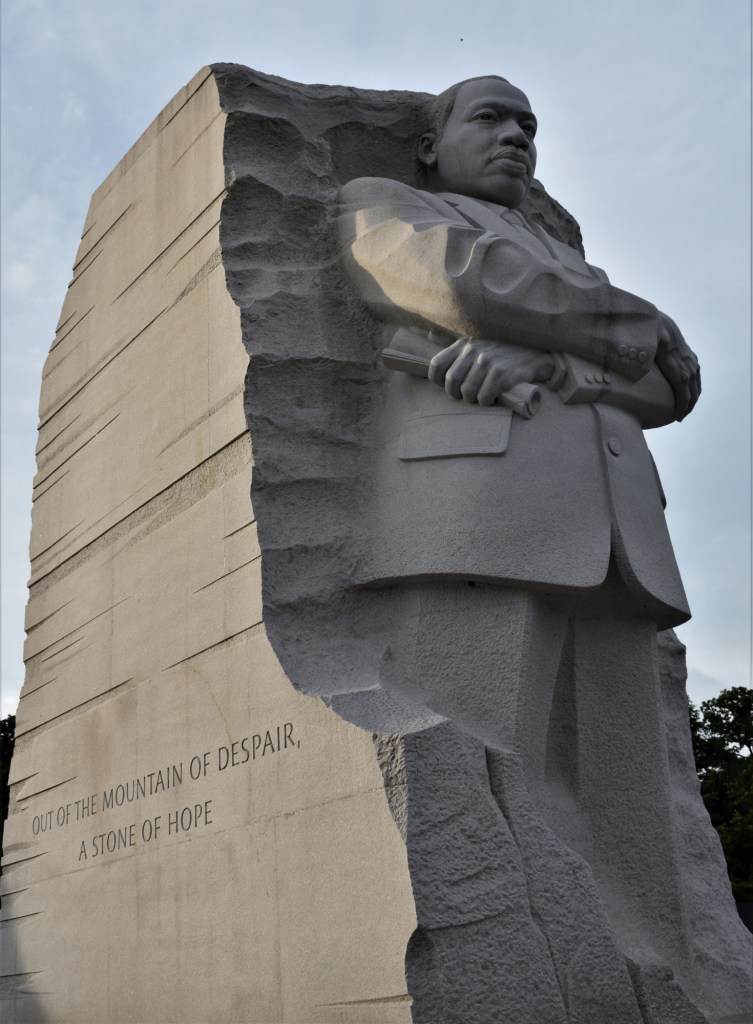
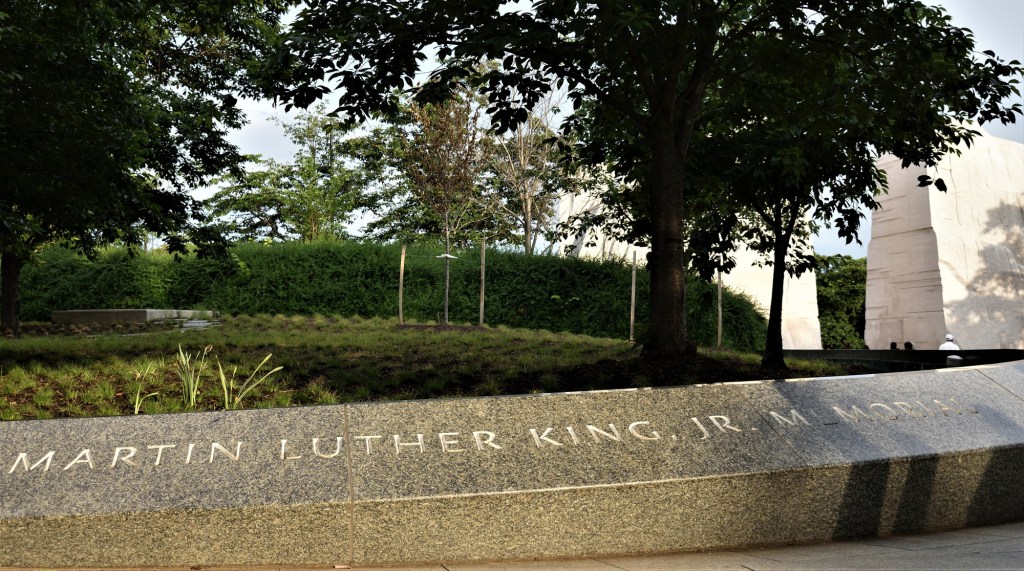
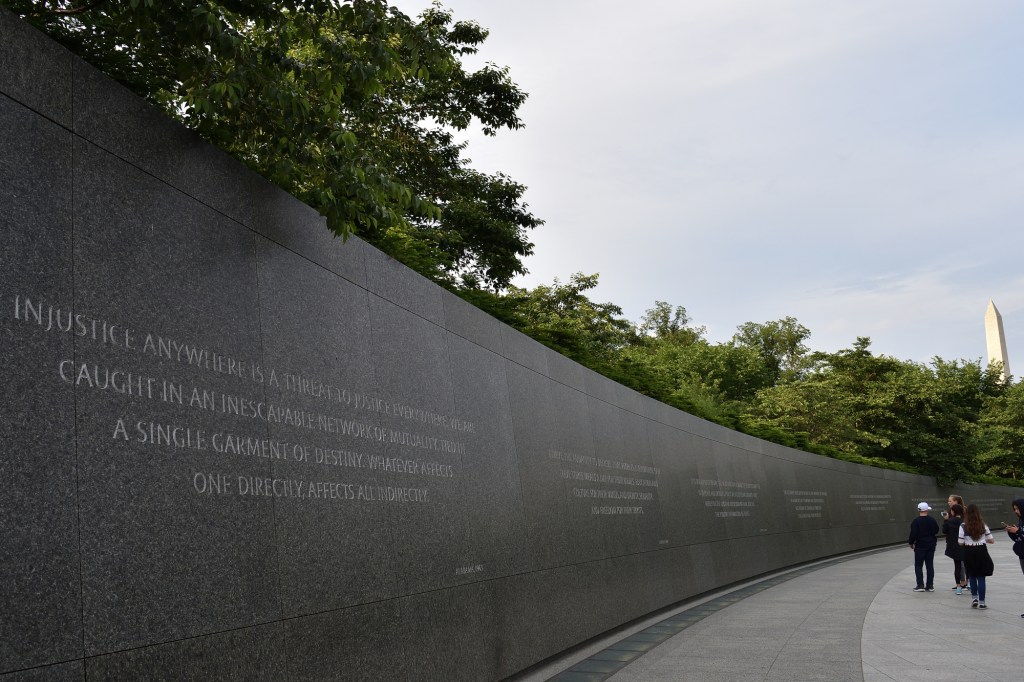
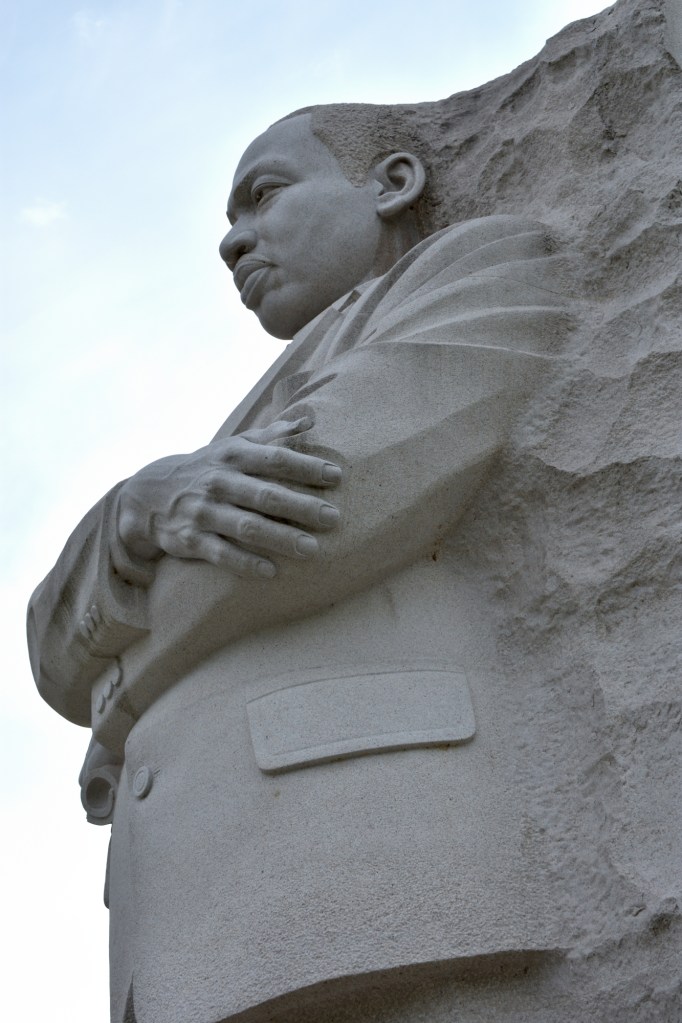
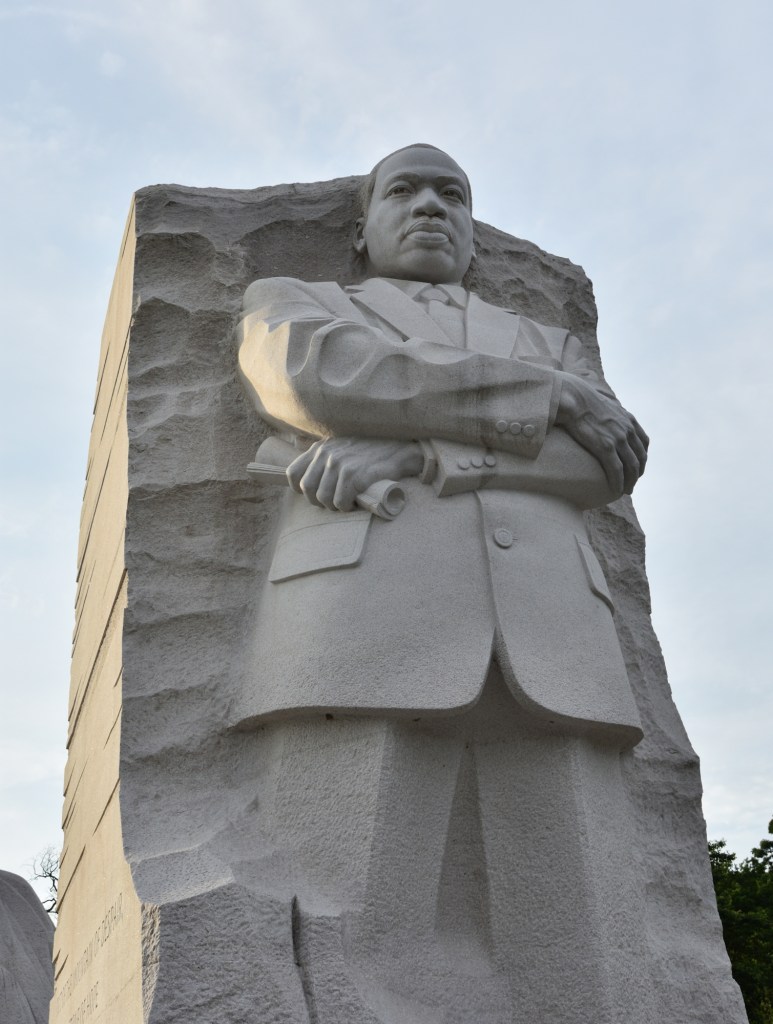
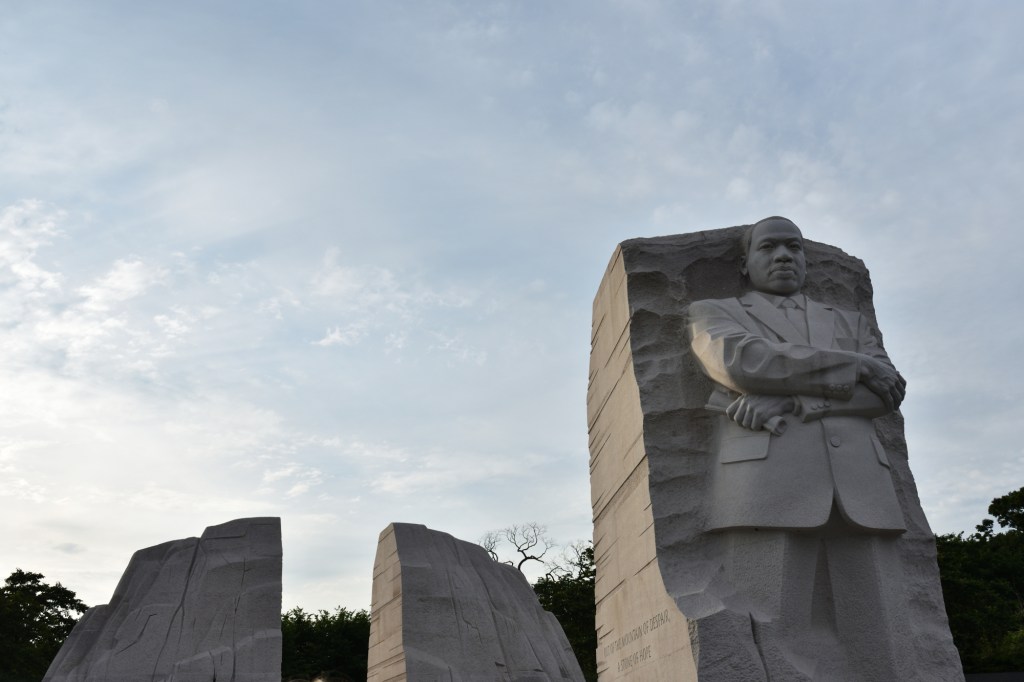
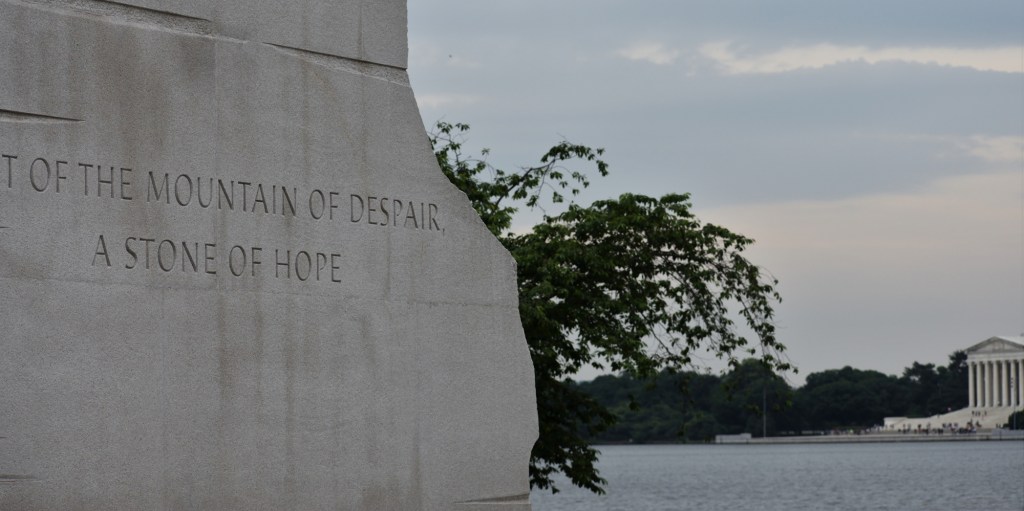
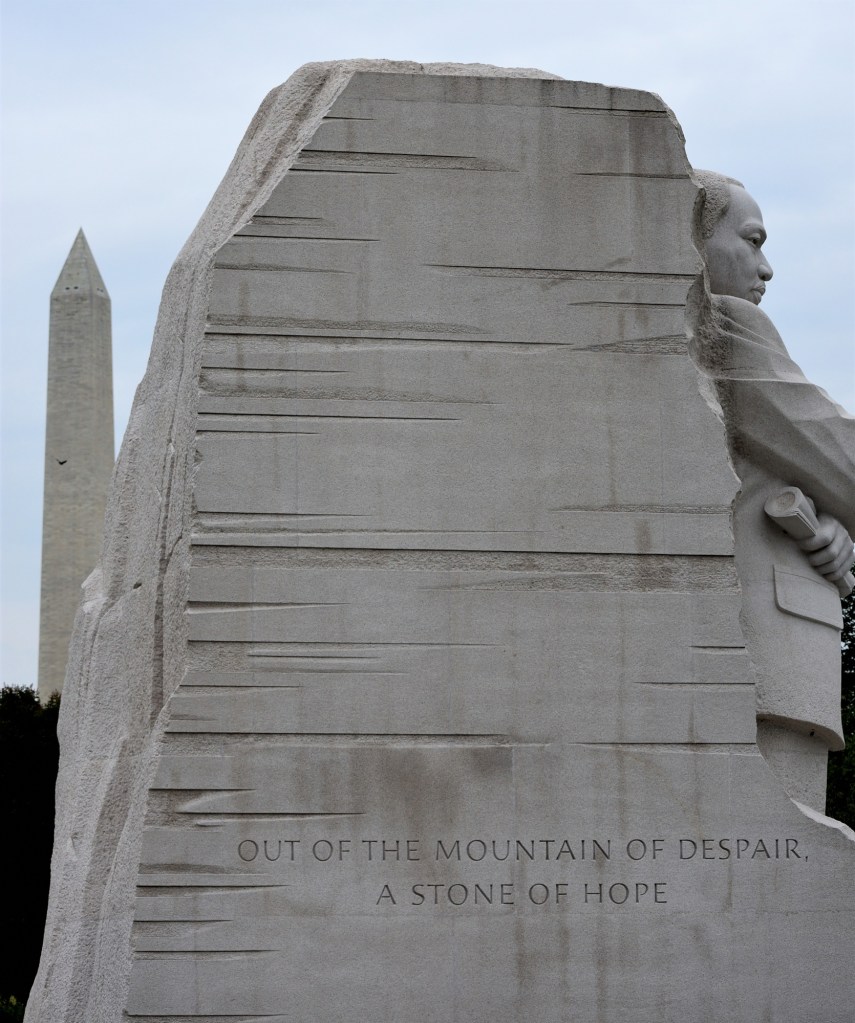
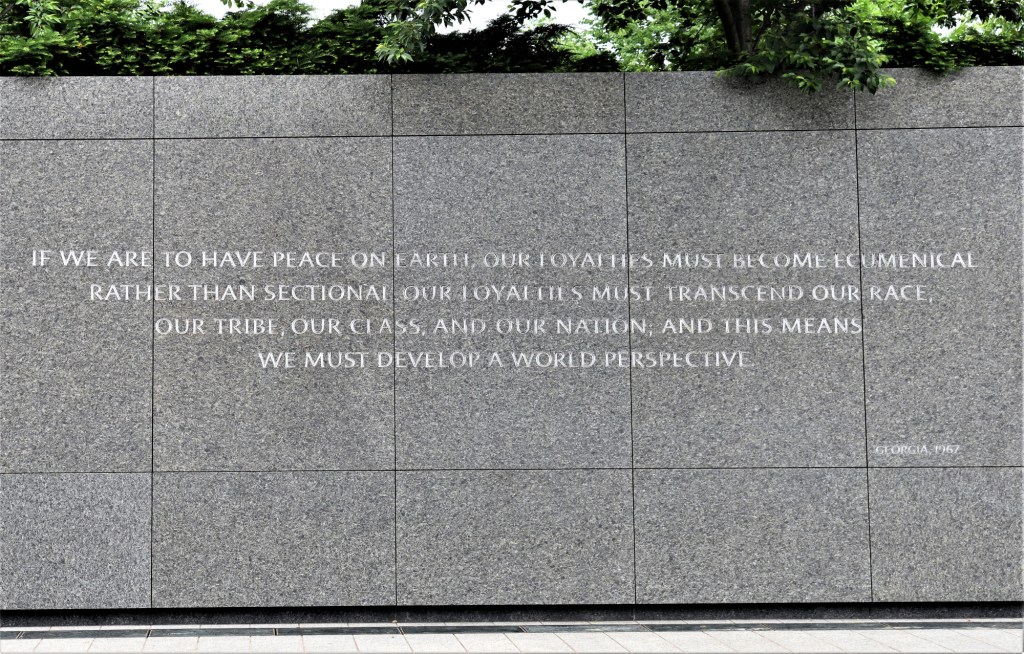
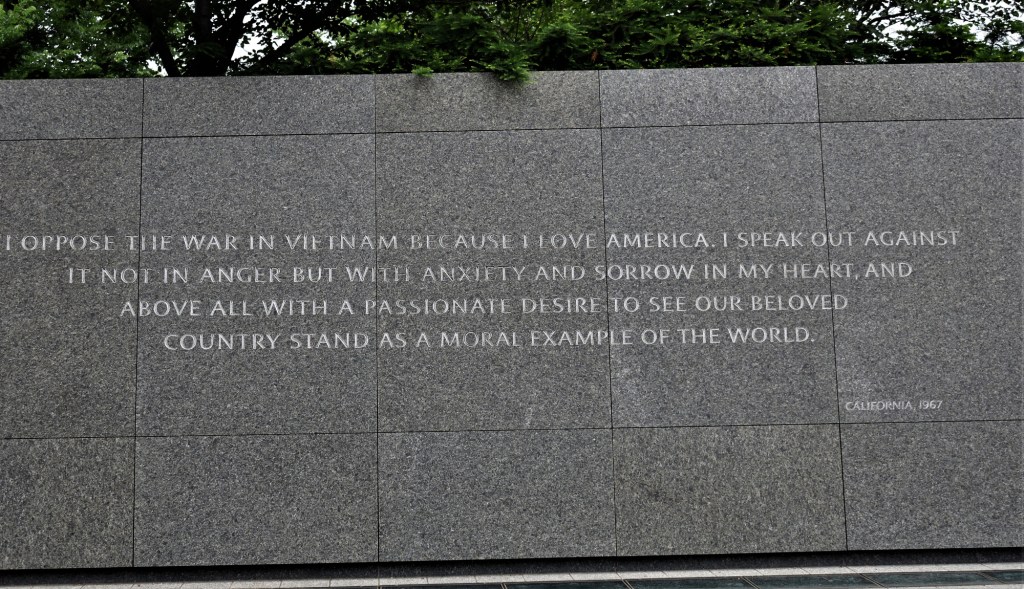
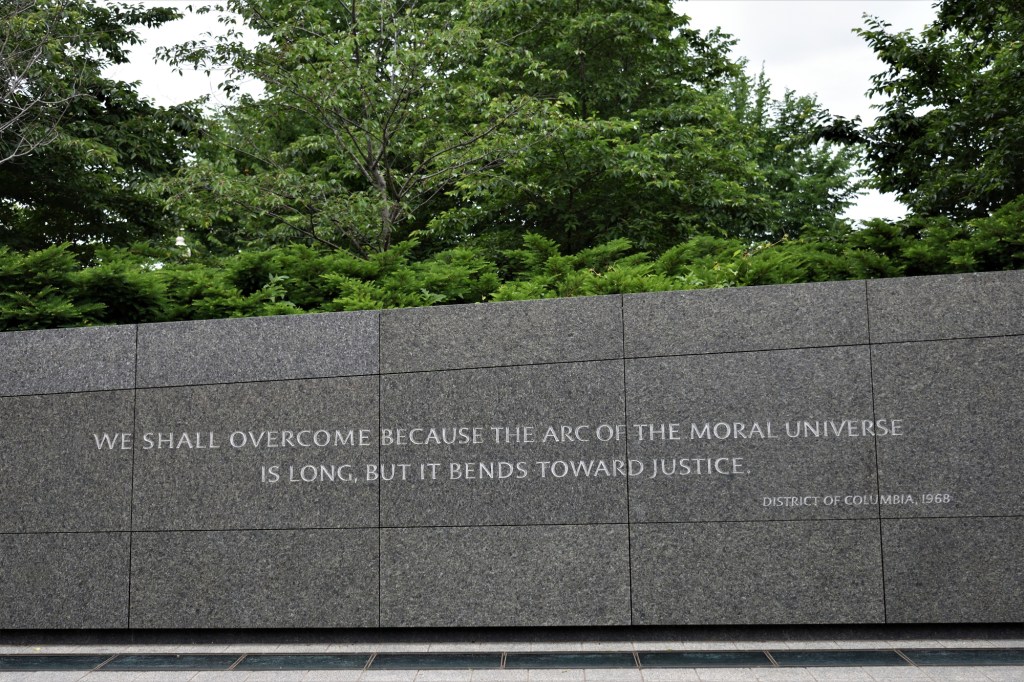
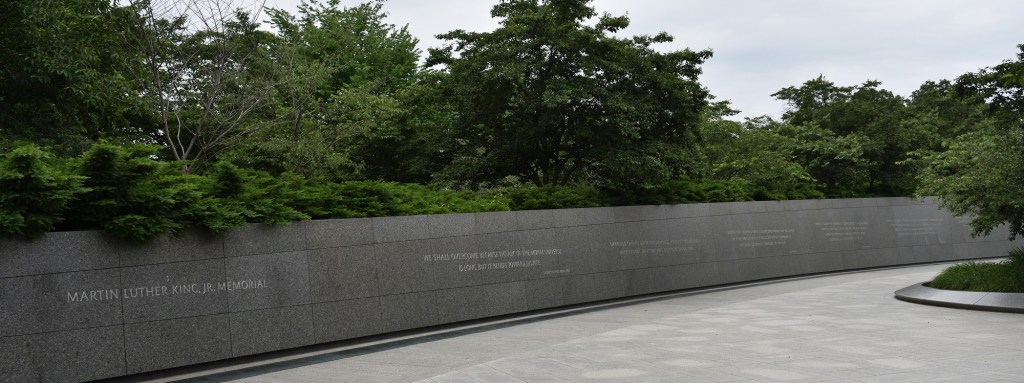
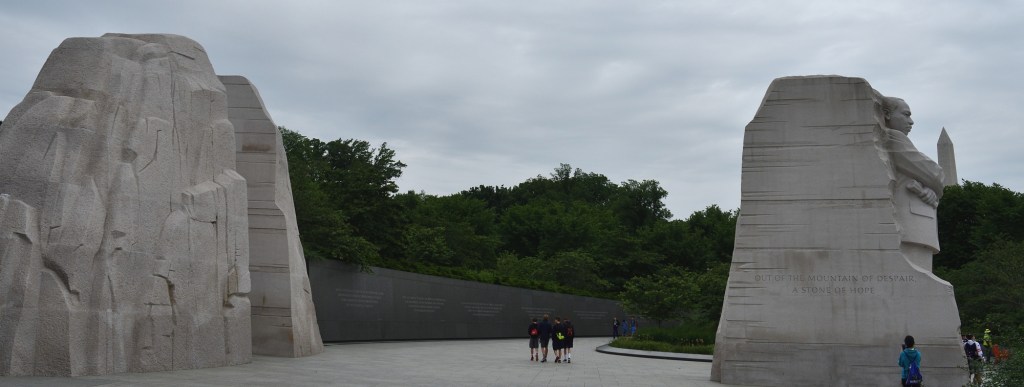
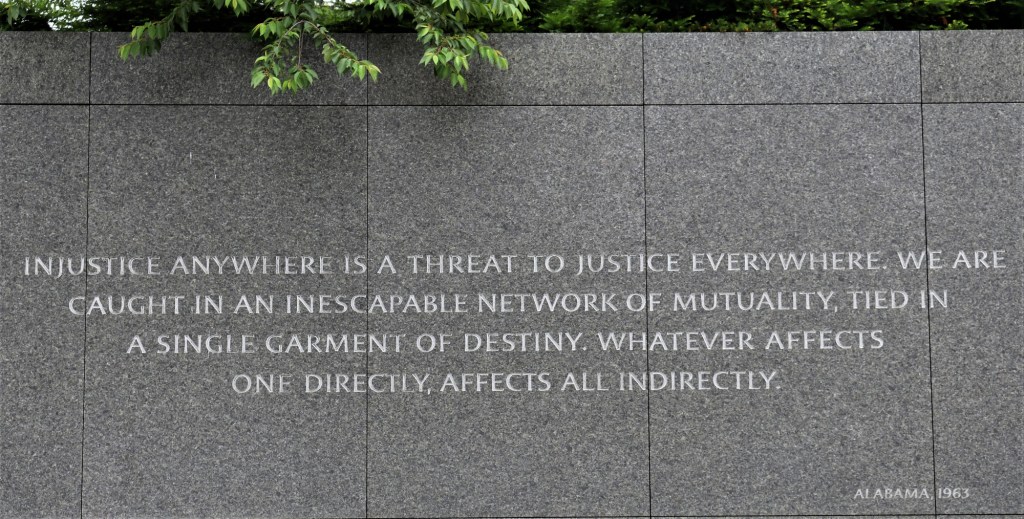
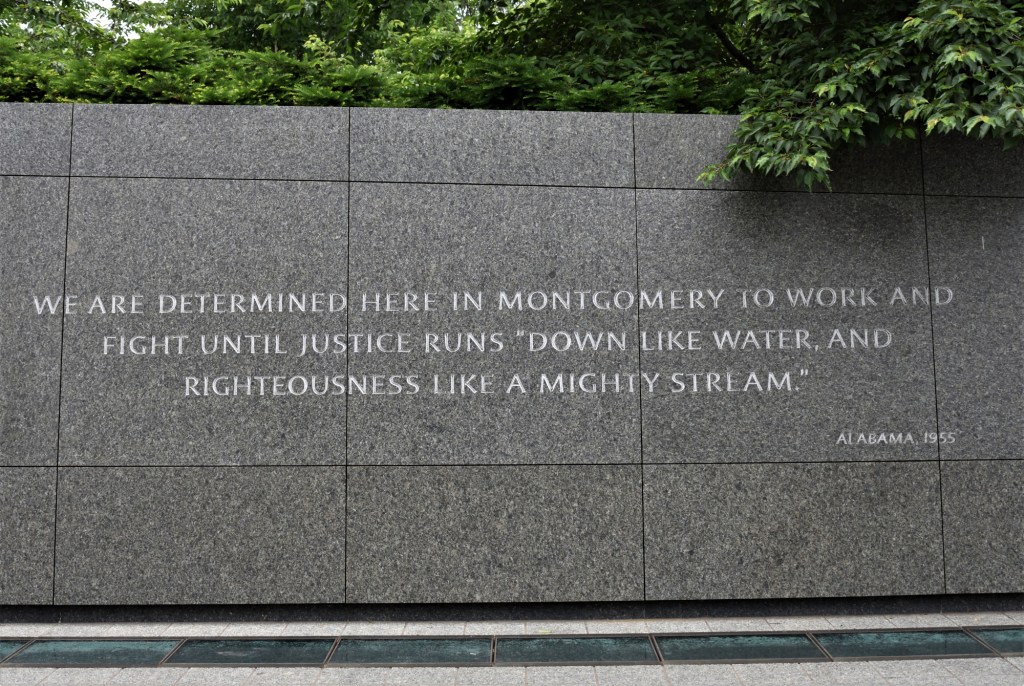
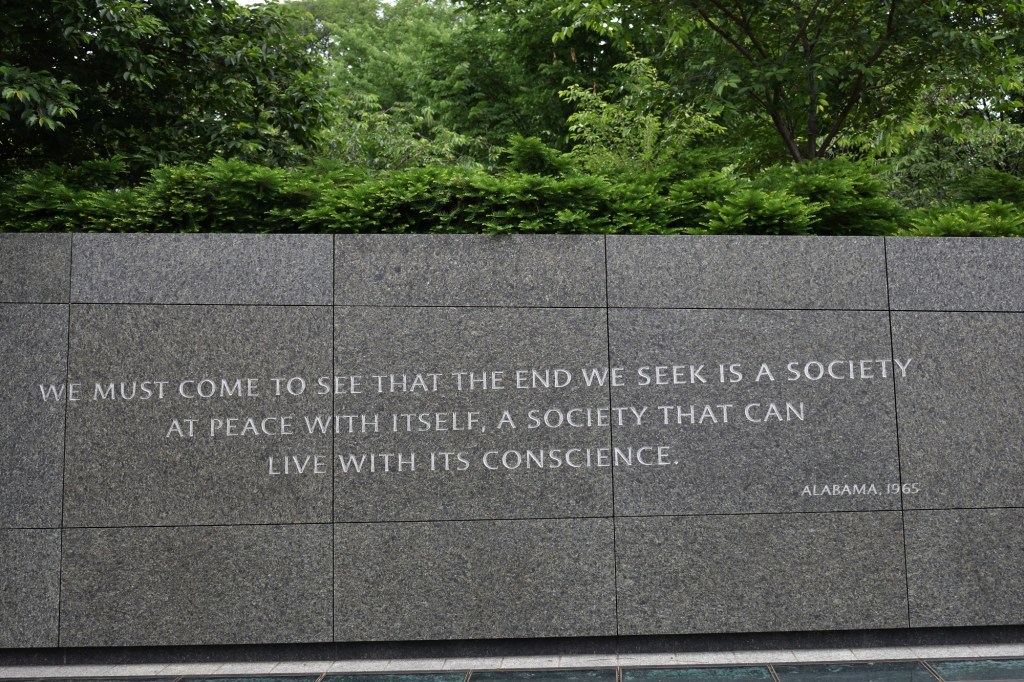
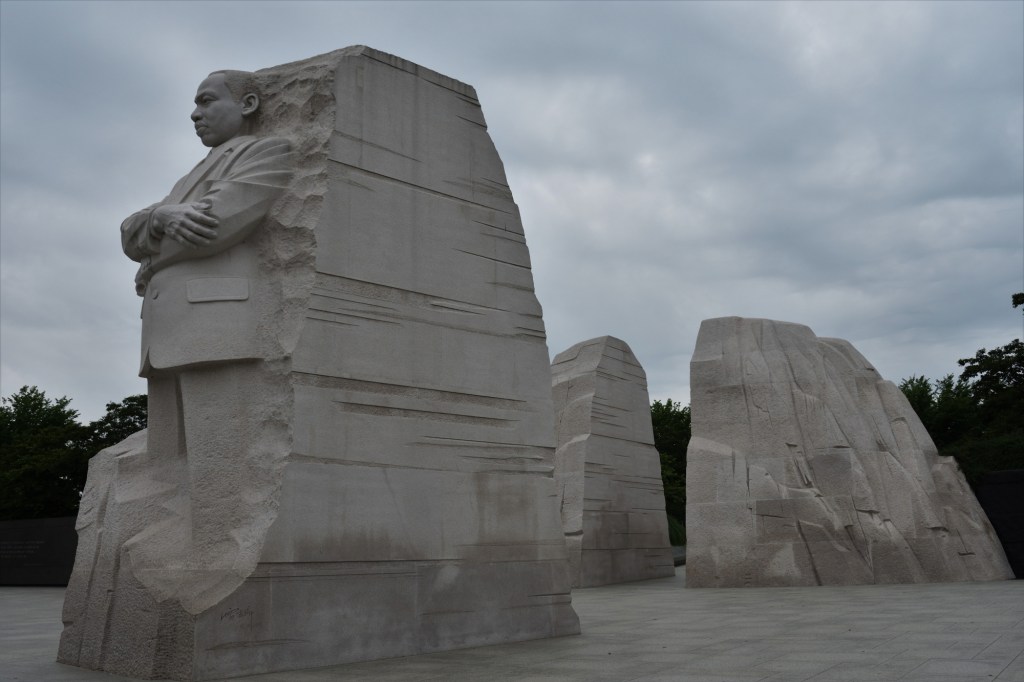
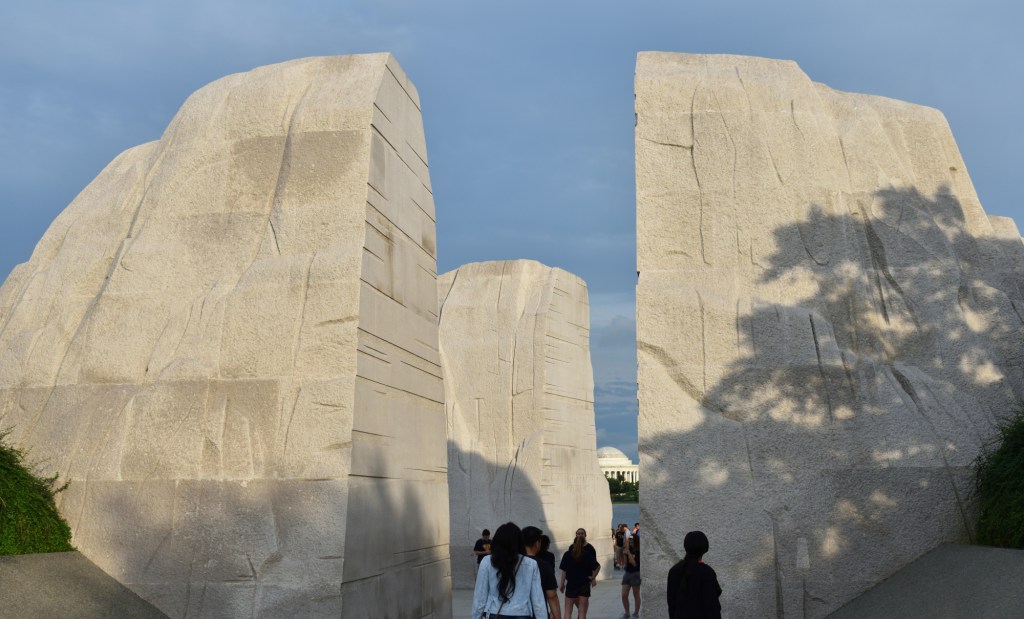
Martin Luther King, Jr, Memorial

This is the tenth anniversary of the Martin Luther King, Jr, Memorial in Washington, DC. For years I went to Washington, DC, for the annual meetings of the Friends Committee for National Legislation. I looked forward to seeing and photographing the monuments and memorials.

Earth’s Bloodstains

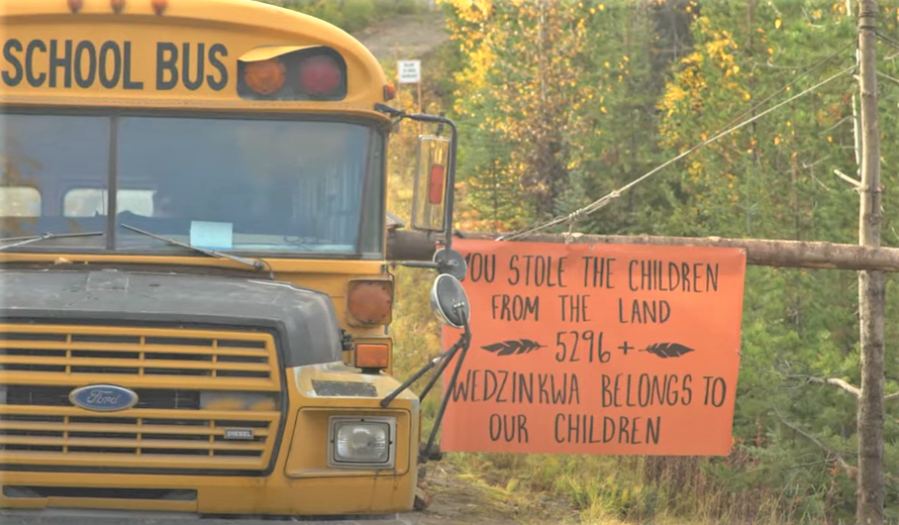
I awoke wondering how to bring more attention to the horrors of the institutions of forced assimilation in the lands called the United States and Canada. The atrocities hidden for many years are finally beginning to be exposed as the remains of THOUSANDS of children are being located on the grounds of those institutions.

Even as this history is beginning to show up on social media and websites there is continued silence from mainstream media. Although there is news about a story Anderson Cooper is working on for 60 Minutes (below).

Where is the outrage? As it is sometimes framed, there would be a radically different response if the remains were of white children. Instead, the ongoing silence is the continued erasure of Indigenous peoples.

What really happened and what is still happening today are not what are published in the mainstream media. If you desire truth, you will have to dig for it yourself.

Earth’s bloodstains

One way I discover websites related to my concerns is when I’m notified when one of my blog posts has been re-blogged. Which was how I learned about the website with the provocative title Earth’s Bloodstains that re-blogged my blog post “We don’t give up“.

Welcome … this site is about exposing our sanitized histories, revealing truth, uncovering earth’s carefully concealed blood stains, exposing the criminals, both past and present who continue to deprive their fellow human beings of the right to a decent existence on planet earth. After twelve years of researching our histories I can only conclude we have been fed layer upon layer of lies. What really happened & what is still happening today are not what are published in the mainstream media. If you desire truth, you will have to dig for it yourself.*

*Please note,  I don’t claim to speak for any group/s of people regarding their own histories. In order for those histories to be known however, I am simply publishing here, histories that have been recorded by non-mainstream indigenous/historians/authors/researchers that we weren’t told, including our own (Aotearoa / New Zealand). So conditioned was I to mainstream versions of history, it was not until I learned about the true history of our own Parihaka in the Taranaki that I woke up to the lies by omission. The official histories taught us in school, were frequently a layer of whitewash, as described by Dr Hirini Moko Mead, the final myth-making phase of colonization. For it is the victors who wrote our histories. I want to expose them. Please contact me if there is anything you know to be incorrect or if you can point me to histories I’ve missed. I am relying on published truth but am aware there are oral histories that likely aren’t in print. 

Earth’s Bloodstains

Exposing the lies of the powerful who mercilessly drive people off lands they’ve inhabited for centuries, who greedily shore up land for themselves alone, shutting out the people, all the while under the cover of ‘law’, a law they carefully craft themselves, for their own ends, and under the guise of ‘economic development’, ‘progress’, ‘civilization’, ‘sustainability’, the great lie that there is not room enough for all on planet earth, all this  in the name of greed, avarice and profit.

Remembering those who sought justice and found none, the many millions who are still being mercilessly slaughtered with swords, poison, fire, lynching, bombs, warfare, guns, drowning, starvation, enslavement, exile, torture, exposure and disease, suffering unspeakable agonies, driven from their homes, incarcerated, raped, abused and enslaved, shipped to the four corners of the earth, enduring trauma that will continue to haunt them and their descendants all their days, visiting the terror upon succeeding generations, driving them in their sadness to suicide, addiction and death even, far from the comfort of hearth and kin, the innocents whose only ‘crime’ was to require a share of the Creator’s earth to live on …

Earth’s Bloodstains


#LANDBACK