Teaching Quality Standard

It is difficult to realize how close we have come to the erasure of Indigenous peoples in the lands called the United States and Canada. This is changing as Indigenous peoples are leading the struggles to protect Mother Earth.

There is also focus on Indigenous peoples as the remains of thousands of native children on the grounds of institutions of forced assimilation are found. The point of forced assimilation was the erasure of the children’s Indigenous identities and ways of living. The ultimate erasure was the death of a child.

The first step in healing is education. Education of all students. Education for ourselves. This comes at a time when powerful forces are determined to maintain this erasure of Indigenous peoples’ history and culture.

It is crucial for non-native people to learn this history, to know how this country developed, so we can all begin to heal. We can’t do that as long as we remain within the boundaries of whitewashed colonial stories. This is important context for dealing with rapidly evolving environmental chaos. Because a return to Indigenous practices and relationships with Mother Earth and all our relations is, I believe, the way to adapt to continuing, deepening collapse.

An earlier blog post was about anti-racism education in Iowa. https://landbackfriends.com/2021/09/15/unban-anti-racism-education-in-iowa/
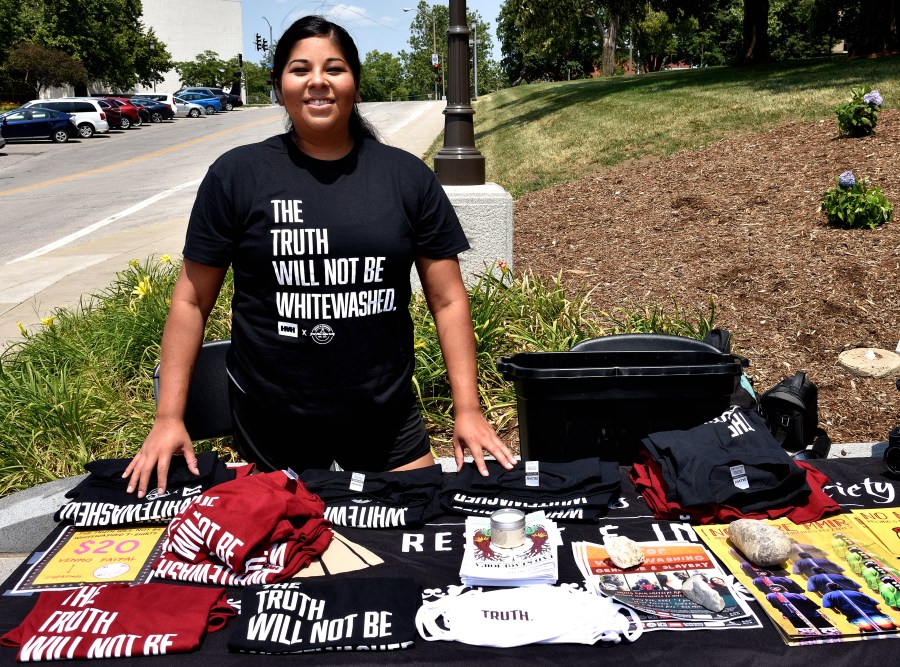
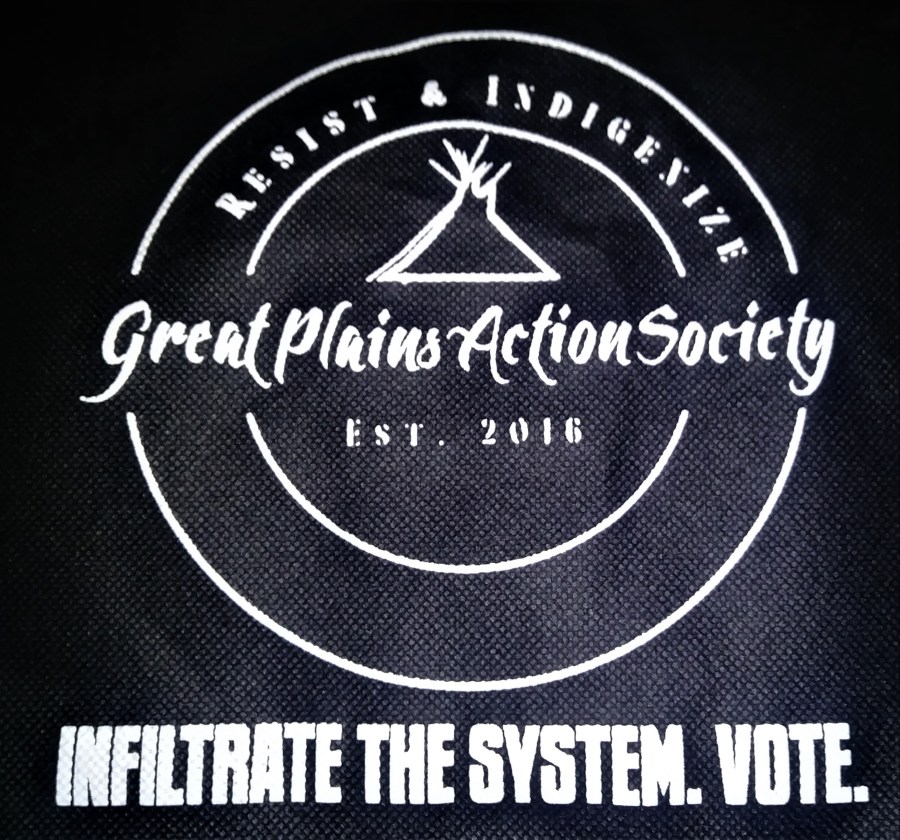
The Great Plains Action Society youth organizers and experts across Iowa weigh in on white supremacy and the ban on Critical Race Theory. The bans on Critical Race Theory across the country are one of many examples of efforts to whitewash the truth.


The following story was just published:

PIERRE, S.D. — Facing bipartisan pressure and calls for her resignation by the South Dakota Education Equity Coalition, South Dakota Gov. Kristi Noem told the state Department of Education to postpone controversial changes to its social studies standards for up to one year to allow for more public input.

Tribes from across South Dakota voiced their ire last month after officials from Noem’s South Dakota Department of Education scrubbed more than a dozen Indigenous-centered learning objectives from the department’s new social studies standards before releasing the document to the public.

The American Indian leaders, educators and community members called the removal of the objectives “Native erasure.”

“Our children were stolen from us in past generation, forcefully assimilated or secretly buried in boarding schools under the ‘kill the Indian and save the Man’ ideologies, and it would seem that the task to erase them has not ended under Governor Kristi Noem’s administration and leadership,” Cheyenne River Sioux Tribe Chairman Harold Frazier said in August.

Under Pressure, S.D. Gov. Noem Delays Social Studies Standards That Erase Native History by Levi Rickert, Native News Online, Sept 22, 2021

Following are two sections of the Alberta Teaching Standard that relate to First Nations, Métis and Inuit peoples.

Quality teaching occurs when the teacher’s ongoing analysis of the context, and the teacher’s decisions about which pedagogical knowledge and abilities to apply, result in optimum learning for all students.

The professional practice of all Alberta teachers is guided by the Teaching Quality Standard (TQS). This standard is the basis for certification of all Alberta teachers and holds them accountable to the profession and to the Minister of Education.

Establishing Inclusive Learning Environments

A teacher establishes, promotes and sustains inclusive learning environments where diversity is embraced and every student is welcomed, cared for, respected and safe.

Achievement of this competency is demonstrated by indicators such as:

a. fostering equality and respect with regard to rights as provided for in the Alberta Human Rights Act and the Canadian Charter of Rights and Freedoms;
b. using appropriate universal and targeted strategies and supports to address students’ strengths, learning challenges and areas for growth;
c. communicating a philosophy of education affirming that every student can learn and be successful;
d. being aware of and facilitating responses to the emotional and mental health needs of students;
e. recognizing and responding to specific learning needs of individual or small groups of students and, when needed, collaborating with service providers and other specialists to design and provide targeted and specialized supports to enable achievement of the learning outcomes;
f. employing classroom management strategies that promote positive, engaging learning environments;
g. incorporating students’ personal and cultural strengths into teaching and learning; and
h. providing opportunities for student leadership

Applying Foundational Knowledge about First Nations, Métis and Inuit

A teacher demonstrates an understanding of and adherence to the legal frameworks and policies that provide the foundations for the Alberta education system.

Achievement of this competency is demonstrated by indicators such as:

a. understanding the historical, social, economic and political implications of:
• treaties and agreements with First Nations;
• legislation and agreements negotiated with Métis; and
• residential schools and their legacy;
b. supporting student achievement by engaging in collaborative, whole school approaches to capacity building in First Nations, Métis and Inuit education;
c. using the programs of study to provide opportunities for all students to develop a knowledge and understanding of, and respect for, the histories, cultures, languages, contributions, perspectives, experiences and contemporary contexts of First Nations, Métis and Inuit; and
d. supporting the learning experiences of all students by using resources that accurately reflect and demonstrate the strength and diversity of First Nations, Métis and Inuit.

Alberta Teaching Standard


For its part, NABSHC—an organization that has been at the helm of increasing public awareness on boarding schools since its founding nearly a decade ago—in 2020 released its first ever Truth and Healing Curriculum. The curriculum, available for free online, is made up of four lessons on Indian Boarding Schools focusing on history, impacts, stories, and healing.

Truth and Healing Curriculum

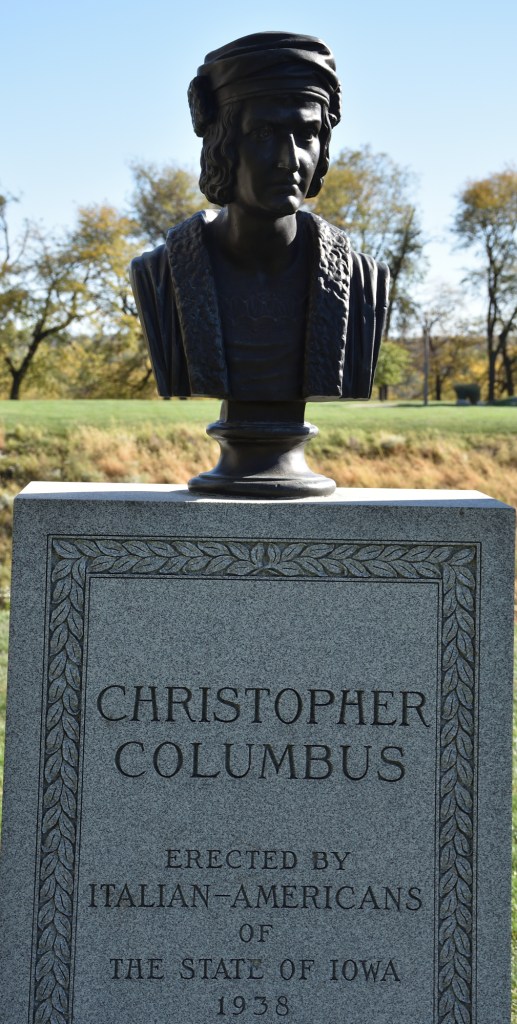
As the horror stories of the institutions of forced assimilation of Indigenous children continue to emerge, it is clear the erasure of this history almost succeeded. I remember being taught very little beyond Columbus ‘discovering America’, the colonial version of ‘Thanksgiving’, and not much related to the settler colonists and Indigenous peoples.

It is crucial for non-native people to learn this history, to know how this country developed, so we can all begin to heal. We can’t do that as long as we remain within the boundaries of whitewashed colonial stories. This is important for the context for dealing with rapidly evolving environmental chaos. Because a return to Indigenous practices and relationships with Mother Earth and all our relations is, I believe, the way to adapt to the coming collapse.

In the last blog post I wrote about sixth grader Alden Nobiss’ idea of having students teach each other about anti-racism and an accurate history of this country known as the United States.

Alden’s mother, Christine Nobiss (Sikowis) says, “he basically thinks that if teachers can’t teach critical race theory, then why can’t students do it? So that’s his idea. He thinks that students can teach each other in their spare time. During recess, during lunch time, and that’s something that he’s going to try to do. So, we have a book that he’s going to share called 500 Years After Columbus, which is a curriculum guide for teaching better indigenous studies for k-12. So, he’s already taking a look at that.”


It has been a long-running goal of many Native people to have more about their history and culture taught in grade schools. New requirements have been adopted in Connecticut, North Dakota and Oregon and advocates say their efforts have gained some momentum with the nation’s reckoning over racial injustice since the killing of George Floyd.

The legislation affecting schools has advanced alongside new bans on Native mascots for sports teams and states celebrating Indigenous Peoples Day in place of Christopher Columbus Day.

The push for curriculum requirements has not been without challenges, with some legislatures deeming new laws unnecessary because Native American history already is reflected in school curriculum. There also have been some steps in the opposite direction amid battles over how topics related to race and racism are taught in classrooms.

In South Dakota, a group of teachers and citizens charged with crafting new state social studies standards said last month that Gov. Kristi Noem’s administration deleted from their draft recommendations many elements intended to bolster students’ understanding of Native American history and culture. They said changes made to the draft gave it a political edge they had tried to avoid, aligning it instead with the Republican governor’s rhetoric on what she calls patriotic education.

Push for Indigenous Curriculum Makes Gains by Susan Haigh, Indian Country Today, Sept 15, 2021

Without the political will to ensure accountability and to guide implementation, what is observed rather in mainstream American education is the ongoing erasure of Indigenous people. Sam Torres

Only five states mentioned Indian boarding schools in their state content standards, which is “unimaginable,” said Sam Torres of The Native American Boarding School Healing Coalition. “It’s obviously a representation and reflection of what is being valued in educational and curricular context.”

As the United States federal government gears up to assess the genocide it perpetuated against Native communities for nearly a century, Native leaders and academics say there is one glaring method for accessing truth and healing: education.

Roughly fifty four percent of public schools across the United States make no mention of Native Americans in their K-12 curriculum, and 87 percent of state history standards don’t discuss Native American history after 1900, according to a study conducted in 2019.

For its part, NABSHC—an organization that has been at the helm of increasing public awareness on boarding schools since its founding nearly a decade ago—in 2020 released its first ever Truth and Healing Curriculum. The curriculum, available for free online, is made up of four lessons on Indian Boarding Schools focusing on history, impacts, stories, and healing.

“We were hearing a lot of feedback from community members asking for materials for their students,” Torres said. In developing the curriculum— sectioned into primary, middle and upper grades learning levels—Torres said he and staff members focused on the pillars that mimic a Native approach to collective education.

Other nonprofit institutions, such as The Ziibiwing Center of Anishinabe Culture & Lifeways in Michigan and the Heard Museum in Arizona have also developed their own supplemental Indian Boarding School curriculum. But without a state mandate on the specific curriculum, or enough educators aware of or comfortable enough with the content, the material reaches only a tiny fraction of students.

NABSHC’s Truth and Healing curriculum has been downloaded over one thousand times, Torres said, as the organization sets its sight on training educators in decolonizing knowledge. 

“Rigorous meaningful curricular materials have and continue to be developed by Native people,” Torres said. “Yet without the political will to ensure accountability and to guide implementation, what is observed rather in mainstream American education is the ongoing erasure of Indigenous people.”

The vast majority of Americans don’t learn about Indian boarding schools growing up. These Native leaders and educators want to change that by Jenna Kunze, Native New Online, Sept 13, 2021

The National Native American Boarding School Healing Coalition has developed a curriculum on U.S. Indian Boarding Schools for teachers and parents to use with their students and children.

The Truth and Healing Curriculum is comprised of four (4) robust lessons on Indian boarding schools covering History, Impacts, Stories, and Healing, and is appropriately sectioned into three (3) learning levels: primary, middle, and upper grades.

NABS understands that educational resources such as these are greatly needed for a variety of important reasons. As a response to requests from teachers and parents, we developed the Truth and Healing Curriculum to support distance learning during the COVID-19 pandemic.

Download a package that includes all curriculum.

Download Curriculum


Students teaching students

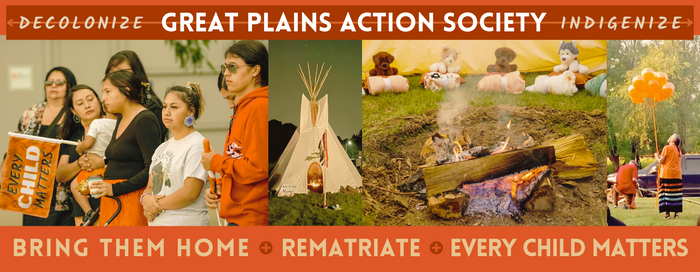
Yesterday I saw the great presentation, Online Pushback:UnBan Anti-Racism Education in Iowa, a forum by Indigenous youth of the Great Plains Action Society related to Iowa’s ban on teaching Critical Race Theory or Anti-Racism Education (video below).

Indigenous Youth Organizers, Alexandrea Walker and Keely Driscoll, have started a youth-led movement to demand that the current Iowa Administration unban Anti-Racism Education, aka, Critical Race Theory. For the sake of health and safety for all, it is imperative that Kim Reynolds reverse the overtly white supremacist decision to ban anti-racism education plus diversity, equity, and inclusion programming in the classroom and in all state-funded institutions

At the 12:15 mark in the video above, my friend Sikowis Nobiss introduces her son Alden who is in sixth grade. With the ban against teachers teaching about anti-racism, he spoke about his idea of students teaching each other as an alternative.

Sikowis: Hello everybody. I am here with my son today and his name is Alden and he’s in sixth grade. And he’s being affected by the ban on critical race theory or as we like to call it anti-racism education, decolonization work, diversity equity inclusion. Those are better terms for it because critical race theory is a term that they’re using to manipulate the situation, to make it sound like it’s critical, you know that it’s being like overtly hard on something when really it means how like you know analyzing something specifically or properly.
So, Alden is in grade six and you know he’s got some interesting thoughts about this, and I wanted to ask him like what does he think, what do you think about the ban on critical race theory?
Alden: It’s not that good.
Sikowis: How come?
Alden: I mean people should know that what happened in the past or else the history is just going to repeat itself. Just the same thing that happens over and over right? Seems like it isn’t going to stop if people don’t take action and more people like Reynolds is going to ban stuff.
Sikowis: And you had an interesting idea, you had said that teachers can’t teach critical race theory right? But students can. Can you tell us more about that?
Alden: The governor only said that teachers couldn’t say stuff like that and they couldn’t teach stuff like that, but that doesn’t mean schools can’t just be used to teach inside like only teachers.
Sikowis: So, who would teach like you want?
Alden: Kids to teach each other. Yeah the more educated kids that are like me I guess that know about what happened in the past.
Sikowis: Very good thank you so much Alden. We appreciate you making those remarks. That took a lot of bravery for him. I’m very proud of that.
I hope you guys could hear that. He basically thinks that if teachers can’t teach critical race theory then why can’t students do it? So that’s his idea. He thinks that students can teach each other in their spare time. During recess during, lunch time and that’s something that he’s going to try to do. So, we have a book that he’s going to share called 500 Years After Columbus, which is a curriculum guide for teaching better indigenous studies for k-12. So, he’s already taking a look at that.


Just as the final report from the National Inquiry into Missing and Murdered Indigenous Women and Girls triggered shock waves across the country, bringing conversations about violence against Indigenous people into the classroom, so did the discovery of 215 children’s remains at the Kamloops Indian Residential School earlier this year.

As the National Day for Truth and Reconciliation approaches, we can expect Canadian teachers are thinking about how they can better weave Indigenous perspectives into their lesson planning.

In the past, events like this rarely made it as national news, staying inside our Indigenous communities where the pain remained hidden from the rest of Canada. Now, teachers are talking about them with their students — how history and society influence individual situations of race-motivated violence and cultural genocide. It’s our responsibility to make sure they are equipped to teach the truth and acknowledge the important role schools play in reconciliation.

We owe it to all students to bring truth and drive reconciliation in classrooms by Linda Isaac & John Estabillo, National Observer, September 16th, 2021.

For specific teachings on Indian Boarding Schools and the United States assimilation policies—a history educators say is central in contextualizing present day culture for Native and non-Native youth alike— statistics are even bleeker.

“Over the course of the last couple of years, we’ve identified five states—only five states— that have even mentioned Indian boarding schools in their content in their state content standards, which is unimaginable,” said Sam Torres, director of research and programs at The Native American Boarding School Healing Coalition. Those states, surveyed by NABSHC in 2015, are: Arizona, Washington, Kansas, Oklahoma, and North Dakota. 

“It’s obviously a representation and reflection of what is being valued in educational and curricular context,” Torres said. 

For its part, NABSHC—an organization that has been at the helm of increasing public awareness on boarding schools since its founding nearly a decade ago—in 2020 released its first ever Truth and Healing Curriculum. The curriculum, available for free online, is made up of four lessons on Indian Boarding Schools focusing on history, impacts, stories, and healing.

The vast majority of Americans don’t learn about Indian boarding schools growing up. These Native leaders and educators want to change that by JENNA KUNZE, Native News Online, SEPTEMBER 13, 2021

We owe it to Indigenous educators who are triggered and challenged to deliver education around a topic like residential schools that have impacted them. Educators like me, who when viewing the images of children with their plain clothes, short hair, and empty eyes — identities stripped — still struggle to separate the pain we hold from lesson planning.

We also owe it to non-Indigenous educators who lack confidence in teaching because they weren’t taught the truth about the atrocities of the residential school system. This is a significant blocker to the successful integration of truth-telling in our classrooms, which can be solved by supporting educators in their journey of learning.

We must ensure the materials passed down to educators are written accurately by authentic voices. We need ongoing government funding and access to professional learning programs. Alberta is one province that does this well. Its Teacher Qualifications Standard requires educators to take courses in foundational knowledge of Indigenous history.

We owe it to all students to bring truth and drive reconciliation in classrooms by Linda Isaac & John Estabillo, National Observer, September 16th, 2021.

First Nation-Farmer Climate Unity March Anniversary

My grandmother, Lorene Standing, said the will of God is often revealed in a series of small steps. I thought that meant a series of spiritual messages and that has been my experience.

But also, looking back over our lives, the series of actions we took, the decisions we made, map the path traveled. Spiritual guidance can help us stay on the path, might tell us what action to take. Each step gives us experience needed to continue on the path. We stray from the path at times. But learn by making mistakes.

This is the third anniversary of the First Nation-Farmer Climate Unity March (described below). When I learned about the March, I immediately felt a leading from the Creator this was something I should do. The experiences during the March were transformational for me.

The Spirit was important in numerous ways. One of the reasons I wanted to join the March was to learn more about Indigenous spirituality, and I did.

The article below describes how my Quaker community supported us spiritually during the March.

The Spirit created the opportunity for me to talk with my new friend, Matthew Lone Bear, about Quaker involvement with the native residential schools. And for him to share a story of the impact of those schools on his own family. (These stories are found on the First Nation-Farmer Climate Unity March website https://firstnationfarmer.com/ )

Our experiences on the March have made it possible for us, native and nonnative people, to work together in many ways since.

Here is a link to the First Nation-Farmer website, where there are many stories, photos and videos from the March. And a link to the website LANDBACKFriends which is about work going on now related to the concepts of LANDBACK.

First Nation-Farmer Climate Unity Marchhttps://firstnationfarmer.com/
LANDBACK Friendshttps://landbackfriends.com/

These are perilous times. Ferocious wildfires, melting glaciers and permafrost, severe drought, and devastating storms show rapidly evolving environmental chaos. Political, economic and social systems are breaking down.

There is also hope as we work together to address these challenges. Mutual Aid works because it is based upon people working and being together in their local communities, solving local problems. And LANDBACK is a framework for Indigenous peoples to teach us how to work to repair our relationships with Mother Earth and each other. It is because of the friendships that formed during the March that many of us are working together on Mutual Aid and LANDBACK.

Following is an article, written shortly after the March, published in On Creation, the publication of Quaker Earthcare Witness. The article is no longer online.

https://firstnationfarmer.com/

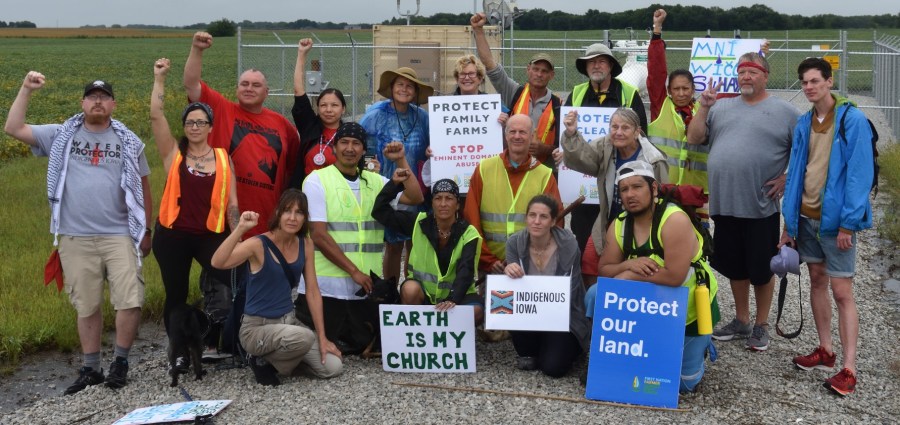
Iowa Yearly Meeting (Conservative) Friends Peter Clay and I recently walked on the First Nation-Farmer Climate Unity March. A group of about thirty that included nearly a dozen Native Americans walked 94 miles along the route of the Dakota Access Pipeline from September 1 – 8, 2018. One of the goals of the March was to bring attention to a case before the Iowa Supreme Court about the improper use of eminent domain to force Iowa farmers to allow construction of the pipeline on their land.

After walking between 9 and 15 miles, most evenings a community forum was held to discuss topics such as farming practices, or the consequences of the pipeline construction. One evening my Scattergood Friends School classmate Lee Tesdell discussed some of his progressive farming practices. Christine Nobiss discussed ways Native farming practices are better for the earth and water. This was an example of how this March helped us come together. As Manape LaMere, one of the headsmen from Standing Rock said, the purpose of the March was to make it possible for us to work together in the future. To do so, we needed to trust each other, and to trust each other we needed to understand each other.

During this March, Quakers in my local meeting, Bear Creek, often sent email messages of encouragement, and held us in their prayers. One of my Quaker friends, Liz Oppenheimer, invited people to offer spiritual support for our March in a couple of ways. One was via a telephone conference call every morning we were marching, from 8:30 to 9:00 am.

The other way Liz created for others to support us was by creating a Facebook group called “Meeting for Worship: Iowa’s Climate Unity March”. Following are a few of the messages shared on that Facebook page:

I see that Jeff has posted some of his recent writing about the march and its issues. My request is that we return to Jeff’s initial questions— sharing our reactions to the idea behind this march, as well as to the issues of pipelines, indigenous rights, misuse of eminent domain, etc.

As we share our own wonderings, questions, and struggle, I hope we can better accompany Jeff, Peter Clay, and other marchers.

George Fox suggested to us that if we answer that of god in others that we can then walk cheerfully over the earth. As I think about Jeff and Peter and the new sisters and brothers they will meet as they march, I realize that this sentiment works the other way also. As they walk over the earth they will then be able to answer to that of god in others.

This morning on the conference call for worship, we heard a vocal prayer of gratitude to Peter Clay, Jeff Kisling, and the other marchers and organizers of the march. We also heard the joyous hymn “Trees of the Field.”

After other Friends had left the call, and literally as my finger was about to hit the Hang Up button on my phone just past 9:00 am, another Friend joined the call. It was Jeff!!

He wants us to know that the marchers and organizers know we are holding them all in prayer and they are very appreciative of our support in this way. When I replied “It’s such a small thing we do,” Jeff reminded me “No, no it’s not.”

We are so blessed to be connected this way, no matter what form our march and our journey takes. And to those of you who are carving out time each day to hold the Climate Unity March in prayer, regardless of when, where, or how, all of us thank you.

Each morning of the March we gathered in a circle to hear about the day’s route and address any questions. The first morning I shared this Quaker support with my fellow marchers during our circle gathering, who expressed appreciation for this.

Some of the most powerful experiences I had during the March were times when prayers were offered. We stopped for prayers every time we crossed the route of the Dakota Access Pipeline. I was honored to be given the opportunity to give prayers at the pipeline crossing just before we reached Pilot Mound. I briefly described Quaker worship, then our circle, holding hands, worshiped in silence for a while.

Abolition and racial capitalism

It has taken a while to adjust to thinking of abolition as the elimination of prisons instead of the historical context of abolition of the institution of enslavement. Not surprisingly the concept of prison abolition comes up in any discussion of capitalism and building a just future. Police are the enforcers of capitalism.

I am part of a new group of Friends who are interested in abolishing police and prisons called the Quakers for Abolition Network (QAN).

The following is from an article Jed Walsh and Mackenzie Barton-Rowledge, who helped start QAN, wrote for Western Friend.

Mackenzie: Let’s start with: What does being a police and prison abolitionist mean to you?

Jed: The way I think about abolition is first, rejecting the idea that anyone belongs in prison and that police make us safe. The second, and larger, part of abolition is the process of figuring out how to build a society that doesn’t require police or prisons.

M: Yes! The next layer of complexity, in my opinion, is looking at systems of control and oppression. Who ends up in jail and prison? Under what circumstances do the police use violence?

As you start exploring these questions, it becomes painfully clear that police and prisons exist to maintain the white supremacist, heteronormative, capitalist status quo.

Abolish the Police by Mackenzie Barton-Rowledge and Jed Walsh, Western Friend, November December, 2020

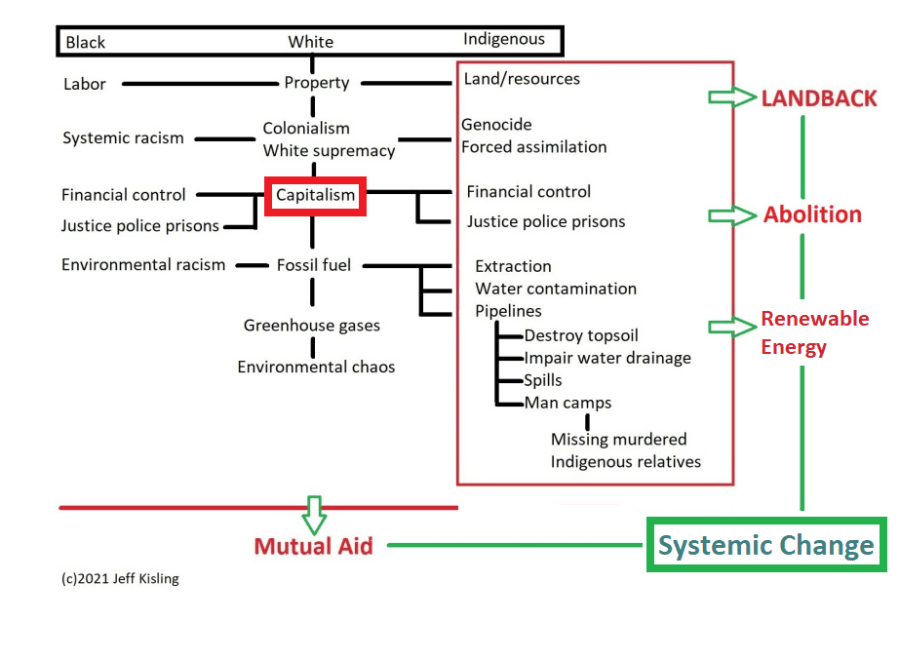
This diagram shows abolition, along with LANDBACK and Mutual Aid, as pieces of changes to transition away from systems of capitalism and white supremacy.

I’ve been reading The Red Deal by the Red Nation, which is about empowering Indigenous peoples, in part to help guide us through environmental chaos. What follows are some interesting perspectives on prison abolition.

Austerity is enforced scarcity. The neoliberal policy of the last forty years has been a tax strike of the super wealthy, who have refused to pay their share of taxes and have locked away the world’s wealth in tax havens and offshore accounts. These are resources that should go towards providing services—education, housing, healthcare, public transportation, infrastructure, and environmental restoration—to those who actually produce the wealth: the Indigenous, Black, migrants, women, and children who are the workers of the world. This strike is worth crushing quickly and with prejudice. Direct action alone won’t reallocate wealth if it is not backed by popular mass movements and enforced by state apparatuses wrested away from the elite and powerful.

Prison abolition and an end to border imperialism are key aspects of the Red Deal, for good reason. The GND calls for the creation of millions of “green” jobs, as well as a policy of “just transition” for poor and working-class families and communities that currently depend on resource extraction for basic income and needs, and which will suffer greatly when the extractive industry is shut down. In the United States today, however, about seventy million people—nearly one-third of adults—have some kind of criminal conviction—whether or not they’ve served time—that prevents them from holding certain kinds of jobs. If we add this number of people to the approximately eight million undocumented migrants, the sum is about half the US workforce, two-thirds of whom are not white. Half of the workforce faces employment discrimination because of mass criminalization and incarceration.

The terrorization of Black, Indigenous, Brown, migrant, and poor communities by border enforcement agencies and the police drives down wages and disciplines poor people—whether or not they are working—by keeping them in a state of perpetual uncertainty and precarity. As extreme weather and imperialist interventions continue to fuel migration, especially from Central America, the policies of punishment—such as walls, detention camps, and increased border security—continue to feed capital with cheap, throwaway lives. The question of citizenship—colonizing settler nations have no right to say who does and doesn’t belong—is something that will have to be thoroughly challenged as a “legal” privilege to life chances. Equitable access to employment and social care must break down imperial borders, not reproduce them.

The Red Deal by The Red Nation (pp. 22-23). Common Notions. Kindle Edition.

Calls for abolition of the prison system have expanded in the wake of widespread police violence. Abolition is part of the work of our Mutual Aid community.

Prison abolition and an end to border imperialism are key aspects of the Red Deal

The Red Nation

This same war of conquest is currently using the mass incarceration machine to instill fear in the populace, warehouse cheap labor, and destabilize communities that dare to defy a system that would rather see you dead than noncompliant. This is the same war where it’s soldiers will kill a black or brown body, basically instinctively, because our very existence reminds them of all that they have stolen and the possibility of a revolution that can create a new world where conquest is a shameful memory.

What we have is each other. We can and need to take care of each other. We may have limited power on the political stage, a stage they built, but we have the power of numbers.

Those numbers represent unlimited amounts of talents and skills each community can utilize to replace the systems that fail us.  The recent past shows us that mutual aid is not only a tool of survival, but also a tool of revolution. The more we take care of each other, the less they can fracture a community with their ways of war.

Ronnie James, The Police State and Why We Must Resist

Policing in the United States is a force of racist violence that is entangled at the core of the capitalist system. As Robin D.G. Kelley pointed out on Intercepted With Jeremy Scahill, capitalism and racism are not distinct from one another: “If you think of capitalism as racial capitalism, then the outcome is you cannot eliminate capitalism, overthrow it, without the complete destruction of white supremacy, of the racial regime under which it’s built.”

Police in the United States act with impunity in targeted neighborhoods, public schools, college campuses, hospitals, and almost every other public sphere. Not only do the police view protesters, Black and Indigenous people, and undocumented immigrants as antagonists to be controlled, they are also armed with military-grade weapons. This police militarization is a process that dates at least as far back as President Lyndon Johnson when he initiated the 1965 Law Enforcement Assistance Act, which supplied local police forces with weapons used in the Vietnam War. The public is now regarded as dangerous and suspect; moreover, as the police are given more military technologies and weapons of war, a culture of punishment, resentment and racism intensifies as Black people, in particular, are viewed as a threat to law and order. Unfortunately, employing militarized responses to routine police practices has become normalized. One consequence is that the federal government has continued to arm the police through the Defense Logistics Agency’s 1033 Program, which allows the Defense Department to transfer military equipment free of charge to local enforcement agencies.

TO END RACIAL CAPITALISM, WE WILL NEED TO TAKE ON POLICING By Henry A. Giroux, Truthout, June 20, 2021

It’s decolonization or extinction. And that starts with land back.

I’ve often written about my inability to convince people why we need to reject the systems of capitalism and endless economic growth. Emblematic of that is nearly fifty years I’ve lived without a car, hoping others might give up theirs, too. I’ve prayed and written so much about protecting Mother Earth for years, with little or no success. Either I was going about this wrong, or no one was listening, or both.

For the past year I’ve been blessed to become part of a local Mutual Aid community. And learning much about the concepts of LANDBACK. I’ve been putting what I’ve been learning on my website, LANDBack Friends, because my native friends tell me teaching white people about those concepts is one of the best ways for white allies to help them. https://landbackfriends.com/

The following statement applies to the land called the United States, as well as Canada.

Canada maintains the same antiquated, paternalistic attitude towards our peoples that sanctioned residential schools and the pass system—they act as if they know what’s best for us. Our rights, our knowledge and values are not included or taken seriously and we are a mere afterthought when our lands are on fire, our communities are evacuating, and as we watch our futures going up in smoke.

Indigenous rights are a counterforce to the climate crisis. Colonialism caused climate change. Indigenous rights are a solution by Eriel Deranger, The Breach, July 30, 2021

As heat and severe weather records are broken again and again, it should be clear by now that there is no limit for capital. There will be no scientific warning or dire catastrophe that leads to a political breakthrough. No huge wildfire, terrible drought or great flood will make governments and corporations change course. To carry on as they are means extinction. And yet they still carry on: more fossil fuels and fewer trees, more pollution and fewer species.

Recognition that there is no way out of this crisis without far-reaching, social upheaval animates the proposals put forward in The Red Deal: Indigenous Action to Save Our EarthThe short book was authored by activists from The Red Nation, a coalition devoted to Indigenous liberation and made up of Native and non-native revolutionaries based mainly in North America.

The authors make clear that they believe the campaign to halt climate change and repair ecological destruction is bound up with the fate of the world’s Indigenous peoples. They say bluntly that “there is no hope for restoring the planet’s fragile and dying ecosystems without Indigenous liberation” and that “it’s decolonization or extinction.”

No Hope for Earth without Indigenous Liberation by Simon Butler, originally published by Climate and Capitalism
August 27, 2021

there is no hope for restoring the planet’s fragile and dying ecosystems without Indigenous liberation

The Red Nation

For us, it’s a larger social problem of underdevelopment. Colonialism has deprived Indigenous people, and all people who are affected by it, of the means to develop according to our needs, principles, and values. It begins with the land. We have been made “Indians” only because we have the most precious commodity to the settler states: land. Vigilante, cop, and soldier often stand between us, our connections to the land, and justice. “Land back” strikes fear in the heart of the settler. But as we show here, it’s the soundest environmental policy for a planet teetering on the brink of total ecological collapse. The path forward is simple: it’s decolonization or extinction. And that starts with land back.

Each movement rises against colonial and corporate extractive projects. But what’s often downplayed is the revolutionary potency of what Indigenous resistance stands for: caretaking and creating just relations between human and other-than-human worlds on a planet thoroughly devastated by capitalism. The image of the water protector and the slogan “Water is Life!” are catalysts of this generation’s climate justice movement. Both are political positions grounded in decolonization—a project that isn’t exclusively about the Indigenous. Anyone who walked through the gates of prayer camps at Standing Rock, regardless of whether they were Indigenous or not, became a water protector. Each carried the embers of that revolutionary potential back to their home communities. Water protectors were on the frontlines of distributing mutual aid to communities in need throughout the pandemic. Water protectors were in the streets of Seattle, Portland, Minneapolis, Albuquerque, and many other cities in the summer of 2020 as police stations burned and monuments to genocide collapsed. The state responds to water protectors—those who care for and defend life—with an endless barrage of batons, felonies, shackles, and chemical weapons. If they weren’t before, our eyes are now open: the police and the military, driven by settler and imperialist rage, are holding back the climate justice movement.

The Red Deal: Indigenous Action to Save Our Earth by The Red Nation

But what’s often downplayed is the revolutionary potency of what Indigenous resistance stands for: caretaking and creating just relations between human and other-than-human worlds on a planet thoroughly devastated by capitalism

The Red Nation

I’ve been working on this diagram for over a year. It’s changed a great deal from the original. I’ve been learning about the concepts of Mutual Aid and LandBack by spending each Saturday morning putting together boxes of food for those in need. It takes awhile to adapt to working with a flat hierarchy of interactions. Nearly every structure we use in the capitalist system is based upon vertical hierarchies. Someone above telling us what to do.

As I’ve learned more about these concepts, it becomes increasingly clear capitalism is a root cause of our environmental chaos. And Mutual Aid and Indigenous leadership are ways to mitigate the increasing damages that are undoubtedly coming.

It’s decolonization or extinction. And that starts with land back.

even Quakers if you can believe that

even Quakers if you can believe that“. I heard this from an Indigenous friend during a presentation about institutions of forced assimilation. This is damning for us Quakers. A jarring dichotomy of being viewed as leaders in the work for peace and justice and yet to have participated, continue to participate in the cultural genocide of Native peoples. Cultural genocide and oppression continue today.

A great deal has been said about white people making the best of a bad situation when native lands and peoples were overwhelmed by the flood of white settler colonists moving across the land. Saying it was in the best interest of the native children to be educated about the white world. When instead this intentional cruelty was intended to break the resistance of Native peoples who did not want to give up their lands. And it was successful.

Unless there is documentation, or oral history, we don’t know what a given individual, perhaps one of our ancestors, might have done in these institutions. Additionally, there are so many ways we ourselves have failed our children and future generations. The extinction of millions of species will eventually include human beings.

But none of that excuses the idea that white people are somehow superior. That is diametrically opposed to the idea that there is that of God in every person and thing. A shameful legacy of oppression of black, Indigenous and other people of color (BIPOC) that continues.

My friend Sikowis and her cousin Janna Pratt gave a Zoom presentation about Native American Boarding School Violence & Whitewashed History as part of the Women’s International League for Peace and Freedom 34th Triennial Congress.

Janna Pratt and Sikowis Nobiss are cousins and both citizens of the George Gordon First Nation and will discuss the rape, torture, and murder of Indigenous children in Canada and the US due to boarding school / residential school policy in the US and Canada and the silence behind the Indigenous genocide on Turtle Island. Janna lives in Saskatchewan, Canada and Sikowis lives in Iowa, USA. They will also delve into the work they are doing to overcome historical trauma and combat the erasure of this crisis by white supremacist governments.

She (Sikowis )is also a speaker, writer, and artist and believes that environmental and social justice work are inextricably linked and change will only happen when we dismantle corrupt colonial-capitalist systems and rebuild them with a decolonized worldview.

With the recent discoveries of children who perished while attending Indian residential schools, her (Janna) sights are now set on finding the children. Janna is a 4th generation residential school survivor and has lived through the decimation of culture these schools forced upon children, built under a policy enforced by the Canadian government to inflict cultural genocide. Janna is currently working on an archive that will gather information on residential schools, Missing and Murdered Indigenous Peoples, and veteran information to build resources for Indigenous communities. She hopes to inspire other projects with this knowledge and create Indigenous virtual reality experiences that are accessible no matter the distance.

They made the connections between Native children violently removed from their families, many times never to return, to the current epidemic of violence against Native women, to Missing and murdered Indigenous relatives (MMIR). The forced removal of Native children continues to this day, by social service agencies.

One of the topics of the presentation was the silence behind the Indigenous genocide on Turtle Island. Will we break this silence?

As Sikowis says, change will only happen when we dismantle corrupt colonial-capitalist systems and rebuild them with a decolonized worldview.

This means we must move away from the colonial capitalist system. Seriously! The concepts of LANDBACK are about how to do that. For the past several months I’ve been building the website LANDBACK Friends to help with education about these ideas. https://landbackfriends.com/

I hope you will join us, to find ways to break the silence behind Indigenous genocide.

https://landbackfriends.com/

One of the topics of the presentation was the silence behind the Indigenous genocide on Turtle Island. Will we break this silence?

Cultural erasure continues.

Before the South Dakota Department of Education released a draft of new social studies standards last week, department officials took out more than a dozen references to education on the Oceti Sakowin.

“Oceti Sakowin” refers collectively to the Lakota, Dakota and Nakota people who are indigenous to South Dakota and surrounding states.

Several of the standards on Oceti Sakowin were removed completely, including:

  • In kindergarten civics, discussing the meaning of kinship to the Oceti Sakowin Oyate.
  • In kindergarten geography, discussing the tribal nations of the Oceti Sakowin Oyate.
  • In first grade civics, identifying symbols of the Oceti Sakowin Oyate, including but not limited to star quilt, buffalo and medicine wheels.
  • In first grade geography, recognizing the nine contemporary reservations of the Oceti Sakowin Oyate on a South Dakota map.
  • In second grade civics, exploring the concepts of the Oceti Sakowin Oyate, including but not limited to tribal flags, celebrations (powwows), beadwork, dreamcatchers, music and artwork.
  • In second grade geography, identifying names and locations of Oceti Sakowin Oyate tribes within our communities and state.
  • In third grade civics, learning how to describe tribal organizational structures (council, chairman, etc.)
  • In third grade geography, researching the nine tribes in South Dakota
  • In fifth grade, standards for learning about tribal sovereignty in civics class and how natural resources and migration affected the lives and culture of the Oceti Sakowin were both removed completely.
  • In eighth grade history, examining major cultural traits and resiliency of the Oceti Sakowin Oyate throughout history
  • In eighth grade history, critiquing significant primary sources, including Oceti Sakowin Oyate treaties, and their impact on events of this time period.

In eighth grade civics, two grade-level standards on Indigenous topics were removed completely, including evaluating changing federal policy toward Indigenous Native Americans, and comparing and contrasting the structure of the U.S. government and sovereign tribal governments.

South Dakota DOE removed Indigenous topics from social studies standards before final draft by Morgan Matzen, Sioux Falls Argus Leader, August 10, 2021


Minute from Canadian Yearly Meeting (CYM) 2016

Truth and Reconciliation 16-08-30

At Yearly Meeting 2015 Friends approved Minute 2015.08.33 calling on individual
Friends to read the Report of the Truth and Reconciliation Commission (TRC) and the Calls to Action. The Minute asks Friends to listen expectantly to the Spirit for guidance on what steps they may be personally led to take. It also asks Monthly Meetings and Worship Groups to engage with the materials shared by the Indigenous Rights committee of Canadian Friends Service Committee (CFSC) and prayerfully consider what actions they may take in working for reconciliation in their communities. We committed to minute our progress for the year at this Yearly Meeting.

Much has happened since our last Yearly Meeting (2015):

• We now have a new federal government that has stated it accepts all of the TRC’s
Calls to Action and that it will implement the United Nations Declaration on the
Rights of Indigenous Peoples. This has changed the dynamic and the tone of public
discourse on Indigenous Peoples’ rights in Canada.

• CYM and CFSC jointly issued a Quaker Response in March 2016 to Call to Action
48, and we submitted this to the TRC. We affirmed in our statement that we have
“endorsed, celebrated and committed to implement the UN Declaration on the
Rights of Indigenous Peoples” as stated in previous minutes (2010.08.50,
2009.08.70). We received a warm reply from Justice Murray Sinclair, Chair of the
TRC, thanking us for our work. He particularly liked that we had committed to an
annual review of our progress.

• CYM and CFSC also collaborated with other faith bodies, some of which were
church parties to the Indian Residential Schools Settlement Agreement and some
of which were not, in issuing a joint ecumenical statement on Call to Action 48.
CFSC’s Indigenous Rights coordinator participated in drafting. This was a
worthwhile process in working to find common ground amongst faith bodies
regarding their role in the reconciliation process.

• CFSC’s Indigenous Rights committee educated Friends on such critical issues as
free, prior, and informed consent; genocide; and intergenerational trauma.

• Meetings and Worship Groups have visited nearby Indigenous communities;
organized discussion groups in partnership with local Indigenous Peoples; are
attending educational events such as workshops and film screenings; are learning
about and honouring Friends’ role as Treaty partners; and are placing the UN
Declaration in poster and booklet form in their Meetinghouses.

• Some individual Friends have been led to stand alongside Indigenous Peoples in
defending their traditional territories, including civil disobedience resulting in
arrest.

During the year, CFSC has explored the work of Reconciliation with many Meetings,
Worship Groups and Half Yearly Meetings. As Friends engage in the work of
reconciliation, we are committed to grounding our actions in our Spiritual practices,
particularly of speaking to that of the Creator in everyone. Let Friends first listen to the concerns of Indigenous Peoples. We know it is not sufficient to be well-intentioned and make assumptions about what is best for Indigenous Peoples without asking what it is they want and need. All actions require the guidance of the Indigenous Peoples involved and need to be done with respect, cooperation and ongoing consultation.


We, as Friends, also need to be open to being challenged in our assumptions about the many destructive facets of colonial legacies and continuing racist practices and policies that constitute Canada’s historical and contemporary realities. We acknowledge that part of our journey is to decolonize our own thinking and sit in the discomfort and pain of confronting where we need to deepen our understanding, bear witness, and transform our behaviour.


While Friends corporately have often been on the forefront of advocating for Indigenous Peoples’ human rights, it is now time to prioritize this work and take it to the next level. Friends recognize that reconciliation requires us to continue to learn, grow, and establish and nurture relationships with Indigenous partners. We are a Society of Friends, and friendship entails a relationship greater than simply understanding our colonial history.

As Friends, we commit to walking the path of friendship, following these instructive
words:

I think about what I want for my children and grandchildren. What I want
for them is to be loved and love other people in this country. Not to tolerate
them, not to go to our respective corners and stop hurting each other, but
to be wrapped up and engaged in each other’s lives.

Douglas White, Kwulasultun (Coast Salish name), Tliishin (Nuu-chah-nulth name), Director of the Centre for Pre-Confederation Treaties and Reconciliation (VIU), former Chief of Snuneymuxw First Nation

For Canada to grow and heal we must be active participants in a paradigm shift, moving from colonialism to a new reality based on respect for Indigenous Peoples’ Human Rights. We are reminded that we have CFSC’s Indigenous Rights committee to assist us and provide resources for this work.

We ask monthly meetings and worship groups:

• To continue to educate themselves, including children and youth, about the
doctrine of discovery, the ongoing effects of colonialism, the UN Declaration, residential schools and their legacy (including the TRC Report), the history of
the land on which they live, and reconciliation efforts.
• To formally acknowledge the traditional territories where their Meetings are
located and engage in processes of reflection on the meaning of this.
Acknowledgments can be accomplished through signage, statements during the
close of Meeting, and inclusion in information provided to any community
groups who use Meeting House space.
• To find out about current concerns of Indigenous Peoples from those
territories, including land appropriation or resource development, with which the
Meeting could be engaged.
• To investigate projects of cultural revitalization that Indigenous Peoples are
involved in and discern if there is an appropriate role (including funding) that
Friends can play.
• To uphold and support individual Friends involved with grassroots
Indigenous rights work and provide spiritual support to Friends led to this
work. This might include offering committees of care and approving minutes of
support.
• To report back annually through the Indigenous Rights committee of CFSC on
actions taken. We ask CFSC to collate such information in their CYM report.

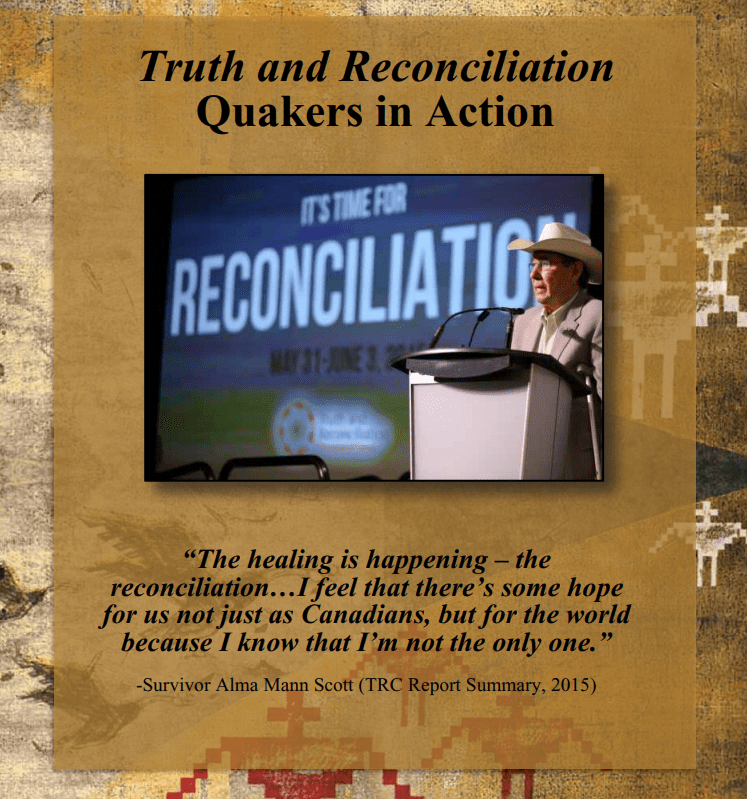
Minute from Canadian Yearly Meeting (CYM) 2016. Truth and Reconciliation 16-08-30 Truth and Reconciliation, Quakers in Action

https://quakerservice.ca/wp-content/uploads/2019/02/TRC-Resource-Book.pdf

Resist

Resistance is a powerful concept.

As I pray and learn about atrocities and injustices, the courage of resisters in all struggles, through all time, inspire me.

My own first experience with resistance came when I was 18 years old and faced the decision regarding registering for the draft (Selective Service System). The stories of, the example of many Quaker men I knew, helped me immensely to decided to resist the draft. My friend and Quaker mentor, Don Laughlin, collected stories of Quaker resistance: Young Quaker Men Face War and Conscription

It was an act of resistance when we walked and camped along the route of the Dakota Access pipeline, from Des Moines to Fort Dodge, Iowa, for a week in 2018. You can read the many stories, and see the photos of this sacred journey here.
First Nation-Farmer Unity – First Nation peoples and farmers working together (firstnationfarmer.com)

I spent many years resisting other fossil fuel pipelines, including the Keystone XL pipeline. And was peripherally involved with the Wet’suwet’en peoples’ resistance to the Coastal GasLink pipeline.

Now I am involved with those who are resisting colonial capitalism and white supremacy. As we build Mutual Aid communities. As we work for LANDBACK.

I don’t know what I will write each morning, as I wait in quiet and pray. The following poem triggered this today.

Resist

Brandy Nālani McDougall

Qawem ya sha’abi, qawemhum. Resist my people, resist them.
—Dareen Tatour

Hawaiians are still here. We are still creating, still resisting.
—Haunani-Kay Trask


Stand in rage as wind and current clash
                                       rile lightning and thunder
fire surge and boulder crash

         Let the ocean eat and scrape away these walls
Let the sand swallow their fences whole
                       Let the air between us split the atmosphere

We have no land             No country
             But we have these bodies              these stories
this language of rage                    left 

                 This resistance is bitter
and tastes like medicine                 Our lands 
               replanted in the dark and warm             there

We unfurl our tangled roots                stretch
                             to blow salt across
             blurred borders of memory  

             They made themselves
fences and bullets             checkpoints 
gates and guardposts                           martial law

They made themselves
            hotels and mansions         adverse 
possession             eminent domain and deeds

                   They made themselves 
                                                       shine 
                                           through the plunder

They say we can never— They say 
                           we will never—because
            because they— 

            and the hills and mountains have been 
mined for rock walls                    the reefs 
            pillaged for coral floors

They say we can never—
                           and the deserts and dunes have been
shoveled and taken for their houses and highways—

                because we can never— because 
the forests have been raided                      razed 
and scorched and we                                 we the wards

refugees          houseless          present-
absentees       recognition refusers        exiled
uncivilized       disposable        natives

protester-activist-terrorist-resisters—
               our springs and streams have been
dammed—so they say we can never return

                       let it go accept this 
progress         stop living
            in the past—

but we make ourselves
         strong enough to carry all of our dead
                engrave their names in the clouds

We gather to sing whole villages awake 
        We crouch down to eat rocks like fruit
                 to hold the dirt the sand in our hands 

to fling words 
           the way fat drops of rain 
                   splatter off tarp or corrugated roofs

We remember the sweetness                We rise from the plunder
           They say there is no return                             
                   they never could really make us leave

Copyright © 2021 by Brandy Nālani McDougall. Originally published in Poem-a-Day on July 23, 2021, by the Academy of American Poets.

“‘Resist’ was inspired by Palestinian poet Dareen Tatour’s courage to stand against the ongoing Israeli occupation of Palestinian land and ethnic cleansing of her people. In 2015, for the poetic line ‘Qawem ya sha’abi, qawemhum’ (Resist, my people, resist them), she was imprisoned on charges of ‘incitement to violence’ and sentenced to five months in jail and years under house arrest. This poem ‘Resist’ reflects on both the militarized violence and creative decolonial connections between Palestine and Hawaiʻi, which was an independent country prior to the U.S. military-backed overthrow in 1893 and the subsequent illegal annexation to the U.S. in 1898. Our own continued struggle as Kānaka ʻŌiwi includes protecting our lands and waters from U.S. military bases and testing, bombing, dumping, housing, and recreational sites, and protecting our people from related health hazards, poverty, and hopelessness. We will forever resist the destruction of our homelands and how they are being used to test weapons that bring horrific violence to others. I intend ‘Resist’ to be a poem of solidarity for the Palestinian people.”

Brandy Nālani McDougall

From Apology to Action

Truth and Reconciliation Commission – From Apology to Action
CFSC (Quakers) Indigenous Rights Icon Small

In 2007 the Truth and Reconciliation Commission of Canada (TRC) was established as part of the legal settlement of the largest class-action lawsuit in Canadian history. The TRC’s mandate was:

to learn the truth about what happened in the residential schools and to inform all Canadians about what happened in the schools. The Commission will document the truth of what happened by relying on records held by those who operated and funded the schools, testimony from officials of the institutions that operated the schools, and experiences reported by survivors, their families, communities and anyone personally affected by the residential school experience and its subsequent impacts.

In 2015 the TRC released its report including 94 Calls to Action which we urge all Canadians to read and strive towards in the ongoing process of reconciliation.

At Canadian Yearly Meeting in 2011 Canadian Friends approved this minute:

We are being invited by the Indigenous peoples of Canada as represented by the Indian Residential School Survivors, through the Indian Residential School Survivors Settlement Agreement, to enter a journey of truth finding and reconciliation. We encourage all Friends, in their Meetings for Worship and Monthly and Regional Meetings, boldly to accept this invitation and to engage locally, regionally and nationally, actively seeking ways to open ourselves to this process.

CFSC was honoured to witness and participate in the closing events of the Truth and Reconciliation Commission of Canada. Watch a clip from this powerful and important closing below:

We welcomed the report and Calls to Action of the TRC as deeply important for genuine reconciliation. Together with our partners we’ve also called on the Government of Canada to follow the lead of the Truth and Reconciliation Commission.

CFSC has produced a resource for Quakers and others who wish to engage with the TRC Calls to Action.

https://quakerservice.ca/TRCGuide
Truth and Reconciliation: Quakers in Action. (PDF)

We encourage you to make use of this resource and are happy to help, so feel free to contact us!