Orange Shirt Day

I’m saddened by the disconnect between Canada’s years of work on truth and reconciliation related to institutions of forced assimilation of Indigenous children and the ongoing militarized response by the government against the Wet’suwet’en peoples (see the tweets at the end for updates).

The investigation related to the remains of Indigenous children on the grounds of residential schools in the US is beginning. And yet, as in Canada, multiple fossil fuel projects continue to be approved. There is increasing resistance to the construction of these pipelines. And a new class of pipelines related to carbon capture are proposed.

Orange Shirt Day will also be observed tomorrow in Canada.


The Orange Shirt Story began in May 2013 during the Truth and Reconciliation Hearings in Williams Lake BC. At that time Kukpi7 Fred Robbins of the Esketemc enlisted the support of the local School District, Regional Government and the Municipalities of the Cariboo, to both honour the survivors of Residential Schools and raise awareness of the Residential School system among the people of the Cariboo. This is the story of Kukpi7 Fred Robbins time at Residential School, the Commemoration events that were organized, and the hopes for the future that Kukpi7 Fred Robbins envisioned. – WARNING Sensitive Content

https://www.canada.ca/en/canadian-heritage/campaigns/national-day-truth-reconciliation.html

Leading up to September 30, the “National Day of Truth and Reconciliation” we need to send the message that things have to change and they have to change NOW.

#WetsuwetenStrong #NoTrespass #WedzinKwa #CGLofftheYintah #Sovereignty #Solidarity #DefendTheYintah #WeAreAllOne #IndigenousSovereignty #TraditionalGovernance

National Day for Truth and Reconciliation

The first National Day for Truth and Reconciliation in Canada will be September 30. A schedule of events can be found here.

With the attention on the deaths of children in the native residential schools in the land called the United States, we are learning more about these atrocities here. Secretary of the Interior, Deb Haaland, has initiated an investigation of the institutions of forced assimilation in the U.S.

Canada went through an eight-year process to learn what happened in the residential schools there, the Truth and Reconciliation Commission of Canada (TRC). Quakers of the Canadian Yearly Meeting have been very involved in that process and ongoing work for reconciliation.

In 2007 the Truth and Reconciliation Commission of Canada (TRC) was established “to learn the truth about what happened in the residential schools and to inform all Canadians about what happened in the schools.”

In 2015 the Truth and Reconciliation Commission released its Final Report and 94 Calls to Action. TRC Chief Commissioner Murray Sinclair said, “We have described for you a mountain, we have shown you the path to the top. We call upon you to do the climbing.”

In 2011, Canadian Yearly Meeting, the national body of Canadian Quakers, had called on Quakers to actively engage in reconciliation efforts:

We are being invited by the Indigenous peoples of Canada as represented by the Indian Residential School Survivors, through the Indian Residential School Survivors Settlement Agreement, to enter a journey of truth finding and reconciliation. We encourage all Friends, in their Meetings for Worship and Monthly and Regional Meetings, boldly to accept this invitation and to engage locally, regionally, and nationally, actively seeking ways to open ourselves to this process…”

Truth and Reconciliation, Canadian Friends Yearly Meeting.

Truth and Reconciliation Commission of Canada

The Truth and Reconciliation Commission (TRC) provided those directly or indirectly affected by the legacy of the Indian Residential Schools system with an opportunity to share their stories and experiences.

About the Truth and Reconciliation Commission

The Indian Residential Schools Settlement Agreement, the largest class-action settlement in Canadian history, began to be implemented in 2007. One of the elements of the agreement was the establishment of the Truth and Reconciliation Commission of Canada to facilitate reconciliation among former students, their families, their communities and all Canadians.

The official mandate (PDF) of the TRC is found in Schedule “N” of the Settlement Agreement which includes the principles that guided the commission in its important work.

Between 2007 and 2015, the Government of Canada provided about $72 million to support the TRC’s work. The TRC spent 6 years travelling to all parts of Canada and heard from more than 6,500 witnesses. The TRC also hosted 7 national events across Canada to engage the Canadian public, educate people about the history and legacy of the residential schools system, and share and honour the experiences of former students and their families.

The TRC created a historical record of the residential schools system. As part of this process, the Government of Canada provided over 5 million records to the TRC. The National Centre for Truth and Reconciliation at the University of Manitoba now houses all of the documents collected by the TRC.

In June 2015, the TRC held its closing event in Ottawa and presented the executive summary of the findings contained in its multi-volume final report, including 94 “calls to action” (or recommendations) to further reconciliation between Canadians and Indigenous peoples.

In December 2015, the TRC released its entire 6-volume final report. All Canadians are encouraged to read the summary or the final report to learn more about the terrible history of Indian Residential Schools and its sad legacy.

To read the reports, please visit the National Centre for Truth and Reconciliation website.

What does reconciliation mean to Collin?

Many settlers wish they could ask Indigenous people questions about reconciliation without appearing foolish or rude. Canadian Friends Service Committee knows that not every settler has the opportunity to have open dialogue with Indigenous friends and neighbours. This is why we want to give you a chance to hear the answers to some important questions from some of our Indigenous partners, people that we work closely with and trust to give us honest responses, and who trust us enough to engage with this project!

Collin Orchyk is from Treaty 1, Peguis First Nation, Manitoba. Collin is a student in the Indigenous education program at the University of British Columbia and a former Youth Reconciliation Leader for Canadian Roots Exchange. He is also a singer/songwriter and has provided all background music for the videos in the Indigenous Voices on Reconciliation Series. Learn more at quakerservice.ca/reconciliation

More Indigenous voices on reconciliation

Quaker Paula Palmer and Friends Peace Teams have done years of work related to Right Relationship with Native Americans.
https://friendspeaceteams.org/trr/

A young Tohono Oʼodham man said in one of our workshops, “No one here today made these things happen, but we are the ones who are living now. And we’re all in this together.” And I think that’s what we need to hear. No one here today made all of these things happen, but we are the ones who are living now. So what are our opportunities to work with indigenous peoples, to engage them, to ask them, “What would right relationship look like?” Paula Palmer

How to watch and listen to National Day for Truth and Reconciliation on CBC

Tune into a day of special programming across all CBC platforms to honor the first National Day for Truth and Reconciliation on September 30

CBC is marking the first National Day for Truth and Reconciliation with a full day of programming and content showcasing First Nations, Métis and Inuit perspectives and experiences across CBC TV, CBC News Network, CBC.ca, CBC Kids, CBC Radio One and CBC Music including a commercial-free, primetime broadcast special, National Day for Truth and Reconciliation.

How to watch and listen

All Day:

An Indigenous-led team of journalists will deliver timely news features and special reports throughout the day from the CBC News investigating Residential Schools on THE NATIONALCBC NEWS NETWORKWORLD REPORTTHE WORLD AT SIX and CBC.ca/Indigenous

Thursday, September 30 at 8 p.m. local time (9 p.m. AT, 9:30 p.m. NT)

NATIONAL DAY FOR TRUTH AND RECONCILIATION – In recognition of the new federal statutory holiday, also known as Orange Shirt Day, this unique one-hour, commercial-free primetime special — hosted by JUNO Award-winning artist Elisapie — honours the stories and perspectives of Indigenous Peoples affected by the tragedies of the residential school system in Canada, with musical tributes and ceremonies in Indigenous communities across the land. The broadcast special is conceived and created by The National Centre for Truth and Reconciliation (NCTR) hosted by the University of Manitoba and produced by NCTR in collaboration with Insight Productions, in association with CBC/Radio-Canada and APTN. The one-hour national special will broadcast on CBC TV, CBC Gem, CBC Radio One and CBC Listen.

WATCH: Thursday, September 30 at 9 p.m. on CBC and CBC Gem

WE KNOW THE TRUTH: STORIES TO INSPIRE RECONCILIATION – A CBC Manitoba documentary that recasts Canada’s history and future through the empowerment of Indigenous Peoples. Meet the people who are challenging the history of Canada and residential schools, and creating change on their own terms. Reflect with residential school survivors and be inspired by those who are working hard to keep their culture and languages alive.

LISTEN: Saturday, September 25 at 4 p.m. and Tuesday, September 28 at 1 p.m. on CBC Radio One

UNRESERVED – Join Rosanna Deerchild on Unreserved for a revealing, poignant and emotional conversation with the Honorable Justice Murray Sinclair, former Senator and Lead Commissioner of the Truth and Reconciliation Commission. In this intimate, hour-long interview they discuss reconciliation⁠ — how far we’ve come, how far we have left to go and who is responsible for taking the journey.

LISTEN: Thursday, September 30 at 10 a.m. on CBC Radio One

Q – Tom Power speaks with Alanis Obomsawin, one of the most accomplished documentary filmmakers in Canada, and one of the most acclaimed Indigenous filmmakers in the world. She is the winner of the Glenn Gould Prize, the prestigious award given for a unique lifetime contribution that has enriched the human condition through the arts. She was also honoured at this year’s Toronto International Film Festival with a career retrospective of her work called ‘Celebrating Alanis Obomsawin’. The video interview with Alanis Obomsawin will be available on cbc.ca/q.

LISTEN: Thursday, September 30 at 12 p.m. noon on CBC Radio One

ANSWERING THE CALL: Stories of resistance, reclamation and resilience on Canada’s National Day for Truth and Reconciliation – Host Rosanna Deerchild explores how Canada is doing on the Truth and Reconciliation Commission’s calls to action and how First Nations across Canada are demolishing, redeveloping, and reclaiming former residential school sites. JUNO Award-winning musician William Prince will discuss the role artists play and share how his family is marking the day. Finally, retired senator Murray Sinclair, who chaired the Truth and Reconciliation Commission, offers his thoughts on the future of reconciliation in Canada.

WATCH and LISTEN: MASHKAWI-MANIDOO BIMAADIZIWIN SPIRIT TO SOAR – Available to stream in Anishinaabemowin on CBC Gem, and premiering in English on CBC TV and CBC Gem on The Passionate Eye, 9 p.m. (9:30 NT) Friday, September 24, with an encore broadcast on September 30 (2:30 p.m./ 6:30 p.m. NT)

Directed by Tanya Talaga and Michelle Derosier, MASHKAWI-MANIDOO BIMAADIZIWIN SPIRIT TO SOAR examines the hard truths around the deaths of First Nations students in Thunder Bay, truths Canada continues to ignore: racism kills, especially when it presents as indifference. It’s a look at how families and communities struggle to carry on while pursuing justice for their loved ones and equity for their people, and it follows Tanya Talaga’s personal journey as she explores her own Indigenous identity.

Also now streaming on the CBC Listen app is a companion podcast to this documentary, SPIRIT TO SOAR: WHERE WE COME FROM, a four-part podcast about four disruptions to Indigenous life, and ways to move forward together. The story is told first in Anishinaabemowin by Elder Sam Achneepineskum and then in English by Jolene Banning.

CBC Gem

THE TRUTH & RECONCILIATION COLLECTION will be available starting Sept 24 on the free CBC Gem streaming service with more than 20 documentaries and films honouring the history, heritage and diversity of First Nations, Inuit and Métis Peoples, including THE SECRET PATH, Gord Downie’s animated film that tells the true story of Chanie Wenjack and INENDI, Sarain Fox’s journey to preserve her cultural legacy by collecting stories from her family’s Matriarch.

CBC Music

Throughout the day on September 30, CBC Music will feature Indigenous artists and composers from 6 a.m. to midnight. CBCMusic.ca will offer stories in the lead up to September 30 include a feature on where Indigenous musicians have experienced moments of truth and reconciliation, an exploration of the art within protests and a collection of songs and lyrics about reconciliation.

CBC Books

Visit CBC.ca/thisplace for the CBC Books podcast, THIS PLACE. The original series, adapted from the award-winning graphic novel, explores 150 years of Indigenous resistance and resilience. Learn more with additional CBC Books content covering the 20 authors and illustrators who made the graphic novel, a cast roundup of the Indigenous actors who voiced the dramatizations and a list of some of the Indigenous heroes we meet in the series.

CBC Kids and CBC Kids News

CBC Kids News will feature an “Ask an Indigenous person anything” segment where four Indigenous people (First Nation, Inuit and Métis) under 30 meet and chat with kid contributor Isabel DeRoy-Olson to discuss reconciliation and take questions from kids across Canada. Additionally, CBC Kids News will feature two segments for a tween audience outlining what reconciliation is and why it is needed, and how to be a better ally.

CBC Kids is recognizing Sept. 30th with an hour-long special from the award-winning animated series MOLLY OF DENALI plus original content from Studio K all about Indigenous Heritage and Culture.

CBC Arts

For National Truth and Reconciliation Day, CBC Arts will be doing a special edition of the “Poetic License” video series featuring four poets including Kahsenniyo Williams from the Mohawk Nation Wolf Clan, who will be doing a piece called Decolonial Love. Also available that day, CBC Arts has a written feature that asks Indigenous curators, cultural programmers and artists to highlight a piece of art that speaks to the ideas behind Truth and Reconciliation, including contributions from writer Alicia Elliott and visual artist Adrian Stimson.

CBC Sports

CBC Sports will feature interviews and opinion pieces by and with Indigenous athletes including Hunter Lang, Michael Linklater and Kali Reis.

Click here for the link


____________________________________________________________
Questions about the titleandrightsalliance list?  Contact eneel@ubcic.bc.ca

Follow us http://twitter.com/UBCIC

Ethnic studies so history will not be erased

It is a paradox that education is crucial for healing, in this case healing from the intergenerational traumas suffered by Indigenous peoples in the lands called the United States and Canada. And yet, who will teach these subjects? Care must be taken to avoid triggering that might occur for Indigenous educators.

The following quote references Alberta’s Teacher Qualifications Standard that I wrote about yesterday.

As the National Day for Truth and Reconciliation approaches, we can expect Canadian teachers are thinking about how they can better weave Indigenous perspectives into their lesson planning.

In the past, events like this rarely made it as national news, staying inside our Indigenous communities where the pain remained hidden from the rest of Canada. Now, teachers are talking about them with their students — how history and society influence individual situations of race-motivated violence and cultural genocide. It’s our responsibility to make sure they are equipped to teach the truth and acknowledge the important role schools play in reconciliation.

But how do we do that when many of our educators were not taught about residential schools when they were students?

This question does not have one answer. In 2016, the Hon. Justice Murray Sinclair, former chair of the Truth and Reconciliation Commission, said, “Education got us into this mess and education will get us out of it.” After generations of miseducation, it will take generations of real truth-sharing and knowledge-building within our provincial education systems to achieve reconciliation.

We owe it to Indigenous educators who are triggered and challenged to deliver education around a topic like residential schools that have impacted them. Educators like me, who when viewing the images of children with their plain clothes, short hair, and empty eyes — identities stripped — still struggle to separate the pain we hold from lesson planning.

We also owe it to non-Indigenous educators who lack confidence in teaching because they weren’t taught the truth about the atrocities of the residential school system. This is a significant blocker to the successful integration of truth-telling in our classrooms, which can be solved by supporting educators in their journey of learning.

We must ensure the materials passed down to educators are written accurately by authentic voices. We need ongoing government funding and access to professional learning programs. Alberta is one province that does this well. Its Teacher Qualifications Standard requires educators to take courses in foundational knowledge of Indigenous history.

We owe it to all students to bring truth and drive reconciliation in classrooms by Linda Isaac & John Estabillo, National Observer, September 16, 2021

Education got us into this mess and education will get us out of it.

Hon. Justice Murray Sinclair

Last year, as a massive uprising against systemic racism swept across the worldactivists fighting for Black liberation and racial justice put radical demands against institutional racism on the table, such as abolishing and defunding the police. Another key step toward challenging institutional racism is the push for ethnic studies and teaching about systemic racism in U.S. schools. I am part of that fight in California.

Racism has been in the United States for over 400 years, stemming from slavery and genocide. However, Trump’s emboldening of white nationalism and last year’s protests against police violence have raised the level of urgency to fight against systemic racism. In this crucial moment, the push for ethnic studies is an important fight because accurate, anti-racist, multicultural educational curricula are vital to creating a better, more just society.

I was one of the very few African American men to graduate from Pittsburg High School and attend Stanford University, where I earned my bachelor’s in International Relations. In my decade-long teaching and writing career post-Stanford, I’ve seen how the education system is a site of institutional racism that directly impacts non-white students. I’ve also written about other forms of systemic racism, such as the police and gentrification. Ethnic studies, an educational discipline that teaches non-white students their own history and empowers them to be agents of their own destiny, is crucial to challenging institutional racism within the education system.

As ethnic studies programs grow around the country, right-wing pushback is also mounting — overlapping with efforts to ban the teaching of critical race theory in U.S. schools. Critical race theory and ethnic studies are not the same: Critical race theory is a highly academic, and rather esoteric, legal theory that analyzes the manifestations of racism in U.S. law; it is mostly taught in law schools, not in K-12 public education. Meanwhile, ethnic studies focuses on the histories, cultures and struggles of marginalized racial/ethnic groups, especially as they relate to the overall history of the United States.

I’M FIGHTING FOR ETHNIC STUDIES SO MY HISTORY WON’T BE ERASED By Adam Hudson, Truthout, September 22, 2021

Truth and Healing Curriculum

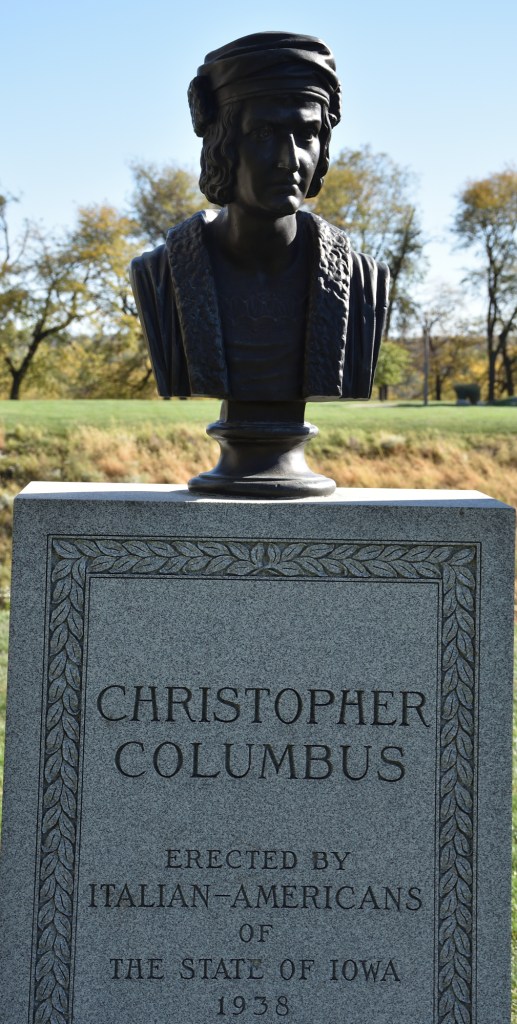
As the horror stories of the institutions of forced assimilation of Indigenous children continue to emerge, it is clear the erasure of this history almost succeeded. I remember being taught very little beyond Columbus ‘discovering America’, the colonial version of ‘Thanksgiving’, and not much related to the settler colonists and Indigenous peoples.

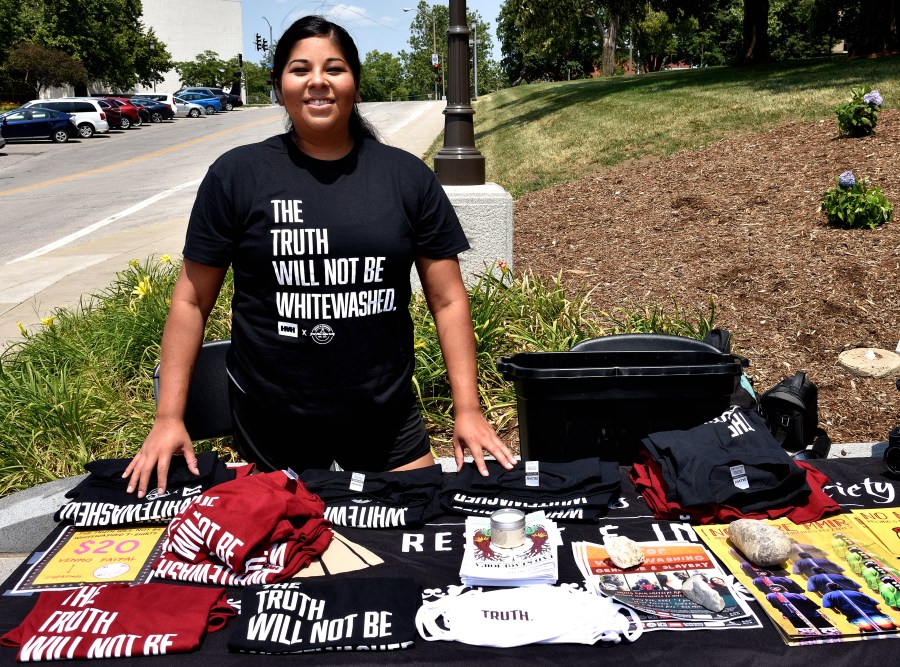
It is crucial for non-native people to learn this history, to know how this country developed, so we can all begin to heal. We can’t do that as long as we remain within the boundaries of whitewashed colonial stories. This is important for the context for dealing with rapidly evolving environmental chaos. Because a return to Indigenous practices and relationships with Mother Earth and all our relations is, I believe, the way to adapt to the coming collapse.

In the last blog post I wrote about sixth grader Alden Nobiss’ idea of having students teach each other about anti-racism and an accurate history of this country known as the United States.

Alden’s mother, Christine Nobiss (Sikowis) says, “he basically thinks that if teachers can’t teach critical race theory, then why can’t students do it? So that’s his idea. He thinks that students can teach each other in their spare time. During recess, during lunch time, and that’s something that he’s going to try to do. So, we have a book that he’s going to share called 500 Years After Columbus, which is a curriculum guide for teaching better indigenous studies for k-12. So, he’s already taking a look at that.”


It has been a long-running goal of many Native people to have more about their history and culture taught in grade schools. New requirements have been adopted in Connecticut, North Dakota and Oregon and advocates say their efforts have gained some momentum with the nation’s reckoning over racial injustice since the killing of George Floyd.

The legislation affecting schools has advanced alongside new bans on Native mascots for sports teams and states celebrating Indigenous Peoples Day in place of Christopher Columbus Day.

The push for curriculum requirements has not been without challenges, with some legislatures deeming new laws unnecessary because Native American history already is reflected in school curriculum. There also have been some steps in the opposite direction amid battles over how topics related to race and racism are taught in classrooms.

In South Dakota, a group of teachers and citizens charged with crafting new state social studies standards said last month that Gov. Kristi Noem’s administration deleted from their draft recommendations many elements intended to bolster students’ understanding of Native American history and culture. They said changes made to the draft gave it a political edge they had tried to avoid, aligning it instead with the Republican governor’s rhetoric on what she calls patriotic education.

Push for Indigenous Curriculum Makes Gains by Susan Haigh, Indian Country Today, Sept 15, 2021

Without the political will to ensure accountability and to guide implementation, what is observed rather in mainstream American education is the ongoing erasure of Indigenous people. Sam Torres

Only five states mentioned Indian boarding schools in their state content standards, which is “unimaginable,” said Sam Torres of The Native American Boarding School Healing Coalition. “It’s obviously a representation and reflection of what is being valued in educational and curricular context.”

As the United States federal government gears up to assess the genocide it perpetuated against Native communities for nearly a century, Native leaders and academics say there is one glaring method for accessing truth and healing: education.

Roughly fifty four percent of public schools across the United States make no mention of Native Americans in their K-12 curriculum, and 87 percent of state history standards don’t discuss Native American history after 1900, according to a study conducted in 2019.

For its part, NABSHC—an organization that has been at the helm of increasing public awareness on boarding schools since its founding nearly a decade ago—in 2020 released its first ever Truth and Healing Curriculum. The curriculum, available for free online, is made up of four lessons on Indian Boarding Schools focusing on history, impacts, stories, and healing.

“We were hearing a lot of feedback from community members asking for materials for their students,” Torres said. In developing the curriculum— sectioned into primary, middle and upper grades learning levels—Torres said he and staff members focused on the pillars that mimic a Native approach to collective education.

Other nonprofit institutions, such as The Ziibiwing Center of Anishinabe Culture & Lifeways in Michigan and the Heard Museum in Arizona have also developed their own supplemental Indian Boarding School curriculum. But without a state mandate on the specific curriculum, or enough educators aware of or comfortable enough with the content, the material reaches only a tiny fraction of students.

NABSHC’s Truth and Healing curriculum has been downloaded over one thousand times, Torres said, as the organization sets its sight on training educators in decolonizing knowledge. 

“Rigorous meaningful curricular materials have and continue to be developed by Native people,” Torres said. “Yet without the political will to ensure accountability and to guide implementation, what is observed rather in mainstream American education is the ongoing erasure of Indigenous people.”

The vast majority of Americans don’t learn about Indian boarding schools growing up. These Native leaders and educators want to change that by Jenna Kunze, Native New Online, Sept 13, 2021

The National Native American Boarding School Healing Coalition has developed a curriculum on U.S. Indian Boarding Schools for teachers and parents to use with their students and children.

The Truth and Healing Curriculum is comprised of four (4) robust lessons on Indian boarding schools covering History, Impacts, Stories, and Healing, and is appropriately sectioned into three (3) learning levels: primary, middle, and upper grades.

NABS understands that educational resources such as these are greatly needed for a variety of important reasons. As a response to requests from teachers and parents, we developed the Truth and Healing Curriculum to support distance learning during the COVID-19 pandemic.

Download a package that includes all curriculum.

Download Curriculum


Students teaching students

Yesterday I saw the great presentation, Online Pushback:UnBan Anti-Racism Education in Iowa, a forum by Indigenous youth of the Great Plains Action Society related to Iowa’s ban on teaching Critical Race Theory or Anti-Racism Education (video below).

Indigenous Youth Organizers, Alexandrea Walker and Keely Driscoll, have started a youth-led movement to demand that the current Iowa Administration unban Anti-Racism Education, aka, Critical Race Theory. For the sake of health and safety for all, it is imperative that Kim Reynolds reverse the overtly white supremacist decision to ban anti-racism education plus diversity, equity, and inclusion programming in the classroom and in all state-funded institutions

At the 12:15 mark in the video above, my friend Sikowis Nobiss introduces her son Alden who is in sixth grade. With the ban against teachers teaching about anti-racism, he spoke about his idea of students teaching each other as an alternative.

Sikowis: Hello everybody. I am here with my son today and his name is Alden and he’s in sixth grade. And he’s being affected by the ban on critical race theory or as we like to call it anti-racism education, decolonization work, diversity equity inclusion. Those are better terms for it because critical race theory is a term that they’re using to manipulate the situation, to make it sound like it’s critical, you know that it’s being like overtly hard on something when really it means how like you know analyzing something specifically or properly.
So, Alden is in grade six and you know he’s got some interesting thoughts about this, and I wanted to ask him like what does he think, what do you think about the ban on critical race theory?
Alden: It’s not that good.
Sikowis: How come?
Alden: I mean people should know that what happened in the past or else the history is just going to repeat itself. Just the same thing that happens over and over right? Seems like it isn’t going to stop if people don’t take action and more people like Reynolds is going to ban stuff.
Sikowis: And you had an interesting idea, you had said that teachers can’t teach critical race theory right? But students can. Can you tell us more about that?
Alden: The governor only said that teachers couldn’t say stuff like that and they couldn’t teach stuff like that, but that doesn’t mean schools can’t just be used to teach inside like only teachers.
Sikowis: So, who would teach like you want?
Alden: Kids to teach each other. Yeah the more educated kids that are like me I guess that know about what happened in the past.
Sikowis: Very good thank you so much Alden. We appreciate you making those remarks. That took a lot of bravery for him. I’m very proud of that.
I hope you guys could hear that. He basically thinks that if teachers can’t teach critical race theory then why can’t students do it? So that’s his idea. He thinks that students can teach each other in their spare time. During recess during, lunch time and that’s something that he’s going to try to do. So, we have a book that he’s going to share called 500 Years After Columbus, which is a curriculum guide for teaching better indigenous studies for k-12. So, he’s already taking a look at that.


Just as the final report from the National Inquiry into Missing and Murdered Indigenous Women and Girls triggered shock waves across the country, bringing conversations about violence against Indigenous people into the classroom, so did the discovery of 215 children’s remains at the Kamloops Indian Residential School earlier this year.

As the National Day for Truth and Reconciliation approaches, we can expect Canadian teachers are thinking about how they can better weave Indigenous perspectives into their lesson planning.

In the past, events like this rarely made it as national news, staying inside our Indigenous communities where the pain remained hidden from the rest of Canada. Now, teachers are talking about them with their students — how history and society influence individual situations of race-motivated violence and cultural genocide. It’s our responsibility to make sure they are equipped to teach the truth and acknowledge the important role schools play in reconciliation.

We owe it to all students to bring truth and drive reconciliation in classrooms by Linda Isaac & John Estabillo, National Observer, September 16th, 2021.

For specific teachings on Indian Boarding Schools and the United States assimilation policies—a history educators say is central in contextualizing present day culture for Native and non-Native youth alike— statistics are even bleeker.

“Over the course of the last couple of years, we’ve identified five states—only five states— that have even mentioned Indian boarding schools in their content in their state content standards, which is unimaginable,” said Sam Torres, director of research and programs at The Native American Boarding School Healing Coalition. Those states, surveyed by NABSHC in 2015, are: Arizona, Washington, Kansas, Oklahoma, and North Dakota. 

“It’s obviously a representation and reflection of what is being valued in educational and curricular context,” Torres said. 

For its part, NABSHC—an organization that has been at the helm of increasing public awareness on boarding schools since its founding nearly a decade ago—in 2020 released its first ever Truth and Healing Curriculum. The curriculum, available for free online, is made up of four lessons on Indian Boarding Schools focusing on history, impacts, stories, and healing.

The vast majority of Americans don’t learn about Indian boarding schools growing up. These Native leaders and educators want to change that by JENNA KUNZE, Native News Online, SEPTEMBER 13, 2021

We owe it to Indigenous educators who are triggered and challenged to deliver education around a topic like residential schools that have impacted them. Educators like me, who when viewing the images of children with their plain clothes, short hair, and empty eyes — identities stripped — still struggle to separate the pain we hold from lesson planning.

We also owe it to non-Indigenous educators who lack confidence in teaching because they weren’t taught the truth about the atrocities of the residential school system. This is a significant blocker to the successful integration of truth-telling in our classrooms, which can be solved by supporting educators in their journey of learning.

We must ensure the materials passed down to educators are written accurately by authentic voices. We need ongoing government funding and access to professional learning programs. Alberta is one province that does this well. Its Teacher Qualifications Standard requires educators to take courses in foundational knowledge of Indigenous history.

We owe it to all students to bring truth and drive reconciliation in classrooms by Linda Isaac & John Estabillo, National Observer, September 16th, 2021.

Corrosive of the human spirit

I am broken, trying to make sense of Quakers’ involvement with the institutions of forced assimilation, the Native residential schools. In the news now because of the verification of the remains of hundreds, soon to be thousands, of children on the grounds of those institutions in both the US and Canada. Verified because Native peoples have known they were there, because thousands of children never returned home.

I can not imagine the trauma. The children forcibly removed from their families. The community not knowing if the children would ever return. Their future was stolen. Those who did return often no longer fit into the community. I only recently learned this intentional cruelty was meant to break the resistance of those Native peoples that did not want to give up their land.

I’ve read that we aren’t to feel guilt or blame for what happened in the past. But we are called to learn about the wrongs, learn the truth. Then begin to work for reconciliation and healing. Canada went through such a process, involving the government and the entire country, several years ago. Secretary of the Interior, Deb Haaland, has initiated a Federal investigation of forced assimilation in this country.

From our twenty‐first‐century vantage point, we know (or can learn) how Native people suffered and continue to suffer the consequences of actions that Friends committed 150 ago with the best of intentions. Can we hold those good intentions tenderly in one hand, and in the other hold the anguish, fear, loss, alienation, and despair borne by generations of Native Americans?

Native organizations are not asking us to judge our Quaker ancestors. They are asking, “Who are Friends today? Knowing what we know now, will Quakers join us in honest dialogue? Will they acknowledge the harm that was done? Will they seek ways to contribute toward healing processes that are desperately needed in Native communities?” These are my questions, too.

Quaker Indian Boarding Schools. Facing Our History and Ourselves by Paula Palmer, Friends Journal, October 1, 2016

Although I believe we should not feel guilt, I have not yet been able to to get past my own sense of that. My head and my heart are out of synch. For a time I’ve felt I needed to distance myself from my Quaker communities. I struggle to discern if this was a spiritual leading, or just an emotional reaction. I’m still not sure. I know I continue to feel guilt. And projected this same guilt toward Friends in general. I know that is wrong and am working hard, praying to find my out of this.

Unearthing the truth was necessary not only for the victims to heal, but for the perpetrators as well. Guilt, even unacknowledged guilt, has a negative effect on the guilty. One day it will come out in some form or another. We must be radical. We must go to the root, remove that which is festering, cleanse and cauterize, and then a new beginning is possible.

Forgiveness gives us the capacity to make a new start. That is the power, the rationale, of confession and forgiveness. It is to say, “I have fallen but I am not going to remain there. Please forgive me.” And forgiveness is the grace by which you enable the other person to get up, and get up with dignity, to begin anew. Not to forgive leads to bitterness and hatred, which, just like self-hatred and self-contempt, gnaw away at the vitals of one’s being. Whether hatred is projected out or projected in, it is always corrosive of the human spirit.

Truth and Reconciliation BY DESMOND TUTU, Greater Good Magazine, SEPTEMBER 1, 2004

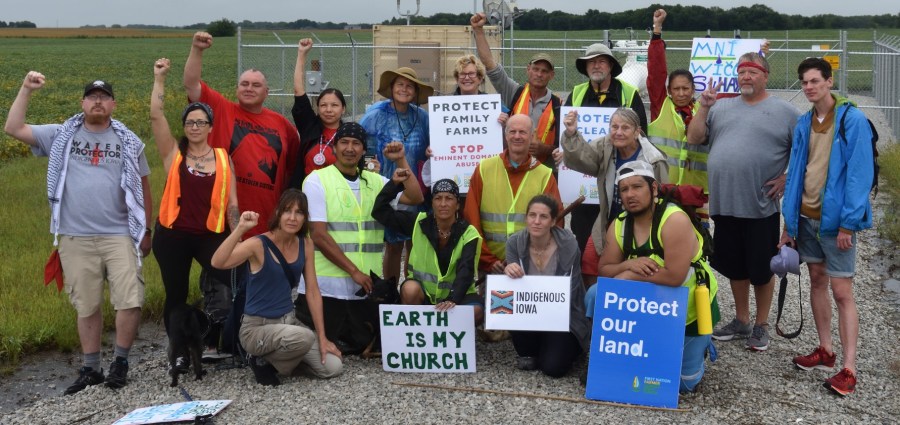
If has been tremendously helpful to have become friends with Native people I began to know as we walked and camped together for 94 miles along the path of the Dakota Access pipeline in 2018. The main intention of that sacred journey was to create a community of native and non-native people who began to know and trust each other so we could work together. That intention was achieved.

And yet, in another way, I have more of a sense of the trauma of assimilation from seeing the terrible effects on my friends.

As Paula Palmer wrote above, “Will they [Quakers] seek ways to contribute toward healing processes that are desperately needed in Native communities?” These are my questions, too.

I need to deal with my guilt before I can contribute to the healing processes.

I am deeply grateful for the acceptance and generosity of my Des Moines Mutual Aid community, which includes Native people. That is helping me move away from this destructive guilt.

I have faith I will be led to a better place.

First Nation-Farmer Climate Unity March September 2018

Minute from Canadian Yearly Meeting (CYM) 2016

Truth and Reconciliation 16-08-30

At Yearly Meeting 2015 Friends approved Minute 2015.08.33 calling on individual
Friends to read the Report of the Truth and Reconciliation Commission (TRC) and the Calls to Action. The Minute asks Friends to listen expectantly to the Spirit for guidance on what steps they may be personally led to take. It also asks Monthly Meetings and Worship Groups to engage with the materials shared by the Indigenous Rights committee of Canadian Friends Service Committee (CFSC) and prayerfully consider what actions they may take in working for reconciliation in their communities. We committed to minute our progress for the year at this Yearly Meeting.

Much has happened since our last Yearly Meeting (2015):

• We now have a new federal government that has stated it accepts all of the TRC’s
Calls to Action and that it will implement the United Nations Declaration on the
Rights of Indigenous Peoples. This has changed the dynamic and the tone of public
discourse on Indigenous Peoples’ rights in Canada.

• CYM and CFSC jointly issued a Quaker Response in March 2016 to Call to Action
48, and we submitted this to the TRC. We affirmed in our statement that we have
“endorsed, celebrated and committed to implement the UN Declaration on the
Rights of Indigenous Peoples” as stated in previous minutes (2010.08.50,
2009.08.70). We received a warm reply from Justice Murray Sinclair, Chair of the
TRC, thanking us for our work. He particularly liked that we had committed to an
annual review of our progress.

• CYM and CFSC also collaborated with other faith bodies, some of which were
church parties to the Indian Residential Schools Settlement Agreement and some
of which were not, in issuing a joint ecumenical statement on Call to Action 48.
CFSC’s Indigenous Rights coordinator participated in drafting. This was a
worthwhile process in working to find common ground amongst faith bodies
regarding their role in the reconciliation process.

• CFSC’s Indigenous Rights committee educated Friends on such critical issues as
free, prior, and informed consent; genocide; and intergenerational trauma.

• Meetings and Worship Groups have visited nearby Indigenous communities;
organized discussion groups in partnership with local Indigenous Peoples; are
attending educational events such as workshops and film screenings; are learning
about and honouring Friends’ role as Treaty partners; and are placing the UN
Declaration in poster and booklet form in their Meetinghouses.

• Some individual Friends have been led to stand alongside Indigenous Peoples in
defending their traditional territories, including civil disobedience resulting in
arrest.

During the year, CFSC has explored the work of Reconciliation with many Meetings,
Worship Groups and Half Yearly Meetings. As Friends engage in the work of
reconciliation, we are committed to grounding our actions in our Spiritual practices,
particularly of speaking to that of the Creator in everyone. Let Friends first listen to the concerns of Indigenous Peoples. We know it is not sufficient to be well-intentioned and make assumptions about what is best for Indigenous Peoples without asking what it is they want and need. All actions require the guidance of the Indigenous Peoples involved and need to be done with respect, cooperation and ongoing consultation.


We, as Friends, also need to be open to being challenged in our assumptions about the many destructive facets of colonial legacies and continuing racist practices and policies that constitute Canada’s historical and contemporary realities. We acknowledge that part of our journey is to decolonize our own thinking and sit in the discomfort and pain of confronting where we need to deepen our understanding, bear witness, and transform our behaviour.


While Friends corporately have often been on the forefront of advocating for Indigenous Peoples’ human rights, it is now time to prioritize this work and take it to the next level. Friends recognize that reconciliation requires us to continue to learn, grow, and establish and nurture relationships with Indigenous partners. We are a Society of Friends, and friendship entails a relationship greater than simply understanding our colonial history.

As Friends, we commit to walking the path of friendship, following these instructive
words:

I think about what I want for my children and grandchildren. What I want
for them is to be loved and love other people in this country. Not to tolerate
them, not to go to our respective corners and stop hurting each other, but
to be wrapped up and engaged in each other’s lives.

Douglas White, Kwulasultun (Coast Salish name), Tliishin (Nuu-chah-nulth name), Director of the Centre for Pre-Confederation Treaties and Reconciliation (VIU), former Chief of Snuneymuxw First Nation

For Canada to grow and heal we must be active participants in a paradigm shift, moving from colonialism to a new reality based on respect for Indigenous Peoples’ Human Rights. We are reminded that we have CFSC’s Indigenous Rights committee to assist us and provide resources for this work.

We ask monthly meetings and worship groups:

• To continue to educate themselves, including children and youth, about the
doctrine of discovery, the ongoing effects of colonialism, the UN Declaration, residential schools and their legacy (including the TRC Report), the history of
the land on which they live, and reconciliation efforts.
• To formally acknowledge the traditional territories where their Meetings are
located and engage in processes of reflection on the meaning of this.
Acknowledgments can be accomplished through signage, statements during the
close of Meeting, and inclusion in information provided to any community
groups who use Meeting House space.
• To find out about current concerns of Indigenous Peoples from those
territories, including land appropriation or resource development, with which the
Meeting could be engaged.
• To investigate projects of cultural revitalization that Indigenous Peoples are
involved in and discern if there is an appropriate role (including funding) that
Friends can play.
• To uphold and support individual Friends involved with grassroots
Indigenous rights work and provide spiritual support to Friends led to this
work. This might include offering committees of care and approving minutes of
support.
• To report back annually through the Indigenous Rights committee of CFSC on
actions taken. We ask CFSC to collate such information in their CYM report.

Minute from Canadian Yearly Meeting (CYM) 2016. Truth and Reconciliation 16-08-30 Truth and Reconciliation, Quakers in Action

https://quakerservice.ca/wp-content/uploads/2019/02/TRC-Resource-Book.pdf

From Apology to Action

Truth and Reconciliation Commission – From Apology to Action
CFSC (Quakers) Indigenous Rights Icon Small

In 2007 the Truth and Reconciliation Commission of Canada (TRC) was established as part of the legal settlement of the largest class-action lawsuit in Canadian history. The TRC’s mandate was:

to learn the truth about what happened in the residential schools and to inform all Canadians about what happened in the schools. The Commission will document the truth of what happened by relying on records held by those who operated and funded the schools, testimony from officials of the institutions that operated the schools, and experiences reported by survivors, their families, communities and anyone personally affected by the residential school experience and its subsequent impacts.

In 2015 the TRC released its report including 94 Calls to Action which we urge all Canadians to read and strive towards in the ongoing process of reconciliation.

At Canadian Yearly Meeting in 2011 Canadian Friends approved this minute:

We are being invited by the Indigenous peoples of Canada as represented by the Indian Residential School Survivors, through the Indian Residential School Survivors Settlement Agreement, to enter a journey of truth finding and reconciliation. We encourage all Friends, in their Meetings for Worship and Monthly and Regional Meetings, boldly to accept this invitation and to engage locally, regionally and nationally, actively seeking ways to open ourselves to this process.

CFSC was honoured to witness and participate in the closing events of the Truth and Reconciliation Commission of Canada. Watch a clip from this powerful and important closing below:

We welcomed the report and Calls to Action of the TRC as deeply important for genuine reconciliation. Together with our partners we’ve also called on the Government of Canada to follow the lead of the Truth and Reconciliation Commission.

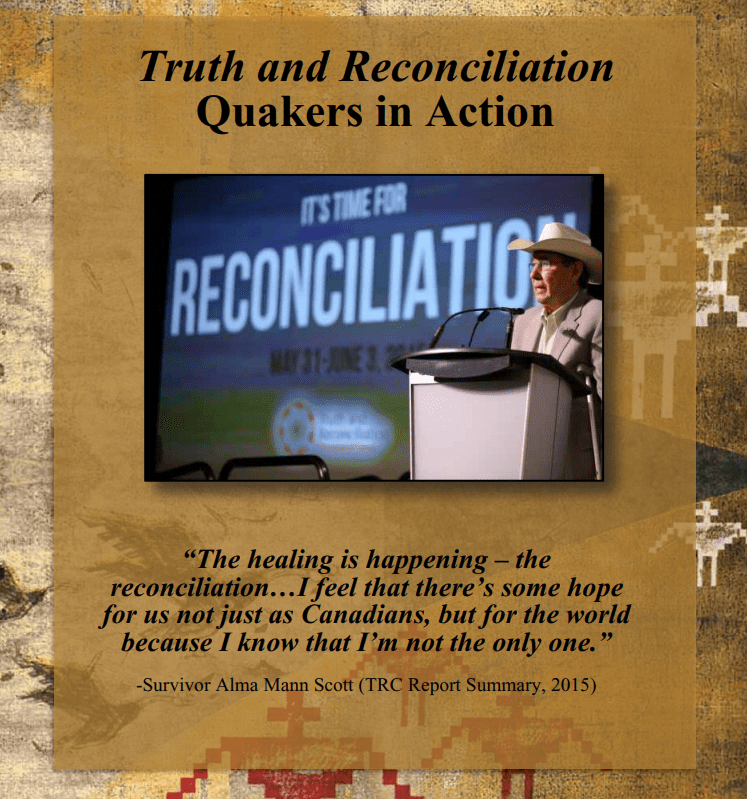
CFSC has produced a resource for Quakers and others who wish to engage with the TRC Calls to Action.

https://quakerservice.ca/TRCGuide
Truth and Reconciliation: Quakers in Action. (PDF)

We encourage you to make use of this resource and are happy to help, so feel free to contact us!

Iowa Yearly Meeting (Conservative) Minute 2019

To this day we have not come to grips with fundamental injustices our country was built on, the cultural genocide and theft of land from Native Americans, the enslavement of African Americans and the legal justifications of bestowing rights and privileges on white land-owning men. The consequences of these injustices continue to plague our society today. And will continue to impact us until we do what is necessary to bring these injustices to light and find ways to heal these wounds.

Several Friends recently assisted Boulder Meeting Friend, Paula Palmer, to lead workshops and discussions as part of her ministry “toward right relationships with Native people.” Part of the tragedy of the theft of Native land is that some Native people don’t have the concept of land as property, belonging to a landowner. Rather they have a spiritual connection to Mother Earth, that the land is sacred and not something that can be claimed as property by anyone. Being forced to leave their land broke their spiritual bonds with the land.

Native people have asked us to begin work toward reconciliation and healing. The first step needed is truth telling, recognizing that injury or harm has taken place. One of the important parts of holding “right relationship” workshops is to determine which Native nations were on the land before white settlers arrived.

–Iowa Yearly Meeting (Conservative) 2019