Human Supremacy

This morning I had one of those “ah ha” moments, when something changes my perspective in a way that explains things that seemed inexplicable. I don’t remember hearing the term ‘human supremacy‘ before. But as soon as I read that I understood what it is. White supremacy been part of our national conversation for years. Human supremacy extends the idea of white supremacy to the domination of everything non-human by humans.

One of the most important points umair haque makes in the article referenced below is there are no hierarchies. That is the fundamental concept of Mutual Aid. In our Mutual Aid work, we monitor ourselves to avoid any vertical hierarchy from creeping in. That’s something you have to learn and practice when you begin to work in a Mutual Aid community. We are so used to having someone in charge, someone making decisions.

When there isn’t a vertical hierarchy, by definition there can be no supremacy.

As the systems now in place break down because of environmental, economic, and political chaos, we will be forced to find different ways of living. Mutual Aid is one possibility. One that gets away from human supremacy.

One of the most insightful authors I follow is umair haque. His article today is titled “The End of Human Supremacy”.

If I say to you that we need to end white supremacy, you’ll probably agree with me, wise and gentle person that you are. But this is a job, to tell you the truth, that we should have done long, long ago. The work before us this century is much harder, and goes much further. I call it the end of human supremacy.

What I mean by that is something like: at this juncture in history, we walking apes regard ourselves as supreme. Above and beyond everything else, at the top of our own self-imagined hierarchies of life and being. We’re way better — way more powerful than a dumb little virus, aren’t we? Maybe not. And because of that very mistake — human supremacy — our civilization has plunged into the beginnings of collapse.

Because our civilization is built on this pillar, “I think therefore I am,” our economies and societies have developed in a perverted way. They don’t think — therefore they aren’t. They aren’t people — they don’t deserve the rights and protections and guarantees of personhood. They are there to be subjugated, exploited, abused.

Do you see what I mean by human supremacy a little bit now? We’re the only “people” on this planet. And therefore, only we matter. We’ve made a tiny bit of progress. Sure, women and people of color are now allowed into the ranks of “people” — sometimes. But human beings sit still atop our great hierarchies. If I ask you to examine your conception of the world, it will be a modern one, not a premodern one — unlike the ancients, you probably won’t put human beings at the bottom…you’ll put them at the top.

And that’s what we have to undo.

We don’t belong at the top of any hierarchies. There are no hierarchies and there is no top. There are webs and spirals and links between things. But a top? It doesn’t exist. Our entire civilization was brought to a halt by a tiny microbe. Still think we’re at the top? OK, then imagine this. The fish clean the rivers we drink from, the insects and worms turn the soil of our harvests, the trees give us air to breathe. Top? What top?

The End of Human Supremacy. Our Civilization is Collapsing. But Can We Change Fast Enough to Stop It? by umair haque, Eudaimonia, Oct 31, 2021

Eileen Crist knows more than a person should, more than seems healthy, about dying birds and dying watersheds. She’s keenly aware of the global crisis of biodiversity loss and ecological collapse, and she sees what’s driving it: direct causes like climate change and what she calls the “ultimate causes” — population growth, overconsumption, and technological power. But the thing that really interests Crist, the thing that she’s been studying and publicizing for the past three decades as a professor and radical environmental thinker, is an even deeper question: Why is so little being done to address this planetary emergency?

She attempts, with a mix of intellectual rigor and lyrical passion, to provide an answer in her 2019 book, Abundant Earth: Toward an Ecological Civilization. The cause of our inaction, she says, is “human supremacy,” a largely unconscious belief that Homo sapiens are the masters of creation rather than just one humble species among millions. This worldview sanctions not only factory farming, clear-cut logging, mountaintop-removal mining, and bottom-trawl fishing, but also more commonplace behaviors such as cruising along in cars that slaughter wildlife and emit carbon dioxide. As long as human supremacy prevails, Crist writes, “humanity will remain unable to muster the will to scale down and pull back the burgeoning human enterprise that is unraveling Earth’s biological wealth.”

The most important thing to expose and dissect is human supremacy. It often gets referred to by the gentler term anthropocentrism. I view it as a widely shared, unconscious worldview that tells us we are superior to the rest of nature and thus entitled to treat nonhumans and their habitats however we please. Human specialness, human aboveness, and the sanctity of the human prerogative — those are key elements, along with our seizing the power of life and death over nonhumans and our aggressive control of all geographical space.

Human Supremacy by Sara Wright, April 21, 2021. Our Great Reckoning. Eileen Crist On The Consequences Of Human Plunder by LEATH TONINO, DECEMBER 2020

Since the inception of the patriarchal culture (ca. 10000 BCE) we have become conditioned to assume that human supremacy over nature is “natural law.” But there is nothing natural about human supremacy and derivatives such as male supremacy, white supremacy, and other such ideologies of domination. 

Musings on Human Supremacy, Religious Patriarchy, and Industrial Ecology by Luis Teodoro Gutiérrez, originally published by Mother Pelican, May 3, 2021

Critical thinking

I recently wrote about evidence and faith. Faith in the very narrow definition of “blind” faith, basing beliefs and actions on an ideology in contrast to evidence and critical thinking.

Ideology is fueling increasingly violent culture wars today. I often find myself wishing people were better informed and thinking critically. Not in the sense of agreeing with me, but having views based on facts and evidence, when available, and informed by critical thinking.

Critical thinking is a widely accepted educational goal. Its definition is contested, but the competing definitions can be understood as differing conceptions of the same basic concept: careful thinking directed to a goal. Conceptions differ with respect to the scope of such thinking, the type of goal, the criteria and norms for thinking carefully, and the thinking components on which they focus. Its adoption as an educational goal has been recommended on the basis of respect for students’ autonomy and preparing students for success in life and for democratic citizenship. “Critical thinkers” have the dispositions and abilities that lead them to think critically when appropriate.

Stanford Encyclopedia of Philosophy


sensemaking–the action or process of making sense of or giving meaning to something, especially new developments and experiences.

At the collective level, a loss of sensemaking erodes shared cultural and value structures and renders us incapable of generating the collective wisdom necessary to solve complex societal problems like those described above. When that happens the centre cannot hold.

Threats to sensemaking are manifold. Among the most readily observable sources are the excesses of identity politics, the rapid polarisation of the long-running culture war, the steep and widespread decline in trust in mainstream media and other public institutions, and the rise of mass disinformation technologies, e.g. fake news working in tandem with social media algorithms designed to hijack our limbic systems and erode our cognitive capacities. If these things can confound and divide us both within and between cultures, then we have little hope of generating the coherent dialogue, let alone the collective resolve, that is required to overcome the formidable global-scale problems converging before us.

Pontoon Archipelago or: How I Learned to Stop Worrying and Love Collapse. By James Allen, originally published by Medium, June 18, 2019

As James Allen writes here, “at the collective level, a loss of sensemaking erodes shared cultural and value structures.” I think Allen’s focus on shared cultural and value structures is important. We don’t rely strictly on facts to make sense of things.

Critical thinking is how many of us make sense of things new to us.

There are so many new things coming at us. Worsing environmental chaos and collapsing economic and political systems.

But some people choose to allow others to make sense of things for them. Theirs is a conscious choice to abandon critical thinking and embrace leaders who profess to share their culture and values. Authoritarianism can be attractive to these people. This explains the assault on democratic governance. Helps explain refusal to get vaccinated against COVID-19 and reject mask mandates, support voting restrictions, etc.

I’m especially disturbed about recent, widespread attacks against schools and educators who teach about the history of slavery and the genocide of Indigenous peoples. We cannot begin to make progress toward reconciliation without acknowledging the truth.

Some people are saying they don’t want students to be disturbed by those histories. That is appalling, because there is much we should be disturbed by.

Banning books is especially disconcerting and antithetical to education and critical thinking. Other authoritarian regimes have banned books. I realize “other authoritarian regimes” implies ours is one.

Some people are terrified that kids will learn about racism.
Especially white people.
Especially that white KIDS might learn about it.
How would that affect a white child’s self-esteem, they say.
Imagine learning that racism existed in the United States.
A country founded by white people.
(Taken from brown people. Made largely profitable by the enslavement of black people.)
Wouldn’t that make white kids feel bad?
It’s a strange question.
First of all, wouldn’t it make the black and brown kids feel worse than the white kids?
After all, it was their ancestors who were brutalized and subjugated.
Second of all, what does history have to do with your feelings?

Moreover, how would one even teach American history without talking about racism?
This is the United States – a country that built much of its economy on the backs of black people kidnapped from their homes across the sea and then bought and sold here as property.
Not only that but the very land we stand on was once the domain of dark-skinned indigenous people.
People who were tricked, coerced and killed if they did not give up this land – if they did not move on to ever shrinking corners of the continent until they were almost all dead, assimilated or stashed away on reservations.
What would it do to a white child to learn all this?
Provide an accurate account of events, I suppose.

It’s not just the history of racism these children are learning, but they’re starting to think that racism is WRONG.

And that’s a problem because it has an impact on how we view the modern world today.

So if we teach the history of racism, how do we justify saying that it ever ended?
How do we not admit that it merely evolved into the status quo?
That’s really the issue.
Not the past but the present.
It’s not the racism of the antebellum South or even the pre-civil rights period North of the Mason-Dixon line.

IF YOU’RE AFRAID KIDS WILL LEARN RACISM IS BAD, PERHAPS PUBLIC SCHOOL IS NOT FOR YOU By Steven M. Singer, Gadfly On The Wall, October 20, 2021


The future is now

I know now cannot be the future. What I’m saying is there are so many crises that urgently need action now. How long can we keep procrastinating? (That’s a rhetorical question.)

The list of crises is long and new ones continue to appear.

Despite all we are being confronted with now, we will look back on these days in the future and wish we could return to what we have now. Instead, we will increasingly be affected by worsening consequences of these crises.

It is increasingly difficult to make sense of all that is going on today. All the bad things I had anticipated for the future are suddenly happening now. And things I never imagined, like the assaults on truth, science, governance, health, and safety come at a time when they are desperately needed. It is difficult to make sense of it all.

If these things can confound and divide us both within and between cultures, then we have little hope of generating the coherent dialogue, let alone the collective resolve, that is required to overcome the formidable global-scale problems converging before us.

James Allen

sensemaking–the action or process of making sense of or giving meaning to something, especially new developments and experiences.

At the collective level, a loss of sensemaking erodes shared cultural and value structures and renders us incapable of generating the collective wisdom necessary to solve complex societal problems like those described above. When that happens the centre cannot hold.

Threats to sensemaking are manifold. Among the most readily observable sources are the excesses of identity politics, the rapid polarisation of the long-running culture war, the steep and widespread decline in trust in mainstream media and other public institutions, and the rise of mass disinformation technologies, e.g. fake news working in tandem with social media algorithms designed to hijack our limbic systems and erode our cognitive capacities. If these things can confound and divide us both within and between cultures, then we have little hope of generating the coherent dialogue, let alone the collective resolve, that is required to overcome the formidable global-scale problems converging before us.

Pontoon Archipelago or: How I Learned to Stop Worrying and Love Collapse. By James Allen, originally published by Medium, June 18, 2019


Following is a diagram I’ve been working on to help me make sense of where things are now, and ways to build a better future.

Where things stand now is represented by the path beneath the WHITE heading. Capitalism is outline in red because it represents the injustices capitalism is based on and indicates remaining on this path will continue to result in environmental chaos. See: Rejecting Capitalism https://landbackfriends.com/2021/10/06/rejecting-capitalism/

The BLACK column represents the stolen labor of those who were enslaved and continues today with all the aspects of systemic economic, judicial system, and environmental racism.

The INDIGENOUS column represents the theft of native lands, genocide and forced assimilation. Includes the consequences of destroying the land and widespread pollution of water. And the epidemic of violence against native peoples, specifically missing and murdered Indigenous relatives.

Many people have been working on alternatives, some for years, others more recently. Some of these alternatives are listed in the green box labeled Green New Deal and Red Deal (which is an Indigenous led green new deal).

The website I recently created, LANDBACK Friends, contains more information about these topics.

LANDBACKhttps://landbackfriends.com/?s=landback
Abolitionhttps://landbackfriends.com/?s=abolition
Mutual Aidhttps://landbackfriends.com/?s=Mutual+AID

As sometimes happens, I spend so much time writing background information that I don’t get to the subject I’d planned to write about. What I had intended to write was why I believe we need to think and work “outside the box”. The box in this case represented by columns Black, White and Indigenous, which is a sketch of the current situation. We should not waste more time and effort trying to make incremental changes to those existing systems. And instead work for LANDBACK, Abolition and Mutual Aid. Which my good friend Ronnie James expresses more eloquently here:

I’m of the firm opinion that a system that was built by stolen bodies on stolen land for the benefit of a few is a system that is not repairable. It is operating as designed, and small changes (which are the result of huge efforts) to lessen the blow on those it was not designed for are merely half measures that can’t ever fully succeed.

So the question is now, where do we go from here? Do we continue to make incremental changes while the wealthy hoard more wealth and the climate crisis deepens, or do we do something drastic that has never been done before? Can we envision and create a world where a class war from above isn’t a reality anymore?”

Ronnie James

Listen with open ears

These past several days have brought attention to the concepts of truth and reconciliation as the land known as Canada held its first observation of the National Day for Truth and Reconciliation.

September 30th was also Orange Shirt Day, which focuses on those who were forced to attend the Indian Boarding Schools, those institutions of forced assimilation.

Orange Shirt Day is a legacy of this project.  As spokesperson for the Reunion group leading up to the events, former student Phyllis (Jack) Webstad told her story of her first day at residential school when her shiny new orange shirt, bought by her grandmother, was taken from her as a six-year old girl.  

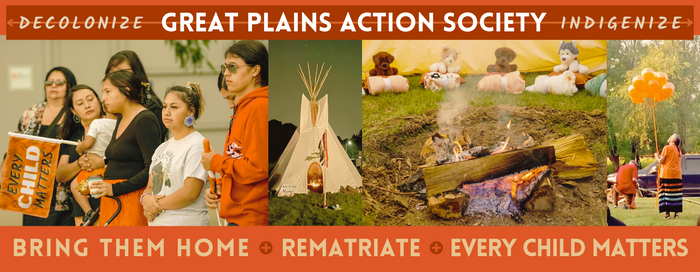
The annual Orange Shirt Day on September 30th opens the door to global conversation on all aspects of Residential Schools. It is an opportunity to create meaningful discussion about the effects of Residential Schools and the legacy they have left behind.  A discussion all Canadians can tune into and create bridges with each other for reconciliation.  A day for survivors to be reaffirmed that they matter, and so do those that have been affected.  Every Child Matters, even if they are an adult, from now on.

It all started right here in the Cariboo, and as a result, School District No. 27 was  chosen by the First Nations Education Steering Committee (FNESC) to pilot curriculum changes for all Grade 5 and Grade 10 students reflecting the residential school experience, which have now been implemented province-wide. 

On this day of September 30th, we call upon humanity to listen with open ears to the stories of survivors and their families, and to remember those that didn’t make it.

The Story of Orange Shirt Day

On this day of September 30th, we call upon humanity to listen with open ears to the stories of survivors and their families, and to remember those that didn’t make it.

the story of Orange Shirt Day

What does it mean to listen with open ears? This implies that we often do not really listen. When was the last time you changed anything based upon what you were hearing? James Allen says, “we need to radically rethink the stories we tell ourselves”. As my friend Lucy Duncan says here, we white Quakers believe a number of myths. Listening with open ears requires a conscious effort to jump over the barriers of those myths we tell ourselves.

During our gatherings for Quaker meetings for worship we listen for the voice of the Creator. Are we really open to the leadings of the Spirit? Are we looking past the myths? Are we listening with open ears? And then do we have the courage to do what the Spirit is asking of us?

“We White Quakers like to revel in our myths about ourselves. These include “we were all abolitionists”; “we all worked on the Underground Railroad”; and “none of us were slaveholders.” Often there are kernels of truth in myths, but the truth is more complex. Myths exist to veil the complexity and contradictions of our history, to obfuscate the differences between who we think we are and who we really are and have been… Perhaps the revolutionary Quaker faith we imagine ourselves to inhabit has never really existed, and if we tell the whole truth and commit to the healing the truth-telling calls us to, perhaps together we can embody and create the prophetic religion we thirst for. –Lucy Duncan, “A Quaker Call to Abolition and Creation”

Query: What myths are you facing? What truths are you embracing?


If we are to find a new kind of good life amid the catastrophes these myths have spawned, then we need to radically rethink the stories we tell ourselves. We need to dig deep into old stories and reveal their wisdom, as well as lovingly nurture the emergence of new stories into being. This will not be easy. The myths of this age are deeply rooted in our culture. The talking heads (even the green ones) echo these myths with the dogmatic fervour of zealots. They talk of “saving the planet” through transitioning to a “sustainable” future, primarily through new renewable energy technologies. They seem only able to conceive of a good life that mirrors our lives more or less as they are now, where the living standard continues to improve and rate of consumption continues to grow, yet somehow decoupled from all the pollution, destruction and guilt.

Pontoon Archipelago or: How I Learned to Stop Worrying and Love Collapse By James Allen, originally published by Medium, June 18, 2019


I think about what I want for my children and grandchildren. What I want
for them is to be loved and love other people in this country. Not to tolerate
them, not to go to our respective corners and stop hurting each other, but
to be wrapped up and engaged in each other’s lives.

Douglas White
Kwulasultun (Coast Salish name), Tliishin (Nuu-chah-nulth name),
Director of the Centre for Pre-Confederation Treaties and Reconciliation
(VIU), former Chief of Snuneymuxw First Nation

What kind of ancestor do you want to be?

In these increasingly troubled times I find myself thinking about the concept of sensemakingthe action or process of making sense of or giving meaning to something, especially new developments and experiences. 

It is increasingly difficult to make sense of all that is going on today. All the bad things I had anticipated for the future are suddenly happening now. And things I never imagined, like the assaults on truth and science, come at a time when they are desperately needed.

At the collective level, a loss of sensemaking erodes shared cultural and value structures and renders us incapable of generating the collective wisdom necessary to solve complex societal problems like those described above. When that happens the centre cannot hold.

Threats to sensemaking are manifold. Among the most readily observable sources are the excesses of identity politics, the rapid polarisation of the long-running culture war, the steep and widespread decline in trust in mainstream media and other public institutions, and the rise of mass disinformation technologies, e.g. fake news working in tandem with social media algorithms designed to hijack our limbic systems and erode our cognitive capacities. If these things can confound and divide us both within and between cultures, then we have little hope of generating the coherent dialogue, let alone the collective resolve, that is required to overcome the formidable global-scale problems converging before us.

Pontoon Archipelago or: How I Learned to Stop Worrying and Love Collapse. By James Allen, originally published by Medium
June 18, 2019

sensemaking the action or process of making sense of or giving meaning to something, especially new developments and experiences

Celebrants have an important part to play in the legacy humanity caries into the future. I suggest that our responsibility as ceremonialists, as humans who help other humans meaningfully connect with the web of life, is to find ways now to help people connect with the story of this world’s beauty, even as the world we love recedes. I believe there is a gift we can bring to our communities, to help people learn the art of losing. To help us all to meet the rising tides.

Celebrants & Ceremony in Response to Climate Grieving, Dina Stander, July 26, 2019

I believe faith communities and Indigenous ways need to play a crucial role in helping us move through the oncoming, increasingly severe chaos. Faith can provide sensemaking for those who have no framework for making sense of our broken systems.

People of faith can be celebrants. Indigenous peoples are celebrants, their cultures based upon a timeless connection to Mother Earth.

The problems before us are emergent phenomena with a life of their own, and the causes requiring treatment are obscure. They are what systems scientists call wicked problems: problems that harbour so many complex non-linear interdependencies that they not only seem impossible to understand and solve, but tend to resist our attempts to do so. For such wicked problems, our conventional toolkits — advocacy, activism, conscientious consumerism, and ballot casting — are grossly inadequate and their primary utility may be the self-soothing effect it has on the well-meaning souls who use them.

If we are to find a new kind of good life amid the catastrophes these myths have spawned, then we need to radically rethink the stories we tell ourselves. We need to dig deep into old stories and reveal their wisdom, as well as lovingly nurture the emergence of new stories into being.

Pontoon Archipelago or: How I Learned to Stop Worrying and Love Collapse. By James Allen, originally published by Medium
June 18, 2019

How do we rethink the stories we tell ourselves? We need to let go of the stories we have discovered to be untrue. Learn about, and embrace stories of other cultures. Seek, and really listen for, Spiritual guidance. Then actually implement that guidance.

One idea is to share stories from earlier times. “We need to dig deep into old stories and reveal their wisdom.” The Quaker Stories Project is an example. https://quakerstories.wordpress.com/

We need to re-think those stories. To consider what they say about our world today. To see if they represent something we have lost. Something it might be good to return to. The past leading into the future.

Seeking out new people and experiences are ways we can create new stories. For more than a year I have been learning new stories from my friends in the Mutual Aid community. We have been learning, together, how to live and work together in ways without a vertical hierarchy. Where decisions no longer come from leaders who try to wield power without consent. As my friend Ronnie James, who is my Mutual Aid mentor says:

I’m of the firm opinion that a system that was built by stolen bodies on stolen land for the benefit of a few is a system that is not repairable. It is operating as designed, and small changes (which are the result of huge efforts) to lessen the blow on those it was not designed for are merely half measures that can’t ever fully succeed.

So the question is now, where do we go from here? Do we continue to make incremental changes while the wealthy hoard more wealth and the climate crisis deepens, or do we do something drastic that has never been done before? Can we envision and create a world where a class war from above isn’t a reality anymore?”

Ronnie James

Our ancestors are ashamed of us, my friends. We are the people who disgraced the past, to create a myth called “the future.” That myth failed because there was no soul in it, no depth, no humanity. It was a vision of power, control, slavery, and violence, if we strip the gloss away

We’re Losing the Battle for the Future | by umair haque | Jul, 2021 | Eudaimonia and Co (eand.co)

It all comes down to what type of ancestor I want to be for my descendants. Do I want to be a regular nobody that did nothing to protect our planet or do I want to be like Crazy Horse who fought and died for the little bit of land that we have left to protect? We have that chance right now to make that decision. This kind of resistance runs through all of our blood because we are the Indigenous Peoples of these lands. It’s at vital choice for the survival of humankind.

What Kind of Ancestor Do you Want to Be? Why I Fight the KXL by TaSina Sapa Win, February 28, 2019