Defend ICWA

It is difficult enough to learn about the removal, often by force, of native children from their families. And about the terrible things done to the children at the institutions of forced assimilation. The remains of thousands of children are being found on the grounds of many of those institutions. The numbers found are rapidly increasing with the use of ground penetrating radar. Indigenous peoples say these findings confirm what they already know. Thousands of children never returned to their families.

The explanation given was the children were being taught how to fit into white culture. It wasn’t until recently that I realized the intentional cruelty was the point. To break the resistance of tribes to removal from their lands. The cruelty worked.

As those institutions were eventually closed, children continued to be removed by state welfare systems. Often to be placed with non-native families.

The era of assimilative U.S. Indian boarding schools started to wane and eventually came to a close after government reports like the Meriam Report (1928) and the Kennedy Report (1969) found mistreatment and abuse to be rampant at the costly institutions. During this time, the federal government shifted its assimilative methods, using the Indian Adoption Project to transfer Native children from their homes and place them directly with white adoptive and foster families.

In full swing in the 1960s and 1970s, the adoption era saw (usually white) social workers deem huge proportions of Native families unfit for children. In fact, by 1978, as many as one-quarter to one-third of children were taken by social workers or other coercive means and either adopted out of the tribe or placed in the non-tribal foster care system. Although the Indian Child Welfare Act of 1978 (ICWA) was designed to address this form of cultural genocide, Native families continue to face very high levels of child removal. For example, in Alaska, where Native children make up 20% of the general child population, they represent 50.9% of children in Foster Care. In Nebraska, Native children make up just 1% of the general child population, but 9% of the children in foster care. (National Indian Child Welfare Association and The Pew Charitable Trusts, 2007).

 In 1978, the Indian Child Welfare Act (ICWA) was passed to re-establish tribal authority over Native children, due to high rates of state removal of children. In spite of ICWA’s passing, Native children were placed into foster care at high rates in Maine. Concerns about the contemporary relationship between the state welfare system and the tribes, as well as the lasting effects of foster care trauma on tribal communities, brought about the Maine Wabanaki-State Child Welfare Truth and Reconciliation Commission, the first Truth and Reconciliation Commission between Native peoples and child welfare.

The Maine Wabanaki-State TRC: Healing from historic trauma to create a better future By Genevieve Beck-Roe, American Friends Service Committee, Jan 27, 2016

Native children and U.S. Secretary of the Interior Deb Haaland are under legal attack in Brackeen v. Haaland. The powerful people behind the lawsuit include both Big Oil and the State of Texas. If their attempt to have a conservative-majority Supreme Court overturn the Indian Child Welfare Act is successful, the door will be open to the total elimination of tribal sovereignty. Take action now to stop this horrific attack on Native rights! (see petition below).
Lakota People’s Law Project

Texas, Big Oil Lawyers Target Native Children in a Bid to End Tribal Sovereignty

The Threat Summarized

If the Supreme Court overturns the Indian Child Welfare Act (ICWA) — a federal law that keeps Native children with Native families — tribal sovereignty could soon be a thing of the past in the U.S. Should the justices rule in the plaintiffs’ favor in the case of Brackeen v. Haaland, we could quickly see a return to blatant, pre-1978 genocidal practices — when Native babies were legally stripped of their families, culture, and identities.

It’s critical that every one of us take immediate action. Before you do anything else today, sign our petition telling President Biden and the Department of Justice to defend ICWA, Secretary Haaland, and tribal sovereignty with every available means.

In this landmark case, the Brackeens — the white, adoptive parents of a Diné child in Texas — seek to overturn ICWA by claiming reverse racism. Joined by co-defendants including the states of Texas, Ohio, Louisiana, and Indiana, they’re being represented pro bono by Gibson Dunn, a high-powered law firm which also counts oil companies Energy Transfer and Enbridge, responsible for the Dakota Access and Line 3 pipelines, among its clients. This lawsuit is the latest attempt by pro-fossil fuel forces to eliminate federal oversight of racist state policies, continue the centuries-long genocide of America’s Native populations, and make outrageous sums of money for energy magnates, gaming speculators, and fossil fuel lawyers. The story below may seem unbelievable, but it is 100 percent true.

Key Points to Take Away

  • Big Oil’s lawyers, Texas, and three other states with very few Native inhabitants are attacking the Indian Child Welfare Act (ICWA).
  • The Texas Attorney General is asking the Supreme Court to declare ICWA unconstitutional.
  • The Plaintiffs argue that tribal affiliations should be considered racial, rather than political, designations.
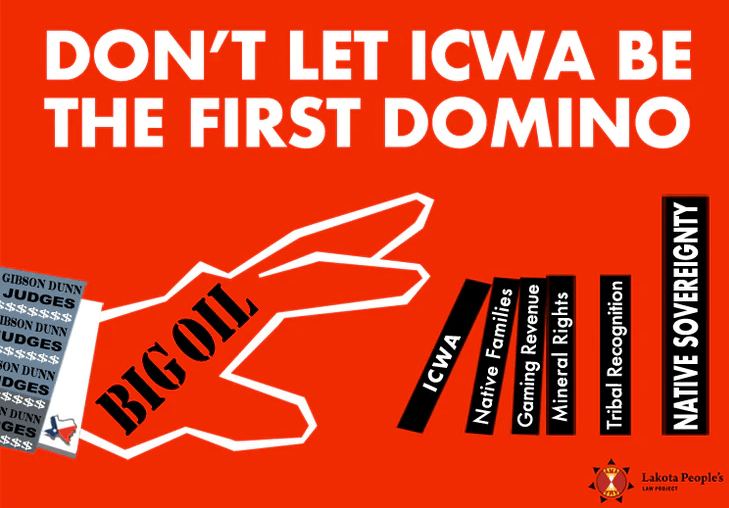
  • Overturning ICWA could be the first legal domino in a broader attack on tribal rights and sovereignty.

The Indian Child Welfare Act Protects Native Kids, Cultures, and Sovereignty

The Indian Child Welfare Act (ICWA) is the federal law that prioritizes Native care for Native children, which is critical to maintaining cultural connections, family ties, and kinship practices that have been intact for thousands of years. ICWA, signed into law in 1978, was conceived as a means of slowing the genocidal policies enacted by the United States and Canada, which included the forced placement of Indigenous children in Indian boarding schools for more than a century.

These schools were cruel institutions designed to enact genocide by separating the children from their cultural identities and severing ties with their families and communities. Thousands of Native and First Nations children died at these schools, where physical, mental, and sexual abuse were commonplace. After the era of boarding schools, during the Sixties Scoop, it became common practice for child welfare workers — hiding behind state law — to kidnap Native children and place them with white, Christian families as adoptees. This lasted well past the 1960s, and ICWA was ultimately passed to protect Native children and keep them with their kin.

Today, the State of Texas (among other plaintiffs) is suing the federal government in an attempt to overturn ICWA. If the plaintiffs are successful, this case will strike down the federal law that prioritizes Native care for Native children. But that’s not even the worst of it. The case would also open a door for the destruction of tribal sovereignty in the United States. The case — Brackeen v. Haaland — is slated to go before a conservative Supreme Court soon, should the justices accept it. It specifically names the defendant as U.S. Secretary of the Interior Deb Haaland — a Laguna Pueblo woman and the first Native person to hold a Cabinet secretary position in U.S. history.

The plaintiffs are essentially alleging racism against white people, arguing that ICWA violates the U.S. Constitution’s Equal Protection Clause. Tribal nations — backed by a prior Supreme Court decision — say that Native status is not a racial designation, but a political one.

This case poses an extreme and imminent danger to Native Peoples across the U.S. If the high court accepts the plaintiffs’ argument that tribal political designations should not count in custody cases, “Native” and “Indian” designations could then be dissolved entirely. That decision would position ICWA as the first domino to fall, potentially leading to the erosion — or total erasure — of Native rights in the only homelands Indigenous North Americans have ever known.

Lakota People’s Law Project
https://lakotalaw.org/news/2021-09-17/icwa-sovereignty


Petition to protect the Indian Child Welfare Act

Dear President Biden and attorneys for the Department of Justice,

As the Supreme Court decides on whether to render judgment in the case of Brackeen v. Haaland, I write today to ask you to do everything in your power to protect the Indian Child Welfare Act and defend Secretary Deb Haaland. We need strong federal protection of Native families and tribal sovereignty.

Please file every available motion, prepare every legal argument judiciously, and do everything else you can to stop this attack on tribal citizens. The plaintiffs will not be easily stopped. Should the Supreme Court accept this case and validate the plaintiffs’ argument that tribes do not have the power to place their own enrolled children in tribal kinship care, we will have crossed a rubicon into dangerous legal territory that could ultimately lead to the disbanding of tribal nations — and the loss of tribal lands, gaming revenues, and mineral rights.

It’s no coincidence that the same attorneys — Gibson Dunn — representing the plaintiffs in this case also have deep ties to fossil fuel interests such as Enbridge and TC Energy (the oil conglomerates responsible for attacking tribal interests through the Line 3 and Dakota Access pipelines, respectively).

The Indigenous peoples of this land have always deserved better. The few gains made over centuries littered with oppression, and in the face of overwhelming systemic racism, must not be lost now. Please fight hard to protect original Americans. Please do everything possible to stop this attack on children, families, and sovereignty.

You can sign this petition here:
https://action.lakotalaw.org/action/protect-icwa

Truth and Healing Curriculum

As the horror stories of the institutions of forced assimilation of Indigenous children continue to emerge, it is clear the erasure of this history almost succeeded. I remember being taught very little beyond Columbus ‘discovering America’, the colonial version of ‘Thanksgiving’, and not much related to the settler colonists and Indigenous peoples.

It is crucial for non-native people to learn this history, to know how this country developed, so we can all begin to heal. We can’t do that as long as we remain within the boundaries of whitewashed colonial stories. This is important for the context for dealing with rapidly evolving environmental chaos. Because a return to Indigenous practices and relationships with Mother Earth and all our relations is, I believe, the way to adapt to the coming collapse.

In the last blog post I wrote about sixth grader Alden Nobiss’ idea of having students teach each other about anti-racism and an accurate history of this country known as the United States.

Alden’s mother, Christine Nobiss (Sikowis) says, “he basically thinks that if teachers can’t teach critical race theory, then why can’t students do it? So that’s his idea. He thinks that students can teach each other in their spare time. During recess, during lunch time, and that’s something that he’s going to try to do. So, we have a book that he’s going to share called 500 Years After Columbus, which is a curriculum guide for teaching better indigenous studies for k-12. So, he’s already taking a look at that.”


It has been a long-running goal of many Native people to have more about their history and culture taught in grade schools. New requirements have been adopted in Connecticut, North Dakota and Oregon and advocates say their efforts have gained some momentum with the nation’s reckoning over racial injustice since the killing of George Floyd.

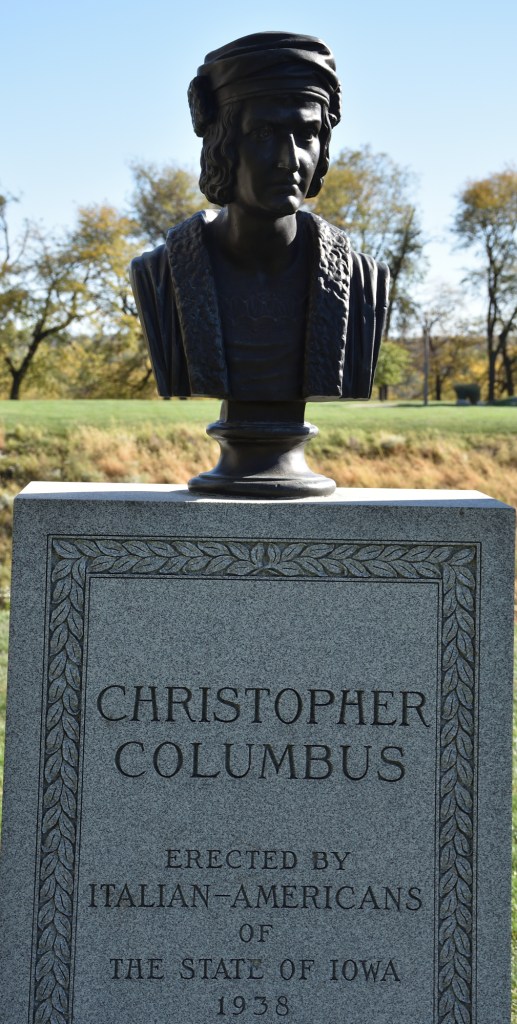
The legislation affecting schools has advanced alongside new bans on Native mascots for sports teams and states celebrating Indigenous Peoples Day in place of Christopher Columbus Day.

The push for curriculum requirements has not been without challenges, with some legislatures deeming new laws unnecessary because Native American history already is reflected in school curriculum. There also have been some steps in the opposite direction amid battles over how topics related to race and racism are taught in classrooms.

In South Dakota, a group of teachers and citizens charged with crafting new state social studies standards said last month that Gov. Kristi Noem’s administration deleted from their draft recommendations many elements intended to bolster students’ understanding of Native American history and culture. They said changes made to the draft gave it a political edge they had tried to avoid, aligning it instead with the Republican governor’s rhetoric on what she calls patriotic education.

Push for Indigenous Curriculum Makes Gains by Susan Haigh, Indian Country Today, Sept 15, 2021

Without the political will to ensure accountability and to guide implementation, what is observed rather in mainstream American education is the ongoing erasure of Indigenous people. Sam Torres

Only five states mentioned Indian boarding schools in their state content standards, which is “unimaginable,” said Sam Torres of The Native American Boarding School Healing Coalition. “It’s obviously a representation and reflection of what is being valued in educational and curricular context.”

As the United States federal government gears up to assess the genocide it perpetuated against Native communities for nearly a century, Native leaders and academics say there is one glaring method for accessing truth and healing: education.

Roughly fifty four percent of public schools across the United States make no mention of Native Americans in their K-12 curriculum, and 87 percent of state history standards don’t discuss Native American history after 1900, according to a study conducted in 2019.

For its part, NABSHC—an organization that has been at the helm of increasing public awareness on boarding schools since its founding nearly a decade ago—in 2020 released its first ever Truth and Healing Curriculum. The curriculum, available for free online, is made up of four lessons on Indian Boarding Schools focusing on history, impacts, stories, and healing.

“We were hearing a lot of feedback from community members asking for materials for their students,” Torres said. In developing the curriculum— sectioned into primary, middle and upper grades learning levels—Torres said he and staff members focused on the pillars that mimic a Native approach to collective education.

Other nonprofit institutions, such as The Ziibiwing Center of Anishinabe Culture & Lifeways in Michigan and the Heard Museum in Arizona have also developed their own supplemental Indian Boarding School curriculum. But without a state mandate on the specific curriculum, or enough educators aware of or comfortable enough with the content, the material reaches only a tiny fraction of students.

NABSHC’s Truth and Healing curriculum has been downloaded over one thousand times, Torres said, as the organization sets its sight on training educators in decolonizing knowledge. 

“Rigorous meaningful curricular materials have and continue to be developed by Native people,” Torres said. “Yet without the political will to ensure accountability and to guide implementation, what is observed rather in mainstream American education is the ongoing erasure of Indigenous people.”

The vast majority of Americans don’t learn about Indian boarding schools growing up. These Native leaders and educators want to change that by Jenna Kunze, Native New Online, Sept 13, 2021

The National Native American Boarding School Healing Coalition has developed a curriculum on U.S. Indian Boarding Schools for teachers and parents to use with their students and children.

The Truth and Healing Curriculum is comprised of four (4) robust lessons on Indian boarding schools covering History, Impacts, Stories, and Healing, and is appropriately sectioned into three (3) learning levels: primary, middle, and upper grades.

NABS understands that educational resources such as these are greatly needed for a variety of important reasons. As a response to requests from teachers and parents, we developed the Truth and Healing Curriculum to support distance learning during the COVID-19 pandemic.

Download a package that includes all curriculum.

Download Curriculum


Students teaching students

Yesterday I saw the great presentation, Online Pushback:UnBan Anti-Racism Education in Iowa, a forum by Indigenous youth of the Great Plains Action Society related to Iowa’s ban on teaching Critical Race Theory or Anti-Racism Education (video below).

Indigenous Youth Organizers, Alexandrea Walker and Keely Driscoll, have started a youth-led movement to demand that the current Iowa Administration unban Anti-Racism Education, aka, Critical Race Theory. For the sake of health and safety for all, it is imperative that Kim Reynolds reverse the overtly white supremacist decision to ban anti-racism education plus diversity, equity, and inclusion programming in the classroom and in all state-funded institutions

At the 12:15 mark in the video above, my friend Sikowis Nobiss introduces her son Alden who is in sixth grade. With the ban against teachers teaching about anti-racism, he spoke about his idea of students teaching each other as an alternative.

Sikowis: Hello everybody. I am here with my son today and his name is Alden and he’s in sixth grade. And he’s being affected by the ban on critical race theory or as we like to call it anti-racism education, decolonization work, diversity equity inclusion. Those are better terms for it because critical race theory is a term that they’re using to manipulate the situation, to make it sound like it’s critical, you know that it’s being like overtly hard on something when really it means how like you know analyzing something specifically or properly.
So, Alden is in grade six and you know he’s got some interesting thoughts about this, and I wanted to ask him like what does he think, what do you think about the ban on critical race theory?
Alden: It’s not that good.
Sikowis: How come?
Alden: I mean people should know that what happened in the past or else the history is just going to repeat itself. Just the same thing that happens over and over right? Seems like it isn’t going to stop if people don’t take action and more people like Reynolds is going to ban stuff.
Sikowis: And you had an interesting idea, you had said that teachers can’t teach critical race theory right? But students can. Can you tell us more about that?
Alden: The governor only said that teachers couldn’t say stuff like that and they couldn’t teach stuff like that, but that doesn’t mean schools can’t just be used to teach inside like only teachers.
Sikowis: So, who would teach like you want?
Alden: Kids to teach each other. Yeah the more educated kids that are like me I guess that know about what happened in the past.
Sikowis: Very good thank you so much Alden. We appreciate you making those remarks. That took a lot of bravery for him. I’m very proud of that.
I hope you guys could hear that. He basically thinks that if teachers can’t teach critical race theory then why can’t students do it? So that’s his idea. He thinks that students can teach each other in their spare time. During recess during, lunch time and that’s something that he’s going to try to do. So, we have a book that he’s going to share called 500 Years After Columbus, which is a curriculum guide for teaching better indigenous studies for k-12. So, he’s already taking a look at that.


Just as the final report from the National Inquiry into Missing and Murdered Indigenous Women and Girls triggered shock waves across the country, bringing conversations about violence against Indigenous people into the classroom, so did the discovery of 215 children’s remains at the Kamloops Indian Residential School earlier this year.

As the National Day for Truth and Reconciliation approaches, we can expect Canadian teachers are thinking about how they can better weave Indigenous perspectives into their lesson planning.

In the past, events like this rarely made it as national news, staying inside our Indigenous communities where the pain remained hidden from the rest of Canada. Now, teachers are talking about them with their students — how history and society influence individual situations of race-motivated violence and cultural genocide. It’s our responsibility to make sure they are equipped to teach the truth and acknowledge the important role schools play in reconciliation.

We owe it to all students to bring truth and drive reconciliation in classrooms by Linda Isaac & John Estabillo, National Observer, September 16th, 2021.

For specific teachings on Indian Boarding Schools and the United States assimilation policies—a history educators say is central in contextualizing present day culture for Native and non-Native youth alike— statistics are even bleeker.

“Over the course of the last couple of years, we’ve identified five states—only five states— that have even mentioned Indian boarding schools in their content in their state content standards, which is unimaginable,” said Sam Torres, director of research and programs at The Native American Boarding School Healing Coalition. Those states, surveyed by NABSHC in 2015, are: Arizona, Washington, Kansas, Oklahoma, and North Dakota. 

“It’s obviously a representation and reflection of what is being valued in educational and curricular context,” Torres said. 

For its part, NABSHC—an organization that has been at the helm of increasing public awareness on boarding schools since its founding nearly a decade ago—in 2020 released its first ever Truth and Healing Curriculum. The curriculum, available for free online, is made up of four lessons on Indian Boarding Schools focusing on history, impacts, stories, and healing.

The vast majority of Americans don’t learn about Indian boarding schools growing up. These Native leaders and educators want to change that by JENNA KUNZE, Native News Online, SEPTEMBER 13, 2021

We owe it to Indigenous educators who are triggered and challenged to deliver education around a topic like residential schools that have impacted them. Educators like me, who when viewing the images of children with their plain clothes, short hair, and empty eyes — identities stripped — still struggle to separate the pain we hold from lesson planning.

We also owe it to non-Indigenous educators who lack confidence in teaching because they weren’t taught the truth about the atrocities of the residential school system. This is a significant blocker to the successful integration of truth-telling in our classrooms, which can be solved by supporting educators in their journey of learning.

We must ensure the materials passed down to educators are written accurately by authentic voices. We need ongoing government funding and access to professional learning programs. Alberta is one province that does this well. Its Teacher Qualifications Standard requires educators to take courses in foundational knowledge of Indigenous history.

We owe it to all students to bring truth and drive reconciliation in classrooms by Linda Isaac & John Estabillo, National Observer, September 16th, 2021.

First Nation-Farmer Climate Unity March Anniversary

My grandmother, Lorene Standing, said the will of God is often revealed in a series of small steps. I thought that meant a series of spiritual messages and that has been my experience.

But also, looking back over our lives, the series of actions we took, the decisions we made, map the path traveled. Spiritual guidance can help us stay on the path, might tell us what action to take. Each step gives us experience needed to continue on the path. We stray from the path at times. But learn by making mistakes.

This is the third anniversary of the First Nation-Farmer Climate Unity March (described below). When I learned about the March, I immediately felt a leading from the Creator this was something I should do. The experiences during the March were transformational for me.

The Spirit was important in numerous ways. One of the reasons I wanted to join the March was to learn more about Indigenous spirituality, and I did.

The article below describes how my Quaker community supported us spiritually during the March.

The Spirit created the opportunity for me to talk with my new friend, Matthew Lone Bear, about Quaker involvement with the native residential schools. And for him to share a story of the impact of those schools on his own family. (These stories are found on the First Nation-Farmer Climate Unity March website https://firstnationfarmer.com/ )

Our experiences on the March have made it possible for us, native and nonnative people, to work together in many ways since.

Here is a link to the First Nation-Farmer website, where there are many stories, photos and videos from the March. And a link to the website LANDBACKFriends which is about work going on now related to the concepts of LANDBACK.

First Nation-Farmer Climate Unity Marchhttps://firstnationfarmer.com/
LANDBACK Friendshttps://landbackfriends.com/

These are perilous times. Ferocious wildfires, melting glaciers and permafrost, severe drought, and devastating storms show rapidly evolving environmental chaos. Political, economic and social systems are breaking down.

There is also hope as we work together to address these challenges. Mutual Aid works because it is based upon people working and being together in their local communities, solving local problems. And LANDBACK is a framework for Indigenous peoples to teach us how to work to repair our relationships with Mother Earth and each other. It is because of the friendships that formed during the March that many of us are working together on Mutual Aid and LANDBACK.

Following is an article, written shortly after the March, published in On Creation, the publication of Quaker Earthcare Witness. The article is no longer online.

https://firstnationfarmer.com/

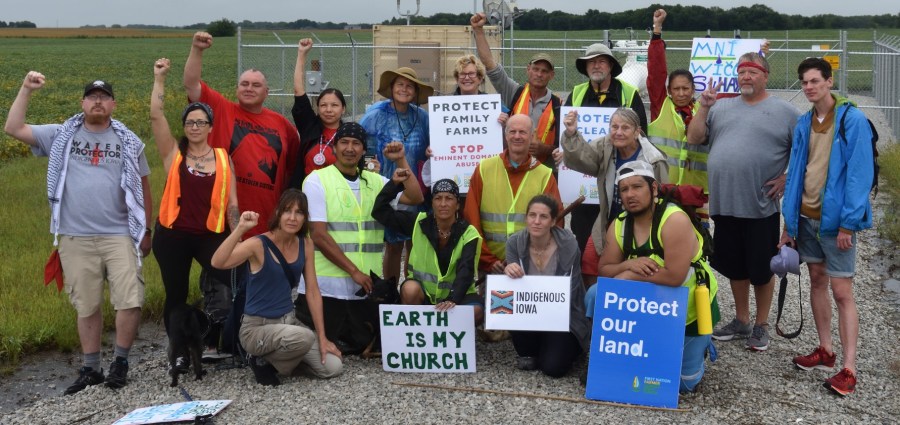
Iowa Yearly Meeting (Conservative) Friends Peter Clay and I recently walked on the First Nation-Farmer Climate Unity March. A group of about thirty that included nearly a dozen Native Americans walked 94 miles along the route of the Dakota Access Pipeline from September 1 – 8, 2018. One of the goals of the March was to bring attention to a case before the Iowa Supreme Court about the improper use of eminent domain to force Iowa farmers to allow construction of the pipeline on their land.

After walking between 9 and 15 miles, most evenings a community forum was held to discuss topics such as farming practices, or the consequences of the pipeline construction. One evening my Scattergood Friends School classmate Lee Tesdell discussed some of his progressive farming practices. Christine Nobiss discussed ways Native farming practices are better for the earth and water. This was an example of how this March helped us come together. As Manape LaMere, one of the headsmen from Standing Rock said, the purpose of the March was to make it possible for us to work together in the future. To do so, we needed to trust each other, and to trust each other we needed to understand each other.

During this March, Quakers in my local meeting, Bear Creek, often sent email messages of encouragement, and held us in their prayers. One of my Quaker friends, Liz Oppenheimer, invited people to offer spiritual support for our March in a couple of ways. One was via a telephone conference call every morning we were marching, from 8:30 to 9:00 am.

The other way Liz created for others to support us was by creating a Facebook group called “Meeting for Worship: Iowa’s Climate Unity March”. Following are a few of the messages shared on that Facebook page:

I see that Jeff has posted some of his recent writing about the march and its issues. My request is that we return to Jeff’s initial questions— sharing our reactions to the idea behind this march, as well as to the issues of pipelines, indigenous rights, misuse of eminent domain, etc.

As we share our own wonderings, questions, and struggle, I hope we can better accompany Jeff, Peter Clay, and other marchers.

George Fox suggested to us that if we answer that of god in others that we can then walk cheerfully over the earth. As I think about Jeff and Peter and the new sisters and brothers they will meet as they march, I realize that this sentiment works the other way also. As they walk over the earth they will then be able to answer to that of god in others.

This morning on the conference call for worship, we heard a vocal prayer of gratitude to Peter Clay, Jeff Kisling, and the other marchers and organizers of the march. We also heard the joyous hymn “Trees of the Field.”

After other Friends had left the call, and literally as my finger was about to hit the Hang Up button on my phone just past 9:00 am, another Friend joined the call. It was Jeff!!

He wants us to know that the marchers and organizers know we are holding them all in prayer and they are very appreciative of our support in this way. When I replied “It’s such a small thing we do,” Jeff reminded me “No, no it’s not.”

We are so blessed to be connected this way, no matter what form our march and our journey takes. And to those of you who are carving out time each day to hold the Climate Unity March in prayer, regardless of when, where, or how, all of us thank you.

Each morning of the March we gathered in a circle to hear about the day’s route and address any questions. The first morning I shared this Quaker support with my fellow marchers during our circle gathering, who expressed appreciation for this.

Some of the most powerful experiences I had during the March were times when prayers were offered. We stopped for prayers every time we crossed the route of the Dakota Access Pipeline. I was honored to be given the opportunity to give prayers at the pipeline crossing just before we reached Pilot Mound. I briefly described Quaker worship, then our circle, holding hands, worshiped in silence for a while.

even Quakers if you can believe that

even Quakers if you can believe that“. I heard this from an Indigenous friend during a presentation about institutions of forced assimilation. This is damning for us Quakers. A jarring dichotomy of being viewed as leaders in the work for peace and justice and yet to have participated, continue to participate in the cultural genocide of Native peoples. Cultural genocide and oppression continue today.

A great deal has been said about white people making the best of a bad situation when native lands and peoples were overwhelmed by the flood of white settler colonists moving across the land. Saying it was in the best interest of the native children to be educated about the white world. When instead this intentional cruelty was intended to break the resistance of Native peoples who did not want to give up their lands. And it was successful.

Unless there is documentation, or oral history, we don’t know what a given individual, perhaps one of our ancestors, might have done in these institutions. Additionally, there are so many ways we ourselves have failed our children and future generations. The extinction of millions of species will eventually include human beings.

But none of that excuses the idea that white people are somehow superior. That is diametrically opposed to the idea that there is that of God in every person and thing. A shameful legacy of oppression of black, Indigenous and other people of color (BIPOC) that continues.

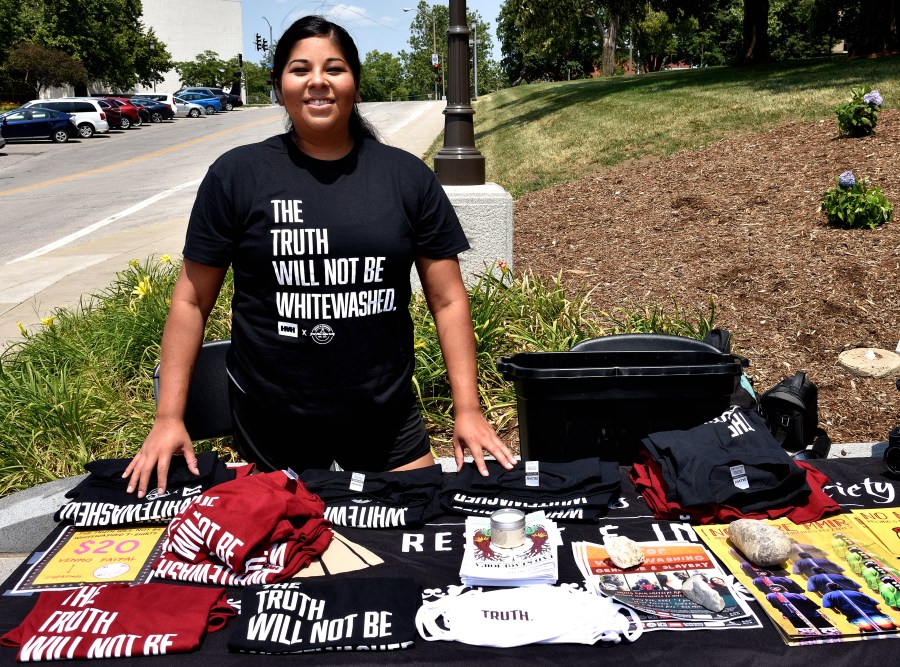
My friend Sikowis and her cousin Janna Pratt gave a Zoom presentation about Native American Boarding School Violence & Whitewashed History as part of the Women’s International League for Peace and Freedom 34th Triennial Congress.

Janna Pratt and Sikowis Nobiss are cousins and both citizens of the George Gordon First Nation and will discuss the rape, torture, and murder of Indigenous children in Canada and the US due to boarding school / residential school policy in the US and Canada and the silence behind the Indigenous genocide on Turtle Island. Janna lives in Saskatchewan, Canada and Sikowis lives in Iowa, USA. They will also delve into the work they are doing to overcome historical trauma and combat the erasure of this crisis by white supremacist governments.

She (Sikowis )is also a speaker, writer, and artist and believes that environmental and social justice work are inextricably linked and change will only happen when we dismantle corrupt colonial-capitalist systems and rebuild them with a decolonized worldview.

With the recent discoveries of children who perished while attending Indian residential schools, her (Janna) sights are now set on finding the children. Janna is a 4th generation residential school survivor and has lived through the decimation of culture these schools forced upon children, built under a policy enforced by the Canadian government to inflict cultural genocide. Janna is currently working on an archive that will gather information on residential schools, Missing and Murdered Indigenous Peoples, and veteran information to build resources for Indigenous communities. She hopes to inspire other projects with this knowledge and create Indigenous virtual reality experiences that are accessible no matter the distance.

They made the connections between Native children violently removed from their families, many times never to return, to the current epidemic of violence against Native women, to Missing and murdered Indigenous relatives (MMIR). The forced removal of Native children continues to this day, by social service agencies.

One of the topics of the presentation was the silence behind the Indigenous genocide on Turtle Island. Will we break this silence?

As Sikowis says, change will only happen when we dismantle corrupt colonial-capitalist systems and rebuild them with a decolonized worldview.

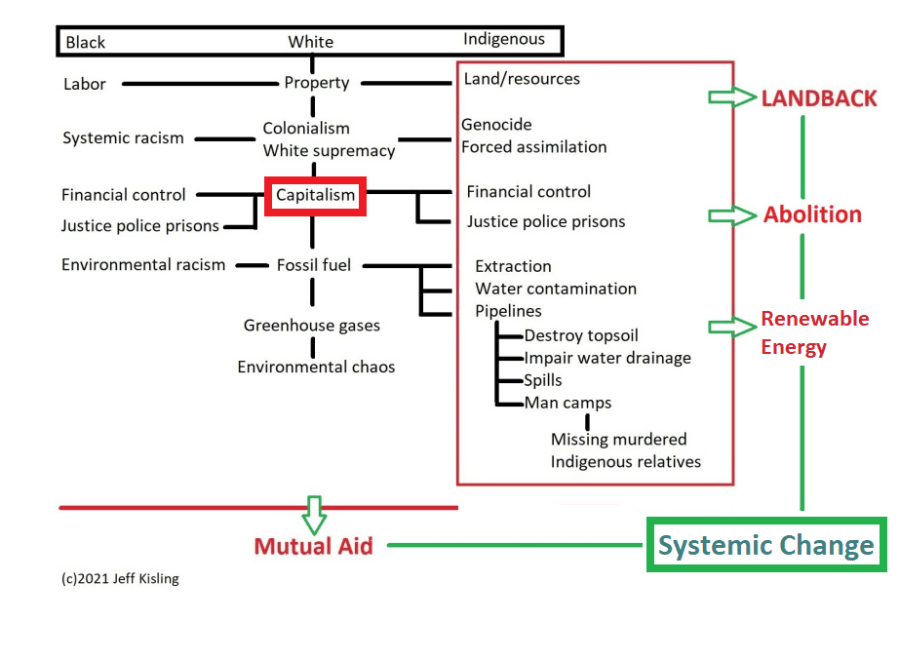
This means we must move away from the colonial capitalist system. Seriously! The concepts of LANDBACK are about how to do that. For the past several months I’ve been building the website LANDBACK Friends to help with education about these ideas. https://landbackfriends.com/

I hope you will join us, to find ways to break the silence behind Indigenous genocide.

https://landbackfriends.com/

One of the topics of the presentation was the silence behind the Indigenous genocide on Turtle Island. Will we break this silence?

Cultural erasure continues.

Before the South Dakota Department of Education released a draft of new social studies standards last week, department officials took out more than a dozen references to education on the Oceti Sakowin.

“Oceti Sakowin” refers collectively to the Lakota, Dakota and Nakota people who are indigenous to South Dakota and surrounding states.

Several of the standards on Oceti Sakowin were removed completely, including:

  • In kindergarten civics, discussing the meaning of kinship to the Oceti Sakowin Oyate.
  • In kindergarten geography, discussing the tribal nations of the Oceti Sakowin Oyate.
  • In first grade civics, identifying symbols of the Oceti Sakowin Oyate, including but not limited to star quilt, buffalo and medicine wheels.
  • In first grade geography, recognizing the nine contemporary reservations of the Oceti Sakowin Oyate on a South Dakota map.
  • In second grade civics, exploring the concepts of the Oceti Sakowin Oyate, including but not limited to tribal flags, celebrations (powwows), beadwork, dreamcatchers, music and artwork.
  • In second grade geography, identifying names and locations of Oceti Sakowin Oyate tribes within our communities and state.
  • In third grade civics, learning how to describe tribal organizational structures (council, chairman, etc.)
  • In third grade geography, researching the nine tribes in South Dakota
  • In fifth grade, standards for learning about tribal sovereignty in civics class and how natural resources and migration affected the lives and culture of the Oceti Sakowin were both removed completely.
  • In eighth grade history, examining major cultural traits and resiliency of the Oceti Sakowin Oyate throughout history
  • In eighth grade history, critiquing significant primary sources, including Oceti Sakowin Oyate treaties, and their impact on events of this time period.

In eighth grade civics, two grade-level standards on Indigenous topics were removed completely, including evaluating changing federal policy toward Indigenous Native Americans, and comparing and contrasting the structure of the U.S. government and sovereign tribal governments.

South Dakota DOE removed Indigenous topics from social studies standards before final draft by Morgan Matzen, Sioux Falls Argus Leader, August 10, 2021


Native American Boarding School Violence and Whitewashed History

I have been blessed to get to know and become friends with Sikowis (Christine Nobiss). Four years ago I heard her speak about building bridges with native peoples during Iowa Yearly Meeting (Conservative)’s annual sessions. In 2018 we walked and camped together for 94 miles, eight days, along the path of the Dakota Access pipeline in central Iowa. And have done many things together since.

Sikowis is a leading organizer on issues of Indigenous concern in the Midwest and nationally. This presentation will be an excellent opportunity to learn what she and Janna Pratt have to say about the atrocities of forced assimilation of native children.

wilpfus.org/34thcongress 11 am PDT

Sikowis (Christine Nobiss) is Plains Cree/Saulteaux of the George Gordon First Nation in Saskatchewan, Canada, and grew up in Winnipeg, Manitoba, Canada. At 19, she began her life’s work of uplifting Indigenous voices when she got her first job at the New Brunswick Aboriginal Peoples Council in Fredericton, Canada and now she is the Founder and Executive Director of Great Plains Action Society—a 100% Indigenous organization working towards climate and social justice. She is also a speaker, writer, and artist and believes that environmental and social justice work are inextricably linked and change will only happen when we dismantle corrupt colonial-capitalist systems and rebuild them with a decolonized worldview. Sikowis graduated from the University of Iowa with an MA in Religious Studies (with a focus on Native American Religion and Culture) and a Graduate Minor in American Indian Native Studies.

May be an image of 2 people and text that says 'WOMEN'SNTENTNAL LEAGUE FOR PEACE AND FREEDOM 34TH TRIENNIAL CONGRESS NATIVE AMERICAN BOARDING SCHOOL VIOLENCE & WHITEWASHED HISTORY Sikowis Nobiss George Gordon First Nation Great Plains Action Society Janna Pratt George Gordon First Nation MUSHOM Project SUNDAY, AUGUST 22 AT 11 AM PDT GO TO: WILPFUS.ORG/34THCONGRESS @GreatPlainsActionSociety MUSHOM Project'
wilpfus.org/34thcongress

Join Janna Pratt and Sikowis (Christine Nobiss) this Sunday, August 22 at 11 AM PDT for a presentation on Native American Bordering School Violence & Whitewashed History as part of the Women’s International LEAGUE for Peace and Freedom
34th Triennial Congress.

Janna Pratt and Sikowis Nobiss are cousins and both citizens of the George Gordon First Nation and will discuss the rape, torture, and murder of Indigenous children in Canada and the US due to boarding school / residential school policy in the US and Canada and the silence behind the Indigenous genocide on Turtle Island. Janna lives in Saskatchewan, Canada and Sikowis lives in Iowa, USA. They will also delve into the work they are doing to overcome historical trauma and combat the erasure of this crisis by white supremacist governments.

#everychildmatters
#WILPF
#greatplainsactionsociety
#MUSHOMproject

#everychildmatters
#WILPF
#greatplainsactionsociety
#MUSHOMproject

Ku Stevens’ Remembrance Run

Stories continue to emerge related to the remains of native children on the grounds of institutions of forced assimilation. Over 1,000 have been found on the grounds of several institutions in Canada so far. Searches are beginning in the land called the United States. Just last month nine children from the Carlisle boarding school in Pennsylvania were returned home. A number of my friends were involved in powerful ceremonies as the children’s’ caravan stopped in Sioux City, Iowa.

Following are stories related to forced assimilation and the Stewart Indian School in Nevada.

Stewart Indian School

First opened in 1890, Stewart Indian School was operated by the federal government for 90 years before it closed in 1980. Stewart and other boarding schools across the nation, were initially set up to forcefully educate Native American children in the late 1800s. This assimilation policy impacted thousands of Native students not only from the Great Basin tribal nations, but over 200 tribes over the school’s 90-year history.

Nevada Indian Commission

At the old (Stewart) school cemetery adjacent to the 240-acre campus, southwest of central Carson City, there are more than 170 marked graves. Those range in time from 1880, a year before the school existed, to the early 2000s. The marked gravesites include many with weathered, nearly-illegible headstones as well as easily-read marble markers and well-tended family plots. The wind-swept site on tribal land, protected by a fence and ringed with gnarled sagebrush, also encompasses an estimated 200 unmarked plots, whose occupants and dates of interment are a mystery.

Stewart Indian School’s 200 unmarked graves. ILLNESSES, ACCIDENTS AND EPIDEMICS TOOK THEIR TOLL ON NATIVE STUDENTS by Frank X. Mullen, Reno News and Review, August 15, 2021
Ku Stevens

When news broke of the mass graves found in Canada at residential schools earlier this year, one young cross country runner in Nevada thought of his own family.

Ku Stevens, Yerington Paiute Tribe, is 17, and a runner. His great grandfather Frank Quinn attended the Stewart Indian School in 1913. Quinn ran away three times.

He says he even felt his ancestors on his feet and he knows what he would say to his great grandfather if he was here today.

“Thanks for getting me this far because without him and the decisions he would have made to even run away from here, if he didn’t, I couldn’t possibly be here. Thanks for being a good man and wanting to be with your family and wanting to support them anyway you could. (Because) that’s family, you know, you would do anything for them,” Stevens said.

Retracing his ancestor’s boarding school escape. 17-year-old Ku Stevens honored his great-grandfather recently as part of a ‘Remembrance Run’ INDIAN COUNTRY TODAY, August 17, 2021

It’s about healing and bringing people together

Ku Stevens
Ku Stevens’ Remembrance Run

The discovery of hundreds of unmarked graves at tribal schools in Canada inspired a Native American teenager from Northern Nevada to recreate his great-grandfather’s escape from a similar school near Carson City.

Yerington Paiute tribal member Ku Stevens, one of the top prep cross-country runners in the state, plans to retrace the steps of his great-grandfather, Frank Quinn. He ran away from the Stewart Indian School three times, starting when he was 8.

Stevens had heard families stories about his great-grandfather his whole life but has grown to appreciate his courage.

“As of recently, I’ve kind of really understood the weight of what he had to do,” Stevens told State of Nevada, “and that’s why we’re trying to do this right now.”

The Yerington High School senior will honor his great-grandfather next month with a 50-mile run to bring awareness to the history of children being taken from families under a policy of forced assimilation of native peoples.

Teen Honors Great-Grandfather’s Escape From Tribal School by Bert Johnson, Nevada Public Radio, July 29, 2021
Ku Stevens, right, and his father Delmar Stevens, visit the Stewart Indian School in Carson City. The younger Stevens plans to run from the campus to Yerrington, recreating his great-grandfather’s efforts to escape the tribal school.

Thanks for getting me this far because without him and the decisions he would have made to even run away from here, if he didn’t, I couldn’t possibly be here. Thanks for being a good man and wanting to be with your family and wanting to support them anyway you could

Ku Stevens

Ku Stevens will not let history be forgotten.

Later this summer, the senior-to-be at Yerington High School plans to retrace his great-grandfather’s journey in escaping from the Stewart Indian School in Carson City.

He’s calling it: “The Remembrance Run.”

Stevens told the Reno Gazette Journal he was inspired earlier this year by the discovery of 215 children’s graves in Canada. The remains of the children were found on the grounds of the former Kamloops Indian Residential School.

The Stewart Indian School, which operated from about 1890 to 1980, was one of about 200 military-style boarding schools for native students nationwide.

Stevens’ great-grandfather, Frank Quinn, escaped from the Stewart Indian School and ran 50 miles when he was 8 years old to try to get back to his family home on the Yerington Paiute tribal reservation.

His route home went across the desert between Carson City and Yerington. He was returned to the school and escaped, again, three times in all.

Stevens’ great-grandmother Hazel, also a Paiute tribe member, was hidden by her family, who denied her existence when government officials came looking for her.

“It’s about remembering and education,” Stevens said. “Anybody can come out and run. It doesn’t matter what race you are. It’s about healing and bringing people together. It’s not just about remembering the segregation and the bad things of the past.”

Yerington teen to retrace escape from Stewart Indian School, Nevada Appeal, July 5, 2021
Stewart Indian School In Carson City To Be Included In Federal Probe

After nearly 1,000 unmarked graves were found at former Indian boarding schools in Canada, U.S. Interior Secretary Deb Haaland announced an initiative to study Indian schools here, including one just outside Carson City.

The former Stewart Indian School is now a state-run museum, but about half of the former campus, including its cemetery, was returned to the Washoe Tribe of Nevada and California. Officials with the Nevada Indian Commission announced earlier this month they were collecting information about the school so they would be ready to participate in the federal review.

Stacey Montooth, director of the commission, said the investigation is welcome but will touch a nerve in the state’s tribal community.

“To prepare for any questions that Secretary Haaland might have, I’ve met with elders and the burial committee from the Washoe Nation to try to get a sense of what they would like to see,” she said. “With permission from their leadership, I was able to go to the cemetery and we’re dealing with upwards of 200 unmarked graves.”

“The boarding schools were so impactful,” she told State of Nevada. “We had families that have never really ever been able to return to their traditional structure, nor have they been able to embrace modern-day America.”

Stewart Indian School In Carson City To Be Included In Federal Probe by Bert Johnson, Nevada Public Radio, July 14, 2021

The eyes of the future are looking back at us

There is a native concept of considering what the effects of decisions made today will be on seven generations into the future.

The following quotation makes a two way connection between us and future generations. Looking at each other over the generations.

The eyes of the future are looking back at us and they are praying for us to see beyond our own time. They are kneeling with hands clasped that we might act with restraint, that we might leave room for the life that is destined to come. To protect what is wild is to protect what is gentle. Perhaps the wilderness we fear is the pause between our own heartbeats, the silent space that says we live only by grace. Wilderness lives by this same grace. Wild mercy is in our hands.

― Terry Tempest Williams, Refuge: An Unnatural History of Family and Place

Similarly, can we not look back at our ancestors? We are our ancestors’ future generation looking back.

I think about this a lot these days. As stories of the remains of native children on the grounds of the institutions of forced assimilation continue. Thousands of children never returned home.

I’ve been praying about what we are doing now that future generations will see as wrong. My Spirit recoils from the likelihood there probably will not be a seventh, or sixth, or fifth generation because of the accelerating rate of environmental collapse.

What have we done?

What will we do?

Practicing Hope

Most white people in what is called North America were ignorant of the history of forced assimilation. But many are learning about it now, shocked to hear about the Native residential schools from news reports about the remains of hundreds of children on the grounds of those institutions. Are learning about the cultural genocide, the physical, emotional and sexual abuse and deaths that occurred there.

Yesterday I wrote about my struggle with guilt and blame regarding Quakers’ involvement with forced assimilation of Native children. As is often the case, I write to try to understand things better myself. And hope some of that might be useful to others. On this subject I sense many Friends share my feelings of guilt. I recognized I had a problem when I wrote we should not feel guilt about what happened in the past, that we didn’t do ourselves. And yet I felt guilty. I’m working on that.

When you are disciplined in hope, you can face these things because you have learned to put them in context, you have learned to swallow joy and grief together, and wait for peace.

Quinn Norton

I often sign messages “practicing hope” which relates to the following quotation. Hope is a mental discipline that helps you put things in context. While we should not feel guilt about the past, it is very important to face hard truths now. This takes time and attention. Cycles of failure and success. Waiting for peace.

People often mistake hope for a feeling, but it’s not. It’s a mental discipline, an attentional practice that you can learn. Like any such discipline, it’s work that takes time, which you fail at, succeed, improve, fail at again, and build over years inside yourself.

Hope isn’t just looking at the positive things in this world, or expecting the best. That’s a fragile kind of cheerfulness, something that breaks under the weight of a normal human life. To practice hope is to face hard truths, harder truths than you can face without the practice of hope. You can’t navigate dark places without a light, and hope is that light for humanity’s dark places. Hope lets you study environmental destruction, war, genocide, exploitative relations between peoples. It lets you look into the darkest parts of human history, and even the callous entropy of a universe hell bent on heat death no matter what we do. When you are disciplined in hope, you can face these things because you have learned to put them in context, you have learned to swallow joy and grief together, and wait for peace.

IT IS BITTER TEA THAT INVOLVES YOU SO: A SERMON ON HOPE by Quinn Norton, April 30, 2018
Standing Family 1900

Corrosive of the human spirit

I am broken, trying to make sense of Quakers’ involvement with the institutions of forced assimilation, the Native residential schools. In the news now because of the verification of the remains of hundreds, soon to be thousands, of children on the grounds of those institutions in both the US and Canada. Verified because Native peoples have known they were there, because thousands of children never returned home.

I can not imagine the trauma. The children forcibly removed from their families. The community not knowing if the children would ever return. Their future was stolen. Those who did return often no longer fit into the community. I only recently learned this intentional cruelty was meant to break the resistance of those Native peoples that did not want to give up their land.

I’ve read that we aren’t to feel guilt or blame for what happened in the past. But we are called to learn about the wrongs, learn the truth. Then begin to work for reconciliation and healing. Canada went through such a process, involving the government and the entire country, several years ago. Secretary of the Interior, Deb Haaland, has initiated a Federal investigation of forced assimilation in this country.

From our twenty‐first‐century vantage point, we know (or can learn) how Native people suffered and continue to suffer the consequences of actions that Friends committed 150 ago with the best of intentions. Can we hold those good intentions tenderly in one hand, and in the other hold the anguish, fear, loss, alienation, and despair borne by generations of Native Americans?

Native organizations are not asking us to judge our Quaker ancestors. They are asking, “Who are Friends today? Knowing what we know now, will Quakers join us in honest dialogue? Will they acknowledge the harm that was done? Will they seek ways to contribute toward healing processes that are desperately needed in Native communities?” These are my questions, too.

Quaker Indian Boarding Schools. Facing Our History and Ourselves by Paula Palmer, Friends Journal, October 1, 2016

Although I believe we should not feel guilt, I have not yet been able to to get past my own sense of that. My head and my heart are out of synch. For a time I’ve felt I needed to distance myself from my Quaker communities. I struggle to discern if this was a spiritual leading, or just an emotional reaction. I’m still not sure. I know I continue to feel guilt. And projected this same guilt toward Friends in general. I know that is wrong and am working hard, praying to find my out of this.

Unearthing the truth was necessary not only for the victims to heal, but for the perpetrators as well. Guilt, even unacknowledged guilt, has a negative effect on the guilty. One day it will come out in some form or another. We must be radical. We must go to the root, remove that which is festering, cleanse and cauterize, and then a new beginning is possible.

Forgiveness gives us the capacity to make a new start. That is the power, the rationale, of confession and forgiveness. It is to say, “I have fallen but I am not going to remain there. Please forgive me.” And forgiveness is the grace by which you enable the other person to get up, and get up with dignity, to begin anew. Not to forgive leads to bitterness and hatred, which, just like self-hatred and self-contempt, gnaw away at the vitals of one’s being. Whether hatred is projected out or projected in, it is always corrosive of the human spirit.

Truth and Reconciliation BY DESMOND TUTU, Greater Good Magazine, SEPTEMBER 1, 2004

If has been tremendously helpful to have become friends with Native people I began to know as we walked and camped together for 94 miles along the path of the Dakota Access pipeline in 2018. The main intention of that sacred journey was to create a community of native and non-native people who began to know and trust each other so we could work together. That intention was achieved.

And yet, in another way, I have more of a sense of the trauma of assimilation from seeing the terrible effects on my friends.

As Paula Palmer wrote above, “Will they [Quakers] seek ways to contribute toward healing processes that are desperately needed in Native communities?” These are my questions, too.

I need to deal with my guilt before I can contribute to the healing processes.

I am deeply grateful for the acceptance and generosity of my Des Moines Mutual Aid community, which includes Native people. That is helping me move away from this destructive guilt.

I have faith I will be led to a better place.

First Nation-Farmer Climate Unity March September 2018