Abolition and racial capitalism

It has taken a while to adjust to thinking of abolition as the elimination of prisons instead of the historical context of abolition of the institution of enslavement. Not surprisingly the concept of prison abolition comes up in any discussion of capitalism and building a just future. Police are the enforcers of capitalism.

I am part of a new group of Friends who are interested in abolishing police and prisons called the Quakers for Abolition Network (QAN).

The following is from an article Jed Walsh and Mackenzie Barton-Rowledge, who helped start QAN, wrote for Western Friend.

Mackenzie: Let’s start with: What does being a police and prison abolitionist mean to you?

Jed: The way I think about abolition is first, rejecting the idea that anyone belongs in prison and that police make us safe. The second, and larger, part of abolition is the process of figuring out how to build a society that doesn’t require police or prisons.

M: Yes! The next layer of complexity, in my opinion, is looking at systems of control and oppression. Who ends up in jail and prison? Under what circumstances do the police use violence?

As you start exploring these questions, it becomes painfully clear that police and prisons exist to maintain the white supremacist, heteronormative, capitalist status quo.

Abolish the Police by Mackenzie Barton-Rowledge and Jed Walsh, Western Friend, November December, 2020

This diagram shows abolition, along with LANDBACK and Mutual Aid, as pieces of changes to transition away from systems of capitalism and white supremacy.
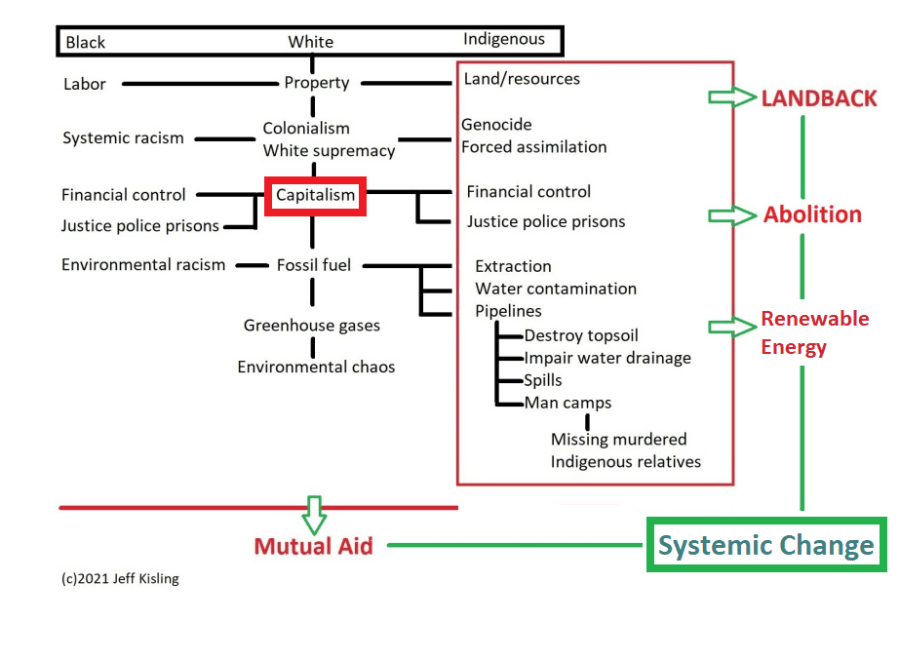
I’ve been reading The Red Deal by the Red Nation, which is about empowering Indigenous peoples, in part to help guide us through environmental chaos. What follows are some interesting perspectives on prison abolition.

Austerity is enforced scarcity. The neoliberal policy of the last forty years has been a tax strike of the super wealthy, who have refused to pay their share of taxes and have locked away the world’s wealth in tax havens and offshore accounts. These are resources that should go towards providing services—education, housing, healthcare, public transportation, infrastructure, and environmental restoration—to those who actually produce the wealth: the Indigenous, Black, migrants, women, and children who are the workers of the world. This strike is worth crushing quickly and with prejudice. Direct action alone won’t reallocate wealth if it is not backed by popular mass movements and enforced by state apparatuses wrested away from the elite and powerful.

Prison abolition and an end to border imperialism are key aspects of the Red Deal, for good reason. The GND calls for the creation of millions of “green” jobs, as well as a policy of “just transition” for poor and working-class families and communities that currently depend on resource extraction for basic income and needs, and which will suffer greatly when the extractive industry is shut down. In the United States today, however, about seventy million people—nearly one-third of adults—have some kind of criminal conviction—whether or not they’ve served time—that prevents them from holding certain kinds of jobs. If we add this number of people to the approximately eight million undocumented migrants, the sum is about half the US workforce, two-thirds of whom are not white. Half of the workforce faces employment discrimination because of mass criminalization and incarceration.

The terrorization of Black, Indigenous, Brown, migrant, and poor communities by border enforcement agencies and the police drives down wages and disciplines poor people—whether or not they are working—by keeping them in a state of perpetual uncertainty and precarity. As extreme weather and imperialist interventions continue to fuel migration, especially from Central America, the policies of punishment—such as walls, detention camps, and increased border security—continue to feed capital with cheap, throwaway lives. The question of citizenship—colonizing settler nations have no right to say who does and doesn’t belong—is something that will have to be thoroughly challenged as a “legal” privilege to life chances. Equitable access to employment and social care must break down imperial borders, not reproduce them.

The Red Deal by The Red Nation (pp. 22-23). Common Notions. Kindle Edition.

Calls for abolition of the prison system have expanded in the wake of widespread police violence. Abolition is part of the work of our Mutual Aid community.

Prison abolition and an end to border imperialism are key aspects of the Red Deal

The Red Nation

This same war of conquest is currently using the mass incarceration machine to instill fear in the populace, warehouse cheap labor, and destabilize communities that dare to defy a system that would rather see you dead than noncompliant. This is the same war where it’s soldiers will kill a black or brown body, basically instinctively, because our very existence reminds them of all that they have stolen and the possibility of a revolution that can create a new world where conquest is a shameful memory.

What we have is each other. We can and need to take care of each other. We may have limited power on the political stage, a stage they built, but we have the power of numbers.

Those numbers represent unlimited amounts of talents and skills each community can utilize to replace the systems that fail us.  The recent past shows us that mutual aid is not only a tool of survival, but also a tool of revolution. The more we take care of each other, the less they can fracture a community with their ways of war.

Ronnie James, The Police State and Why We Must Resist

Policing in the United States is a force of racist violence that is entangled at the core of the capitalist system. As Robin D.G. Kelley pointed out on Intercepted With Jeremy Scahill, capitalism and racism are not distinct from one another: “If you think of capitalism as racial capitalism, then the outcome is you cannot eliminate capitalism, overthrow it, without the complete destruction of white supremacy, of the racial regime under which it’s built.”

Police in the United States act with impunity in targeted neighborhoods, public schools, college campuses, hospitals, and almost every other public sphere. Not only do the police view protesters, Black and Indigenous people, and undocumented immigrants as antagonists to be controlled, they are also armed with military-grade weapons. This police militarization is a process that dates at least as far back as President Lyndon Johnson when he initiated the 1965 Law Enforcement Assistance Act, which supplied local police forces with weapons used in the Vietnam War. The public is now regarded as dangerous and suspect; moreover, as the police are given more military technologies and weapons of war, a culture of punishment, resentment and racism intensifies as Black people, in particular, are viewed as a threat to law and order. Unfortunately, employing militarized responses to routine police practices has become normalized. One consequence is that the federal government has continued to arm the police through the Defense Logistics Agency’s 1033 Program, which allows the Defense Department to transfer military equipment free of charge to local enforcement agencies.

TO END RACIAL CAPITALISM, WE WILL NEED TO TAKE ON POLICING By Henry A. Giroux, Truthout, June 20, 2021

even Quakers if you can believe that

even Quakers if you can believe that“. I heard this from an Indigenous friend during a presentation about institutions of forced assimilation. This is damning for us Quakers. A jarring dichotomy of being viewed as leaders in the work for peace and justice and yet to have participated, continue to participate in the cultural genocide of Native peoples. Cultural genocide and oppression continue today.

A great deal has been said about white people making the best of a bad situation when native lands and peoples were overwhelmed by the flood of white settler colonists moving across the land. Saying it was in the best interest of the native children to be educated about the white world. When instead this intentional cruelty was intended to break the resistance of Native peoples who did not want to give up their lands. And it was successful.

Unless there is documentation, or oral history, we don’t know what a given individual, perhaps one of our ancestors, might have done in these institutions. Additionally, there are so many ways we ourselves have failed our children and future generations. The extinction of millions of species will eventually include human beings.

But none of that excuses the idea that white people are somehow superior. That is diametrically opposed to the idea that there is that of God in every person and thing. A shameful legacy of oppression of black, Indigenous and other people of color (BIPOC) that continues.

My friend Sikowis and her cousin Janna Pratt gave a Zoom presentation about Native American Boarding School Violence & Whitewashed History as part of the Women’s International League for Peace and Freedom 34th Triennial Congress.

Janna Pratt and Sikowis Nobiss are cousins and both citizens of the George Gordon First Nation and will discuss the rape, torture, and murder of Indigenous children in Canada and the US due to boarding school / residential school policy in the US and Canada and the silence behind the Indigenous genocide on Turtle Island. Janna lives in Saskatchewan, Canada and Sikowis lives in Iowa, USA. They will also delve into the work they are doing to overcome historical trauma and combat the erasure of this crisis by white supremacist governments.

She (Sikowis )is also a speaker, writer, and artist and believes that environmental and social justice work are inextricably linked and change will only happen when we dismantle corrupt colonial-capitalist systems and rebuild them with a decolonized worldview.

With the recent discoveries of children who perished while attending Indian residential schools, her (Janna) sights are now set on finding the children. Janna is a 4th generation residential school survivor and has lived through the decimation of culture these schools forced upon children, built under a policy enforced by the Canadian government to inflict cultural genocide. Janna is currently working on an archive that will gather information on residential schools, Missing and Murdered Indigenous Peoples, and veteran information to build resources for Indigenous communities. She hopes to inspire other projects with this knowledge and create Indigenous virtual reality experiences that are accessible no matter the distance.

They made the connections between Native children violently removed from their families, many times never to return, to the current epidemic of violence against Native women, to Missing and murdered Indigenous relatives (MMIR). The forced removal of Native children continues to this day, by social service agencies.

One of the topics of the presentation was the silence behind the Indigenous genocide on Turtle Island. Will we break this silence?

As Sikowis says, change will only happen when we dismantle corrupt colonial-capitalist systems and rebuild them with a decolonized worldview.

This means we must move away from the colonial capitalist system. Seriously! The concepts of LANDBACK are about how to do that. For the past several months I’ve been building the website LANDBACK Friends to help with education about these ideas. https://landbackfriends.com/

I hope you will join us, to find ways to break the silence behind Indigenous genocide.

https://landbackfriends.com/

One of the topics of the presentation was the silence behind the Indigenous genocide on Turtle Island. Will we break this silence?

Cultural erasure continues.

Before the South Dakota Department of Education released a draft of new social studies standards last week, department officials took out more than a dozen references to education on the Oceti Sakowin.

“Oceti Sakowin” refers collectively to the Lakota, Dakota and Nakota people who are indigenous to South Dakota and surrounding states.

Several of the standards on Oceti Sakowin were removed completely, including:

  • In kindergarten civics, discussing the meaning of kinship to the Oceti Sakowin Oyate.
  • In kindergarten geography, discussing the tribal nations of the Oceti Sakowin Oyate.
  • In first grade civics, identifying symbols of the Oceti Sakowin Oyate, including but not limited to star quilt, buffalo and medicine wheels.
  • In first grade geography, recognizing the nine contemporary reservations of the Oceti Sakowin Oyate on a South Dakota map.
  • In second grade civics, exploring the concepts of the Oceti Sakowin Oyate, including but not limited to tribal flags, celebrations (powwows), beadwork, dreamcatchers, music and artwork.
  • In second grade geography, identifying names and locations of Oceti Sakowin Oyate tribes within our communities and state.
  • In third grade civics, learning how to describe tribal organizational structures (council, chairman, etc.)
  • In third grade geography, researching the nine tribes in South Dakota
  • In fifth grade, standards for learning about tribal sovereignty in civics class and how natural resources and migration affected the lives and culture of the Oceti Sakowin were both removed completely.
  • In eighth grade history, examining major cultural traits and resiliency of the Oceti Sakowin Oyate throughout history
  • In eighth grade history, critiquing significant primary sources, including Oceti Sakowin Oyate treaties, and their impact on events of this time period.

In eighth grade civics, two grade-level standards on Indigenous topics were removed completely, including evaluating changing federal policy toward Indigenous Native Americans, and comparing and contrasting the structure of the U.S. government and sovereign tribal governments.

South Dakota DOE removed Indigenous topics from social studies standards before final draft by Morgan Matzen, Sioux Falls Argus Leader, August 10, 2021


We will all become climate refugees

I recently wrote “we need to model how to build sustainable communities not only for climate refugees coming to the Midwest, but also for ourselves. When water no longer flows through the pipes, sewer systems fail and there is no electricity, we will all become climate refugees.Two difficult truths

Eventually, We Will All Be Climate Refugees by Dahr Jamail, TRUTHOUT, July 24, 2019, goes into great detail about the many environmental catastrophes that are increasingly resulting in climate refugees. Things have only gotten worse since that article was written.

Suffice it to say, all of us now, if we live long enough, are likely to become climate refugees at some point … whether it be from lack of food and water, rising seas, wildfires, smoke, or extreme weather events. For many, their time as climate refugees has already begun.

A survey of the last 30 days of scientific studies and extreme weather events shows us the driving force behind these displacements: the mounting climate crisis. An early July heatwave across Alaska found temperatures in the state literally rivaling those in Miami, Florida. Alaska saw its warmest June ever recorded, with the average temperature a stunning 5.3 degrees Fahrenheit (5.3°F) above the normal average for that month … for the entire state. That month was the 16th in a row when the average temperature in Alaska was above normal.

Meanwhile, staple crops in the U.S. Midwest have been taking a beating from runaway climate disruption impacts, such as repeated floods during the spring and scorching hot and dry summers. Because of the dramatic and record-setting flooding this spring, many farmers weren’t able to plant crops at all. Expect food price spikes to come this fall and beyond.

Further complicating matters, another report showed how ecosystems across the Great Plains have shifted 365 miles to the north since just 1970.

“Climate apartheid” will push a stunning 120 million more people into poverty in barely over a decade.

Eventually, We Will All Be Climate Refugees by Dahr Jamail, TRUTHOUT, July 24, 2019


Some Quaker resources

A Quaker Statement on Migration
This statement was developed by American Friends Service Committee, Britain Yearly Meeting, Friends Committee for National Legislation, Quaker Council for European Affairs, and Quaker United Nations Office. It draws on their Quaker foundations and work with migrants and on migration.

Friends Committee on National Legislation Immigrants and refugees

American Friends Service Committee Refugee Assistance Case Files
Consists of more than 20,000 case files created and maintained by staff and volunteers with the American Friends Service Committee (AFSC), a Quaker relief and rescue organization.

Quaker Asylum and Refugee Network (QARN)
In the UK, the Quaker Asylum and Refugee Network, (QARN) works to ensure that justice and compassion are the guiding principles in the treatment of refugees and asylum seekers

Meeting for worship with attention to photography

Sometimes when people compliment a photo I’ve taken, I’ll say the Creator deserves the credit. Then they would often say I had a role in how the beauty was captured.

I usually wouldn’t say anything further, but there is much more to my relationship with the Spirit and photography.

Years ago I began to noticed I was having conversations with the Creator. ‘I love the majesty of these mountains’. ‘Wow, this is a beautiful flower you created’. ‘These mountains humble me’. ‘You know what I’m trying to do here. Could you help me out?’. I asked that last question often, because I intentionally challenge myself and the Spirit to capture difficult images.

There is a connection between the image, the camera, my eyes, the Spirit and the image. A full circle. The Spirit refining how the image is seen.

As I walk with my camera, my eyes scan from side to side, up and down. But very often my attention is drawn by a force beyond me, or within me. By the Spirit. Or Inner Light, which is an interesting juxtaposition with light and photography. I walk slowly, in silence, so I can hear where I should look. If there is a complex scene before me, I stop and wait. Usually, after some time, the image within the scene will emerge. These are sacred times. In some ways making me much more present in the moment. And in other ways taking me to a different space.

There is a connection between the image, the camera, my eyes, the Spirit and the image. A full circle. The Spirit refining how the image is seen.

Prior to digital photography I developed film negatives and printed photos in darkrooms, first as a student at Scattergood Friends School and then as yearbook staff at Earlham College. Doing darkroom work was very popular with the kids I worked with as part of the Friends Volunteer Service Mission in the early 1970’s. I can still see their expressions (via the orange darkroom light) as the images magically formed on the paper in the developer solution.

The process of developing the negatives and prints is technically challenging. And rolls of film would have room for a limited number of photos so you had to make each shot count.

Prior to the advent of digital photography I don’t believe there was automatic control of focus or exposure settings for shutter speed and lens aperture. I think some cameras had built in light meters.

Digital photography was revolutionary. Besides automating focus and exposure, you can actually preview how the photo will look. Eliminating the problems of the darkroom, and allowing as many images as the memory card could hold. Which could be erased and used over and over again. I like the sustainability that reuse represents. I was bothered by all the silver that was used to make the emulsion for photographic film.

The camera became an amazing teacher, giving me the freedom to take as many shots, with as many variations as I wanted. The last time I visited the mountains I wasn’t sure if I would return. So I took 1,093 photos during those four days, most of which you can see here: Colorado 2017.

Although I was raised on farms and had a deep connection with nature, being in the Rocky Mountains was spiritually transformative. Changed my life in many ways. I’m so blessed our family would often spend summer vacations camping in Rocky Mountain National Park, Colorado.

I felt closer to God when we were deep in the quiet of the forests or high on the mountainside. Having grown up in Quaker communities, I was used to worshiping in silence so we can hear the whisper of the Spirit. Being enveloped in the silence of the mountains was a natural relation to Quaker worship. Or as I think of this now, Quaker worship is a natural extension of the silence of the mountains. Silence in the sense of quiet, but at times loud with the voice of the Spirit.

Quakers often refer to our business meetings as meeting for worship with attention to business. Emphasizing the spiritual basis of what would be discussed. I began to think of the quiet I moved through with my camera, even in the city, as meeting for worship with attention to photography.

On those rare occasions when I didn’t have my camera with me I would still be recording images in my head. Once my good friend Diop Adisa and I were talking about photography. I was surprised to learn he also took mental photos when without a camera. We called that Zen photography. I remember how we laughed at those shared observations.

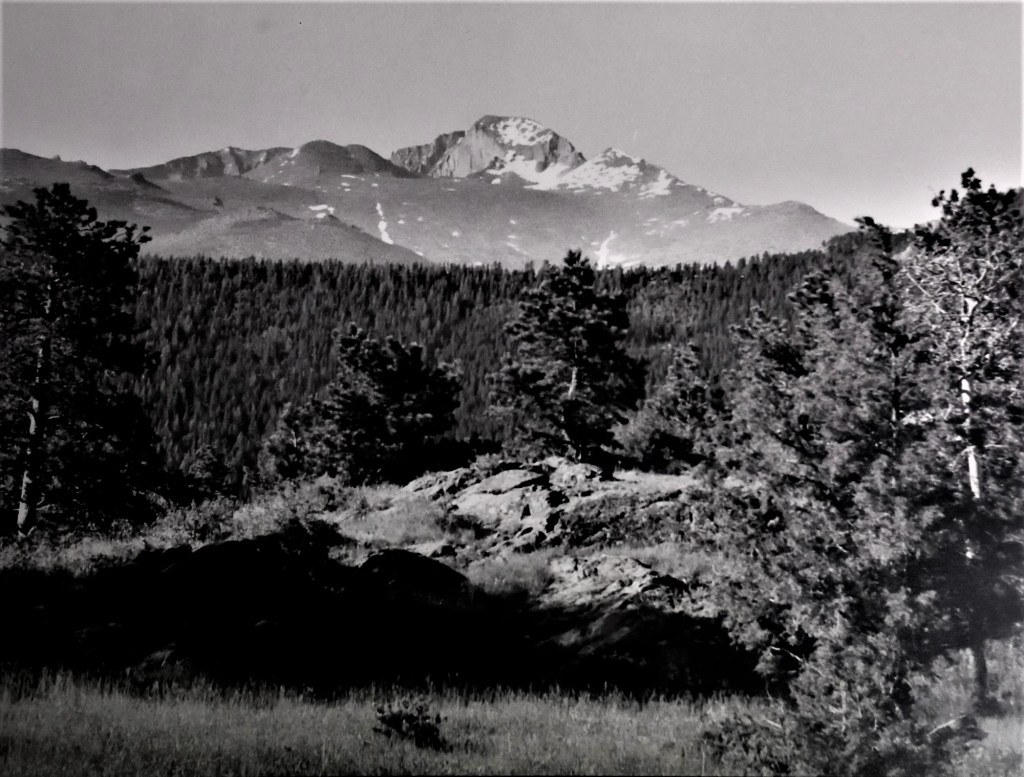
This is a photo I took of Long’s Peak in the early 1970’s. I printed it in the darkroom and kept it near me, a reminder of the mountains. Looking forward to returning.

Long’s Peak, Rocky Mountain National Park, Colorado

When I moved to Indianapolis in 1971, I was just shocked by the clouds of noxious smog. That was before catalytic converters. I could not, and still can not understand how people could continue to drive when they were destroying our environment. Even today with “Code Red” reports on our environment people don’t make the connection to the years of fossil fuel emissions from automobiles. Or at least don’t feel a sense of accountability themselves. Can not conceive of life without a car. It is too late for that. I can not bear to hear the clamor to fix Mother Earth now, when what needed to be done decades ago was completely ignored.

I kept seeing an image of my beloved mountains obscured by smog. I would look at the photo above, and imagine not being able to see that in the future. That was incomprehensible and devastating, and led me to refuse to have a car for the rest of my life.

Although not having a car made many things more difficult there were many positive consequences. Besides turning me into an avid runner, for transportation and enjoyment, perhaps the most significant was related to my photography and the spiritual aspects of that.

I selected places where I lived to be within three miles of the hospital where I worked. Although when I first began running home from work I lived seven miles away. I’d either take a bus, or walk to work so a shower wouldn’t be needed. Then run home. Wearing scrubs at the hospital was great because I didn’t have to bring clothes that were bulky or needed not to be wrinkled. When I moved from one apartment to another, the criteria included being on a bus route and within walking distance of a grocery store and the hospital.

Running in the Indianapolis Mini Marathon which I did 23 years in a row

Walking or running outdoors everyday allowed me to look more closely and see the beauty around me. As I became more aware of my surroundings I began to take my camera with me every day. And not just when going to work. I had to start out earlier than usual to compensate for the time I spent looking for and taking photos. I lose track of time.

At first people would comment on the constant presence of my camera. But it wasn’t long before people would instead ask where my camera was if I did not have it with me.

I admired photographers like Ansel Adams, not only for their amazing images, but how they used their skill to try to make others see the importance of protecting these beautiful lands.

I never thought I’d see the vast destruction of nature from air, water and soil pollution. From oil pipeline construction and spills. Millions of acres laid to waste from mining tar sands. The intentional destruction of vast forests. The death of coral reefs. The removal of entire mountaintops! The severe, ongoing drought of the entire West. Devastating fires and violent storms. Fires in Rocky Mountain National Park. Experience temperatures from heat domes which are reaching the point of being not survivable.

Or witness my long ago nightmare of mountain beauty obscured. Now not by smog, but by the smoke from huge and ferocious wildfires hundreds of miles away.

I never thought my images might be records of the beauty of Mother Earth as it was before all this destruction. Beauty that will never be restored. Beauty of all kinds rapidly disappearing. I’ve written profusely about all these things. But I get the sense that my photos have more of an impact. Speaking for Mother Earth in ways words can not. Thinking perhaps I should just stop writing and capture and share images instead. Before more beauty disappears.


to save a wilderness… one must reach deep into one’s heart and find what is there, then speak it plainly and without shame.

Robert Leonard reid

How could we convince lawmakers to pass laws to protect wilderness? (Barry) Lopez argued that wilderness activists will never achieve the success they seek until they can go before a panel of legislators and testify that a certain river or butterfly or mountain or tree must be saved, not because of its economic importance, not because it has recreational or historical or scientific value, but because it is so beautiful.

I left the room a changed person, one who suddenly knew exactly what he wanted to do and how to do it. I had known that love is a powerful weapon, but until that moment I had not understood how to use it. What I learned on that long-ago evening, and what I have counted on ever since, is that to save a wilderness, or to be a writer or a cab driver or a homemaker—to live one’s life—one must reach deep into one’s heart and find what is there, then speak it plainly and without shame.

Reid, Robert Leonard. Because It Is So Beautiful: Unraveling the Mystique of the American West . Counterpoint. Kindle Edition

Practicing Hope

Most white people in what is called North America were ignorant of the history of forced assimilation. But many are learning about it now, shocked to hear about the Native residential schools from news reports about the remains of hundreds of children on the grounds of those institutions. Are learning about the cultural genocide, the physical, emotional and sexual abuse and deaths that occurred there.

Yesterday I wrote about my struggle with guilt and blame regarding Quakers’ involvement with forced assimilation of Native children. As is often the case, I write to try to understand things better myself. And hope some of that might be useful to others. On this subject I sense many Friends share my feelings of guilt. I recognized I had a problem when I wrote we should not feel guilt about what happened in the past, that we didn’t do ourselves. And yet I felt guilty. I’m working on that.

When you are disciplined in hope, you can face these things because you have learned to put them in context, you have learned to swallow joy and grief together, and wait for peace.

Quinn Norton

I often sign messages “practicing hope” which relates to the following quotation. Hope is a mental discipline that helps you put things in context. While we should not feel guilt about the past, it is very important to face hard truths now. This takes time and attention. Cycles of failure and success. Waiting for peace.

People often mistake hope for a feeling, but it’s not. It’s a mental discipline, an attentional practice that you can learn. Like any such discipline, it’s work that takes time, which you fail at, succeed, improve, fail at again, and build over years inside yourself.

Hope isn’t just looking at the positive things in this world, or expecting the best. That’s a fragile kind of cheerfulness, something that breaks under the weight of a normal human life. To practice hope is to face hard truths, harder truths than you can face without the practice of hope. You can’t navigate dark places without a light, and hope is that light for humanity’s dark places. Hope lets you study environmental destruction, war, genocide, exploitative relations between peoples. It lets you look into the darkest parts of human history, and even the callous entropy of a universe hell bent on heat death no matter what we do. When you are disciplined in hope, you can face these things because you have learned to put them in context, you have learned to swallow joy and grief together, and wait for peace.

IT IS BITTER TEA THAT INVOLVES YOU SO: A SERMON ON HOPE by Quinn Norton, April 30, 2018
Standing Family 1900

Corrosive of the human spirit

I am broken, trying to make sense of Quakers’ involvement with the institutions of forced assimilation, the Native residential schools. In the news now because of the verification of the remains of hundreds, soon to be thousands, of children on the grounds of those institutions in both the US and Canada. Verified because Native peoples have known they were there, because thousands of children never returned home.

I can not imagine the trauma. The children forcibly removed from their families. The community not knowing if the children would ever return. Their future was stolen. Those who did return often no longer fit into the community. I only recently learned this intentional cruelty was meant to break the resistance of those Native peoples that did not want to give up their land.

I’ve read that we aren’t to feel guilt or blame for what happened in the past. But we are called to learn about the wrongs, learn the truth. Then begin to work for reconciliation and healing. Canada went through such a process, involving the government and the entire country, several years ago. Secretary of the Interior, Deb Haaland, has initiated a Federal investigation of forced assimilation in this country.

From our twenty‐first‐century vantage point, we know (or can learn) how Native people suffered and continue to suffer the consequences of actions that Friends committed 150 ago with the best of intentions. Can we hold those good intentions tenderly in one hand, and in the other hold the anguish, fear, loss, alienation, and despair borne by generations of Native Americans?

Native organizations are not asking us to judge our Quaker ancestors. They are asking, “Who are Friends today? Knowing what we know now, will Quakers join us in honest dialogue? Will they acknowledge the harm that was done? Will they seek ways to contribute toward healing processes that are desperately needed in Native communities?” These are my questions, too.

Quaker Indian Boarding Schools. Facing Our History and Ourselves by Paula Palmer, Friends Journal, October 1, 2016

Although I believe we should not feel guilt, I have not yet been able to to get past my own sense of that. My head and my heart are out of synch. For a time I’ve felt I needed to distance myself from my Quaker communities. I struggle to discern if this was a spiritual leading, or just an emotional reaction. I’m still not sure. I know I continue to feel guilt. And projected this same guilt toward Friends in general. I know that is wrong and am working hard, praying to find my out of this.

Unearthing the truth was necessary not only for the victims to heal, but for the perpetrators as well. Guilt, even unacknowledged guilt, has a negative effect on the guilty. One day it will come out in some form or another. We must be radical. We must go to the root, remove that which is festering, cleanse and cauterize, and then a new beginning is possible.

Forgiveness gives us the capacity to make a new start. That is the power, the rationale, of confession and forgiveness. It is to say, “I have fallen but I am not going to remain there. Please forgive me.” And forgiveness is the grace by which you enable the other person to get up, and get up with dignity, to begin anew. Not to forgive leads to bitterness and hatred, which, just like self-hatred and self-contempt, gnaw away at the vitals of one’s being. Whether hatred is projected out or projected in, it is always corrosive of the human spirit.

Truth and Reconciliation BY DESMOND TUTU, Greater Good Magazine, SEPTEMBER 1, 2004

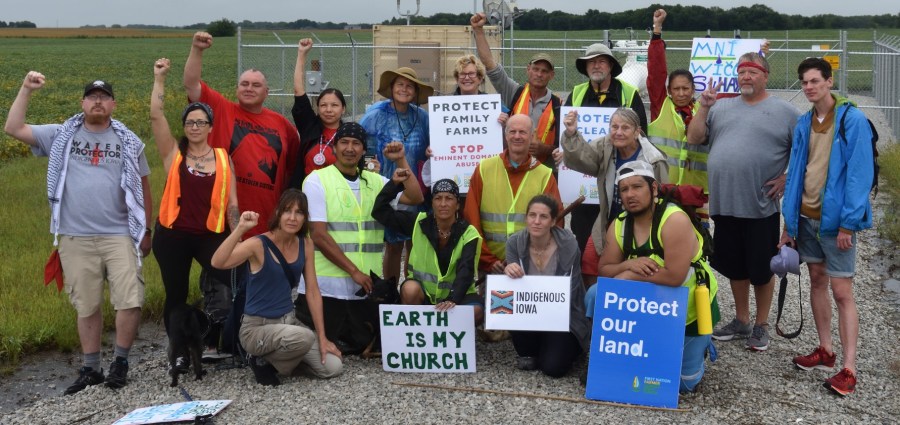
If has been tremendously helpful to have become friends with Native people I began to know as we walked and camped together for 94 miles along the path of the Dakota Access pipeline in 2018. The main intention of that sacred journey was to create a community of native and non-native people who began to know and trust each other so we could work together. That intention was achieved.

And yet, in another way, I have more of a sense of the trauma of assimilation from seeing the terrible effects on my friends.

As Paula Palmer wrote above, “Will they [Quakers] seek ways to contribute toward healing processes that are desperately needed in Native communities?” These are my questions, too.

I need to deal with my guilt before I can contribute to the healing processes.

I am deeply grateful for the acceptance and generosity of my Des Moines Mutual Aid community, which includes Native people. That is helping me move away from this destructive guilt.

I have faith I will be led to a better place.

First Nation-Farmer Climate Unity March September 2018

Becoming the ancestor you want to be

I recently wrote about what kind of ancestor do you want to be? Despite the anxiety of exposing yourself to the world, one good thing about writing on a blog is sometimes someone leaves a useful comment. In response to that blog post, someone mentioned the book What Kind of Ancestor Do You Want to Be? by John Hausdoerffer, Brooke Parry Hecht, Melissa K. Nelson, and Katherine Kassouf Cummings.

The book has made me realize there is much more we can do to become the ancestor we want to be.

I imagine most of us are taught how we live our lives may be seen as an example to others, good or bad. Many believe actions speak louder than words. So I have worked hard to be a good example to others. By how I lived my life more than what I write or say. (which you might question from seeing all that I write).

There have been times when I questioned whether our example had any influence on others. Fifty years ago, as I began to live on my own, I refused to have a car because of the impact on Mother Earth. I waited (and waited, and waited) for others to give up their own cars. We now see how well that worked.

But that illustrates something else about being an example. There are probably many ways others might be affected that we have no way of knowing.

I thought living my beliefs was how I would be the ancestor I wanted to be. This is more eloquently expressed in the following quotes from the book.

What this book has taught me is there is more we can do intentionally to be the kind of ancestor we want to be. We should engage with youth in ways to help them take over from us. Becoming the ancestor we want to be is an active process.

As I aged, I wondered who might continue to work on things I think are important. Subconsciously I was looking for that person. In the fall of 2017 I saw the story of Rezadad Mohammadi’s work with the American Friends Service Committee related to the war on drugs, incarceration and solitary confinement, and work on a mural giving immigrants a voice in their community. I wrote a post about that on my blog. Scattergood graduate’s social justice video project.

Mural1

I thought Reza might be a young person to engage regarding some of the things I had been working on. He had recently graduated from the Quaker boarding school I attended, Scattergood Friends School and Farm in Eastern Iowa. That let me know he learned some about Quaker values.

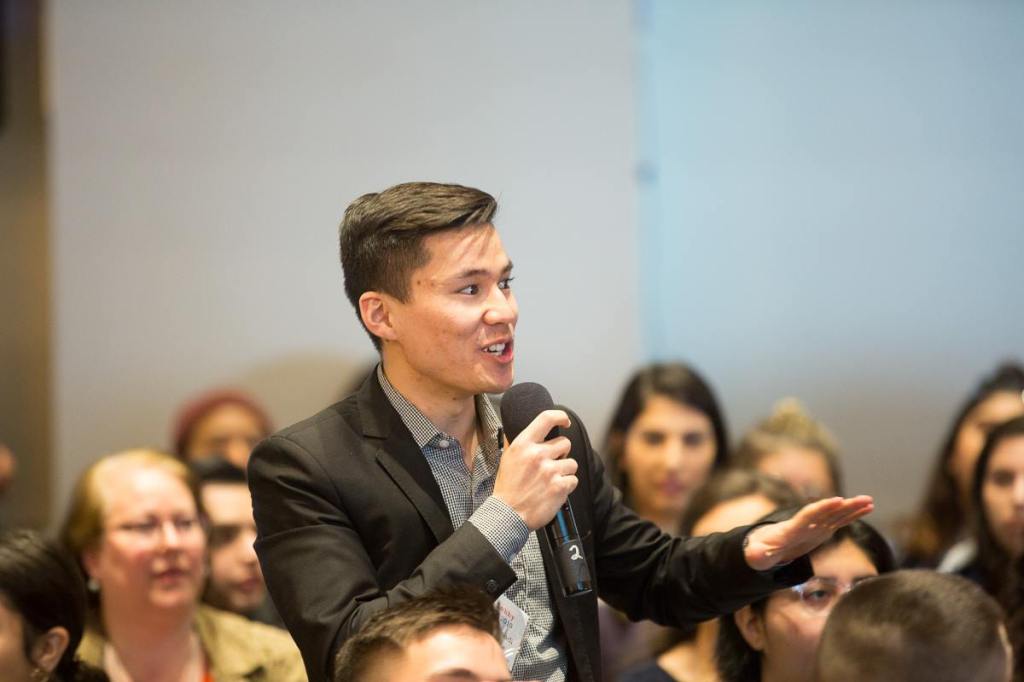
He accepted my Facebook friend request and the rest, as they say, was history. Reza was from Afghanistan. I learned a lot from him about that country, and a little about living in a war torn land.

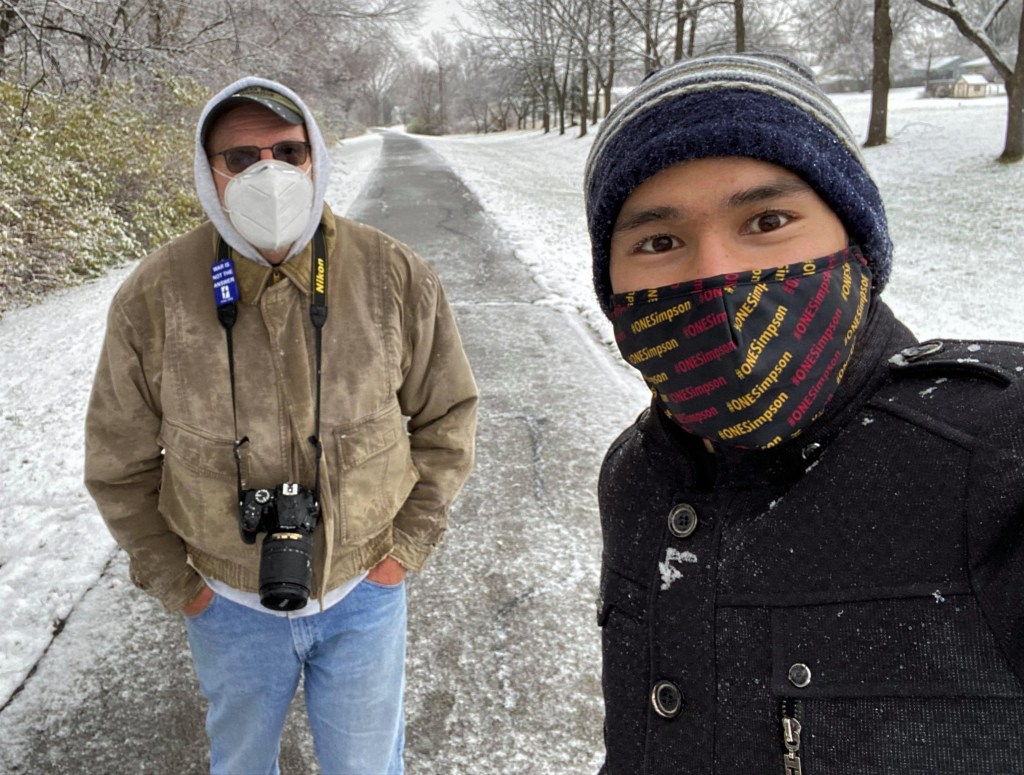
We have become close friends. Fortunately, he came to Indianola, where I live, to attend Simpson College. You can find the many blog posts that mentioned him here: reza | Quakers, social justice and revolution

  • But for some examples, he wrote this article on my blog: Should the United States leave Afghanistan?
  • Reza became involved with the Friends Committee on National Legislation (FCNL). He worked there one summer and attended two Spring Lobby Weekends, where youth lobby congress people with the guidance of FCNL. For the second visit, he organized a group of Simpson College students to attend.
  • Last year Reza and I went to Scattergood to talk about our environmental work. He described his project at Simpson related to plastics and pollution. His group made eating places at the College stop using plastic straws.
  • He went with me for support when I spoke about the First Nation-Farmer Climate Unity March to the International League of Women Voters.
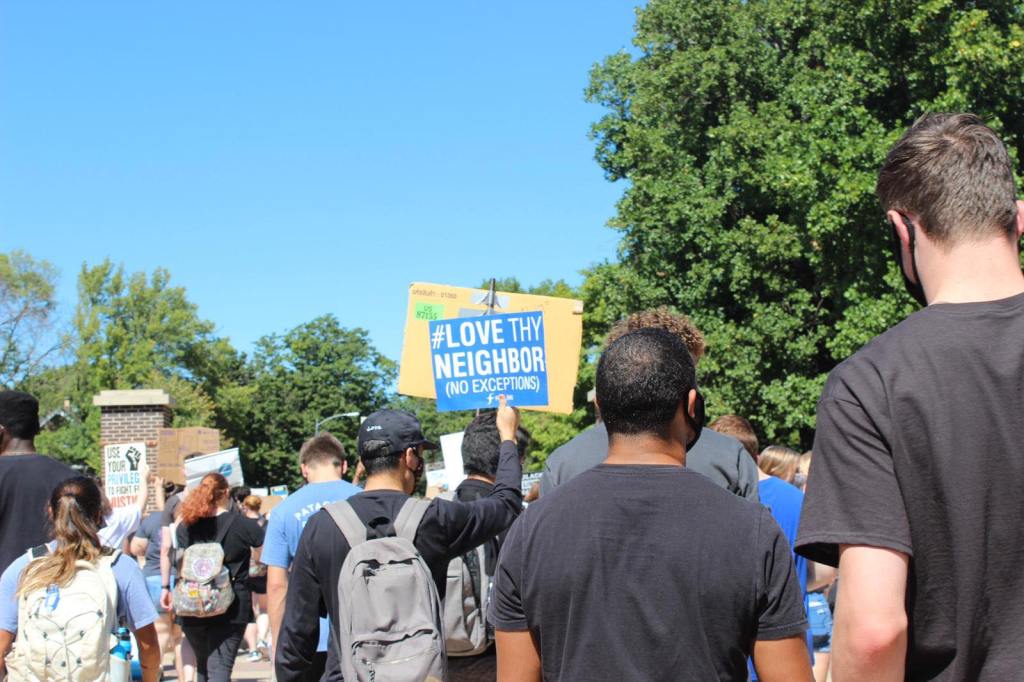
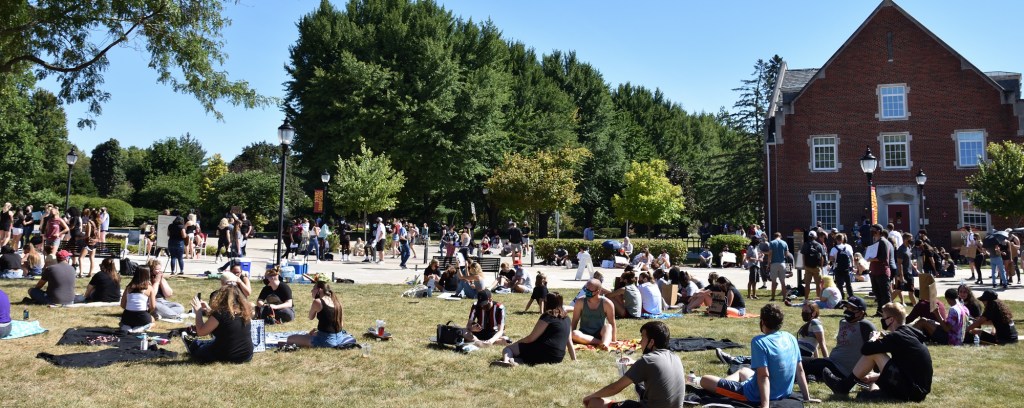
  • Reza was involved in the rallies at Simpson College when a racial incident occurred there.

I am glad to know he will continue to do this work.

Just as we prepare the young to step into adulthood and release childish ways for the health and growth of society , so the practice of becoming an ancestor requires the release of our grip upon what is , the letting go of certain ways of being in the world to embrace the changes required for the stream of life to keep flowing vigorously.

What Kind of Ancestor Do You Want to Be? by John Hausdoerffer, Brooke Parry Hecht, Melissa K. Nelson, and Katherine Kassouf Cummings

Anishinaabe elder Michael Dahl posed the question : What Kind of Ancestor Do You Want to Be ? We view this compelling question as eternally urgent . Eternal because it calls forth ancient wisdom and multigenerational ethics necessary for any human community to survive and thrive . Urgent because the planetary impacts of colonial overconsumption of resources and domination of peoples dramatically threatens the livability of this planet . More than asking us how we want to be remembered , the question of What Kind of Ancestor Do You Want to Be ? suggests that we are , always and already , ancestors — even if we never are remembered or never have children . The question deepens our awareness of the roots and reach of all of our actions and non – actions . In every moment , whether we like it or not and whether we know it or not , we are advancing values and influencing systems that will continue long past our lifetimes . These values and systems shape communities and lives that we will never see . The ways we live create and reinforce the foundation of life for future generations . We are responsible for how we write our values , what storylines we further and set forth — the world we choose to cultivate for the lives that follow ours . So how are we to live ?

What Kind of Ancestor Do You Want to Be? by John Hausdoerffer, Brooke Parry Hecht, Melissa K. Nelson, and Katherine Kassouf Cummings

Just as we prepare the young to step into adulthood and release childish ways for the health and growth of society , so the practice of becoming an ancestor requires the release of our grip upon what is , the letting go of certain ways of being in the world to embrace the changes required for the stream of life to keep flowing vigorously.

What Kind of Ancestor Do You Want to Be? by John Hausdoerffer, Brooke Parry Hecht, Melissa K. Nelson, and Katherine Kassouf Cummings

Being a good ancestor means understanding how to handle power, when to hold it, when to hand it over, and how to transform it.

What Kind of Ancestor Do You Want to Be? by John Hausdoerffer, Brooke Parry Hecht, Melissa K. Nelson, and Katherine Kassouf Cummings

Minute from Canadian Yearly Meeting (CYM) 2016

Truth and Reconciliation 16-08-30

At Yearly Meeting 2015 Friends approved Minute 2015.08.33 calling on individual
Friends to read the Report of the Truth and Reconciliation Commission (TRC) and the Calls to Action. The Minute asks Friends to listen expectantly to the Spirit for guidance on what steps they may be personally led to take. It also asks Monthly Meetings and Worship Groups to engage with the materials shared by the Indigenous Rights committee of Canadian Friends Service Committee (CFSC) and prayerfully consider what actions they may take in working for reconciliation in their communities. We committed to minute our progress for the year at this Yearly Meeting.

Much has happened since our last Yearly Meeting (2015):

• We now have a new federal government that has stated it accepts all of the TRC’s
Calls to Action and that it will implement the United Nations Declaration on the
Rights of Indigenous Peoples. This has changed the dynamic and the tone of public
discourse on Indigenous Peoples’ rights in Canada.

• CYM and CFSC jointly issued a Quaker Response in March 2016 to Call to Action
48, and we submitted this to the TRC. We affirmed in our statement that we have
“endorsed, celebrated and committed to implement the UN Declaration on the
Rights of Indigenous Peoples” as stated in previous minutes (2010.08.50,
2009.08.70). We received a warm reply from Justice Murray Sinclair, Chair of the
TRC, thanking us for our work. He particularly liked that we had committed to an
annual review of our progress.

• CYM and CFSC also collaborated with other faith bodies, some of which were
church parties to the Indian Residential Schools Settlement Agreement and some
of which were not, in issuing a joint ecumenical statement on Call to Action 48.
CFSC’s Indigenous Rights coordinator participated in drafting. This was a
worthwhile process in working to find common ground amongst faith bodies
regarding their role in the reconciliation process.

• CFSC’s Indigenous Rights committee educated Friends on such critical issues as
free, prior, and informed consent; genocide; and intergenerational trauma.

• Meetings and Worship Groups have visited nearby Indigenous communities;
organized discussion groups in partnership with local Indigenous Peoples; are
attending educational events such as workshops and film screenings; are learning
about and honouring Friends’ role as Treaty partners; and are placing the UN
Declaration in poster and booklet form in their Meetinghouses.

• Some individual Friends have been led to stand alongside Indigenous Peoples in
defending their traditional territories, including civil disobedience resulting in
arrest.

During the year, CFSC has explored the work of Reconciliation with many Meetings,
Worship Groups and Half Yearly Meetings. As Friends engage in the work of
reconciliation, we are committed to grounding our actions in our Spiritual practices,
particularly of speaking to that of the Creator in everyone. Let Friends first listen to the concerns of Indigenous Peoples. We know it is not sufficient to be well-intentioned and make assumptions about what is best for Indigenous Peoples without asking what it is they want and need. All actions require the guidance of the Indigenous Peoples involved and need to be done with respect, cooperation and ongoing consultation.


We, as Friends, also need to be open to being challenged in our assumptions about the many destructive facets of colonial legacies and continuing racist practices and policies that constitute Canada’s historical and contemporary realities. We acknowledge that part of our journey is to decolonize our own thinking and sit in the discomfort and pain of confronting where we need to deepen our understanding, bear witness, and transform our behaviour.


While Friends corporately have often been on the forefront of advocating for Indigenous Peoples’ human rights, it is now time to prioritize this work and take it to the next level. Friends recognize that reconciliation requires us to continue to learn, grow, and establish and nurture relationships with Indigenous partners. We are a Society of Friends, and friendship entails a relationship greater than simply understanding our colonial history.

As Friends, we commit to walking the path of friendship, following these instructive
words:

I think about what I want for my children and grandchildren. What I want
for them is to be loved and love other people in this country. Not to tolerate
them, not to go to our respective corners and stop hurting each other, but
to be wrapped up and engaged in each other’s lives.

Douglas White, Kwulasultun (Coast Salish name), Tliishin (Nuu-chah-nulth name), Director of the Centre for Pre-Confederation Treaties and Reconciliation (VIU), former Chief of Snuneymuxw First Nation

For Canada to grow and heal we must be active participants in a paradigm shift, moving from colonialism to a new reality based on respect for Indigenous Peoples’ Human Rights. We are reminded that we have CFSC’s Indigenous Rights committee to assist us and provide resources for this work.

We ask monthly meetings and worship groups:

• To continue to educate themselves, including children and youth, about the
doctrine of discovery, the ongoing effects of colonialism, the UN Declaration, residential schools and their legacy (including the TRC Report), the history of
the land on which they live, and reconciliation efforts.
• To formally acknowledge the traditional territories where their Meetings are
located and engage in processes of reflection on the meaning of this.
Acknowledgments can be accomplished through signage, statements during the
close of Meeting, and inclusion in information provided to any community
groups who use Meeting House space.
• To find out about current concerns of Indigenous Peoples from those
territories, including land appropriation or resource development, with which the
Meeting could be engaged.
• To investigate projects of cultural revitalization that Indigenous Peoples are
involved in and discern if there is an appropriate role (including funding) that
Friends can play.
• To uphold and support individual Friends involved with grassroots
Indigenous rights work and provide spiritual support to Friends led to this
work. This might include offering committees of care and approving minutes of
support.
• To report back annually through the Indigenous Rights committee of CFSC on
actions taken. We ask CFSC to collate such information in their CYM report.

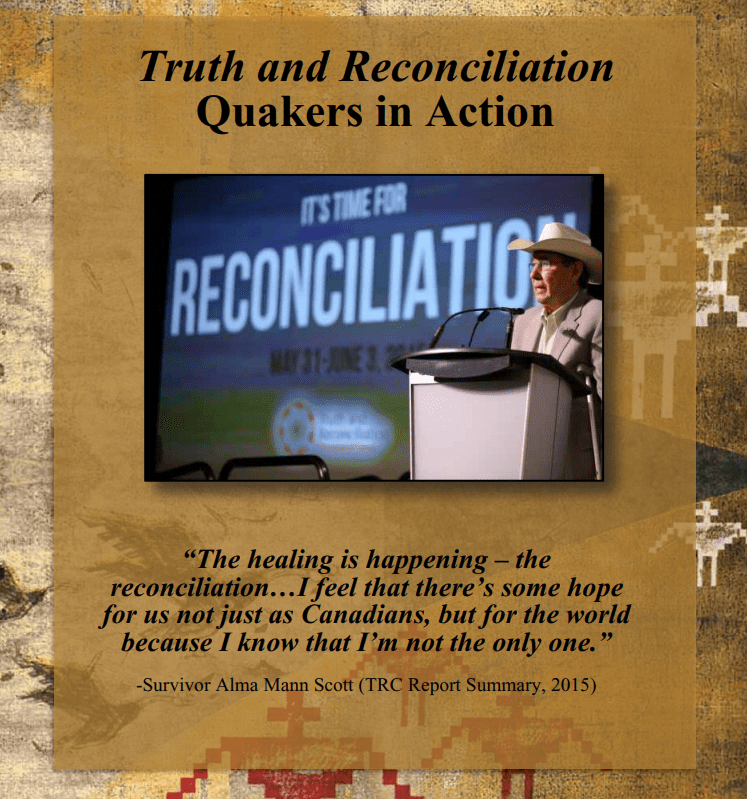
Minute from Canadian Yearly Meeting (CYM) 2016. Truth and Reconciliation 16-08-30 Truth and Reconciliation, Quakers in Action

https://quakerservice.ca/wp-content/uploads/2019/02/TRC-Resource-Book.pdf

We’re Losing the Battle for the Future continued

Yesterday I wrote about umair haque’s article We’re Losing the Battle for the Future because I believe he accurately lays out where we are at this moment. And, more importantly, has some suggestions about what we can do. As does the excerpt below from the report of the Peace and Social Concerns Committee of Iowa Yearly Meeting (Conservative).

It’s true that the past was backwards. Our civilisation’s was. Slavery, empire, Inquisition. But there is a healthy respect, too, for a deeper past. The way that indigenous peoples have far more sophisticated ethical notions than ours, ones of interdependence with nature. Or the way that their societies were often far more consensual and nonviolent than ours, too.

We need to go back, probably, to go forward. The future isn’t a thing we can make with machines. Our mistake, our undoing. The future needs to carry forward what’s good in the past, what’s true, what’s beautiful, and keep on doing it. We didn’t do that. We gave up the old ways — the really old ones. The ones which would have said that taking a life, even a little one, without thanking it, without grieving for it, brings shame. Or the ones which would have been repelled and sickened in their souls by the idea of ripping down a forest or polluting an ocean.

Our ancestors are ashamed of us, my friends. We are the people who disgraced the past, to create a myth called “the future.” That myth failed because there was no soul in it, no depth, no humanity. It was a vision of power, control, slavery, and violence, if we strip the gloss away. Machines — or subhumans — doing the work we didn’t want to do, so we could gorge ourselves into oblivion, instead of grappling with the big, beautiful, dangerous questions of being alive, existing, feeling, being connected, here, now on a tiny ball of dust, spinning through the darkness. The meaning and purpose and truth and beauty of it all. What kind of creepy way of life is that? Is that even living much at all?

We’re Losing the Battle for the Future | by umair haque | Jul, 2021 | Eudaimonia and Co (eand.co)

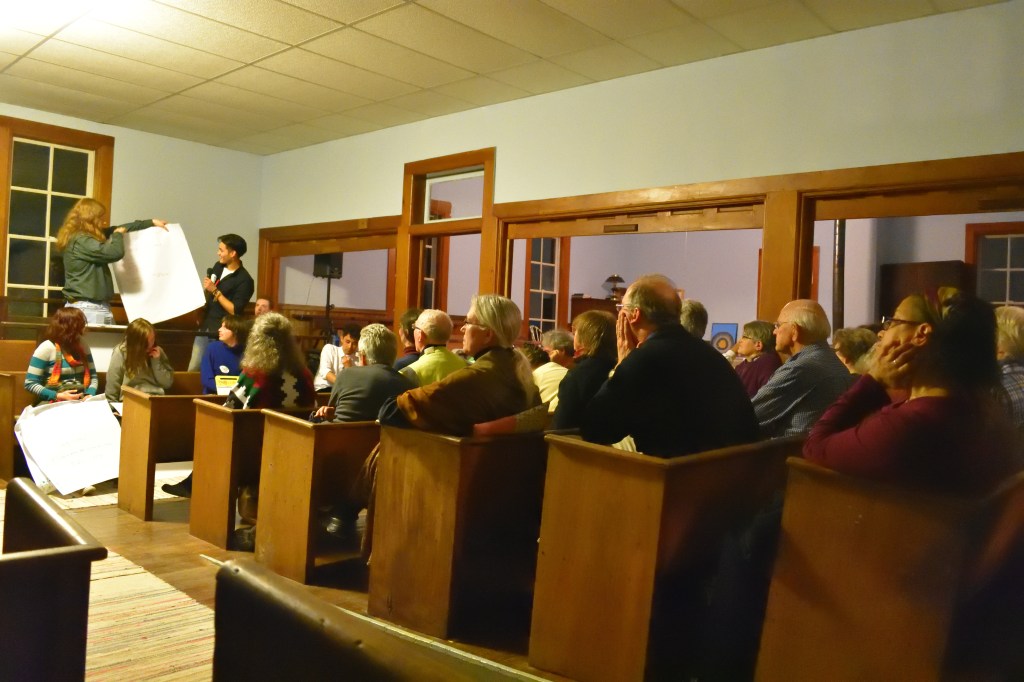
These injustices are some of the effects of systems of white supremacy. The concept of Mutual Aid is becoming an increasingly used model for communities working for justice. The idea is to have a horizontal hierarchy, where everyone has a voice. And work to ensure a vertical hierarchy does not develop. Without a vertical hierarchy, there can, by definition, be no superiority. Several of our meetings are supporting existing Mutual Aid communities or considering creating their own. These are opportunities to begin to disengage from the colonial capitalist system and white supremacy. Ways we can model justice in our own meetings and communities.

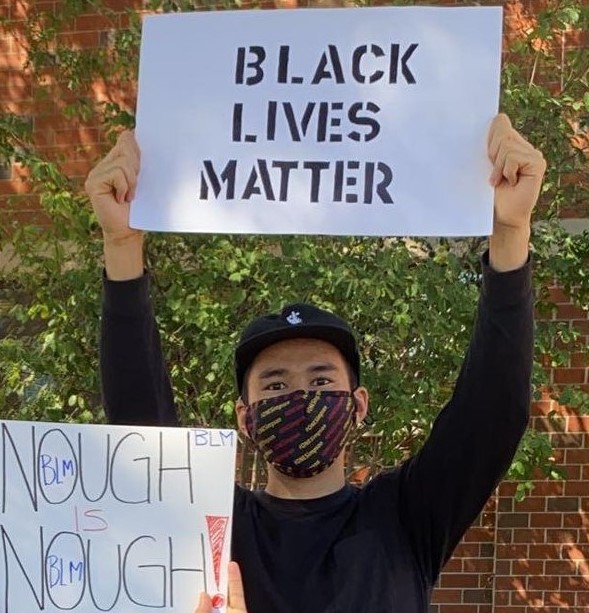
We can show up for Black Lives Matter and other racial justice events. We can support those who meet with local, state, and Federal government officials. We can show up in the streets to support agitation for change, train in nonviolent civil disobedience, or accompany arrested activists through the justice system.

We can show up, when appropriate, at events of Native peoples, such as the Prairie Awakening ceremony. We can share Indigenous news on social media platforms, so others are aware of these things.

Indigenous leaders in the Midwest have asked us to learn about and find ways to engage in the concepts of Land Back. The website LANDBack Friends has been created and will be updated as our work continues.  https://landbackfriends.com/

Peace and Social Concerns, Iowa Yearly Meeting (Conservative) 2021

We’re Losing the Battle for the Future

Yesterday I shared the Story of umair haque and Eudaimonia. His recent article elucidates many of the concerns related to environmental disaster and climate refugees I’ve been writing about for a long time (so he must to be right ! )

The following is from the Peace and Social Concerns Committee of Iowa Yearly Meeting (Conservative) that was approved yesterday.

Global chaos from rapidly accelerating environmental devastation is highly likely to occur, breaking down our economic, social, and political systems. As air and water temperatures increase, water supplies are drying up. Widening areas and severity of drought are decreasing crop production and forcing people to flee. Rising oceans are creating more climate refugees. The trend of increasing numbers of more ferocious wildfires, hurricanes and other storms are expected to accelerate. All kinds of infrastructure will likely be destroyed, creating more climate refugees, many migrating to the Midwest. How can we prepare our own communities for these disasters, and plan for the arrival of climate refugees?

Peace and Social Concerns, Iowa Yearly Meeting (Conservative) 2021

So if the future isn’t “the future” — if the myth of constant growth, progress, and expansion, driven by miraculous labour-saving technology — anymore, then, well, what’s in store for us? The answer to that’s pretty simple. Regress is.

What does a world crossing the threshold of runaway global warming have in store for it? You might imagine that people will unite in some kind of grand, noble revolution to save the planet, but unfortunately, that’s not going to happen. Instead, the opposite is.

People will flee from Fire and Flood and Plague Belts. As they do, entire economies will begin to collapse, and societies implode. Think about a Napa Valley that can’t make wine. Factories that can’t produce things, homes which can’t be insured, basic infrastructure systems — transport, food, water, energy — which no longer work. Bang. Game over. Entire regions and cities just wink out. As they do, economies grow depressed, while prices skyrocket. If you have a sense that that’s beginning to happen already, you’re precisely correct.

As huge waves of “human capital flight” — read mass migration — ensue, the political result will be, sadly, that today’s nationalism becomes tomorrow’s fascism. Look at how fast Britain — once the envy of the world, gentle, kind, friendly, expansive — fell into a catastrophic nationalism that utterly wrecked its future. Depressed economies need scapegoats. Demagogues arise to point the finger at anyone remotely foreign, different, other. The future looks ultra-fascist, at least to those who’ve studied history.

Do you think any nation will be happy to welcome, say, a million climate refugees? When it’s own systems are already buckling, because the planet’s boiling? When it’s own regions are flooding or burning or both? Of course not. It’ll be fodder for demagogues, who’ll blame the migrants for the woes of the pure and true.

Meanwhile, living on a burning planet is going to continue basically driving much of the human race verifiably insane. Take a look at how fast and hard bizarre delusions spread. It’s not just Facebook — that’s just the mechanism. It’s that life is incredibly stressful, to the point that many of us can’t cope. We need the delusions, just to make through another day. Much easier to hate someone slightly different from you than work together to solve real problems. Much easier to descend into superstition and fanaticism and fundamentalism than think through the plight we’re in these days.

Faith in the future is one of the linchpins which held our civilisation together. The myths of technological progress, economic growth, and living standards rising in tandem forever — eternally — are what sold the thing known as “the global economy” to the world. Only now they appear to have been proven badly wrong. The people dismissed as “pessimists” and “alarmists” in the 70s and 80s and 90s — ecologists, climate scientists, economists — appear to have been exactly right.

We’re Losing the Battle for the Future | by umair haque | Jul, 2021 | Eudaimonia and Co (eand.co)