Teachable moment

Yesterday I wrote why decolonization and Indigenous liberation is the only way to mitigate the damages done from unrestrained fossil fuel extraction and burning. From a lifetime’s experience I know just saying something like that doesn’t register for most people. Stories or events that impact a person’s life directly are what we learn from.

I should not have been surprised by the following story in the Des Moines Register, Company wants to build a carbon sequestration pipeline in 30 Iowa counties, but I was. It was predictable that unrealistic ideas would be put forth as the reality of deepening environmental chaos can no longer be ignored. As just today we are seeing the devastation of the aftermath of Hurricane Ida.

I hope the news about this pipeline might provide a teachable moment to illustrate why we need Indigenous leadership now. There are all kinds of reasons why a carbon capture pipeline should not be built. There is a matter of scale, ie what percentage of all the carbon emitted would be captured? How much energy is consumed by the capture process and to move the liquid through the pipeline? Can the liquid be safely stored for hundreds of years? How much more fertile farm ground will be destroyed by the pipeline construction? How much water is used? How many more relatives will be missing or murdered? How much profit will be generated, and for who?

I think this provides a clear example of why Indigenous liberation is the only hope for Mother Earth. Carbon capture pipelines are typical projects funded by banks, fossil fuel companies and white legislators and businessmen. Even though it is clear that continuing fossil fuel driven capitalism will only lead to increasingly dire environmental chaos. An existential threat. Our only hope is to stop spewing tons of fossil fuel emissions into the air.

Indigenous communities would not be interested in carbon capture.

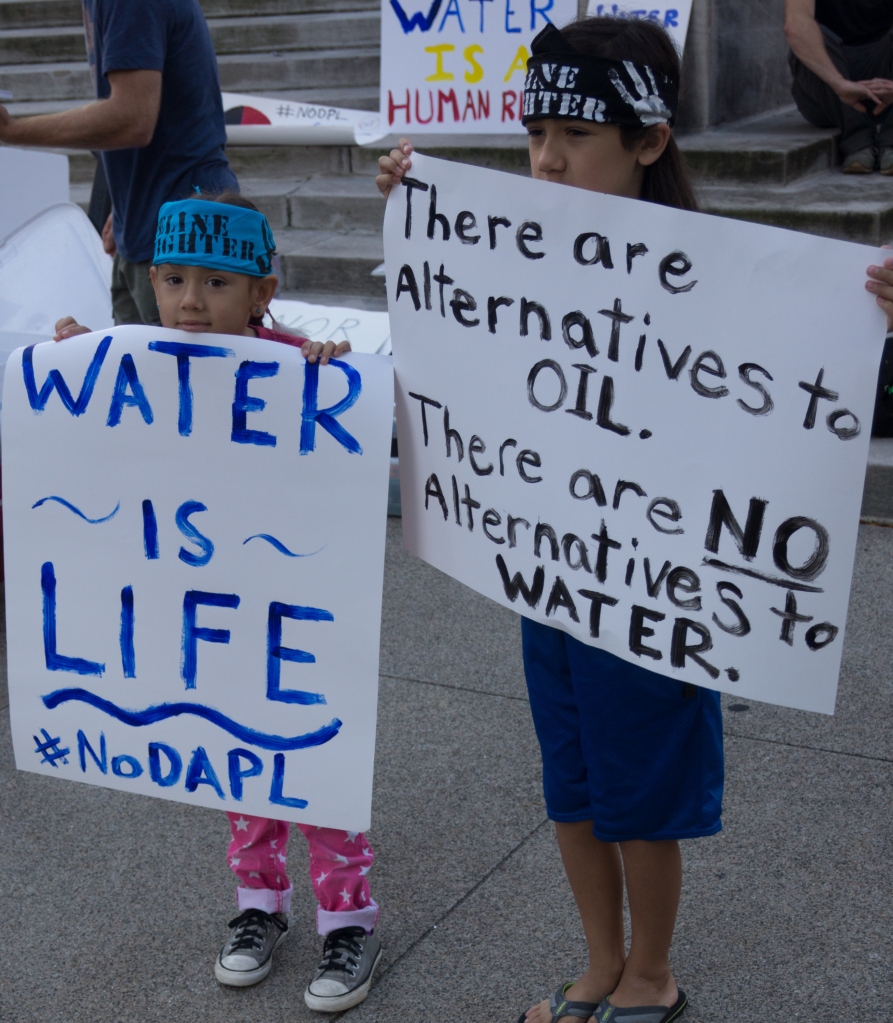
In my short time at the camp (Red Lake Treaty Camp), I watched people make incredible personal sacrifices for this fight. The water protectors risking and experiencing arrests, many in their late teens and 20s, are not criminals — they’re not rebels without a cause.

They’re scared and fighting for their rights and their future: for clean water, and for the lives of their ancestors. It’s 2021, and we’re holding everyone accountable: from the banks financing tarsands expansion projects, to the insurers underwriting them, we’ll continue to hold pressure for change.

Line 3 is cultural genocide at the hands of Enbridge, police and big banks By Evelyn Austin, National Observer, August 30th 2021

Summit Carbon Solutions, the Alden company owned by Bruce Rastetter’s Summit Agricultural Group, proposes building a 710-mile underground pipeline that would extend into or through 30 of the state’s 99 counties.

Summit plans to capture the carbon dioxide emissions from ethanol and other industrial agricultural plants before they’re released into the atmosphere and contribute to global warming. The company will compress the emissions into a liquid so it can be transported to North Dakota, where it will be injected in underground rock formations for permanent storage.

Company wants to build a carbon sequestration pipeline in 30 Iowa counties. Find out where by Donnelle Eller, Des Moines Register, Aug 26, 2021

The map below shows the approximate planned route for a proposed carbon capture pipeline in Iowa. The pipeline would enter Iowa in the west from Lyon and Woodbury counties and extend east to Chickasaw County. It would have extensions north through Dickinson County, and south to Fremont, Greene and Story counties.
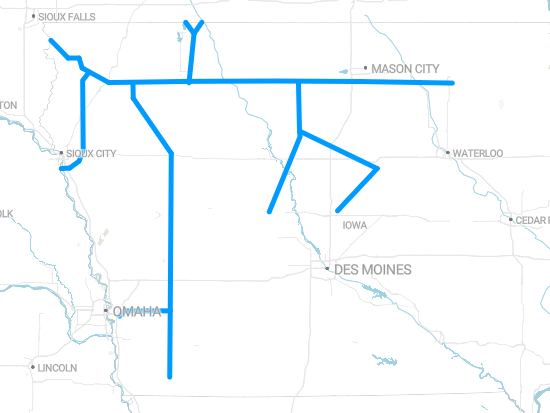
Source: Summit Carbon Solutions  Created with Datawrapper

Recognition that there is no way out of this crisis without far-reaching, social upheaval animates the proposals put forward in The Red Deal: Indigenous Action to Save Our EarthThe short book was authored by activists from The Red Nation, a coalition devoted to Indigenous liberation and made up of Native and non-native revolutionaries based mainly in North America.

The authors make clear that they believe the campaign to halt climate change and repair ecological destruction is bound up with the fate of the world’s Indigenous peoples. They say bluntly that “there is no hope for restoring the planet’s fragile and dying ecosystems without Indigenous liberation” and that “it’s decolonization or extinction.”

No Hope for Earth without Indigenous Liberation by Simon Butler, originally published by Climate and Capitalism
August 27, 2021

#LANDBACK

It’s decolonization or extinction. And that starts with land back.

I’ve often written about my inability to convince people why we need to reject the systems of capitalism and endless economic growth. Emblematic of that is nearly fifty years I’ve lived without a car, hoping others might give up theirs, too. I’ve prayed and written so much about protecting Mother Earth for years, with little or no success. Either I was going about this wrong, or no one was listening, or both.

For the past year I’ve been blessed to become part of a local Mutual Aid community. And learning much about the concepts of LANDBACK. I’ve been putting what I’ve been learning on my website, LANDBack Friends, because my native friends tell me teaching white people about those concepts is one of the best ways for white allies to help them. https://landbackfriends.com/

The following statement applies to the land called the United States, as well as Canada.

Canada maintains the same antiquated, paternalistic attitude towards our peoples that sanctioned residential schools and the pass system—they act as if they know what’s best for us. Our rights, our knowledge and values are not included or taken seriously and we are a mere afterthought when our lands are on fire, our communities are evacuating, and as we watch our futures going up in smoke.

Indigenous rights are a counterforce to the climate crisis. Colonialism caused climate change. Indigenous rights are a solution by Eriel Deranger, The Breach, July 30, 2021

As heat and severe weather records are broken again and again, it should be clear by now that there is no limit for capital. There will be no scientific warning or dire catastrophe that leads to a political breakthrough. No huge wildfire, terrible drought or great flood will make governments and corporations change course. To carry on as they are means extinction. And yet they still carry on: more fossil fuels and fewer trees, more pollution and fewer species.

Recognition that there is no way out of this crisis without far-reaching, social upheaval animates the proposals put forward in The Red Deal: Indigenous Action to Save Our EarthThe short book was authored by activists from The Red Nation, a coalition devoted to Indigenous liberation and made up of Native and non-native revolutionaries based mainly in North America.

The authors make clear that they believe the campaign to halt climate change and repair ecological destruction is bound up with the fate of the world’s Indigenous peoples. They say bluntly that “there is no hope for restoring the planet’s fragile and dying ecosystems without Indigenous liberation” and that “it’s decolonization or extinction.”

No Hope for Earth without Indigenous Liberation by Simon Butler, originally published by Climate and Capitalism
August 27, 2021

there is no hope for restoring the planet’s fragile and dying ecosystems without Indigenous liberation

The Red Nation

For us, it’s a larger social problem of underdevelopment. Colonialism has deprived Indigenous people, and all people who are affected by it, of the means to develop according to our needs, principles, and values. It begins with the land. We have been made “Indians” only because we have the most precious commodity to the settler states: land. Vigilante, cop, and soldier often stand between us, our connections to the land, and justice. “Land back” strikes fear in the heart of the settler. But as we show here, it’s the soundest environmental policy for a planet teetering on the brink of total ecological collapse. The path forward is simple: it’s decolonization or extinction. And that starts with land back.

Each movement rises against colonial and corporate extractive projects. But what’s often downplayed is the revolutionary potency of what Indigenous resistance stands for: caretaking and creating just relations between human and other-than-human worlds on a planet thoroughly devastated by capitalism. The image of the water protector and the slogan “Water is Life!” are catalysts of this generation’s climate justice movement. Both are political positions grounded in decolonization—a project that isn’t exclusively about the Indigenous. Anyone who walked through the gates of prayer camps at Standing Rock, regardless of whether they were Indigenous or not, became a water protector. Each carried the embers of that revolutionary potential back to their home communities. Water protectors were on the frontlines of distributing mutual aid to communities in need throughout the pandemic. Water protectors were in the streets of Seattle, Portland, Minneapolis, Albuquerque, and many other cities in the summer of 2020 as police stations burned and monuments to genocide collapsed. The state responds to water protectors—those who care for and defend life—with an endless barrage of batons, felonies, shackles, and chemical weapons. If they weren’t before, our eyes are now open: the police and the military, driven by settler and imperialist rage, are holding back the climate justice movement.

The Red Deal: Indigenous Action to Save Our Earth by The Red Nation

But what’s often downplayed is the revolutionary potency of what Indigenous resistance stands for: caretaking and creating just relations between human and other-than-human worlds on a planet thoroughly devastated by capitalism

The Red Nation

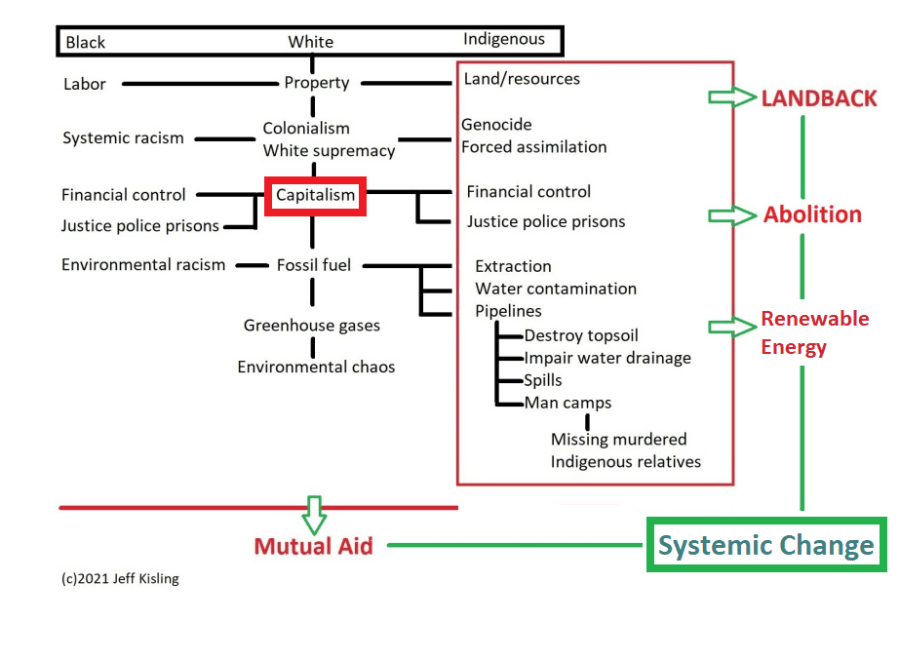
I’ve been working on this diagram for over a year. It’s changed a great deal from the original. I’ve been learning about the concepts of Mutual Aid and LandBack by spending each Saturday morning putting together boxes of food for those in need. It takes awhile to adapt to working with a flat hierarchy of interactions. Nearly every structure we use in the capitalist system is based upon vertical hierarchies. Someone above telling us what to do.

As I’ve learned more about these concepts, it becomes increasingly clear capitalism is a root cause of our environmental chaos. And Mutual Aid and Indigenous leadership are ways to mitigate the increasing damages that are undoubtedly coming.

It’s decolonization or extinction. And that starts with land back.

May these steps be steps of prayer

Recent posts have been about “Treaties not Tar Sands” and the Treaty People Walk for Water. Walkers arrived at the Minnesota Capitol grounds Wednesday, ending a 256 mile walk from the Mississippi headwaters, an effort to draw attention to the state-approved Enbridge Line 3 pipeline.

Camp Migizi leader and Fon Du Lac Band member Taysha Martineau and Standing Rock Elder Sonny Wonase address 2,000 pipeline opponents gathered for the “Treaties not Tar Sands” rally at the Minnesota State Capitol on Aug. 25th, 2021.

It is time that all the people of the earth come together and every step that you walk on this earth, may these steps be steps of prayer. Steps of prayer put feet on the ground, put prayer with every step you take. The fight isn’t over yet.

Sonny Wonase

Police presence was as strong as ever, including a fence meant to wall state officials off from our prayerful ceremony and pleas for justice. As you can probably guess, that didn’t deter water protectors. At the end of the rally, my fellow organizers read a statement of demands criticizing Governor Tim Walz’s support of the pipeline and militarized response. We also continued to call on President Joe Biden to intervene.

Until we’re heard and acknowledged, we will not be silent. We will not stop taking direct action to end this invasion of our sacred lands and protect our water and manoomin (wild rice). We are carrying forward the tradition of Indigenous activism begun by the American Indian Movement in the 1960s and renewed at Standing Rock five years ago. I express my gratitude to Standing Rock for standing with us now — and to you for holding space with us and Mother Earth. If we come together across our traditional boundaries, if we act with a unified voice and spirit, we can win this fight.

Taysha Martineau

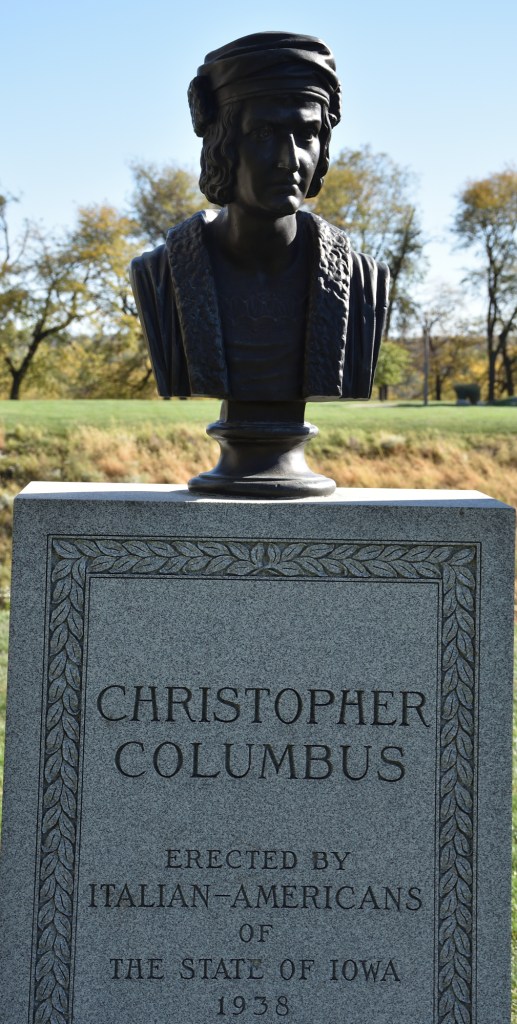
Yesterday’s post was about the heavy police presence at the Capitol. According to Native News Online, “in anticipation of the demonstration, Minnesota State troopers barricaded all roadways into the Capitol grounds. Fearing damage to monuments near the capitol, as when a Christopher Columbus statue was taken down by protesters last summer, all statues were fenced in and guarded by law enforcement.”

In the evening, demonstrators announced they will occupy the Minnesota Capitol grounds overnight and began pitching tents on the lawn. However, Minnesota State Troopers ordered demonstrators to remove the tents and allowed people to occupy the permitted tipis on the lawn.

‘Treaties Not Tar Sands’ Rally Convenes at Minnesota State Capitol, by Darren Thompson, Native News Online, August 26, 2021
https://youtu.be/YIkTBCvpToM

This is a powerful livestream video of the Water Walkers, in silence, arriving at the Minnesota State Capitol Wednesday.

I can’t help but reflect on how different this peaceful, prayerful walk compares to the insurrection at the U.S. Capitol on January 6, 2021.

#StopLine3
#HonorTheTreaties
#WaterIsLife

State of Intimidation

Yesterday’s article was about ‘Treaties Not Tar Sands’ which summarized the Treaty People Walk for Water. Walkers arrived at the Minnesota Capitol grounds yesterday, ending a 200+ mile walk from the Mississippi headwaters, an effort to draw attention to the state-approved Enbridge Line 3 pipeline. Isn’t it ironic that Enbridge says Line 3 is needed to replace the old pipeline because it isn’t safe any longer?

It is disheartening but unsurprising to hear about the large police response to the peaceful gathering of water protectors. Despite their unconstitutionality, many laws have been passed to criminalize protest. Felony penalties for damage to ‘critical infrastructure’ such as pipelines.

In Iowa last year several activists were banned from the grounds of the Iowa State Capitol because of their participation in rallies against police violence, ironically. That ban was later declared illegal.

Renee Keezer speaks to the crowd at Wednesday’s ‘Treaties Not Tar Sands’ rally.

What’s wrong with this picture? It implies a significant and violent threat where there was none.

The ‘Treaties Not Tar Sands’ rally at the Capitol Wednesday drew 1,000 to 2,000 people. It was a beautiful and powerful event. I will write more about it in the coming days. It deserves more attention.

Tonight, I’m focusing on law enforcement’s massive and intimidating response — and how rally-goers responded.

At one point I counted 33 officers on or near the front steps of the Capitol. And there were many others spread out around the Capitol complex.

The question is: Why is it when large numbers of black and brown people show up for some event, law enforcement feels compelled to use a show of force?

Given all the racial tensions around policing, law enforcement had to know this approach was bad optics. It did it anyway. That means law enforcement either had little concern about making people feel unwelcome, scared, and/or angry, or in fact that was the intention.

Arriving at the Capitol on Tuesday, I was surprised to see two law enforcement officers guarding the Capitol’s west wing. It was barricaded and fenced. No one was anywhere near this entrance. Yet there they were.

Later Tuesday, law enforcement brought in more concrete barricades. I’m curious what those barricades accomplished, as they are easy to hop over. Was law enforcement worried people would try to drive their cars or pick-up trucks up the stairs? The streets already were blocked.

That concrete represents a lot of fear.

Water protectors are used to dealing with police who view them as criminals. Law enforcement was present at Enbridge construction sites up north because Enbridge was paying them to be there as private security.

This ubiquitous police presence is a form of violence. It intimidates. It undermines people’s sense of safety and belonging. It sends the message that law enforcement thinks you’re dangerous.

State of Intimidation: Minnesota law enforcement’s in-your-face approach to ‘Treaties Not Tar Sands’ rally, Healing Minnesota Stories, August 26, 2021

#TreatiesNotTarSands

Treaties Not Tar Sands

Protecting water from fossil fuel pipeline projects is an example of #LANDBACK. There is the devastation of the earth and water during extraction of fossil fuels, pipeline construction, and when the pipelines leak. The tons of carbon dioxide that will be added to our atmosphere when that fuel is burned. The acidification of the oceans as the water attempts to absorb some of the carbon dioxide from the air.

There is growing recognition among white people that Native peoples should lead efforts to protect Mother Earth. Indigenous peoples world wide have lived in sustainable ways for centuries. And Indigenous peoples have treaty rights to preserve many of their connections to the lands, including access for fishing and growing rice. Treaties that have all been broken, but remain in effect.

Now, helping to lead opposition to the Line 3 pipeline extension in Minnesota, (Tara) Houska says she’s become a firm believer in a “holistic approach to land protection.”

“I’ve also become more firm in my position that as the holders of the last remaining biodiversity on planet Earth, the need to center and uphold tribal sovereignty and indigenous rights, specifically indigenous land rights, is absolutely critical towards any sort of solution there could be involving climate,” she told The Hill in a phone interview from the frontlines of the protests.

Battles over pipelines, she said, are representative of larger tribal environmental struggles, but are a particularly salient issue because of “the immediate localized harms of both spills and degradation to ecosystems through the construction, and harms to the people in the communities by way of manned camps and the influx of out-of-state workers into an area.”

‘The land is us’ — Tribal activist turns from Keystone XL to Line 3 by Zack Budryk, The Hill, 8/1/2021
Water Walkers Headed to Minnesota Capitol
Water Walkers headed for the Capitol: Why They Walk

From Monday, August 23 through Thursday, August 26, water protectors will hold space at the Minnesota State Capitol — with a great big gathering (all welcome!) on Wednesday the 25th to welcome the Treaty People Walk for Water as they reach the end of their 256 mile journey.

Enbridge is racing to complete Line 3, and aims to finish construction and have oil flowing by the end of the year. Our governor and state agencies have failed us — and we need President Biden to step up and ensure that treaties are upheld. Starting on Monday the 23rd, Indigenous grandmothers from White Earth plan to hold ceremony space on the Capitol lawn, along with a powerful visual display of resistance by artist Rory Wakemup. Everyone is welcome to come by between the 10am opening to 5pm closing of the ceremony space each day. Join for lunch and stay for morning and afternoon talking circles to deepen knowledge and build community.

ON AUGUST 25, ALL ARE INVITED TO GATHER for a huge day of ceremony, solidarity, and action to stop Line 3! Since August 7, water protectors have been traveling on foot 256 miles from Line 3’s upstream Mississippi River crossing to St. Paul. They will arrive on the 25th and we need to be there to welcome them! Along with elected officials and community leaders, we will call for action and make ourselves heard. Some may choose to hold space for as long as it takes — if this is you, come with what you need to stay, such as a tent.

SCHEDULE:- Aug 23-26: ceremony, talking circles; opening 10am and closing 5pm daily. Come learn, share, build community.
– August 25 at 12pm: Folks are welcome to join the walkers outside the Martin Luther King Rec Center between noon and 1:00pm on Aug 25th (where they will be having lunch), then to walk with them for the last 1.5 miles to the capitol (arriving around 2)
– Aug 25 at 2pm: big welcome gathering for walkers w/ rally & speakers & food! Some people may choose to hold space past 5pm in the evening and into the 26th.Our state leaders have had years to take action but have sat back — and worse, Gov. Walz has directed state agencies to expedite construction. Principles of free, prior, and informed consent with the Anishinaabe have not been upheld. Given their unwillingness to stop the pipeline, we need President Biden to step in and direct the Army Corps to cancel this pipeline’s permits. This pipeline directly violates treaties, preventing Anishinaabe communities from exercising their guaranteed rights to hunt, fish and engage in cultural practices. It’s also a climate disaster and a carbon bomb, threatening to release as much greenhouse gas emissions as 50 coal plants at a time when the newest IPCC report shows we don’t have time to spare. Multiple pending legal cases against the project deserve to be heard. It’s time to act.

We will have more details to come, and encourage you to keep checking back for information! The time is now to #StopLine3.RSVP on our website – treatiesnottarsands.com

Minnesota is the Land of 10,000 contradictions around racial equity.

Gov. Tim Walz issued an executive order in 2019 committing the state to meaningful consultation with Native Nations. He followed that up by allowing Enbridge to build its Line 3 tar sands pipeline over strong tribal opposition with little or no consultation.

The Minnesota Pollution Control Agency (MPCA) has touted its racial justice framework. When the agency approved permits for Enbridge Line 3, a majority of its Environmental Justice Working Group resigned, writing: “… we cannot continue to legitimize and provide cover for the MPCA’s war on black and brown people.”

Native grandmothers, water protectors, and their allies are not letting up. They have set up camp on the Capitol lawn as a sign both of their ongoing resistance to Line 3 and their long-standing commitment to uphold treaty rights.

The state has responded with fear: erecting fencing around the Capitol and sending a heavy police presence.

The ‘Treaties Not Tar Sands’ encampment will remain until Thursday. Organizers are planning a ceremony for 10 a.m. Tuesday, with talking circles in the afternoon.

The major event is Wednesday at 2 p.m. when walkers arrive on the Capitol grounds, ending a 200+ mile walk from the Mississippi headwaters to the Capitol, an effort to draw attention to the travesty that is the state-approved Enbridge Line 3 pipeline.

Four-day ‘Treaties Not Tar Sands’ Encampment opens on the State Capitol Mall, Healing Minnesota Stories, August 24, 2021

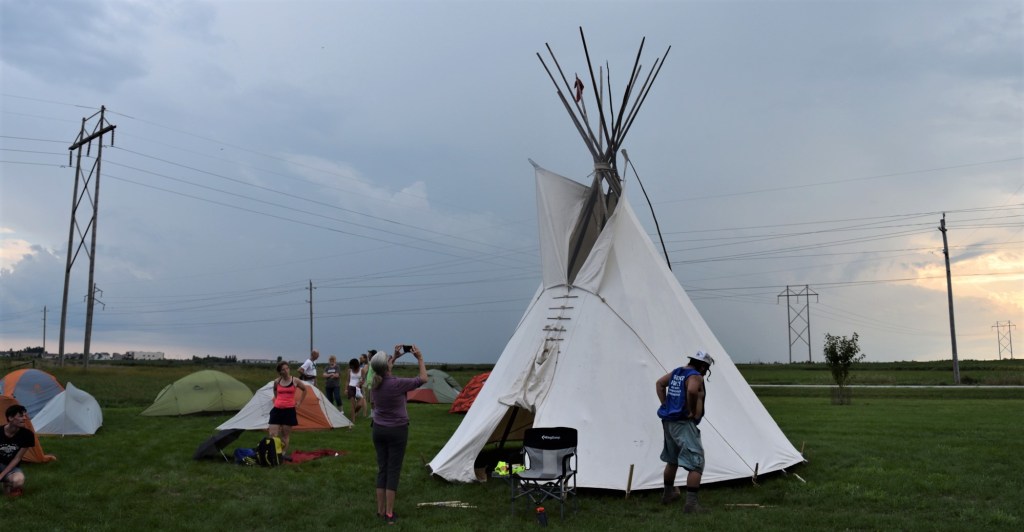
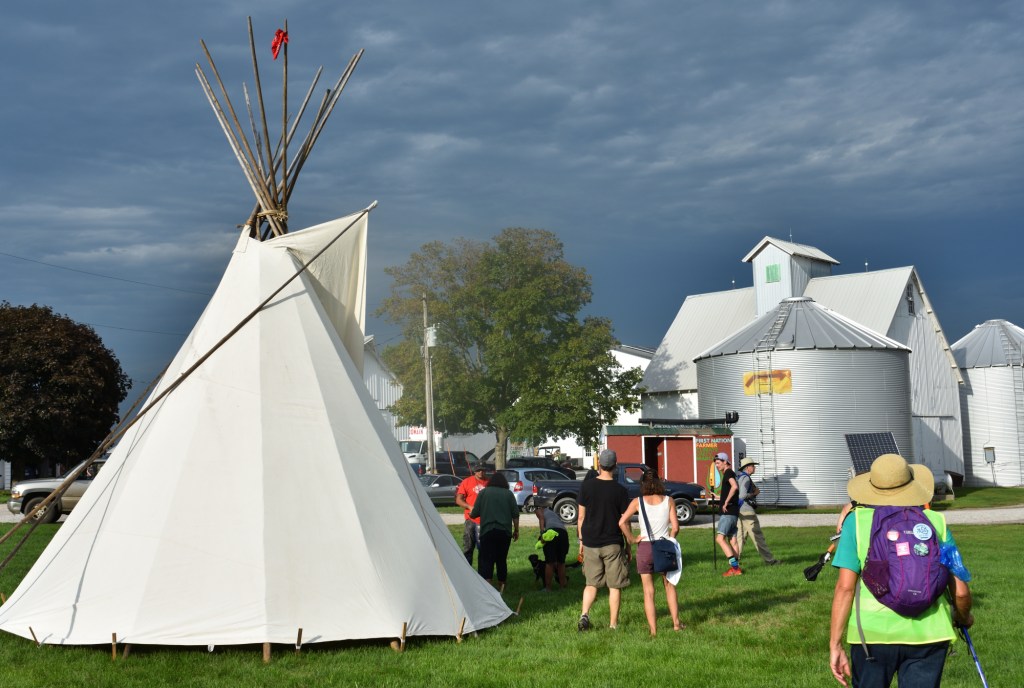
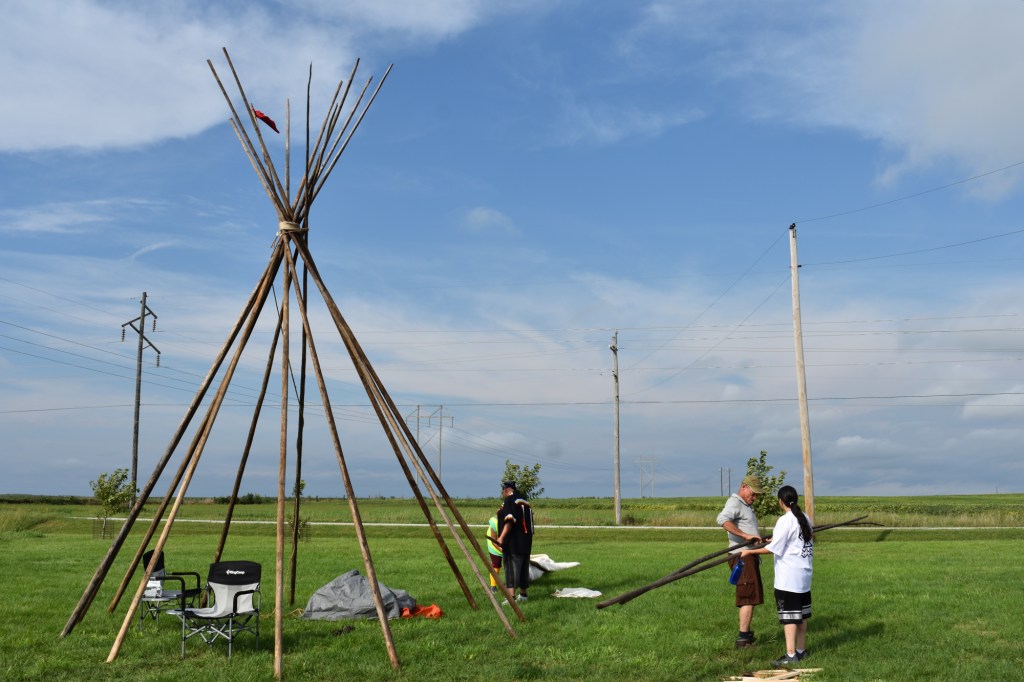
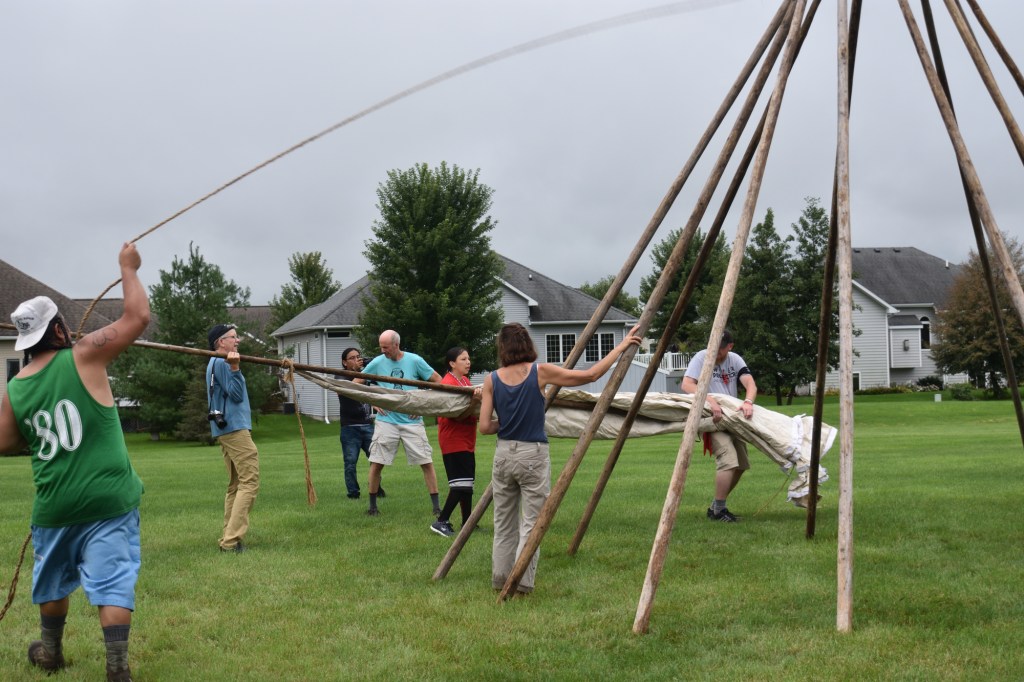
Included in the article above is a photo essay about the tepees that have been erected at the state capitol. Showing volunteers learning how to put up tepees.

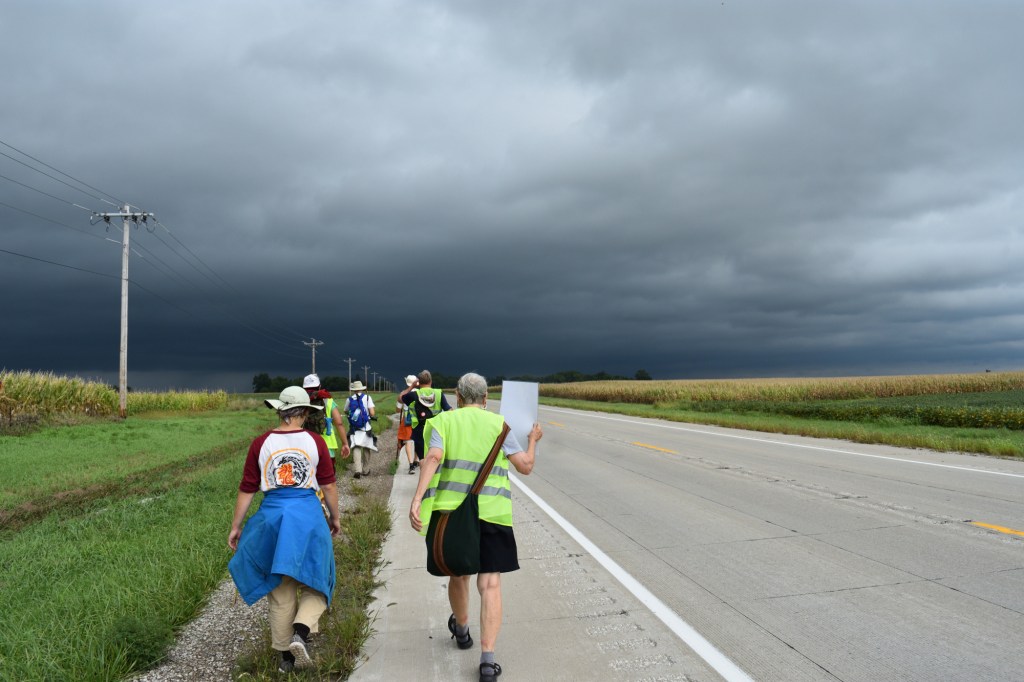
During the First Nation-Farmer Climate Unity March in 2018, a tepee was put up at most of our daily destinations. This video shows how the tepee was set up when we arrived in Ames, Iowa.


even Quakers if you can believe that

even Quakers if you can believe that“. I heard this from an Indigenous friend during a presentation about institutions of forced assimilation. This is damning for us Quakers. A jarring dichotomy of being viewed as leaders in the work for peace and justice and yet to have participated, continue to participate in the cultural genocide of Native peoples. Cultural genocide and oppression continue today.

A great deal has been said about white people making the best of a bad situation when native lands and peoples were overwhelmed by the flood of white settler colonists moving across the land. Saying it was in the best interest of the native children to be educated about the white world. When instead this intentional cruelty was intended to break the resistance of Native peoples who did not want to give up their lands. And it was successful.

Unless there is documentation, or oral history, we don’t know what a given individual, perhaps one of our ancestors, might have done in these institutions. Additionally, there are so many ways we ourselves have failed our children and future generations. The extinction of millions of species will eventually include human beings.

But none of that excuses the idea that white people are somehow superior. That is diametrically opposed to the idea that there is that of God in every person and thing. A shameful legacy of oppression of black, Indigenous and other people of color (BIPOC) that continues.

My friend Sikowis and her cousin Janna Pratt gave a Zoom presentation about Native American Boarding School Violence & Whitewashed History as part of the Women’s International League for Peace and Freedom 34th Triennial Congress.

Janna Pratt and Sikowis Nobiss are cousins and both citizens of the George Gordon First Nation and will discuss the rape, torture, and murder of Indigenous children in Canada and the US due to boarding school / residential school policy in the US and Canada and the silence behind the Indigenous genocide on Turtle Island. Janna lives in Saskatchewan, Canada and Sikowis lives in Iowa, USA. They will also delve into the work they are doing to overcome historical trauma and combat the erasure of this crisis by white supremacist governments.

She (Sikowis )is also a speaker, writer, and artist and believes that environmental and social justice work are inextricably linked and change will only happen when we dismantle corrupt colonial-capitalist systems and rebuild them with a decolonized worldview.

With the recent discoveries of children who perished while attending Indian residential schools, her (Janna) sights are now set on finding the children. Janna is a 4th generation residential school survivor and has lived through the decimation of culture these schools forced upon children, built under a policy enforced by the Canadian government to inflict cultural genocide. Janna is currently working on an archive that will gather information on residential schools, Missing and Murdered Indigenous Peoples, and veteran information to build resources for Indigenous communities. She hopes to inspire other projects with this knowledge and create Indigenous virtual reality experiences that are accessible no matter the distance.

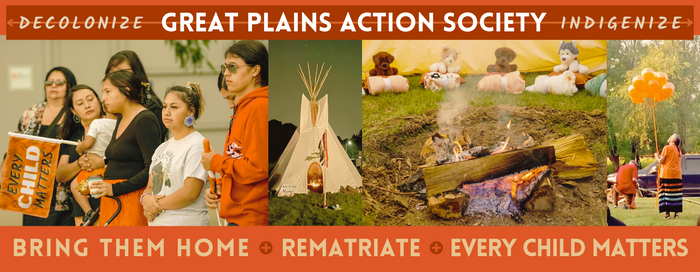
They made the connections between Native children violently removed from their families, many times never to return, to the current epidemic of violence against Native women, to Missing and murdered Indigenous relatives (MMIR). The forced removal of Native children continues to this day, by social service agencies.

One of the topics of the presentation was the silence behind the Indigenous genocide on Turtle Island. Will we break this silence?

As Sikowis says, change will only happen when we dismantle corrupt colonial-capitalist systems and rebuild them with a decolonized worldview.

This means we must move away from the colonial capitalist system. Seriously! The concepts of LANDBACK are about how to do that. For the past several months I’ve been building the website LANDBACK Friends to help with education about these ideas. https://landbackfriends.com/

I hope you will join us, to find ways to break the silence behind Indigenous genocide.

https://landbackfriends.com/

One of the topics of the presentation was the silence behind the Indigenous genocide on Turtle Island. Will we break this silence?

Cultural erasure continues.

Before the South Dakota Department of Education released a draft of new social studies standards last week, department officials took out more than a dozen references to education on the Oceti Sakowin.

“Oceti Sakowin” refers collectively to the Lakota, Dakota and Nakota people who are indigenous to South Dakota and surrounding states.

Several of the standards on Oceti Sakowin were removed completely, including:

  • In kindergarten civics, discussing the meaning of kinship to the Oceti Sakowin Oyate.
  • In kindergarten geography, discussing the tribal nations of the Oceti Sakowin Oyate.
  • In first grade civics, identifying symbols of the Oceti Sakowin Oyate, including but not limited to star quilt, buffalo and medicine wheels.
  • In first grade geography, recognizing the nine contemporary reservations of the Oceti Sakowin Oyate on a South Dakota map.
  • In second grade civics, exploring the concepts of the Oceti Sakowin Oyate, including but not limited to tribal flags, celebrations (powwows), beadwork, dreamcatchers, music and artwork.
  • In second grade geography, identifying names and locations of Oceti Sakowin Oyate tribes within our communities and state.
  • In third grade civics, learning how to describe tribal organizational structures (council, chairman, etc.)
  • In third grade geography, researching the nine tribes in South Dakota
  • In fifth grade, standards for learning about tribal sovereignty in civics class and how natural resources and migration affected the lives and culture of the Oceti Sakowin were both removed completely.
  • In eighth grade history, examining major cultural traits and resiliency of the Oceti Sakowin Oyate throughout history
  • In eighth grade history, critiquing significant primary sources, including Oceti Sakowin Oyate treaties, and their impact on events of this time period.

In eighth grade civics, two grade-level standards on Indigenous topics were removed completely, including evaluating changing federal policy toward Indigenous Native Americans, and comparing and contrasting the structure of the U.S. government and sovereign tribal governments.

South Dakota DOE removed Indigenous topics from social studies standards before final draft by Morgan Matzen, Sioux Falls Argus Leader, August 10, 2021


Line 3 pipeline

I haven’t been keeping up with the developments of Line 3 and was astonished to learn nearly 600 water protectors had been arrested. But not at all surprised there has been so little media coverage.

Sadly, there have been so many similarities related to fossil fuel pipelines in the past. Since 2013 when a resistance movement was built against the construction of the Keystone XL pipeline. Some of that history follows.

Protection of the water is part of the concept of LANDBACK. An illustration of the need to return to the guidance of Indigenous peoples to protect Mother Earth.

Nearly 600 water protectors have been arrested during ongoing protests in Minnesota against the construction of the Enbridge Line 3 tar sands pipeline at the Shell River, which the partially completed pipeline is set to cross in five places. On Monday, authorities arrested Indigenous leader Winona LaDuke and at least six others. She was just released from jail yesterday and joins us after three nights in jail. LaDuke describes how the Canadian multinational corporation Enbridge, which is building the pipeline, has funded more than 40 police squads from around the state to crack down on protests, saying, “It is a civil crisis when a Canadian multinational controls your police force.” LaDuke is executive director of Honor the Earth. She says Enbridge’s efforts to finish construction come as investors are increasingly pulling out of the fossil fuels sector. “Who wants to have the last tar sands pipeline? It’s the end of the party.”

Just Out of Jail, Winona LaDuke Decries Militarized Crackdown on Enbridge Line 3 Pipeline Protests, Democracy NOW, July 23, 2021

A FEW WEEKS before a controversial oil pipeline was approved for construction in his area, Aitkin County, Minnesota, Sheriff’s Deputy Aaron Cook bought a new assault rifle that cost $725. The purchase was part of an effort to standardize police weaponry, said Cook’s boss, the local sheriff, and was unrelated to the Line 3 pipeline being built by Enbridge. Cook himself, however, told the gun seller that Enbridge could play a role in boosting the agency’s arsenal.

“Our budget took a hit last week, so that’s all we will be ordering for now,” the deputy said in a November 2020 email about his purchase. “I’m hoping the pipeline will give us an extra boost to next year’s budget, which should make it easy for me to propose an upgrade/trade to your rifles rather than a rebuild of our 8 Bushmasters” — a reference to another make of assault rifles.

The email suggests that at least some law enforcement officers anticipate new policing resources if the pipeline, Enbridge’s Line 3, is completed.

MINNESOTA POLICE EXPECTED PIPELINE BUDGET BOOST TO FUND NEW WEAPONS. The same cops tasked with policing resistance to pipelines anticipate financial benefits from oil companies moving into their areas by Alleen Brown, The Intercept, July 22 2021

This same unbelievable militarized response occurred during the Standing Rock gathering to protect the water from the Dakota Access pipeline. Police departments from several states came.


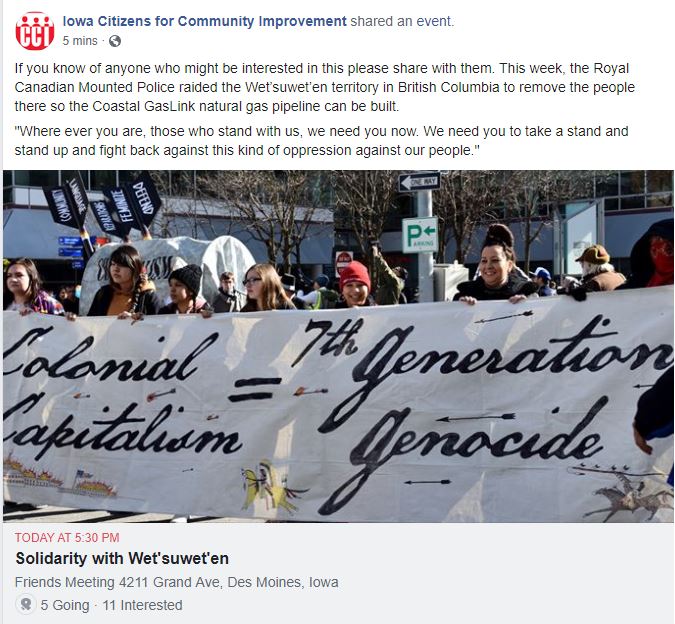
Last year militarized Royal Canadian Mounted Police invaded the Wet’suwet’en peoples’ land, yet again, to try to crush the resistance of the people trying to prevent the Coastal GasLink pipeline from being built through their pristine lands.

[ WARNING: This video contains graphic images of an armed threat on the lives of land defenders Denzel Sutherland-Wilson (Gitxsan) and Anne Spice (Tlingit). It may be traumatic for many to see. But we feel strongly that it should be available to witness. Denzel, Anne, and all the land defenders are now safe. These events took place during the RCMP raid on unceded Wet’suwet’en territory on February 7, 2020. The video was filmed by Gitxsan land defender Denzel Sutherland-Wilson from atop this tower. ]

Winona LaDuke mentioned Line 3 would create 23 jobs. Similarly proponents of the Keystone XL pipeline talked about how many jobs would be created when in fact less than 50 would be. After my letter was published in the Indianapolis Star, Senator Donnelly didn’t speak about jobs again.


Minute from Canadian Yearly Meeting (CYM) 2016

Truth and Reconciliation 16-08-30

At Yearly Meeting 2015 Friends approved Minute 2015.08.33 calling on individual
Friends to read the Report of the Truth and Reconciliation Commission (TRC) and the Calls to Action. The Minute asks Friends to listen expectantly to the Spirit for guidance on what steps they may be personally led to take. It also asks Monthly Meetings and Worship Groups to engage with the materials shared by the Indigenous Rights committee of Canadian Friends Service Committee (CFSC) and prayerfully consider what actions they may take in working for reconciliation in their communities. We committed to minute our progress for the year at this Yearly Meeting.

Much has happened since our last Yearly Meeting (2015):

• We now have a new federal government that has stated it accepts all of the TRC’s
Calls to Action and that it will implement the United Nations Declaration on the
Rights of Indigenous Peoples. This has changed the dynamic and the tone of public
discourse on Indigenous Peoples’ rights in Canada.

• CYM and CFSC jointly issued a Quaker Response in March 2016 to Call to Action
48, and we submitted this to the TRC. We affirmed in our statement that we have
“endorsed, celebrated and committed to implement the UN Declaration on the
Rights of Indigenous Peoples” as stated in previous minutes (2010.08.50,
2009.08.70). We received a warm reply from Justice Murray Sinclair, Chair of the
TRC, thanking us for our work. He particularly liked that we had committed to an
annual review of our progress.

• CYM and CFSC also collaborated with other faith bodies, some of which were
church parties to the Indian Residential Schools Settlement Agreement and some
of which were not, in issuing a joint ecumenical statement on Call to Action 48.
CFSC’s Indigenous Rights coordinator participated in drafting. This was a
worthwhile process in working to find common ground amongst faith bodies
regarding their role in the reconciliation process.

• CFSC’s Indigenous Rights committee educated Friends on such critical issues as
free, prior, and informed consent; genocide; and intergenerational trauma.

• Meetings and Worship Groups have visited nearby Indigenous communities;
organized discussion groups in partnership with local Indigenous Peoples; are
attending educational events such as workshops and film screenings; are learning
about and honouring Friends’ role as Treaty partners; and are placing the UN
Declaration in poster and booklet form in their Meetinghouses.

• Some individual Friends have been led to stand alongside Indigenous Peoples in
defending their traditional territories, including civil disobedience resulting in
arrest.

During the year, CFSC has explored the work of Reconciliation with many Meetings,
Worship Groups and Half Yearly Meetings. As Friends engage in the work of
reconciliation, we are committed to grounding our actions in our Spiritual practices,
particularly of speaking to that of the Creator in everyone. Let Friends first listen to the concerns of Indigenous Peoples. We know it is not sufficient to be well-intentioned and make assumptions about what is best for Indigenous Peoples without asking what it is they want and need. All actions require the guidance of the Indigenous Peoples involved and need to be done with respect, cooperation and ongoing consultation.


We, as Friends, also need to be open to being challenged in our assumptions about the many destructive facets of colonial legacies and continuing racist practices and policies that constitute Canada’s historical and contemporary realities. We acknowledge that part of our journey is to decolonize our own thinking and sit in the discomfort and pain of confronting where we need to deepen our understanding, bear witness, and transform our behaviour.


While Friends corporately have often been on the forefront of advocating for Indigenous Peoples’ human rights, it is now time to prioritize this work and take it to the next level. Friends recognize that reconciliation requires us to continue to learn, grow, and establish and nurture relationships with Indigenous partners. We are a Society of Friends, and friendship entails a relationship greater than simply understanding our colonial history.

As Friends, we commit to walking the path of friendship, following these instructive
words:

I think about what I want for my children and grandchildren. What I want
for them is to be loved and love other people in this country. Not to tolerate
them, not to go to our respective corners and stop hurting each other, but
to be wrapped up and engaged in each other’s lives.

Douglas White, Kwulasultun (Coast Salish name), Tliishin (Nuu-chah-nulth name), Director of the Centre for Pre-Confederation Treaties and Reconciliation (VIU), former Chief of Snuneymuxw First Nation

For Canada to grow and heal we must be active participants in a paradigm shift, moving from colonialism to a new reality based on respect for Indigenous Peoples’ Human Rights. We are reminded that we have CFSC’s Indigenous Rights committee to assist us and provide resources for this work.

We ask monthly meetings and worship groups:

• To continue to educate themselves, including children and youth, about the
doctrine of discovery, the ongoing effects of colonialism, the UN Declaration, residential schools and their legacy (including the TRC Report), the history of
the land on which they live, and reconciliation efforts.
• To formally acknowledge the traditional territories where their Meetings are
located and engage in processes of reflection on the meaning of this.
Acknowledgments can be accomplished through signage, statements during the
close of Meeting, and inclusion in information provided to any community
groups who use Meeting House space.
• To find out about current concerns of Indigenous Peoples from those
territories, including land appropriation or resource development, with which the
Meeting could be engaged.
• To investigate projects of cultural revitalization that Indigenous Peoples are
involved in and discern if there is an appropriate role (including funding) that
Friends can play.
• To uphold and support individual Friends involved with grassroots
Indigenous rights work and provide spiritual support to Friends led to this
work. This might include offering committees of care and approving minutes of
support.
• To report back annually through the Indigenous Rights committee of CFSC on
actions taken. We ask CFSC to collate such information in their CYM report.

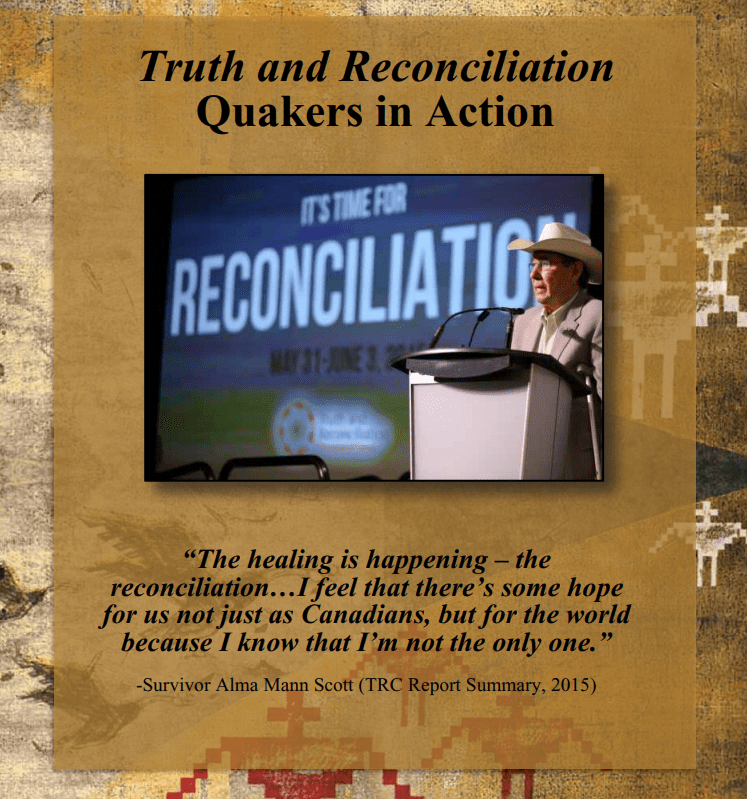
Minute from Canadian Yearly Meeting (CYM) 2016. Truth and Reconciliation 16-08-30 Truth and Reconciliation, Quakers in Action

https://quakerservice.ca/wp-content/uploads/2019/02/TRC-Resource-Book.pdf

LANDBACK Movement Introduction
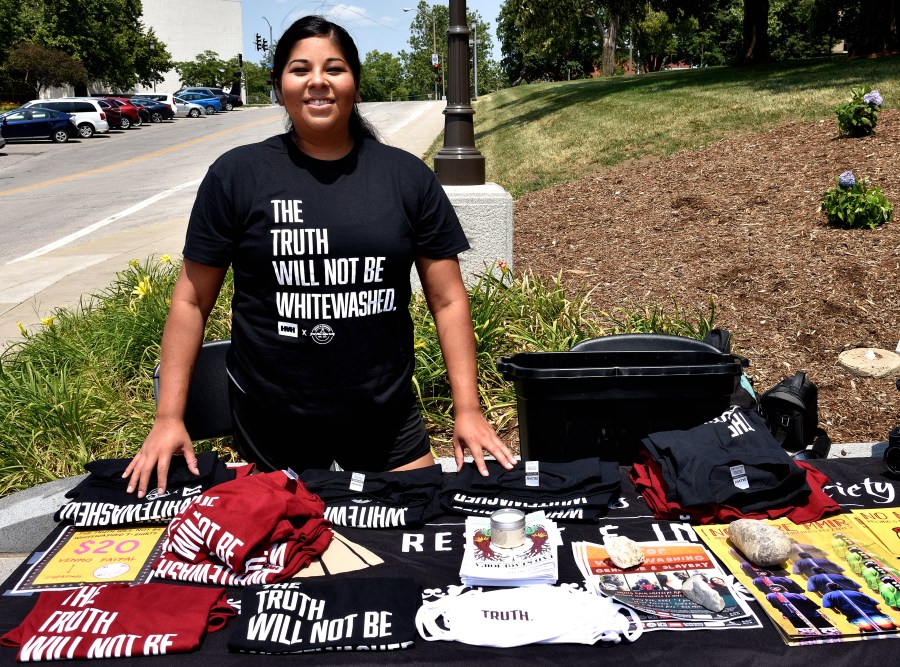
The following is an explanation of the LANDBACK Movement LANDBACK.ORG

LANDBACK is a movement that has existed for generations with a long legacy of organizing and sacrifice to get Indigenous Lands back into Indigenous hands. Currently, there are LANDBACK battles being fought all across Turtle Island, to the north and the South.
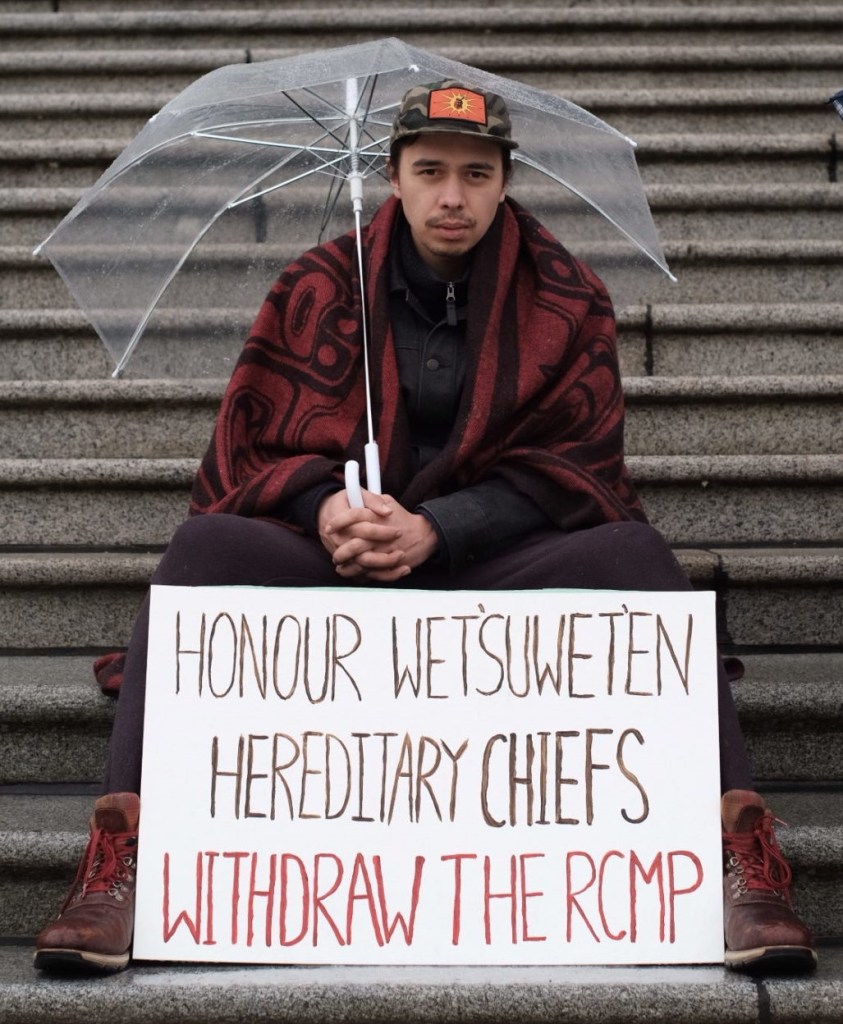
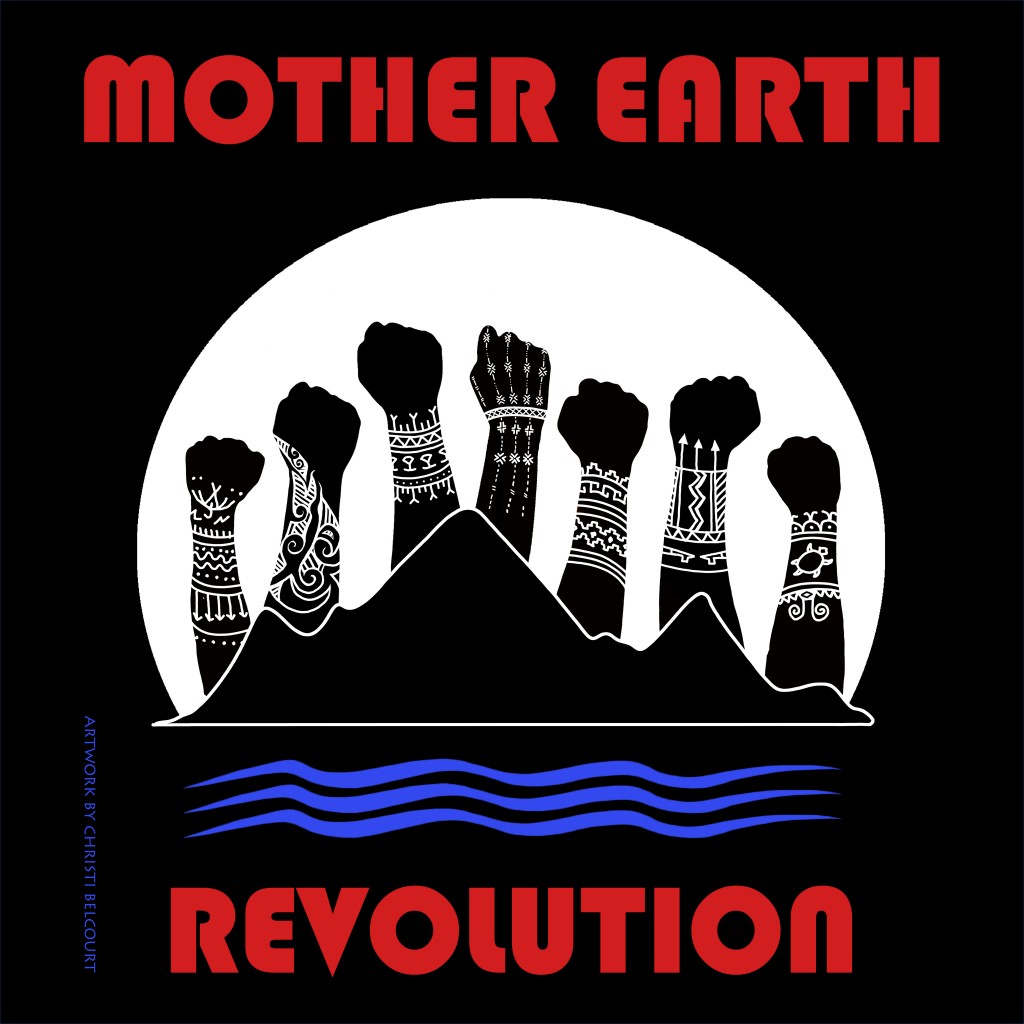
As NDN Collective, we are stepping into this legacy with the launch of the LANDBACK Campaign as a mechanism to connect, coordinate, resource and amplify this movement and the communities that are fighting for LANDBACK. The closure of Mount Rushmore, return of that land and all public lands in the Black Hills, South Dakota is our cornerstone battle, from which we will build out this campaign. Not only does Mount Rushmore sit in the heart of the sacred Black Hills, but it is an international symbol of white supremacy and colonization. To truly dismantle white supremacy and systems of oppression, we have to go back to the roots. Which, for us, is putting Indigneous Lands back in Indigenous hands.
LANDBACK Manifesto

It is the reclamation of everything stolen from the original Peoples.

  • Land
  • Language
  • Ceremony
  • Medicines
  • Kinship

It is a relationship with Mother Earth that is symbiotic and just, where we have reclaimed stewardship. 
It is bringing our People with us as we move towards liberation and embodied sovereignty through an organizing, political and narrative framework. 
It is a catalyst for current generation organizers and centers the voices of those who represent our future. 
It is recognizing that our struggle is interconnected with the struggles of all oppressed Peoples.
It is a future where Black reparations and Indigenous LANDBACK co-exist. Where BIPOC collective liberation is at the core. 
It is acknowledging that only when Mother Earth is well, can we, her children, be well. 
It is our belonging to the land – because – we are the land. 
We are LANDBACK!

The closure of Mount Rushmore, return of that land and all public lands in the Black Hills, South Dakota is our cornerstone battle, from which we will build out this campaign.

In addition, LANDBACK is more than just a campaign. It is a meta narrative that allows us to deepen our relationships across the field of organizing movements working towards true collective liberation. It allows us to envision a world where Black, Indigenous & POC liberation co-exists. It is our political, organizing and narrative framework from which we do the work.

https://youtu.be/HCl6TS5zBIw

On July 3, 2020, Land Defenders took to Mt.Rushmore to reignite the fight for the Black Hills and the closure of Mt. Rushmore, a symbol of white supremacy and racism. Now, 21 of those Land Defenders who stood in defense of the sacred Ȟesápa, the ancestral homelands of Lakota and many other Indigenous Nations, are facing criminal charges.Inspired by the action taken that day, NDN Collective has developed the LANDBACK campaign, a mutli-faceted campaign to get Indigenous lands back into Indigenous hands, and empower Indigenous people across Turtle Island with the tools and strategies to do LANDBACK work in their own communities.The LANDBACK Campaign will officially launch on Indigenous Peoples’ Day, October 12, 2020.

In the meantime, here are our Calls-to-Action:

Campaign demands

  • Dismantle — white supremacy structures that forcefully removed us from our Lands and continue to keep our Peoples in oppression.
    • Bureau of Land Management, National Parks Service
  • Defund — white supremacy and the mechanisms and systems that enforce it and disconnect us from stewardship of the Land.
    • Police, military industrial complex, Border Patrol, ICE
  • Return — All public lands back into Indigenous hands.
  • Consent — Moving us out of an era of consultation and into a new era of policy around Free and Prior Informed Consent
Organizing principles
  • Don’t burn bridges: even when there is conflict between groups or organizers remember that we are fighting for all of our peoples and we will continue to be in community even after this battle
  • Don’t defend our ways 
  • Organize to win 
  • Move from abundance – We come from a space of scarcity. We must work from a place of  abundance
  • We bring our people with us 
  • Deep relationships by attraction, not promotion 
  • Divest/invest
  • We value our warriors
  • Room for grace- be able to be human  
  • We cannot let our oppressors inhumanity take away from ours 
  • Strategy includes guidance 
  • Realness: Sometimes the truth hurts
  • Unapologetic but keep is classy

#landback #DefendDevelopDecolonize

Water protectors and state sanctioned violence

Protecting water from fossil fuel pipeline projects is an example of #LANDBACK. There is the devastation to the earth during extraction of fossil fuels, during pipeline construction, and when the pipelines leak. The tons of carbon dioxide that will be added to our atmosphere when that fuel is burned. The acidification of the oceans as the water attempts to absorb some of the carbon dioxide from the air.

The routes of pipelines are an example of blatant environmental racism. As just one example, the Dakota Access pipeline (DAPL) was originally going to be built upstream of Bismarck, North Dakota. When there was an uproar from the people there who were concerned about contamination of their water, it was moved to cross the Missouri River just a mile upriver from the Standing Rock Sioux reservation.
(see: Bismarck residents got the Dakota Access Pipeline moved without a fight)

The world saw the despicable display of heavily militarized law enforcement personnel and their equipment attacking Indigenous people who were praying to protect the water.

And silence, never been so loud
And the violence, never been so proud of our people.
Nahko

So many times Indigenous treaty rights were and continue to be violated.

I’m sharing some of my own experiences with fossil fuel pipelines to show how widespread this work to protect the water has been, and continues to be. In Indianapolis in 2013 I was trained to organize and lead nonviolent direct actions as part of the Keystone Pledge of Resistance. Eight years later Enbridge Energy has cancelled the Keystone pipeline project.

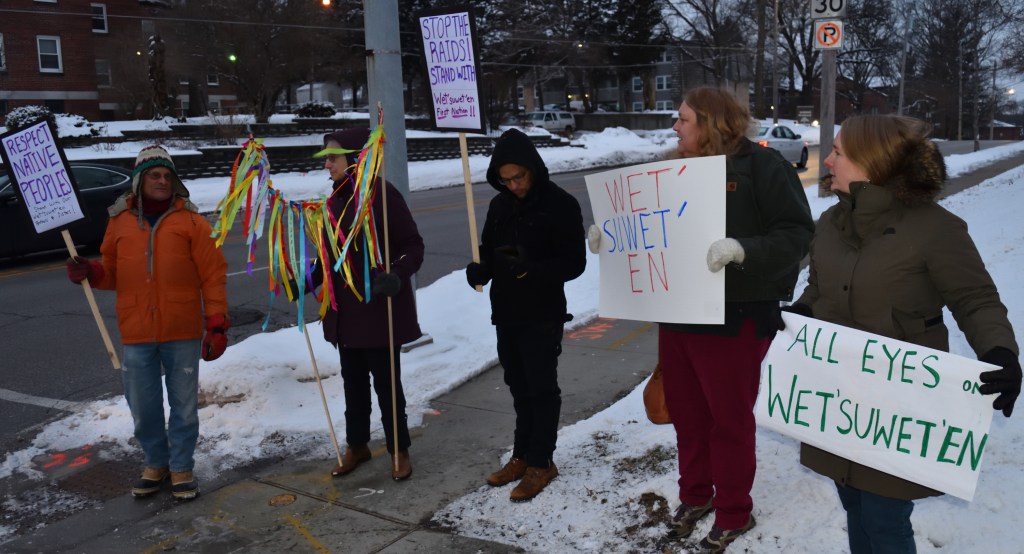
I supported the Wet’suwet’en peoples in British Columbia as they struggled to prevent the construction of the Coastal GasLink natural gas pipeline through their beautiful lands. Multiple times militarized Royal Canadian Mounted Police attacked the First Nations people.

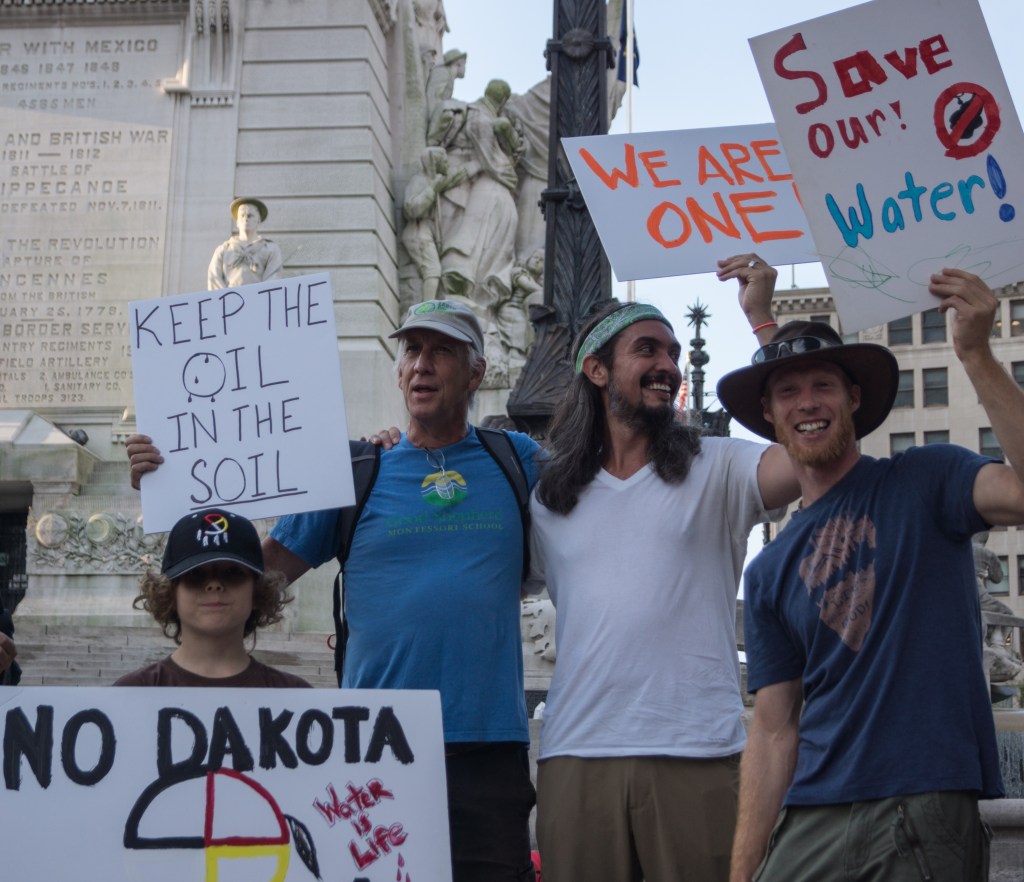
I participated in gatherings to protect the water from the Dakota Access Pipeline in Indianapolis, Iowa and Minnesota. Numerous water protectors were arrested by the state.

I haven’t been involved with the current work against the Line 3 pipeline. (see: Stop Line 3 ). But I am writing about recent events there because there is good news about stopping, at least temporarily, state sanctioned violence against water protectors at Line 3.

In a development progressives called a “huge legal win in the fight against Line 3,” a Minnesota court on Friday ordered police in Hubbard County to stop impeding access to the Giniw Collective’s camp, where anti-pipeline activists have been organizing opposition to Enbridge’s multibillion-dollar tar sands project.

Last month, (county sheriff) Aukes unlawfully blockaded a 90-year-old driveway that serves as the only means of entry and exit to the Giniw Collective’s camp, which is a convergence point for Indigenous-led protests against the expansion of the Line 3 pipeline. Police officers also cited and arrested individuals who attempted to use the driveway to travel to and from the camp.

COURT STOPS POLICE FROM BLOCKADING LINE 3 PROTESTER CAMP by Kenny Stancil, Common Dreams, July 25, 2021

Under the pretext that the small portion of the driveway extending from the Camp’s private property onto Hubbard County property is now suddenly a “trail” and not designated for vehicular traffic local sheriffs have either physically blocked access, at times by forming a line of over twenty officers, several armed with clubs, or issued citations to water protectors who have driven vehicles on the driveway, even when delivering food, water, or other necessary supplies.

Court Orders Police to Cease Illegal Blockade of Indigenous-led Water Protectors Camp at Line 3 Issues Restraining Order Against Sheriff Aukes and Hubbard County