I know now cannot be the future. What I’m saying is there are so many crises that urgently need action now. How long can we keep procrastinating? (That’s a rhetorical question.)
The list of crises is long and new ones continue to appear.
Despite all we are being confronted with now, we will look back on these days in the future and wish we could return to what we have now. Instead, we will increasingly be affected by worsening consequences of these crises.
It is increasingly difficult to make sense of all that is going on today. All the bad things I had anticipated for the future are suddenly happening now. And things I never imagined, like the assaults on truth, science, governance, health, and safety come at a time when they are desperately needed. It is difficult to make sense of it all.
If these things can confound and divide us both within and between cultures, then we have little hope of generating the coherent dialogue, let alone the collective resolve, that is required to overcome the formidable global-scale problems converging before us.
James Allen
sensemaking–the action or process of making sense of or giving meaning to something, especially new developments and experiences.
At the collective level, a loss of sensemaking erodes shared cultural and value structures and renders us incapable of generating the collective wisdom necessary to solve complex societal problems like those described above. When that happens the centre cannot hold.
Threats to sensemaking are manifold. Among the most readily observable sources are the excesses of identity politics, the rapid polarisation of the long-running culture war, the steep and widespread decline in trust in mainstream media and other public institutions, and the rise of mass disinformation technologies, e.g. fake news working in tandem with social media algorithms designed to hijack our limbic systems and erode our cognitive capacities. If these things can confound and divide us both within and between cultures, then we have little hope of generating the coherent dialogue, let alone the collective resolve, that is required to overcome the formidable global-scale problems converging before us.
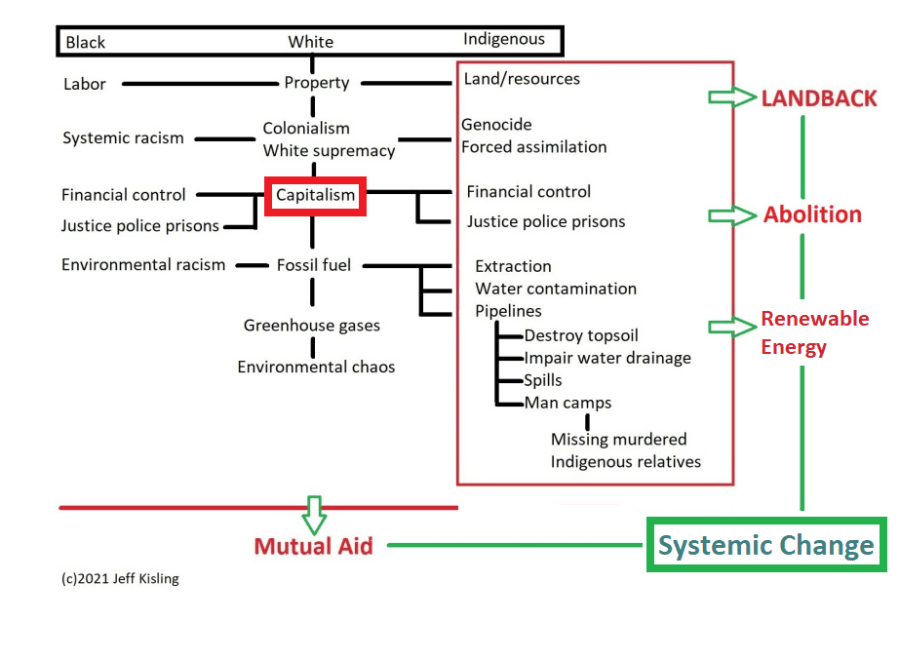
Following is a diagram I’ve been working on to help me make sense of where things are now, and ways to build a better future.
Where things stand now is represented by the path beneath the WHITE heading. Capitalism is outline in red because it represents the injustices capitalism is based on and indicates remaining on this path will continue to result in environmental chaos. See: Rejecting Capitalismhttps://landbackfriends.com/2021/10/06/rejecting-capitalism/
The BLACK column represents the stolen labor of those who were enslaved and continues today with all the aspects of systemic economic, judicial system, and environmental racism.
The INDIGENOUS column represents the theft of native lands, genocide and forced assimilation. Includes the consequences of destroying the land and widespread pollution of water. And the epidemic of violence against native peoples, specifically missing and murdered Indigenous relatives.
Many people have been working on alternatives, some for years, others more recently. Some of these alternatives are listed in the green box labeled Green New Deal and Red Deal (which is an Indigenous led green new deal).
The website I recently created, LANDBACK Friends, contains more information about these topics.
As sometimes happens, I spend so much time writing background information that I don’t get to the subject I’d planned to write about. What I had intended to write was why I believe we need to think and work “outside the box”. The box in this case represented by columns Black, White and Indigenous, which is a sketch of the current situation. We should not waste more time and effort trying to make incremental changes to those existing systems. And instead work for LANDBACK, Abolition and Mutual Aid. Which my good friend Ronnie James expresses more eloquently here:
I’m of the firm opinion that a system that was built by stolen bodies on stolen land for the benefit of a few is a system that is not repairable. It is operating as designed, and small changes (which are the result of huge efforts) to lessen the blow on those it was not designed for are merely half measures that can’t ever fully succeed.
So the question is now, where do we go from here? Do we continue to make incremental changes while the wealthy hoard more wealth and the climate crisis deepens, or do we do something drastic that has never been done before? Can we envision and create a world where a class war from above isn’t a reality anymore?”
With so much upheaval, both in the natural world and man-made systems, it is important to have a vision of the future we want to build. We have limited capacity, of both time and other resources, making it important to determine how we can most wisely use them. And there are an increasing number of crises requiring attention and resources now if we are going to have any chance of slowing these evolving catastrophes.
Fundamentally, we must decide whether to work for incremental changes to the existing systems or transition to new ones.
I’m having a tough time convincing people that the capitalist economic system, and the political systems supporting capitalism, are fundamentally unjust.
One’s view of capitalism is determined by how well capitalism is working for you. If you are fortunate to have income to cover expenses, you probably don’t want to change. Change is difficult.
Otherwise, you understand capitalism is unjust. An economic system built on money is unjust when millions of people live in poverty because they don’t have adequate, or any income. Are denied goods and services simply due to the lack of money.
When there was close to full employment capitalism seemed to work. But as jobs were lost to automation or moving them out of the country to take advantage of cheap labor elsewhere, millions have been thrown into poverty. To lack food, shelter, healthcare, education, spiritual support, dignity.
Capitalism is unjust because it has been built on stolen land and the labor of enslaved people.
As my good friend Ronnie James says:
I’m of the firm opinion that a system that was built by stolen bodies on stolen land for the benefit of a few is a system that is not repairable. It is operating as designed, and small changes (which are the result of huge efforts) to lessen the blow on those it was not designed for are merely half measures that can’t ever fully succeed.
So the question is now, where do we go from here? Do we continue to make incremental changes while the wealthy hoard more wealth and the climate crisis deepens, or do we do something drastic that has never been done before? Can we envision and create a world where a class war from above isn’t a reality anymore?”
Ronnie James
Thanks to Ronnie, I’ve been learning about, and participating in an alternative to capitalism, Mutual Aid. “Can we envision and create a world where a class war from above isn’t a reality anymore?” One of the fundamental principles of Mutual Aid is working to maintain a horizontal or flat hierarchy. To work to avoid a vertical hierarchy. One of the great advantages of this lack of vertical hierarchy is any kind of supremacy, e.g. white supremacy, is not even a possibility.
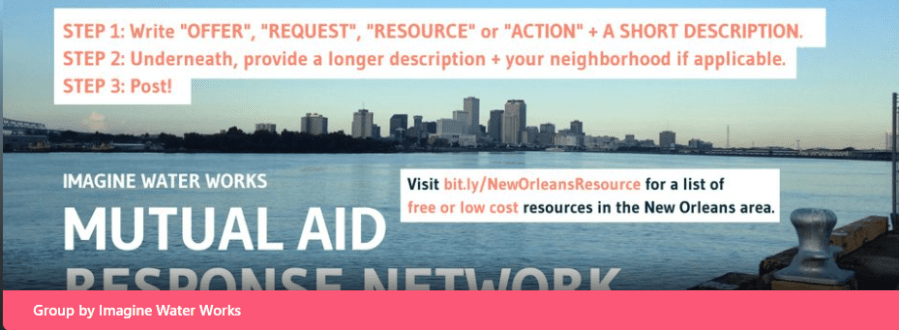
So I work with a dope crew called Des Moines Mutual Aid, and on Saturday mornings we do a food giveaway program that was started by the Panthers as their free breakfast program and has carried on to this day. Anyways, brag, brag, blah, blah.
So I get to work and I need to call my boss, who is also a very good old friend, because there is network issues. He remembers and asks about the food giveaway which is cool and I tell him blah blah it went really well. And then he’s like, “hey, if no one tells you, I’m very proud of what you do for the community” and I’m like “hold on hold on. Just realize that everything I do is to further the replacing of the state and destroying western civilization and any remnants of it for future generations.” He says “I know and love that. Carry on.”
This diagram identifies LANDBACK, Abolition of police and prisons, and Mutual Aid as paths to a better society and future for us all.
Des Moines Mutual Aid is a collective that does outreach for homeless folks in our community, houseless folks in our community. We also assist BLM with their rent relief fund, and most of the work we’ve done is running the bail fund for the protests over the summer. In the course of that work, we have witnessed firsthand the violence that is done upon people of color, Black people specifically, by the white supremacist forces of the state – in this state, in this city, in this county. There is absolutely a state of emergency for people of color and Black people in Iowa. The state of emergency has been a long time coming. We will support – DMMA will absolutely support any and all efforts of this community – BLM, and the people of color community more generally- to keep themselves safe. Power to the people.
Patrick Stahl, Des Moines Mutual Aid
mutual aid is the new economy. mutual aid is community. it is making sure your elderly neighbor down the street has a ride to their doctor’s appointment. mutual aid is making sure the children in your neighborhood have dinner, or a warm coat for the upcoming winter. mutual aid is planting community gardens.
capitalism has violated the communities of marginalized folks. capitalism is about the value of people, property and the people who own property. those who have wealth and property control the decisions that are made. the government comes second to capitalism when it comes to power.
in the name of liberation, capitalism must be reversed and dismantled. meaning that capitalistic practices must be reprogrammed with mutual aid practices.
Des Moines Black Liberation
Randomly passing an accomplice on the street and throwing up a fist at each other as we go our separate ways to destroy all that is rotten in this world will never fail to give me extra energy and a single tear of gratitude for what this city is creating.
With the attention on the deaths of children in the native residential schools in the land called the United States, we are learning more about these atrocities here. Secretary of the Interior, Deb Haaland, has initiated an investigation of the institutions of forced assimilation in the U.S.
Canada went through an eight-year process to learn what happened in the residential schools there, the Truth and Reconciliation Commission of Canada (TRC). Quakers of the Canadian Yearly Meeting have been very involved in that process and ongoing work for reconciliation.
In 2007 the Truth and Reconciliation Commission of Canada (TRC) was established “to learn the truth about what happened in the residential schools and to inform all Canadians about what happened in the schools.”
In 2015 the Truth and Reconciliation Commission released its Final Report and 94 Calls to Action. TRC Chief Commissioner Murray Sinclair said, “We have described for you a mountain, we have shown you the path to the top. We call upon you to do the climbing.”
In 2011, Canadian Yearly Meeting, the national body of Canadian Quakers, had called on Quakers to actively engage in reconciliation efforts:
We are being invited by the Indigenous peoples of Canada as represented by the Indian Residential School Survivors, through the Indian Residential School Survivors Settlement Agreement, to enter a journey of truth finding and reconciliation. We encourage all Friends, in their Meetings for Worship and Monthly and Regional Meetings, boldly to accept this invitation and to engage locally, regionally, and nationally, actively seeking ways to open ourselves to this process…”
The Truth and Reconciliation Commission (TRC) provided those directly or indirectly affected by the legacy of the Indian Residential Schools system with an opportunity to share their stories and experiences.
About the Truth and Reconciliation Commission
The Indian Residential Schools Settlement Agreement, the largest class-action settlement in Canadian history, began to be implemented in 2007. One of the elements of the agreement was the establishment of the Truth and Reconciliation Commission of Canada to facilitate reconciliation among former students, their families, their communities and all Canadians.
The official mandate (PDF) of the TRC is found in Schedule “N” of the Settlement Agreement which includes the principles that guided the commission in its important work.
Between 2007 and 2015, the Government of Canada provided about $72 million to support the TRC’s work. The TRC spent 6 years travelling to all parts of Canada and heard from more than 6,500 witnesses. The TRC also hosted 7 national events across Canada to engage the Canadian public, educate people about the history and legacy of the residential schools system, and share and honour the experiences of former students and their families.
The TRC created a historical record of the residential schools system. As part of this process, the Government of Canada provided over 5 million records to the TRC. The National Centre for Truth and Reconciliation at the University of Manitoba now houses all of the documents collected by the TRC.
In June 2015, the TRC held its closing event in Ottawa and presented the executive summary of the findings contained in its multi-volume final report, including 94 “calls to action” (or recommendations) to further reconciliation between Canadians and Indigenous peoples.
In December 2015, the TRC released its entire 6-volume final report. All Canadians are encouraged to read the summary or the final report to learn more about the terrible history of Indian Residential Schools and its sad legacy.
Many settlers wish they could ask Indigenous people questions about reconciliation without appearing foolish or rude. Canadian Friends Service Committee knows that not every settler has the opportunity to have open dialogue with Indigenous friends and neighbours. This is why we want to give you a chance to hear the answers to some important questions from some of our Indigenous partners, people that we work closely with and trust to give us honest responses, and who trust us enough to engage with this project!
Collin Orchyk is from Treaty 1, Peguis First Nation, Manitoba. Collin is a student in the Indigenous education program at the University of British Columbia and a former Youth Reconciliation Leader for Canadian Roots Exchange. He is also a singer/songwriter and has provided all background music for the videos in the Indigenous Voices on Reconciliation Series. Learn more at quakerservice.ca/reconciliation
Quaker Paula Palmer and Friends Peace Teams have done years of work related to Right Relationship with Native Americans. https://friendspeaceteams.org/trr/
A young Tohono Oʼodham man said in one of our workshops, “No one here today made these things happen, but we are the ones who are living now. And we’re all in this together.” And I think that’s what we need to hear. No one here today made all of these things happen, but we are the ones who are living now. So what are our opportunities to work with indigenous peoples, to engage them, to ask them, “What would right relationship look like?” Paula Palmer
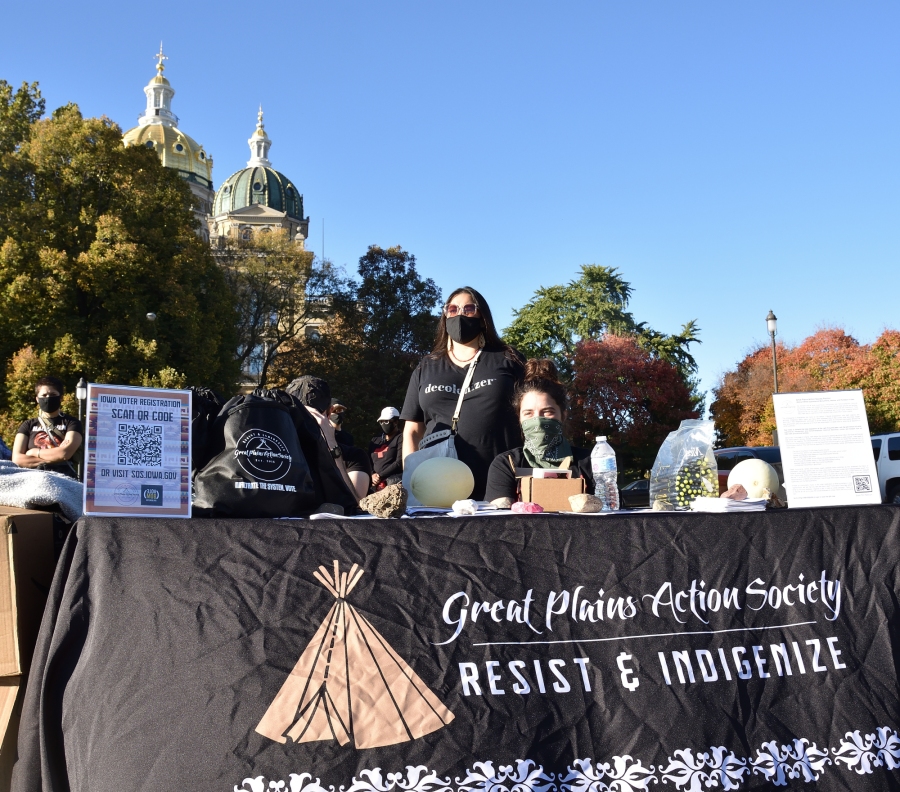
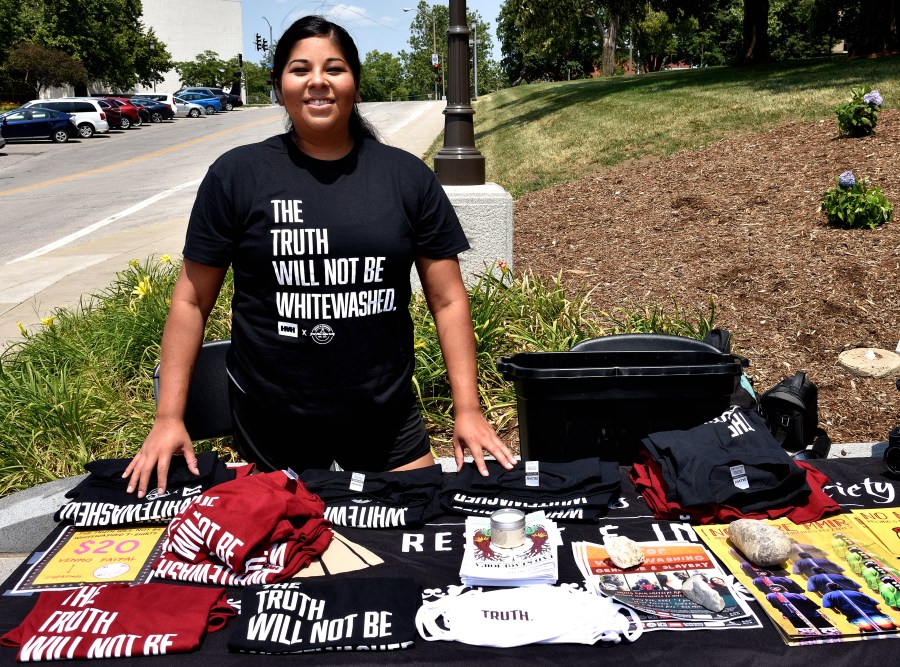
The Great Plains Action Society youth organizers and experts across Iowa weigh in on white supremacy and the ban on Critical Race Theory. The bans on Critical Race Theory across the country are one of many examples of efforts to whitewash the truth.
Online Pushback: UnBan Anti-Racism Education in Iowa
Indigenous Youth Organizers, Alexandrea Walker and Keely Driscoll, have started a youth-led movement to demand that the current Iowa Administration unban Anti-Racism Education, aka, Critical Race Theory. For the sake of health and safety for all, it is imperative that Kim Reynolds reverse the overtly white supremacist decision to ban anti-racism education plus diversity, equity, and inclusion programming in the classroom and in all state-funded institutions. Join Alex and Keely as they host a forum for youth and experts throughout Iowa to weigh in on this pressing issue. Guests TBA.
The Truth Will Not Be Whitewashed is a campaign founded by Great Plains Action Society and Humanize My Hoodie. We encourage others to join this effort. Please contact us if you are interested in joining our growing coalition.
This reminds me of the work of Lynne Howard and Des Moines Valley Friends’ (Quakers) to get draft counseling into the Des Moines public schools in 1970. They were successful! Resisting draft counseling was an effort to whitewash the truth about participating in the military.
PROPOSAL FOR DRAFT COUNSELING IN THE DES MOINES PUBLIC HIGH SCHOOLS
STATEMENT OF BELIEF:
We believe that all young men in the Des Moines Public High Schools should have access to adequate counseling by qualified counselors in regard to the Selective Service and its alternatives. Qualified counselors are those persons who:
Have received special draft counseling training
Have a detailed knowledge and experience of the Selective Service Law and the administration thereof
Are sensitive to the moral and spiritual implication of war and peace and individual conscience
Have knowledge of where to refer students if they want counseling on a specific aspect of the Selective Service alternatives and options
We further believe that such counseling should be made available during school hours, similar to other available guidance counseling.
IMPLEMENTATION:
There in light of the above purpose we recommend that one of the following plans be used to implement this counseling program:
That each high school in Des Moines provide adequate training of all guidance counselors in order that they be familiar with the Selective Service Law and its alternatives
That each high school select one guidance counselor who would be specially trained (see above) to counsel and answer questions concerning the draft and its alternatives. Other guidance counselors in the school could refer their students to this specially trained counselor, if this type of counseling is needed
That each trained counselor would refer persons who need more intensive and specific counseling to appropriate groups. (Particular religious groups, various branches of the Service, etc.)
Recently a series of things happened that provoked some reflection. I saw the quote, “what you get into will change you. Sometimes in life you just don’t know what you’re getting into”, which prompted me to write the following.
A lot happened to me since retiring and returning to Iowa four years ago. I hadn’t given a lot of thought to what would happen when I returned to Iowa. I had stayed connected with Iowa Quakers and involved with them as much as I could from a distance. So, there were already some relationships to build on.
In Indianapolis I was blessed to have made many friends as we worked to protect water and oppose the Keystone XL and Dakota Access pipelines. I was also most fortunate to become involved with the Kheprw Institute (KI), a youth mentoring and empowerment community. And North Meadow Circle of Friends Quaker meeting. It was hard to leave but I stay in touch.
What follows are stories of my justice experiences since returning to Iowa. They are offered in case they might be helpful for you and your own work.
I’m frustrated more people don’t engage in justice work. Why are we here if not to grow and engage with family and our communities? Most people either don’t know how to engage or don’t want to. I’m frustrated because there is so much work to be done. We are experiencing environmental catastrophes that will only worsen and occur more frequently. We need masses of people to prepare now for the evolving chaos.
It is important to recognize “sometimes in life you just don’t know what you’re getting into.” Those can be times of great opportunity. I encourage you to get involved in opportunities like this, as long as doing so is relevant to what you are called to do.
What you get into will change you. Sometimes in life you just don’t know what you’re getting into.
Phyllis Cole-Dai
The most important step is to figure out what you should do. There are so many problems. Many people get burned out by trying to do too many things. People of faith rely on faith to help us figure this out. Keep what you are led to do in mind. You must be vigilant as you look for opportunities to get involved with justice work. And just as vigilant to decline to get involved in things not related to what you are called to do. Maintaining this focus is crucial for success.
First Nation-Farmer Climate Unity
I had long wanted to get to know some Indigenous people for numerous reasons, such as spirituality and sustainable living. Fortunately, an ideal opportunity to do so was to walk and camp along the path of the Dakota Access pipeline with a small group of native and nonnative people. The intention was for those in the group to get to know each other as we walked 10-15 miles/day, put up our tents, and have meals together.
During the First Nation-Farmer Climate Unity March (Sept. 1 – 8, 2018) Manape said we were on a sacred journey. During the March, Donnielle said we are a tribe. This morning I’m realizing the following stories about the past are part of my sacred journey. Also thinking of the many new friends found as part of this journey. I’m thinking how much I would have missed if I didn’t recognize and take advantage of this amazing opportunity.
Wet’suwet’en
Last Saturday morning began by watching a new video (see below) from the Wet’suwet’en people in British Columbia. Gidimt’en Checkpoint spokesperson Sleydo’ (Molly Wickham) and Elder Janet Williams found a film crew trespassing on Gidimt’en territory, making a commercial to promote Coastal Gaslink’s plans to tunnel beneath the sacred headwaters.
I first learned about the Wet’suwet’en’s struggles in January, 2020, when I saw a remarkable video of Sleydo’ evicting the Coastal GasLink workers from Wet’suwet’en territory. “All CGL workers have now been peacefully evicted from Unist’ot’en and Gidimt’en territories. Under the authority of Anuk nu’at’en (Wet’suwet’en law), and with support of the Wet’suwet’en hereditary chiefs of all five clans, the Wet’suwet’en are standing up for the last of our lands and we need you to stand with us. We will honour the instructions of our ancestors, and continue to protect our lands from trespassers.”
I began to follow what was happening with the Wet’suwet’en, especially when they started asking people to write about what was happening, since the mainstream media was not. A few of us, who had worked together on some Indigenous related events, organized a vigil in support of the Wet’suwet’en:
We didn’t expect anyone to join us. Fortunately, Ronnie James did. In the photo are Peter Clay, Linda Lemons and Ronnie James. Ronnie is an Indigenous organizer with many years of experience and interested to see who organized and attended our vigil. After he left, I realized I didn’t have a way to contact him. Fortunately, he accepted my Facebook Friend request. We began to have numerous conversations (via social media), where he patiently taught me a great deal about organizing, Indigenous thought, and Mutual Aid. (See: https://landbackfriends.com/mutual-aid/)
Peter Clay, Linda Lemons and Ronnie James
Mutual Aid
Meeting and becoming great fiends with Ronnie changed the course of my life. I eventually joined the work of Des Moines Mutual Aid (DMMA). Every Saturday morning, I participate in the free food distribution program. About a dozen of us put together sixty boxes of food, that we then put in the cars of those who need it. It is amazing this food distribution has been in existence in Des Moines since the Black Panthers organized the free breakfast program for school kids in the 1970’s.
Putting together the boxes of food, we move as a well-oiled machine. There is a little visiting as we pass each other when putting the food into boxes. I learn a lot about the justice work people are doing in central Iowa, since my Mutual Aid friends are also involved in many such projects.
Saturday there was a lull while waiting for another food delivery that provided a chance to talk with Ronnie. I mentioned the story below about the continued oppression of the Wet’suwet’en peoples and reminded him that we had met at the vigil for the Wet’suwet’en mentioned above. I told him that was something he taught me about organizing. Going to justice events to meet people. I said I wouldn’t have known about Mutual Aid if not for him attending that Wet’suwet’en vigil. He replied I probably would have learned about Mutual Aid because it had been in the news a lot recently.
Ronnie mentioned that was the first time he had been at Friends House, where the Wet’suwet’en vigil was held. Des Moines Mutual Aid has its offices in Friends House now. I had just spoken with Jon Krieg who works with the American Friends Service Committee (AFSC), whose offices had been in Friends House. Recently AFSC had moved out and Jon mentioned he missed visiting with Ronnie.
Des Moines Valley Friends meeting, which meets in a meetinghouse attached to Friends House, has been allowing another Mutual Aid group to use their kitchen to cook meals that are taken to the houseless camps.
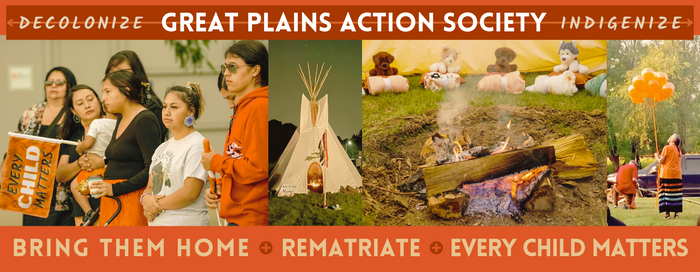
Another set of connections relates to the Great Plains Action Society (GPAS), founded by my friend Christine Nobiss, who was also on the First Nation-Farmer Climate Unity March. Ronnie’s Mutual Aid work is supported by GPAS.
Prairie Awakening/Prairie Awoke
Saturday was also the day of the annual Prairie Awakening/Prairie Awoke ceremony, an annual event sponsored by the Dallas County Conservation Board. The ceremony is held in the Kuehn Conservation Area. My Quaker meeting, Bear Creek, has been involved with the ceremony for over ten years. A number of Friends attended.
While there, I was able to talk with my friend Rodger Routh, who grew up in the Earlham, Iowa (where Bear Creek meeting is) community. Rodger is a photographer/videographer and justice advocate, who is often at the same events I attend. Jon Krieg (AFSC, mentioned above) is also a photographer. It is common for the three of us to be at the justice related events.
LANDBACK
One of the principles of justice work is to follow the leadership of the communities affected by injustice. In Indianapolis, the Kheprw Institute would let us (Quakers in this case) know what we could do for them.
Recently I had a chance to ask Christine how nonnative people could best support her and her work now. She told me to learn and teach others about the concepts of LANDBACK. So, I created a website named LANDBACK Friends, where I’ve been sharing what I am learning about LANDBACK. https://landbackfriends.com/
Maintaining connections
As the completion of a circle, I was so glad to be contacted by my friends at the Kheprw Institute (KI) in Indianapolis. Aghilah contacted me because KI is interested to learn more about LANDBACK. Evidently, they have been following my blog since I left Indianapolis and reading what I’ve been writing about LANDBACK.
Quakers for Abolition Network
My blog also made it possible for one of my new friends, Jed Walsh, to contact me about the work he and Mackenzie Barton-Rowledge are doing related to abolition of police and prisons. I wrote a little in their article that was just published by the Western Friend, https://westernfriend.org/article/quakers-abolition-network.
Conclusion
We are moving more deeply into collapse. Fueled by the consequences of environmental chaos, our economic and political systems are failing. We must work now to build ways to deal with this collapse. I’ve been working on this diagram to illustrate how people are building such systems. It is important to build Mutual Aid communities. And embrace the principles of LANDBACK. “What you get into will change you”.
This document has a lot more information about Quakers, the Wet’suwet’en peoples, and LANDBACK. Scroll down to move through the document.
The pandemic resulted in many people, including Friends Committee on National Legislation (FCNL) staff, remaining home. So, FCNL invited people to attend weekly Quaker meetings for worship via Zoom, called Witness Wednesday Silent Reflection. There are a number of regular attenders, who often speak of how meaningful these meetings have been in these times. This Wednesday there will be a special silent reflection on 20 years of endless war, that anyone is welcome to attend. We will reflect on affirming our fervent hope that endless war will be no more. Signup to receive the Zoom link here:
As we mark the 20th anniversary of the 9/11 attacks, and the unfolding humanitarian crisis and violence in Afghanistan today, join General Secretary Diane Randall for a time of reflection.
Take a moment to reflect in keeping with the Quaker practice of silent worship. Join us virtually on Zoom or by phone in affirming our fervent hope that endless war will be no more.
War has never been the answer to the world’s most pressing problems—including terrorism. Military solutions and large-scale violence cannot lead to sustainable peace. Instead, they only make the problem worse by spawning new terrorist groups and setting off cycles of retribution.
Only through the careful, patient work of peacebuilding with local human rights and civil society leaders which includes women, and through diplomacy by regional and international stakeholders can we reach just and durable solutions to the root causes of violence.
As we grieve these deaths and the unfolding humanitarian crisis in Afghanistan, we hold the people of Afghanistan in the Light in the days and months ahead. We affirm our opposition to war and violence and to the ensuing destruction and chaos.
Today, it is our fervent hope that endless war will be no more.
Two Decades of War by Diane Randall, General Secretary, Friends Committee on National Legislation, September 1, 2021
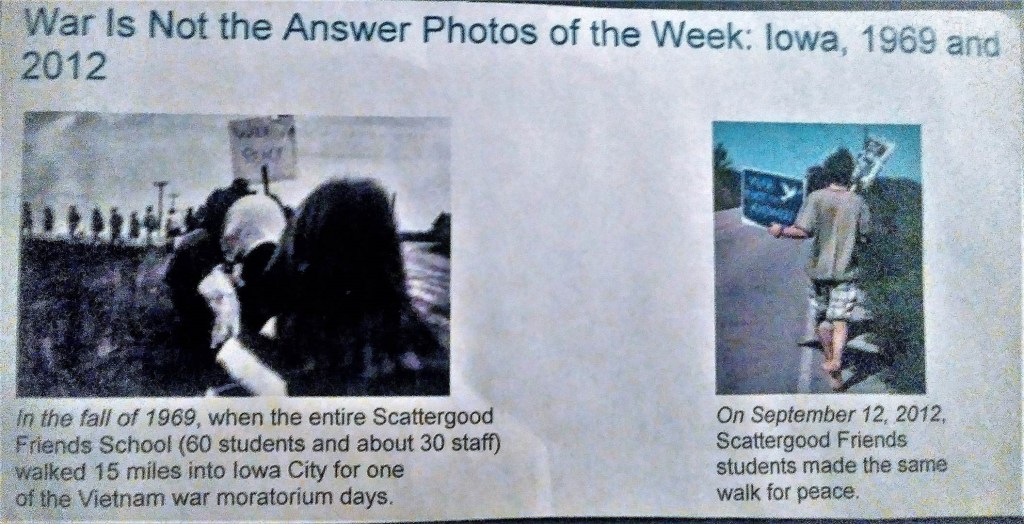
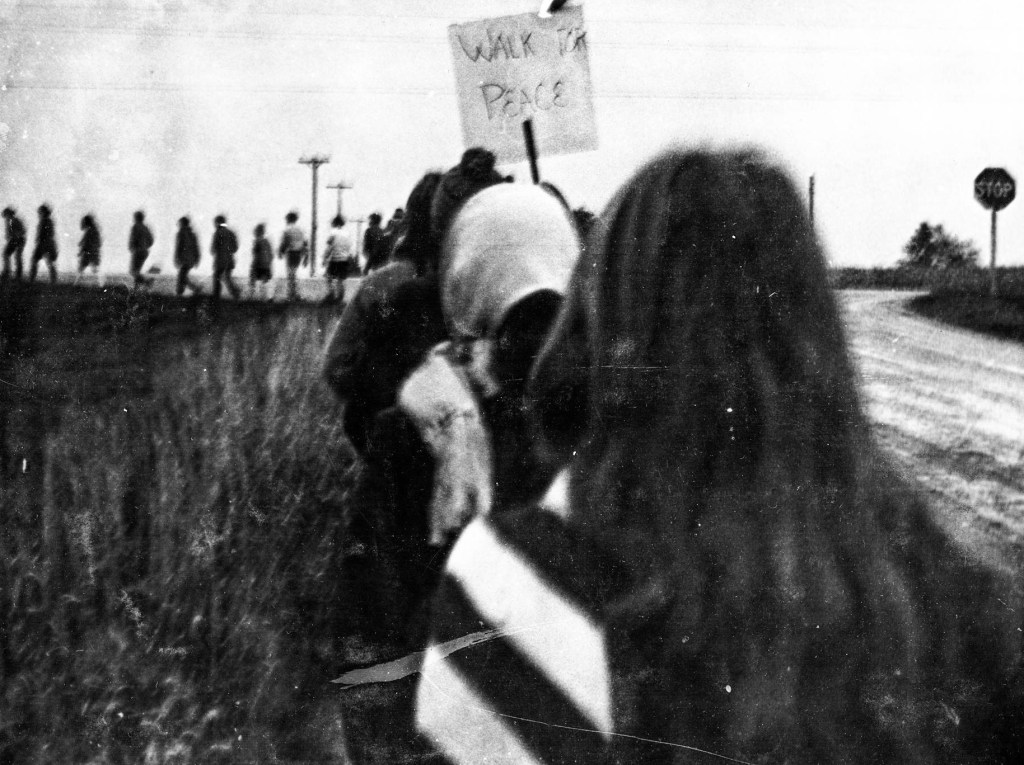
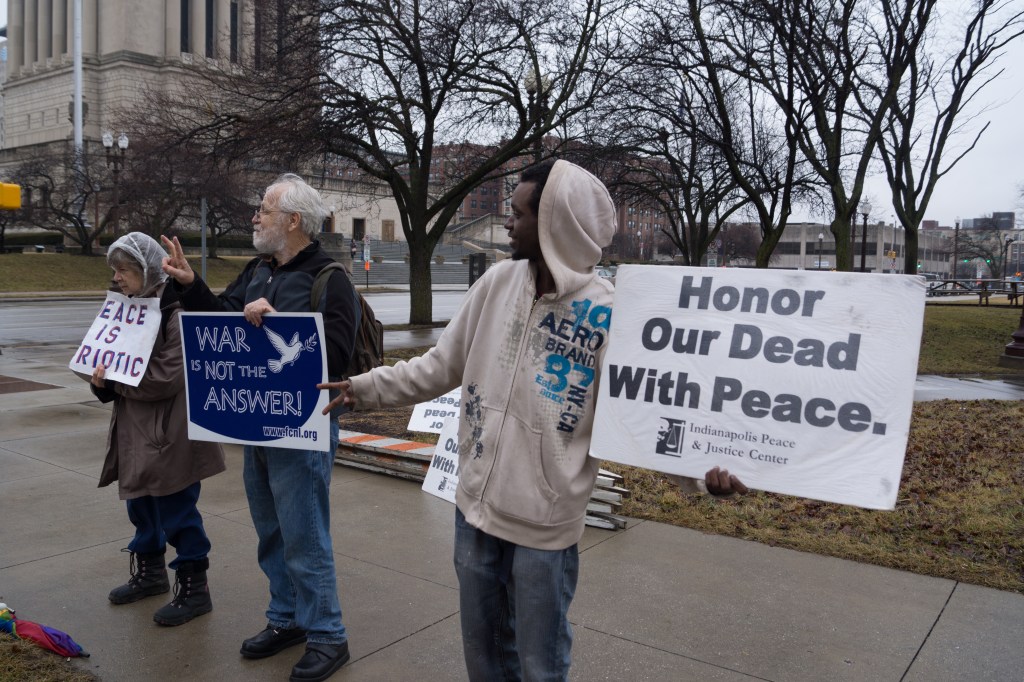
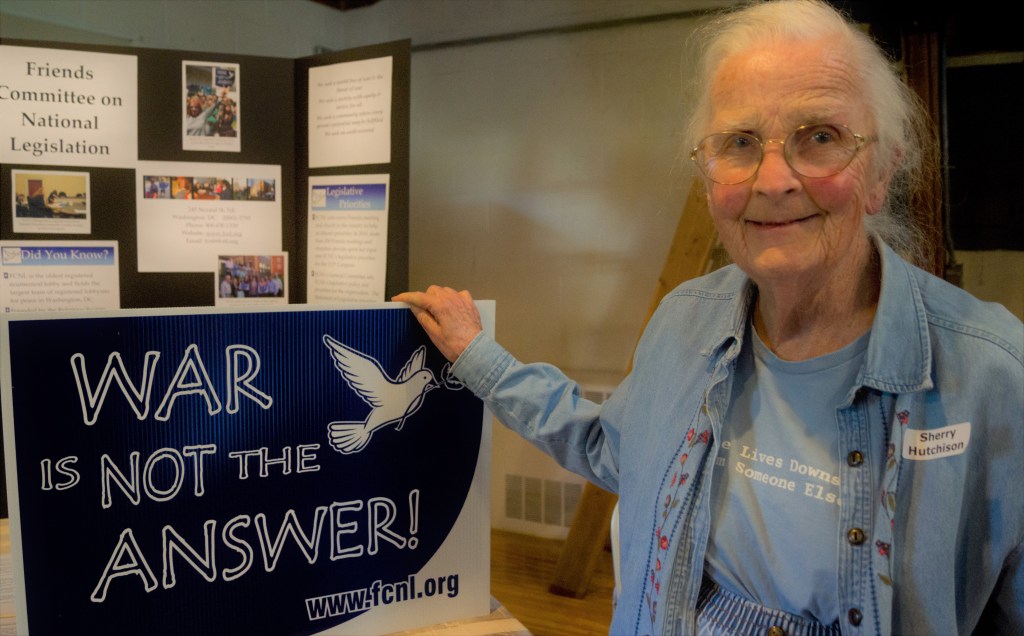
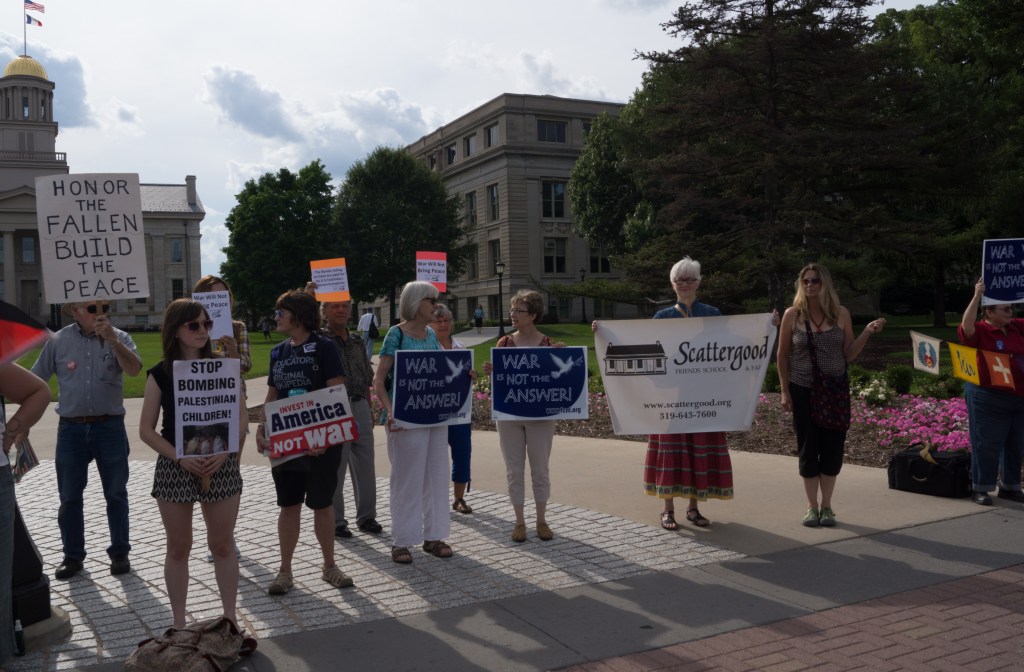
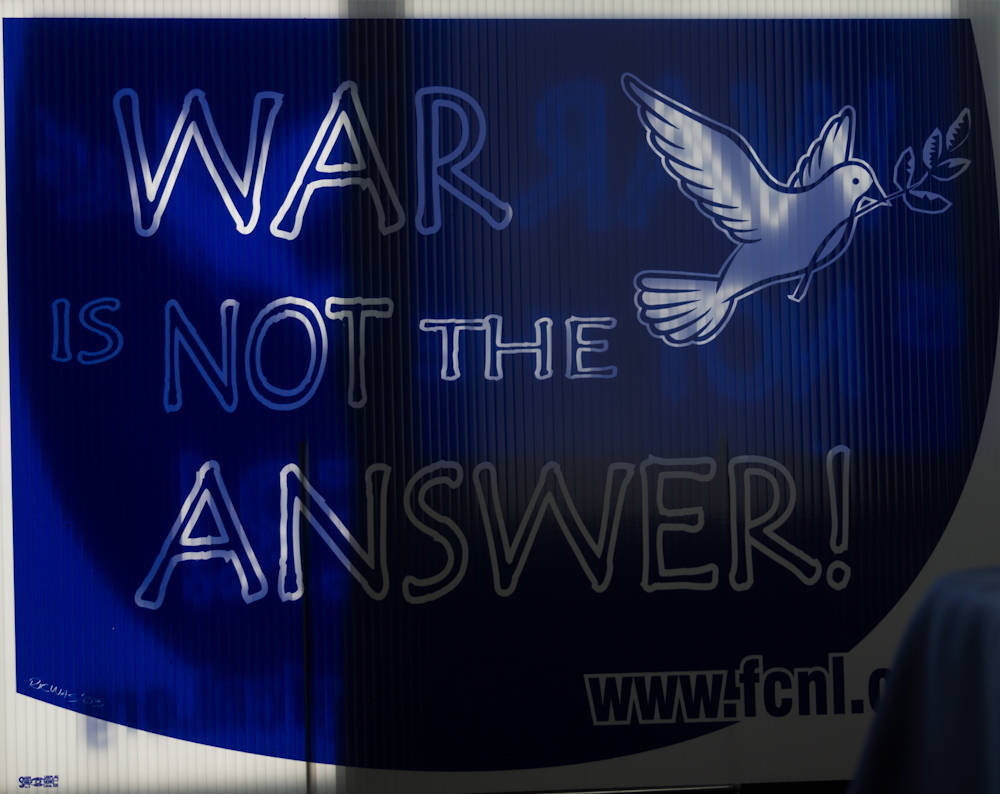
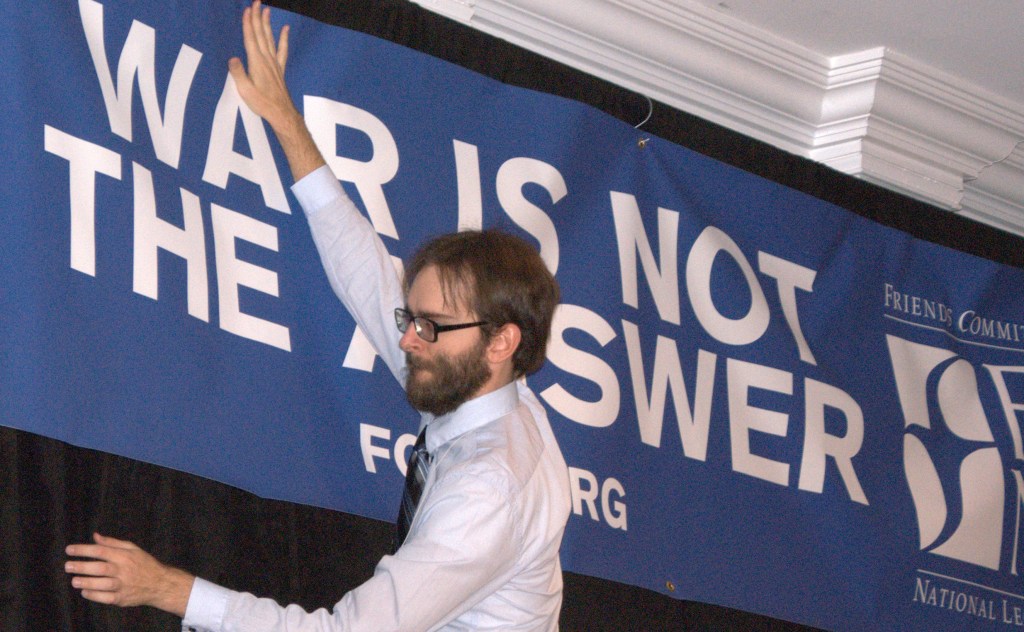
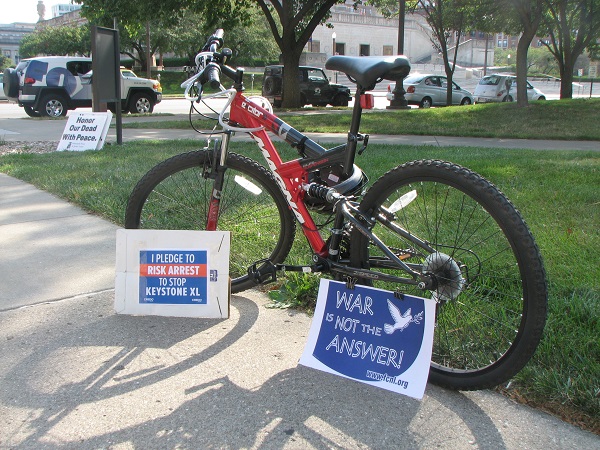
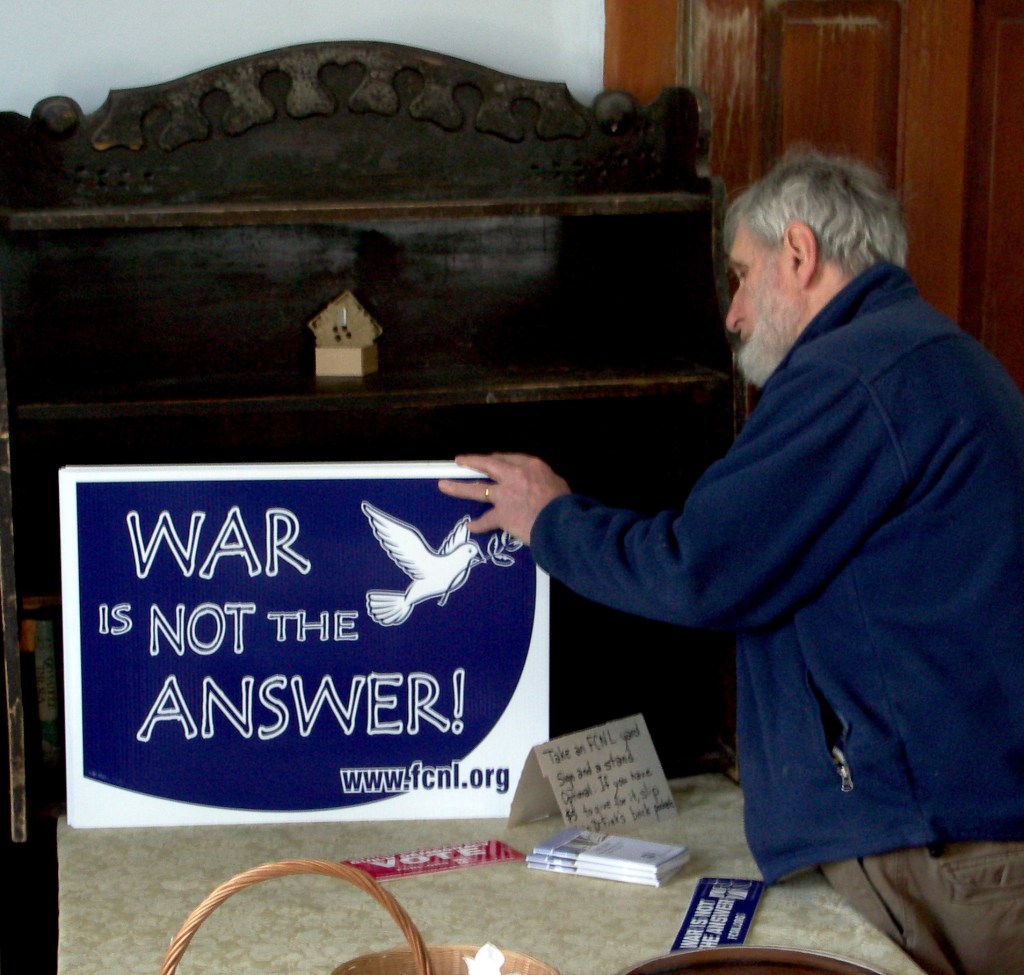
War is not the Answer
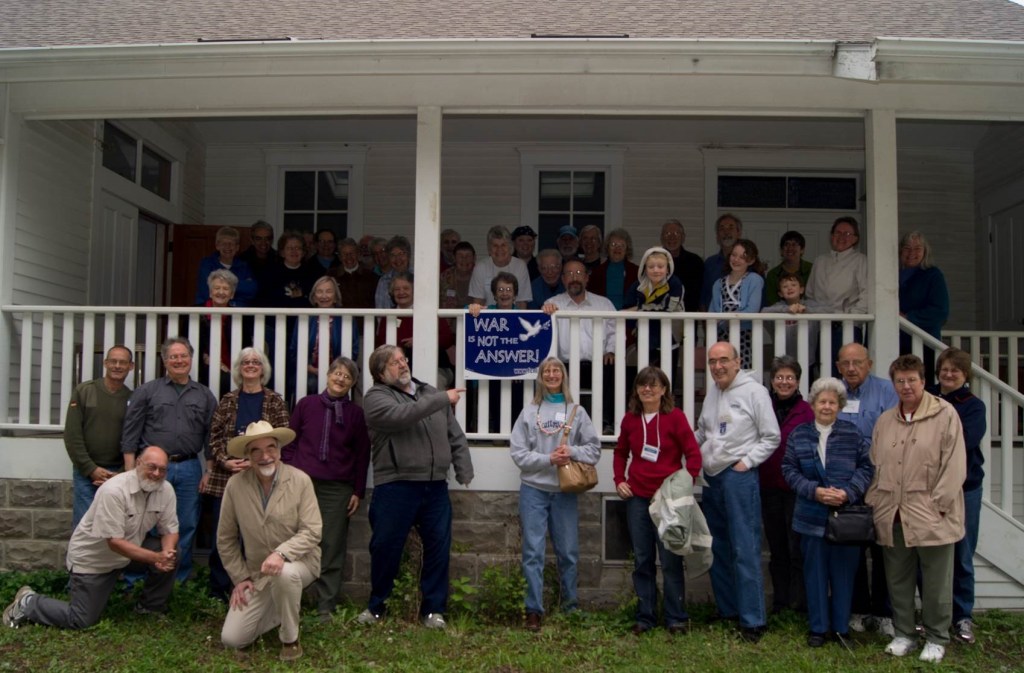
It was post-9/11, and Friends in Atlanta Friends Meeting wanted to publicly witness against war. Friends listened to their hearts’ stirrings during business meeting, and “War is Not the Answer” became the Meeting’s new yard sign.
These words were taken from Martin Luther King Jr.’s speech, Beyond Vietnam: A Time to Break Silence, delivered April 4, 1967 at the Riverside Church in New York.
War is not the answer. Communism will never be defeated by the use of atomic bombs or nuclear weapons. Let us not join those who shout war and, through their misguided passions, urge the United States to relinquish its participation in the United Nations. These are days which demand wise restraint and calm reasonableness. We must not engage in a negative anticommunism, but rather in a positive thrust for democracy, realizing that our greatest defense against communism is to take offensive action in behalf of justice. We must with positive action seek to remove those conditions of poverty, insecurity, and injustice, which are the fertile soil in which the seed of communism grows and develops.
These are revolutionary times. All over the globe men are revolting against old systems of exploitation and oppression, and out of the wounds of a frail world, new systems of justice and equality are being born.
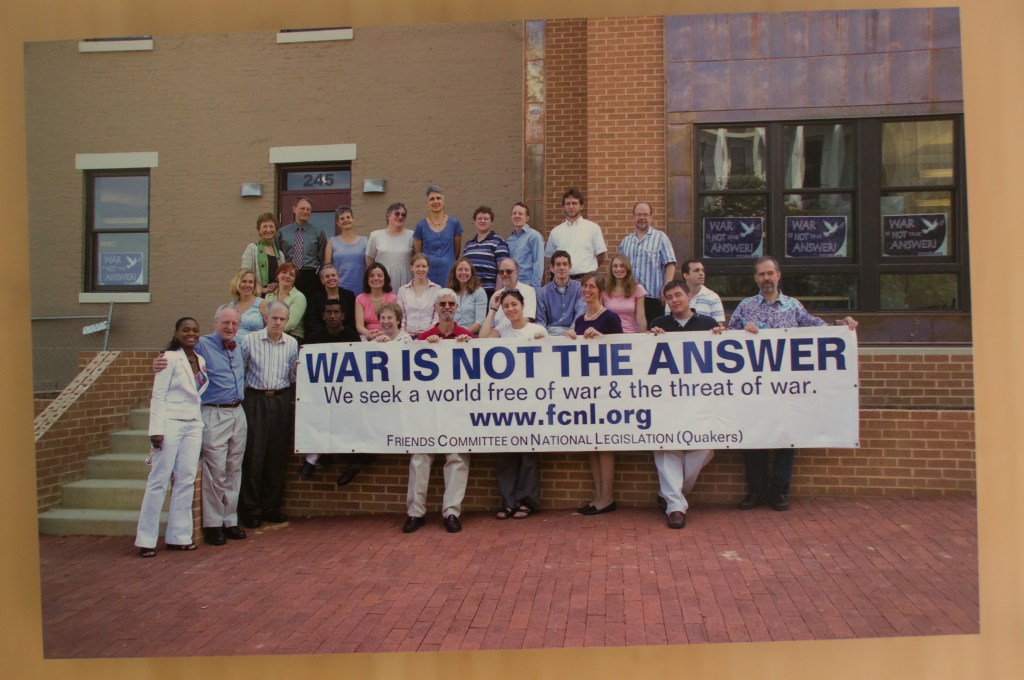
The message – War is Not the Answer – and the signs went viral. FCNL and Friends saw the potency and popularity of the message grew and spread, and the rest is history. With the increasing prospect for an endless war with Iran, War is Not the Answer, has become more relevant.
Friends and other people of faith act when they see broken systems. As we stand on the precipice of another war, Friends are mobilizing across the country to demand Congress halt the spiral into all-out war.
FCNL has distributed more than 2,000,000 “War is Not the Answer” bumper stickers and yard signs since 2002. Demands for the sign are increasing so we are making it available free online for you to download and print. If you’d like to purchase a lawn sign or bumper sticker, you can do so here.
It has taken a while to adjust to thinking of abolition as the elimination of prisons instead of the historical context of abolition of the institution of enslavement. Not surprisingly the concept of prison abolition comes up in any discussion of capitalism and building a just future. Police are the enforcers of capitalism.
I am part of a new group of Friends who are interested in abolishing police and prisons called the Quakers for Abolition Network (QAN).
The following is from an article Jed Walsh and Mackenzie Barton-Rowledge, who helped start QAN, wrote for Western Friend.
Mackenzie: Let’s start with: What does being a police and prison abolitionist mean to you?
Jed: The way I think about abolition is first, rejecting the idea that anyone belongs in prison and that police make us safe. The second, and larger, part of abolition is the process of figuring out how to build a society that doesn’t require police or prisons.
M: Yes! The next layer of complexity, in my opinion, is looking at systems of control and oppression. Who ends up in jail and prison? Under what circumstances do the police use violence?
As you start exploring these questions, it becomes painfully clear that police and prisons exist to maintain the white supremacist, heteronormative, capitalist status quo.
This diagram shows abolition, along with LANDBACK and Mutual Aid, as pieces of changes to transition away from systems of capitalism and white supremacy.
I’ve been reading The Red Deal by the Red Nation, which is about empowering Indigenous peoples, in part to help guide us through environmental chaos. What follows are some interesting perspectives on prison abolition.
Austerity is enforced scarcity. The neoliberal policy of the last forty years has been a tax strike of the super wealthy, who have refused to pay their share of taxes and have locked away the world’s wealth in tax havens and offshore accounts. These are resources that should go towards providing services—education, housing, healthcare, public transportation, infrastructure, and environmental restoration—to those who actually produce the wealth: the Indigenous, Black, migrants, women, and children who are the workers of the world. This strike is worth crushing quickly and with prejudice. Direct action alone won’t reallocate wealth if it is not backed by popular mass movements and enforced by state apparatuses wrested away from the elite and powerful.
Prison abolition and an end to border imperialism are key aspects of the Red Deal, for good reason. The GND calls for the creation of millions of “green” jobs, as well as a policy of “just transition” for poor and working-class families and communities that currently depend on resource extraction for basic income and needs, and which will suffer greatly when the extractive industry is shut down. In the United States today, however, about seventy million people—nearly one-third of adults—have some kind of criminal conviction—whether or not they’ve served time—that prevents them from holding certain kinds of jobs. If we add this number of people to the approximately eight million undocumented migrants, the sum is about half the US workforce, two-thirds of whom are not white. Half of the workforce faces employment discrimination because of mass criminalization and incarceration.
The terrorization of Black, Indigenous, Brown, migrant, and poor communities by border enforcement agencies and the police drives down wages and disciplines poor people—whether or not they are working—by keeping them in a state of perpetual uncertainty and precarity. As extreme weather and imperialist interventions continue to fuel migration, especially from Central America, the policies of punishment—such as walls, detention camps, and increased border security—continue to feed capital with cheap, throwaway lives. The question of citizenship—colonizing settler nations have no right to say who does and doesn’t belong—is something that will have to be thoroughly challenged as a “legal” privilege to life chances. Equitable access to employment and social care must break down imperial borders, not reproduce them.
The Red Deal by The Red Nation (pp. 22-23). Common Notions. Kindle Edition.
Calls for abolition of the prison system have expanded in the wake of widespread police violence. Abolition is part of the work of our Mutual Aid community.
Prison abolition and an end to border imperialism are key aspects of the Red Deal
The Red Nation
This same war of conquest is currently using the mass incarceration machine to instill fear in the populace, warehouse cheap labor, and destabilize communities that dare to defy a system that would rather see you dead than noncompliant. This is the same war where it’s soldiers will kill a black or brown body, basically instinctively, because our very existence reminds them of all that they have stolen and the possibility of a revolution that can create a new world where conquest is a shameful memory.
What we have is each other. We can and need to take care of each other. We may have limited power on the political stage, a stage they built, but we have the power of numbers.
Those numbers represent unlimited amounts of talents and skills each community can utilize to replace the systems that fail us. The recent past shows us that mutual aid is not only a tool of survival, but also a tool of revolution. The more we take care of each other, the less they can fracture a community with their ways of war.
Ronnie James, The Police State and Why We Must Resist
Policing in the United States is a force of racist violence that is entangled at the core of the capitalist system. As Robin D.G. Kelley pointed out on Intercepted With Jeremy Scahill, capitalism and racism are not distinct from one another: “If you think of capitalism as racial capitalism, then the outcome is you cannot eliminate capitalism, overthrow it, without the complete destruction of white supremacy, of the racial regime under which it’s built.”
Police in the United States act with impunity in targeted neighborhoods, public schools, college campuses, hospitals, and almost every other public sphere. Not only do the police view protesters, Black and Indigenous people, and undocumented immigrants as antagonists to be controlled, they are also armed with military-grade weapons. This police militarization is a process that dates at least as far back as President Lyndon Johnson when he initiated the 1965 Law Enforcement Assistance Act, which supplied local police forces with weapons used in the Vietnam War. The public is now regarded as dangerous and suspect; moreover, as the police are given more military technologies and weapons of war, a culture of punishment, resentment and racism intensifies as Black people, in particular, are viewed as a threat to law and order. Unfortunately, employing militarized responses to routine police practices has become normalized. One consequence is that the federal government has continued to arm the police through the Defense Logistics Agency’s 1033 Program, which allows the Defense Department to transfer military equipment free of charge to local enforcement agencies.
I recently wrote about what kind of ancestor do you want to be? Despite the anxiety of exposing yourself to the world, one good thing about writing on a blog is sometimes someone leaves a useful comment. In response to that blog post, someone mentioned the book What Kind of Ancestor Do You Want to Be? by John Hausdoerffer, Brooke Parry Hecht, Melissa K. Nelson, and Katherine Kassouf Cummings.
The book has made me realize there is much more we can do to become the ancestor we want to be.
I imagine most of us are taught how we live our lives may be seen as an example to others, good or bad. Many believe actions speak louder than words. So I have worked hard to be a good example to others. By how I lived my life more than what I write or say. (which you might question from seeing all that I write).
There have been times when I questioned whether our example had any influence on others. Fifty years ago, as I began to live on my own, I refused to have a car because of the impact on Mother Earth. I waited (and waited, and waited) for others to give up their own cars. We now see how well that worked.
But that illustrates something else about being an example. There are probably many ways others might be affected that we have no way of knowing.
I thought living my beliefs was how I would be the ancestor I wanted to be. This is more eloquently expressed in the following quotes from the book.
What this book has taught me is there is more we can do intentionally to be the kind of ancestor we want to be. We should engage with youth in ways to help them take over from us. Becoming the ancestor we want to be is an active process.
As I aged, I wondered who might continue to work on things I think are important. Subconsciously I was looking for that person. In the fall of 2017 I saw the story of Rezadad Mohammadi’s work with the American Friends Service Committee related to the war on drugs, incarceration and solitary confinement, and work on a mural giving immigrants a voice in their community. I wrote a post about that on my blog. Scattergood graduate’s social justice video project.
I thought Reza might be a young person to engage regarding some of the things I had been working on. He had recently graduated from the Quaker boarding school I attended, Scattergood Friends School and Farm in Eastern Iowa. That let me know he learned some about Quaker values.
He accepted my Facebook friend request and the rest, as they say, was history. Reza was from Afghanistan. I learned a lot from him about that country, and a little about living in a war torn land.
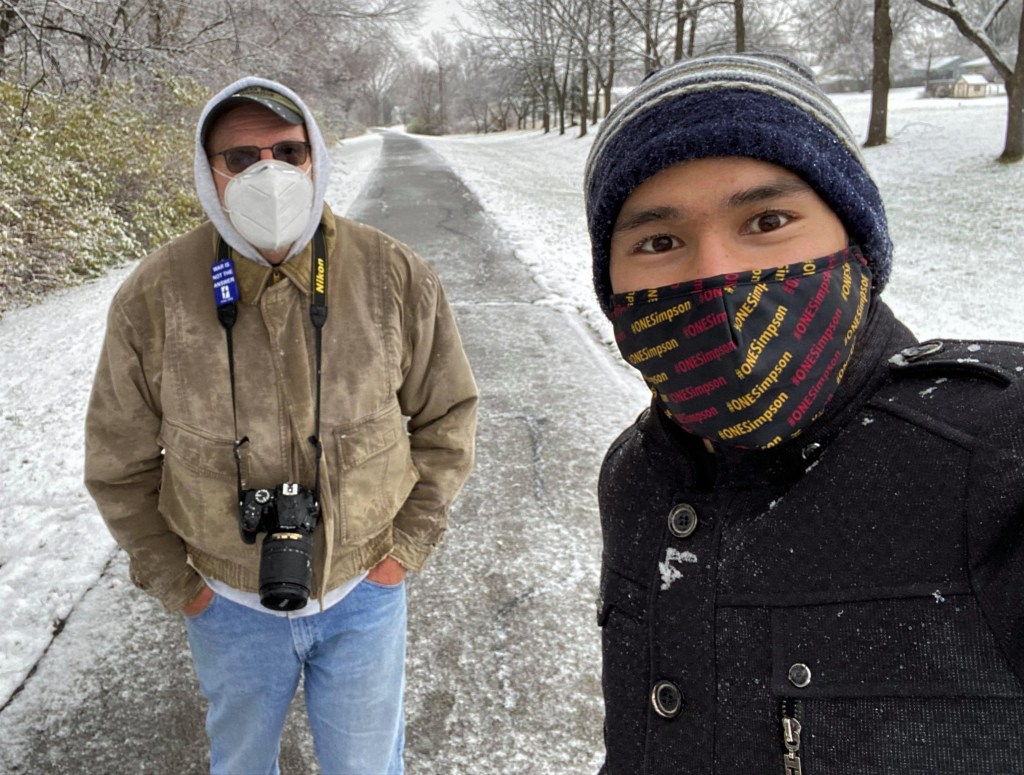
We have become close friends. Fortunately, he came to Indianola, where I live, to attend Simpson College. You can find the many blog posts that mentioned him here: reza | Quakers, social justice and revolution
Reza became involved with the Friends Committee on National Legislation (FCNL). He worked there one summer and attended two Spring Lobby Weekends, where youth lobby congress people with the guidance of FCNL. For the second visit, he organized a group of Simpson College students to attend.
Last year Reza and I went to Scattergood to talk about our environmental work. He described his project at Simpson related to plastics and pollution. His group made eating places at the College stop using plastic straws.
He went with me for support when I spoke about the First Nation-Farmer Climate Unity March to the International League of Women Voters.
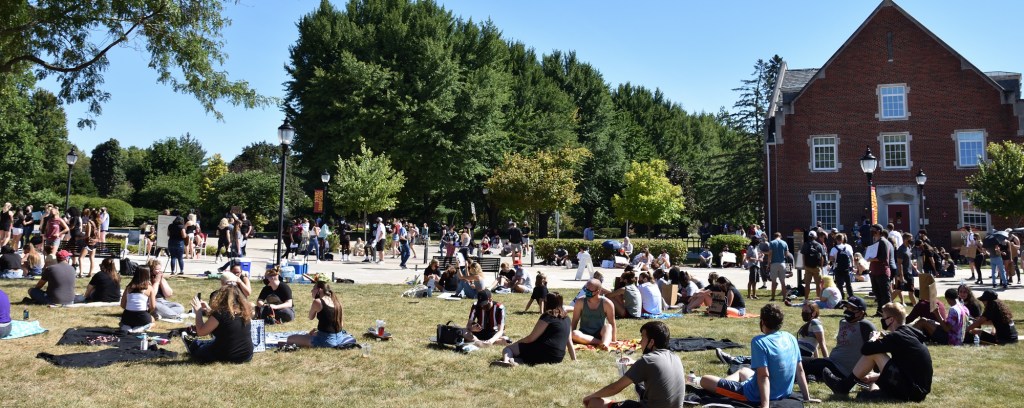
Reza was involved in the rallies at Simpson College when a racial incident occurred there.
I am glad to know he will continue to do this work.
Just as we prepare the young to step into adulthood and release childish ways for the health and growth of society , so the practice of becoming an ancestor requires the release of our grip upon what is , the letting go of certain ways of being in the world to embrace the changes required for the stream of life to keep flowing vigorously.
What Kind of Ancestor Do You Want to Be? by John Hausdoerffer, Brooke Parry Hecht, Melissa K. Nelson, and Katherine Kassouf Cummings
Anishinaabe elder Michael Dahl posed the question : What Kind of Ancestor Do You Want to Be ? We view this compelling question as eternally urgent . Eternal because it calls forth ancient wisdom and multigenerational ethics necessary for any human community to survive and thrive . Urgent because the planetary impacts of colonial overconsumption of resources and domination of peoples dramatically threatens the livability of this planet . More than asking us how we want to be remembered , the question of What Kind of Ancestor Do You Want to Be ? suggests that we are , always and already , ancestors — even if we never are remembered or never have children . The question deepens our awareness of the roots and reach of all of our actions and non – actions . In every moment , whether we like it or not and whether we know it or not , we are advancing values and influencing systems that will continue long past our lifetimes . These values and systems shape communities and lives that we will never see . The ways we live create and reinforce the foundation of life for future generations . We are responsible for how we write our values , what storylines we further and set forth — the world we choose to cultivate for the lives that follow ours . So how are we to live ?
What Kind of Ancestor Do You Want to Be? by John Hausdoerffer, Brooke Parry Hecht, Melissa K. Nelson, and Katherine Kassouf Cummings
Just as we prepare the young to step into adulthood and release childish ways for the health and growth of society , so the practice of becoming an ancestor requires the release of our grip upon what is , the letting go of certain ways of being in the world to embrace the changes required for the stream of life to keep flowing vigorously.
What Kind of Ancestor Do You Want to Be? by John Hausdoerffer, Brooke Parry Hecht, Melissa K. Nelson, and Katherine Kassouf Cummings
Being a good ancestor means understanding how to handle power, when to hold it, when to hand it over, and how to transform it.
What Kind of Ancestor Do You Want to Be? by John Hausdoerffer, Brooke Parry Hecht, Melissa K. Nelson, and Katherine Kassouf Cummings


















 LANDBACK Friends