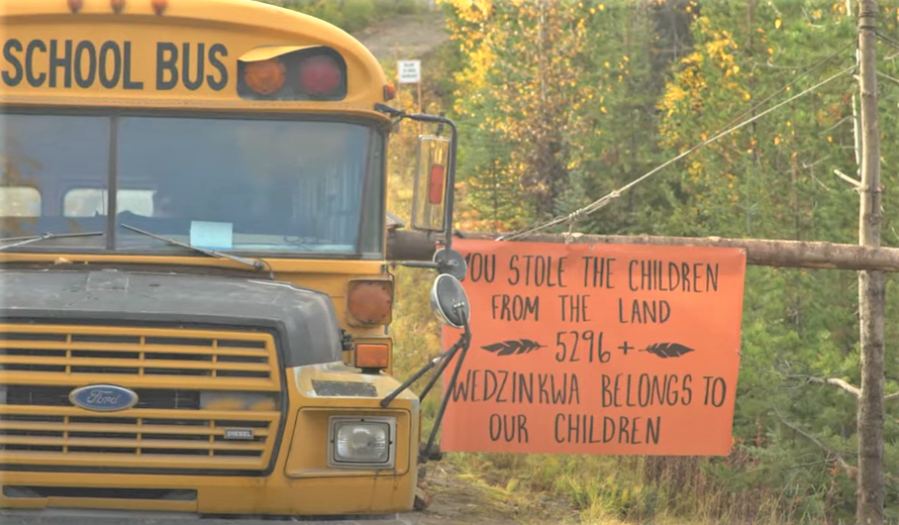
We don’t give up

This first video is an update about what is happening now on the Wet’suwet’en territories.

The video at the end, INVASION, was released in November, 2019, and gives an excellent overview of the struggles of the Wet’suwet’en peoples to protect their land and water. The story is well told, but what really affected me were all the beautiful shots of that pristine land.

We’re occupying this space. People are going to be living here and it’ll be occupied from now on. This project is not a done deal. It’s only one third complete and most of that work is happening in other territories. The Wetsuweten have been resisting this project since day one and will continue to resist this project until it fails.

It’s time to end this once and for all because there’s no way that Wetsuweten are ever going to stand down. There’s no way that we’re ever going to move off of our territories and not be here and occupying them and not be utilizing our Wedzin Kwa, utilizing our territories the way that we’re supposed to be in the way that we have every right to.

So now is the time to let the investors know, let the people who are putting millions and billions of dollars into this project know that it’s going to fail. And let’s put it to rest once and for all because we’re not going anywhere. We’re digging in, the snow’s coming. We anticipated. You know that it’s going to get cold, things are going to get harder but we’re digging in. And this is our territory. This is Wedzin Kwa, the lifeline of our whole territory for all for us and all of our neighbors. And this is the stand that we’re taking, and the position that we’re taking, and we don’t give up.

Molly Wickham, Sleydo’

News Release

Indigenous Environmental Network

On the morning of September 25, 2021, the access road to Coastal GasLink’s (CGL’s) drill site at the Wedzin Kwa river was destroyed. Blockades have been set up and sites have been occupied, to stop the drilling under the sacred headwaters that nourish the Wet’suwet’en Yintah and all those within its catchment area. Cas Yikh and supporters have gained control of the area and refuse to allow this destruction to continue.

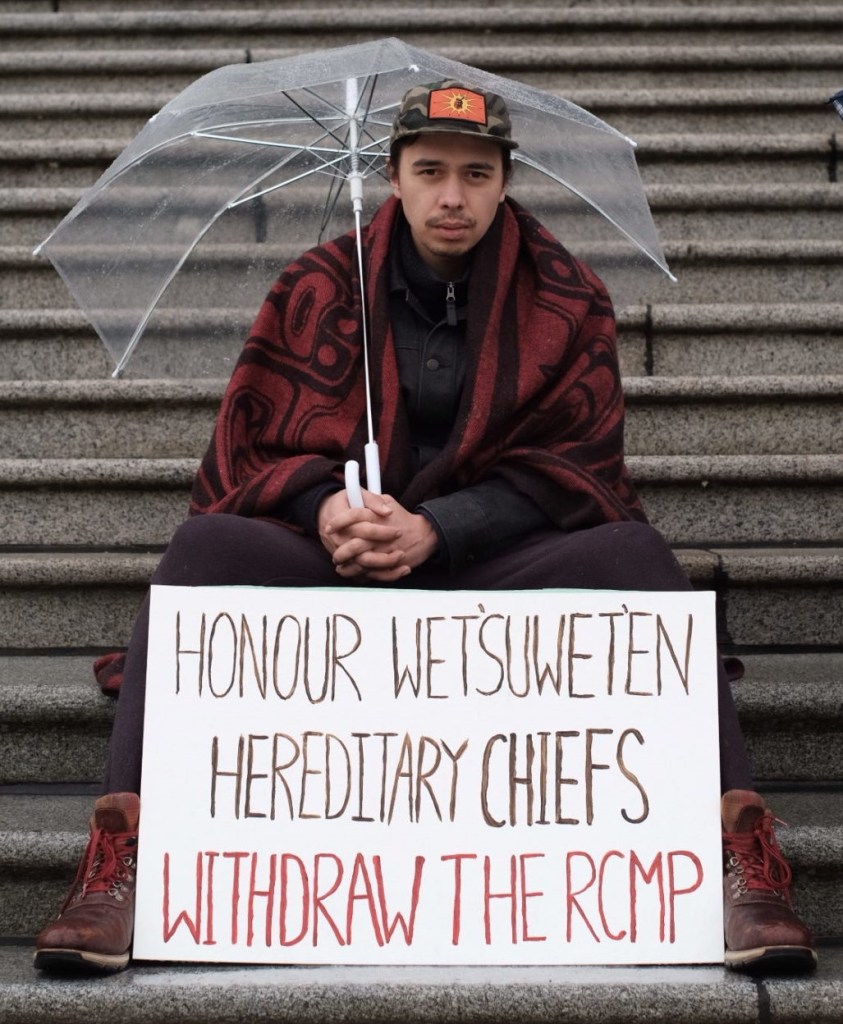
Wet’suwet’en Hereditary Chiefs were denied access to their own lands, and there has been one arrest confirmed. The Hereditary Chiefs were read the injunction and threatened with arrest, but they held their ground. Despite heavy machinery and heavy Royal Canadian Mounted Police presence, our relatives and supporters are standing strong holding the line, and so far no more arrests have been confirmed. As of Sunday, September 26, the individual arrested has been released and the chiefs and supporters continue to hold the line and successfully hold off any work by Coastal GasLink.

Days ago, Coastal GasLink destroyed our ancient village site, Ts’elkay Kwe. When Gidimt’en Checkpoint spokesperson Sleydo’ attempted to monitor the Coastal GasLink archaeological team and contest the destruction of Wet’suwet’en cultural heritage, she was aggressively intimidated by Coastal GasLink security guards. Tensions have continued to rise on the Yintah as Coastal GasLink pushes a reckless and destructive construction schedule with the support of private security and the Royal Canadian Mounted Police.

Now, Coastal GasLink is ready to begin drilling beneath our sacred headwaters, Wedzin Kwa. We know that this would be disastrous, not only for Wet’suwet’en people, but for all living beings supported by the Wedzin Kwa, and for the communities living downstream. Wedzin Kwa is a spawning ground for salmon and a critical source of pristine drinking water. 

States Sleydo’, Gidimt’en Checkpoint Spokesperson:

“Our way of life is at risk. […] Wedzin Kwa [is the] the river that feeds all of Wet’suwet’en territory and gives life to our nation.”

Coastal Gaslink has been evicted from our territories by the Wet’suwet’en Hereditary Chiefs who have full jurisdiction over Wet’suwet’en lands. Coastal GasLink is pushing through a 670-kilometer fracked gas pipeline, but under ‘Anuc niwh’it’en (Wet’suwet’en law) all five clans of the Wet’suwet’en have unanimously opposed all pipeline proposals and have not provided free, prior, and informed consent to Coastal Gaslink to do work on Wet’suwet’en lands.

As Coastal GasLink continues to trespass, we will do everything in our power to protect our waters and to uphold our laws. Gidimt’en Checkpoint has issued a call for support, asking people to travel to Cas Yikh territory to stand with them.

Wet’suwet’en blockades erected to stop Coastal Gaslink drilling under sacred headwaters. Drilling would be disastrous for all living beings supported by the Wedzin Kwa. SEP 27, 2021


In this era of “reconciliation”, Indigenous land is still being taken at gunpoint. INVASION is a new film about the Unist’ot’en Camp, Gidimt’en checkpoint and the larger Wet’suwet’en Nation standing up to the Canadian government and corporations who continue colonial violence against Indigenous people.

The Unist’ot’en Camp has been a beacon of resistance for nearly 10 years. It is a healing space for Indigenous people and settlers alike, and an active example of decolonization. The violence, environmental destruction, and disregard for human rights following TC Energy (formerly TransCanada) / Coastal GasLink’s interim injunction has been devastating to bear, but this fight is far from over.

Following are suggested questions for discussion after seeing the film. The questions can, of course, be used for that lands you live on.

  • What is the colonial history of this region? Who occupied these lands before the establishment of the current borders & national government?
  • What does anti-colonial struggle look like in this area?  Are there any active anti-colonial struggles going on?
  • What projects are people in this room currently engaged with that could benefit from applying more of an anti-colonial lens?  What would this actually look like in practice… aside from just token acknowledgement?
  • What are some of the practical things that non-Indigenous activists should know about when working with Indigenous groups, or in Indigenous-led campaigns?  
  • What financial institutions, politicians, or corporations based in your community are supporting the destruction of Wet’suwet’en lands?
  • What are some ways of demonstrating material support for the Unis’tot’en and Wet’suwet’en? How can you support Wet’suwet’en sovereignty from your stand?

The United Nations Declaration on the Rights of Indigenous Peoples delineates and defines the individual and collective rights of Indigenous peoples, including their ownership rights to cultural and ceremonial expression, identity, language, employment, health, education and other issues. It “emphasizes the rights of Indigenous peoples to maintain and strengthen their own institutions, cultures and traditions, and to pursue their development in keeping with their own needs and aspirations”. It “prohibits discrimination against indigenous peoples”, and it “promotes their full and effective participation in all matters that concern them and their right to remain distinct and to pursue their own visions of economic and social development”.

UN Declaration on the Rights of Indigenous Peoples


Article 10 of the UN Declaration on the Rights of Indigenous Peoples states: Indigenous peoples shall not be forcibly removed from their lands or territories. No relocation shall take place without the free, prior and informed consent of the indigenous peoples concerned and after agreement on just and fair compensation and, where possible, with the option of return.

UNDRIP Article 10: No Forced Removal


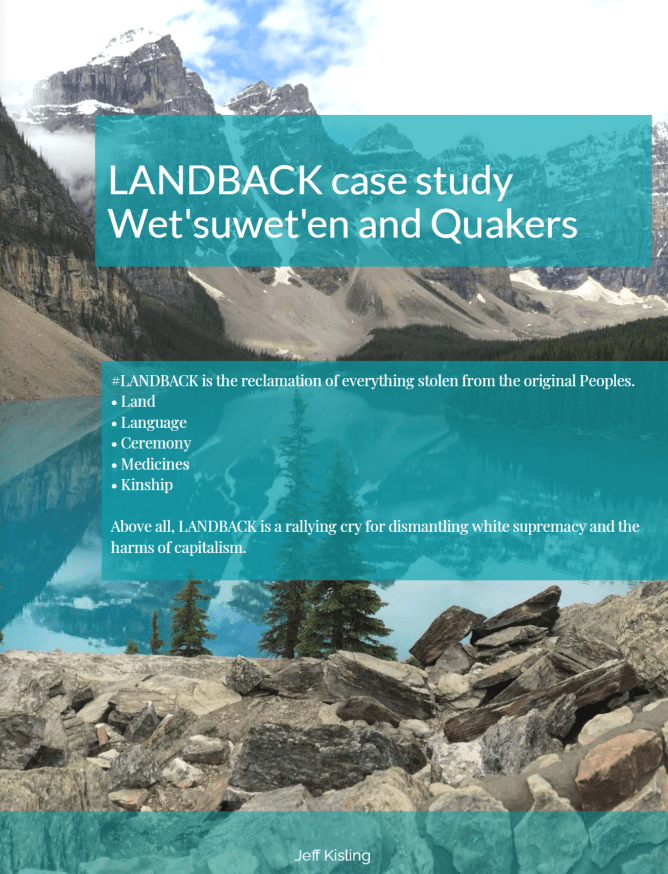
The LANDBACK Case Study, Wet’suwet’en and Quakers pictured below can be found here: https://designrr.s3.amazonaws.com/jakislin_at_outlook.com_52440/n-a_615326c8.pdf

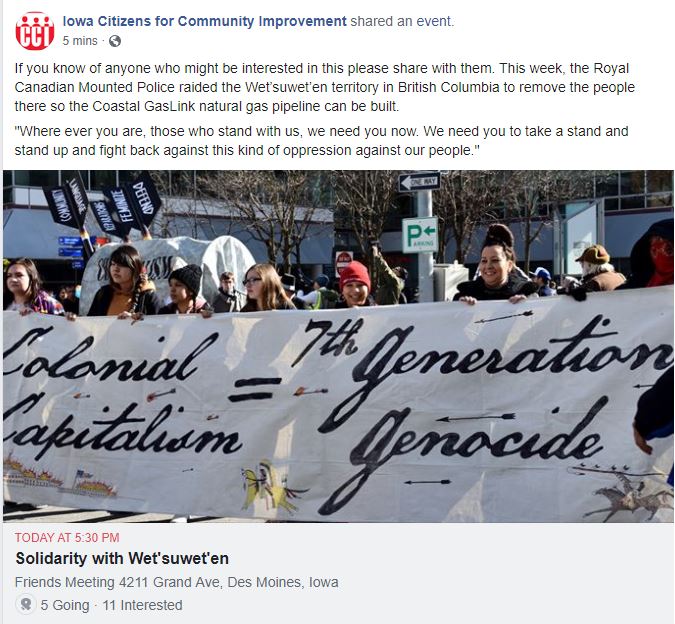
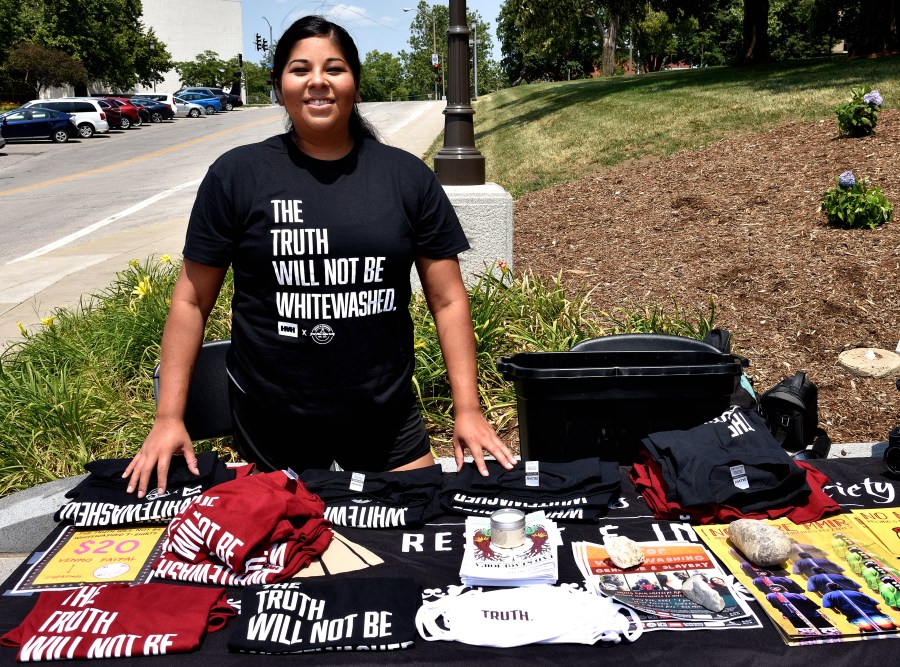
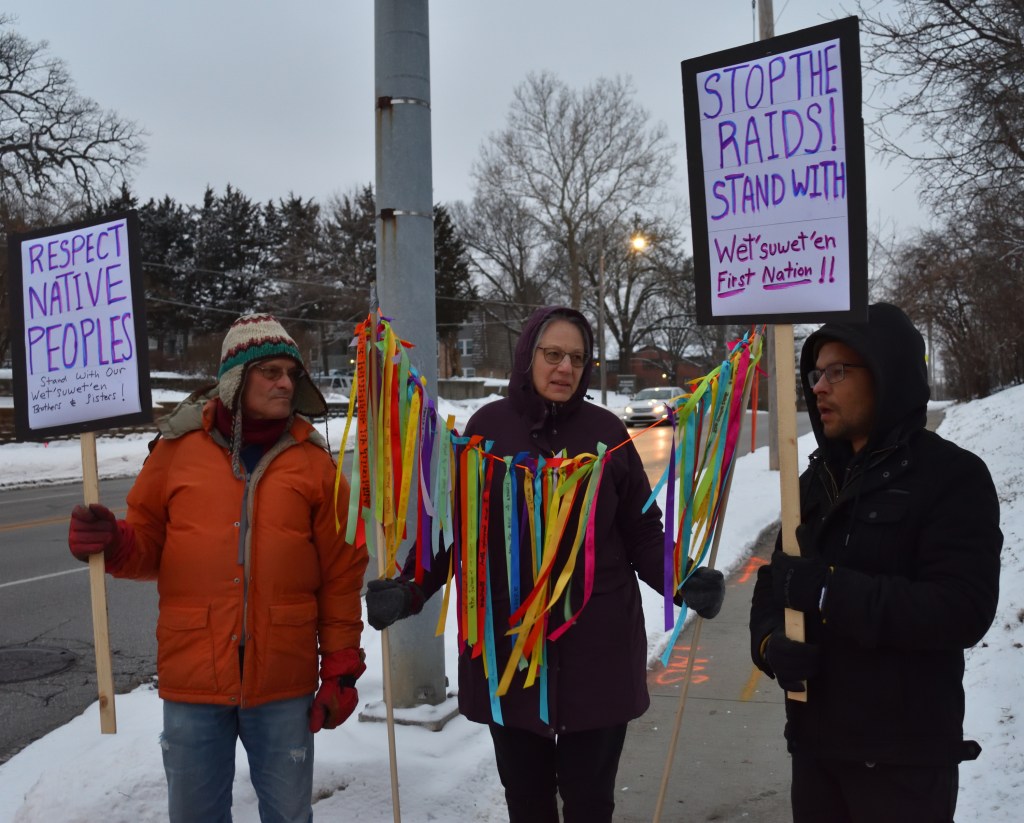
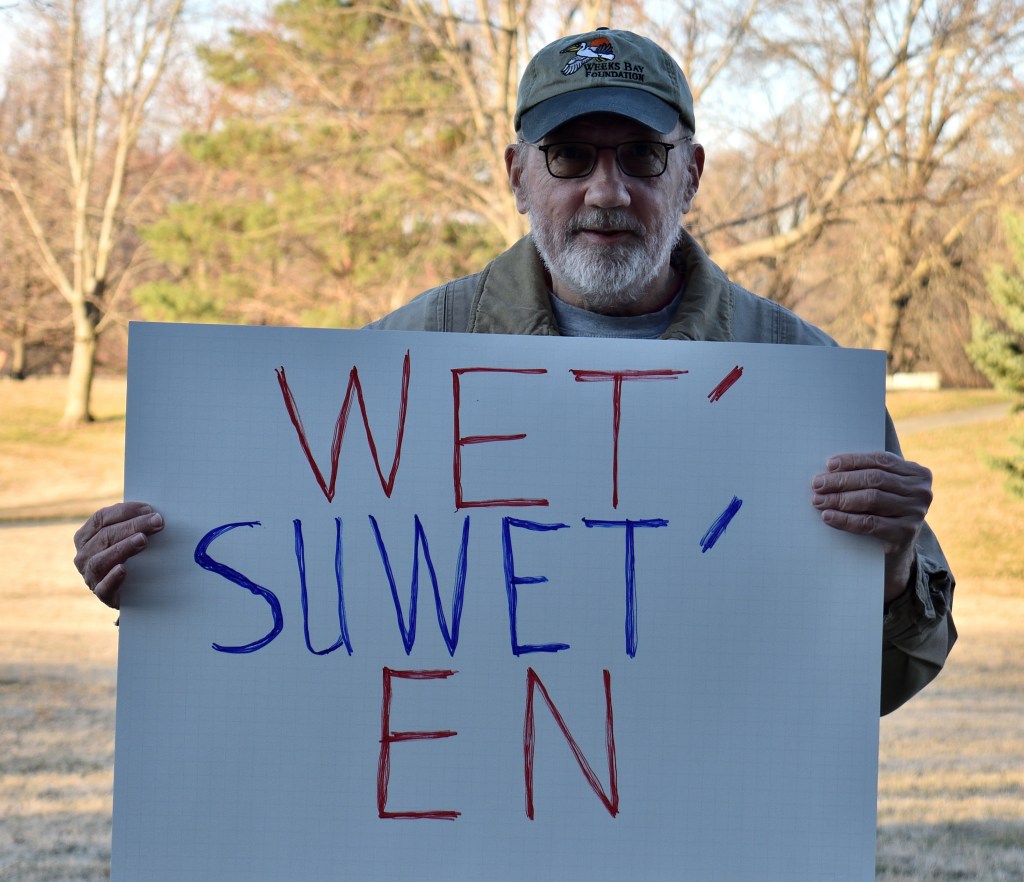
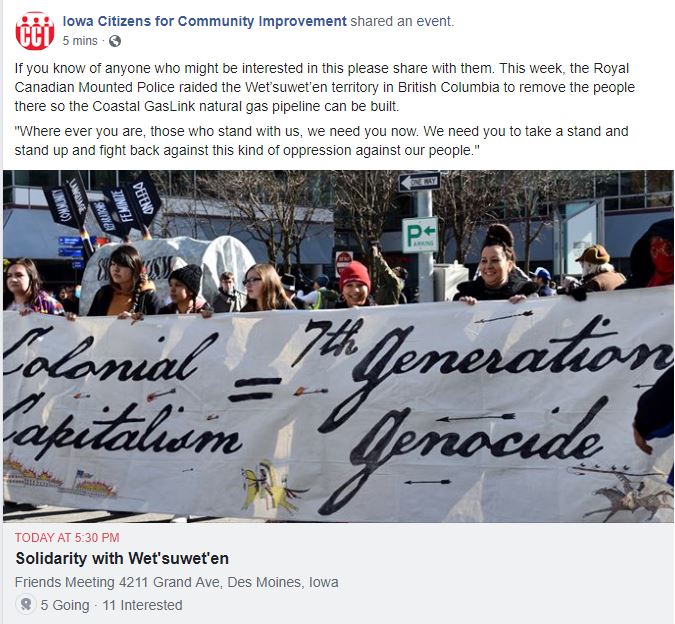
Support in Des Moines, Iowa

#AllOutForWedzinKwa

I first heard of the Wet’suwet’en peoples and their struggle to prevent the construction of the Coastal GasLink (CGL) pipeline through their pristine land in January 2020. What caught my attention was the following video, “Coastal Gaslink Evicted from Unist’ot’en territory.” Having been engaged with protecting water from the Keystone XL and Dakota Access pipelines for years, I was amazed at the peaceful eviction of CGL workers from Wet’suwet’en territories, temporary as it turned out to be.

Unfortunately, the interactions between the Wet’suwet’en and the Canadian government have not been peaceful. There have been many conflicts and arrests of Wet’suwet’en people by militarized Royal Canadian Mounted Police. There are heightened tensions now as construction of CGL has reached the point of drilling under the sacred headwaters of the Wedzin Kwa river.

Under ‘Anuc niwh’it’en (Wet’suwet’en law) all Hereditary Chiefs of the five clans of the Wet’suwet’en have unanimously opposed all pipeline proposals and have not provided free, prior, and informed consent to Coastal Gaslink to drill on Wet’suwet’en lands.

Over the past week, as Wet’suwet’en members of Cas Yikh and their supporters maintain control of a Coastal GasLink drill site that threatens their unceded territories, the RCMP has utilized excessive use of force and torturous pain compliance on land defenders. 

Gidimt’en chiefs and supporters have been defending a number of culturally significant archeological sites and the sacred headwaters of the Wedzin Kwa from destruction on unceded Cas Yikh (Grizzly House) territory belonging to the Gidimt’en clan of the Wet’suwet’en people. 

#AllOutForWedzinKwa

The following tweet provides a detail summary of the recent actions at the Wet’suwet’en territory.
Wet’suwet’en Resistance to CGL Pipeline Occupation 2021: What Is Happening at Gidimt’en Checkpoint? A Recap of Events from Wet’suwet’en Territory This Week, Oct 4, 2021

What can I do?

Last year, the Wet’suwet’en and our allies saw a massive resurgence of solidarity and support in the #SHUTDOWNCANADA movement. Inspired by the recognition and belief in Indigenous Sovereignty and jurisdiction over their territories, many people rose up together and demonstrated a serious rejection to Canada’s agenda of land theft and genocide against Indigenous Peoples. 

This year, we must go #AllOutForWedzinKwa !  

The time is now to return our energy to this movement after the long slow pain of the past few isolating years. The river is imminently under threat, and the people on the ground in this remote community need your engagement, action and support.

Ways to support: 

⭐ Come to the land: https://www.yintahaccess.com/come-to-camp

⭐ Find or host a solidarity rally near you. Consider hosting a rally at the site of a regulating, insurance or investment office to send a direct message to those permitting and backing this project that Coastal Gaslink for trespassing on Wet’suwet’en lands and will not go through.

⭐ Pressure the government : call the BC Oil and Gas Commission,, the Ministry of Forests,and the Environmental Assessment office

BC Oil and Gas Commission (2950 Jutland Rd, Floor 6, Victoria BC): https://www.bcogc.ca/what-we-regulate/major-projects/coastal-gaslink/

  • Commissioner and Chief Executive Officer BC Oil & Gas Commission: Paul Jeakins; (250 419 4411), paul.jeakins@bcogc.ca

Minister of Forests, Lands, Natural Resource Operations & Rural Development Contacts:

https://www2.gov.bc.ca/gov/content/governments/organizational-structure/ministries-organizations/ministries/forests-lands-natural-resource-operations-and-rural-development/ministry-contacts

  • Katrine Conroy; (250 381 6240), flnr.minister@gov.bc.ca

Enviromental Assement Office: https://projects.eao.gov.bc.ca/p/588511c4aaecd9001b825604/project-details

  • Project Lead: Meaghan Hoyle; (778 974-336), meaghan.hoyle@gov.bc.ca
  • Executive Project Director: Fern Stockman; (778 698-9313), Fern.Stockman@gov.bc.ca
  • Compliance & Enforcement Lead: Compliance & Enforcement Branch (250-387-0131), eao.compliance@gov.bc.ca

⭐ Donate: https://go.rallyup.com/wetsuwetenstrong/Campaign/Details

⭐ Share our posts: Use the hashtag #AllOutForWedzinKwa to spread the word! 

#AllOutForWedzinKwa

Orange Shirt Day

I’m saddened by the disconnect between Canada’s years of work on truth and reconciliation related to institutions of forced assimilation of Indigenous children and the ongoing militarized response by the government against the Wet’suwet’en peoples (see the tweets at the end for updates).

The investigation related to the remains of Indigenous children on the grounds of residential schools in the US is beginning. And yet, as in Canada, multiple fossil fuel projects continue to be approved. There is increasing resistance to the construction of these pipelines. And a new class of pipelines related to carbon capture are proposed.

Orange Shirt Day will also be observed tomorrow in Canada.


The Orange Shirt Story began in May 2013 during the Truth and Reconciliation Hearings in Williams Lake BC. At that time Kukpi7 Fred Robbins of the Esketemc enlisted the support of the local School District, Regional Government and the Municipalities of the Cariboo, to both honour the survivors of Residential Schools and raise awareness of the Residential School system among the people of the Cariboo. This is the story of Kukpi7 Fred Robbins time at Residential School, the Commemoration events that were organized, and the hopes for the future that Kukpi7 Fred Robbins envisioned. – WARNING Sensitive Content

https://www.canada.ca/en/canadian-heritage/campaigns/national-day-truth-reconciliation.html

Leading up to September 30, the “National Day of Truth and Reconciliation” we need to send the message that things have to change and they have to change NOW.

#WetsuwetenStrong #NoTrespass #WedzinKwa #CGLofftheYintah #Sovereignty #Solidarity #DefendTheYintah #WeAreAllOne #IndigenousSovereignty #TraditionalGovernance

Defending Wedzin Kwa

Over the past several days there has been escalating conflict between the Wet’suwet’en peoples and the Coastal Gaslink pipeline company, which is supported by the Royal Canadian Mounted Police. Coastal GasLink is trying to drill under the sacred headwaters, Wedzin Kwa.

The last tweet below talks about the most recent attempts of armed invasion of Wet’suwet’en lands by the RCMP that began in 2019.

This is a glaring example of the fossil fuel industry forcing its way against the will of the people, of Indigenous peoples, enforced by the government (of Canada in this case). Go to https://www.yintahaccess.com/ for ways you can help.

This is especially dispiriting as the first National Day of Truth and Reconciliation in Canada, September 30, approaches.


On the morning of September 26th, the access road to Coastal GasLink’s drill site was destroyed. A series of blockades were put into place and the site was occupied. When the chiefs arrived onsite, they were threatened with arrest and denied access to their territory. One person was arrested during the occupation. Wet’suwet’en chiefs are trying to protect the sacred head waters of Wedzin Kwa. We cannot let them drill under this river.

Drill Site Occupied As Wet’suwet’en Chiefs Call For Support, It’s Going Down, Sept 26, 2021


Now, CGL is ready to begin drilling beneath our sacred headwaters, Wedzin Kwa. We know that this would be disastrous, not only for Wet’suwet’en people, but for all living beings supported by the Wedzin Kwa, and for the communities living downstream. Wedzin Kwa is a spawning ground for salmon and a critical source of pristine drinking water. States Sleydo’, Gidimt’en Checkpoint Spokesperson: 

“Our way of life is at risk. […] Wedzin Kwa [is the] the river that feeds all of Wet’suwet’en territory and gives life to our nation.”

Wet’suwet’en Blockades Erected To Stop Coastal Gaslink Drilling Under Sacred Headwaters, Indigenous Environmental Network, September 27, 2021


News Release
Indigenous Environmental Network

On the morning of September 25, 2021, the access road to Coastal GasLink’s (CGL’s) drill site at the Wedzin Kwa river was destroyed. Blockades have been set up and sites have been occupied, to stop the drilling under the sacred headwaters that nourish the Wet’suwet’en Yintah and all those within its catchment area. Cas Yikh and supporters have gained control of the area and refuse to allow this destruction to continue.

Wet’suwet’en Hereditary Chiefs were denied access to their own lands, and there has been one arrest confirmed. The Hereditary Chiefs were read the injunction and threatened with arrest, but they held their ground. Despite heavy machinery and heavy Royal Canadian Mounted Police presence, our relatives and supporters are standing strong holding the line, and so far no more arrests have been confirmed. As of Sunday, September 26, the individual arrested has been released and the chiefs and supporters continue to hold the line and successfully hold off any work by Coastal GasLink.

Days ago, Coastal GasLink destroyed our ancient village site, Ts’elkay Kwe. When Gidimt’en Checkpoint spokesperson Sleydo’ attempted to monitor the Coastal GasLink archaeological team and contest the destruction of Wet’suwet’en cultural heritage, she was aggressively intimidated by Coastal GasLink security guards. Tensions have continued to rise on the Yintah as Coastal GasLink pushes a reckless and destructive construction schedule with the support of private security and the Royal Canadian Mounted Police.

Now, Coastal GasLink is ready to begin drilling beneath our sacred headwaters, Wedzin Kwa. We know that this would be disastrous, not only for Wet’suwet’en people, but for all living beings supported by the Wedzin Kwa, and for the communities living downstream. Wedzin Kwa is a spawning ground for salmon and a critical source of pristine drinking water.

Indian Country Today

Our warrior spirits are stronger than they’ll ever be

Gidimt’en Checkpoint spokesperson Sleydo’
https://twitter.com/Gidimten/status/1442698309651427328/photo/1

This is a PDF of the history of the involvement of some of us in Iowa related to the Wet’suwet’en peoples’ struggles. https://designrr.s3.amazonaws.com/jakislin_at_outlook.com_52440/n-a_615326c8.pdf


Police Violence at Gidimt’en Checkpoint

The Wet’suwet’en vs. RCMP and Coastal GasLink situation is escalating.

#WetsuwetenStrong #NoTrespass #WedzinKwa #CGLofftheYintah #WeAreAllOne #TraditionalGovernance #StandUpFightBack

Wet’suwet’en struggle continues

It is tragic that at the same time the concepts of #LANDBACK are being embraced, resource extractive companies continue to take land, without free and prior consent. And it is ironic that this conflict is going on at a time when Canada will celebrate the first National Day for Truth and Reconciliation on September 30.
This is a link to the story of my experiences with the Wet’suwet’en struggles, LANDBACK Case Study: Wet’suwet’en and Quakers.

Now an archeological site has just been destroyed.

Gidimt’en Checkpoint

September 23 at 2:32 PM 
PRESS RELEASE
COASTAL GASLINK DESTROYS ARCHEOLOGICAL SITE ON CAS YIKH TERRITORY
September 23, 2021
FOR IMMEDIATE RELEASE

SMITHERS, BC: On September 22, 2021, after days of conflict between Gidimt’en/Cas Yikh Chiefs and members, Coastal GasLink and the RCMP, contractors completely cleared an archaeological site which has been destroyed with heavy machinery for the construction of a methane gas pipeline.

Gidimt’en chiefs and supporters have been defending a number of culturally significant archeological sites from destruction on unceded Cas Yikh (Grizzly House) territory belonging to the Gitdimt’en clan of the Wet’suwet’en people. The Coastal GasLink pipeline company has obtained a Site Alteration Permit (SAP) from the BC Oil and Gas Commission (OGC) through a flawed and ineffective consultation process and without the Free, Prior and Informed Consent of the Wet’suwet’en Hereditary Chiefs. The Wet’suwet’en have argued for years that the pipeline route endangers critical species, cultural use and heritage sites, and is not supported by Wet’suwet’en land use plans, particularly around the development of climate change policies. This archaeological site in particular, is significant to the Wet’suwet’en in the protection of our cultural heritage for future generations and for protecting our oral histories and heritage values for ongoing rights and title negotiations.

The company continues to violate their own regulations and conditions set forward by governing bodies such as the OGC and their own Environmental Assessment Certificates. Neither CGL nor the BCOGC undertook consultation with Cas Yikh or the Office of the Wet’suwet’en for the permit. The consultation process and the permitting system is deeply flawed and acts merely as a rubber stamp process to allow industry to continue. For example, files sent to the Office of the Wet’suwet’en were password protected and unable to be opened. Thus the information contained inside was never able to be reviewed, let alone consented to. Silence does not equal consent and to push forward with destroying a culturally significant heritage site is deeply disturbing and violent.

An archeologist working with Cas Yikh recently stated, about the cultural site that CGL is now threatening:

A site alteration permit was granted for the purpose of clearing GbSs-8 to make way for the Coastal GasLink pipeline, but no information on the proposed work/clearing activities has been shared with OW, Wo’os, Cas Yikh, or this report’s author. What is known about the archaeology of Ts’elkay Kwe Ceek is dismal. This is especially concerning given the sheer intensity with which the landscape was inhabited and used (according to oral and written testimonies) and the concentration of habitation and use sites (lithics, trails, and cultural depressions). As a result, any destruction to archaeological heritage in Ts’elkay Kwe Ceek should be seen as a gross miscalculation on behalf of the proponent and their archaeologists. Indeed, given that no consultation or consent was granted for the site alteration permit, the course of site destruction is highly irregular and likely illegal.

Many measures were taken to prevent the destruction of this site, including a Cease and Desist letter sent to all parties, including provincial ministers in charge of lands and forests, in which hereditary chief Dini ze’ Woos stated:

To be clear, we do not authorize or consent to the removal of, or any “alteration” or impacts to, our archaeological heritage. According to the United Nations Declaration of the Rights of Indigenous Peoples — a declaration implemented by the BC Government under Bill C41, which states:

4. Article 11 (1). Indigenous peoples have the right to practise and revitalize their cultural traditions and customs. This includes the right to maintain, protect and develop the past, present and future manifestations of their cultures, such as archaeological and historical sites, artefacts, designs, ceremonies, technologies and visual and performing arts and literature. (2). States shall provide redress through effective mechanisms, which may include restitution, developed in conjunction with indigenous peoples, with respect to their cultural, intellectual, religious and spiritual property taken without their free, prior and informed consent or in violation of their laws, traditions and customs. (Emphasis added).

The work that is continuing just hundreds of meters from Gidimt’en Checkpoint, a reoccupation site belonging to Cas Yikh, is in violation of the provincially legislated DRIPA. It is happening without the consent of Cas Yikh and therefore we demand that the permit be revoked and a proper consultation process begin.

For further information please go to: yintahaccess.com

#WetsuwetenStrong #NoTrespass #WedzinKwa #CGLofftheYintah #Sovereignty #Solidarity #DefendTheYintah #WeAreAllOne #IndigenousSovereignty #TraditionalGovernance #StandUpFightBack #RematriatetheLand

Originally tweeted by Gidimt’en Checkpoint (@Gidimten) on September 25, 2021.

Gidimt’en Matriarch Confronts CGL and RCMP

A few days ago (9/22/2021) Coastal GasLink contractors came in and cleared trees and brush at our ancient site along Ts’elkay Kwe. They came escorted by RCMP. There was still no archaeologist on site, they also refused to show any permits, but continued to clear brush and fall trees in the valley as a Gidimt’en matriarch requested a pause to consult with Cas Yikh’s chiefs, wing chiefs, matriarchs and members.

They said that work will be continuing throughout the week. We need boots on the ground and feet in the street. We will never give up. We will never back down. Join us.

CW: Aggressive security block and intimidate Indigenous woman.

On September 22, Gidimt’en Checkpoint spokesperson Sleydo’ attempted to monitor the destruction of an ancestral site, as it was destroyed by Coastal GasLink pipeline workers. She was met with physically aggressive and intimidating CGL security guards.

For the past week, Coastal Gaslink has fallen trees and used excavators to destroy Ts’elkay Kwe, an ancient village site that they call GbSs-8.

CGL security (https://forsythesecurity.ca) counselled the archeologists from Ecofor not to discuss the work or accept the Cease and Desist letter that was previously emailed to the company via Stacey McConnell (stacey.mcconnell@ecofor.ca). They blocked access to Sleydo’ which is a direct violation of their Environmental Assessment Certificate (eao.compliance@gov.bc.ca).

The work continues today as we hear constant chain saw work and extended helicopter flights taking place over the archeological site.

Our ancestors are under attack. Our people are under attack. Once they have completed this devastating work they will move to drill under our sacred headwaters, Wedzin Kwa.

Prophecy about black snake

When I first heard the Lakota prophecy about the black snake, I thought it was amazing that a sacred message from so long ago was coming true. What that said about Indigenous spirituality.

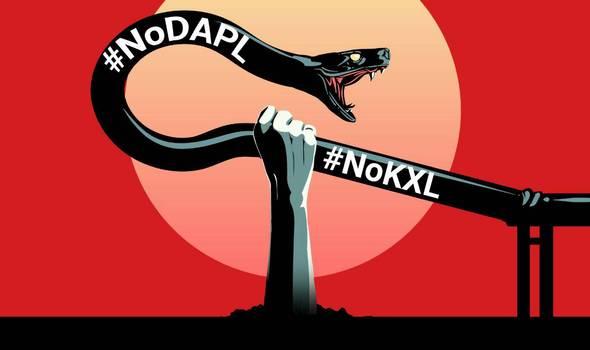
I thought the image of the black snake was so powerful. A symbol of the evils of the wanton disregard for Mother Earth and balance and what that means for future generations. I thought of one of the most powerful symbols in my life, the image of my beloved Rocky Mountains hidden in clouds of pollution.

There is an ancient Lakota prophecy about a black snake that would slither across the land, desecrating the sacred sites and poisoning the water before destroying the Earth. 

For many Indigenous people gathered near the Standing Rock Sioux reservation, that snake has a name — the Dakota Access pipeline.

‘We must kill the black snake’: Prophecy and prayer motivate Standing Rock movement. Indigenous leaders say effort to oppose Dakota Access pipeline rooted in power of prayer by Karen Pauls, CBC.CA, Dec 11, 2016

This reflection on the prophecy of the black snake was prompted by another story in today’s Des Moines Register about a proposed new carbon capture pipeline.

I should not have been surprised by the following story in the Des Moines Register, Company wants to build a carbon sequestration pipeline in 30 Iowa counties, but I was. It was predictable that unrealistic ideas would be put forth as the reality of deepening environmental chaos can no longer be ignored. As just today we are seeing the devastation of the aftermath of Hurricane Ida.

I hope the news about this pipeline might provide a teachable moment to illustrate why we need Indigenous leadership now. There are all kinds of reasons why a carbon capture pipeline should not be built. There is a matter of scale, ie what percentage of all the carbon emitted would be captured? How much energy is consumed by the capture process and to move the liquid through the pipeline? Can the liquid be safely stored for hundreds of years? How much more fertile farm ground will be destroyed by the pipeline construction? How much water is used? How many more relatives will be missing or murdered? How much profit will be generated, and for who?

I think this provides a clear example of why Indigenous liberation is the only hope for Mother Earth. Carbon capture pipelines are typical projects funded by banks, fossil fuel companies and white legislators and businessmen. Even though it is clear that continuing fossil fuel driven capitalism will only lead to increasingly dire environmental chaos. An existential threat. Our only hope is to stop spewing tons of fossil fuel emissions into the air.

Today’s Register story includes remarks made by my friends Lee Tesdell (my Scattergood School classmate) and Ed Fallon of Bold Iowa, about the company, Summit, who plans to build the carbon capture pipeline.

Summit hired Branstad, who was the U.S. ambassador to China under President Donald Trump, in March as a senior policy adviser to provide “oversight, leadership and guidance on public policy matters affecting stakeholders” in what the company says will be the world’s largest carbon capture and storage project.

At a Sept. 13 meeting in Ames, Lee Tesdell, a central Iowa farmland owner, asked whether any of the Iowa Utilities Board members were appointed by Branstad and whether they would recuse themselves from making a decision about whether Summit should receive a permit to build nearly 710 miles of pipeline across Iowa.

TesdelI, whose central Iowa farm is not in the pipeline’s pathway, said he believes board members Branstad appointed have a conflict of interest. “Either Branstad should resign from the Midwest Carbon Express team or they (board members) should recuse themselves,” he said.


In 2017, Lozier recused himself from the controversial Dakota Access oil pipeline case because he had represented a pro-pipeline lobby group in court as a private attorney before joining the utilities board.

Ed Fallon, a former state representative and vocal Dakota Access pipeline opponent, said he believes the Iowa Utilities Board members should recuse themselves. “Given their high-salary positions, they’re beholden to Branstad, and that gives the impression that they would be inclined to vote his way,” Fallon said.

Board members are required to spend their “whole time” on state utility issues. Huser earned a base salary of $128,890 last year, and Lozier, $122,428, according to the state employee salary book. No salary was recorded for Byrnes last year.

Critics of $4.5 billion carbon capture pipeline say Branstad appointees have conflict, should recuse themselves by Donnelle Eller, Des Moines Register, Sept 20, 2021

“I, Chief Arvol Looking Horse, of the Lakota, Dakota, and Nakota Nations, ask you to understand an Indigenous perspective on what has happened in America, what we call “Turtle Island.” My words seek to unite the global community through a message from our sacred ceremonies to unite spiritually, each in our own ways of beliefs in the Creator.”

“There needs to be a fast move toward other forms of energy that are safe for all nations upon Mother Earth. We need to understand the types of minds that are continuing to destroy the spirit of our whole global community. Unless we do this, the powers of destruction will overwhelm us.”

“To us, as caretakers of the heart of Mother Earth, falls the responsibility of turning back the powers of destruction. You yourself are the one who must decide.”

“You alone – and only you – can make this crucial choice, to walk in honor or to dishonor your relatives. On your decision depends the fate of the entire World.”

Important Message from Keeper of Sacred White Buffalo Calf Pipe. I, Chief Arvol Looking Horse ask you to understand an Indigenous perspective on what has happened in America, what we call “Turtle Island.” by CHIEF ARVOL LOOKING HORSE, Indian Country Today, Sept 7, 2017

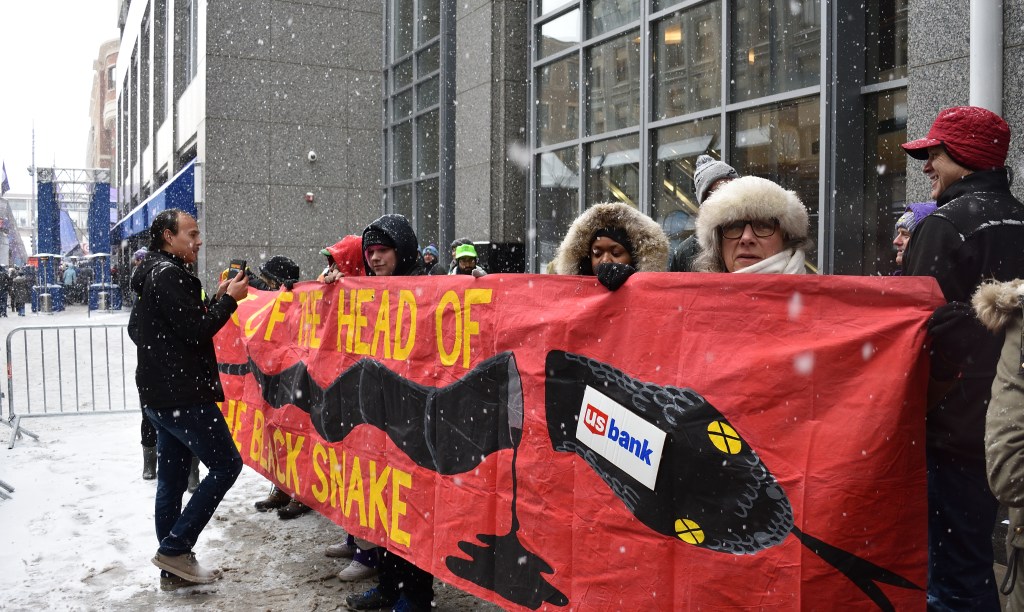
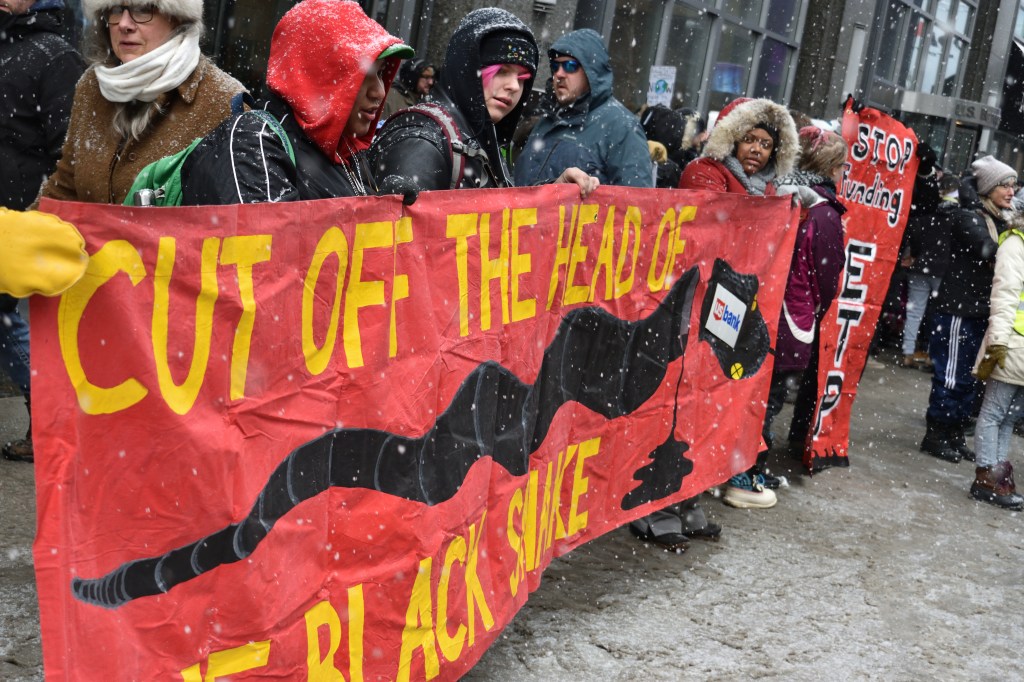
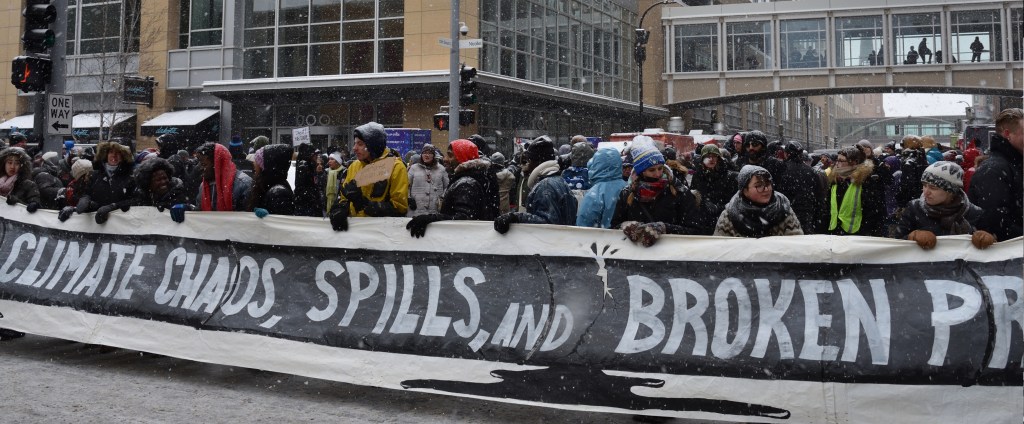
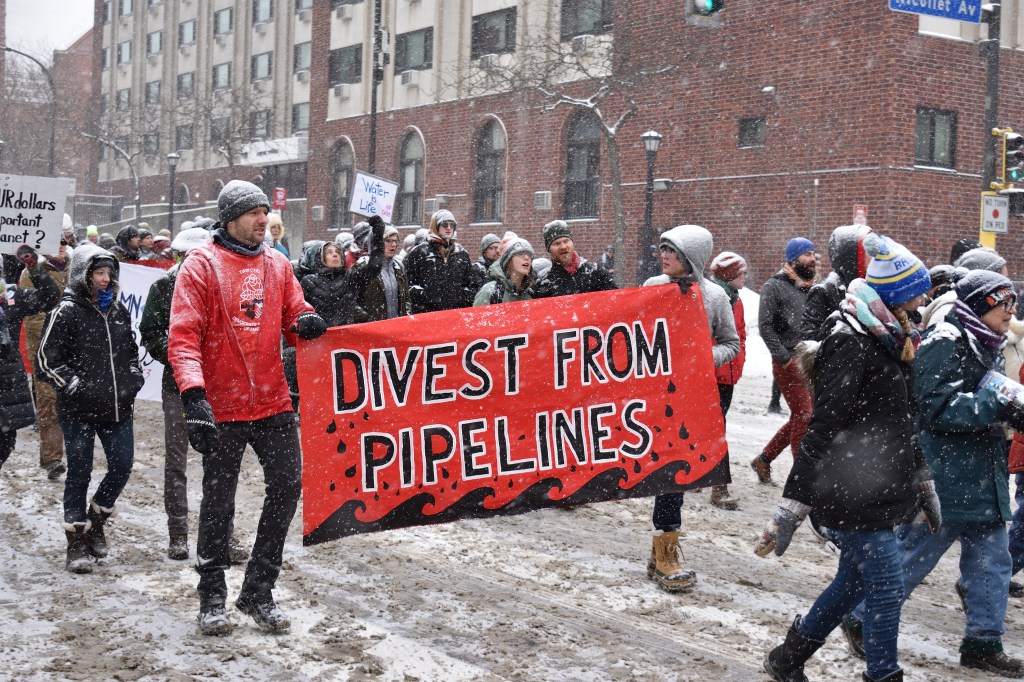
These are photos from the day a van full of us went to Minneapolis for a rally related to USBank’s funding of fossil fuel projects. Minneapolis is the headquarters of USBank.

Teachable moment

Yesterday I wrote why decolonization and Indigenous liberation is the only way to mitigate the damages done from unrestrained fossil fuel extraction and burning. From a lifetime’s experience I know just saying something like that doesn’t register for most people. Stories or events that impact a person’s life directly are what we learn from.

I should not have been surprised by the following story in the Des Moines Register, Company wants to build a carbon sequestration pipeline in 30 Iowa counties, but I was. It was predictable that unrealistic ideas would be put forth as the reality of deepening environmental chaos can no longer be ignored. As just today we are seeing the devastation of the aftermath of Hurricane Ida.

I hope the news about this pipeline might provide a teachable moment to illustrate why we need Indigenous leadership now. There are all kinds of reasons why a carbon capture pipeline should not be built. There is a matter of scale, ie what percentage of all the carbon emitted would be captured? How much energy is consumed by the capture process and to move the liquid through the pipeline? Can the liquid be safely stored for hundreds of years? How much more fertile farm ground will be destroyed by the pipeline construction? How much water is used? How many more relatives will be missing or murdered? How much profit will be generated, and for who?

I think this provides a clear example of why Indigenous liberation is the only hope for Mother Earth. Carbon capture pipelines are typical projects funded by banks, fossil fuel companies and white legislators and businessmen. Even though it is clear that continuing fossil fuel driven capitalism will only lead to increasingly dire environmental chaos. An existential threat. Our only hope is to stop spewing tons of fossil fuel emissions into the air.

Indigenous communities would not be interested in carbon capture.

In my short time at the camp (Red Lake Treaty Camp), I watched people make incredible personal sacrifices for this fight. The water protectors risking and experiencing arrests, many in their late teens and 20s, are not criminals — they’re not rebels without a cause.

They’re scared and fighting for their rights and their future: for clean water, and for the lives of their ancestors. It’s 2021, and we’re holding everyone accountable: from the banks financing tarsands expansion projects, to the insurers underwriting them, we’ll continue to hold pressure for change.

Line 3 is cultural genocide at the hands of Enbridge, police and big banks By Evelyn Austin, National Observer, August 30th 2021

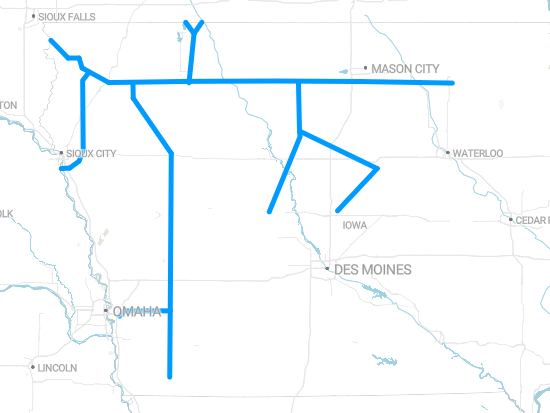
Summit Carbon Solutions, the Alden company owned by Bruce Rastetter’s Summit Agricultural Group, proposes building a 710-mile underground pipeline that would extend into or through 30 of the state’s 99 counties.

Summit plans to capture the carbon dioxide emissions from ethanol and other industrial agricultural plants before they’re released into the atmosphere and contribute to global warming. The company will compress the emissions into a liquid so it can be transported to North Dakota, where it will be injected in underground rock formations for permanent storage.

Company wants to build a carbon sequestration pipeline in 30 Iowa counties. Find out where by Donnelle Eller, Des Moines Register, Aug 26, 2021

The map below shows the approximate planned route for a proposed carbon capture pipeline in Iowa. The pipeline would enter Iowa in the west from Lyon and Woodbury counties and extend east to Chickasaw County. It would have extensions north through Dickinson County, and south to Fremont, Greene and Story counties.

Source: Summit Carbon Solutions  Created with Datawrapper

Recognition that there is no way out of this crisis without far-reaching, social upheaval animates the proposals put forward in The Red Deal: Indigenous Action to Save Our EarthThe short book was authored by activists from The Red Nation, a coalition devoted to Indigenous liberation and made up of Native and non-native revolutionaries based mainly in North America.

The authors make clear that they believe the campaign to halt climate change and repair ecological destruction is bound up with the fate of the world’s Indigenous peoples. They say bluntly that “there is no hope for restoring the planet’s fragile and dying ecosystems without Indigenous liberation” and that “it’s decolonization or extinction.”

No Hope for Earth without Indigenous Liberation by Simon Butler, originally published by Climate and Capitalism
August 27, 2021

#LANDBACK

May these steps be steps of prayer

Recent posts have been about “Treaties not Tar Sands” and the Treaty People Walk for Water. Walkers arrived at the Minnesota Capitol grounds Wednesday, ending a 256 mile walk from the Mississippi headwaters, an effort to draw attention to the state-approved Enbridge Line 3 pipeline.

Camp Migizi leader and Fon Du Lac Band member Taysha Martineau and Standing Rock Elder Sonny Wonase address 2,000 pipeline opponents gathered for the “Treaties not Tar Sands” rally at the Minnesota State Capitol on Aug. 25th, 2021.

It is time that all the people of the earth come together and every step that you walk on this earth, may these steps be steps of prayer. Steps of prayer put feet on the ground, put prayer with every step you take. The fight isn’t over yet.

Sonny Wonase

Police presence was as strong as ever, including a fence meant to wall state officials off from our prayerful ceremony and pleas for justice. As you can probably guess, that didn’t deter water protectors. At the end of the rally, my fellow organizers read a statement of demands criticizing Governor Tim Walz’s support of the pipeline and militarized response. We also continued to call on President Joe Biden to intervene.

Until we’re heard and acknowledged, we will not be silent. We will not stop taking direct action to end this invasion of our sacred lands and protect our water and manoomin (wild rice). We are carrying forward the tradition of Indigenous activism begun by the American Indian Movement in the 1960s and renewed at Standing Rock five years ago. I express my gratitude to Standing Rock for standing with us now — and to you for holding space with us and Mother Earth. If we come together across our traditional boundaries, if we act with a unified voice and spirit, we can win this fight.

Taysha Martineau

Yesterday’s post was about the heavy police presence at the Capitol. According to Native News Online, “in anticipation of the demonstration, Minnesota State troopers barricaded all roadways into the Capitol grounds. Fearing damage to monuments near the capitol, as when a Christopher Columbus statue was taken down by protesters last summer, all statues were fenced in and guarded by law enforcement.”

In the evening, demonstrators announced they will occupy the Minnesota Capitol grounds overnight and began pitching tents on the lawn. However, Minnesota State Troopers ordered demonstrators to remove the tents and allowed people to occupy the permitted tipis on the lawn.

‘Treaties Not Tar Sands’ Rally Convenes at Minnesota State Capitol, by Darren Thompson, Native News Online, August 26, 2021
https://youtu.be/YIkTBCvpToM

This is a powerful livestream video of the Water Walkers, in silence, arriving at the Minnesota State Capitol Wednesday.

I can’t help but reflect on how different this peaceful, prayerful walk compares to the insurrection at the U.S. Capitol on January 6, 2021.

#StopLine3
#HonorTheTreaties
#WaterIsLife

State of Intimidation

Yesterday’s article was about ‘Treaties Not Tar Sands’ which summarized the Treaty People Walk for Water. Walkers arrived at the Minnesota Capitol grounds yesterday, ending a 200+ mile walk from the Mississippi headwaters, an effort to draw attention to the state-approved Enbridge Line 3 pipeline. Isn’t it ironic that Enbridge says Line 3 is needed to replace the old pipeline because it isn’t safe any longer?

It is disheartening but unsurprising to hear about the large police response to the peaceful gathering of water protectors. Despite their unconstitutionality, many laws have been passed to criminalize protest. Felony penalties for damage to ‘critical infrastructure’ such as pipelines.

In Iowa last year several activists were banned from the grounds of the Iowa State Capitol because of their participation in rallies against police violence, ironically. That ban was later declared illegal.

Renee Keezer speaks to the crowd at Wednesday’s ‘Treaties Not Tar Sands’ rally.

What’s wrong with this picture? It implies a significant and violent threat where there was none.

The ‘Treaties Not Tar Sands’ rally at the Capitol Wednesday drew 1,000 to 2,000 people. It was a beautiful and powerful event. I will write more about it in the coming days. It deserves more attention.

Tonight, I’m focusing on law enforcement’s massive and intimidating response — and how rally-goers responded.

At one point I counted 33 officers on or near the front steps of the Capitol. And there were many others spread out around the Capitol complex.

The question is: Why is it when large numbers of black and brown people show up for some event, law enforcement feels compelled to use a show of force?

Given all the racial tensions around policing, law enforcement had to know this approach was bad optics. It did it anyway. That means law enforcement either had little concern about making people feel unwelcome, scared, and/or angry, or in fact that was the intention.

Arriving at the Capitol on Tuesday, I was surprised to see two law enforcement officers guarding the Capitol’s west wing. It was barricaded and fenced. No one was anywhere near this entrance. Yet there they were.

Later Tuesday, law enforcement brought in more concrete barricades. I’m curious what those barricades accomplished, as they are easy to hop over. Was law enforcement worried people would try to drive their cars or pick-up trucks up the stairs? The streets already were blocked.

That concrete represents a lot of fear.

Water protectors are used to dealing with police who view them as criminals. Law enforcement was present at Enbridge construction sites up north because Enbridge was paying them to be there as private security.

This ubiquitous police presence is a form of violence. It intimidates. It undermines people’s sense of safety and belonging. It sends the message that law enforcement thinks you’re dangerous.

State of Intimidation: Minnesota law enforcement’s in-your-face approach to ‘Treaties Not Tar Sands’ rally, Healing Minnesota Stories, August 26, 2021

#TreatiesNotTarSands