RCMP Invasion expected on Wet’suwet’en territory

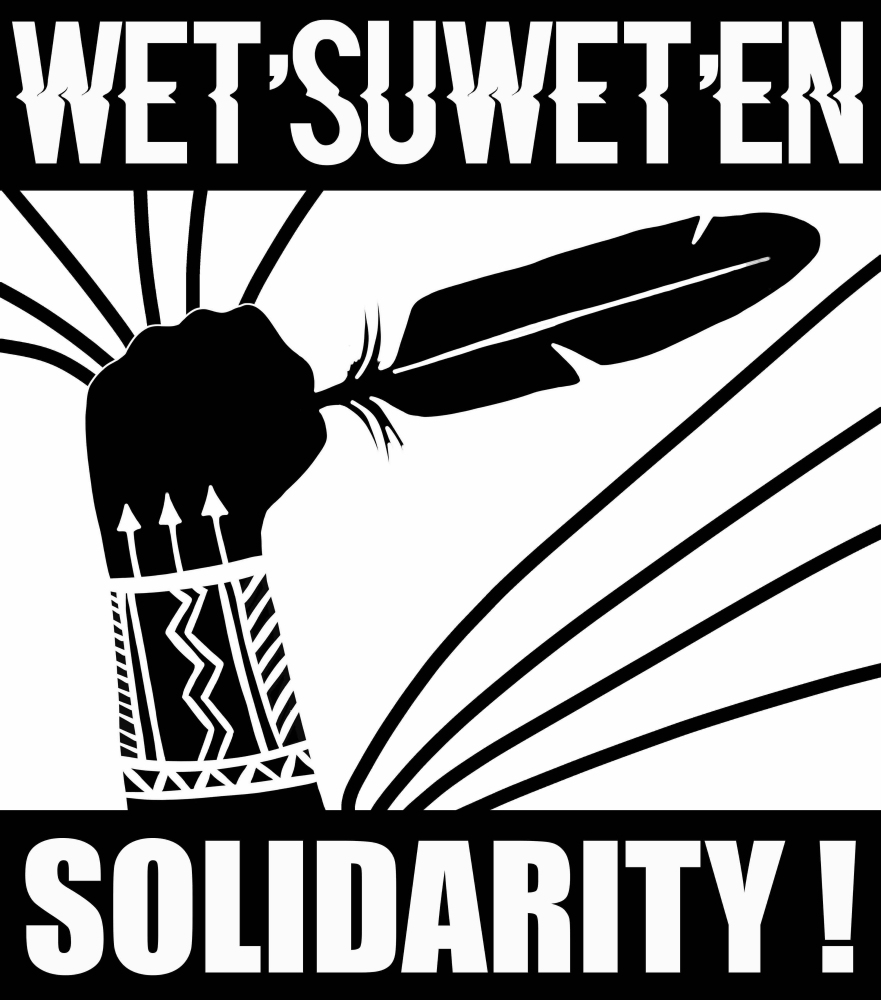
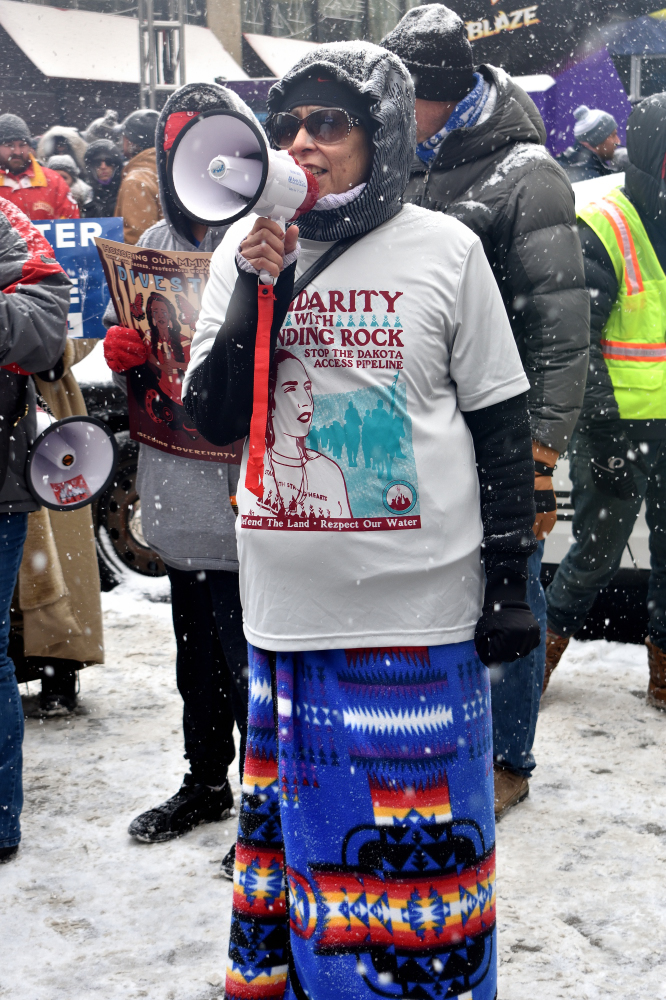
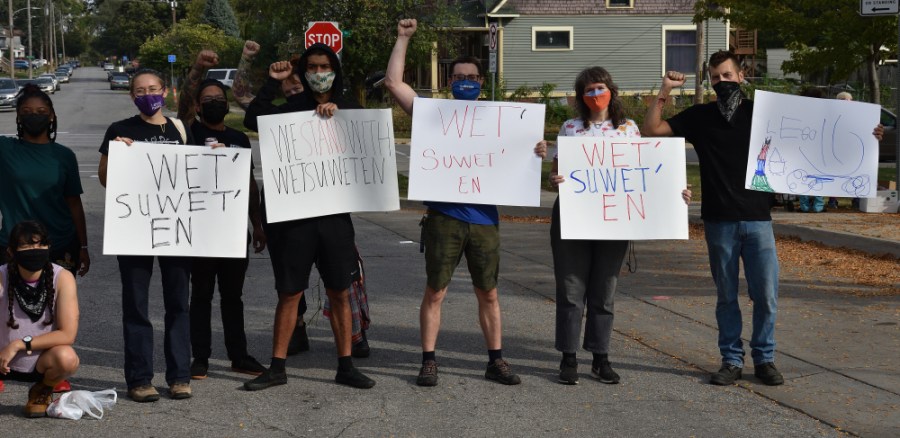
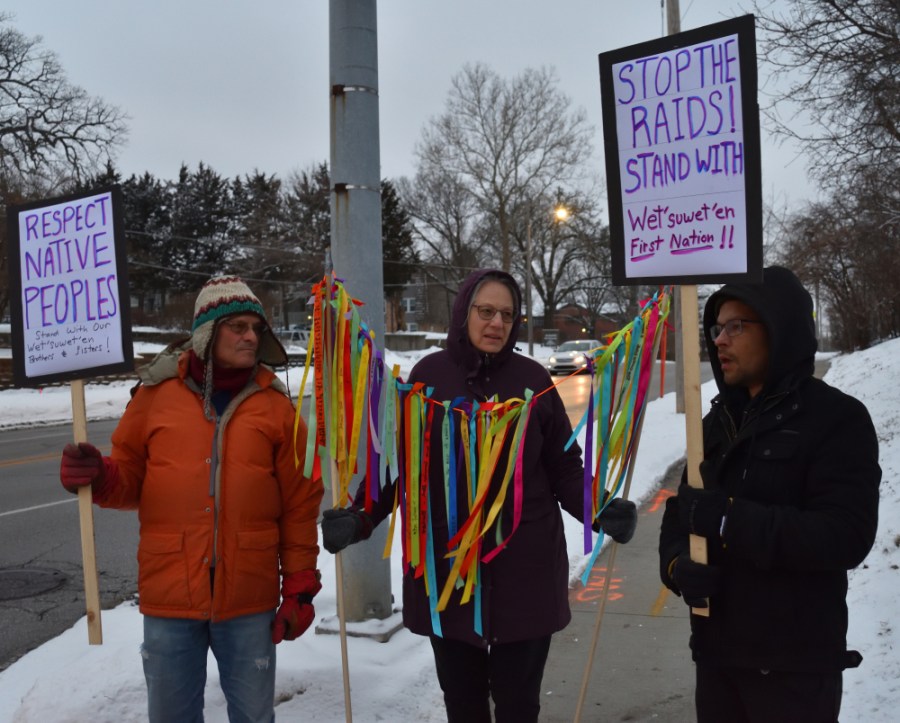
Readers of my blogs know what an influence the struggles of the Wet’suwet’en peoples have had on my life. It was at a vigil for the Wet’suwet’en in February, 2020, that I met Ronnie James and became involved in Des Moines Mutual Aid. Links to articles about the Wet’suwet’en can be found below.

I am deeply saddened to hear that another invasion of the Wet’suwet’en territory is expected.

Statement from Gidim’ten Checkpoint: 

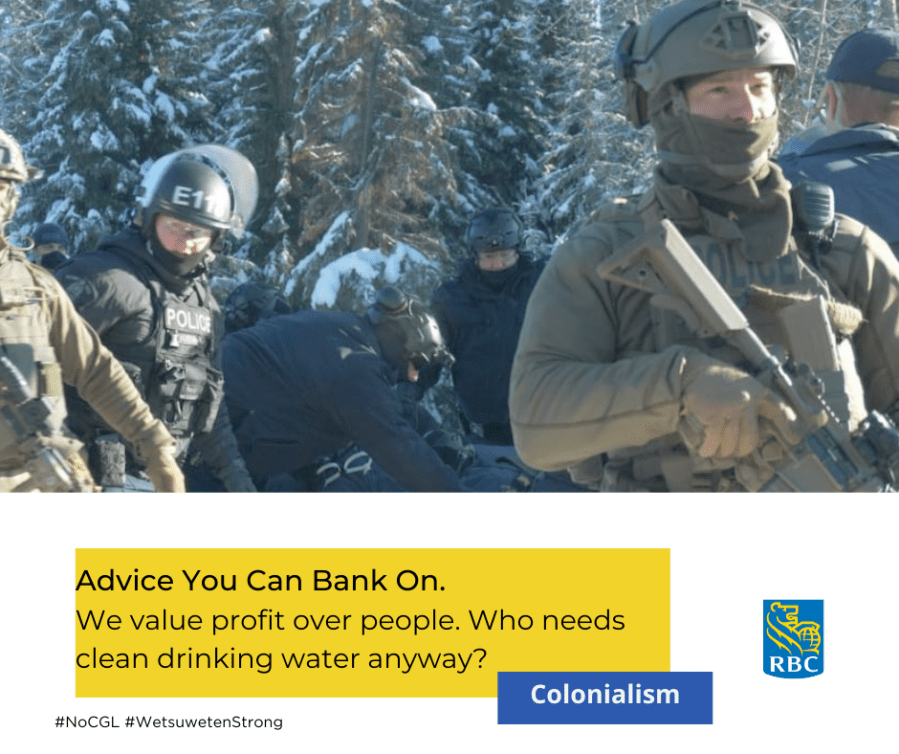
For the fourth time in four years, we have received information that dozens of militarized RCMP are en route to Wet’suwet’en territory, to facilitate construction of the Coastal GasLink pipeline and to steal our unceded lands at gunpoint. We continue to hold the drill pad site, where Coastal Gaslink plans to tunnel beneath our pristine and sacred headwaters.

RCMP have booked up local hotels for the next month. We have also received word from the Union of BC Indian Chiefs that the C-IRG unit of the RCMP – the paramilitary unit that protects private industries who are seeking to destroy Indigenous lands – are being deployed onto our lands.

We need boots on the ground and all eyes on Wet’suwet’en territory as we continue to stand up for our lands, our waters, and our future generations! If you can’t be here, take action where you stand – at investors’ offices, RBC branches, or your local police detachment.

#ShutDownCanada
#AllOutForWedzinKwa
#WetsuwetenStrong


Logan Staats is mentioned in the video above. His beautiful new song, “Deadman” is another example of the power of art to call attention to injustice. The track comes alongside a visual accompaniment partially shot at the site of a former residential school.

Logan was beaten and arrested by the RCMP while supporting the Wet’suwet’en peoples. I was only peacefully singing our water song and hugging/protecting a 70-year-old matriarch. I was free’d and remain steadfast and committed to defending the land from sea to sea all across Turtle Island.

“I wrote “Dead Man” while in rehab. It’s not about a girl. The culture is the love that I’m asking for. The love for myself. That was stolen from me – by the government, the crown, the church. When I sing “GIVE ME BACK MY LOVE”, I’m speaking about my culture, my pride, the love for myself.” – Logan Staats

Mohawk singer-songwriter Logan Staats makes his return with the new single “Deadman,” which signals the storyteller and activist’s debut release under the Indigenous-owned label, Red Music Rising.

“I wrote ‘Deadman’ while in rehab. It’s not about a girl; the culture is the love that I’m asking for,” he revealed in a press release.

The love Staats pleads for in the song is not romantic but rather a demand for something cherished, stolen by settler colonialism. “The love for myself that was stolen from me — by the government, the crown, the church. When I sing ‘Give back my love,’ I’m speaking about my culture, my pride and my love for myself.”

As a descendent of residential school survivors, Staats delivers the single alongside a video partially shot on the property of the Mohawk Institute — a former residential school in Brantford, ON — and at Land Back Lane, where Six Nations land defenders have been fighting development on unceded Six Nations territory.

In a statement, Staats recalled fighting for land sovereignty alongside the land defenders in Wet’suwet’en territory:

Recently I’ve been spending a lot of time on the West Coast in Wet’suwet’en territory after answering the call of the Hereditary Chiefs there and standing in solidarity with the land defenders on their sovereign ground. After serving an eviction notice to Coastal Gas Link, a for-profit corporation conducting illegal activities on Wet’suwet’en territory, heavily armed RCMP officers were flown in and conducted a raid on the traditional lands or ‘Yin’tah’. During that raid I was punched in the ear, my head was slammed into the frozen pavement by my braids, and I was kneed in my spine and held down while I was handcuffed and bleeding… all after I was only peacefully singing our water song and hugging/protecting a 70-year-old matriarch. I was hauled off to jail along with my sister Layla Black, several other land defenders, elders; along with members of the press. With the support of my community and people rallying across nations, I was free’d and remain steadfast and committed to defending the land from sea to sea all across Turtle Island.

Logan Staats Announces Red Music Rising Debut with New Single “Deadman”. The track comes alongside a visual accompaniment partially shot at the site of a former residential school by Haley Bentham, exclaim.ca, Nov 25, 2021

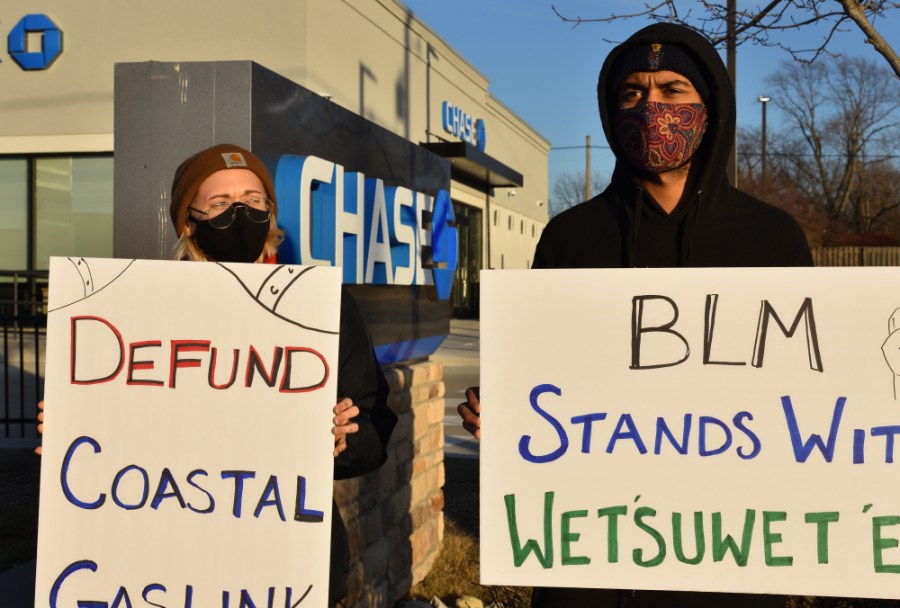
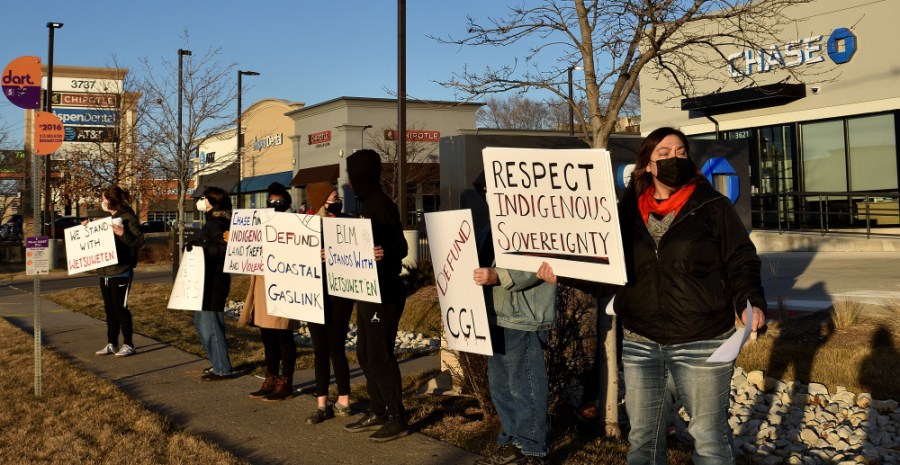
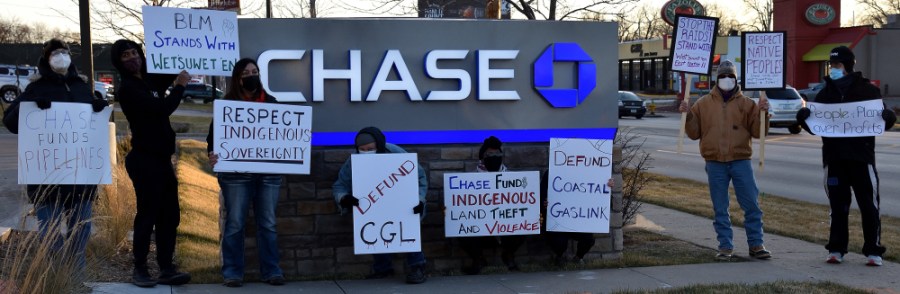
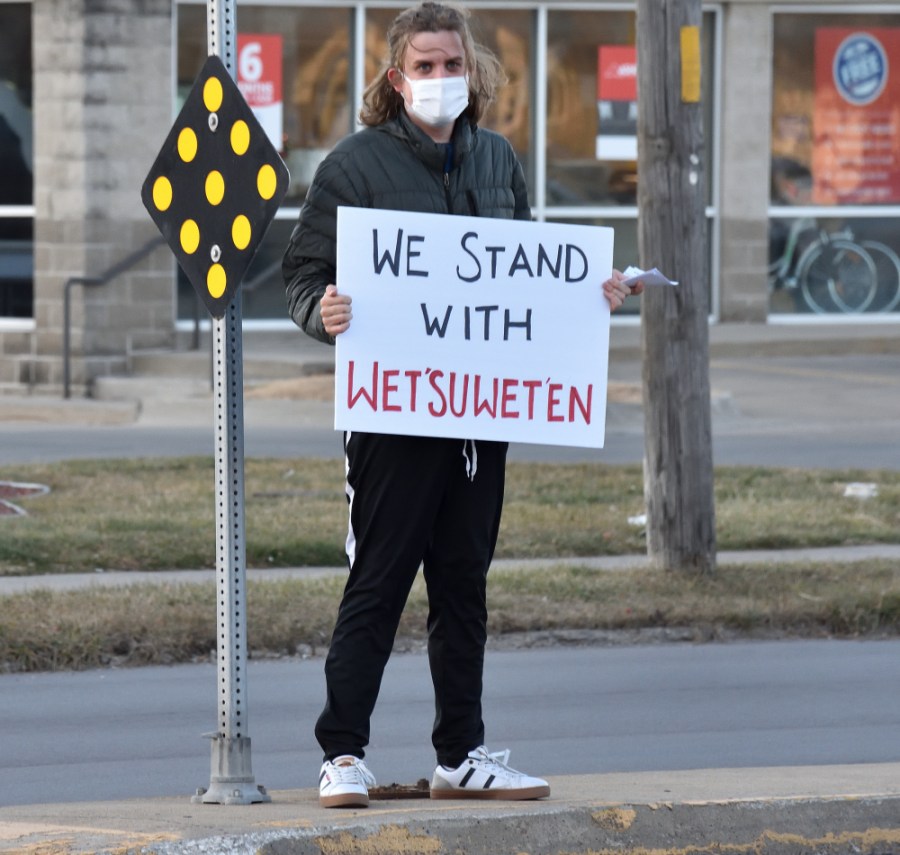
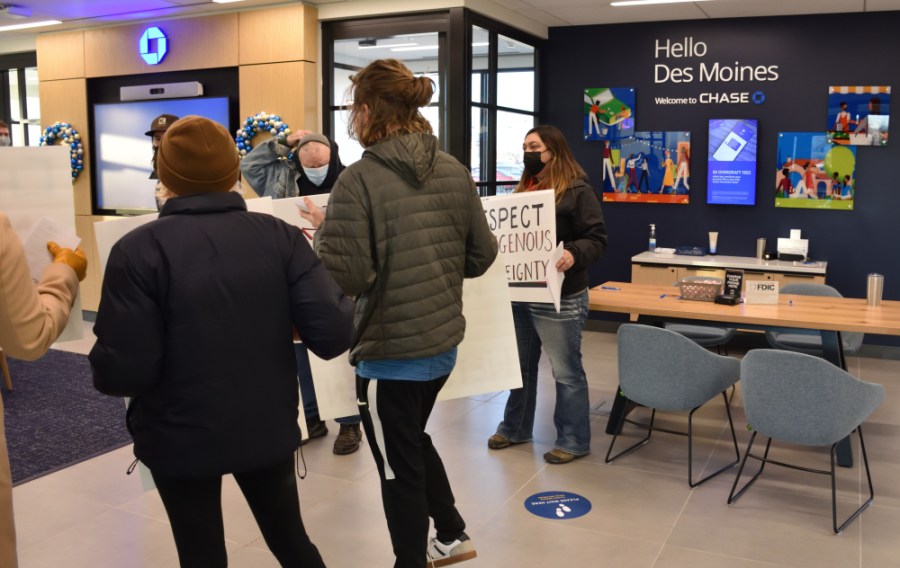
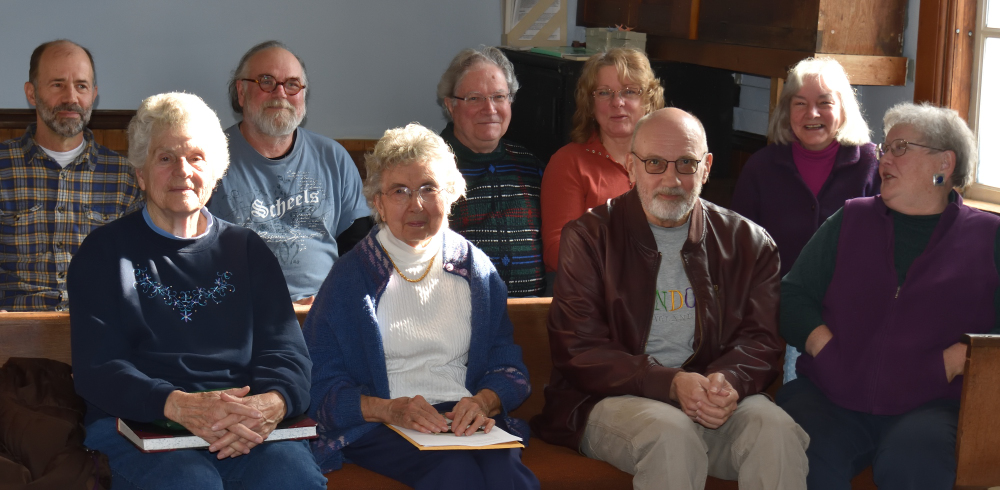
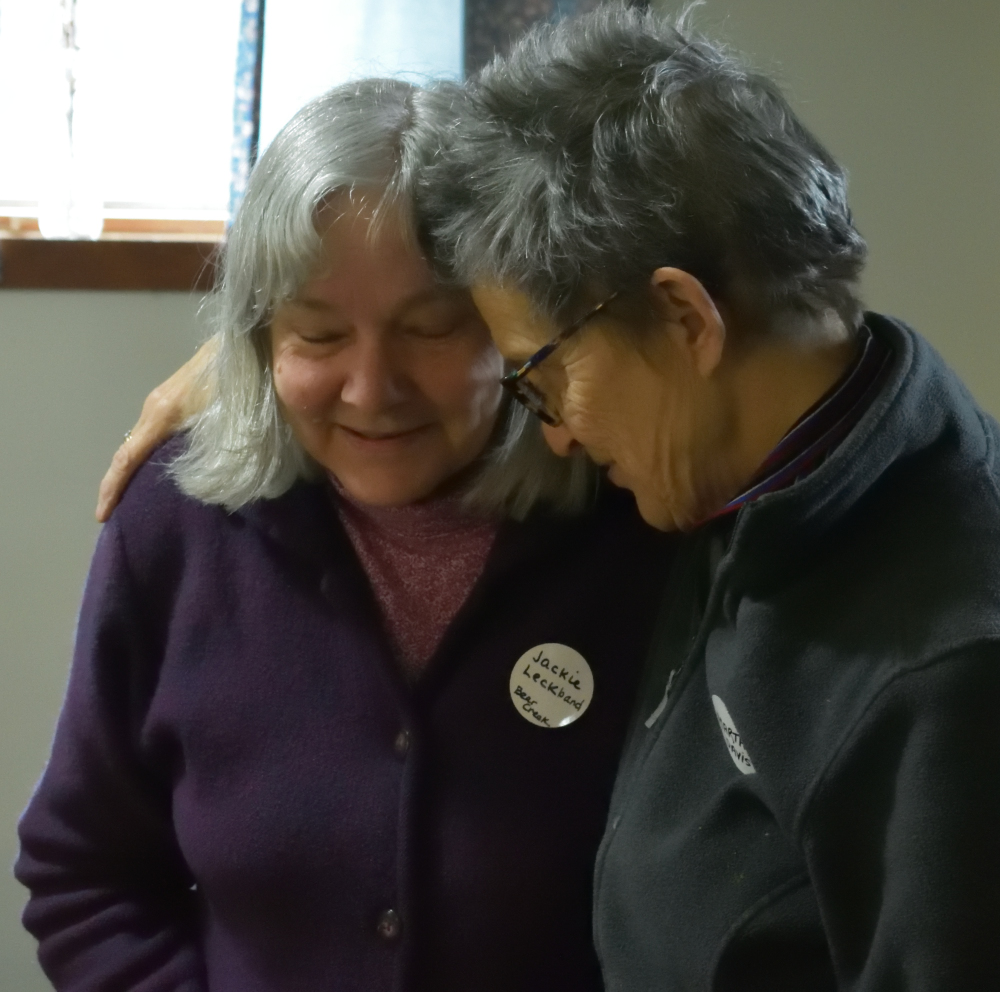
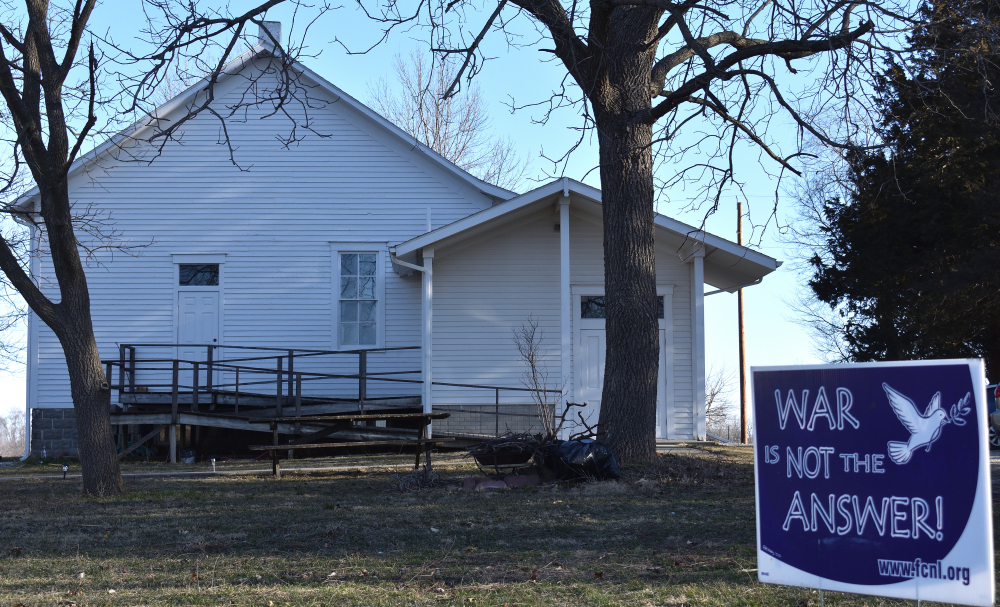
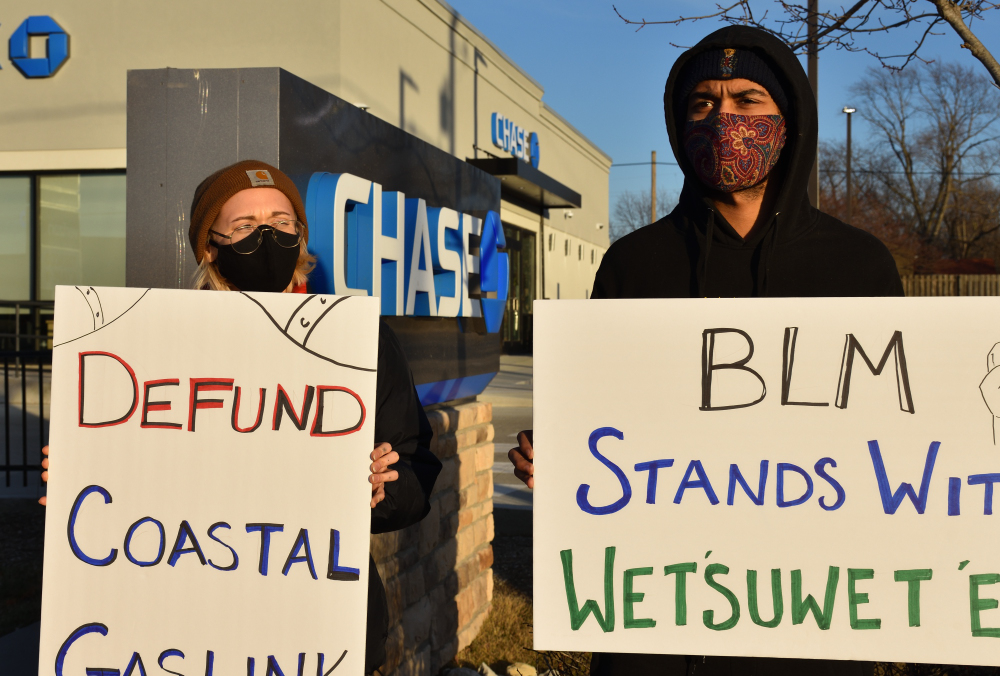
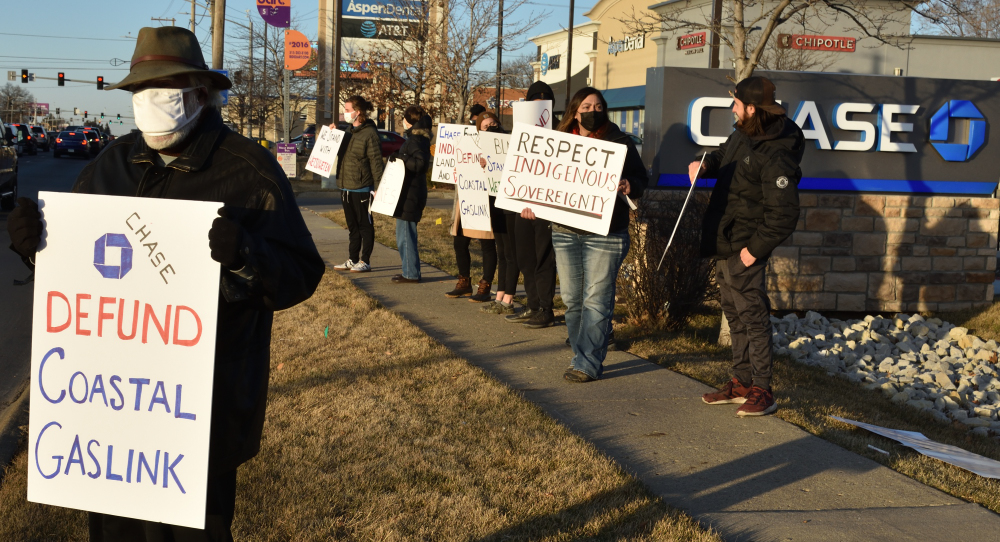
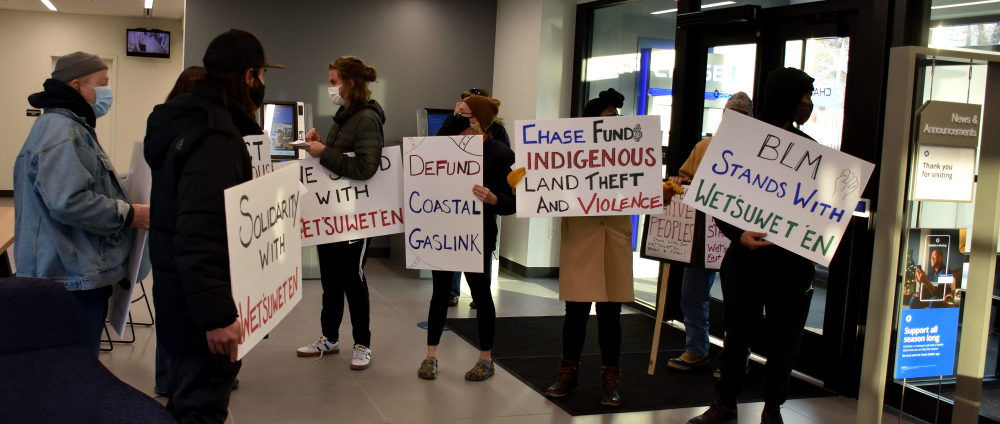
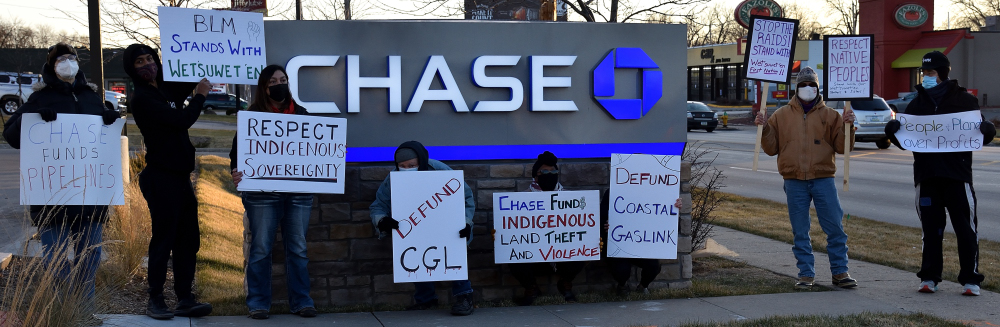
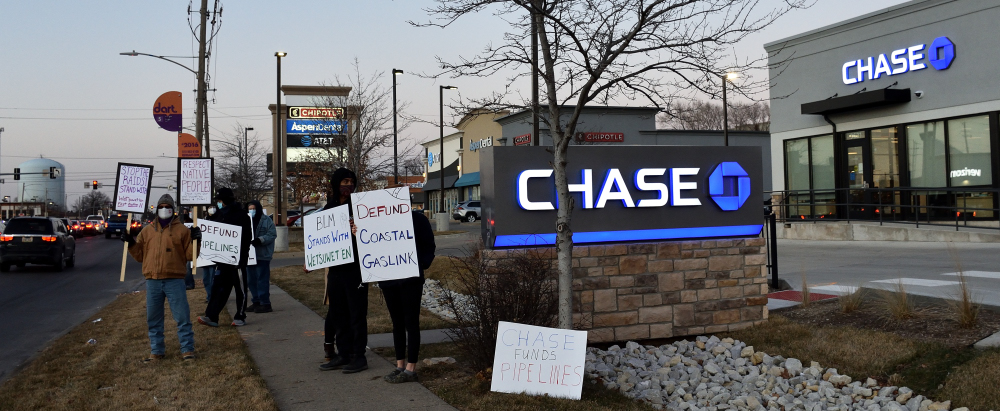
Iowa Solidarity with the Wet’suwet’en is about our action at Chase Bank in Des Moines on December 23, 2021. Chase is one of the main financial institutions supporting the Coastal GasLink pipeline through Wet’suwet’en territory. (Photos below).

Articles about the Wet’suwet’en on my blog Quakers, social justice and revolution. https://jeffkisling.com/?s=wetsuweten

And more recent articles on my blog LANDBACK Friends https://landbackfriends.com/?s=wetsuweten

What I don’t know about Mutual Aid

Disclaimer: Before getting to that, I think I should make a disclaimer, especially since I shared the 2021 Peace and Social Concerns report of my yearly meeting, Iowa Yearly Meeting (Conservative). I included that because Mutual Aid is mentioned in the report. “These injustices are some of the effects of systems of white supremacy. The concept of Mutual Aid is becoming an increasingly used model for communities working for justice. The idea is to have a horizontal hierarchy, where everyone has a voice. And work to ensure a vertical hierarchy does not develop. Without a vertical hierarchy, there can, by definition, be no superiority. Several of our meetings are supporting existing Mutual Aid communities or considering creating their own. These are opportunities to begin to disengage from the colonial capitalist system and white supremacy. Ways we can model justice in our own meetings and communities.”

But that doesn’t mean what I’ve been writing on this blog has been approved by the Yearly Meeting.

What I do know about Mutual Aid comes from my two years of experience with Mutual Aid in Des Moines.

I met Ronnie James, and Indigenous organizer and now close friend, when he came to a vigil we held in February 2020 in support of the Wet’suwet’en people’s struggles to prevent the construction of the Coastal GasLink pipeline through their territories. He came because he wanted to know who was supporting the Wet’suwet’en, because their struggles were not being covered in the mainstream media. That was a good organizing strategy, a way to find allies.

Because of the COVID pandemic, he and I didn’t meet in person for several months. But during that time, he was very generous in teaching me about his work with Des Moines Mutual Aid (DMMA). I quickly saw there was much more to Mutual Aid than just distributing free food, or propane tanks for the houseless in winter. I could also tell the people involved in DMMA were very careful about who they associated with because they were on the police radar, so to speak. Several had been arrested, some several times, as they demonstrated to support Des Moines Black Liberation’s protests of police violence after the killing of George Floyd.

But after months of email exchanges, I felt we were getting to know each other well enough that I could ask if it would be appropriate to participate in his work. I knew it was important for allies to be careful about inviting ourselves into situations in ways that are not appropriate.

Fortunately, he said yes, and I have been participating in the food distribution part of Des Moine Mutual Aid nearly every Saturday morning since (for more than a year).

I thought I would see how this worked for a few weeks, and that might be the end of it. But I found the actual experience of being present in this community taught me so much that words written in emails could not.

When I arrived that first morning, apprehensive about what might happen, I was told this was Mutual Aid, which meant all of us were encouraged to take any food we wanted, ourselves. For many weeks I did not take any, but finally realized that was a mistake. It was like I wasn’t really buying into the mutual part of this. I realized this when one of my new friends, in a friendly manner, asked why I wasn’t taking any food. Now I do.

I also witnessed the truly uplifting way every volunteer greeted each car of people who came for the food. It was always, “hi, how are you doing? Have a great day.”

I also saw this insistence of avoiding any kind of vertical hierarchy. No one said, “do this, do that…”. When there was a problem, anyone with a solution was expected to just do it. Or when the van of food arrived, someone would say “the van is here” and whoever wasn’t doing something else would just go out and help unload the food.

Also, one of my new friends who volunteered to help with the food distribution told me she was once in the position of needing the food herself.

And I know my friends always show up. As they did yesterday, New Year’s Day, with a wind chill of -11 degrees. As we had on Christmas day the week before.

So a new person has to learn a new way of working together. Learn how to act in a situation where you aren’t told what to do by someone above you in a vertical hierarchy. To learn to be always aware of what is going on around you. See if there is something that needs to be done, then do it yourself.

Multiple times I’ve heard someone say these Saturday mornings together are the best part of their week. I feel that, too. That’s one of the important parts of Mutual Aid. We are enthusiastic about this work. It pulls people in when they are doing something that has an immediate impact.

This is one of the many reasons I’m encouraging Friends and others to learn about, create and participate in Mutual Aid. Most of the Quaker meetings I’m aware of have dwindling numbers of people attending their meetings. And we don’t attract many/any young people or Black, Indigenous and other people of color (BIPOC).

I’ve thought we should have more workcamps, as we did when I was growing up. Those were experiences people appreciated. Mutual Aid can be the answer today.

But there is a more fundamental reason to adopt Mutual Aid. We need to accept that our political and economic systems are failing. Are not meeting our needs. “We” being those of us fortunate to have had livable incomes. Those who don’t have known the failure of these systems their entire lives. We have no choice but to come up with alternatives. I believe Mutual Aid is one alternative.

Finally, we get to what I don’t know about Mutual Aid. The key to Mutual Aid is for everyone in the community to be involved in the work. But most of us live some distance from our Quaker meetings. Is it possible, or desirable, to find ways to create Mutual Aid communities if people are not physically present with each other? Is ZOOM Mutual Aid possible, or desirable?

I don’t know. If you have some ideas about this, please write them in the comments.

Thank you.

Bear Creek Friends

Resolve to be always beginning

Resolve to be always beginning — to be a beginner. –Rainer Maria Rilke

I’m hoping some Friends might consider Mutual Aid to be part of their new story this new year. Yesterday’s post was an introduction.

This is a link to a lot more information about my experiences with Mutual Aid. Mutual Aid in the Midwest

I realize I didn’t explain yesterday’s comment about friendships with native people. Indigenous peoples have always lived in ways that could be seen as Mutual Aid. And my good friend Ronnie James, an Indigenous organizer, has been my Mutual Aid mentor from the beginning of my experiences. This work is supported by the Great Plains Action Society that Ronnie is part of.

We are Indigenous Peoples of the Great Plains proactively working to resist and Indigenize colonial-capitalist institutions and behaviors. We defend the land where our ancestors lie and where the children walk. Our goal is to reclaim what has been stolen and oppressed to create a better world for us all.

Great Plains Action Society

New Year’s resolutions tend to be about wanting more of something we desire and/or less of something we do not, and while they surely have their noble side, they also often emanate from subtle and less subtle forms of perceived lack, scarcity, comparison, self-flagellation, and judgment. The “should” and “should not” messages we send ourselves when we make resolutions can be harsh and incriminating. These are qualities we may want to endeavor not to perpetuate and strengthen when we make our commitments this year.

How about making “the means more of the ends” by putting gratefulness rather than scarcity at the center of the resolutions we make this year? How about bringing a more gentle form of motivation, rooted in appreciation, celebration, and acceptance, to our goals? How about letting gratitude guide us?

Turn New Year’s Resolutions into Revelations by Kristi Nelson, syndicated from gratefulness.org, Jan 01, 2022

A Call for Quakers to Embrace Mutual Aid

I am writing to make the case for the adoption of Mutual Aid as a framework for Quaker justice work.

This comes from my perspective of a White, Quaker, male (he/him), settler on Ioway land, in the country called the United States. When I refer to Quakers here, I mean White Quakers. Black, Indigenous, and other people of color (BIPOC) Friends have completely different experiences related to white privilege and racism, for example.

My credentials include friendships with Native people here in the Midwest. And to have been part of a Mutual Aid community for the past two years. The following is from these lived experiences, which have excited me, shown me a different way to work for peace and justice.

There are three key elements of Mutual Aid.

  1. Mutual aid projects work to meet survival needs and build shared understanding about why people do not have what they need.
  2. Mutual aid projects mobilize people, expand solidarity, and build movements.
  3. Mutual Aid projects are participatory, solving problems through collective action rather than waiting for saviors.

    Mutual Aid, Building Solidarity during this Crisis (and the next) by Dean Spade, Verso, 2020


Mutual Aid is NOT charity. People often think of their financial support for a cause as aid. But that is not Mutual Aid. Charity involves an agency determining what the need is. Which too often is not what is needed. And has an implied hierarchy of the agency providing aid as superior to those who receive the aid. There are usually rules as to who qualifies for the aid.

Instead, Mutual Aid involves everyone in the community to work on problems that affect everyone. There is not a distinction between those who need help and those providing help. It is explicitly stated that anyone in the community might need help at some point. The whole community determines its needs and how to address those needs. Not a vertical hierarchy like “us helping them”.

Mutual Aid communities work to make sure no vertical hierarchy develops, implied or not. Vertical hierarchies mean some people are seen as superior in some way. Vertical hierarchies are about power. Which is the antithesis of mutuality.

Quakers and hierarchy

I hadn’t thought much about Quakers and vertical hierarchy before getting involved in Mutual Aid. But for example, we have yearly meeting clerks and yearly meeting committee clerks. Members of yearly meeting committees are appointed by local meetings, which might imply they have some superiority in those meetings. “Birthright” Friends are sometimes accorded privilege.

Often Quaker meetings make donations to peace and justice organizations, which is charity. Which usually doesn’t create a mutual relationship with those organizations or the people they serve.

For these reasons I think Quaker communities should embrace Mutual Aid. That would mean connecting with everyone in the neighborhood around the meeting. This is the concept of beloved community.  This might attract neighbors to become involved in the meeting. We would get a better idea of what we might work on together. This would be a way to speak to the spiritual condition of our communities.

This PDF has much more information about Quakers and Mutual Aid:
A Call for Quakers to Embrace Mutual Aid

Following is this year’s report of the Peace and Social Concerns Committee of Iowa Yearly Meeting (Conservative) which includes discussion of Mutual Aid.


Peace and Social Concerns Committee Report 2021
Iowa Yearly Meeting (Conservative)

This has been a year of great upheaval locally, nationally, and globally. The work of our monthly meetings has been impacted by the COVID-19 pandemic. Yet we have found ways to continue our peace and justice work. And had more time for prayer and reflection.

Global chaos from rapidly accelerating environmental devastation is highly likely to occur, breaking down our economic, social, and political systems. As air and water temperatures increase, water supplies are drying up. Widening areas and severity of drought are decreasing crop production and forcing people to flee. Rising oceans are creating more climate refugees. The trend of increasing numbers of more ferocious wildfires, hurricanes and other storms are expected to accelerate. All kinds of infrastructure will likely be destroyed, creating more climate refugees, many migrating to the Midwest. How can we prepare our own communities for these disasters, and plan for the arrival of climate refugees?

Justice work by White Friends has changed in recent years. An important concept of justice work is to follow the leadership of oppressed communities, who are working tirelessly for their liberation. Those who consider themselves White Friends are learning how to step back. Be supporters and allies.

Many injustices today trace their roots to the arrival of white Europeans on this continent. These include a whole history of enslavement as well as genocide of Indigenous peoples. It is important for white Quakers to know we are not expected to feel guilt or blame for injustices that occurred in the past. But knowing what we know now, it is up to us to learn more about those wrongs, and work toward repair and healing.  This will be a primary focus of this committee’s work in the coming year.

As a society we have been forced to face systemic racism. For example, public murders by police have generated sustained protests regarding police brutality, with calls to limit police powers and change or abolish prisons.

Also dating back to the arrival of white Europeans is the genocide of Indigenous peoples. The theft of Native lands. And the atrocities of Native children taken from their families to institutions of forced assimilation, often far away. Places where attempts were made to the erase their culture. Many subjected to physical or sexual abuse. Thousands of Native children died. This intentional cruelty broke the resistance of Native peoples who were trying to hold onto their lands.

The recent validation of the remains of Native children on the grounds of those institutions is having devastating effects in Native communities and those who care about them. Searching the grounds of the institutions in this country is about to begin. Secretary of the Interior, Deb Haaland, has launched a federal investigation into these institutions of forced assimilation in the US

 A number of Catholic churches, who ran those institutions in Canada, have been burned or vandalized.

There are renewed calls for truth and reconciliation. Canadian Yearly Meeting has done a great deal of work on this.

These injustices are some of the effects of systems of white supremacy. The concept of Mutual Aid is becoming an increasingly used model for communities working for justice. The idea is to have a horizontal hierarchy, where everyone has a voice. And work to ensure a vertical hierarchy does not develop. Without a vertical hierarchy, there can, by definition, be no superiority. Several of our meetings are supporting existing Mutual Aid communities or considering creating their own. These are opportunities to begin to disengage from the colonial capitalist system and white supremacy. Ways we can model justice in our own meetings and communities.

We can show up for Black Lives Matter and other racial justice events. We can support those who meet with local, state, and Federal government officials. We can show up in the streets to support agitation for change, train in nonviolent civil disobedience, or accompany arrested activists through the justice system.

We can show up, when appropriate, at events of Native peoples, such as the Prairie Awakening ceremony. We can share Indigenous news on social media platforms, so others are aware of these things.

Indigenous leaders in the Midwest have asked us to learn about and find ways to engage in the concepts of Land Back. The website LANDBack Friends has been created and will be updated as our work continues.  https://landbackfriends.com/

We pray for guidance for how our committee might work together at the intersection of our responsibilities and those of Ministry and Counsel.

We will continue to seek spiritual guidance, both for what we are called to do, and ways to offer spiritual support for those who are not Friends. There is great spiritual poverty in many communities. Spiritual support will be needed by those who suffer the consequences of environmental and other disasters. And those responding to these disasters.

It is important to understand this work depends on us all working together, in the community. Outside our meetinghouses. Developing friendships in the local community. We encourage more engagement with our youth. They can teach us about justice. We and our meetings will be revitalized.

Many monthly meetings are adapting to these changing ways of doing peace and justice work.  Building relationships with communities of black, Indigenous, and other people of color. Exploring ways to be in right relationship with these communities. All of us learning from each other. Sharing our stories. Deepening spiritual connections.

Jeff Kisling, clerk
Peace and Social Concerns Committee


Prairie Not Pipelines

Tonight, my friends at the Great Plains Action Society will present Episode 1 of an Indigenous web series related to climate, water, and resource extraction on the Plains.

“Currently, the majority of the media and public pushback is coming from white landowners. However, these pipelines are being proposed to be forced through stolen land and treaty territories where Indigenous voices need to be heard. This forum will discuss the legal, environmental, and tribal perspectives of Carbon Capture and Storage.”

Great Plains Action Society

Event today: PRAIRIE NOT PIPELINES
An Indigenous web series on climate, water and resource extraction on the plains
December 28 at 6PM CST

May be an image of outdoors and text that says 'PRAIRIE NOT PIPELINES AN INDIGENOUS WEB SERIES ON CLIMATE, WATER AND RESOURCE EXTRACTION ON THE PLAINS Episode 1 Carbon Capture and Sequestration in the Great Plains and Indian Country December 28 at 6PM CST Streamed on Great Plains Action Society's FB and YouTube Pages Hosted by Mahmud Fitil and Sikowis Nobiss With Guests Lisa Deville, Carolyn Raffensperger, Chase Jensen, Frank James, Michelle Free-LaMere, Brian Jorde, Donnielle Wanatee, Joseph White Eyes, and Scott Skokos DAKOTA RESOURCE COUNCIL SCIENCE ENVIRONMENTAL BAC ETWORK DAKOTA RURAL ACTION GRASSROOTS ORGANIZING THE FUTURE'
https://www.facebook.com/events/2712621119047428

Event by Dakota Rural ActionNí Btháska Stand and Great Plains Action Society
Public  · Anyone on or off Facebook

December 28 at 6pm
OnlineWatch on FB at:
https://www.facebook.com/GreatPlainsActionSociety
Watch on YouTube at:
https://www.youtube.com/watch?v=8RUfRUgVVLQ


Check out the first webisode of Prairie Not Pipelines, an Indigenous web series focused on climate, water, and resource extraction on the plains.
Hosted by Mahmud Fitil and Sikowis Nobiss.
Folks from across the Great Plains in ND, SD, NE, and Iowa will be discussing the recent push for CO2 pipelines across the region. Currently, the majority of the media and public pushback is coming from white landowners. However, these pipelines are being proposed to be forced through stolen land and treaty territories where Indigenous voices need to be heard. This forum will discuss the legal, environmental, and tribal perspectives of Carbon Capture and Storage. These projects are being touted as environmentally sound when in fact they are huge greenwashed projects which extend a lifeline to the fossil fuel industry which is responsible for our current climate emergency in the first place. These investors and corporations are merely looking to profit from government programs and subsidies rather than address our climate woes in any meaningful way. The people, land, and water in the way of their profiteering ambitions are of little concern.
Guest Speakers
From Iowa:
Carolyn Raffensperger – Executive Director, Science and Environmental Health Network
Donielle Wanatee – Meskwaki Nation, Sac & Fox Tribe of the Mississippi in Iowa
From Nebraska:
Michelle Free – HoChunk/Ojibwa, Winnebago Tribe of Nebraska
Brian Jorde – Managing Lawyer, Domina Law Group
From South Dakota:
Chase Jensen – Community Organizer and Lobbyist, Dakota Rural Action
Frank James – Staff Director, Dakota Rural Action
Joseph White Eyes – Lakota, Cheyenne River Sioux Tribe & Collective Member of Cheyenne River Grassroots Collective
From North Dakota:
Lisa DeVille – The Mandan, Hidatsa and Arikara Nation
Scott Skokos – Executive Director, Dakota Resource Council


Two Carbon Capture and Storage (CCS) pipelines are proposed to be built in Iowa. There are many reasons carbon capture is a bad idea. The table below lists numerous organizations working to stop CCS.

Pipeline Watchdogs: Monitoring Construction and Operations
Carbon (CCS) Pipeline Resistance Coalition – Iowa
Great Plains Action Society
Bold Iowa
LANDBACK Friends
Food & Water Watch
Iowa Citizens for Community Improvement.
Petition: No more public dollars for false carbon storage solutions

At Summit Carbon Solutions offices, Ames, Iowa
12/18/2021

May be an image of 1 person, horse and text

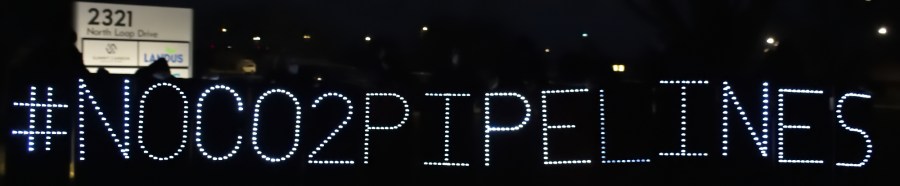
#NoCO2Pipelines
#NoCCS
#NoCarbonPipelines
#ClimateEmergency
#NoCO2Pipelines
#StopNavigator
#StopSummit
#HiFromIA

New Year 2022

I’m concerned to see little progress toward solutions for the myriad of problems we face. Especially with accelerating environmental chaos. We’re paralyzed in the face of so many complex problems. Disheartened because nothing makes progress.

I contend that is because, as Albert Einstein said, “we cannot solve our problems with the same thinking we used when we created them.”

I am proposing we implement new ways to approach our justice work. And will ask our peace and social concerns committee to explore how to change our work from a committee structure to a Mutual Aid group. I’m interested to see how faith can be part of Mutual Aid.

This year’s Peace and Social Concerns Committee Report from my Quaker yearly meeting is included below. And this is a link to An Epistle to Friends Regarding Community, Mutual Aid and LANDBACK.

This diagram lists problems and solutions. LANDBACK, Abolition of police and prisons, Mutual Aid, resource conservation and spirituality. Adapted from the more detailed diagram at the end of this.


Peace and Social Concerns Committee Report 2021
Iowa Yearly Meeting (Conservative)

This has been a year of great upheaval locally, nationally, and globally. The work of our
monthly meetings has been impacted by the COVID-19 pandemic. Yet we have found
ways to continue our peace and justice work. And had more time for prayer and
reflection.

Global chaos from rapidly accelerating environmental devastation is highly likely to
occur, breaking down our economic, social, and political systems. As air and water
temperatures increase, water supplies are drying up. Widening areas and severity of
drought are decreasing crop production and forcing people to flee. Rising oceans are
creating more climate refugees. The trend of increasing numbers of more ferocious
wildfires, hurricanes and other storms are expected to accelerate. All kinds of
infrastructure will likely be destroyed, creating more climate refugees, many migrating to
the Midwest. How can we prepare our own communities for these disasters, and plan
for the arrival of climate refugees?

Justice work by White Friends has changed in recent years. An important concept of
justice work is to follow the leadership of oppressed communities, who are working
tirelessly for their liberation. Those who consider themselves White Friends are learning
how to step back. Be supporters and allies.

Many injustices today trace their roots to the arrival of white Europeans on this
continent. These include a whole history of enslavement as well as genocide of
Indigenous peoples. It is important for white Quakers to know we are not expected to
feel guilt or blame for injustices that occurred in the past. But knowing what we know
now, it is up to us to learn more about those wrongs, and work toward repair and
healing. This will be a primary focus of this committee’s work in the coming year.

As a society we have been forced to face systemic racism. For example, public murders
by police have generated sustained protests regarding police brutality, with calls to limit
police powers and change or abolish prisons.

Also dating back to the arrival of white Europeans is the genocide of Indigenous
peoples. The theft of Native lands. And the atrocities of Native children taken from their
families to institutions of forced assimilation, often far away. Places where attempts
were made to the erase their culture. Many subjected to physical or sexual abuse.
Thousands of Native children died. This intentional cruelty broke the resistance of
Native peoples who were trying to hold onto their lands.

The recent validation of the remains of Native children on the grounds of those
institutions is having devastating effects in Native communities and those who care
about them. Searching the grounds of the institutions in this country is about to begin.
Secretary of the Interior, Deb Haaland, has launched a federal investigation into these
institutions of forced assimilation in the US,

A number of Catholic churches, who ran those institutions in Canada, have been
burned or vandalized.

There are renewed calls for truth and reconciliation. Canadian Yearly Meeting has done a
great deal of work on this.

These injustices are some of the effects of systems of white supremacy. The concept of
Mutual Aid is becoming an increasingly used model for communities working for justice.
The idea is to have a horizontal hierarchy, where everyone has a voice. And work to
ensure a vertical hierarchy does not develop. Without a vertical hierarchy, there can, by
definition, be no superiority. Several of our meetings are supporting existing Mutual Aid
communities or considering creating their own. These are opportunities to begin to
disengage from the colonial capitalist system and white supremacy. Ways we can model
justice in our own meetings and communities.

We can show up for Black Lives Matter and other racial justice events. We can support
those who meet with local, state, and Federal government officials. We can show up in
the streets to support agitation for change, train in nonviolent civil disobedience, or
accompany arrested activists through the justice system.

We can show up, when appropriate, at events of Native peoples, such as the Prairie
Awakening ceremony. We can share Indigenous news on social media platforms, so
others are aware of these things.

Indigenous leaders in the Midwest have asked us to learn about and find ways to
engage in the concepts of Land Back. The website LANDBack Friends has been
created and will be updated as our work continues. https://landbackfriends.com/
We pray for guidance for how our committee might work together at the intersection of
our responsibilities and those of Ministry and Counsel.

We will continue to seek spiritual guidance, both for what we are called to do, and ways
to offer spiritual support for those who are not Friends. There is great spiritual poverty in
many communities. Spiritual support will be needed by those who suffer the
consequences of environmental and other disasters. And those responding to these
disasters.

It is important to understand this work depends on us all working together, in the
community. Outside our meetinghouses. Developing friendships in the local community.
We encourage more engagement with our youth. They can teach us about justice. We
and our meetings will be revitalized.

Many monthly meetings are adapting to these changing ways of doing peace and
justice work. Building relationships with communities of black, Indigenous, and other
people of color. Exploring ways to be in right relationship with these communities. All of
us learning from each other. Sharing our stories. Deepening spiritual connections.

Peace and Social Concerns Committee 2021
Iowa Yearly Meeting (Conservative)


An Epistle to Friends Regarding Community, Mutual Aid and LANDBACK


Dakota 38 + 2


The day after Christmas, Dec. 26, 1862, President Abraham Lincoln ordered the largest execution in United States history — the hanging of 38 Dakota men. At the heart of this is the genocide and land theft of the tribal nations by the white settler-colonialists. #LANDBACK

“Today, all the people of the region continue to be affected by this traumatic event. We take the youth on the ride, so that they may connect with their culture in a more physical way. By being apart of the ride they are connecting themselves with their ancestors and their horse relatives. It is through the ride that they are able to see the beauty in the history and their culture.” SUNKTANKA


The Dakota 38 Plus 2 Memorial Ride is a ride that honors the 38 Dakota men who were hung in Mankato in December of 1862. The ride began from the vision of a Dakota elder and warrior. In this vision riders would ride from Crow Creek, SD to Mankato, MN. Ever since then the ride has continued to happen annually from the beginning year December 2005 to present collecting supporters and new riders along the way.

My name is Winona Goodthunder. My Dakota name is Wambde Ho Waste Win, Eagle Woman with a Good Voice. I have ridden in this ride since 2006, the second year. I was in eighth grade when I started. As the years have gone by the riders that we’ve met every year have become a part of a new kind of family. We are all different even though we are all somehow related. Those of us who are from the Lower Sioux region are used to different types of living than those who come from Canada, Nebraska, South Dakota, and other parts of the world. The differences that we have are forgotten when we come to this ride. We get up early in the morning to get our horses ready together. We ride all day together, and we eat together at night. It is then that our differences merge and we teach each other. The thing that seems to bind us the most is the fact that we can laugh. Humor may not be what is expected on a memorial ride, but it is encouraged for it is stressed that this ride is for forgiveness.

Although our group goes only for the last four days it is enough to establish that sense of family amongst each other. It is from these riders that I’ve learned most about my culture. I have read books, but they cannot foster the feeling that one gets when they are living in an experience such as the ride.

Winona Goodthunder


In the spring of 2005, Jim Miller, a Native spiritual leader and Vietnam veteran, found himself in a dream riding on horseback across the great plains of South Dakota. Just before he awoke, he arrived at a riverbank in Minnesota and saw 38 of his Dakota ancestors hanged. At the time, Jim knew nothing of the largest mass execution in United States history, ordered by Abraham Lincoln on December 26, 1862. “When you have dreams, you know when they come from the creator… As any recovered alcoholic, I made believe that I didn’t get it. I tried to put it out of my mind, yet it’s one of those dreams that bothers you night and day.”

Now, four years later, embracing the message of the dream, Jim and a group of riders retrace the 330-mile route of his dream on horseback from Lower Brule, South Dakota to Mankato, Minnesota to arrive at the hanging site on the anniversary of the execution. “We can’t blame the wasichus anymore. We’re doing it to ourselves. We’re selling drugs. We’re killing our own people. That’s what this ride is about, is healing.” This is the story of their journey- the blizzards they endure, the Native and Non-Native communities that house and feed them along the way, and the dark history they are beginning to wipe away.

This film was created in line with Native healing practices. In honoring this ceremony, we are screening and distributing “Dakota 38″ as a gift rather than for sale. This film was inspired by one individual’s dream and is not promoting any organization or affiliated with any political or religious groups. It was simply created to encourage healing and reconciliation.

Smooth Feather


I have watched this video, “Dakota 38”, many times. My friend and roommate from Scattergood Friends School, Lee Tesdell, teaches in Mankato, and has spoken about this history with me.

The photography and especially the story, are just excellent and very moving. I’ve been learning how trauma is passed from generation to generation. The events shown in the film “Dakota 38” occurred in 1862.

“Today, all the people of the region continue to be affected by this traumatic event.” SUNKTANKA

Please note the video is age-restricted and only available on YouTube.
Search for Dakota 38
https://www.youtube.com/results?search_query=dakota+38

Composers Jay McKay and Jay Parrotta spent three years fusing sound and visuals into a cinematic experience that takes the viewer onto the Northern Plains and through a relentless pounding blizzard. Sound has the ability to transport, and the mix of chants, drums and melody is spellbinding.


Forgive Everyone Everything

FORGIVE EVERYONE EVERYTHING is inscribed on a bench in Reconciliation Park, Mankato, Minnesota, where the ride ends. The photo of the memorial shows a list of the names of the 38 Dakota men who were all hanged at the same time in what is now Mankato, Minnesota. A raised wooden platform, with 38 nooses along the sides, was constructed. It is said nearly 4,000 people witnessed this, the largest execution in U.S. history, on December 26, 1862.

As to who needs to be forgiven, there are many answers to that. 

At the heart of this is the genocide and land theft of the tribal nations by the white settler-colonialists. 

More specifically this history came about as the Dakota were forced into smaller and smaller areas of land, to the point they could not sustain themselves.

#LANDBACK
This image has an empty alt attribute; its file name is 96766751_rTnbZmN48yVXBZxfPoiyqOQl6MjM_fEEZFr6jKZWb54.jpg
https://foursquare.com/v/reconciliation-park/4d86396a509137040938a75b
NAMES OF THE EXECUTED INDIANS

#1 was to be TA-TAY-ME-MA but he was reprieved because of his age and questions related to his innocence

  1. Plan-doo-ta, (Red Otter.)
  2. Wy-a-tah-ta-wa, (His People.)
  3. Hin-hau-shoon-ko-yag-ma-ne, (One who walks clothed in an Owl’s Tail.)
  4. Ma-za-bom-doo, (Iron Blower.)
  5. Wak-pa-doo-ta, (Red Leaf.)
  6. Wa-he-hua, _.
  7. Sua-ma-ne, (Tinkling Walker.)
  8. Ta-tay-me-ma, (Round Wind) — respited.
  9. Rda-in-yan-ka, (Rattling Runner.)
  10. Doo-wau-sa, (The Singer.)
  11. Ha-pau, (Second child of a son.)
  12. Shoon-ka-ska, (White Dog.)
  13. Toon-kau-e-cha-tag-ma-ne, (One who walks by his Grandfather.)
  14. E-tay-doo-tay, (Red Face.)
  15. Am-da-cha, (Broken to Pieces.)
  16. Hay-pe-pau, (Third child of a son.)
  17. Mah-pe-o-ke-na-jui, (Who stands on the Clouds.)
  18. Harry Milord, (Half Breed.)
  19. Chas-kay-dau, (First born of a son.)
  20. Baptiste Campbell, _.
  21. Ta-ta-ka-gay, (Wind Maker.)
  22. Hay-pin-kpa, (The Tips of the Horn.)
  23. Hypolite Auge, (Half-breed.)
  24. Ka-pay-shue, (One who does not Flee.)
  25. Wa-kau-tau-ka, (Great Spirit.)
  26. Toon-kau-ko-yag-e-na-jui, (One who stands clothed with his Grandfather.)
  27. Wa-ka-ta-e-na-jui, (One who stands on the earth.)
  28. Pa-za-koo-tay-ma-ne, (One who walks prepared to shoot.)
  29. Ta-tay-hde-dau, (Wind comes home.)
  30. Wa-she-choon, (Frenchman.)
  31. A-c-cha-ga, (To grow upon.)
  32. Ho-tan-in-koo, (Voice that appears coming.)
  33. Khay-tan-hoon-ka, (The Parent Hawk.)
  34. Chau-ka-hda, (Near the Wood.)
  35. Hda-hin-hday, (To make a rattling voice.)
  36. O-ya-tay-a-kee, (The Coming People.)
  37. Ma-hoo-way-ma, (He comes for me.)
  38. Wa-kin-yan-wa, (Little Thunder.)

Iowa Solidarity with Wet’suwet’en

As I’ve been writing (see table below), the Wet’suwet’en peoples have declared the week of December 20 as a time for international support for their struggle to stop the completion of the Coastal GasLink pipeline through their pristine lands and water.

The map shows only two actions were planned in the Midwest. One is the action we took at the Chase bank in Des Moines yesterday, and the second will be held today in Chicago. Ironically, a mutual friend introduced me to Daniel, another Quaker working in support of the Wet’suwet’en and for LandBack. Daniel will be participating in the Midwest solidarity event in Chicago today.

Another new connection was made when my friend Jon Krieg (American Friends Service Committee) introduced me to Julie Brown, Turtle Island Solidarity Network, who has connections with the Wet’suwet’en organizers as well as activists in Iowa. Julie had connections with most of those who showed up yesterday. She also spoke with the bank manager by phone the day before our event, which facilitated talking with the manager and delivering a letter when we were there yesterday.

The people in the bank were clearly uncomfortable when we entered, but we were silent and non-threatening as we waited for the manager to appear. I was told I could not take photos in the bank and immediately stopped, although I had several shots prior to that.

Dear Branch Manager Minnihan,

As concerned residents of Des Moines and surrounding areas in Iowa, we are gathering today at the Chase bank branch on Merle Hay Road to demand that Chase immediately stops funding of the Coastal GasLink (CGL) project in Wet’suwet’en territory.

Coastal GasLink does not have the consent of the Wet’suwet’en Hereditary Chiefs, whose title to the land the Supreme Court of Canada recognizes. And yet Chase has continued to bankroll this illegal project and the destruction of Wet’suwet’en land, When met with resistance, the CGL project deployed sniper rifles and militarized squads against unarmed Indigenous peoples on their own land. People will not stand for this.

We demand that Chase immediately stops funding Coastal GasLink and profiting off of the illegal destruction and invasion of Wet’suwet’en land.

Attached are copies of the eviction notice issued on January 4, 2020, by Wet’suwet’en Hereditary Chiefs and the notice of enforcement issues on November 14, 2020.

Concerned local residents of Des Moines, Iowa

Action Goals
  • Take up the time and energy of Chase leadership nationally and locally
  • Educate members of the public on the role of TC Energy in their role in violating Indigenous rights by sharing graphics on social media, on email lists & in-person interactions
  • Increase the skills and leadership abilities of action participants 
  • Informing the public about the link between the bank’s fossil investments, land theft, and the climate crisis. 
  • Building solidarity between Land Defenders on the frontlines and the broader climate movement. 
  • Building power for the movement by training teams who can escalate against Chase come spring.
Defund Coastal GasLinkhttps://landbackfriends.com/2021/12/22/defund-coastal-gaslink/
Evicting Colonizershttps://landbackfriends.com/2021/12/21/evicting-colonizers/
International Week of Action to Defund Coastal GasLinkhttps://landbackfriends.com/2021/12/20/international-week-of-action-to-defund-coastal-gaslink/
Wet’suwet’en solidarity in Iowahttps://landbackfriends.com/2021/12/19/wetsuweten-solidarity-in-iowa/

#WetsuwetenStrong
#WetsuwetenSolidarity
#AllOutForWedzinKwa
#1492LandBackLane
#LandBack

Defund Coastal GasLink

Today (12/22/2021) we will be gathering in solidarity with the Wet’suwet’en peoples at 4:00 PM. at the Chase Bank, 3621 Merle Hay Rd, Des Moines, IA 50310.

Chase is one of the major institutions funding fossil fuel projects, including the Coastal GasLink pipeline being built on Wet’suwet’en lands. Pressuring financial institutions to divest funds from fossil fuel projects has been a tactic for many years. Gatherings like this can encourage the bank to divest from fossil fuel projects. They can also provide a public way for individuals to divest their funds from these banks.

Banks and private equity companies are pouring billions on a massive fracked gas pipeline to cross Wet’suwet’en territory: Coastal GasLink. 

Indigenous Hereditary chiefs and supporters have responsibilities to defend the sacred, pristine headwaters of the Wedzin Kwa, in Wet’suwet’en law. They hold uninterrupted title to the land, in colonial law. For peacefully acting in accordance with the law and defending our shared future, land defenders, allies and journalists were removed at gunpoint. 

These companies are bankrolling Wet’suwet’en people being removed at gunpoint from their land.

  • RBC, Chase, and KKR are violating the rights of the Wet’suwet’en Hereditary chiefs by funding the Coastal GasLink pipeline. 
  • This week of action comes one month after RCMP raided Wet’suwet’en land, arresting 32 people (Land Defenders, Elders, journalists, and allies). 

Action Goals
  • Take up the time and energy of Chase leadership nationally and locally
  • Educate members of the public on the role of TC Energy in their role in violating Indigenous rights by sharing graphics on social media, on email lists & in-person interactions
  • Increase the skills and leadership abilities of action participants 
  • Informing the public about the link between the bank’s fossil investments, land theft, and the climate crisis. 
  • Building solidarity between Land Defenders on the frontlines and the broader climate movement. 
  • Building power for the movement by training teams who can escalate against RBC come spring.

I will not tell my children and grandchildren that a piece of paper from a colonial court kept me from standing up for our lands and waters.

Skyler Williams

The camp that was burned to the ground by the RCMP with help from CGL has be retaken, the Wet’suwet’en returned to their lands!

The courts and cops think that we will just go away, that we will stop honouring our connection to these lands and waters. That we will forget our responsibilities to our children. When will Canada realize that we cannot be forced from our lands, that we will cannot be forced into giving up on our future generations?

I will not tell my children and grandchildren that a piece of paper from a colonial court kept me from standing up for our lands and waters. The police have power because they use fear, intimidation and violence. Our power comes from our love for our lands and for each other.

Skyler Williams

#WetsuwetenStrong
#WetsuwetenSolidarity
#AllOutForWedzinKwa
#1492LandBackLane
#LandBack

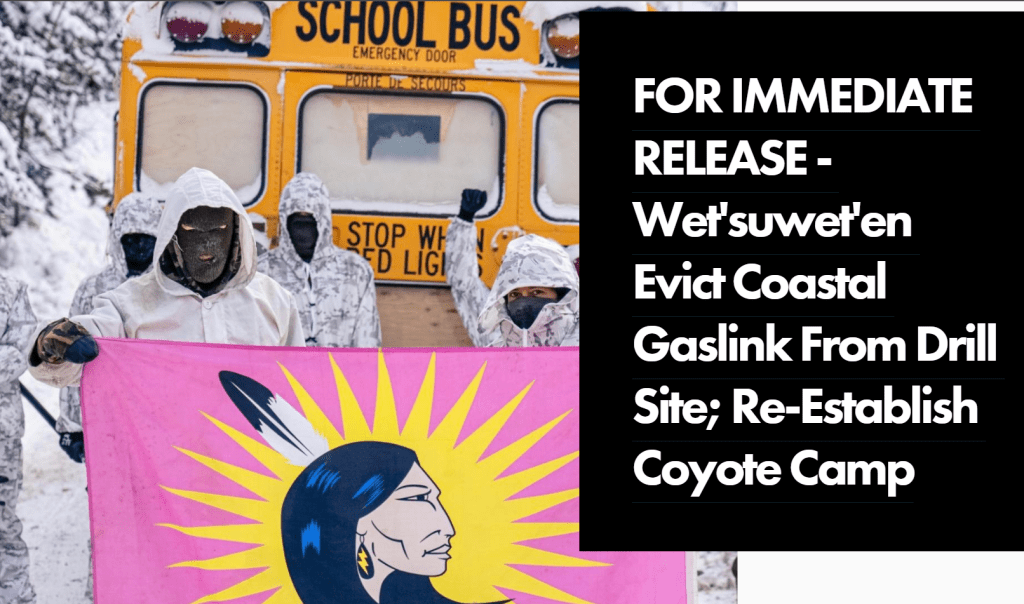
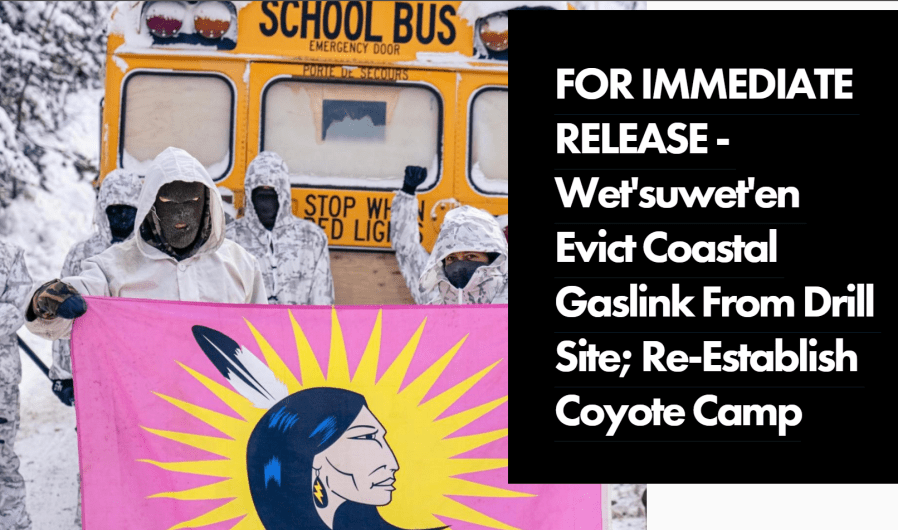
FOR IMMEDIATE RELEASE – Wet’suwet’en Evict Coastal Gaslink From Drill Site; Re-Establish Coyote Camp

Dec 20, 2021 – Unceded Gidimt’en Territory, Smithers (BC):

Gidimt’en land defenders and supporters have once again evicted Coastal Gaslink workers from a key pipeline drill site, protecting Wet’suwet’en headwaters and re-occupying the area known as “Coyote Camp”. 

Early Sunday, in observance of Wet’suwet’en law, land defenders enforced the Wet’suwet’en Hereditary Chiefs’ 2020 Eviction Notice to Coastal Gaslink, removing pipeline workers and re-establishing the blockade that ended on Nov 19th after two days of militarized police raids. 
The eviction took place exactly one month after RCMP made 30 arrests on Wet’suwet’en yintah, marking the third large-scale militarized operation on unceded Wet’suwet’en land since 2019. Approximately 100 RCMP, equipped with assault weapons, sniper rifles, and dogs were deployed while floodwaters raged throughout the province, to facilitate construction of the Coastal GasLink pipeline and the theft of sovereign Wet’suwet’en land.

The Wet’suwet’en people have never sold, surrendered, or in any way relinquished title to Wet’suwet’en land.

Today’s action follows the 24th anniversary of the 1997 Delgamuukw-Gisday’wa court ruling, which proved that Aboriginal title has never been extinguished across 58,000km2 of Wet’suwet’en and Gitxsan lands. The Supreme Court of Canada recognized the Wet’suwet’en Hereditary Chiefs as representatives of the Wet’suwet’en title holding collective, and Anuc ‘nu’at’en (Wet’suwet’en law) as the basis of Wet’suwet’en society.

In violation of the Delgamuukw-Gisday’wa ruling, the UN Declaration on the Rights of Indigenous Peoples, and Anuc ‘nu’at’en, the Coastal GasLink pipeline has proceeded without the Free, Prior, and Informed Consent of the Wet’suwet’en Hereditary Chiefs.

In early 2020, Hereditary Chiefs representing all five clans of the Wet’suwet’en nation issued an eviction notice to Coastal Gaslink, leading to a series of blockades across Wet’suwet’en land and sparking nationwide solidarity actions. Today, this eviction is once again in force.

“Coastal GasLink does not and will never have the consent of the Wet’suwet’en Hereditary governance system and should expect that Wet’suwet’en law will prevail on our lands. No amount of state violence against us will make us forget our responsibility to protect the water for all future generations”, says Sleydo’, spokesperson for the Gidimt’en Checkpoint. 

Media contact: Jennifer Wickham, Gidimt’en Checkpoint Media Coordinator
yintahaccess@gmail.com
250-917-8392 

Media Backgrounder :
Wet’suwet’en 101: https://www.yintahaccess.com/media-background

Wet’suwet’en Hereditary Chiefs’ Eviction Notice:
https://unistoten.camp/wetsuweten-hereditary-chiefs-evict-coastal-gaslink-from-territory/

#WetsuwetenSolidarity
#AllOutForWedzinKwa
#1492LandBackLane
#LandBack

EVICTING COLONIZERS

The complete title of the post quoted below is “WET’SUWET’EN RESISTANCE AND SOLIDARITY: EVICTING THE COLONIZERS” By YintahAccess.com, December 19, 2021.

Wet’suwet’en land defenders have reminded us through their recent re-capture of Coyote Camp – injunctions are only pieces of paper. Canadian law has no legitimacy on stolen land. #LANDBACK

Reconciliation at Gunpoint

CONTENT WARNING: Detailed description of colonial violence and dehumanization at the hands of police and prison/court staff.

In this interview, Layla Staats and Skyler Williams describe their arrest on unceded Cas Yikh territory, and the disgusting lengths that the Canadian state went to try and break their warrior spirits.

Through these desperate and brutal actions, the RCMP and the courts showed the true essence of ‘reconciliation’ in a militarized settler-colonial state.

As Skyler says, and Wet’suwet’en land defenders have reminded us through their recent re-capture of Coyote Camp – injunctions are only pieces of paper. Canadian law has no legitimacy on stolen land.

#AllOutForWedzinKwa #shutdowncanada

The Wet’suwet’en peoples are calling for this to be an International Week of Action to Defund Coastal GasLink.

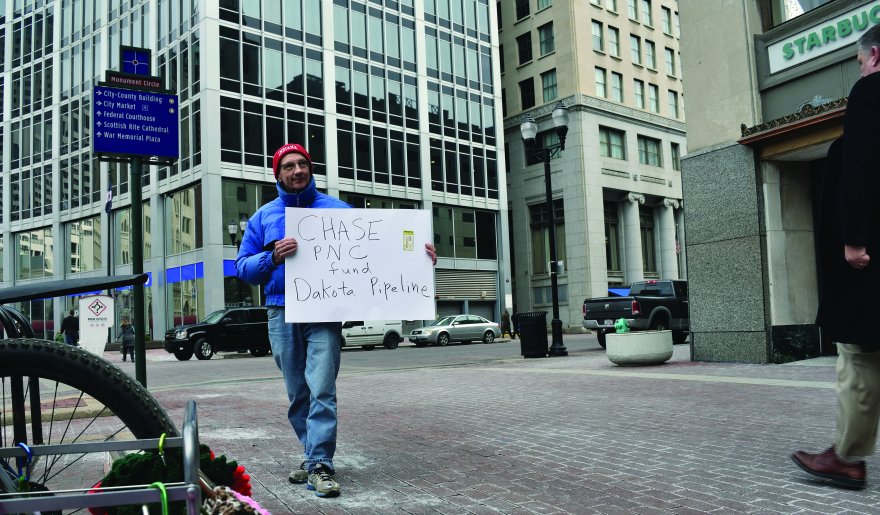
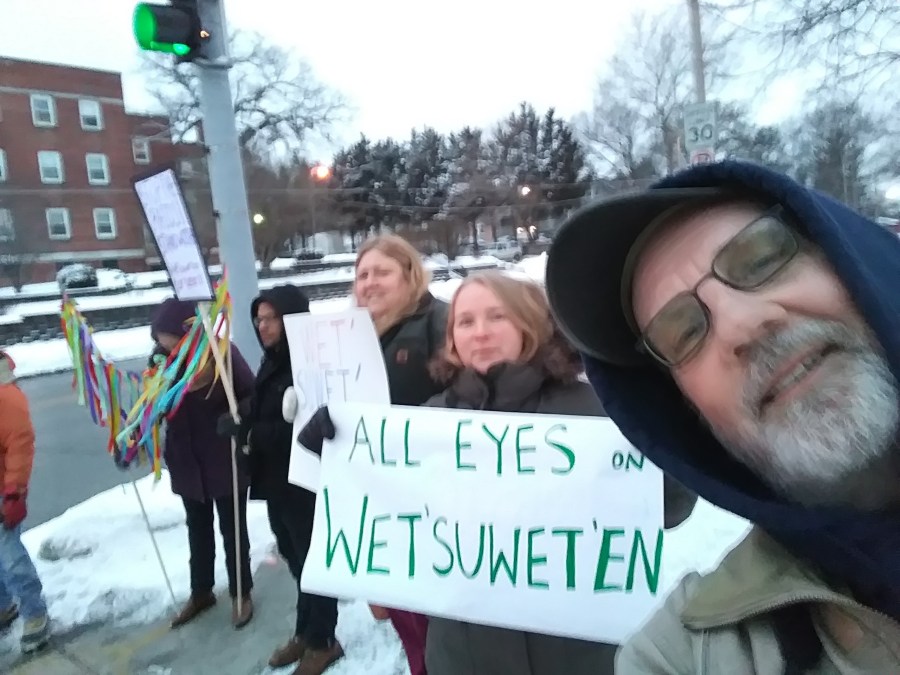
Hold an Action in your city or your town. Banner drop, hold a Rally/March at RBC or Chase headquarters/ building, have a sit in, jam up phone lines, etc…spread the awareness! You can do this. There were just six of us who stood on a street corner at our first vigil in support of the Wet’suwet’en peoples in February 2020. We knew nobody would recognize Wet’suwet’en, but that was our intention, to “spread awareness”. And amazing connections were made at that event. You never know what will happen. That was where I met Ronnie James who taught me the concepts of Mutual Aid.

Wet’suwet’en vigil, Des Moines, Iowa

We have a sacred responsibility to our children, to protect Wedzin Kwa, our clean drinking water, our salmon, and the right to be Wet’suwet’en, for all future generations. We will not endure genocide by oil and gas corporate colonizers. We call on our allies everywhere, to rise up, stand up, fight back! Put pressure on investors, on industry, and the government to put an end to the Coastal GasLink pipeline. All Out for Wedzin Kwa! Join the Wet’suwet’en resistance!

YintahAccess.com

For the third time in three years, the Wet’suwet’en have faced militarized raids on our ancestral territory.

One month ago today, the RCMP violently raided unceded Gidimt’en territory (November 18-19, 2021), removing Indigenous people from their land at gunpoint on behalf of TC Energy’s proposed Coastal GasLink pipeline. The Wet’suwet’en enforced our standing eviction of CGL by closing roads into the territory November 14-17. Following the raids, arrestees received cruel and violent treatment in prison. The conditions set forth by the court are human rights violations to Indigenous peoples. We’re still here. We’re still throwing down. We are more determined than ever to protect our traditional territories for future generations.

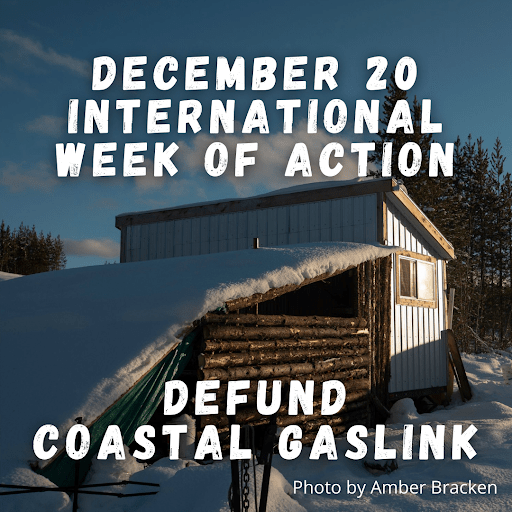
In September 2021, Gidimt’en Checkpoint reoccupied Lhudis Bin territory, building a clan cabin on the drill pad site where Coastal GasLink pipeline wants to drill underneath our sacred headwaters, Wedzin Kwa. The Coyote Camp re-occupation of Cas Yikh Gidimt’en Yintah was an historic 56 days long.

CGL took extreme measures to force us from our ancestral lands. They employed fear tactics and threats of violence daily. They surveilled us with helicopters and drones, threatened us with attack dogs, pointed guns at us and chainsawed down the doors to our homes. They put their own workers in danger and used them as political pawns for profit. They tried to break our spirits in prison and in court with torture and colonial “release conditions”.

Again, they threatened to kill us and steal our land. But we’re still here.

In 2010, there were 13 proposed pipeline projects to go through Wet’suwet’en territory. Investors were forced to pull out of these mega-destructive projects through our territory and the CGL pipeline is the only one left, from Enbridge, Pacific Trails Pipeline, Spectra, Pembina, and several others.

Within the first days of the reoccupation there were violent arrests and police brutality on unarmed welcome guests on Cas Yikh yintah. We put a callout for solidarity from our neighboring nations and from our allies. The Haudenosaunee showed up in solidarity and walked the RCMP out of the territory. Gitxsan erected a railway blockade in solidarity with our reoccupation. Others took action in their territories including land back, rolling blockades, highway shut downs and rallies across Turtle Island.

Wet’suwet’en RESISTANCE AND SOLIDARITY: EVICTING THE COLONIZERS” By YintahAccess.com, December 19, 2021.

International Week of Action week of December 20th 2021

We are calling on our supporters and allies to join us to turn our outrage towards RBC once again! Their lack of accountability in financing Colonial Violence and land theft from Indigenous People is unacceptable. We are all in this together and we all have a responsibility to stand up to big financial institutions that invest and keep the fossil fuel industry going full force. With no green sustainability transition in the foreseeable future, all of humanity and our kin are at dangerous risk. With the fires and floods that happened recently south of so-called British Columbia we can’t let any more time pass while big banks are fueling our demise. 

Hold an Action in your city or your town. We know it’s close to the end of the year, we need to make sure RBC doesn’t slip through the cracks and slither away! 

Banner drop, hold a Rally/March at RBC headquarters/ building, have a sit in, jam up phone lines, etc…spread the awareness! 

https://www.yintahaccess.com/

Wet’suwet’en solidarity in Iowa

There will be a gathering in solidarity with the Wet’suwet’en peoples this Wednesday, December 22, at 4:00 PM. at the Chase Bank, 3621 Merle Hay Rd, Des Moines, IA 50310.