ReMatriate and Land Back

I remember the moment when I woke up in my tent for the first time in the Oceti Sakowin camp north of the Standing Rock Reservation during the fight to stop the Dakota Access Pipeline in 2016. Everywhere I looked Indigenous people were reclaiming space and power. We all felt a deep need to steward the land, because we were tired of the harm that colonizers had inflicted upon us. It was the first time in my life that I truly felt the power of the Land Back movement.

PERSPECTIVES: Why “ReMatriate” is a more inclusive term for returning land to Indigenous peoples by Sikowis Nobiss, reckon, Oct 3, 2023

Thus begins another excellent article by my friend, Sikowis Nobiss.

The subheading of that article continues: “In a world where unfettered patriarchal violence and greed has brought us to the precipice of a climate extinction, ReMatriation is a call to reestablish Indigenous landscapes and give stolen power back to the feminine.”

“For Indigenous Peoples Day, I would like for folks to better understand and appreciate this movement which has been working its way into the dominant public narrative over the past few years. As a hashtag or sign at a protest, the term Land Back is straightforward. It is a demand that stolen land, sacred sites and sovereign stewardship be returned to whom it was stolen from: Indigenous peoples. It has become popular movement slang used in our ongoing efforts to fend off relentless theft and racial injustice, and a call for reparations.

Land Back is a helpful term but I prefer to use ReMatriate, as it is more inclusive of the many issues that have arisen from land theft, and better describes the Indigenous fight to defend Mother Earth. It is a call to reestablish Indigenous landscapes, bring back Indigenous traditional ecological knowledge and to give stolen power back to the feminine. In a world where unfettered patriarchal violence and greed has brought us to the precipice of a climate extinction, ReMatriation is the return of the matriarchy. This counterbalances the forces of toxic masculinity that, through Christian colonial-capitalist violence, are intent on holding all power and controlling all the life, land and resources on our Mother Earth.”


First, a definition: “Rematriation is a powerful word that Indigenous women of Turtle Island use to describe how they are restoring balance to the world…it means ‘Returning the Sacred to the Mother.”

The Indigenous concept of rematriation champions a return to our origins, to life and co-creation, and a focus on Mother Earth with the reclaiming of all kinds of things, such as ancestral remains, yes, but also spirituality, cultural practices, knowledge, resources, and seeds.

Rematriate by  Dr. Jessica R. Metcalfe, Beyond Buckskin, Nov 12, 2021


Returning the land to Indigenous peoples is exceedingly hard

Truthfully, there is just a blatant disregard for the health of the land, the water and the air we breathe. Where there used to be tallgrass prairie, oak savannah, and woodland there are now massive monocropped fields of corn and soy with ethanol plants, meatpacking plants, and Concentrated Animal Feed Operations dotting the landscape.

Yet I have found that returning the land to Indigenous peoples is exceedingly hard. I can raise funds to fight a pipeline or end the Missing and Murdered Indigenous Relatives crisis, but it is almost impossible to raise funds as a non-profit to buy just one acre of land in Sioux City to start a Native urban garden, or for even a few acres near Des Moines so we can reclaim first foods and ReMatriate the prairie.

My friend Foxy Onefeather carried this sign about Missing and Murdered Indigenous Relatives (sometimes referred to at MMIW-Missing and Murdered Indigenous Women) during our eight-day walk, the First Nation-Farmer Climate Unity March, from Des Moines to Fort Dodge in 2018. Sikowis helped organize the march.

I first heard Sikowis and Donnielle Wanatee speak at our Quaker Yearly Meeting in 2017, in a panel discussion about building bridges with Native peoples.

I have spoken to hundreds of folks about Land Back and ReMatriation. I have also spoken to congregations such as the Mennonites, the Quakers, Nuns and Nones, The Beloved Community, The United Church and Catholic Workers. In every one of these conversations I hear a cocktail of white guilt combined with a desire to be in proximity to Indigenous folks and our movements that ultimately just leads to more inaction.

These conversations always leave me feeling tokenized and angry. Despite the fact that giving the land back to Native stewards is the single most powerful act that white folks with generations of inherited wealth—which can be traced back to stolen land—can do to counter colonialism, none of these conversations have ever led to any change.

ReMatriation is a movement

ReMatriation describes an entire movement that is not just intent on returning land, but making sure that Indigenous lifeways return so we can build a regenerative and compassionate world economy. While we will not ReMatriate the world in my lifetime, the term allows a new understanding. I consider this planet to be my mother and therefore she is a matriarch. I believe that by doing this work, I am following the path my ancestors put me on to keep my mother safe.

Indigenous People’s Day

To protect all living-beings and sacred sites is a feminine act and in complete defiance to Christopher Columbus’ worldview, which is the narrative that we counter every time we celebrate Indigenous People’s Day instead of Columbus Day.

Sikowis Nobiss, MA is Nêhiyaw/Saulteaux of the George Gordon First Nation and the founder and Executive Director of Great Plains Action Society. When she imagines a strong political infrastructure, societies built on compassion, and a regenerative economy, she sees a focus on relationships and community. She believes we can get there through Indigenous ideologies and practices, which are the antitheses to Christian fundamentalism and colonial capitalism. Sikowis is mom, a writer, a speaker, an organizer and an earth defender fighting to decolonize the world. Learn more about Great Plains Action Society at greatplainsaction.org.


Sikowis references this article, which is an excellent discussion of what Land Back means: LAND BACK! What do we mean? by Ronald Gamblin, 4Rs NLC Coordinator, 4Rs Youth Movement. This quote is from that article:

“When you hear the words decolonization, white supremacy, patriarchy or even racism, do you feel something? Do you get a chill down your back, randomly start crossing your arms, get tense all over your body, or even just feel an urge to resist? Well good! When your body is cold it shivers, when it’s hungry it growls, when it’s in fear it shakes and when it’s sad it cries. Your body is meant to respond, whether that be physical or emotional, and it’s the same when deconstructing what you’ve been taught. It tells you that something is there and that you must go through it and find ways to process it.” – Kris Archie, Executive Director of the Circle on Philanthropy and Aboriginal Peoples


A few comments:

I don’t usually quote so much from other sources, as I did here. But this is Sikowis’ story, meant to better inform people about Land Back and ReMatriation.

Regarding my use of the word friend, that is not to call attention to myself. Rather that is to let the reader know that I know these people and firmly believe in what they stand for. I am blessed to know them as friends of mine.

We have some parallel paths. In Indianapolis I worked against the Keystone and Dakota Access Pipelines. That included organizing and training people to engage in nonviolent civil disobedience.

Yesterday, I wrote an update related to my website, LANDBACK Friends, that includes a detailed document about the relationships between the Great Plains Action Society and Midwest Quakers. As the name implies, LANDBACK Friends is my writing, hoping to inform Quakers (Friends) about LANDBACK and now, ReMatriate.

These are some of the photos I’ve taken over the past few years related to Indigenous People’s Day and related events in Iowa and Indianapolis.

Pipelines and soil destruction

Fossil fuel pipelines have been a target of water protectors for many years.

Presidential approval for the Keystone XL pipeline gave rise to the Keystone Pledge of Resistance which was probably the reason the Obama administration eventually denied the permit. (See: https://landbackfriends.com/?s=keystone)

In a textbook example of racial injustice, the route of the Dakota Access pipeline (DAPL) was changed from crossing the Missouri River upstream of Bismarck, North Dakota, to instead cross the water at Standing Rock.

Now the fossil fuel industry is applying significant pressure for the approval of pipelines to move liquified carbon emissions from sites of high CO2 production to underground storage in rock formations.

These carbon capture pipelines have the same problems as the Keystone XL, DAPL and other pipelines, including disrupting Indigenous sacred sites and lands, abuse of eminent domain, missing and murdered Indigenous relatives because of the “man camps” at the construction sites.

Another problem that needs attention is the damage to the soil by the pipeline construction. Pipeline companies say they will protect the rich, fertile topsoil by setting it aside, to be replaced on top of the covered pipeline.

That is not done. Instead, the fertile topsoil is mixed with the subsoil, causing problems that include poor water drainage and lower crop yields.

AMES, Iowa — An Iowa State University study looking at the impacts of soil disturbance and early remediation practices from construction of the Dakota Access Pipeline finds significant soil compaction and gradual recovery of crop yield in the right-of-way over five years.

The research, funded by Dakota Access Pipeline (DAPL), aimed to investigate construction influences of the underground pipeline on farmland. The pipeline transports crude oil over 1,172 miles from North Dakota to Patoka, Illinois, passing through South Dakota and about 347 miles in Iowa.

According to a university news release, the study’s primary goal was to assess the extent of soil and cropping disturbances in the approximately 150-foot right-of-way caused by land clearing, topsoil removal and soil mixing, pipeline trenching and backfilling during the construction process.

Researchers also wanted to evaluate the effectiveness of state-mandated remediation requirements and a DAPL agricultural mitigation plan designed to minimize impacts to cropland. The Iowa Utility Code requires pipeline projects to remove topsoil and apply deep tillage to exposed subsoil before replacing the topsoil. The researchers are continuing to study the benefits of these practices, which can be costly.

Such field-based research quantifying soil properties and recovery in the years after a pipeline installation on farmlands is limited.

“Our findings show extensive soil disturbance from construction activities had adverse effects on soil physical properties, which come from mixing of topsoil and subsoil, as well as soil compaction from heavy machinery,” said Mehari Tekeste, assistant professor of agricultural and biosystems engineering, director of the Soil Machine Dynamics Laboratory at Iowa State and leader of the project.

“Overall, in the first two years, we found the construction caused severe subsoil compaction, impaired soil physical structure that can discourage root growth and reduce water infiltration in the right-of-way,” said Horton, the lead soil physicist on the project. They also found changes in available soil water and nutrients.

The team found crop yields in the right-of-way were reduced by an average of 25% for soybeans and 15% for corn during the first and second crop seasons, compared to undisturbed fields.

Study: Pipeline construction affects crop yield, Iowa Farmer Today, Nov 29, 2021

Following are some photos related to the construction of the Dakota Access pipeline that we observed during the First Nation-Farmer Climate Unity March.

Not Enough Being Done for MMIW

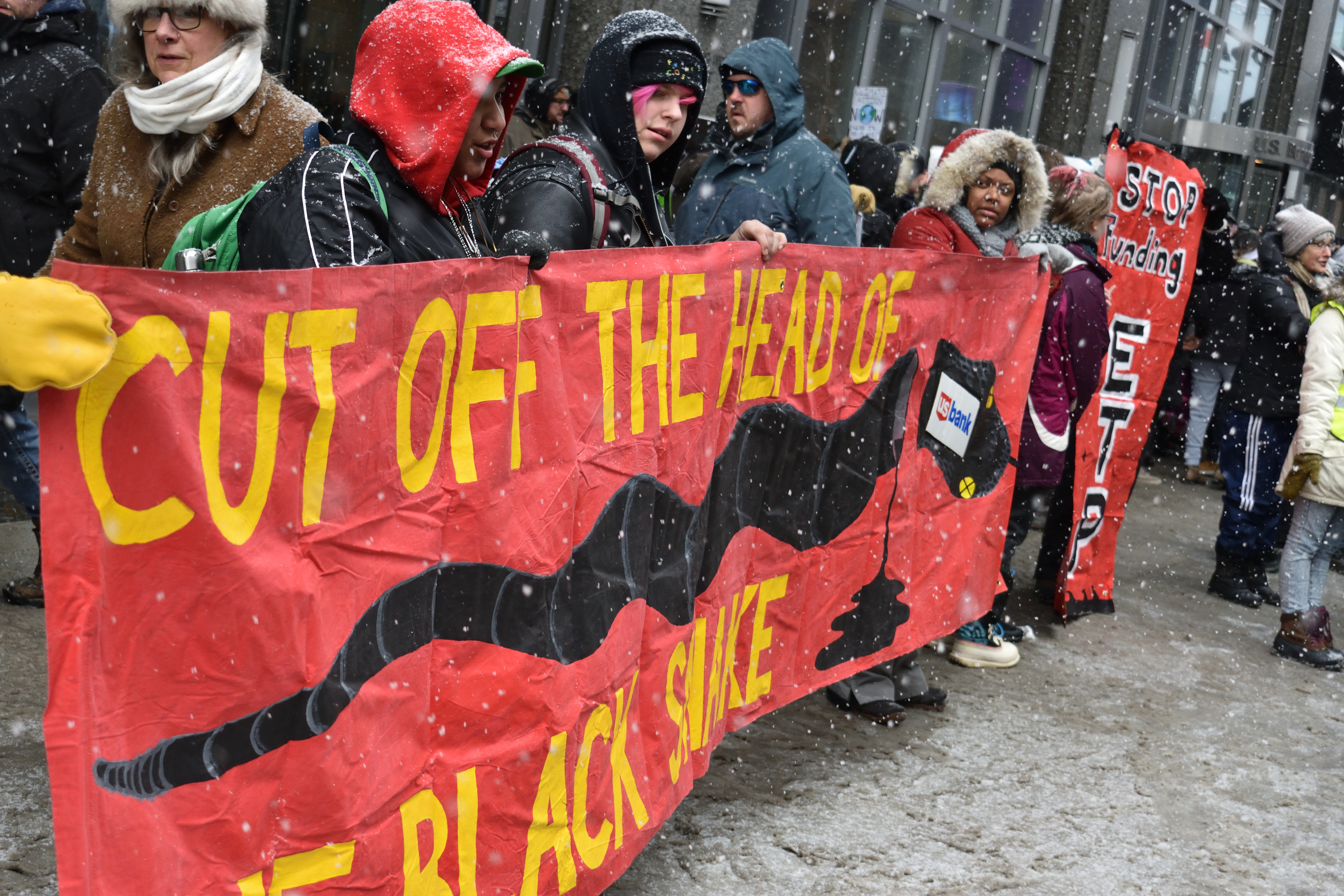
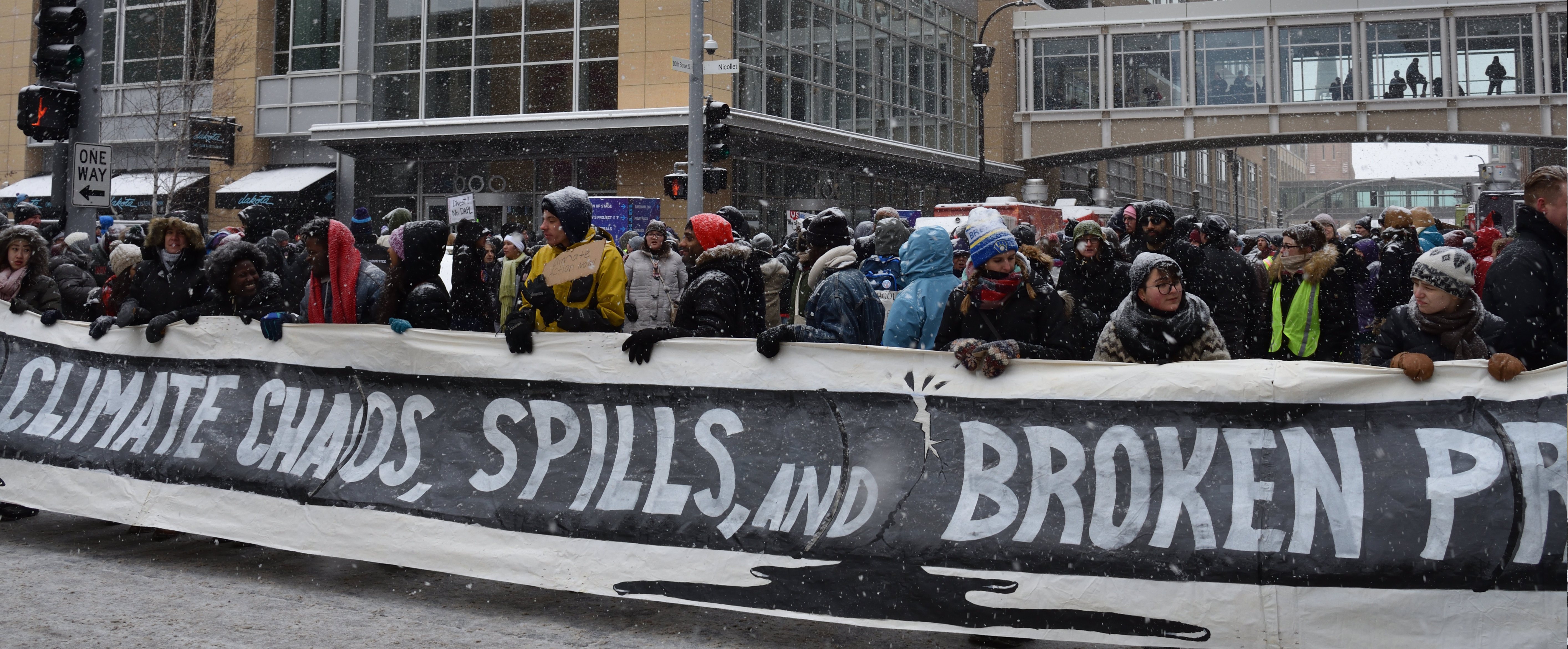
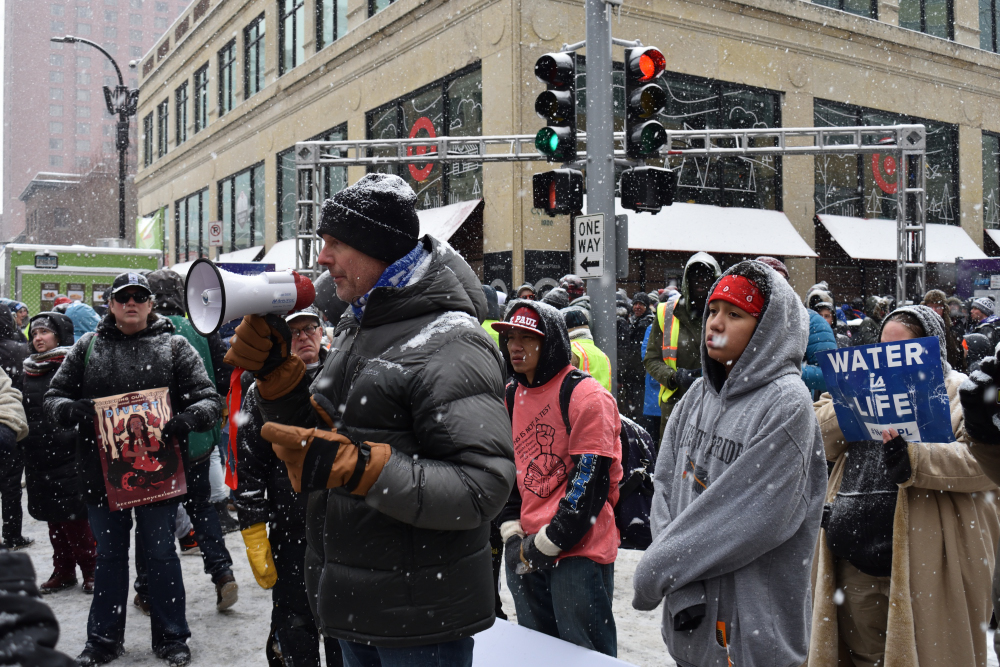
I was not aware of the epidemic of violence against, and the disappearance and/or murder of Indigenous women prior to getting to know some Indigenous people. I first became aware when I rode in a van, organized by Ed Fallon, to Minneapolis February 3, 2018, the day before the Super Bowl was played there. Minneapolis is the US Bank headquarters, and the Super Bowl was played in the US Bank stadium. US Bank has been involved in funding many fossil fuel projects. We gathered outside the bank offices with signs to call attention to that.

Heading for Minneapolis, Feb 4, 2018.

I was surprised when the speakers all talked about Missing and Murdered Indigenous Women (MMIW), sometimes expressed as Missing and Murdered Indigenous Relatives (MMIR). I was just learning much of this violence came from the man camps, the living quarters for those work on the construction of fossil fuel pipelines.

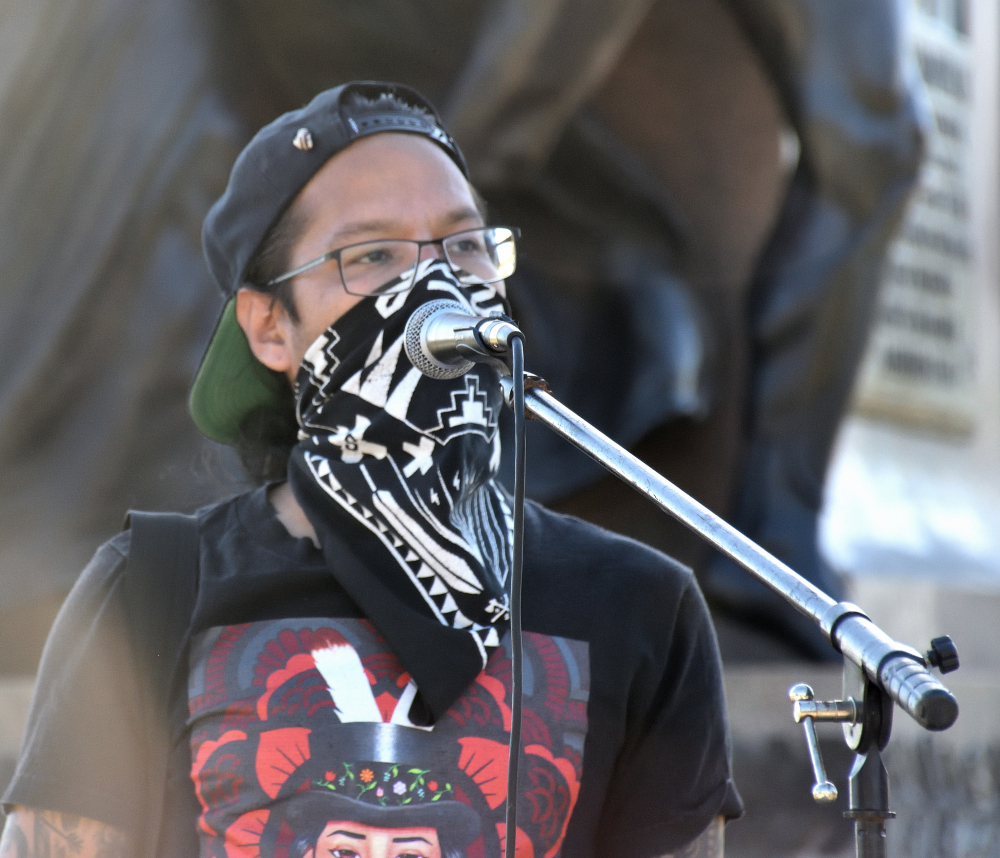
Those who spoke, Sikowis Nobiss, Donnielle Wanatee, Kathy Byrnes and Ed Fallon, would become friends of mine. In these photos you can see the Missing and Murdered Women artwork held by several of the speakers.

That fall (2018) I participated on the First Nation-Farmer Climate Unity March. My friend Foxy Onefeather carried the MMIW sign during our eight-day, ninety-four mile walk along the path of the Dakota Access Pipeline. Many stories, photos and videos of that march can be found here: https://firstnationfarmer.com/

Foxy Onefeather

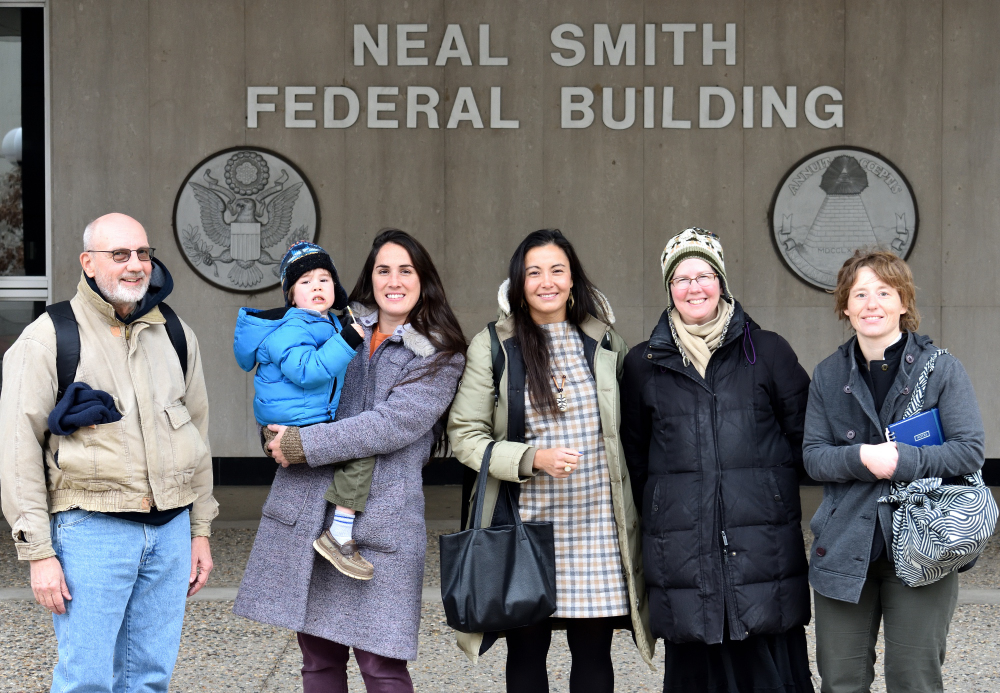
One goal of the First Nation-Farmer Climate Unity March was to create friendships and the beginning of trust among the marchers, so we could work together on things of common concern. One of the first things several of us did together was meet with Senator Chuck Grassley’s staff in Des Moines.

There were two pieces of legislation in Congress related to Native Affairs. One was the SURVIVE Act which is intended to get more funds from the Victims of Crime Act to Native communities. The second is Savanna’s Act, which allows tribal police forces to have jurisdiction over non-Native people on Native land, access to criminal databases and expanded collection of crime statistics. Senator Grassley was involved in the passage of the Victims of Crime Act.

Jeff, Fox, Shazi, Sikowis, Shari and Sid

This Monday a report was released saying the federal response to missing and murdered Indigenous women needs improvement.

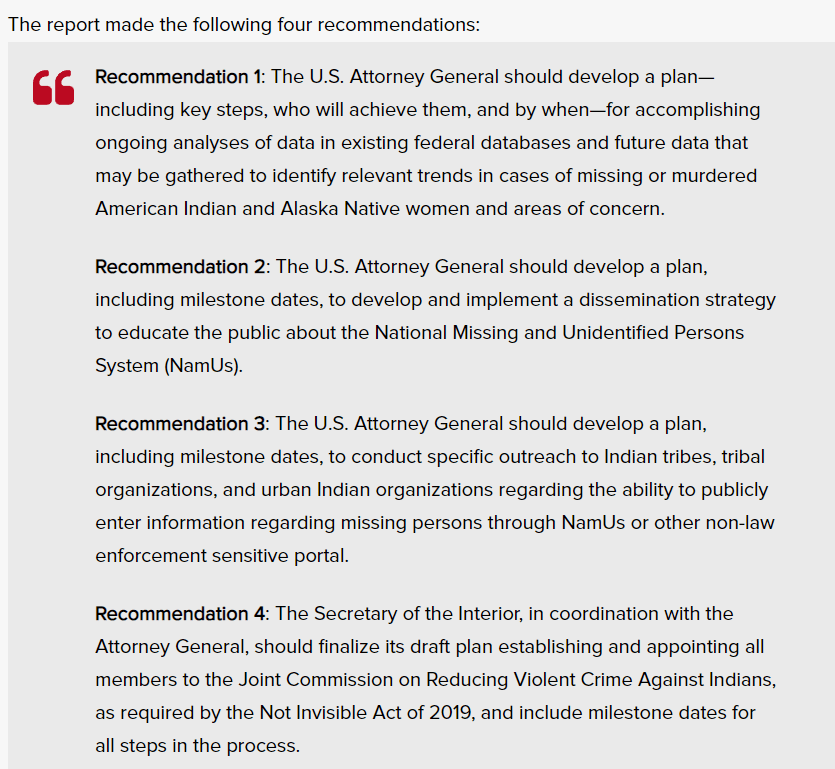
The Missing or Murdered Indigenous Women; New Efforts Are Underway but Opportunities Exist to Improve the Federal Response GAO report concluded the U.S. Department of Justice (DOJ) and U.S. Department of the Interior (DOI) have missed numerous deadlines set by the Not Invisible Act and Savanna’s Act, and it recommended that the departments develop an action plan to ensure they’re doing all they can to combat the crisis of missing and murdered Indigenous women.

U.S. Sen. Catherine Cortez Masto (D-NV), a member of the Senate Committee on Indian Affairs, called on the Biden administration to do more to address the crisis of missing and murdered Indigenous women (MMIW) after the U.S. Government Accountability Office (GAO) released a report finding that the government has not done enough to respond to the crisis.

Sen. Cortez Masto has led efforts in the Senate to protect Indigenous women and girls, and she asked that the GAO put together this report to investigate the federal response to violence facing Native women across the country.

NOT ENOUGH IS BEING DONE FOR MISSING AND MURDERED INDIGENOUS WOMEN GAO Report Says of Federal Government by Native News Online, November 3, 2021

Great Plains Action Society

#MMIW

What You Get into Will Change You

Recently a series of things happened that provoked some reflection. I saw the quote, “what you get into will change you. Sometimes in life you just don’t know what you’re getting into”, which prompted me to write the following.

A lot happened to me since retiring and returning to Iowa four years ago. I hadn’t given a lot of thought to what would happen when I returned to Iowa. I had stayed connected with Iowa Quakers and involved with them as much as I could from a distance. So, there were already some relationships to build on.

In Indianapolis I was blessed to have made many friends as we worked to protect water and oppose the Keystone XL and Dakota Access pipelines. I was also most fortunate to become involved with the Kheprw Institute (KI), a youth mentoring and empowerment community. And North Meadow Circle of Friends Quaker meeting. It was hard to leave but I stay in touch.

What follows are stories of my justice experiences since returning to Iowa. They are offered in case they might be helpful for you and your own work.

I’m frustrated more people don’t engage in justice work. Why are we here if not to grow and engage with family and our communities? Most people either don’t know how to engage or don’t want to. I’m frustrated because there is so much work to be done. We are experiencing environmental catastrophes that will only worsen and occur more frequently. We need masses of people to prepare now for the evolving chaos.

Also, these experiences will be good for you. I know from experience “what you get into will change you”. https://www.dailygood.org/story/2795/what-you-get-into-will-change-you-phyllis-cole-dai/

It is important to recognize “sometimes in life you just don’t know what you’re getting into.” Those can be times of great opportunity. I encourage you to get involved in opportunities like this, as long as doing so is relevant to what you are called to do.

What you get into will change you. Sometimes in life you just don’t know what you’re getting into.

Phyllis Cole-Dai

The most important step is to figure out what you should do. There are so many problems. Many people get burned out by trying to do too many things. People of faith rely on faith to help us figure this out. Keep what you are led to do in mind. You must be vigilant as you look for opportunities to get involved with justice work. And just as vigilant to decline to get involved in things not related to what you are called to do. Maintaining this focus is crucial for success.

First Nation-Farmer Climate Unity

I had long wanted to get to know some Indigenous people for numerous reasons, such as spirituality and sustainable living. Fortunately, an ideal opportunity to do so was to walk and camp along the path of the Dakota Access pipeline with a small group of native and nonnative people. The intention was for those in the group to get to know each other as we walked 10-15 miles/day, put up our tents, and have meals together.

During the First Nation-Farmer Climate Unity March (Sept. 1 – 8, 2018) Manape said we were on a sacred journey. During the March, Donnielle said we are a tribe. This morning I’m realizing the following stories about the past are part of my sacred journey. Also thinking of the many new friends found as part of this journey. I’m thinking how much I would have missed if I didn’t recognize and take advantage of this amazing opportunity.

Wet’suwet’en

Last Saturday morning began by watching a new video (see below) from the Wet’suwet’en people in British Columbia. Gidimt’en Checkpoint spokesperson Sleydo’ (Molly Wickham) and Elder Janet Williams found a film crew trespassing on Gidimt’en territory, making a commercial to promote Coastal Gaslink’s plans to tunnel beneath the sacred headwaters.

I first learned about the Wet’suwet’en’s struggles in January, 2020, when I saw a remarkable video of Sleydo’ evicting the Coastal GasLink workers from Wet’suwet’en territory. “All CGL workers have now been peacefully evicted from Unist’ot’en and Gidimt’en territories. Under the authority of Anuk nu’at’en (Wet’suwet’en law), and with support of the Wet’suwet’en hereditary chiefs of all five clans, the Wet’suwet’en are standing up for the last of our lands and we need you to stand with us. We will honour the instructions of our ancestors, and continue to protect our lands from trespassers.”

I began to follow what was happening with the Wet’suwet’en, especially when they started asking people to write about what was happening, since the mainstream media was not. A few of us, who had worked together on some Indigenous related events, organized a vigil in support of the Wet’suwet’en:

We didn’t expect anyone to join us. Fortunately, Ronnie James did. In the photo are Peter Clay, Linda Lemons and Ronnie James. Ronnie is an Indigenous organizer with many years of experience and interested to see who organized and attended our vigil. After he left, I realized I didn’t have a way to contact him. Fortunately, he accepted my Facebook Friend request. We began to have numerous conversations (via social media), where he patiently taught me a great deal about organizing, Indigenous thought, and Mutual Aid. (See: https://landbackfriends.com/mutual-aid/)


Peter Clay, Linda Lemons and Ronnie James
Mutual Aid

Meeting and becoming great fiends with Ronnie changed the course of my life. I eventually joined the work of Des Moines Mutual Aid (DMMA). Every Saturday morning, I participate in the free food distribution program. About a dozen of us put together sixty boxes of food, that we then put in the cars of those who need it. It is amazing this food distribution has been in existence in Des Moines since the Black Panthers organized the free breakfast program for school kids in the 1970’s.

Putting together the boxes of food, we move as a well-oiled machine. There is a little visiting as we pass each other when putting the food into boxes. I learn a lot about the justice work people are doing in central Iowa, since my Mutual Aid friends are also involved in many such projects.

Saturday there was a lull while waiting for another food delivery that provided a chance to talk with Ronnie. I mentioned the story below about the continued oppression of the Wet’suwet’en peoples and reminded him that we had met at the vigil for the Wet’suwet’en mentioned above. I told him that was something he taught me about organizing. Going to justice events to meet people. I said I wouldn’t have known about Mutual Aid if not for him attending that Wet’suwet’en vigil. He replied I probably would have learned about Mutual Aid because it had been in the news a lot recently.

Ronnie mentioned that was the first time he had been at Friends House, where the Wet’suwet’en vigil was held. Des Moines Mutual Aid has its offices in Friends House now. I had just spoken with Jon Krieg who works with the American Friends Service Committee (AFSC), whose offices had been in Friends House. Recently AFSC had moved out and Jon mentioned he missed visiting with Ronnie.

Des Moines Valley Friends meeting, which meets in a meetinghouse attached to Friends House, has been allowing another Mutual Aid group to use their kitchen to cook meals that are taken to the houseless camps.

Another set of connections relates to the Great Plains Action Society (GPAS), founded by my friend Christine Nobiss, who was also on the First Nation-Farmer Climate Unity March. Ronnie’s Mutual Aid work is supported by GPAS.

Prairie Awakening/Prairie Awoke

Saturday was also the day of the annual Prairie Awakening/Prairie Awoke ceremony, an annual event sponsored by the Dallas County Conservation Board. The ceremony is held in the Kuehn Conservation Area. My Quaker meeting, Bear Creek, has been involved with the ceremony for over ten years. A number of Friends attended.

While there, I was able to talk with my friend Rodger Routh, who grew up in the Earlham, Iowa (where Bear Creek meeting is) community. Rodger is a photographer/videographer and justice advocate, who is often at the same events I attend. Jon Krieg (AFSC, mentioned above) is also a photographer. It is common for the three of us to be at the justice related events.

LANDBACK

One of the principles of justice work is to follow the leadership of the communities affected by injustice. In Indianapolis, the Kheprw Institute would let us (Quakers in this case) know what we could do for them.

Recently I had a chance to ask Christine how nonnative people could best support her and her work now. She told me to learn and teach others about the concepts of LANDBACK. So, I created a website named LANDBACK Friends, where I’ve been sharing what I am learning about LANDBACK. https://landbackfriends.com/

Maintaining connections

As the completion of a circle, I was so glad to be contacted by my friends at the Kheprw Institute (KI) in Indianapolis. Aghilah contacted me because KI is interested to learn more about LANDBACK. Evidently, they have been following my blog since I left Indianapolis and reading what I’ve been writing about LANDBACK.

Quakers for Abolition Network

My blog also made it possible for one of my new friends, Jed Walsh, to contact me about the work he and Mackenzie Barton-Rowledge are doing related to abolition of police and prisons. I wrote a little in their article that was just published by the Western Friend, https://westernfriend.org/article/quakers-abolition-network.

Conclusion

We are moving more deeply into collapse. Fueled by the consequences of environmental chaos, our economic and political systems are failing. We must work now to build ways to deal with this collapse. I’ve been working on this diagram to illustrate how people are building such systems. It is important to build Mutual Aid communities. And embrace the principles of LANDBACK. “What you get into will change you”.


This document has a lot more information about Quakers, the Wet’suwet’en peoples, and LANDBACK. Scroll down to move through the document.


#LANDBACK

First Nation-Farmer Climate Unity March Anniversary

My grandmother, Lorene Standing, said the will of God is often revealed in a series of small steps. I thought that meant a series of spiritual messages and that has been my experience.

But also, looking back over our lives, the series of actions we took, the decisions we made, map the path traveled. Spiritual guidance can help us stay on the path, might tell us what action to take. Each step gives us experience needed to continue on the path. We stray from the path at times. But learn by making mistakes.

This is the third anniversary of the First Nation-Farmer Climate Unity March (described below). When I learned about the March, I immediately felt a leading from the Creator this was something I should do. The experiences during the March were transformational for me.

The Spirit was important in numerous ways. One of the reasons I wanted to join the March was to learn more about Indigenous spirituality, and I did.

The article below describes how my Quaker community supported us spiritually during the March.

The Spirit created the opportunity for me to talk with my new friend, Matthew Lone Bear, about Quaker involvement with the native residential schools. And for him to share a story of the impact of those schools on his own family. (These stories are found on the First Nation-Farmer Climate Unity March website https://firstnationfarmer.com/ )

Our experiences on the March have made it possible for us, native and nonnative people, to work together in many ways since.

Here is a link to the First Nation-Farmer website, where there are many stories, photos and videos from the March. And a link to the website LANDBACKFriends which is about work going on now related to the concepts of LANDBACK.

First Nation-Farmer Climate Unity Marchhttps://firstnationfarmer.com/
LANDBACK Friendshttps://landbackfriends.com/

These are perilous times. Ferocious wildfires, melting glaciers and permafrost, severe drought, and devastating storms show rapidly evolving environmental chaos. Political, economic and social systems are breaking down.

There is also hope as we work together to address these challenges. Mutual Aid works because it is based upon people working and being together in their local communities, solving local problems. And LANDBACK is a framework for Indigenous peoples to teach us how to work to repair our relationships with Mother Earth and each other. It is because of the friendships that formed during the March that many of us are working together on Mutual Aid and LANDBACK.

Following is an article, written shortly after the March, published in On Creation, the publication of Quaker Earthcare Witness. The article is no longer online.

https://firstnationfarmer.com/

Iowa Yearly Meeting (Conservative) Friends Peter Clay and I recently walked on the First Nation-Farmer Climate Unity March. A group of about thirty that included nearly a dozen Native Americans walked 94 miles along the route of the Dakota Access Pipeline from September 1 – 8, 2018. One of the goals of the March was to bring attention to a case before the Iowa Supreme Court about the improper use of eminent domain to force Iowa farmers to allow construction of the pipeline on their land.

After walking between 9 and 15 miles, most evenings a community forum was held to discuss topics such as farming practices, or the consequences of the pipeline construction. One evening my Scattergood Friends School classmate Lee Tesdell discussed some of his progressive farming practices. Christine Nobiss discussed ways Native farming practices are better for the earth and water. This was an example of how this March helped us come together. As Manape LaMere, one of the headsmen from Standing Rock said, the purpose of the March was to make it possible for us to work together in the future. To do so, we needed to trust each other, and to trust each other we needed to understand each other.

During this March, Quakers in my local meeting, Bear Creek, often sent email messages of encouragement, and held us in their prayers. One of my Quaker friends, Liz Oppenheimer, invited people to offer spiritual support for our March in a couple of ways. One was via a telephone conference call every morning we were marching, from 8:30 to 9:00 am.

The other way Liz created for others to support us was by creating a Facebook group called “Meeting for Worship: Iowa’s Climate Unity March”. Following are a few of the messages shared on that Facebook page:

I see that Jeff has posted some of his recent writing about the march and its issues. My request is that we return to Jeff’s initial questions— sharing our reactions to the idea behind this march, as well as to the issues of pipelines, indigenous rights, misuse of eminent domain, etc.

As we share our own wonderings, questions, and struggle, I hope we can better accompany Jeff, Peter Clay, and other marchers.

George Fox suggested to us that if we answer that of god in others that we can then walk cheerfully over the earth. As I think about Jeff and Peter and the new sisters and brothers they will meet as they march, I realize that this sentiment works the other way also. As they walk over the earth they will then be able to answer to that of god in others.

This morning on the conference call for worship, we heard a vocal prayer of gratitude to Peter Clay, Jeff Kisling, and the other marchers and organizers of the march. We also heard the joyous hymn “Trees of the Field.”

After other Friends had left the call, and literally as my finger was about to hit the Hang Up button on my phone just past 9:00 am, another Friend joined the call. It was Jeff!!

He wants us to know that the marchers and organizers know we are holding them all in prayer and they are very appreciative of our support in this way. When I replied “It’s such a small thing we do,” Jeff reminded me “No, no it’s not.”

We are so blessed to be connected this way, no matter what form our march and our journey takes. And to those of you who are carving out time each day to hold the Climate Unity March in prayer, regardless of when, where, or how, all of us thank you.

Each morning of the March we gathered in a circle to hear about the day’s route and address any questions. The first morning I shared this Quaker support with my fellow marchers during our circle gathering, who expressed appreciation for this.

Some of the most powerful experiences I had during the March were times when prayers were offered. We stopped for prayers every time we crossed the route of the Dakota Access Pipeline. I was honored to be given the opportunity to give prayers at the pipeline crossing just before we reached Pilot Mound. I briefly described Quaker worship, then our circle, holding hands, worshiped in silence for a while.