There is a native concept of considering what the effects of decisions made today will be on seven generations into the future.
The following quotation makes a two way connection between us and future generations. Looking at each other over the generations.
The eyes of the future are looking back at us and they are praying for us to see beyond our own time. They are kneeling with hands clasped that we might act with restraint, that we might leave room for the life that is destined to come. To protect what is wild is to protect what is gentle. Perhaps the wilderness we fear is the pause between our own heartbeats, the silent space that says we live only by grace. Wilderness lives by this same grace. Wild mercy is in our hands.
― Terry Tempest Williams, Refuge: An Unnatural History of Family and Place
Similarly, can we not look back at our ancestors? We are our ancestors’ future generation looking back.
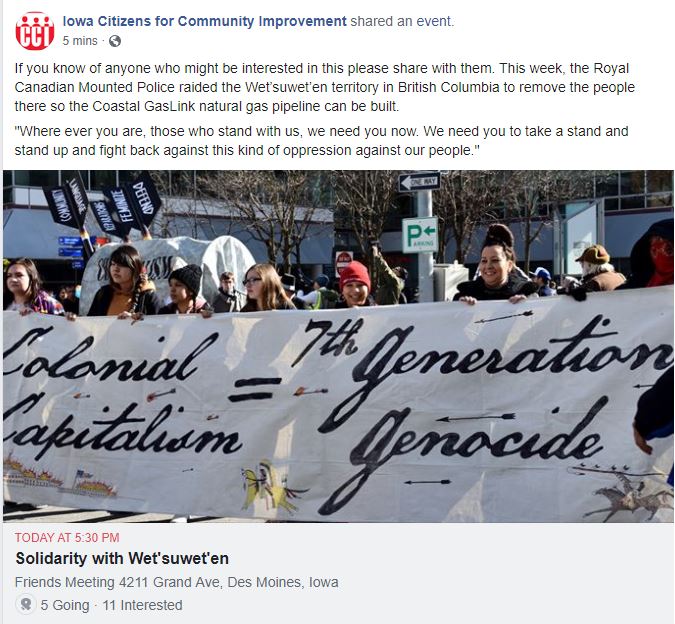
I think about this a lot these days. As stories of the remains of native children on the grounds of the institutions of forced assimilation continue. Thousands of children never returned home.
I’ve been praying about what we are doing now that future generations will see as wrong. My Spirit recoils from the likelihood there probably will not be a seventh, or sixth, or fifth generation because of the accelerating rate of environmental collapse.
Most white people in what is called North America were ignorant of the history of forced assimilation. But many are learning about it now, shocked to hear about the Native residential schools from news reports about the remains of hundreds of children on the grounds of those institutions. Are learning about the cultural genocide, the physical, emotional and sexual abuse and deaths that occurred there.
Yesterday I wrote about my struggle with guilt and blame regarding Quakers’ involvement with forced assimilation of Native children. As is often the case, I write to try to understand things better myself. And hope some of that might be useful to others. On this subject I sense many Friends share my feelings of guilt. I recognized I had a problem when I wrote we should not feel guilt about what happened in the past, that we didn’t do ourselves. And yet I felt guilty. I’m working on that.
When you are disciplined in hope, you can face these things because you have learned to put them in context, you have learned to swallow joy and grief together, and wait for peace.
Quinn Norton
I often sign messages “practicing hope” which relates to the following quotation. Hope is a mental discipline that helps you put things in context. While we should not feel guilt about the past, it is very important to face hard truths now. This takes time and attention. Cycles of failure and success. Waiting for peace.
People often mistake hope for a feeling, but it’s not. It’s a mental discipline, an attentional practice that you can learn. Like any such discipline, it’s work that takes time, which you fail at, succeed, improve, fail at again, and build over years inside yourself.
Hope isn’t just looking at the positive things in this world, or expecting the best. That’s a fragile kind of cheerfulness, something that breaks under the weight of a normal human life. To practice hope is to face hard truths, harder truths than you can face without the practice of hope. You can’t navigate dark places without a light, and hope is that light for humanity’s dark places. Hope lets you study environmental destruction, war, genocide, exploitative relations between peoples. It lets you look into the darkest parts of human history, and even the callous entropy of a universe hell bent on heat death no matter what we do. When you are disciplined in hope, you can face these things because you have learned to put them in context, you have learned to swallow joy and grief together, and wait for peace.
I recently wrote about what kind of ancestor do you want to be? Despite the anxiety of exposing yourself to the world, one good thing about writing on a blog is sometimes someone leaves a useful comment. In response to that blog post, someone mentioned the book What Kind of Ancestor Do You Want to Be? by John Hausdoerffer, Brooke Parry Hecht, Melissa K. Nelson, and Katherine Kassouf Cummings.
The book has made me realize there is much more we can do to become the ancestor we want to be.
I imagine most of us are taught how we live our lives may be seen as an example to others, good or bad. Many believe actions speak louder than words. So I have worked hard to be a good example to others. By how I lived my life more than what I write or say. (which you might question from seeing all that I write).
There have been times when I questioned whether our example had any influence on others. Fifty years ago, as I began to live on my own, I refused to have a car because of the impact on Mother Earth. I waited (and waited, and waited) for others to give up their own cars. We now see how well that worked.
But that illustrates something else about being an example. There are probably many ways others might be affected that we have no way of knowing.
I thought living my beliefs was how I would be the ancestor I wanted to be. This is more eloquently expressed in the following quotes from the book.
What this book has taught me is there is more we can do intentionally to be the kind of ancestor we want to be. We should engage with youth in ways to help them take over from us. Becoming the ancestor we want to be is an active process.
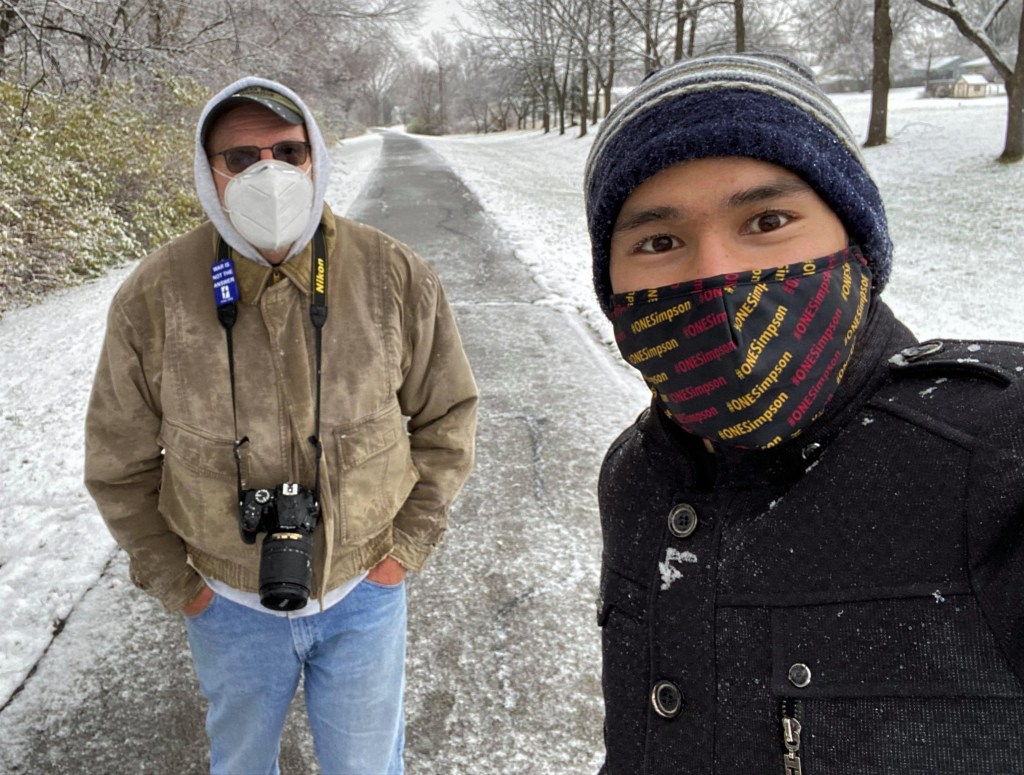
As I aged, I wondered who might continue to work on things I think are important. Subconsciously I was looking for that person. In the fall of 2017 I saw the story of Rezadad Mohammadi’s work with the American Friends Service Committee related to the war on drugs, incarceration and solitary confinement, and work on a mural giving immigrants a voice in their community. I wrote a post about that on my blog. Scattergood graduate’s social justice video project.
I thought Reza might be a young person to engage regarding some of the things I had been working on. He had recently graduated from the Quaker boarding school I attended, Scattergood Friends School and Farm in Eastern Iowa. That let me know he learned some about Quaker values.
He accepted my Facebook friend request and the rest, as they say, was history. Reza was from Afghanistan. I learned a lot from him about that country, and a little about living in a war torn land.
We have become close friends. Fortunately, he came to Indianola, where I live, to attend Simpson College. You can find the many blog posts that mentioned him here: reza | Quakers, social justice and revolution
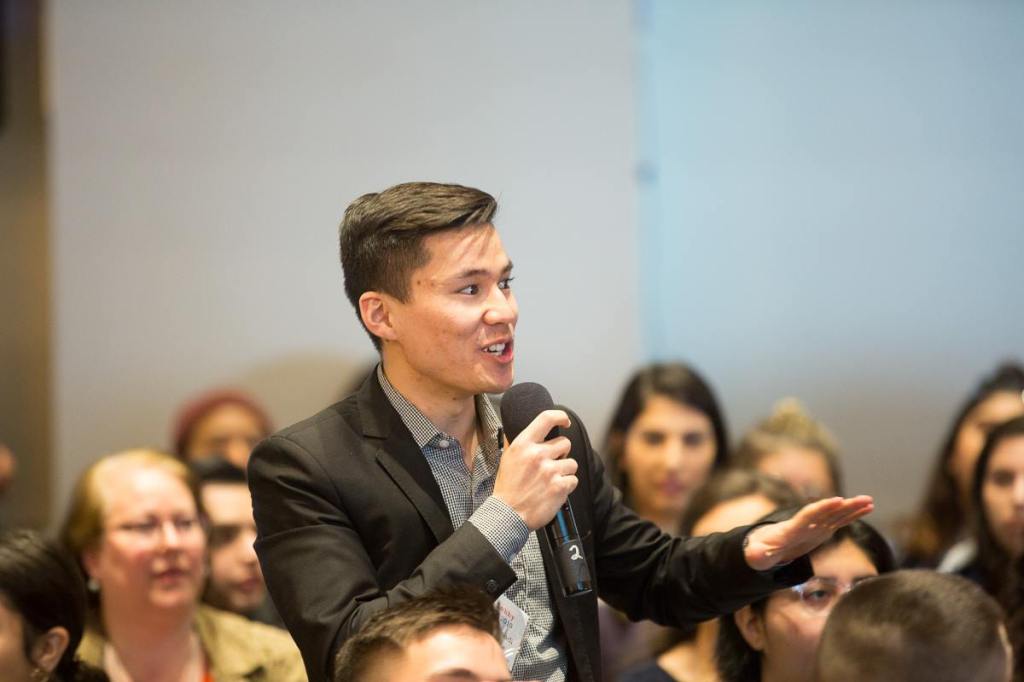
Reza became involved with the Friends Committee on National Legislation (FCNL). He worked there one summer and attended two Spring Lobby Weekends, where youth lobby congress people with the guidance of FCNL. For the second visit, he organized a group of Simpson College students to attend.
Last year Reza and I went to Scattergood to talk about our environmental work. He described his project at Simpson related to plastics and pollution. His group made eating places at the College stop using plastic straws.
He went with me for support when I spoke about the First Nation-Farmer Climate Unity March to the International League of Women Voters.
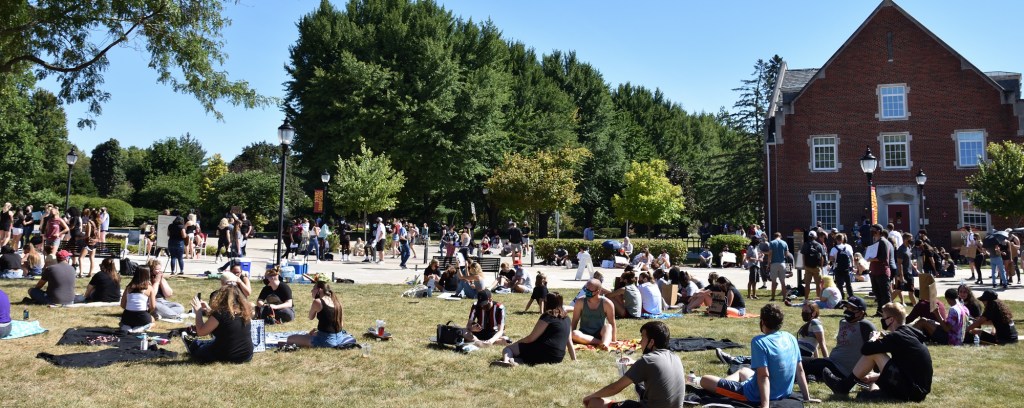
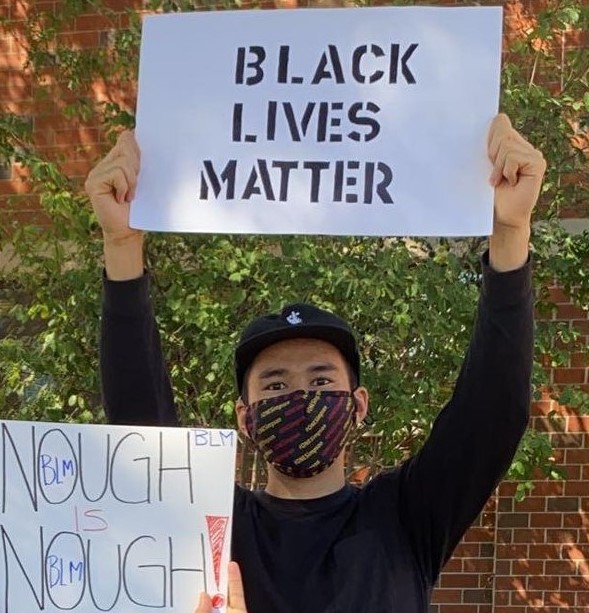
Reza was involved in the rallies at Simpson College when a racial incident occurred there.
I am glad to know he will continue to do this work.
Just as we prepare the young to step into adulthood and release childish ways for the health and growth of society , so the practice of becoming an ancestor requires the release of our grip upon what is , the letting go of certain ways of being in the world to embrace the changes required for the stream of life to keep flowing vigorously.
What Kind of Ancestor Do You Want to Be? by John Hausdoerffer, Brooke Parry Hecht, Melissa K. Nelson, and Katherine Kassouf Cummings
Anishinaabe elder Michael Dahl posed the question : What Kind of Ancestor Do You Want to Be ? We view this compelling question as eternally urgent . Eternal because it calls forth ancient wisdom and multigenerational ethics necessary for any human community to survive and thrive . Urgent because the planetary impacts of colonial overconsumption of resources and domination of peoples dramatically threatens the livability of this planet . More than asking us how we want to be remembered , the question of What Kind of Ancestor Do You Want to Be ? suggests that we are , always and already , ancestors — even if we never are remembered or never have children . The question deepens our awareness of the roots and reach of all of our actions and non – actions . In every moment , whether we like it or not and whether we know it or not , we are advancing values and influencing systems that will continue long past our lifetimes . These values and systems shape communities and lives that we will never see . The ways we live create and reinforce the foundation of life for future generations . We are responsible for how we write our values , what storylines we further and set forth — the world we choose to cultivate for the lives that follow ours . So how are we to live ?
What Kind of Ancestor Do You Want to Be? by John Hausdoerffer, Brooke Parry Hecht, Melissa K. Nelson, and Katherine Kassouf Cummings
Just as we prepare the young to step into adulthood and release childish ways for the health and growth of society , so the practice of becoming an ancestor requires the release of our grip upon what is , the letting go of certain ways of being in the world to embrace the changes required for the stream of life to keep flowing vigorously.
What Kind of Ancestor Do You Want to Be? by John Hausdoerffer, Brooke Parry Hecht, Melissa K. Nelson, and Katherine Kassouf Cummings
Being a good ancestor means understanding how to handle power, when to hold it, when to hand it over, and how to transform it.
What Kind of Ancestor Do You Want to Be? by John Hausdoerffer, Brooke Parry Hecht, Melissa K. Nelson, and Katherine Kassouf Cummings




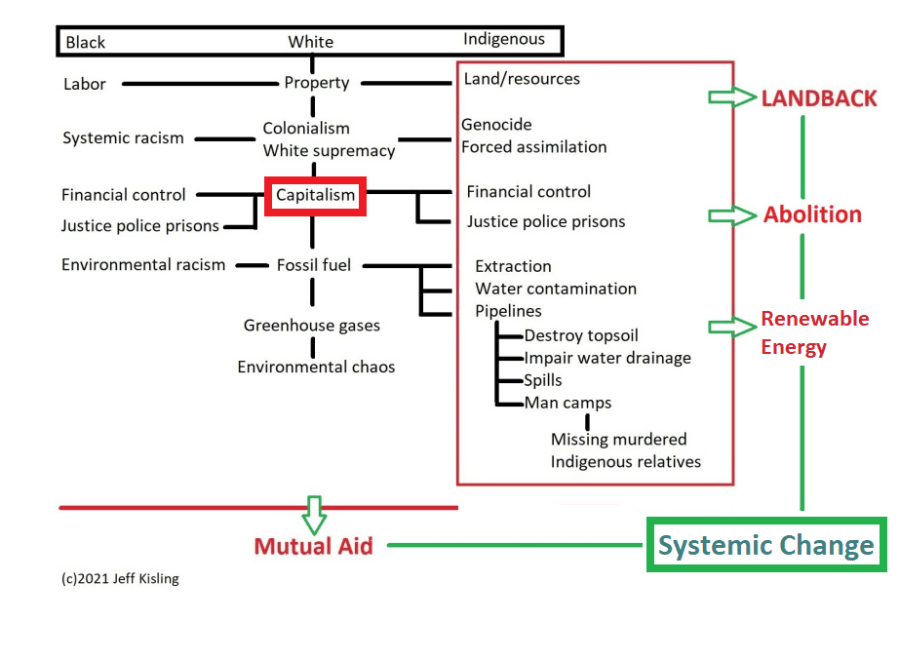




 LANDBACK Friends