Becoming the ancestor you want to be

I recently wrote about what kind of ancestor do you want to be? Despite the anxiety of exposing yourself to the world, one good thing about writing on a blog is sometimes someone leaves a useful comment. In response to that blog post, someone mentioned the book What Kind of Ancestor Do You Want to Be? by John Hausdoerffer, Brooke Parry Hecht, Melissa K. Nelson, and Katherine Kassouf Cummings.

The book has made me realize there is much more we can do to become the ancestor we want to be.

I imagine most of us are taught how we live our lives may be seen as an example to others, good or bad. Many believe actions speak louder than words. So I have worked hard to be a good example to others. By how I lived my life more than what I write or say. (which you might question from seeing all that I write).

There have been times when I questioned whether our example had any influence on others. Fifty years ago, as I began to live on my own, I refused to have a car because of the impact on Mother Earth. I waited (and waited, and waited) for others to give up their own cars. We now see how well that worked.

But that illustrates something else about being an example. There are probably many ways others might be affected that we have no way of knowing.

I thought living my beliefs was how I would be the ancestor I wanted to be. This is more eloquently expressed in the following quotes from the book.

What this book has taught me is there is more we can do intentionally to be the kind of ancestor we want to be. We should engage with youth in ways to help them take over from us. Becoming the ancestor we want to be is an active process.

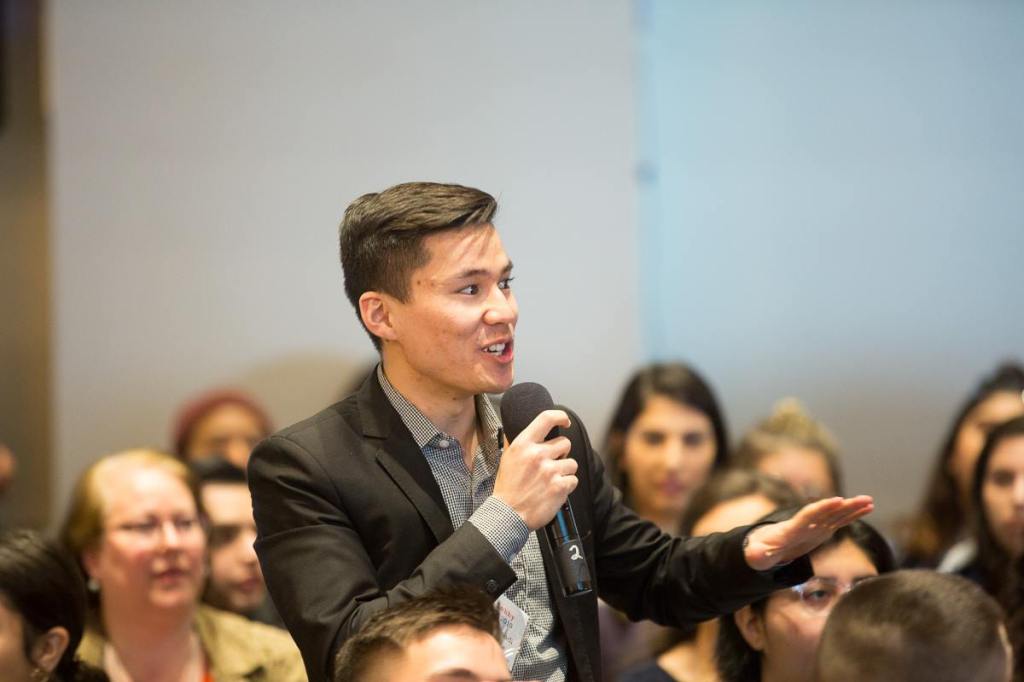
As I aged, I wondered who might continue to work on things I think are important. Subconsciously I was looking for that person. In the fall of 2017 I saw the story of Rezadad Mohammadi’s work with the American Friends Service Committee related to the war on drugs, incarceration and solitary confinement, and work on a mural giving immigrants a voice in their community. I wrote a post about that on my blog. Scattergood graduate’s social justice video project.

Mural1

I thought Reza might be a young person to engage regarding some of the things I had been working on. He had recently graduated from the Quaker boarding school I attended, Scattergood Friends School and Farm in Eastern Iowa. That let me know he learned some about Quaker values.

He accepted my Facebook friend request and the rest, as they say, was history. Reza was from Afghanistan. I learned a lot from him about that country, and a little about living in a war torn land.

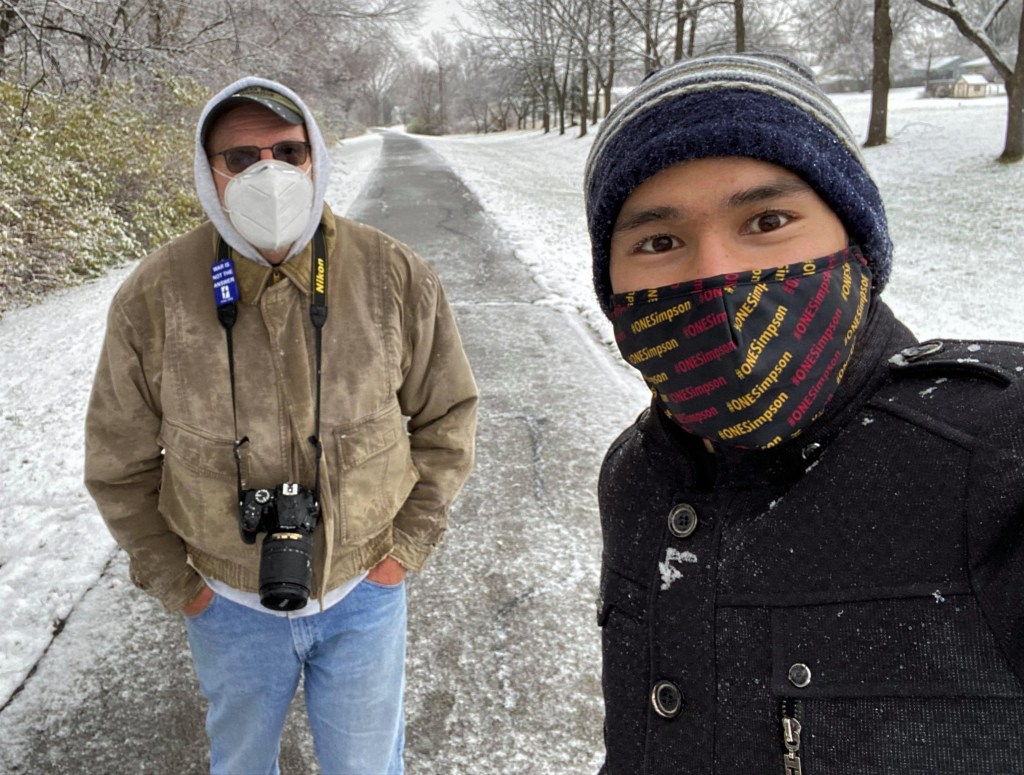
We have become close friends. Fortunately, he came to Indianola, where I live, to attend Simpson College. You can find the many blog posts that mentioned him here: reza | Quakers, social justice and revolution

  • But for some examples, he wrote this article on my blog: Should the United States leave Afghanistan?
  • Reza became involved with the Friends Committee on National Legislation (FCNL). He worked there one summer and attended two Spring Lobby Weekends, where youth lobby congress people with the guidance of FCNL. For the second visit, he organized a group of Simpson College students to attend.
  • Last year Reza and I went to Scattergood to talk about our environmental work. He described his project at Simpson related to plastics and pollution. His group made eating places at the College stop using plastic straws.
  • He went with me for support when I spoke about the First Nation-Farmer Climate Unity March to the International League of Women Voters.
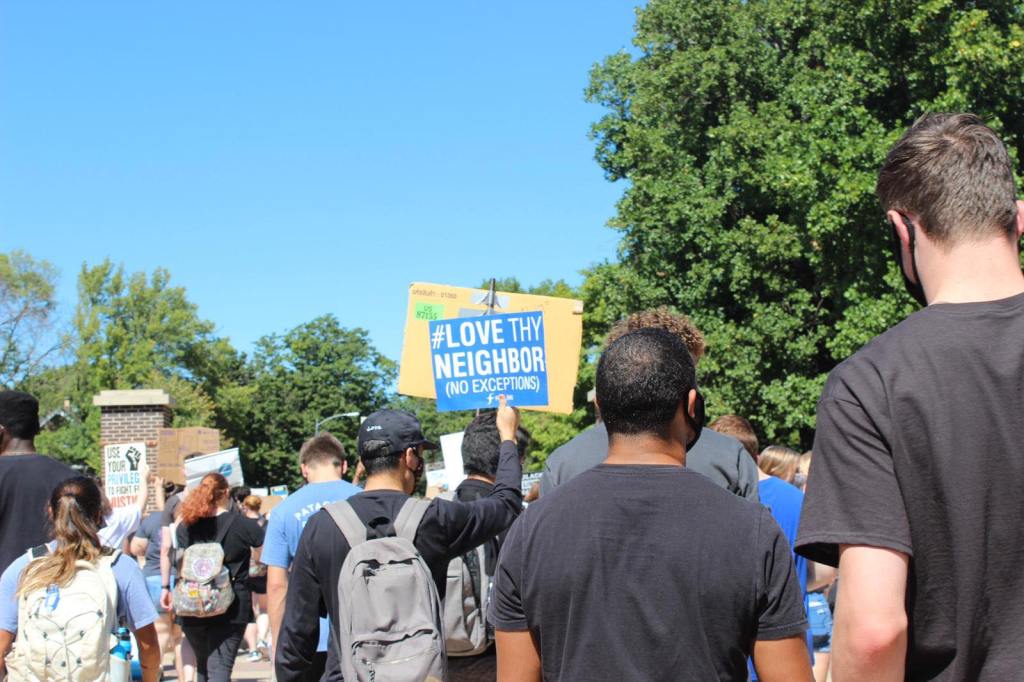
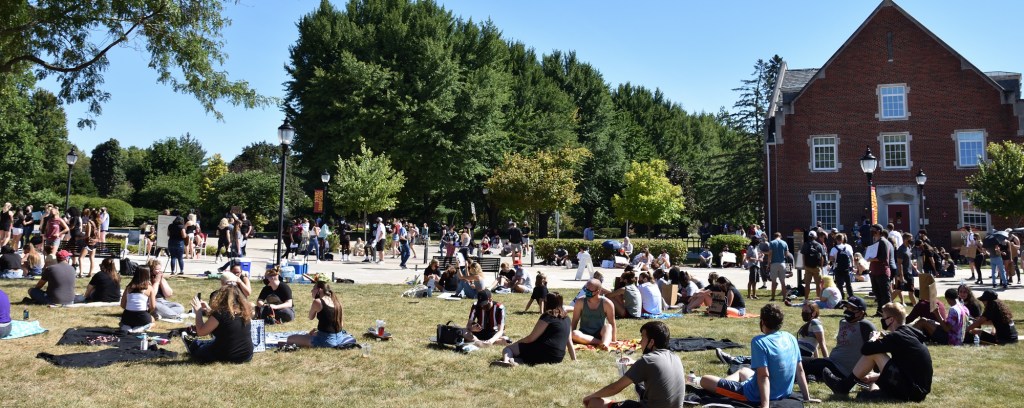
  • Reza was involved in the rallies at Simpson College when a racial incident occurred there.

I am glad to know he will continue to do this work.

Just as we prepare the young to step into adulthood and release childish ways for the health and growth of society , so the practice of becoming an ancestor requires the release of our grip upon what is , the letting go of certain ways of being in the world to embrace the changes required for the stream of life to keep flowing vigorously.

What Kind of Ancestor Do You Want to Be? by John Hausdoerffer, Brooke Parry Hecht, Melissa K. Nelson, and Katherine Kassouf Cummings
Anishinaabe elder Michael Dahl posed the question : What Kind of Ancestor Do You Want to Be ? We view this compelling question as eternally urgent . Eternal because it calls forth ancient wisdom and multigenerational ethics necessary for any human community to survive and thrive . Urgent because the planetary impacts of colonial overconsumption of resources and domination of peoples dramatically threatens the livability of this planet . More than asking us how we want to be remembered , the question of What Kind of Ancestor Do You Want to Be ? suggests that we are , always and already , ancestors — even if we never are remembered or never have children . The question deepens our awareness of the roots and reach of all of our actions and non – actions . In every moment , whether we like it or not and whether we know it or not , we are advancing values and influencing systems that will continue long past our lifetimes . These values and systems shape communities and lives that we will never see . The ways we live create and reinforce the foundation of life for future generations . We are responsible for how we write our values , what storylines we further and set forth — the world we choose to cultivate for the lives that follow ours . So how are we to live ?

What Kind of Ancestor Do You Want to Be? by John Hausdoerffer, Brooke Parry Hecht, Melissa K. Nelson, and Katherine Kassouf Cummings
Just as we prepare the young to step into adulthood and release childish ways for the health and growth of society , so the practice of becoming an ancestor requires the release of our grip upon what is , the letting go of certain ways of being in the world to embrace the changes required for the stream of life to keep flowing vigorously.

What Kind of Ancestor Do You Want to Be? by John Hausdoerffer, Brooke Parry Hecht, Melissa K. Nelson, and Katherine Kassouf Cummings

Being a good ancestor means understanding how to handle power, when to hold it, when to hand it over, and how to transform it.

What Kind of Ancestor Do You Want to Be? by John Hausdoerffer, Brooke Parry Hecht, Melissa K. Nelson, and Katherine Kassouf Cummings
Minute from Canadian Yearly Meeting (CYM) 2016

Truth and Reconciliation 16-08-30

At Yearly Meeting 2015 Friends approved Minute 2015.08.33 calling on individual
Friends to read the Report of the Truth and Reconciliation Commission (TRC) and the Calls to Action. The Minute asks Friends to listen expectantly to the Spirit for guidance on what steps they may be personally led to take. It also asks Monthly Meetings and Worship Groups to engage with the materials shared by the Indigenous Rights committee of Canadian Friends Service Committee (CFSC) and prayerfully consider what actions they may take in working for reconciliation in their communities. We committed to minute our progress for the year at this Yearly Meeting.

Much has happened since our last Yearly Meeting (2015):

• We now have a new federal government that has stated it accepts all of the TRC’s
Calls to Action and that it will implement the United Nations Declaration on the
Rights of Indigenous Peoples. This has changed the dynamic and the tone of public
discourse on Indigenous Peoples’ rights in Canada.

• CYM and CFSC jointly issued a Quaker Response in March 2016 to Call to Action
48, and we submitted this to the TRC. We affirmed in our statement that we have
“endorsed, celebrated and committed to implement the UN Declaration on the
Rights of Indigenous Peoples” as stated in previous minutes (2010.08.50,
2009.08.70). We received a warm reply from Justice Murray Sinclair, Chair of the
TRC, thanking us for our work. He particularly liked that we had committed to an
annual review of our progress.

• CYM and CFSC also collaborated with other faith bodies, some of which were
church parties to the Indian Residential Schools Settlement Agreement and some
of which were not, in issuing a joint ecumenical statement on Call to Action 48.
CFSC’s Indigenous Rights coordinator participated in drafting. This was a
worthwhile process in working to find common ground amongst faith bodies
regarding their role in the reconciliation process.

• CFSC’s Indigenous Rights committee educated Friends on such critical issues as
free, prior, and informed consent; genocide; and intergenerational trauma.

• Meetings and Worship Groups have visited nearby Indigenous communities;
organized discussion groups in partnership with local Indigenous Peoples; are
attending educational events such as workshops and film screenings; are learning
about and honouring Friends’ role as Treaty partners; and are placing the UN
Declaration in poster and booklet form in their Meetinghouses.

• Some individual Friends have been led to stand alongside Indigenous Peoples in
defending their traditional territories, including civil disobedience resulting in
arrest.

During the year, CFSC has explored the work of Reconciliation with many Meetings,
Worship Groups and Half Yearly Meetings. As Friends engage in the work of
reconciliation, we are committed to grounding our actions in our Spiritual practices,
particularly of speaking to that of the Creator in everyone. Let Friends first listen to the concerns of Indigenous Peoples. We know it is not sufficient to be well-intentioned and make assumptions about what is best for Indigenous Peoples without asking what it is they want and need. All actions require the guidance of the Indigenous Peoples involved and need to be done with respect, cooperation and ongoing consultation.


We, as Friends, also need to be open to being challenged in our assumptions about the many destructive facets of colonial legacies and continuing racist practices and policies that constitute Canada’s historical and contemporary realities. We acknowledge that part of our journey is to decolonize our own thinking and sit in the discomfort and pain of confronting where we need to deepen our understanding, bear witness, and transform our behaviour.


While Friends corporately have often been on the forefront of advocating for Indigenous Peoples’ human rights, it is now time to prioritize this work and take it to the next level. Friends recognize that reconciliation requires us to continue to learn, grow, and establish and nurture relationships with Indigenous partners. We are a Society of Friends, and friendship entails a relationship greater than simply understanding our colonial history.

As Friends, we commit to walking the path of friendship, following these instructive
words:

I think about what I want for my children and grandchildren. What I want
for them is to be loved and love other people in this country. Not to tolerate
them, not to go to our respective corners and stop hurting each other, but
to be wrapped up and engaged in each other’s lives.

Douglas White, Kwulasultun (Coast Salish name), Tliishin (Nuu-chah-nulth name), Director of the Centre for Pre-Confederation Treaties and Reconciliation (VIU), former Chief of Snuneymuxw First Nation

For Canada to grow and heal we must be active participants in a paradigm shift, moving from colonialism to a new reality based on respect for Indigenous Peoples’ Human Rights. We are reminded that we have CFSC’s Indigenous Rights committee to assist us and provide resources for this work.

We ask monthly meetings and worship groups:

• To continue to educate themselves, including children and youth, about the
doctrine of discovery, the ongoing effects of colonialism, the UN Declaration, residential schools and their legacy (including the TRC Report), the history of
the land on which they live, and reconciliation efforts.
• To formally acknowledge the traditional territories where their Meetings are
located and engage in processes of reflection on the meaning of this.
Acknowledgments can be accomplished through signage, statements during the
close of Meeting, and inclusion in information provided to any community
groups who use Meeting House space.
• To find out about current concerns of Indigenous Peoples from those
territories, including land appropriation or resource development, with which the
Meeting could be engaged.
• To investigate projects of cultural revitalization that Indigenous Peoples are
involved in and discern if there is an appropriate role (including funding) that
Friends can play.
• To uphold and support individual Friends involved with grassroots
Indigenous rights work and provide spiritual support to Friends led to this
work. This might include offering committees of care and approving minutes of
support.
• To report back annually through the Indigenous Rights committee of CFSC on
actions taken. We ask CFSC to collate such information in their CYM report.

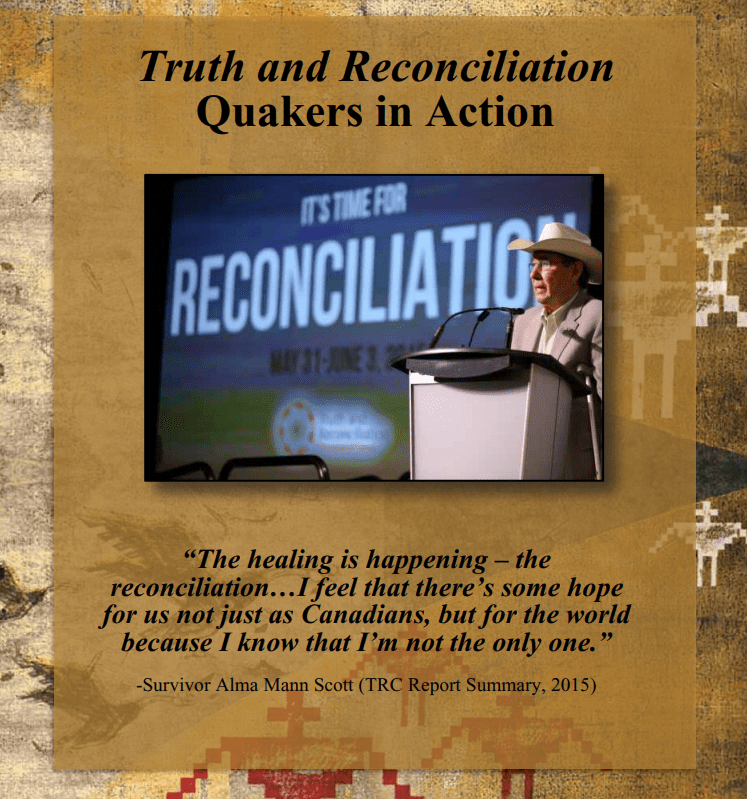
Minute from Canadian Yearly Meeting (CYM) 2016. Truth and Reconciliation 16-08-30 Truth and Reconciliation, Quakers in Action

https://quakerservice.ca/wp-content/uploads/2019/02/TRC-Resource-Book.pdf

Great Plains Action Society-Residential Schools

Hi Friend, 

Thank you for being a supporter of Great Plains Actions Society and all our work on behalf of the Indigenous and Native communities.

We recently supported our community through an awful tragedy that I will talk more about below. We need your help to keep fighting for our equality and basic human rights. Please consider donating $25, $50, $100 or whatever you can spare today here today: https://secure.actblue.com/donate/residentialschools

I want to talk to you about an issue that has been devastating and traumatizing our communities. It has affected us for hundreds of years, yet has only gained national traction recently. In both Canada and the United States, the churches and government have stolen and assimilated Indigenous children through residential schools. In these schools, children were neglected, raped, tortured and murdered. You can listen to me interview experts on my radio show, 8 O’Clock Buzz on Wort 89.9 FM here.

Recently, over 1,500 unmarked graves have been uncovered on the grounds of just eight residential schools in Canada. There were over 489 residential schools between the United States and Canada. The darkest part of this discovery, the graves that were uncovered were mostly children. The New York Times reported on this last month and while we are thankful for the coverage, it doesn’t nearly represent the pain and suffering this is causing our community. 


Great Plains Action Society has felt this pain firsthand and we are rising to meet the needs of our communities, whom we are already helping through the Missing and Murdered Indigenous Relatives crisis. We have been working to support families directly impacted by these residential schools through meals, community gatherings and covering ceremonial expenses. Great Plains Action Society is also continuing all of our other work, including mutual aid, political engagement action and environmental activism. We are dedicated to providing whatever our community needs to grow, survive, and thrive.

This is why we NEED your help. We can’t continue our work without support from people like you. Please consider donating $25, $50, $100 or whatever you can spare today. You can click here to give: https://secure.actblue.com/donate/residentialschools

Ay hai kitatamihin,

Sikowis (Fierce), aka, Christine Nobiss – She/Her They/Them

Plains Cree-Saulteaux, George Gordon First Nation

Founder and Decolonizer, Great Plains Action Society

sikowis@greatplainsaction.org

Web – greatplainsaction.org

FB – @GreatPlainsActionSociety

IG – @greatplainsactionsociety

Tw – @PlainsAction

There is so much to say about the murdered Indigenous children and the support Great Plains Action Society is giving to the community and families affected. Please read below for more details about the event we hosted in Sioux City to welcome the return of nine children from Carlisle Indian Boarding School back to the Sicangu Oyate Nation (Rosebud Nation).

On July 15-16, we organized and hosted an event in Sioux City to welcome the return of nine children from Carlisle Indian Boarding School back to the Sicangu Oyate Nation (Rosebud Nation) as they passed through. We hosted a community meal and prayer on the 15th for 415 folks and served traditional foods. There were family members of the children in attendance and we were honored to offer them some support. In the evening the large caravan carrying the children arrived and we lit a fire in a tipi set up with nine seats, toys and blankets. This event was held at War Eagle Park in Sioux City Iowa, a place that local Natives are taking back. 

On the 16th, early in the morning, we saw the Caravan off with refreshments, a press conference and more prayer. We had over ten media sources provide coverage of our event, including the Des Moines RegisterAl Jazeera,  MPR NewsIndianz.com, and Keloland.com.

Great Plains Action Society spent over $4,000 to set up and host this one event, and there are more than 480 residential schools in the US and Canada that have not been searched. Our work has just begun.

LANDBACK Movement Introduction

The following is an explanation of the LANDBACK Movement LANDBACK.ORG

LANDBACK is a movement that has existed for generations with a long legacy of organizing and sacrifice to get Indigenous Lands back into Indigenous hands. Currently, there are LANDBACK battles being fought all across Turtle Island, to the north and the South.

As NDN Collective, we are stepping into this legacy with the launch of the LANDBACK Campaign as a mechanism to connect, coordinate, resource and amplify this movement and the communities that are fighting for LANDBACK. The closure of Mount Rushmore, return of that land and all public lands in the Black Hills, South Dakota is our cornerstone battle, from which we will build out this campaign. Not only does Mount Rushmore sit in the heart of the sacred Black Hills, but it is an international symbol of white supremacy and colonization. To truly dismantle white supremacy and systems of oppression, we have to go back to the roots. Which, for us, is putting Indigneous Lands back in Indigenous hands.

LANDBACK Manifesto

It is the reclamation of everything stolen from the original Peoples.

  • Land
  • Language
  • Ceremony
  • Medicines
  • Kinship

It is a relationship with Mother Earth that is symbiotic and just, where we have reclaimed stewardship. 
It is bringing our People with us as we move towards liberation and embodied sovereignty through an organizing, political and narrative framework. 
It is a catalyst for current generation organizers and centers the voices of those who represent our future. 
It is recognizing that our struggle is interconnected with the struggles of all oppressed Peoples.
It is a future where Black reparations and Indigenous LANDBACK co-exist. Where BIPOC collective liberation is at the core. 
It is acknowledging that only when Mother Earth is well, can we, her children, be well. 
It is our belonging to the land – because – we are the land. 
We are LANDBACK!

The closure of Mount Rushmore, return of that land and all public lands in the Black Hills, South Dakota is our cornerstone battle, from which we will build out this campaign.

In addition, LANDBACK is more than just a campaign. It is a meta narrative that allows us to deepen our relationships across the field of organizing movements working towards true collective liberation. It allows us to envision a world where Black, Indigenous & POC liberation co-exists. It is our political, organizing and narrative framework from which we do the work.

https://youtu.be/HCl6TS5zBIw

On July 3, 2020, Land Defenders took to Mt.Rushmore to reignite the fight for the Black Hills and the closure of Mt. Rushmore, a symbol of white supremacy and racism. Now, 21 of those Land Defenders who stood in defense of the sacred Ȟesápa, the ancestral homelands of Lakota and many other Indigenous Nations, are facing criminal charges.Inspired by the action taken that day, NDN Collective has developed the LANDBACK campaign, a mutli-faceted campaign to get Indigenous lands back into Indigenous hands, and empower Indigenous people across Turtle Island with the tools and strategies to do LANDBACK work in their own communities.The LANDBACK Campaign will officially launch on Indigenous Peoples’ Day, October 12, 2020.

In the meantime, here are our Calls-to-Action:

Campaign demands

  • Dismantle — white supremacy structures that forcefully removed us from our Lands and continue to keep our Peoples in oppression.
    • Bureau of Land Management, National Parks Service
  • Defund — white supremacy and the mechanisms and systems that enforce it and disconnect us from stewardship of the Land.
    • Police, military industrial complex, Border Patrol, ICE
  • Return — All public lands back into Indigenous hands.
  • Consent — Moving us out of an era of consultation and into a new era of policy around Free and Prior Informed Consent
Organizing principles
  • Don’t burn bridges: even when there is conflict between groups or organizers remember that we are fighting for all of our peoples and we will continue to be in community even after this battle
  • Don’t defend our ways 
  • Organize to win 
  • Move from abundance – We come from a space of scarcity. We must work from a place of  abundance
  • We bring our people with us 
  • Deep relationships by attraction, not promotion 
  • Divest/invest
  • We value our warriors
  • Room for grace- be able to be human  
  • We cannot let our oppressors inhumanity take away from ours 
  • Strategy includes guidance 
  • Realness: Sometimes the truth hurts
  • Unapologetic but keep is classy

#landback #DefendDevelopDecolonize

What kind of ancestor do you want to be?

In these increasingly troubled times I find myself thinking about the concept of sensemakingthe action or process of making sense of or giving meaning to something, especially new developments and experiences. 

It is increasingly difficult to make sense of all that is going on today. All the bad things I had anticipated for the future are suddenly happening now. And things I never imagined, like the assaults on truth and science, come at a time when they are desperately needed.

At the collective level, a loss of sensemaking erodes shared cultural and value structures and renders us incapable of generating the collective wisdom necessary to solve complex societal problems like those described above. When that happens the centre cannot hold.

Threats to sensemaking are manifold. Among the most readily observable sources are the excesses of identity politics, the rapid polarisation of the long-running culture war, the steep and widespread decline in trust in mainstream media and other public institutions, and the rise of mass disinformation technologies, e.g. fake news working in tandem with social media algorithms designed to hijack our limbic systems and erode our cognitive capacities. If these things can confound and divide us both within and between cultures, then we have little hope of generating the coherent dialogue, let alone the collective resolve, that is required to overcome the formidable global-scale problems converging before us.

Pontoon Archipelago or: How I Learned to Stop Worrying and Love Collapse. By James Allen, originally published by Medium
June 18, 2019

sensemaking the action or process of making sense of or giving meaning to something, especially new developments and experiences

Celebrants have an important part to play in the legacy humanity caries into the future. I suggest that our responsibility as ceremonialists, as humans who help other humans meaningfully connect with the web of life, is to find ways now to help people connect with the story of this world’s beauty, even as the world we love recedes. I believe there is a gift we can bring to our communities, to help people learn the art of losing. To help us all to meet the rising tides.

Celebrants & Ceremony in Response to Climate Grieving, Dina Stander, July 26, 2019

I believe faith communities and Indigenous ways need to play a crucial role in helping us move through the oncoming, increasingly severe chaos. Faith can provide sensemaking for those who have no framework for making sense of our broken systems.

People of faith can be celebrants. Indigenous peoples are celebrants, their cultures based upon a timeless connection to Mother Earth.

The problems before us are emergent phenomena with a life of their own, and the causes requiring treatment are obscure. They are what systems scientists call wicked problems: problems that harbour so many complex non-linear interdependencies that they not only seem impossible to understand and solve, but tend to resist our attempts to do so. For such wicked problems, our conventional toolkits — advocacy, activism, conscientious consumerism, and ballot casting — are grossly inadequate and their primary utility may be the self-soothing effect it has on the well-meaning souls who use them.

If we are to find a new kind of good life amid the catastrophes these myths have spawned, then we need to radically rethink the stories we tell ourselves. We need to dig deep into old stories and reveal their wisdom, as well as lovingly nurture the emergence of new stories into being.

Pontoon Archipelago or: How I Learned to Stop Worrying and Love Collapse. By James Allen, originally published by Medium
June 18, 2019

How do we rethink the stories we tell ourselves? We need to let go of the stories we have discovered to be untrue. Learn about, and embrace stories of other cultures. Seek, and really listen for, Spiritual guidance. Then actually implement that guidance.

One idea is to share stories from earlier times. “We need to dig deep into old stories and reveal their wisdom.” The Quaker Stories Project is an example. https://quakerstories.wordpress.com/

We need to re-think those stories. To consider what they say about our world today. To see if they represent something we have lost. Something it might be good to return to. The past leading into the future.

Seeking out new people and experiences are ways we can create new stories. For more than a year I have been learning new stories from my friends in the Mutual Aid community. We have been learning, together, how to live and work together in ways without a vertical hierarchy. Where decisions no longer come from leaders who try to wield power without consent. As my friend Ronnie James, who is my Mutual Aid mentor says:

I’m of the firm opinion that a system that was built by stolen bodies on stolen land for the benefit of a few is a system that is not repairable. It is operating as designed, and small changes (which are the result of huge efforts) to lessen the blow on those it was not designed for are merely half measures that can’t ever fully succeed.

So the question is now, where do we go from here? Do we continue to make incremental changes while the wealthy hoard more wealth and the climate crisis deepens, or do we do something drastic that has never been done before? Can we envision and create a world where a class war from above isn’t a reality anymore?”

Ronnie James

Our ancestors are ashamed of us, my friends. We are the people who disgraced the past, to create a myth called “the future.” That myth failed because there was no soul in it, no depth, no humanity. It was a vision of power, control, slavery, and violence, if we strip the gloss away

We’re Losing the Battle for the Future | by umair haque | Jul, 2021 | Eudaimonia and Co (eand.co)

It all comes down to what type of ancestor I want to be for my descendants. Do I want to be a regular nobody that did nothing to protect our planet or do I want to be like Crazy Horse who fought and died for the little bit of land that we have left to protect? We have that chance right now to make that decision. This kind of resistance runs through all of our blood because we are the Indigenous Peoples of these lands. It’s at vital choice for the survival of humankind.

What Kind of Ancestor Do you Want to Be? Why I Fight the KXL by TaSina Sapa Win, February 28, 2019

We’re Losing the Battle for the Future continued

Yesterday I wrote about umair haque’s article We’re Losing the Battle for the Future because I believe he accurately lays out where we are at this moment. And, more importantly, has some suggestions about what we can do. As does the excerpt below from the report of the Peace and Social Concerns Committee of Iowa Yearly Meeting (Conservative).

It’s true that the past was backwards. Our civilisation’s was. Slavery, empire, Inquisition. But there is a healthy respect, too, for a deeper past. The way that indigenous peoples have far more sophisticated ethical notions than ours, ones of interdependence with nature. Or the way that their societies were often far more consensual and nonviolent than ours, too.

We need to go back, probably, to go forward. The future isn’t a thing we can make with machines. Our mistake, our undoing. The future needs to carry forward what’s good in the past, what’s true, what’s beautiful, and keep on doing it. We didn’t do that. We gave up the old ways — the really old ones. The ones which would have said that taking a life, even a little one, without thanking it, without grieving for it, brings shame. Or the ones which would have been repelled and sickened in their souls by the idea of ripping down a forest or polluting an ocean.

Our ancestors are ashamed of us, my friends. We are the people who disgraced the past, to create a myth called “the future.” That myth failed because there was no soul in it, no depth, no humanity. It was a vision of power, control, slavery, and violence, if we strip the gloss away. Machines — or subhumans — doing the work we didn’t want to do, so we could gorge ourselves into oblivion, instead of grappling with the big, beautiful, dangerous questions of being alive, existing, feeling, being connected, here, now on a tiny ball of dust, spinning through the darkness. The meaning and purpose and truth and beauty of it all. What kind of creepy way of life is that? Is that even living much at all?

We’re Losing the Battle for the Future | by umair haque | Jul, 2021 | Eudaimonia and Co (eand.co)

These injustices are some of the effects of systems of white supremacy. The concept of Mutual Aid is becoming an increasingly used model for communities working for justice. The idea is to have a horizontal hierarchy, where everyone has a voice. And work to ensure a vertical hierarchy does not develop. Without a vertical hierarchy, there can, by definition, be no superiority. Several of our meetings are supporting existing Mutual Aid communities or considering creating their own. These are opportunities to begin to disengage from the colonial capitalist system and white supremacy. Ways we can model justice in our own meetings and communities.

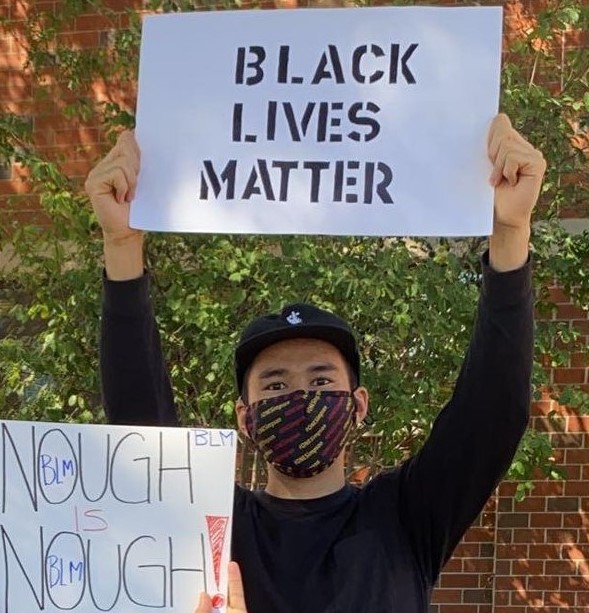
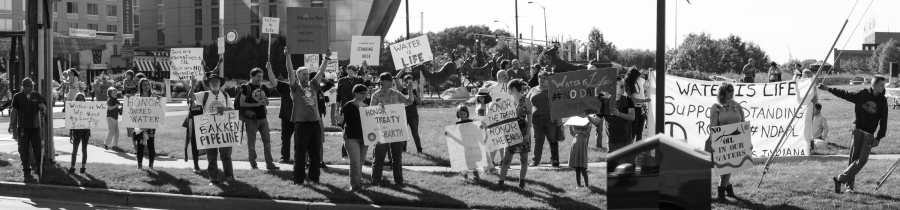
We can show up for Black Lives Matter and other racial justice events. We can support those who meet with local, state, and Federal government officials. We can show up in the streets to support agitation for change, train in nonviolent civil disobedience, or accompany arrested activists through the justice system.

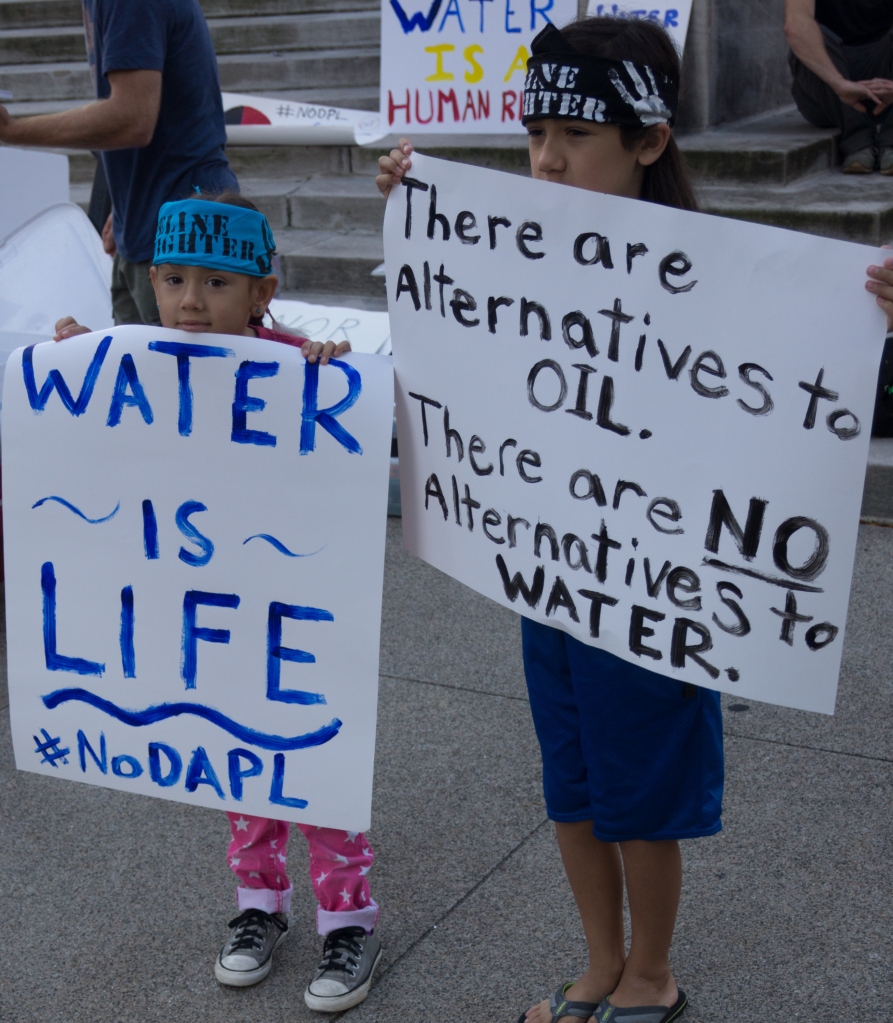
We can show up, when appropriate, at events of Native peoples, such as the Prairie Awakening ceremony. We can share Indigenous news on social media platforms, so others are aware of these things.

Indigenous leaders in the Midwest have asked us to learn about and find ways to engage in the concepts of Land Back. The website LANDBack Friends has been created and will be updated as our work continues.  https://landbackfriends.com/

Peace and Social Concerns, Iowa Yearly Meeting (Conservative) 2021

About LANDBACK

LANDBACK is a movement that has existed for generations with a long legacy of organizing and sacrifice to get Indigenous Lands back into Indigenous hands. Currently, there are LANDBACK battles being fought all across Turtle Island, to the north and the South.

As NDN Collective, we are stepping into this legacy with the launch of the LANDBACK Campaign as a mechanism to connect, coordinate, resource and amplify this movement and the communities that are fighting for LANDBACK. The closure of Mount Rushmore, return of that land and all public lands in the Black Hills, South Dakota is our cornerstone battle, from which we will build out this campaign. Not only does Mount Rushmore sit in the heart of the sacred Black Hills, but it is an international symbol of white supremacy and colonization. To truly dismantle white supremacy and systems of oppression, we have to go back to the roots. Which, for us, is putting Indigneous Lands back in Indigenous hands.

The closure of Mount Rushmore, return of that land and all public lands in the Black Hills, South Dakota is our cornerstone battle, from which we will build out this campaign.

In addition, LANDBACK is more than just a campaign. It is a meta narrative that allows us to deepen our relationships across the field of organizing movements working towards true collective liberation. It allows us to envision a world where Black, Indigenous & POC liberation co-exists. It is our political, organizing and narrative framework from which we do the work.

LANDBACK Campaign demands

  • Dismantle — white supremacy structures that forcefully removed us from our Lands and continue to keep our Peoples in oppression.
    • Bureau of Land Management, National Parks Service
  • Defund — white supremacy and the mechanisms and systems that enforce it and disconnect us from stewardship of the Land.
    • Police, military industrial complex, Border Patrol, ICE
  • Return — All public lands back into Indigenous hands.
  • Consent — Moving us out of an era of consultation and into a new era of policy around Free and Prior Informed Consent. 

LANDBACK organizing principles

  • Don’t burn bridges: even when there is conflict between groups or organizers remember that we are fighting for all of our peoples and we will continue to be in community even after this battle
  • Don’t defend our ways 
  • Organize to win 
  • Move from abundance – We come from a space of scarcity. We must work from a place of  abundance
  • We bring our people with us 
  • Deep relationships by attraction, not promotion 
  • Divest/invest
  • We value our warriors
  • Room for grace- be able to be human  
  • We cannot let our oppressors inhumanity take away from ours 
  • Strategy includes guidance 
  • Realness: Sometimes the truth hurts
  • Unapologetic but keep is classy

LANDBACK Manifesto

It is the reclamation of everything stolen from the original Peoples.

  • Land
  • Language
  • Ceremony
  • Medicines
  • Kinship

It is a relationship with Mother Earth that is symbiotic and just, where we have reclaimed stewardship. 

It is bringing our People with us as we move towards liberation and embodied sovereignty through an organizing, political and narrative framework. 

It is a long legacy of warriors and leaders who sacrificed freedom and life.

It is a catalyst for current generation organizers and centers the voices of those who represent our future. 

It is recognizing that our struggle is interconnected with the struggles of all oppressed Peoples.

It is a future where Black reparations and Indigenous LANDBACK co-exist. Where BIPOC collective liberation is at the core. 

It is acknowledging that only when Mother Earth is well, can we, her children, be well. 

It is our belonging to the land – because – we are the land. 

We are LANDBACK!