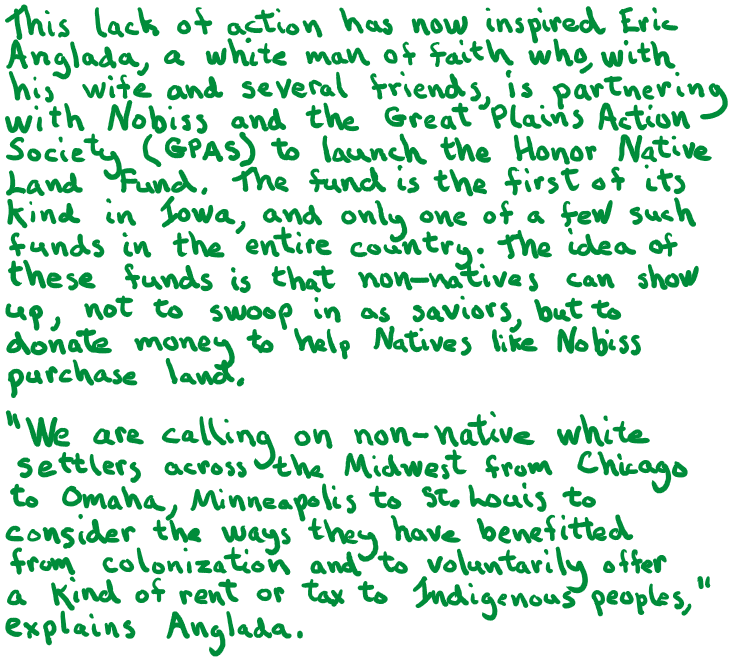
We are calling on non-native white settlers across the Midwest from Chicago to Omaha, Minneapolis to St. Louis to consider the ways they have benefitted from colonization and to voluntarily offer a kind of rent or tax to Indigenous peoples. We feel like, in the face of the climate crisis, one of the most important things we can do is support Indigenous people reclaiming Indigenous lifeways-that is a key part of what is going to heal the land and the climate. Eric Anglada, Honor Native Land Fund
We’re grateful for your interest in and support of the work of Honor Native Land Fund. Hopefully you were able to join us for our opening launch webinar. We urge you to become a regular contributor to this fund, 100% of which goes to support amazing Indigenous women in the crucial work of land rematriation.
Are you interested in getting your organization on board with this work of financial support but are unsure of how to do that? Email us and we can explore a presentation for your group.
If you missed Beth Hoffman’s recent essay, “A New Way to Honor Native Land,” you can check it out here.
And lastly, one of our HNLF members is helping launch a broader Decolonial Repair Network that includes ongoing support for HNLF while also looking to continue the journey of learning and supporting decolonization, community, healing, and repair. Sign up here for that introductory zoom call this Wednesday, April 3rd, 7pm CT!
As I was writing yesterday’s post, Palestine and LANDBACK, I realized it has been some time since I wrote about LANDBACK. And I’m reminded many Quakers are not well versed in this concept.
The LANDBACK focus on the plight of Palestinians shows how this concept is increasingly being used globally by Indigenous peoples to regain their land.
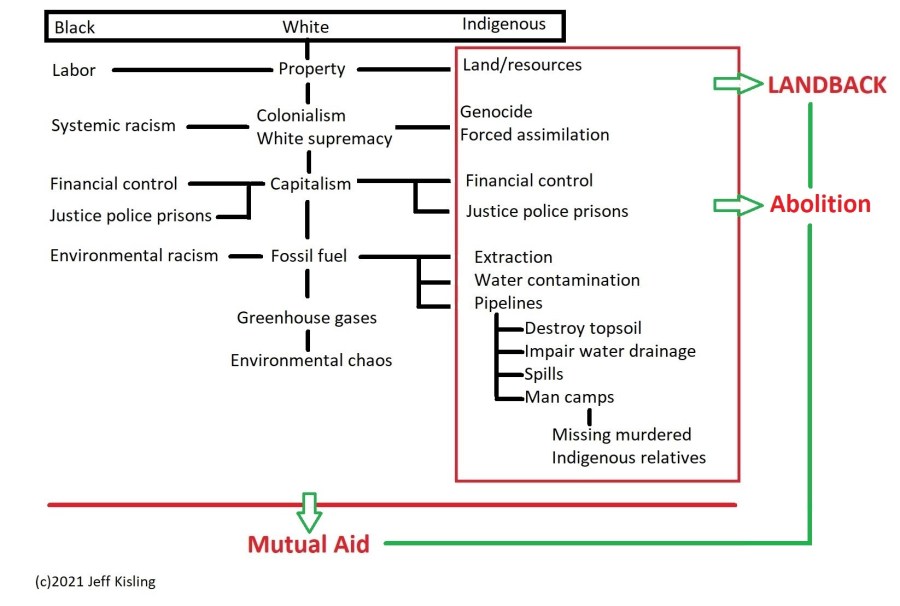
Going far beyond economics, LandBack sees land as tied to culture – regaining land is central to efforts by the colonized to assert their existence. It advocates decolonization, dismantling white supremacy, and reclaiming stewardship to save their land. Palestinian efforts to regain their land can become a spark to mobilize LandBack across the globe.
Following are three examples of connections of Quakers to LANDBACK. At the end of this is an electronic book that goes into much more detail.
To this day we have not come to grips with fundamental injustices our country was built on, the cultural genocide and theft of land from Native Americans, the enslavement of African Americans and the legal justifications of bestowing rights and privileges on white land-owning men. The consequences of these injustices continue to plague our society today. And will continue to impact us until we do what is necessary to bring these injustices to light and find ways to heal these wounds.
Several Friends recently assisted Boulder Meeting Friend, Paula Palmer, to lead workshops and discussions as part of her ministry “toward right relationships with Native people.” Part of the tragedy of the theft of Native land is that some Native people don’t have the concept of land as property, belonging to a landowner. Rather they have a spiritual connection to Mother Earth, that the land is sacred and not something that can be claimed as property by anyone. Being forced to leave their land broke their spiritual bonds with the land.
Native people have asked us to begin work toward reconciliation and healing. The first step needed is truth telling, recognizing that injury or harm has taken place. One of the important parts of holding “right relationship” workshops is to determine which Native nations were on the land before white settlers arrived.
–Iowa Yearly Meeting (Conservative) 2019
(Iowa Quaker) Marshall Massey on LANDBACK
As far as archæology can tell, no one actually lived on any of the land within fifty miles of where I, personally, live, until the 1870s, when whites came to use it for transshipment. It was too dry and barren and empty to support people who just lived *here*. There’s a part of the Bighorn River Canyon about 90 miles southeast of me, where very small numbers of people like the Anasazi lived in Anasazi-style cliff dwellings, at about the time of the Anasazi, perhaps 800 or 1200 years ago. They fished the streams, hunted the nearby hills, and probably cultivated small patches of ground. But that was long before horses arrived, and they had no real reason to come the long distance (it would have been a week or more on foot) from where they dwelt to where I live, except perhaps in curiosity about what the land looked like.
By the time the natives of my area had horses, my area, along with most of the broad stretch of land from the Bighorn to the Rocky Mountain Front — 400 miles and more miles across — was an area that the nearest tribes (Crow and Blackfeet) hunted buffalo and other prey on horseback in, but did not settle in, and did not regard as a possession. They rode across it, from their own edge to the other tribe’s edge, to raid the other tribe’s dwellings on the far side, to steal horses and count coup and work revenge. They spoke of this to the European-Americans: “This all belongs to the Great Spirit,” they said, “and the Great Spirit meant us to have the use of it, but not to own it.” If you want an exact quotation, here is Crowfoot, a chief among the Blackfeet, speaking some time around 1885: “We cannot sell the lives of men and animals; therefore we cannot sell this land. It was put here for us by the Great Spirit and we cannot sell it because it does not belong to us.”
We have a similar testimony in the Bible — would you believe it? Funny coincidence. “The earth is YHWH’s,” it says, “and the fullness thereof.” (YHWH is a Hebrew word which some modern scholars believe began as a representation of the great wind that fills all the sky, or the great breath that animates all beings: the great spirit.) You may know this passage: it appears in Deuteronomy 10:14 and Psalm 24:1, and is repeated in I Corinthians 10:26. Not that the Bible matters much to liberal activists any more, though; most of them would much, much rather get the same teaching from some other source, anywhere else but their own tradition. Nonetheless, this teaching in the biblical tradition is why the believers in the early Church held all things in common and committed all their resources to look after one another. How can anyone really own what God has put in place for all, especially in cases where someone else has an unmet need? Deuteronomy and Psalms represent wisdom teachings that date back three thousand years, and were I a betting man, I would bet the wisdom of non-possession goes back to the dawn of thought about such things — millions of years back, to when our ancestors and the ancestors of chimpanzees were one people.
I have begun to think that many modern Americans — including, unfortunately, many modern, Westernized native Americans, and at least equally unfortunately, also many modern Quakers — will never, never let themselves comprehend the idea of non-ownership. Their souls are too far shriveled. Surely the land must have been someone’s property, whenever there was anyone even remotely able to make a claim. But this was the testimony of the natives of that time, and of Friends as well. And I believe it is the truth. You might as well claim that somebody owns the sun.
–Marshall Massey
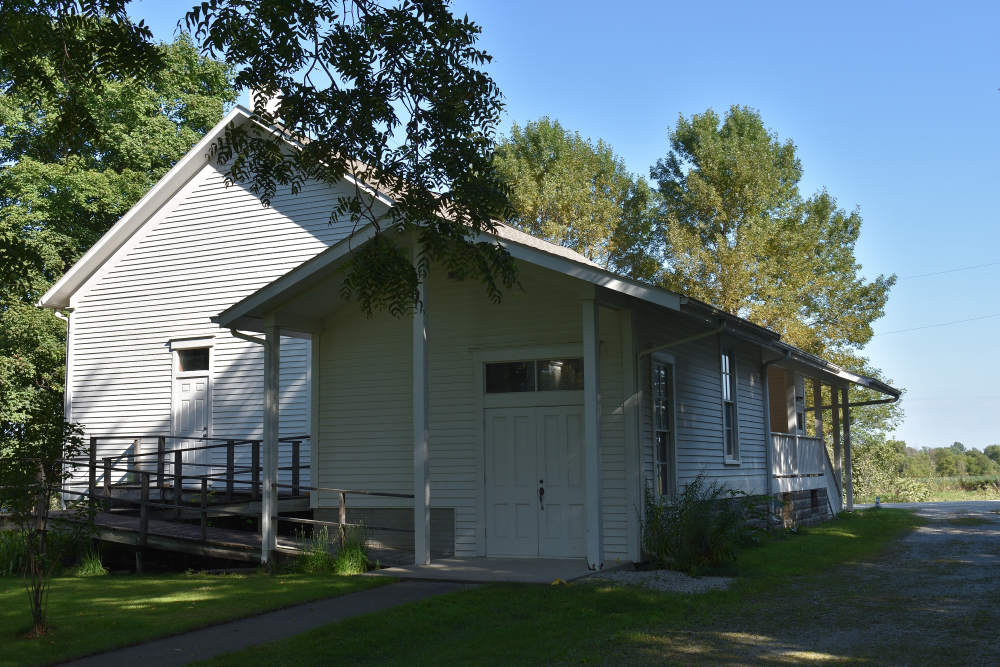
Bear Creek Friends Meeting
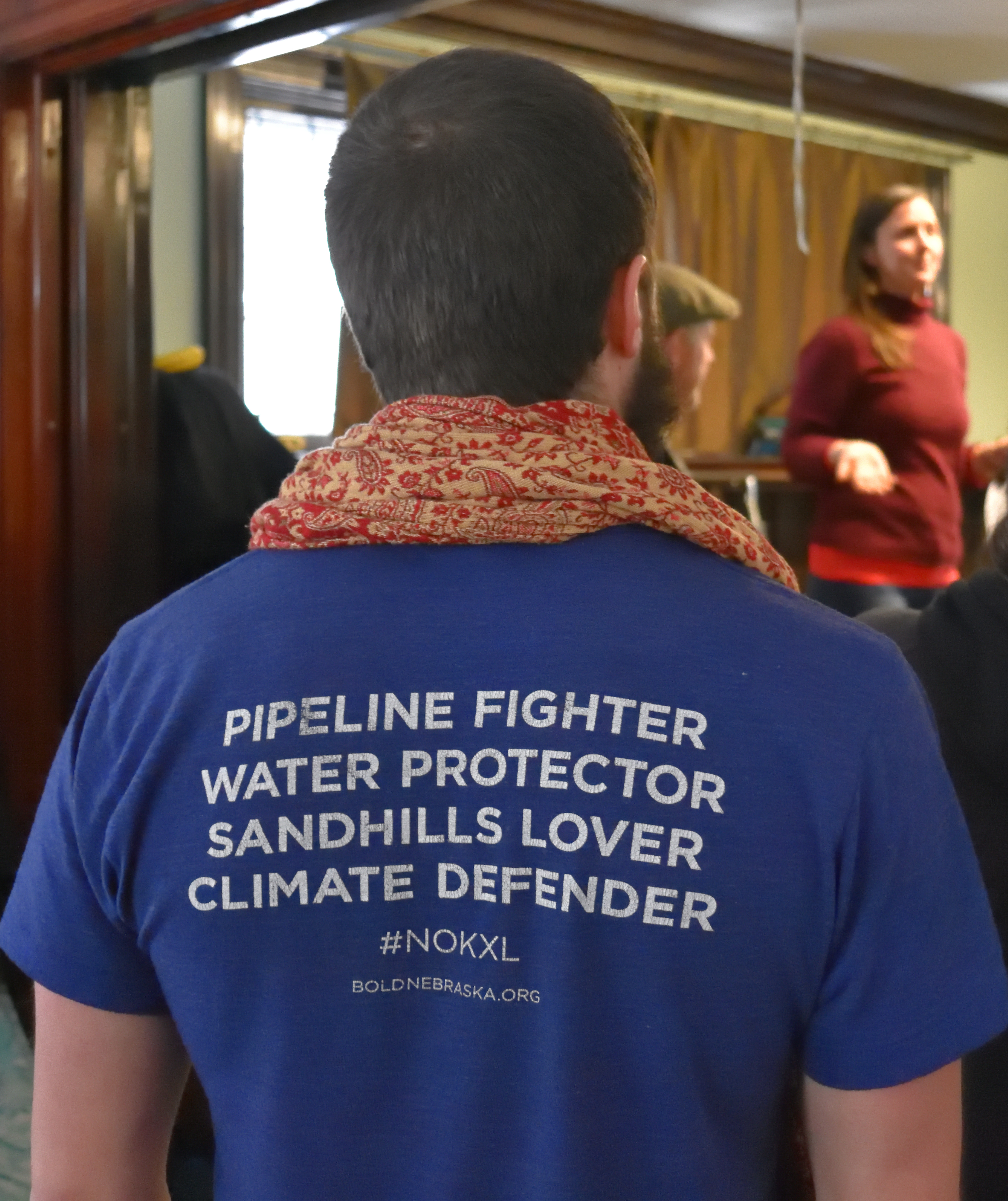
Bear Creek Friends (Quaker) meetinghouse is in the Iowa countryside. Many members have been involved in agriculture and care about protecting Mother Earth. A number of Friends have various relationships with Indigenous peoples. Some Friends have worked to protect water and to stop the construction of fossil fuel pipelines in the United States, such as the Keystone XL and Dakota Access pipelines.
This is a letter Bear Creek Meeting sent to the British Columbia Premier.
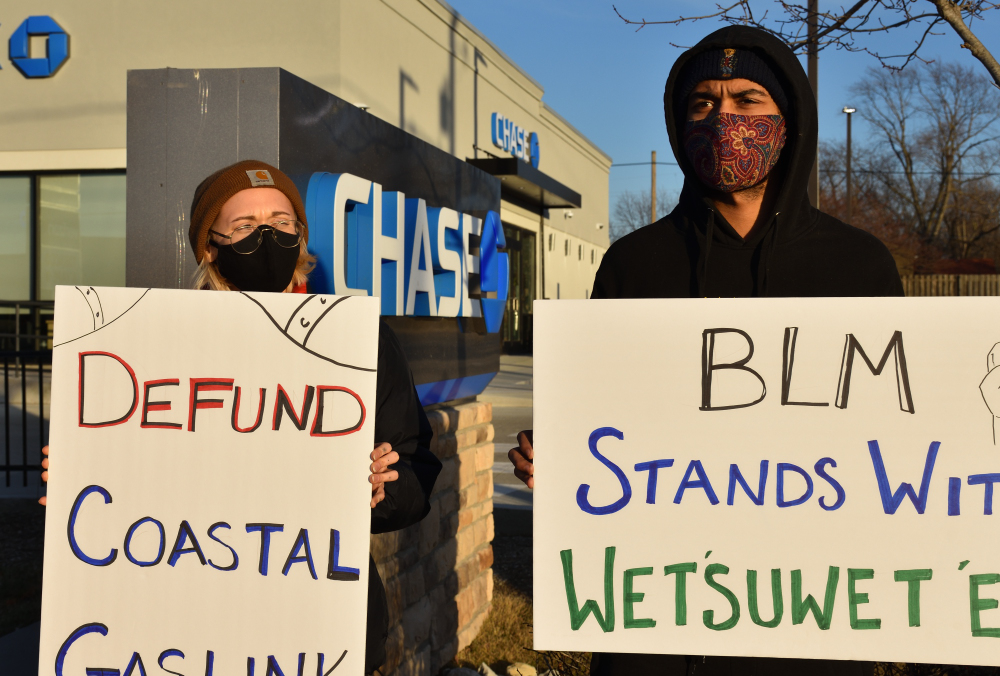
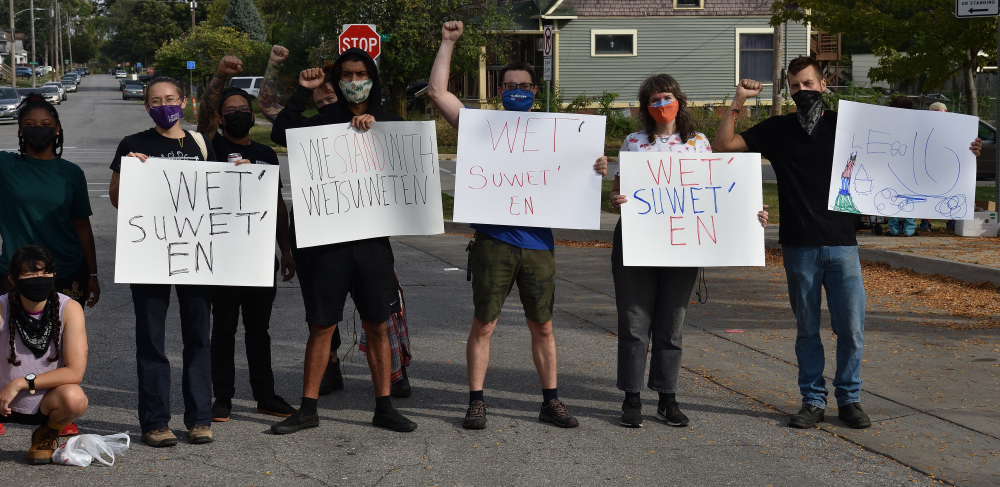
We are concerned about the tensions involving the Wet’suwet’en Peoples, who are working to protect their water and lands in British Columbia. Most recently they are working to prevent the construction of several pipelines through their territory. Such construction would do severe damage to the land, water, and living beings. Bear Creek Friends Meeting, of Iowa Yearly Meeting (Conservative) approved sending the following letter to British Columbia Premier, John Horgan.
John Horgan. PO BOX 9041 STN PROV GOVT VICTORIA, BC V8W 9E1. Email premier@gov.bc.ca
John Horgan, We’re concerned that you are not honoring the tribal rights and unceded Wet’suwet’en territories and are threatening a raid instead.
We ask you to de-escalate the militarized police presence, meet with the Wet’suwet’en Hereditary Chiefs, and hear their demands:
That the province cease construction of the Coastal Gaslink Pipeline project and suspend permits..
That the United Nations Declaration on the Rights of Indigenous Peoples (UNDRIP) and tribal rights to free, prior and informed consent (FPIC) are respected by the state and RCMP.
That the Royal Canadian Mounted Police (RCMP) and associated security and policing services be withdrawn from Wet’suwet’en lands, in agreement with the most recent letter provided by the United Nations Committee on the Elimination of Racial Discrimiation’s (CERD) request.
That the provincial and federal government, RCMP and private industry employed by Coastal GasLink (CGL) respect Wet’suwet’en laws and governance system, and refrain from using any force to access tribal lands or remove people.
Bear Creek Monthly Meeting of Friends (Quakers) 19186 Bear Creek Road, Earlham, Iowa, 50072
Following is a case study to illustrate some of the work that Quakers have done related to LANDBACK. When you click on the image, an electronic book appears that you can page through.
WARNING: This video (on page 16) contains graphic images of an armed threat on the lives of land defenders Denzel Sutherland-Wilson (Gitxsan) and Anne Spice (Tlingit). It may be traumatic for many to see. But we feel strongly that it should be available to witness. Denzel, Anne, and all the land defenders are now safe. These events took place during the RCMP raid on unceded Wet’suwet’en territory on February 7, 2020. The video was filmed by Gitxsan land defender Denzel Sutherland-Wilson from atop this tower.
I’ve been praying and writing about this unsettled time for me. I know there are other members of my Quaker faith community who also feel this way. As I try to explain here, Spiritual discernment to leave Quakers, I was led to temporarily distance myself from Quakers. I didn’t have a clear understanding of why that was necessary, what distancing myself meant, and what would need to happen for me to return to Quakers. What I had no doubt about was the spiritual message that was what I must do.
Over the past six years I’ve been led in multiple ways to connect with, become friends with, Native people. I recently wrote I have a spiritual bond with this new community. Multiple Spiritual Communities. This has opened a whole new way to see my Quaker community.
There is a tragic history between these two communities. Beginning in the mid 1800’s, Quakers and other denominations took on the role of forcefully assimilating Native children into White culture. The stated reason was to help those children learn how to live in the white world that was enveloping them. The more sinister reason was to quell the resistance of Native nations to being forced off their lands. (see: Much worse than I realized )
The recent verification of the remains of 215 Native children on the grounds of the Kamloops Indian Residential School in British Columbia was devastating news to Native peoples in Canada and the US. Many have been triggered by this atrocity. One of my Native friends wrote that she was NOT OK. Another told me, “I’m trying not to be enraged in my mourning.”
The concept of moral injury is helpful for me in the context of the tragedies of the Indian boarding schools and my relationship with my Quaker community.
Moral injury is the social, psychological, and spiritual harm that arises from a betrayal of one’s core values, such as justice, fairness, and loyalty. Harming others, whether in military or civilian life; failing to protect others, through error or inaction; and failure to be protected by leaders, especially in combat—can all wound a person’s conscience, leading to lasting anger, guilt, and shame, and can fundamentally alter one’s world view and impair the ability to trust others.
Moral injury refers to an injury to an individual’s moral conscience and values resulting from an act of perceived moral transgression, which produces profound emotional guilt and shame, and in some cases also a sense of betrayal, anger and profound “moral disorientation”.
Definition
The concept of moral injury emphasizes the psychological, social, cultural, and spiritual aspects of trauma. Distinct from psychopathology, moral injury is a normal human response to an abnormal traumatic event. According to the U.S. Department of Veterans Affairs, the concept is used in literature with regard to the mental health of military veterans who have witnessed or perpetrated an act in combat that transgressed their deeply held moral beliefs and expectations. Among healthcare professionals, moral injury refers to unaddressed moral distress leading to the accumulation of serious inner conflict that may overwhelm one’s sense of goodness and humanity. It is important to note that, despite the identification of moral traumas among both veterans and healthcare professionals, research has remained oddly independent between these two groups, and as such, the terminology is not uniform.
Quakers were among those involved in enslavement. There were also Quakers among the white settlers who colonized native lands. In addition, Friends were involved in the forced assimilation, the cultural genocide, of native children. There are many Quakers who don’t want to deal with this today. Suggesting this was in the past, or we don’t have a responsibility for what our ancestors did.
Unfortunately those traumas are passed from generation to generation. Influence both those who experienced the trauma, and those who caused it, today.
Economic injustice and Mutual Aid
The moral injury I’ve been experiencing for the past several years.is related to economic injustice. I believe it is immoral for an economic system to deny access to basic necessities for those who don’t have money to pay for food, shelter, clothing, medical care and/or education. Those who don’t have money through no fault of their own. The COVID pandemic and it’s economic impact have resulted millions more falling into economic insecurity.
I’ve been blessed to learn about and participate in Mutual Aid. The concept that everyone in a community can work together to find solutions to problems that affect the whole community. With Mutual Aid there is no vertical hierarchy. Rather a flat hierarchy where every contributes to the work. Where survival needs are addressed immediately. Work that helps satisfy people’s desire to be involved in meaningful work.
I feel disappointment that Quakers as a whole do not see the urgency to create Mutual Aid projects. Do not see the moral imperative to leave an unjust system, and create one that is just.










 LANDBACK Friends