Civilian Climate Corps and Mutual Aid

Senate Democrats have included a Civilian Climate Corp in the reconciliation bill currently being debated. Yesterday’s article was an introduction to the idea of a Civilian Climate Corps (CCC) and included a link for you to send letters to your representatives asking them to vote for it.

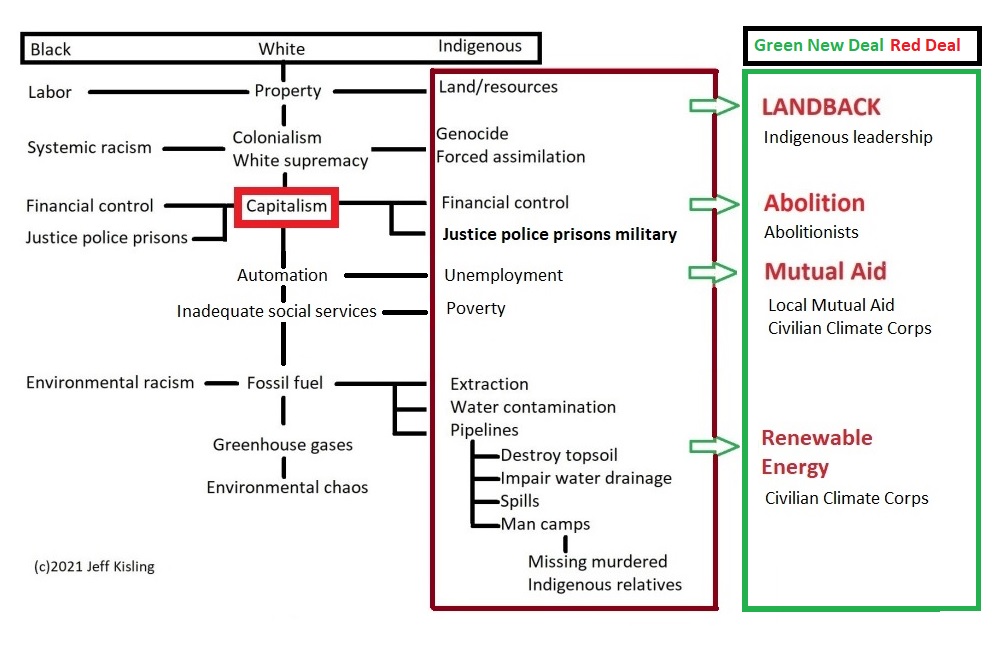
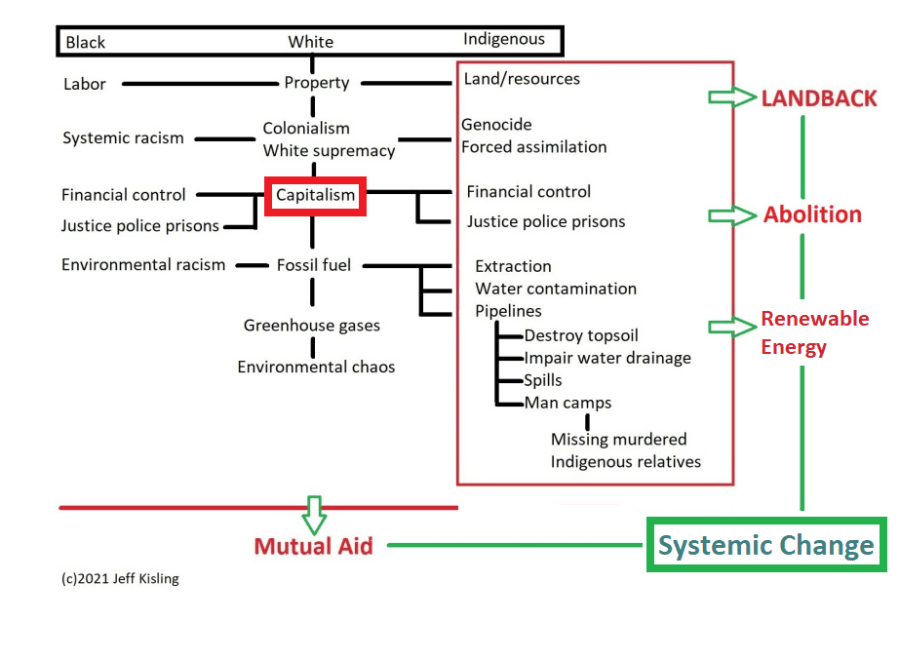
I’m really excited about the possibility of a CCC because that could be the final piece for a plan to address many social ills and make real progress to mitigate the environmental chaos that will continue and worsen. I’ve updated this diagram to include how a CCC could fit in.

I’ve been working with Des Moines Mutual Aid for over a year, which has taught me a great deal by seeing this concept in action.
https://landbackfriends.com/mutual-aid/

Mutual Aid works because Mutual Aid groups are made up of the people living in the neighborhood. Mutual Aid results in people getting to know and trust each other because it is about action, not meetings and plans for the future. And the work is to address the needs of the community, like food and shelter. Those involved get the satisfaction of making change happen immediately.

Mutual Aid should be integrated into the Civilian Climate Corps idea!

Key to the success of Mutual Aid is working to maintain a horizontal hierarchy, where everyone has a voice. Attention is paid to avoid vertical hierarchy from forming. Everyone is treated with respect, because we know circumstances might change where we need the help of Mutual Aid ourselves.

Because of these experiences, I wanted to find ways for Mutual Aid to be embraced by more communities. We need vast numbers of people to join in this work.

But how? Just talking to people doesn’t really demonstrate how Mutual Aid works.

Mutual Aid should be integrated into the Civilian Climate Corps idea!

That is how colonial capitalism can be replaced. That is how we can rapidly transition from fossil fuels. That is how we can rebuild caring communities.

Cannot depend on traditional power sources

Powerful hurricane Ida which gained strength from the hot Gulf waters (from global warming) destroyed square miles of buildings as it came ashore. Then caused massive flooding as it moved through the country.

The entire electrical grid failed in New Orleans! It will be weeks or months before full power returns.

In February this year the power grid for the entire state of Texas failed.

Each hurricane also renews calls to find new ways to produce and distribute energy in the face of climate change, which experts say is leading to more frequent and more devastating storms. In New Orleans, advocates have tried to push Entergy to invest more in renewable energy sources, such as solar and wind, and technologies that provide electricity to the area where it is produced.

Those concerns, along with worries about pollution in residential neighborhoods, fueled resistance to Entergy’s plan to build the new natural gas-powered plant in New Orleans East. Even after the company admitted to playing a role in the hiring of actors to support the project at public meetings, the council approved the plant. Groups that opposed the plan sued, and the case made it to the Louisiana Supreme Court, which upheld the council’s vote.

“​​Over and over we have tried to say we need not only climate action for renewables, but also we need to be adaptive to what is coming, because the traditional system to move power isn’t going to be able to help us weather these storms,” said Logan Atkinson Burke, executive director of the Alliance for Affordable Energy. “We’ve been ignored by utilities and regulators, and we are concerned that now, yet again, we will have this system rebuilt the same way we’ve done it and it will do us no good the next time.”

Slow return of power raises questions about a New Orleans plant that was supposed to deliver electricity after hurricanes. Calls for an investigation of Entergy’s power outages follow a wave of complaints about the company by Jon Schuppe, NBC News, Sept 1, 2021

Hurricane Ida thoroughly wrecked New Orleans’ power supply, preying on vulnerabilities that are only likely to get worse in the future as storms like Ida become more fierce. The storm knocked out all eight transmission lines that bring power into New Orleans, plunging the city into darkness. The damage was so intense that a new gas-fired power plant — sold as something that could keep the lights on after big storms — took days to bring power to the nearest neighborhood.

To keep the lights on in the future, leaders need to abandon old strategies and build up different kinds of energy infrastructure, experts say. The fallout from Ida is yet another reminder of how fragile the country’s existing energy infrastructure is, especially as climate change brings on more extreme weather.

“We’ve been saying, you know, we can’t depend on the traditional system,” says Logan Atkinson Burke, executive director of the local consumer advocacy group Alliance for Affordable Energy. “We need to be planning for the kind of climate impacts that we know are coming, and here they are. Having not planned for them, we’re experiencing the kinds of problems we expected.”

NEW ORLEANS NEEDS A BETTER BACKUP PLAN FOR BLACKOUTS. A new gas plant still isn’t enough to solve the city’s power problems by Justine Calma, Sep 1, 2021

This is what LANDBACK is about, restoring Indigenous ways.

“How about phasing out fossil fuels and quit acting like addicts? Let’s have a new green revolution. Let’s take the green path.” Winona Laduke (in video below). Winona was arrested while protecting the water from Line 3. Honor the Earth says that the “charge of the colonial world is in conflict with the Anishinaabeg,” citing a 2019 White Earth Nation tribal law which requires the White Earth Nation to stand up for and protect the rights of wild rice and other sacred food.

#TreatiesNotTarSands

#LANDBACK

Indigenous led Green New Deal

The book The Red Deal is about an Indigenous led Green New Deal (GND).

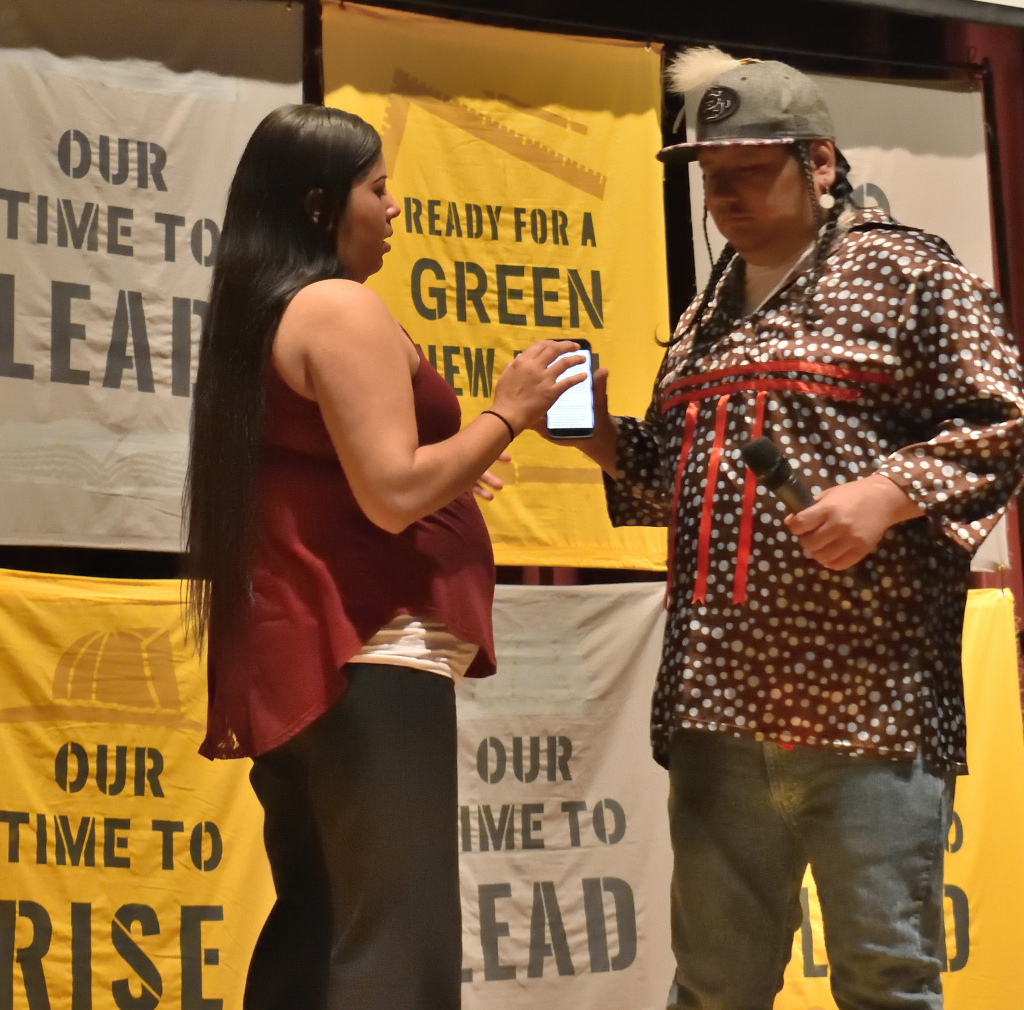
The Sunrise Movement was launched as a national campaign for a Green New Deal (GND) in 2017. From the beginning I heard my native friends talk about the importance of a green new deal to be Indigenous led but didn’t have a clear idea of what that meant. In 2019 Sunrise’s Green New Deal tour included a stop in Des Moines. There my friends Trisha Cax-Sep-Gu-Wiga Etringer and Lakasha Yooxot Likipt spoke about Indigenous leadership as part of the GND.

So I’m glad to be reading the recently published book, The Red Deal: Indigenous Action to Save Our Earth by the Red Nation.

The Red Nation is a coalition of Native and non-Native activists, educators, students, and community organizers advocating Native liberation that formed to address the marginalization and invisibility of Native struggles within mainstream social justice organizing, and to foreground the targeted destruction and violence towards Native life and land.”

Inspired by the appeals to divest from the financial institutions funding oil pipelines during the Standing Rock uprising and the Movement for Black Lives’ divest-invest strategy, the Red Deal also targets the institutions of the military, police, and prisons for divestment. Imagine divesting from these institutions and opening up $1 trillion to accomplish the task of saving this Earth for everyone.

In 2018, Winona LaDuke pushed for an Indigenous-led GND. The former Green Party vice-presidential candidate inspired us to think about how divesting from fossil fuel infrastructure—such as billion-dollar oil pipelines—could be reinvested into building wind and solar farms and sustainable agriculture on reservations. Indeed, the most radical appraisals of the GND come from Indigenous people. According to the Indigenous Environmental Network (IEN), the GND, as is, “will leave incentives by industries and governments to continue causing harms to Indigenous communities.” Before endorsing the GND, IEN called for a clear commitment to keep fossil fuels in the ground; reject carbon pricing schemes; strengthen language on Indigenous peoples and uphold Indigenous rights; and stop, not prolong, our current exploitative and abusive economic and political systems.

Nation, The Red. The Red Deal (pp. 18-19). Common Notions. Kindle Edition.

… what if the question all water protectors and land defenders asked was, why don’t we just overturn the system that makes development a threat in the first place? This system, again, is capitalism. Rather than taking an explicitly conservationist approach, the Red Deal instead proposes a comprehensive, full-scale assault on capitalism, using Indigenous knowledge and tried-and-true methods of mass mobilization as its ammunition. In this way, it addresses what are commonly thought of as single issues like the protection of sacred sites—which often manifest in specific uprisings or insurrections—as structural in nature, which therefore require a structural (i.e., non-reformist reform) response that has the abolition of capitalism via revolution as its central goal. We must be straightforward about what is necessary. If we want to survive, there are no incremental or “non-disruptive” ways to reduce emissions. Reconciliation with the ruling classes is out of the question. Market-based solutions must be abandoned. We have until 2050 to reach net-zero carbon emissions. That’s it. Thirty years. The struggle for a carbon-free future can either lead to revolutionary transformation or much worse than what Marx and Engels imagined in 1848, when they forewarned that “the common ruin of the contending classes” was a likely scenario if the capitalist class was not overthrown. The common ruin of entire peoples, species, landscapes, grasslands, waterways, oceans, and forests—which has been well underway for centuries—has intensified more in the last three decades than in all of human existence.

Nation, The Red. The Red Deal (pp. 21-22). Common Notions. Kindle Edition.

I’m of the firm opinion that a system that was built by stolen bodies on stolen land for the benefit of a few is a system that is not repairable. It is operating as designed, and small changes (which are the result of huge efforts) to lessen the blow on those it was not designed for are merely half measures that can’t ever fully succeed.

So the question is now, where do we go from here? Do we continue to make incremental changes while the wealthy hoard more wealth and the climate crisis deepens, or do we do something drastic that has never been done before? Can we envision and create a world where a class war from above isn’t a reality anymore?”

Ronnie James, Des Moines Mutual Aid, Great Plains Action Society